Subaru's 16-valve flat-four mainstay, from the 1989 EJ15 through the turbo WRX engines and the STI EJ257 to the 2020 end of the EJ20.
The Subaru EJ engine is a family of four-stroke boxer engines that Subaru introduced in 1989. It ranged from 1.5 to 2.5 litres, and turbocharged versions powered WRX and STI models until the EJ20 ended in 2020.
The Subaru EJ series was the mainstay of the company's engine line, a family of four-stroke horizontal flat-fours introduced in 1989. Displacements ran from 1.5 litres to 2.5 litres, and both naturally aspirated and turbocharged versions were built.
When was the Subaru EJ engine introduced?
The EJ series arrived in 1989 and was meant to replace the earlier Subaru EA engine. Every EJ is a 16-valve horizontal flat-four, offered with either a single or a double overhead camshaft layout. Outputs range from 94 to 341 hp (70 to 254 kW; 95 to 346 PS).
Primary engineering on the series came from Masayuki Kodama, Takemasa Yamada and Shuji Sawafuji of Fuji Heavy Industries, Subaru's parent company. The engines went into a wide range of models, from the Impreza and Legacy to the Forester and Outback.
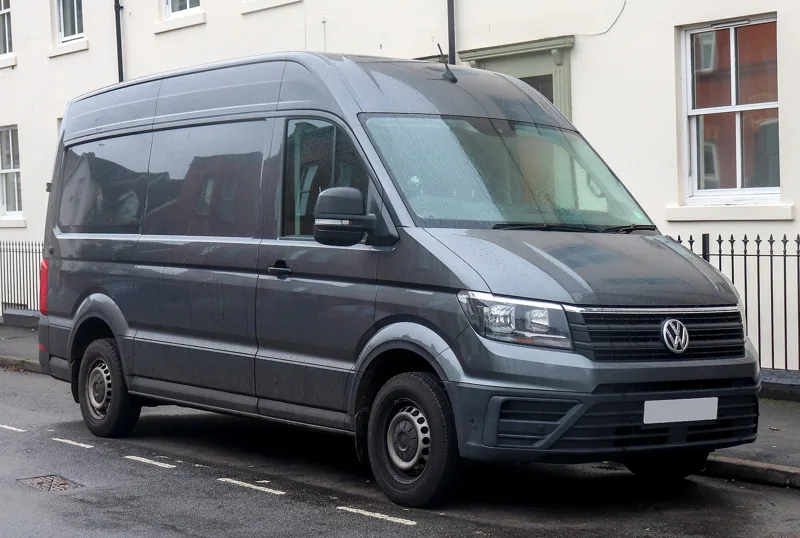
Beyond road cars, EJ engines found work in light aircraft and kit cars, and enthusiasts fit them into air-cooled Volkswagens. They are also a popular swap into Volkswagen T3 Vanagons, which otherwise use the Wasserboxer engine.
A flat-four family that started as a 1.5-litre commuter engine and ended with a 341 hp STI.
What were the smallest EJ engines?
The series began with the 1.5-litre EJ15, followed by the 1.6-litre EJ16 and the 1.8-litre EJ18. The EJ15 displaced 1,493 cc with an 85 mm bore and a 65.8 mm stroke, while the EJ16 kept the same stroke and used an 87.9 mm bore.
The EJ15 came in four tunes, from the EJ151 to the EJ154. The EJ151 made 97 PS (71 kW; 96 bhp) at 6,000 rpm, and the EJ154 reached 100 PS (74 kW; 99 bhp) at 5,200 rpm.
The EJ16 was a belt-driven SOHC engine fed by multi-point injection in most places and by a carburettor in some. It appeared in the Impreza from 1993 in Japan, Europe, Australia and Latin America, with outputs between 90 and 98 PS.
The EJ18 measured 1,825 cc, with an 87.9 mm bore and 75 mm stroke. Its EJ183 tune produced 120 PS (88 kW; 118 bhp) at 5,600 rpm, and the engine went into Impreza GC6 models, Legacy cars outside the United States and the Isuzu Aska from 1990 to 1993.
How long did the EJ20 last?
Subaru announced at the 2019 Tokyo Motor Show that it would end EJ20 production by the end of March 2020. At that point the engine was sold only in the Japanese market, in the WRX STI, and a special WRX STI EJ20 Final Edition marked the close of production.
The EJ20 came in many forms, which the sections below group by induction and camshaft layout. Its 92 mm bore and 75 mm stroke stayed constant across the naturally aspirated and turbocharged versions.
What were the naturally aspirated EJ20 engines?
The EJ20E was a single overhead cam, naturally aspirated unit. Japanese Legacy models ran it from 1989 to 1994 at 125 PS (92 kW; 123 hp), and a 135 PS (99 kW; 133 hp) version followed from 1993 to 1999.
Later EJ20E engines in the BE to BH Legacy reached 155 PS (114 kW; 153 hp) from 1998 to 2004. European Impreza and Legacy applications used a 115 PS (85 kW; 113 hp) tune in the early and mid 1990s.
The EJ20D was the DOHC naturally aspirated version. In the Japanese Legacy from 1989 to 1999 it made 150 PS (110 kW; 148 hp). The EJ204 added AVCS, and in the Legacy B4 TSR of 1999 to 2001 it delivered 155 PS (114 kW; 153 hp).
How did the EJ20G turbo engine work?
The EJ20G is the turbocharged engine used in the early WRX models and in the Legacy RS, RS-RA and GT. Its rated power ran from 197 bhp (147 kW; 200 PS) for the GT to 217 bhp (162 kW; 220 PS) for the RS versions.
Three sub-types appeared. The rocker-style version used rocker arms and served the Legacy RS, RS-RA and GT between 1989 and 1993. From early 1992 the bucket-style version took over in all WRX models, with hydraulic lifters in the cylinder head and cast aluminium pistons.
Block design changed too. Closed-deck blocks with piston oil squirters were used until mid-1994, then came a brief open-deck period and an open-deck block from 1995 until mid-1996, when the EJ20K arrived. The EJ20G stayed in the automatic WRX wagon until 1998, when the EJ205 replaced it.
The shim-under-bucket EJ20G fitted to the STI RA cars used factory forged pistons of 8.5:1 and lighter valves. Output on those cars ran from 220 PS (162 kW; 217 hp) in the WRX wagons up to 275 PS (202 kW; 271 hp) in the WRX STI Version II.
What replaced the EJ20G?
The EJ20K first appeared in the WRX from mid-1996, and the EJ205 took over the WRX wagon in 1998. Japanese EJ20K engines produced 270 PS (199 kW; 266 bhp) at 6,800 rpm, while the third version of the STI, with its VF23 turbo, reached 300 PS (221 kW; 296 bhp).
The EJ20K came in two styles. The shim-over-bucket type went into JDM WRX models and the SF5 Forester, and the shim-under-bucket type went into WRX STI models. The WRX used an IHI ball-bearing turbo in the VF22 size, while the STI used a VF23 or VF24.
What was the EJ205 and how was it identified?
The EJ205 served WRX models outside Japan from 1999. Japanese WRX models used the EJ207 from 1999 to 2001, except the five-door wagon, which kept the EJ205. The EJ205 runs an 8:1 to 9:1 compression ratio and an open-deck block.
Identification starts with coil-on-plug ignition, which the JDM SF5 Forester does not use, plus idle air control built into the throttle body and an inlet manifold underneath. These are the clues used to identify one.
What set the EJ207 apart?
The EJ207 began life in the 9/98 to 8/99 GC8, sold in Japan, the UK and Australia. It had an 8.0:1 compression ratio, a wasted spark coil pack set off centre on the manifold and a higher rev limit than the EJ205.
Version seven brought AVCS, a single scroll turbo, cable throttle and top-feed injectors. Later versions used twin-scroll turbos, and the factory engine speed limit sits at 8000 rpm. The Spec C was a Japanese-only EJ207.
How did the EJ20 twin-turbo engines fit in?
The EJ20TT was a DOHC sequential twin-turbo engine with intercooling, built from 1994 to 2005 in several iterations. Subaru never used that name, which enthusiasts applied to the family. It fitted Japanese-spec Legacies and right-hand-drive Australian Liberty B4 models.
Its pistons were lighter, with a shorter skirt than the WRX EJ20T pistons, to allow higher engine speed. The displacement was 1,998 cc, with a 92 mm bore and a 75 mm stroke.
The EJ20H ran from 1993 to 1996 in the pre-facelift Legacy BD5 and BG5, rated at 184 kW (250 PS; 247 bhp) at 8.5:1. The facelifted 1996 to 1998 version reached 191 kW (260 PS; 256 bhp) at 9.0:1.
The EJ20R followed in 1996 and 1997 with 206 kW (280 PS; 276 bhp), at 8.0:1 and then 8.5:1. The EJ206 and EJ208 served the BE5 and BH5 Legacy from 1998 to 2003. The EJ206 offered 190 kW (258 PS; 255 bhp) with automatic or five-speed manual gearboxes, and the EJ208 offered 206 kW (280 PS; 276 bhp) in manual cars.
What was the EJ22?
The EJ22 was a 2.2-litre engine whose bore measured 96.9 mm against a 75 mm stroke. It went into the Impreza from 1995 to 2001, the Legacy from 1990 to 1999 and the Outback in 1995 and 1996, and it had SOHC valve gear in its naturally aspirated form.
The EJ22E produced 130 bhp (97 kW; 132 PS) from 1989 to 1994, 135 bhp (101 kW; 137 PS) from 1995 to 1996, and 137 bhp (102 kW; 139 PS) at 5,400 rpm for 1997 and 1998.
From the 1997 model year the engine gained about 10% more power and 3% better fuel economy. Molybdenum-coated pistons reduced friction, and the piston skirt was reshaped. Piston weight fell by about 100 g (3.5 oz), and compression rose to 9.7:1 through a reshaped piston crown.
Solid valve adjusters arrived in the 1997 and later SOHC engines, with a scheduled service at 100,000 miles (160,934 km). Clearance is set with an adjustment screw.
The 1999 Phase 2 design brought a new cylinder head with a two-rocker-shaft, solid-valve layout and roller followers. Head gaskets became 0.7 mm thick, and compression reached 10:1. Output rose to 142 bhp (106 kW; 144 PS) at 5,600 rpm, with 202 N m (149 lb ft) of torque at 3,600 rpm.
How strong was the turbo EJ22 family?
The first turbocharged EJ22T produced 160 bhp (119 kW; 162 PS) at 5,600 rpm and was sold in North America as the Legacy Sport Sedan and Touring Wagon from 1991 to 1994. It ran a compression ratio of 8.1:1.
The EJ22G was a DOHC development with a closed-deck crankcase, built for the Japanese Impreza STi 22B. Its factory figure was 280 PS (206 kW; 276 bhp) at 6,000 rpm, and enthusiasts often claim more, although those claims are hard to verify.
What was the 2.5-litre EJ25?
The EJ25 was the 2.5-litre member of the family, with a 99.5 mm bore, a 79 mm stroke and a displacement of 2,457 cc. Its compression ratio was 9.5:1 to 10:1 when naturally aspirated and 8.0:1 to 9.5:1 for turbo versions.
The US-market EJ25D arrived in 1996 with hydraulic lash adjusters and a recommendation for 91 octane fuel. A revised 1997 engine used shimmed bucket lifters, ran on 87 octane and came with either transmission. The DOHC spark plugs have a service life of 80,000 miles (130,000 km).
The EJ251 was the first SOHC 2.5-litre for the US market. It is known for head gasket failures, which were common because it used a single-layer coated gasket rather than the multi-layer steel gasket of later engines. It made 165 hp (123 kW; 167 PS) at 5,600 rpm.
The EJ253 replaced the EJ251 in many models and uses a mass airflow sensor where the earlier engine used a MAP sensor. It produced 162 hp (121 kW; 165 PS) at 5,600 rpm, and the 2006 I-Active models reached 175 hp (130 kW; 177 PS).
The EJ254 was a DOHC AVCS engine and the first AVCS unit on an EJ alongside the EJ204. It delivered 165 hp (123 kW; 167 PS) at 6,000 rpm from 1998 to 2004.
The turbocharged EJ255 used sodium-filled valves and powered the WRX from 2006 to 2014, among other models. The EJ257 STI was rated at 300 bhp (304 PS; 224 kW) for 2004 to 2007 and 305 bhp (309 PS; 227 kW) for 2008 to 2018. The 2019 STI S209 reached 341 hp (346 PS; 254 kW) at 6,400 rpm.
How do the EJ engines compare at a glance?
| Family | Displacement | Bore and stroke | Example output |
|---|---|---|---|
| EJ15 | 1,493 cc (1.5 L) | 85 mm and 65.8 mm | 97 PS (71 kW; 96 bhp) at 6,000 rpm |
| EJ16 | 1,597 cc (1.6 L) | 87.9 mm and 65.8 mm | 90 to 98 PS (66 to 72 kW) |
| EJ18 | 1,825 cc (1.8 L) | 87.9 mm and 75 mm | 120 PS (88 kW; 118 bhp) at 5,600 rpm |
| EJ20 | 2.0 L | 92 mm and 75 mm | 155 PS (114 kW; 153 hp) in the EJ20E |
| EJ22 | 2,212 cc (2.2 L) | 96.9 mm and 75 mm | 137 bhp (102 kW; 139 PS) at 5,400 rpm |
| EJ25 | 2,457 cc (2.5 L) | 99.5 mm and 79 mm | 165 hp (123 kW; 167 PS) at 5,600 rpm |
| EJ257 STI | 2.5 L family | As the EJ25 | 341 hp (346 PS; 254 kW) in the 2019 S209 |
Why do the firing order and timing belt matter?
All EJ engines use a 1-3-2-4 firing order. The longer exhaust runners on cylinders two and four produce the characteristic boxer rumble.
SOHC EJ engines through 1995 were non-interference designs, so a broken timing belt did not damage the valves. DOHC engines and SOHC engines from 1998 onwards are interference designs, where a belt failure can wreck the valves.
Did the EJ engines win awards?
Yes. The Subaru Turbo Boxer won best engine in the 2.0 to 2.5 litre category at the International Engine of the Year awards in 2006 and 2008. It also appeared on Ward's 10 Best Engines list in 2004 and 2010.
Why do EJ engines still attract enthusiasts?
Enthusiasts keep EJ engines in light aircraft, kit cars, air-cooled Volkswagen conversions and Vanagon swaps. Some turbo engines from 2005 onwards use CAN bus as their only vehicle speed input, so removing the ABS speed signal can force the ECU into limp-home mode. That matters for anyone swapping one into a different vehicle.