Seven generations of Subaru's flagship, from the first EJ-engined car to the 2025 finale, with rally wins, speed records and the Liberty name in Australia.
The Subaru Legacy was a Japanese mid-size car built from 1989 to 2025, sold as the Liberty in Australia. It offered all-wheel drive as standard and used Subaru's boxer engines throughout its seven generations. Subaru built 3.6 million examples by 2008.
The Subaru Legacy was Subaru's flagship mid-size car, built from 1989 to 2025 and unusual in its class for offering all-wheel drive as standard. It carried the company's boxer engine through seven generations, and in Australia it was sold under the name Liberty. Subaru had built 3.6 million examples by 2008.
When did the Subaru Legacy first go on sale?
The Subaru Legacy was formally released in Japan on January 23, 1989, as an all-new mid-size car. It was built to compete in North America against the Honda Accord, Toyota Camry, Mazda 626 and Nissan Stanza. Subaru of America has confirmed that 2025 will be the final model year.
Japanese production ended in June 2020. The Outback, a raised-suspension variant that began life in 1996, later became Subaru's top selling model in 2023.
A boxer engine lays its cylinders flat in two opposing banks, which keeps the centre of gravity low and suits a car with all-wheel drive. Subaru kept that layout at the heart of the Legacy for its whole life.
Seven generations of boxer engines and standard all-wheel drive, sold as the Liberty in Australia.
Why was the Legacy sold as the Liberty in Australia?
In Australia the car was sold as the Liberty, out of deference to Legacy Australia. Subaru did not want its model name to clash with that organisation, so the Legacy name stayed in other markets while Australian buyers saw the Liberty badge.
The Australian Liberty was offered in LX, GX, RX and Heritage grades.
Naming is a reminder of how carefully a global model had to be handled, since a name that works in one country can carry an unwanted meaning in another.
What made the first-generation Legacy different?
The first-generation Legacy introduced the EJ engine series, which was quieter and more powerful than the EA engine it replaced. Buyers could choose front-wheel drive or full-time all-wheel drive, with an optional air suspension that allowed the driver to change ride height for rough going.
Engine choice varied by market, from 1.8 and 2.0 SOHC units to DOHC and DOHC turbo versions, plus a 2.2 SOHC engine. Four-channel ABS was licensed from Bosch.
US buyers got the Sport Sedan with the EJ22T turbo between 1991 and 1994. Driver airbags were an option in 1992 and standard from 1993, while passenger airbags did not arrive until 1995.
Full-time all-wheel drive means the car always sends power to all four wheels, rather than waiting for wheel slip before engaging the rear axle. That capability is part of why the Legacy stood out in its class.
How did the second and third generations develop?
The second generation reached Japan in 1993, while North American buyers got it for the 1995 model year. Its exterior was designed by Olivier Boulay, who was hired on a short-term basis, and the tail lights echoed the SVX. Subaru made all-wheel drive standard across North America from 1996.
The Outback gained raised ground clearance and a higher roofline in 1996. It became a separate model in 2000.
A raised roofline and extra ground clearance are what separate an estate-style wagon from a more rugged alternative, so the Outback gave buyers wagon space with a tougher stance.
The third generation arrived in Japan in 1998 and reached North America as a 2000 model. The US version used the 2.5 L EJ251 engine as standard, while the 2001 EZ30 3.0 L H6 was offered in Outbacks and met California's LEV emission standard.
Emission rules such as California's LEV standard shaped engine choices across the decade, and each market had its own route to compliance.
What changed in the fourth and fifth generations?
The fourth generation ran from 2003 in Japan and from 2005 in North America, with production in Indiana. Its 2.5-litre turbo was derived from the WRX STI engine, and the five-speed automatic was licensed from Prodrive. Subaru's first win for the Japan Car of the Year title arrived with this car.
The fifth generation went into production in late May 2009 at the Indiana plant. It introduced the Lineartronic CVT on the EJ253 2.5 L flat-four, and it carried forward EyeSight, the twin-camera system first offered in Japan on May 10, 2008.
A twin-camera system judges distance in a way that resembles stereoscopic vision, so the car can watch the road ahead and the driver's attention at the same time.
Diesel was part of the story too. The Subaru EE flat-4 diesel, the first to be fitted to a passenger car, was sold in the European Union from March 2008 as the Legacy 2.0D.
Few car makers had fitted a flat-four diesel to a passenger car, which made the EE engine a distinctive choice for European buyers.
How did the sixth and seventh generations differ?
The sixth generation arrived for the 2015 model year, with its 2.5-litre flat-four and 3.6-litre flat-six carried over. The four-cylinder was rated 175 PS (129 kW; 173 bhp). The seventh generation followed in 2019 for North America, sold in the US and Canada but not in Japan or Australia.
The seventh generation used a direct-injection FB25 as its base engine. Higher trims moved to the turbocharged 2.4-litre FA24, which was borrowed from the Ascent, and the Sport and Touring XT versions used the FA24F turbo.
Turbocharging uses exhaust gas to drive a compressor that forces more air into the cylinders, which lets a smaller engine produce more power than a naturally aspirated unit of the same size.
Inside, the seventh generation carried an 11.6 inch touchscreen on most trims.
Driver monitoring became a headline feature in the later cars. DriverFocus, a camera-based system fitted to the 2025 model, watches for distraction and fatigue and issues alerts.
Did the Legacy compete in rallying?
Yes. From 1990 the Subaru World Rally Team ran the car in the WRC, with Prodrive's help. Two second-place finishes in 1992 came from Ari Vatanen and Colin McRae, and in 1993 McRae won Rally New Zealand in a Legacy.
Markku Alen finished third at the 1991 Swedish Rally, and 1993 was the Legacy's last WRC year before the Impreza took over.
The 1990 Safari Rally was a notable result. A Legacy became the first Group N car to finish, placing eighth overall when only 10 of 59 competitors reached the finish. The Legacy also won the Alcan Winter Rally in 1990, 1992, 2002 and 2006.
Group N is a class for production-based touring cars, so a Legacy competing in it was running a car close to showroom specification. That made the Safari result especially notable.
Rallying was also a proving ground for all-wheel drive, because loose-surface stages punish any car that cannot put its power down evenly.
What speed and endurance records did the Legacy set?
In 1998 a Legacy station wagon posted a world speed mark for turbocharged production wagons with small engines, clocking 270.532 km/h (168.101 mph) over one kilometre. The run took place on Highway 10 in Colorado, and the car was a Generation III model.
That mark beat a 1993 record of 249.981 km/h (155.331 mph), set by a second-generation car.
The first Legacy endurance mark came in early 1989, when three RS sedans ran for 447 hours, 44 minutes and 9.887 seconds. The cars averaged 223.345 km/h (138.780 mph). The run lasted 447 hours, 44 minutes and 9.887 seconds.
Endurance records of this kind are judged on average speed over the full distance, so consistency and reliability matter as much as peak pace.
How well did the Legacy sell?
Subaru sold its three-millionth Legacy worldwide on March 14, 2005, and the model had reached 3.6 million built by 2008. In 1989 the Legacy was the number-one-selling 4-wheel drive car in the US. That milestone came well into a run that began in 1989 and ended with the 2025 model year.
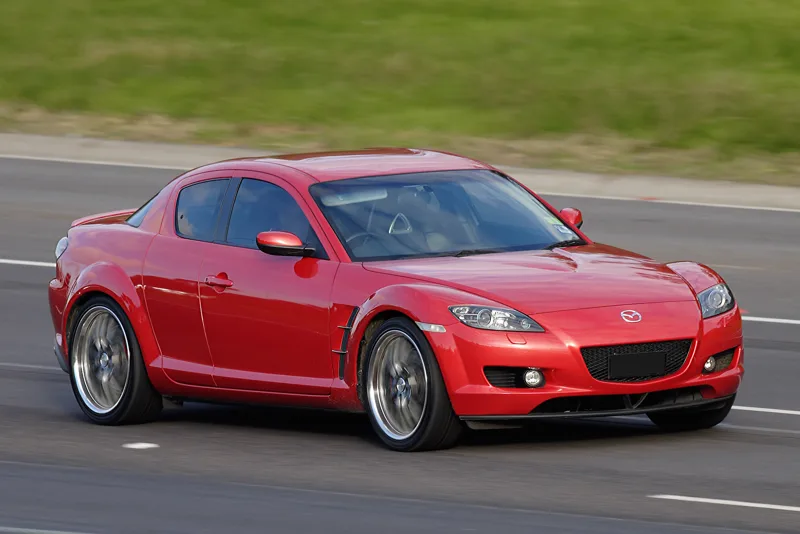
The Automotive Journalists Association of Canada chose the Legacy as its 1990 best new sedan. Top Gear crowned the Legacy Outback its car of the year in 2007, and the fourth generation won the 2003-2004 Japan Car of the Year, beating the Toyota Prius and Mazda RX-8.
What were the Legacy's key specifications?
The Legacy's engines ranged from small SOHC fours in the first generation to a 3.6-litre flat-six in the sixth. Seventh generation models used a 2.5-litre FB25 with 182 HP at 5,800 RPM in base trims, while the Sport and Touring XT used the FA24F turbo. The table below sets out the main figures.
| Item | Detail |
|---|---|
| Production years | 1989 to 2025 |
| Drive | All-wheel drive standard, North America from 1996 |
| First-generation engines | 1.8 and 2.0 SOHC, DOHC and DOHC turbo, 2.2 SOHC |
| Third-generation US engine | 2.5 L EJ251; 3.0 L H6 in Outbacks from 2001 |
| Fourth-generation turbo | 2.5-litre, derived from the WRX STI engine |
| Japanese GT turbo | EJ20X, 276 bhp (280 PS/206 kW) at 6400 rpm |
| Sixth-generation 2.5-litre | FB25 flat-four, 175 PS (129 kW; 173 bhp) |
| Sixth-generation 3.6-litre | EZ36D flat-six, 256 PS (188 kW; 252 bhp) |
| Seventh-generation base | FB25 DOHC, 182 HP at 5,800 RPM |
| Seventh-generation turbo | FA24F, 260 hp at 5,600 rpm; 277 lb-ft from 2,000 to 4,800 rpm |
The table reads as a timeline of Subaru's engineering. Each generation kept the flat layout while changing displacement, injection and turbocharging to suit the market it was built for.
Which North American generations ran when?
The first North American generation ran from 1990 to 1994, and the seventh from 2020 to 2025. In between, the second generation covered 1995 to 1999, the fourth 2005 to 2009 and the sixth 2015 to 2019. Subaru has built every North American Legacy at its Indiana plant since 2004.
What is the Legacy's legacy?
The Legacy was Subaru's flagship from 1989 to 2025, and it offered all-wheel drive as standard in a class where that was rare. Its boxer engines, rally history and Japan Car of the Year win made it a defining car for the brand.
The Outback, which began as a Legacy variant in 1996, went on to become Subaru's top selling model in 2023.
Boxer engines, all-wheel drive and a rally pedigree are the three threads that tie the car to Subaru's identity, and each one shows up in the models that followed.
Frequently asked questions
What did the 1998 speed record measure?
It was a one-kilometre run at 270.532 km/h (168.101 mph) by a Generation III car. It came ahead of the 1993 benchmark, which stood at 249.981 km/h (155.331 mph) for a second-generation model.
Which Legacy had the 276 bhp engine?
The Japanese GT turbo used the EJ20X, rated 276 bhp (280 PS/206 kW) at 6400 rpm. It was offered in the fourth generation alongside the EJ20Y.
Was the Legacy ever sold with a diesel?
Yes. The Subaru EE flat-4 diesel reached the European Union in March 2008, badged as the Legacy 2.0D. It was the first diesel of its kind fitted to a passenger car.
What was the Spec B?
Spec B was a performance Legacy with a Bilstein suspension. The 2006 run was limited to 500 cars, and from 2007 it became a regular production model with a 6-speed manual.
What does DriverFocus do?
DriverFocus is a camera-based distraction system on the 2025 Legacy. It monitors driver attention, issues alerts for fatigue or distraction, and recognises up to five drivers' preferences for seat position, climate and mirrors.