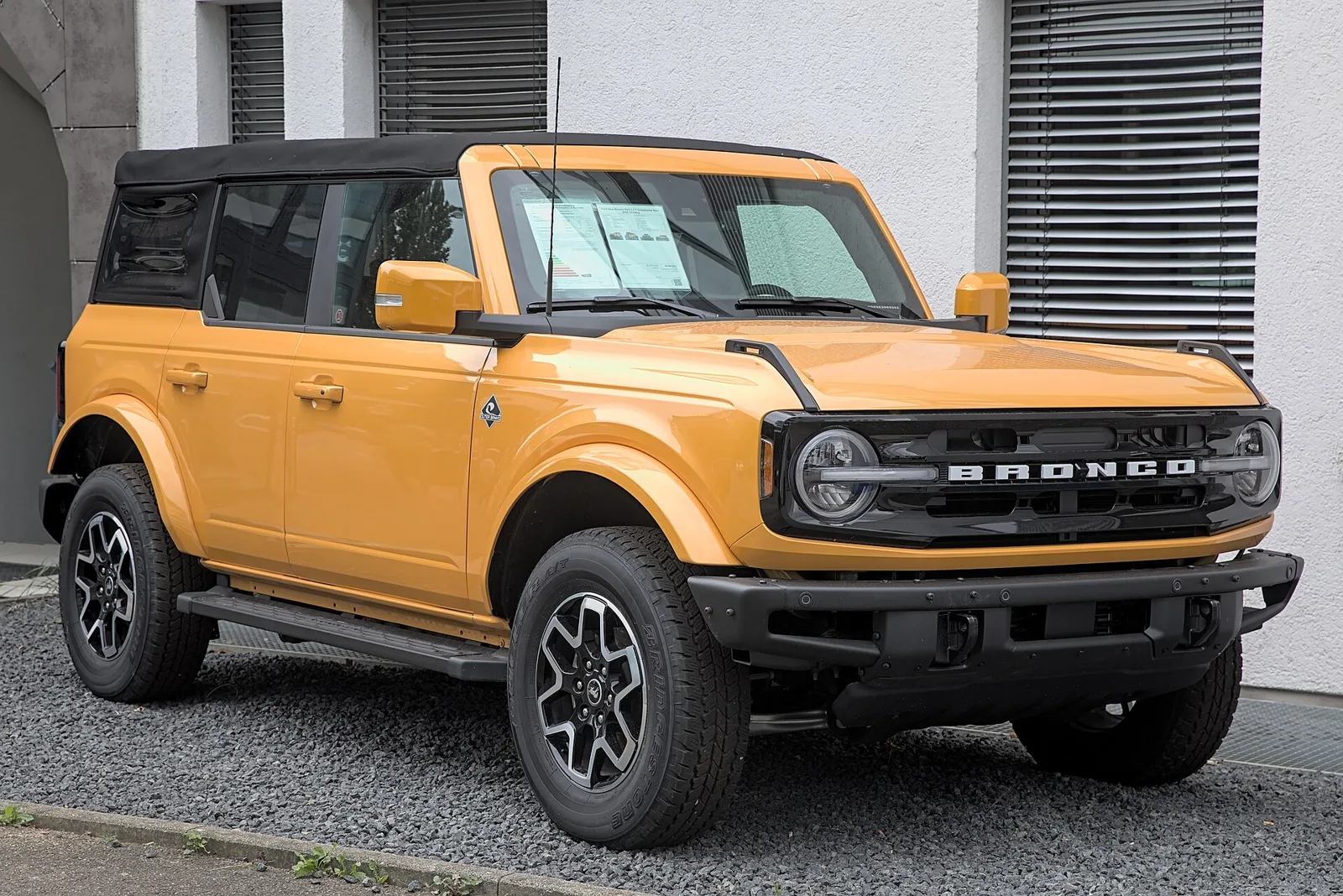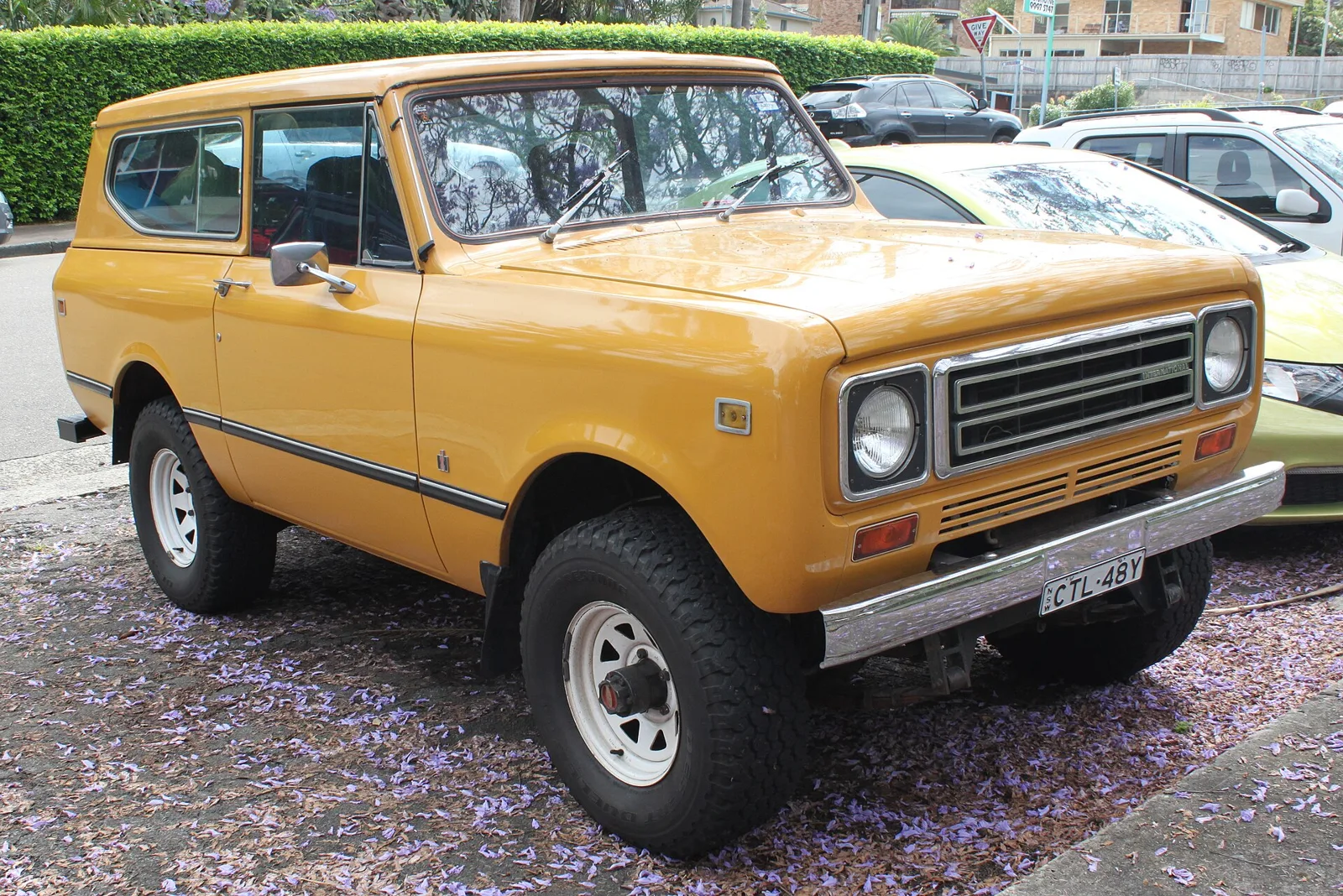
A design brief to replace the horse produced the Scout, a Jeep CJ rival, while the four-door Travelall wagon was already doing the SUV's job.
The International Scout was a two-door off-road vehicle built by International Harvester from 1960 to 1980 to rival the Jeep CJ, with 532,674 made. The Travelall was a truck-based station wagon sold from 1953 to 1975. Both foreshadowed later SUVs and ended as International refocused on commercial trucks.
International Harvester's brief for the Scout, as its chief designer remembered it, came from an engineering manager who said to design something to replace the horse. The market for a four-wheel-drive recreational vehicle was an unknown quantity.
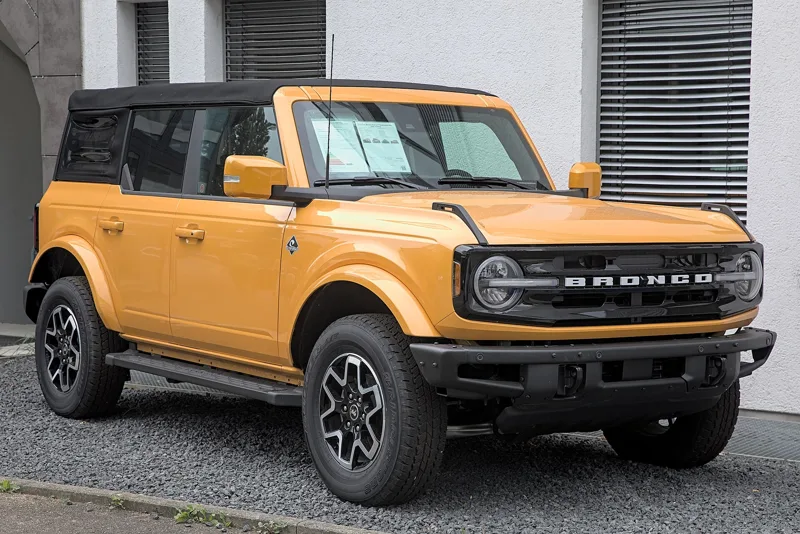
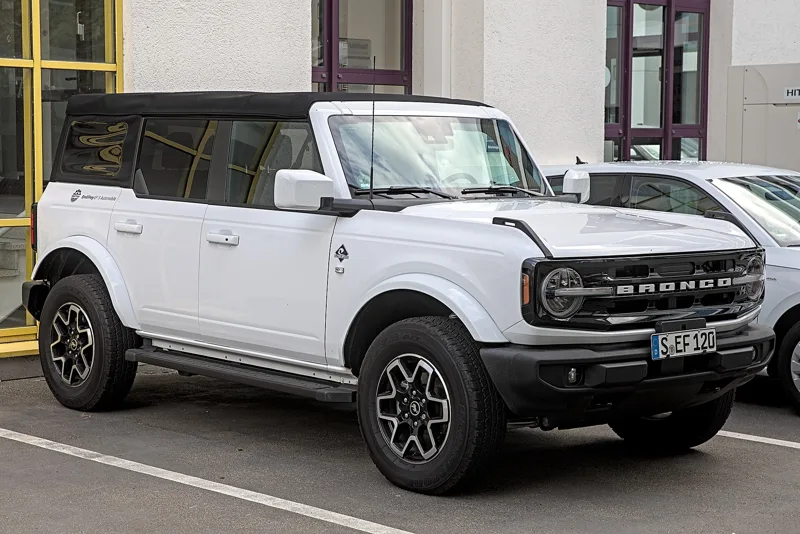
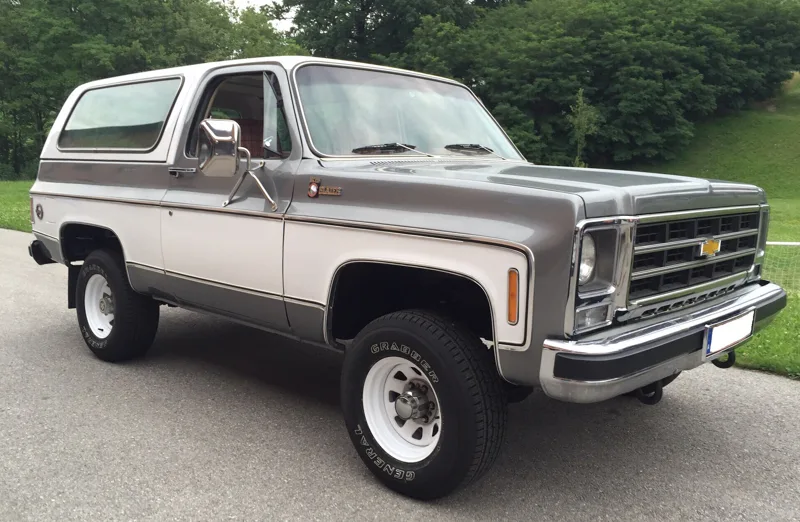
The answer arrived in late 1960 as the Scout 80, aimed squarely at the Jeep CJ, and it grew into a 20-year line that anticipated the Ford Bronco, the Chevrolet Blazer and later the Jeep Cherokee. Alongside it ran the Travelall, a station wagon on a truck chassis sold from 1953, which was a forerunner of the modern people carrier and full-size SUV.
How the International Scout began in 1958
Ted Ornas, the chief designer, later recalled that in early 1958 the team was told to propose a concept for a small, uncertain market. The only comparison was the Willys Jeep, a flat-sided, bare-bones machine descended from the wartime military design. His flat-sided sketches failed to excite the executive committee, and the programme began to die.
One night at his kitchen table, in frustration, he drew a contoured-side body on a scrap of mat board, meant for plastic tooling. A committee member saw it the next morning, and interest revived. Goodyear, which had built a large plastic engineering group during the war, took on the work and a scale model was vacuum formed. By July 1959 its costing was complete and the plastic scheme was cancelled because of the price, so the contoured design was converted to steel. A full-size clay model began in late July 1959 and was approved that November. Ornas called the 24-month development a heroic achievement, since no in-house engine or manufacturing was available when the programme started.
The Scout was assembled at International Harvester's Fort Wayne, Indiana, plant as an open-top two-door truck that could be configured as a station wagon, a half-cab pickup or a soft-top convertible. It went on sale as a 1961 model, although the company introduced the first Scout in 1960 as a commercial utility pickup. By the time production ended, 532,674 Scouts had been built.
Design something to replace the horse.
What was the Scout 80?
The Scout 80 was International's answer to the two-door Jeep CJ 4x4, built from 1960 to 1965. Its standard engine was the International 152 inline-four, and early cars were identifiable by removable sliding side windows, a fold-down windshield, and vacuum wipers mounted along the top of the glass.
The Red Carpet series celebrated the 100,000th Scout, with a red interior, a white exterior and a silver medallion reading "Custom". Only 3,000 were built, and every dealer in the United States received one. Early in the 1960s International also tried a Campermobile, with a raised roof, tented bunks and a rear swinging door. A stripped shell cost $960 installed and a deluxe version with a stand-up galley and a retractable toilet cost $1850. Orders were few, and the cars are now rare.
Scout 800, 800A and 800B
The Scout 800 replaced the 80 in 1965 and brought bucket seats, better instruments and heating, an updated dashboard and optional rear seats. A 196 cu in (3.2 L) four came from 1966, alongside a 232 cu in (3.8 L) six, and from March 1967 a 266 cu in (4.4 L) V8. The base engine, the Comanche 152 four, made 93 hp (69 kW), with a turbocharged 152-T producing 111 hp (83 kW). When the larger 196-4 arrived in August 1966, it delivered the same power as the turbo and could reach 20 mpg. The turbo was dropped in early 1968.
Some cars made in late 1965 are classed as 800s even though they reuse 80 parts, and about 3000 of these "1965 1/2" Scouts are thought to exist. Early 800s used the weaker Dana 27 axle, which was prone to shaft breakage off-road, but a stronger Dana 44 was offered until 1968, and by then four-wheel drive was standard.
The 800A replaced the 800 in November 1968 with a heavier rear axle, a quieter Dana 20 transfer case and a new 304 cu in (5.0 L) V8 on the option list. Its last version, the Aristocrat, wore blue vinyl, a blue and silver paint scheme and a chrome roof rack. The 800B lasted less than eight months, from August 1970 until March 1971, when the Scout II took over. It could be had with the Comanche package, and a Sno-Star version, developed for snowplow use and offered only with the six, appeared in late 1970.
Comfort and style packages multiplied around the basic truck. From early 1966 the Sportop added an upgraded interior and a fibreglass top, also sold as a convertible, with a slanted rear roof and a Continental spare tyre kit. The Champagne Series brought a headliner, door panels and carpet to the 80 and later the 800. The 800B's Comanche package added special paint and decals, chrome trim, sliding Traveltop-style windows, a roof rack and chrome wheels.
International Scout models at a glance
| Model | Years | Notes |
|---|---|---|
| Scout 80 | 1960 to 1965 | Original standard model |
| Scout 800 | 1966 to 1971 | Same design as the 80 with upgrades such as electric wipers and newer engines |
| Scout 810 | 1971 | Badging found on some early Scout IIs |
| Scout II | 1971 to 1980 | Removable soft or hard top, 100-inch wheelbase |
| Scout II Terra | 1976 to 1980 | Light pickup, 118-inch wheelbase |
| Scout II Traveler | 1976 to 1980 | Removable fibreglass hardtop, optional third row, 118-inch wheelbase |
| Super Scout II | 1977 to 1979 | Fabric doors, roll bar and soft top |
Scout II, the model that carried the Scout to 1980
A replacement concept started in 1964 and won approval for production in mid-1965, and a version nearly identical to the final Scout II was shown to management in December 1967. Production began in April 1971, and the basic sheet metal did not change until the last Scout was built on 21 October 1980.
The easiest way to tell the years apart is the grille. The 1971 and 1972 cars had three horizontal bars and chrome rings around the headlights, the 1973 car had 14 vertical bars, and 1976 brought a chrome centre grille of 15 horizontal bars in three sections, used for that year only. The 1980 car had a single-piece grille in ABS plastic, in black or silver. Owners could choose a full metal Traveltop, the half-cab Roadster top, or a soft top.
Emissions rules shaped one detail. For 1976 International raised the maximum gross vehicle weight rating of every Scout to 6,200 lb (2,800 kg), a move that let the company avoid fitting catalytic converters, which did not appear on Scouts until the 1979 model year. The Terra, from 1976, was a half-cab pickup with a lift-off hardtop, and counts as one of the first mid-size pickup trucks.
For anyone checking a car, International left a paper trail. Each vehicle carried a line ticket listing its engine, gearbox, driveline, paint codes and options. On 1971 to 1976 Scout IIs it sits under the hood on the cowl cover panel, on 1977 to 1980 cars it is inside the glove box door, and on 1969 to 1975 pickups and Travelalls it is behind the glove box. Lost copies can be ordered from Scout parts specialists.
International Travelall, the wagon built on a truck
The Travelall was an International Harvester station wagon made from 1953 to 1975, built on a truck chassis because International did not make passenger cars. It competed with the Chevrolet Suburban for its whole life and was the first vehicle in its segment to offer four passenger doors.
Before 1953 the company's chassis carried wood wagon bodies fitted by outside firms, and after the war K-series panel vans with added windows and rear seats served as airport people movers. The first Travelall came with the R series in 1953, as the R-110 on a 115-inch wheelbase, powered by a 100 hp (75 kW) 220 cu in "Silver Diamond" six. It was a windowed panel van with two or three rear seats, and passengers reached the back by flipping up the front passenger seat. Four-wheel drive became a factory option in 1956.
The A series of 1958 marked International's 50 years of truck production and added a rear passenger-side door, nine years before the Suburban got one. The fuel filler position ruled out one on the driver's side. Engines now made 113 to 154 hp (84 to 115 kW). In 1959 the B series brought power steering, power brakes and optional V8s, and the C series of April 1961 introduced a new frame, independent front suspension with torsion bars and a 119-inch wheelbase, after the front axle moved four inches forward. A fourth door followed that year, two years before the Jeep Wagoneer and 12 years before the Suburban.
The names followed the pickups. The light trucks took D-Series naming for 1965, the Travelall became the 1010, 1110 and 1210 for 1971, and in 1974 it switched again to the 100 and 200 series. That year it also adopted the pickups' chassis changes, with coil-sprung independent front suspension on two-wheel-drive models and front leaf springs on four-wheel-drive ones in place of the torsion bars introduced in 1961. In 1975 the 100 became the 150, although its axle weight ratings were slightly reduced.
From the same body came the Travelette of 1961, the first factory-produced four-door crew-cab pickup. The fourth generation of 1969 split the Travelall into its own model line, above the Scout and sized between the Wagoneer and the Suburban. It came in 1000, 1100 and 1200 payload series, with up to three rows of seats and, on some cars, exterior woodgrain trim.
Power came from a standard AMC-supplied 232 cu in six on the 1000 in 1969 to 1971, with 304, 345 and 392 cu in V8s as options, and in 1973 and 1974 an AMC 401 V8 was offered because of a shortage of International V8s. In late 1971 the Travelall offered the Bendix-developed Adaptive Braking System, one of the first anti-lock systems on any vehicle. It was expensive, and few owners ordered it.
The Wagonmaster of 1973 and 1974 removed the roof and windows behind the cab to form a 5-foot pickup bed, intended for owners who towed fifth-wheel RV trailers. With the hitch behind the rear axle and a wheelbase shared with the Travelall, it handled poorly, and estimates of the number made run from 500 to under 2000. The Chevrolet Avalanche of the 2000s later revisited the idea.
How the Travelall ended in 1975 and the Scout in 1980
Travelall sales began to collapse in 1974 after the oil crisis of 1973. The Suburban gained a fourth door in 1973, so it competed directly with a Travelall that managed 10 to 12 mpg on average, yet the International kept high owner loyalty. In May 1975 International Harvester discontinued its entire Light Line, including the Travelall, and the Scout II remained the only consumer vehicle until it ended in 1980. Since then International has concentrated on medium-duty and heavy-duty trucks, and it has not developed a light truck or SUV for North America again.
Travelalls were also built with raised roofs and longer wheelbases for school buses, ambulances and airport limousines, many converted by the Springfield Equipment Company and sold through International.