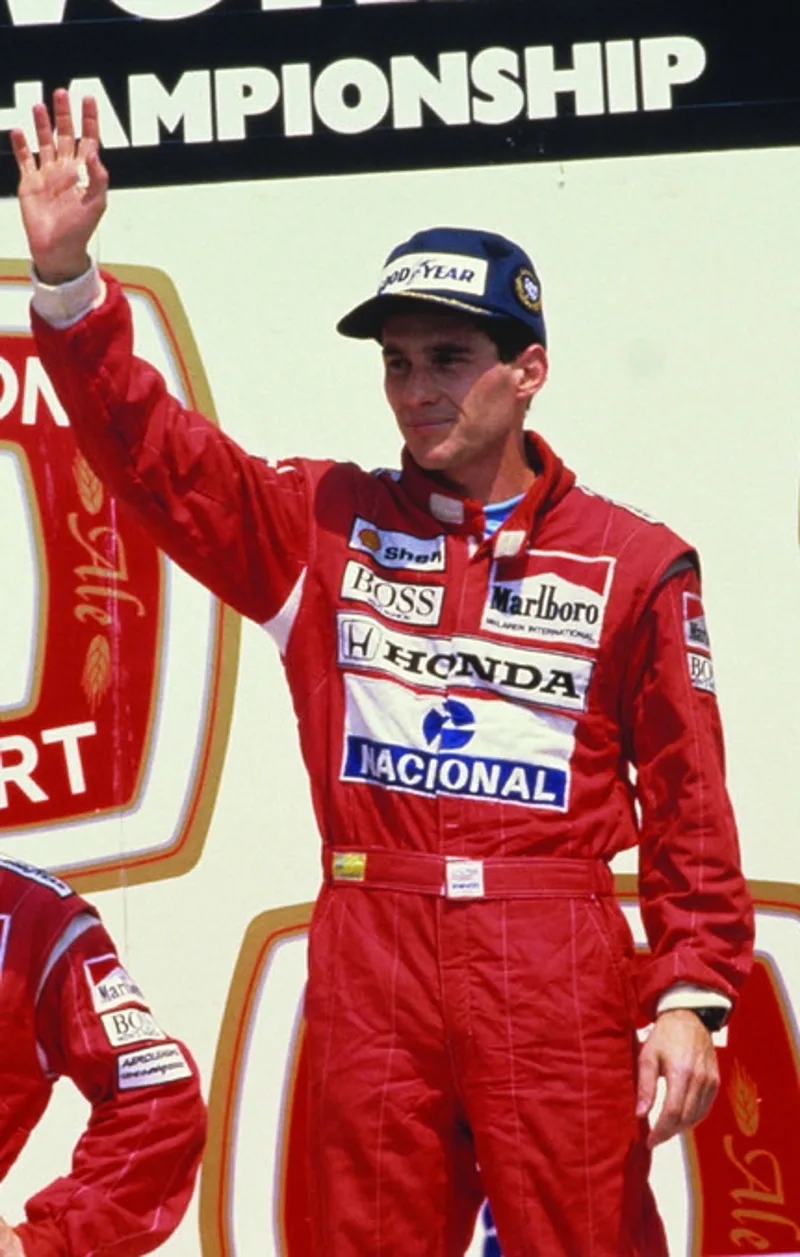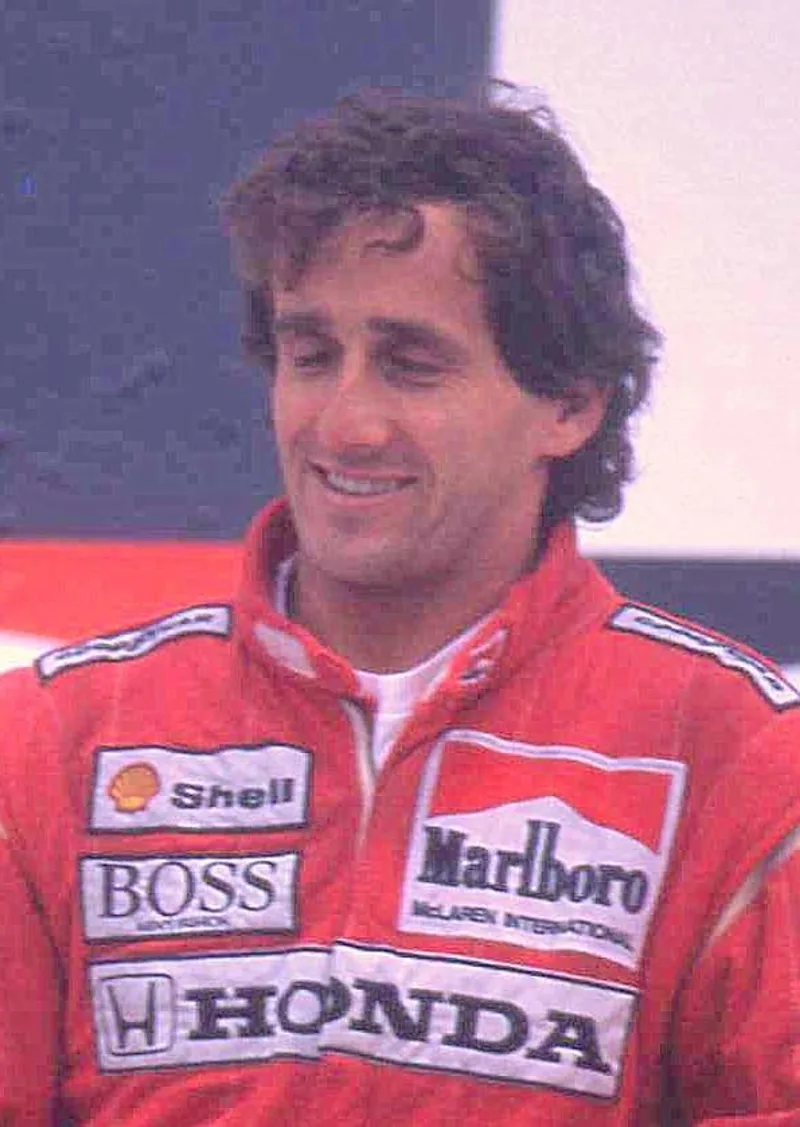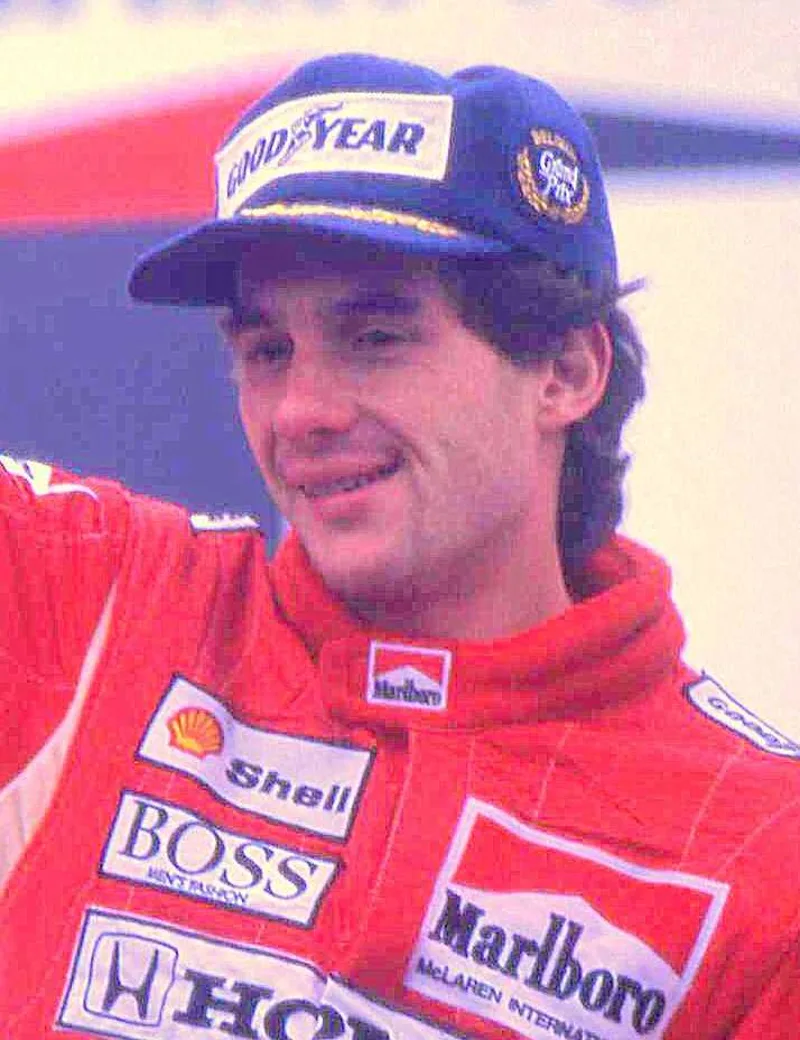
A Suzuka win inherited from Senna, a Le Mans victory for BMW, and the last Italian to hold a regular Ferrari seat.
Capelli, Nannini, Martini and Morbidelli were Italian Formula One drivers between 1984 and 1997. Nannini won the 1989 Japanese Grand Prix, Capelli took three podiums and drove for Ferrari, Martini won Le Mans for BMW in 1999 and Morbidelli scored one podium in 70 Grands Prix.
Ivan Capelli signed for Ferrari in 1992 and, as of 2025, he is still the last Italian to hold a regular drive with the team. His season ended with a sacking before the finish. His story is one of four from the same corner of Formula One. Nannini, Martini and Morbidelli also raced as Italians in the grand prix paddock between the mid-1980s and the mid-1990s, and the four careers keep crossing.
Who were Capelli, Nannini, Martini and Morbidelli?
Ivan Capelli, Alessandro Nannini, Pierluigi Martini and Gianni Morbidelli were Italian Formula One drivers of the late 1980s and 1990s. Between them they took one grand prix win, Nannini's at Suzuka in 1989, and, away from F1, a Le Mans victory for Martini in 1999.
Capelli made 98 starts between 1985 and 1993. Nannini raced from 1986 to 1990. Martini made 124 starts in two spells, 1984 to 1985 and 1988 to 1995. Morbidelli started 70 races from 1990. All four went on to long careers in touring cars or sportscars.
Capelli is still the last Italian to hold a regular Ferrari drive, as of 2025.
Who is Ivan Capelli?
Ivan Franco Capelli was born in Milan on 24 May 1963 and began karting at 15. After four years he moved up to Italian Formula 3 and in 1983 became champion with nine victories. He moved to the Coloni team and the European Formula 3 Championship, and won that in 1984. A Genoa Racing March-Cosworth took him into Formula 3000 in 1985, and he won a race.
His Formula One debut came the same year, in a Tyrrell at the European Grand Prix. At the final round in Australia he finished fourth, though as a guest driver he could not score points. No full-time seat followed for 1986, so he started a handful of races for AGS, contested Formula 3000 again and raced a BMW in the European Touring Car Championship. He took the 1986 International Formula 3000 title, with Martini as runner-up.
What did Capelli achieve at March and Leyton House?
Capelli became a full-time Formula One driver with March in 1987. The team was led by Cesare Gariboldi of Genoa Racing and ran a new chassis from Robin Herd with a normally aspirated Cosworth V8. Money was tight: at the Belgian Grand Prix the car ran a detuned 3.3 litre sports car engine rather than the full Formula One unit. Capelli also kept racing BMW touring cars for the Schnitzer team, which had works status. He scored March's first point of the year by finishing sixth at Monaco.
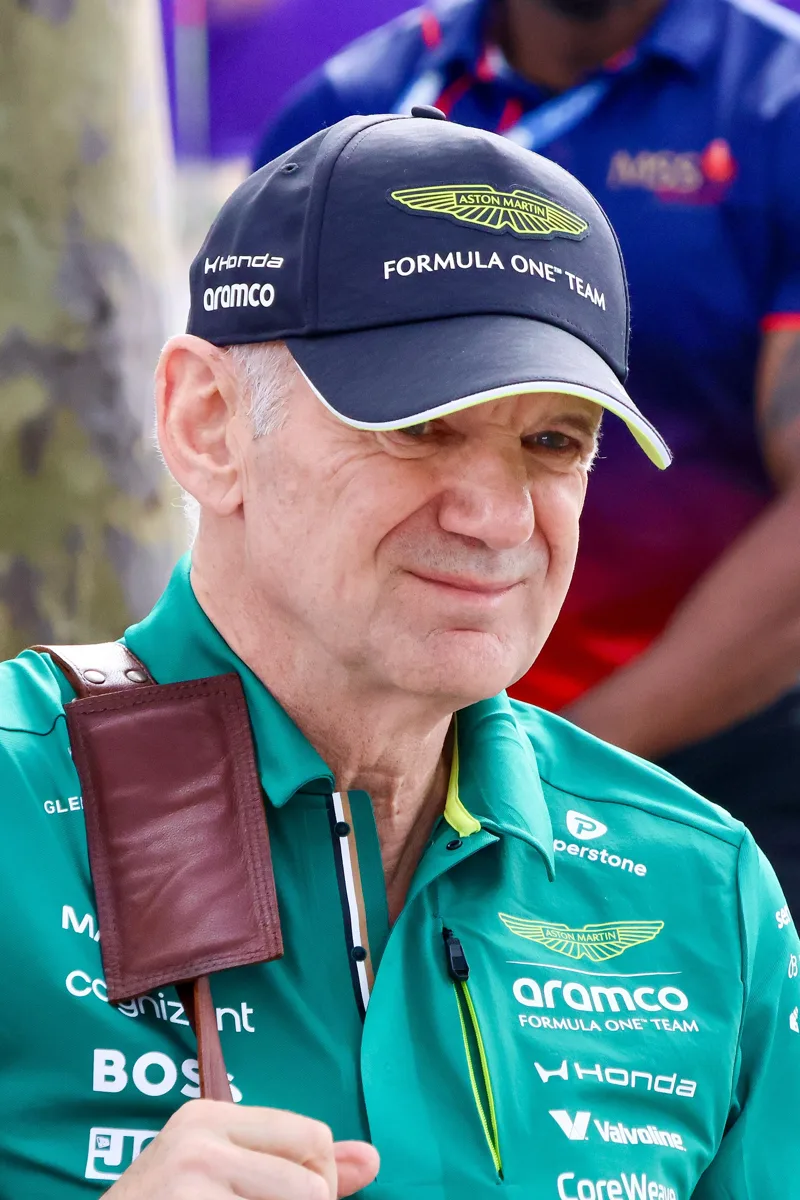
In 1988 he drove a March designed by Adrian Newey, later a multiple constructors' champion as a designer with Williams, McLaren and Red Bull, and powered by a Judd V8. With the Brazilian Mauricio Gugelmin as teammate, the March 881 was the surprise of the year. Capelli took his first podium at Spa-Francorchamps, a third behind Ayrton Senna and Alain Prost, though the result was settled only at the end of the year, once the two Benettons had been thrown out over fuel irregularities. His best finish was second at the Portuguese Grand Prix, behind Prost.
At Suzuka that year he became the first driver without a turbocharged engine since 1983 to lead a World Championship Grand Prix. On lap 16 Prost missed a gear leaving the final chicane and Capelli got ahead before the start and finish line, so he officially led the lap. Prost passed him before turn one, using Honda power, and the Judd V8 failed electrically three laps later.
The momentum faded. March had financial problems, and the sponsor Leyton House took a controlling interest. The 1989 car disappointed, and Capelli finished only once all year, 12th in Belgium. Even so, he was one of just six drivers to start all 16 races, along with Senna, Prost, Patrese, Boutsen and Nannini. Gariboldi died in a car crash during the season.
The 1990 car, prefixed CG in Gariboldi's honour, had excellent aerodynamics and the sole use of an updated Judd V8, but it could not cope with bumps. At bumpy Mexico City neither driver could qualify. At Paul Ricard, the next race, form turned round completely. Capelli and Gugelmin ran 1-2 for much of the race. Gugelmin retired, and Prost's Ferrari passed Capelli with three laps remaining, leaving him second.
Results in 1991 were sparse, though Capelli often qualified and raced well. Then the Leyton House owner, Akira Akagi, was arrested over the Fuji Bank fraud, leaving the team in a precarious state. Capelli had already signed for Ferrari for 1992, so he stood aside voluntarily and let the pay driver Karl Wendlinger complete the season, paying to attend the races he missed.
Why did Capelli's Ferrari spell end early?
In 1992 Capelli became the first Italian with a regular Ferrari drive since Michele Alboreto in 1988. Gianni Morbidelli had made one start for the team the season before. Since then, up to 2025, Italians have only stood in: Nicola Larini in 1994 and Luca Badoer and Giancarlo Fisichella in 2009.
The new F92A was not competitive. Capelli, who liked the convivial atmosphere of a family-type team, struggled with the bureaucracy of early 1990s Ferrari. His motivation fell, the team's confidence in him went the same way and teammate Jean Alesi took charge. Capelli was sacked before the season ended. No Ferrari driver went a whole year without a podium again until Felipe Massa in 2011.
Capelli took a Jordan seat for 1993 alongside the rookie Rubens Barrichello, with Ian Phillips, the team manager, still believing in him. It did not work. He missed the cut at the second race, in Brazil, left by mutual consent, was replaced by Boutsen and never raced in Formula One again. A Nissan Primera in the German Super Tourenwagen Cup followed from 1994 to 1996. He kept racing touring cars until 2017 and won in the Italian GT Championship and the Trofeo Maserati. For Rai 1 he commented on Formula One from 1998 to 2017.
Who is Alessandro Nannini?
Alessandro Nannini, known as Sandro, was born in Siena on 7 July 1959. He is the younger brother of the musician Gianna Nannini. He began in a Lancia Stratos at national rallies, then won the Formula Italia championship in 1981 in his first year. He drove for Minardi in Formula Two from 1982 to 1984, standing out for his speed in a poor car, and was seventh overall in 1983.
Lancia then signed him for the World Sportscar Championship. In the fast but fragile LC2 he set fastest lap at Le Mans in 1984 and finished eighth with Bob Wollek, and later that year he won the 1000 km of Kyalami with Patrese.
For 1985 Giancarlo Minardi wanted him for his new Formula One car, but the governing body FISA denied Nannini a Super Licence, controversially, and his former F2 teammate Pierluigi Martini took the drive. In 1986 he was granted his licence and joined Minardi, where he stayed until 1987. The Motori Moderni V6 made the car unreliable, and he was classified only four times from 30 starts, but he outperformed the more experienced Andrea de Cesaris. In his spare time in 1987 he won the Mille Miglia with the veteran Giorgio Marin.
How did Nannini win the 1989 Japanese Grand Prix?
Nannini joined Benetton in 1988 as Boutsen's teammate. His first point came in only his second race, and with two third places he ended the year tenth. For 1989 Boutsen left for Williams, and Nannini became team leader alongside Johnny Herbert.
At Suzuka he was third behind the McLarens of Senna and Prost when the two collided. Prost retired. Senna rejoined after a push start, pitted for a new front wing and chased Nannini. Senna passed him and took the flag, but was then disqualified for missing the chicane after the collision, and the disqualification gave Nannini his only Formula One victory. He ended the year second in torrential rain at Adelaide, which lifted him to sixth in the championship.
In 1990 he was joined by the three-time champion Nelson Piquet and returned to being number two, but largely matched the Brazilian's pace. At Hockenheim he led by deciding against a tyre stop, his Ford V8 holding off Senna's more powerful McLaren-Honda V10 for 16 laps before fading grip dropped him to second. He finished third in Spain.
What happened to Nannini after the helicopter crash?
On 12 October 1990, the week after Spain, a helicopter crashed at Nannini's vineyard in Siena when the ground beneath it gave way. His right forearm was severed. Microsurgery healed the injury but it ended his Formula One career, which stood at one win, two fastest laps and nine podiums. Benetton had reconfirmed him for 1991, Ferrari had long been interested and was considering him as a replacement for Nigel Mansell, and McLaren boss Ron Dennis had been watching him too.
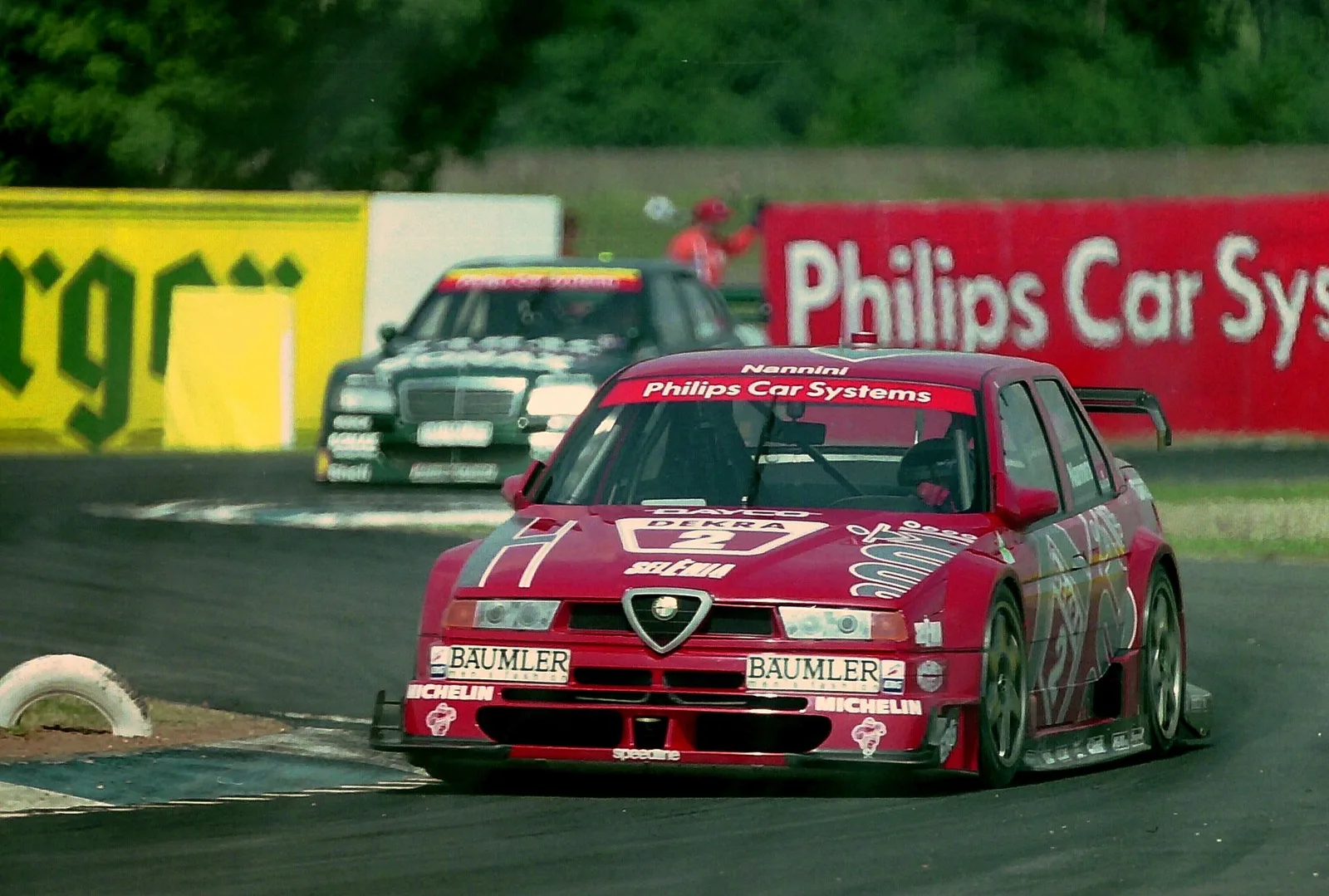
Ferrari offered him a test at Fiorano in 1992, where he completed 38 laps in Alesi's F92A, which had a specially modified steering wheel. In 1996 Flavio Briatore kept a promise of a test in a Benetton B196 at Estoril. With only partial use of his right hand, Nannini built a touring car career with Alfa Romeo: fourth in the 1994 DTM and third in the 1996 International Touring Car Championship. In 1997 he raced a Mercedes in the FIA GT Championship, finished sixth and won a race at Suzuka, and retired. Today he runs a chain of upmarket cafes under his own name, some as distant as Indonesia, and in 2007 he came back to the track for the Grand Prix Masters.
Who is Pierluigi Martini?
Pierluigi Martini was born in Lugo, Emilia-Romagna, on 23 April 1961. His uncle Giancarlo Martini raced in the 1970s, and entered some non-championship events in a Ferrari 312T run by Scuderia Everest, which belonged to Giancarlo Minardi. His younger brother Oliver also races. In 1983 Martini won four races in Formula 3 with Luigi Pavesi's team and took both the Italian and European titles.
He made his Formula One debut on 9 September 1984 for Toleman, taking the place of the suspended Senna at the Italian Grand Prix. Apart from that outing and a season with Scuderia Italia in 1992, his whole Formula One career was spent with Minardi. He drove for the team when it began in 1985, gave it its first point at Detroit in 1988 and, at the 1990 United States Grand Prix, its only front-row start. Rain on Saturday meant the grid was set by Friday times, when Pirelli's soft qualifying tyres caught Goodyear off guard.
Fourth place at the 1991 San Marino and Portuguese Grands Prix was his best finish. Without a drive for 1993, he was recalled mid-season in place of Fabrizio Barbazza and outpaced his young teammate Christian Fittipaldi. In total he scored 18 championship points.
Why was Martini known for ignoring blue flags?
Martini had a reputation for not giving way. At the 1991 Monaco Grand Prix he held up Emanuele Pirro, Stefano Modena and Riccardo Patrese for several laps even though he was near the back of the field. At the 1995 Canadian Grand Prix he blocked Gerhard Berger's Ferrari as the Austrian tried to lap him. Both times he was called in for a ten-second stop-go penalty. Asked about it at the 1995 San Marino Grand Prix, where he had held up the winner Damon Hill, Martini argued that his racing lines were clean and that the drivers complaining should explain why they could not pass him with cars that had far more power.
How did Martini win Le Mans in 1999?
Martini had driven a Lancia LC2 at Le Mans in 1984, before his Formula One career got going. After leaving F1 he built a successful sportscar career. He ran the 1996 24 Hours in a Porsche run by Joest Racing, took fourth in 1997 in a Porsche 911 GT1, a car he also ran in the FIA GT Championship that year, and in 1998 joined BMW's brand-new Le Mans programme.
In 1999 Martini, Yannick Dalmas and Joachim Winkelhock won the 24 Hours of Le Mans for BMW. The team had to fight works Toyota and Mercedes cars and won by a lap over the runner-up Toyota. In 2006 Martini returned to racing in the Grand Prix Masters for retired Formula One drivers.
Who is Gianni Morbidelli?
Gianni Morbidelli was born in Pesaro on 13 January 1968. His father, Giancarlo Morbidelli, founded the Morbidelli motorcycle company, which had success in Grand Prix motorcycle racing. He started karting in 1980, won the EUR-AM championship in 1986 and moved up to Italian Formula 3. In 1989 he was Italian Formula 3 and Formula 3 European Cup champion and won two races in Italian touring cars.
His Formula One debut came on 11 March 1990, when he stood in for Emanuele Pirro at Scuderia Italia for the first two races. He then concentrated on Formula 3000, winning a round and finishing fifth, and tested for Ferrari. He returned for the final two races of the 1990 season with Minardi and stayed through 1992. In 1991, after Prost was fired, Ferrari drafted him in for the Australian Grand Prix, where a rain-shortened race gave him half a point for sixth, his first.
What did Morbidelli win outside Formula One?
A lack of sponsorship took Morbidelli out of Minardi, and in 1993 he drove an Alfa Romeo 155 to two Italian touring car wins for Alfa Corse. In 1994 he joined Footwork Arrows. Over two years he scored in four races, including his only podium, third in the high-attrition 1995 Australian Grand Prix, and his eight points made him the team's most successful driver. He won two races in the Italian Superturismo Championship in 1995 and tested for Jordan in 1996. In 1997 he replaced Nicola Larini at Sauber for several mid-season races, scored no points and, after two testing injuries, retired from Formula One. He finished with 70 Grands Prix, one podium and 8.5 points.
The touring car years were long. In 1998 he raced a Volvo in the British Touring Car Championship, less competitively than his teammate Rickard Rydell, who won the title. A BMW 320i took him fifth in the 2001 European Touring Car Championship, including victory in the final race at Estoril. In 2006 he took two second places in the World Touring Car Championship in an Alfa Romeo 156. In 2007 he won two ADAC GT Masters races and began three straight Italian Superstars Championship titles, with the Audi RS4 and the BMW M3. The 2008-09 Speedcar Series followed, after a close fight with the defending champion Johnny Herbert, whom he beat by one place in the last round. In 2014 he returned to the WTCC in a Chevrolet Cruze, and he has since competed in rallycross and the TCR International Series.
How do the four drivers compare?
| Driver | Born | Formula One years | Best Formula One result | Outside F1 |
|---|---|---|---|---|
| Ivan Capelli | 1963 | 1985 to 1993 | Second, Portugal 1988 and France 1990 | Formula 3000 champion 1986; Rai 1 commentator |
| Alessandro Nannini | 1959 | 1986 to 1990 | Winner, Japan 1989 | Mille Miglia winner 1987; FIA GT race winner 1997 |
| Pierluigi Martini | 1961 | 1984 to 1985, 1988 to 1995 | Fourth, San Marino and Portugal 1991 | Le Mans winner 1999 |
| Gianni Morbidelli | 1968 | 1990 to 1997 | Third, Australia 1995 | Superstars and Speedcar champion |
How did their careers cross?
Nannini lost the 1985 Minardi seat to Martini through a licence dispute, and Martini finished behind Capelli in the 1986 Formula 3000 championship. Morbidelli's single Ferrari start came the year before Capelli's full season, and Nannini and Capelli were two of the six drivers who started every race of 1989.
Two of them also ended up in the Grand Prix Masters series for retired drivers: Martini in 2006 and Nannini in 2007, alongside his former Benetton teammate Herbert.