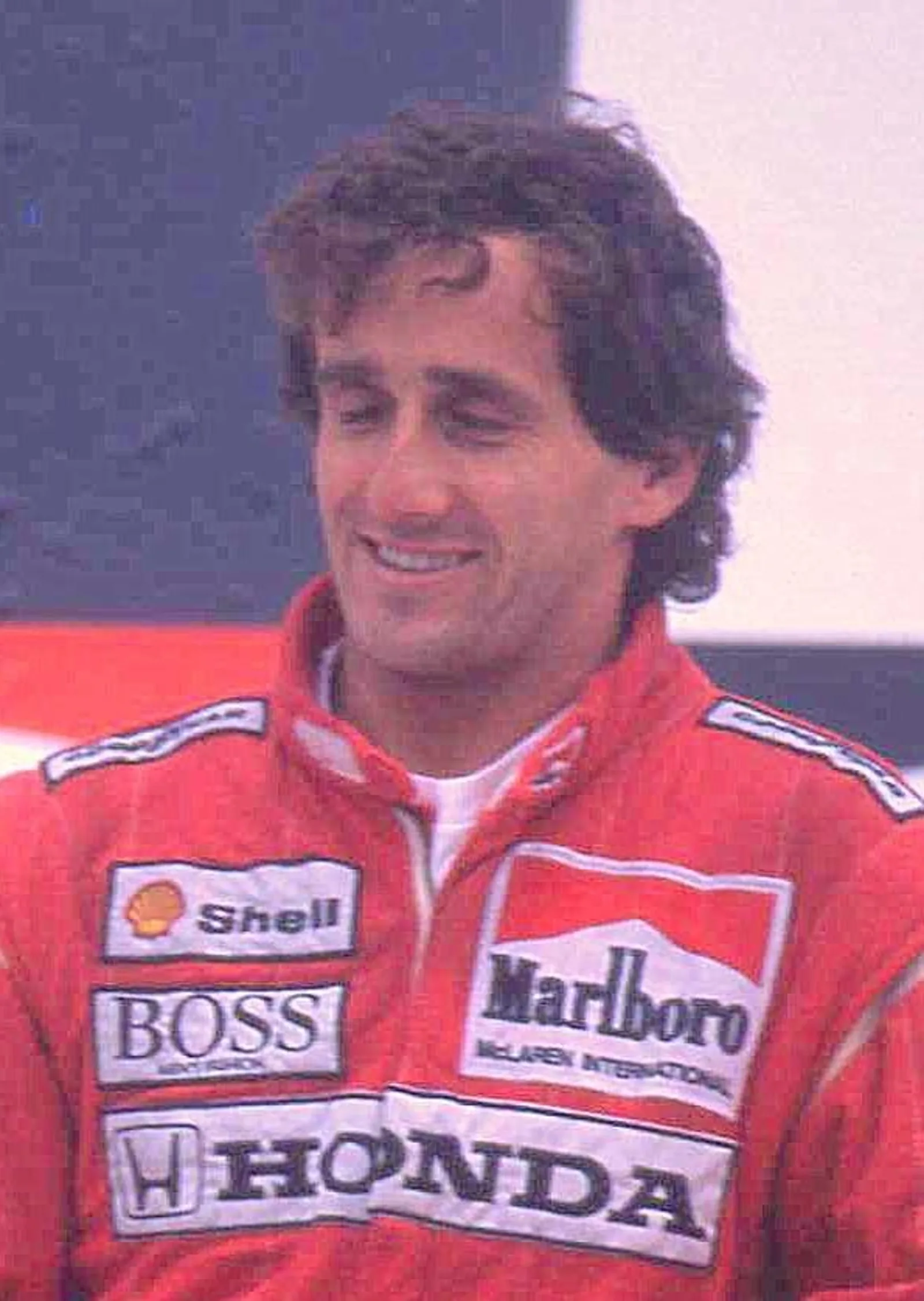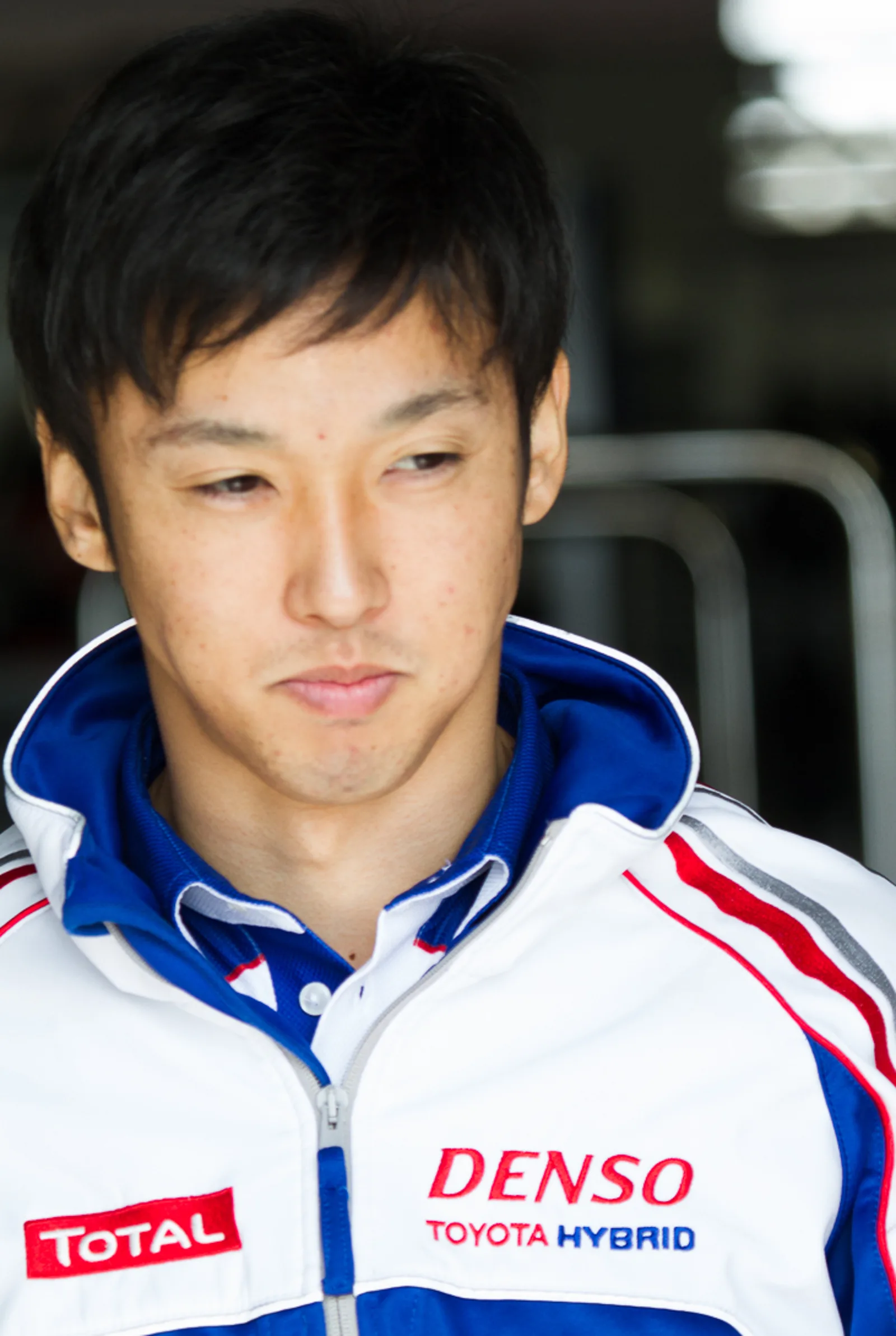
The first Asian podium, a Honda-backed team that lasted three seasons and a son who won Le Mans three times for Toyota.
Satoru Nakajima became Japan's first full-time Formula One driver in 1987. Aguri Suzuki took the first Asian podium in 1990, Ukyo Katayama started 97 Grands Prix, and Satoru's son Kazuki drove for Williams before winning Le Mans three times for Toyota.
At Suzuka in 1990, Aguri Suzuki finished third in the Japanese Grand Prix and became the first Asian driver to take a Formula One podium. It was a home result, in a Larrousse. Four men, Satoru Nakajima, Aguri Suzuki, Ukyo Katayama and Satoru's son Kazuki Nakajima, carried Japan's flag in Formula One across more than two decades, and the way they raced, and what they did afterwards, is a surprisingly varied story.
Who were Satoru Nakajima, Aguri Suzuki, Ukyo Katayama and Kazuki Nakajima?
Satoru Nakajima, Aguri Suzuki, Ukyo Katayama and Kazuki Nakajima were Japanese Formula One drivers. Satoru raced from 1987 to 1991 and was the first Japanese driver to compete full time. Suzuki raced from 1988 to 1995, Katayama from 1992 to 1997 and Kazuki, Satoru's son, for Williams from 2007 to 2009.
Satoru started 80 Grands Prix, Suzuki 88 and Katayama 97, and Kazuki spent three seasons at Williams. Beyond F1 they went on to team ownership, Le Mans podiums, a world championship and the Dakar Rally. Their backgrounds are as different as a farm outside Okazaki and a family go-cart shop in Tokyo.
Aguri Suzuki's third place at Suzuka in 1990 was the first Asian podium in Formula One.
Who is Satoru Nakajima?
Satoru Nakajima was born on 23 February 1953 to a farming family just outside Okazaki, Aichi. He learned to drive in his early teens in the family garden, with his older brother coaching him while they avoided their father. After school he started racing, won the Suzuka Circuit series as a rookie in 1973, and in 1978 he won his first Japanese Formula Two race and in 1981 the championship, starting a run of dominance: five titles between 1981 and 1986, all with a Honda V6, and a record at the time. In all he took 21 victories across 10 seasons.
In 1984 he founded Nakajima Racing to run March chassis privately in Japanese Formula Two, and the team won three consecutive titles until 1986. Between 1999 and 2009 it won four Formula Nippon Teams' Championship titles.
How did Satoru Nakajima reach Formula One?
Honda wanted him at Williams for 1986 in place of Nigel Mansell, but Frank Williams refused to drop a driver who had won his first two races late in 1985. A year later Lotus needed a new engine partner as Renault was leaving, and agreed to take Nakajima as part of a Honda deal, replacing Johnny Dumfries beside Ayrton Senna.
He made his debut at the Brazilian Grand Prix on 12 April 1987, aged 34, one of the oldest debutants of the modern era and the first Japanese driver to race full time. He finished sixth, and scored a point, in his second race at San Marino. His career best was fourth at the British Grand Prix that year. Senna outclassed him in the first season.
What were Satoru Nakajima's best races?
The 1988 season was miserable for him and for Lotus. He scored a single point, a sixth place in the opening race in Brazil, and failed to qualify the Lotus 100T at Monaco and Detroit. Between 1983 and 1988 those were the only times a Honda V6 turbo failed to qualify. Then came the Japanese Grand Prix at Suzuka. Half an hour before Friday practice he was told that his mother had died that morning. In qualifying he equalled Piquet's time to the thousandth of a second, and the two lined up fifth and sixth, with Piquet ahead only because he had set his time earlier. On Friday he had actually been faster than the triple world champion.
Lotus re-signed him for 1989 even after Honda said it would stop supplying the team. The season was up and down in a Judd V8 Lotus 101, and at the Belgian Grand Prix neither Lotus qualified, the first time that had happened in the team's 30-year history. Yet at the rain-soaked Australian Grand Prix he finished fourth and set the fastest lap, after spinning to dead last on lap one. He finished 4.648 seconds behind Riccardo Patrese in third, and even critics like the BBC commentator James Hunt praised him.
In 1990 he joined Tyrrell, and scored points in the United States, Italy and Japan, but his teammate Jean Alesi scored 13 points to his three. In 1991, with Honda power again, Nakajima scored two points, from fifth place in the opening race at Phoenix, against ten for Stefano Modena. He left to work on Honda's own works project. He drove the Honda RC100 when it was unveiled in February 1993, and gave the RC101B its first public test at Suzuka in January 1994, but Honda chose to put its effort into CART instead.
He still lives in his family home near Okazaki.
Who is Aguri Suzuki?
Aguri Suzuki was born in Tokyo on 8 September 1960 and named after a character in a comic strip. His father, Masashi Suzuki, was of mixed Japanese and Martinique ancestry, had worked as an aircraft technician for Honda Airways, and opened a go-cart shop in 1973. Aguri began in karts in 1972, aged 12, and was Japanese kart champion in 1978 and 1981. He was second in the All-Japan F3 series in 1983, won the Japanese touring car title with Nissan in 1986, and in 1988 took the Japanese F3000 title in a March-Yamaha with three victories.
How did Aguri Suzuki become the first Asian podium finisher?
Suzuki's Formula One debut was at his home race, on 30 October 1988, standing in for the sick Yannick Dalmas at Larrousse-Lola. Zakspeed, running Yamaha engines, hired him for 1989, but he failed to pre-qualify at any of the 16 races. Back at Larrousse for 1990 and 1991, he finished sixth three times, then third at Suzuka, the first podium for an Asian driver in Formula One, setting the second-fastest lap as well.
At Footwork in 1992 and 1993 his teammates Michele Alboreto and then Derek Warwick usually outperformed him. In 1995 he shared a Ligier with Martin Brundle and scored one point, and Mika Salo criticised him after the two collided in Buenos Aires. A massive practice crash before the Japanese Grand Prix caused a neck injury that kept him out of the race, and he announced his retirement immediately. He had 88 starts and eight championship points. When he stopped, he was the second most successful Japanese driver in points behind Satoru Nakajima, though Takuma Sato and Kamui Kobayashi have since overtaken both.
What did Suzuki do after Formula One?
Suzuki finished third overall at Le Mans in 1998, and won a race in the All-Japan GT Championship. With the sponsor Autobacs he formed Autobacs Racing Team Aguri, known as ARTA, in 1997. It has run mostly in Super GT, won titles in both the GT500 and GT300 classes, took the GT300 title in 2002 and added the DTM a season later.
The Formula One team came next. Backed by Honda, Super Aguri was put together in four and a half months after Suzuki's announcement on 1 November 2005. The FIA first rejected its entry over missing financial guarantees, and acceptance was confirmed only on 26 January 2006. The debut came at the Bahrain Grand Prix on 12 March 2006. Takuma Sato's two top-eight finishes in 2007 brought the first points and ninth place in the constructors' standings. On 6 May 2008, after the first four races of the season, the team withdrew because of financial problems. Team Aguri followed in Formula E, from 2014 to 2016.
Who is Ukyo Katayama?
Ukyo Katayama was born in Tokyo on 29 May 1963. He raced for three years in France before returning to Japanese F3000 in 1988, took three podiums in 1990, and in 1991 won the title with two wins and three runner-up finishes. His sponsor Japan Tobacco, through its Cabin brand, arranged a Formula One seat with Larrousse for 1992. The car was unreliable, and teammate Bertrand Gachot got most of the team's limited resources, but Katayama impressed by running fifth in Canada until his engine blew. His best results that year were two ninth places.
Japan Tobacco moved him to Tyrrell for 1993, though the 020C was essentially three years old and the new 021 was uncompetitive. His best result was tenth in Hungary. Then 1994 brought a turnaround with the Tyrrell 022: he was faster than his more experienced teammate Mark Blundell and ran in the top six consistently. The car was unreliable, and he had 12 retirements, including the German Grand Prix, where his throttle stuck open while he was running third. In the four races he finished, two fifth places, a sixth and a seventh gave him five championship points, all he would score.
What happened to Katayama's Formula One career?
After 1994 he was reportedly offered a Benetton contract for 1995 beside the world champion Michael Schumacher, but in his words he could not sign it. It later emerged that he had been diagnosed with cancer in his back that year. It was not life-threatening but it was painful, and his race commitments delayed treatment. He told nobody until retiring, because he did not want sympathy to excuse his results.
He stayed at Tyrrell for two more seasons but lost form, with two seventh places his best results, and he was outpaced by the rookie Mika Salo. Higher cockpit sides, brought in after Ayrton Senna's death at the 1994 San Marino Grand Prix, disadvantaged him as well. His only lead-lap finish came at the 1996 Belgian Grand Prix. For 1997 Mild Seven, another Japan Tobacco brand, got him a Minardi seat, and two tenth places were his best. At his home Grand Prix he announced his retirement, visibly emotional. He had made 97 starts, the second most for a Japanese driver.
What did Katayama do after retiring?
His best-known performance came at the 1999 24 Hours of Le Mans. Sharing a Toyota GT-One with Keiichi Tsuchiya and Toshio Suzuki, he was closing on the leading BMW in the last hour when a tyre blew. He kept the car on the track but had to crawl round to the pits for a new set, which cost the chance of challenging the BMW. The GT-One finished second overall and won the GTP class, though it was the only car in the class to finish.
Team UKYO was established in 2000. It ran in the GT500 class of the Japanese GT Championship in 2001 and 2002 with Cerumo, with Katayama and Masahiko Kondo driving, then returned in 2011 to lead Goodsmile Racing's GT300 programme and won the class three times, in 2011, 2014 and 2017. The team also entered the Dakar Rally in 2002 to 2005 and in 2007, and has run a UCI Continental cycling team since 2012.
He is also a mountaineer. In 2001 he climbed Cho Oyu, the sixth-highest mountain in the world, and in 2006 he was reported to have fulfilled a lifetime ambition with Manaslu, the eighth-highest, after failing in 2004. In December 2009 he was reported missing on Mount Fuji with two friends; he was found alive, but both companions had died. He is now a Formula One commentator for Fuji TV and co-hosts the programme Samurai Wheels for NHK World.
Who is Kazuki Nakajima?
Kazuki Nakajima was born on 11 January 1985 in Okazaki, the son of Satoru. His younger brother Daisuke also raced. He started karting in 1996 and three years later was Suzuka Formula ICA karting champion, which brought him to the Toyota Young Drivers Program. Satoru had been backed by Honda throughout his career, so by joining Toyota Kazuki hoped to protect himself from any accusation that his father had promoted him.
He won a scholarship in Formula Toyota in 2002 and the championship a year later. In Japanese Formula Three he finished fifth in 2004 and second in 2005. He moved to the Formula Three Euroseries in 2006 and finished seventh with 36 points, while Paul di Resta won the title with 86. In November 2006 Williams named him a test driver, and his first laps in a Formula One car were four demonstration laps in the wet at Fuji.
How did Kazuki Nakajima do at Williams?
He raced in GP2 for DAMS in 2007 without a win but with five consecutive podiums, finishing fifth in the championship and top rookie. On 9 October 2007 Williams announced he would drive the finale in Brazil after Alexander Wurz retired. He took tenth and the fifth-fastest lap, a faster lap than Nico Rosberg managed on his way to fourth. At his first stop he overshot his box and hit two mechanics, who went to hospital for checks, and he apologised publicly.
He was confirmed as Rosberg's teammate for 2008. At the Australian Grand Prix he finished seventh but was promoted to sixth after Rubens Barrichello was disqualified. He scored two points at Monaco, where no Japanese driver had scored before, and a point at the British Grand Prix, and in Singapore he started tenth and finished eighth.
In 2009 he scored no points. Qualifying fifth at the British Grand Prix, ahead of the championship leader Jenson Button, was his best grid slot, though poor pit strategy kept him outside the points. In Brazil his hopes ended when his compatriot Kamui Kobayashi took him out. He was the only driver to take part in every race that year without scoring, while Rosberg scored every point the team won. Williams signed Barrichello and Nico Hulkenberg for 2010. Stefan GP confirmed Nakajima on 19 February 2010, but the FIA ruled the team could not be entered so late.
What did Kazuki Nakajima win after Formula One?
In Japan he drove for TOM'S in Formula Nippon, winning at Autopolis in 2011 and finishing runner-up to Andre Lotterer. He took the title in 2012, finished fourth in 2013 when he could not defend it, won again in 2014 and was second in 2015. In Super GT he won two races in a Lexus RC F in 2014.
The major success came with Toyota in endurance racing, starting in 2012 with the TS030 Hybrid. At Le Mans that year he hit the Nissan DeltaWing so hard that both cars retired. Later in 2012 he took pole at Fuji and brought the TS030 its second win. He became a full-time Toyota driver in 2015, and in 2017 won at Silverstone and Spa. In 2018 he won Le Mans in the No. 8 Toyota with Fernando Alonso and Sebastien Buemi, and the trio repeated it in 2019 while taking the 2018-19 World Endurance Championship, making him the second Japanese FIA world champion after Toshi Arai. He won Le Mans for a third consecutive time in 2020.
He retired from racing after the 2021 season to become vice-chairman at Toyota Gazoo Racing Europe, with Ryo Hirakawa taking his seat. Since 2022 he has served as vice-chairman of Toyota in the WEC, and the team won three consecutive World Manufacturers' Championship titles from 2022 to 2024.
How do the four drivers compare?
| Driver | Born | Formula One years | Starts | Best Formula One result |
|---|---|---|---|---|
| Satoru Nakajima | 1953 | 1987 to 1991 | 80 | Fourth, British 1987 and Australian 1989 |
| Aguri Suzuki | 1960 | 1988 to 1995 | 88 | Third, Japan 1990 |
| Ukyo Katayama | 1963 | 1992 to 1997 | 97 | Fifth, twice in 1994 |
| Kazuki Nakajima | 1985 | 2007 to 2009 | Three seasons | Sixth, Australia 2008 |
What are Nakajima Racing and the Nakajima family doing now?
Satoru Nakajima still owns Nakajima Racing, which competes in the series now known as Super Formula. Daisuke Nakajima raced in the British Formula 3 Championship in 2009 and 2010, then in Super GT, and retired at the end of 2019. Kazuki Nakajima remains a Toyota executive.