From a book of plans to a factory-built roller missing only its engine: how kit cars work, who builds the replicas, and what it takes to put one on the road.
A kit car arrives as parts the owner puts together, anything from a book of plans to a near-complete set. Superformance sells replicas such as its Cobra as factory-built rollers lacking only an engine and transmission, and registration rules vary by country.
The most accurate replica kits can take more than 5,000 hours to build, while a typical kit car, according to a survey of nearly 600 owners in the United States, the United Kingdom and Germany, takes between 100 and 1,500. That gap is the whole story of the category. At one end sits a book of plans and a garage. At the other, a factory-built car arrives needing only an engine, and the line between a "kit" and a finished car blurs.
Kit cars have a long history, a set of distinctions that matter when you register one, and a high-end branch led by Superformance, which sells replicas of the Shelby Cobra, Ford GT40 and Corvette Grand Sport as nearly complete cars. Each rests on the same question: how much of the car is the buyer's job?
What is a kit car?
A kit car is sold by a manufacturer as a set of parts that the buyer assembles into a working car. The engine and gearbox usually come from donor vehicles or from other suppliers. Kits vary from a book of plans at one extreme to a full set of components at the other, as with Caterham.
A few terms sit nearby. A re-body is a production car given a new, often fibreglass body on its existing running chassis, usually keeping the drivetrain and interior. It asks less technical knowledge of the builder, and because a major manufacturer designed and tested the chassis, a re-body can be much safer and more reliable. A component car is one where every part is bought from a single company, quality-controlled and designed to fit, so it goes together in far less time than a kit car. Caterham cars are the example. A hand-built special, made for hillclimbing, racing or record attempts, is something else again, as a kit car implies a manufacturer producing many kits of the same design.
Kits come in two types: complete kits that hold every part needed, and partial kits, where the builder gets some parts from donor cars.
The line between a kit and a finished car is how much of the build is left to the owner.
A short history of kit cars
The idea is as old as the car. In England in 1896, Thomas Hyler-White drew up a design for a car to be put together at home, and the technical plans ran in The English Mechanic. In the United States the Lad's Car of 1912 sold for US$160 ($5,000 in 2023) ready-built, or US$140 ($4,400 in 2023) as a kit.
The British industry took shape in 1949, when Derek Buckler built the first UK kit car, aiming to open motorsport to more people with affordable kits. Small firms then multiplied between 1949 and 1973, serving amateurs in trials, races, rallies and sprints. Conditions suited them. Cars were scrapped in large numbers because rustproofing was still primitive, and a trade grew up supplying new bodies and chassis so that the mechanical parts of worn-out cars could be reused, often as sports cars. Fibre-reinforced plastic made small production runs of body panels far cheaper. In Britain until the mid-1970s, some kits were production cars sold part-assembled, since the tax authorities treated kits as components rather than vehicles and so no purchase tax was due.
Donor cars and the Beetle era
Early makers leaned on donors, most commonly the Austin Seven, the Austin-Healey Sprite and the Ford Prefect. Lotus, Ashley and Microplas were among the firms that built on them. Several sports car producers, including Lotus, Marcos and TVR, began as kit car makers.
In the 1970s the Volkswagen Beetle became the favourite donor, because its body lifts away from the chassis leaving nearly all the mechanicals in place. A fibreglass body from the kit supplier then went on top. The Bradley GT, Sterling and Sebring were made by the thousands, and many survive. The Sterling Nova, originally British, was the most popular VW-based kit anywhere, licensed under several names, with an estimated 10,000 sold. Volkswagen-based dune buggies appeared in good numbers in the 1960s and 1970s, usually on a shortened floor pan.
Robots arrive
Factory Five Racing, in the early 2000s, brought robot automation into the process. With Product-ion Technology Inc. it developed an automated trimming cell for its gel-coated fibreglass body panels. Trimming them by hand could take up to 7.5 hours for just four sets, and the robot reduced the time while improving accuracy and consistency and cutting the number of rejected panels.
Replica kits: Cobras, Sevens and the economics of copying
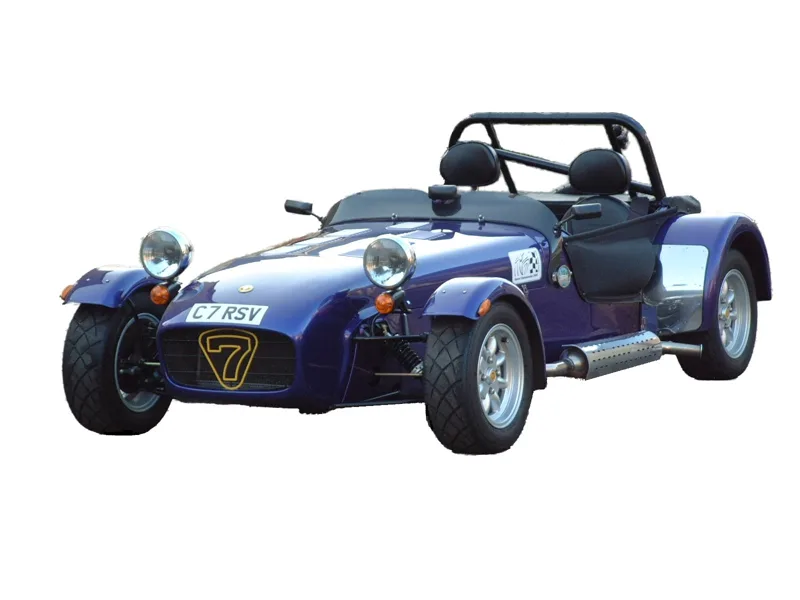
Many present-day kits copy famous and expensive classics, built so that a skilled person can finish one at home to roadworthy standard. The bodies are usually fibreglass mat soaked in polyester resin rather than sheet metal. Copies of the AC Cobra and the Lotus Seven are especially popular.
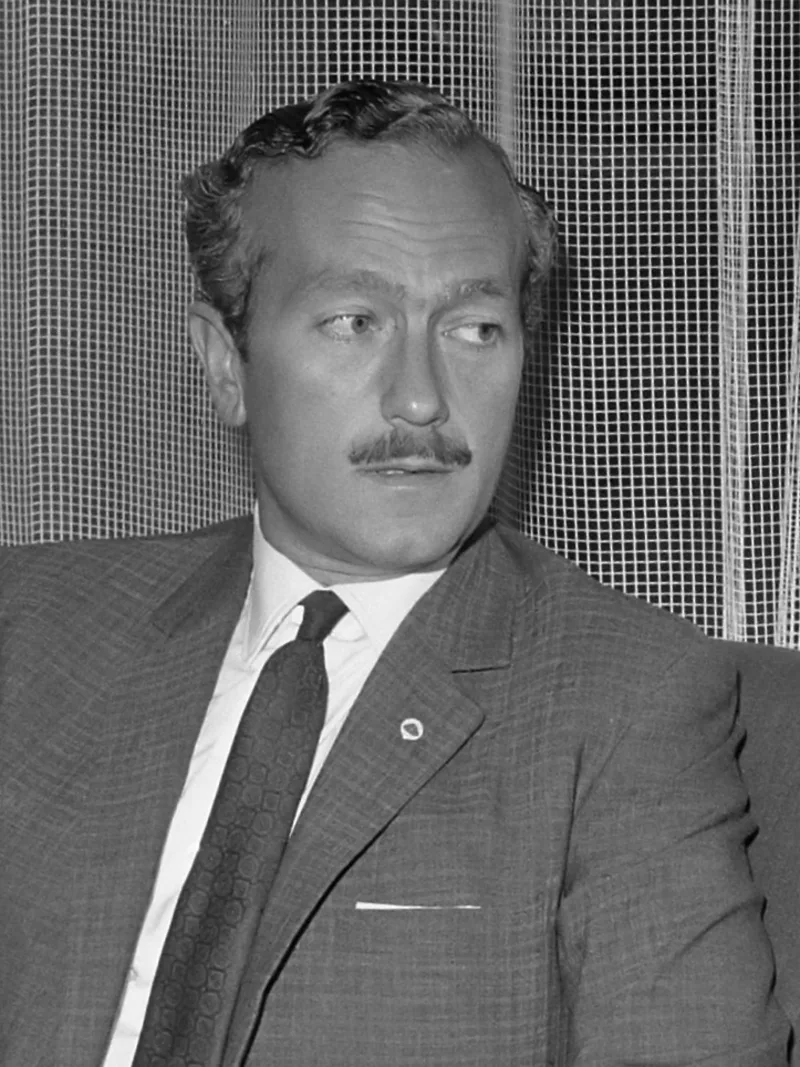
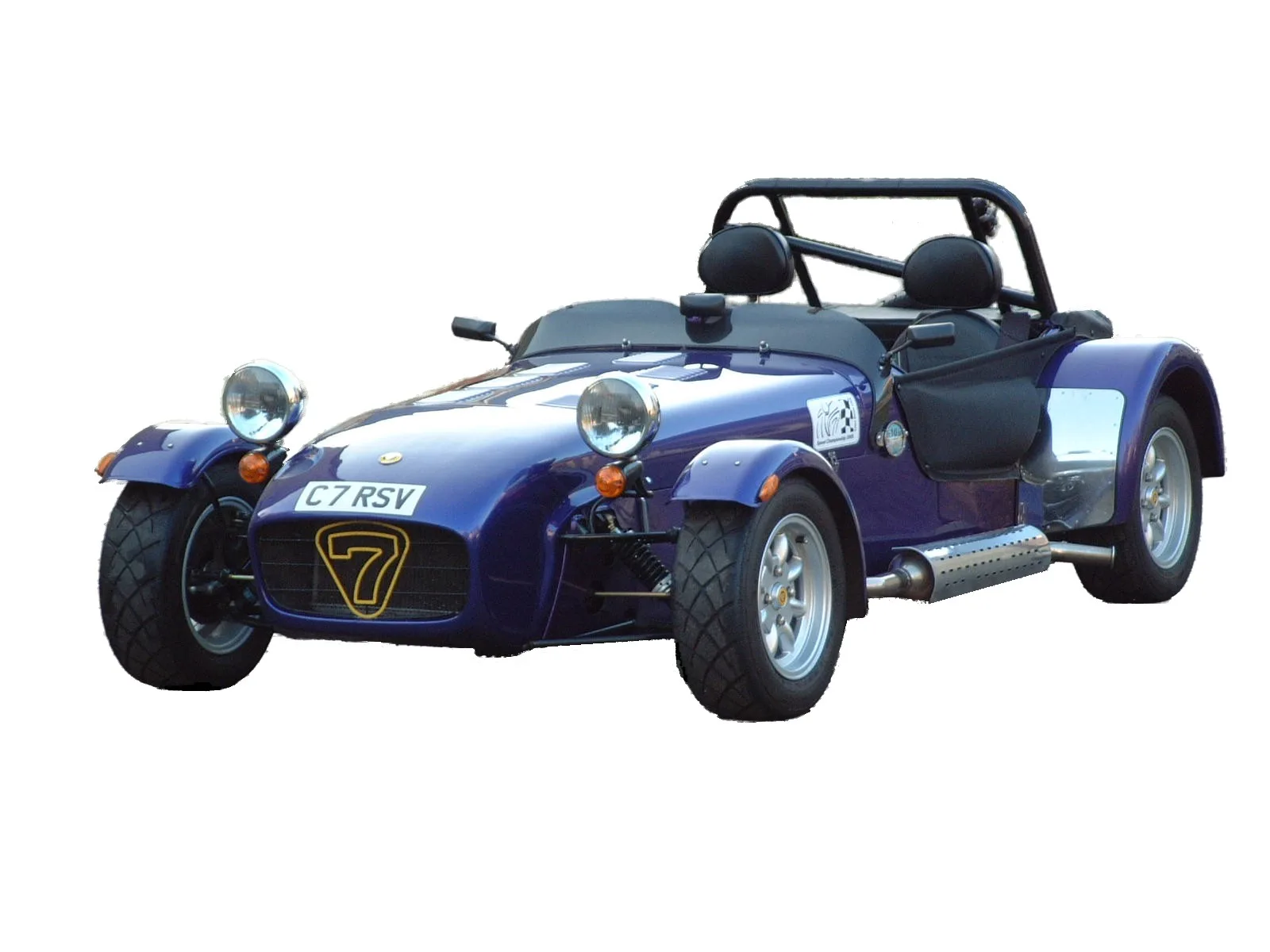
The Seven shows how murky the lines can be. Caterham Cars bought the right to build the Lotus 7 from Colin Chapman in 1973, and its cars are component cars that continue Chapman's design. Every other Seven-style car is a replica kit costing significantly less than a Caterham, but without the residual value. Such kits let enthusiasts have the look of a car too scarce to buy, with modern technology underneath.
Superformance and the turnkey-minus replica
Superformance began in 1996 as Superformance International, created by Hi-Tech Automotive, and today is an American company with 15 authorised US dealers and 6 international ones. Its cars are described as "replicars", complete factory-built rollers lacking only the engine and transmission. A dealer fits the buyer's chosen powertrain. Ownership passed in December 2005 to American Hillbank Automotive Group, the private business of Lance Stander, while Hi-Tech Automotive carries on building them in South Africa, at Port Elizabeth. Hi-Tech does not sell its cars as kits at all; it builds fully assembled "turnkey-minus" continuation cars, almost all of them exported, mostly to the United States.
| Model | What it copies | Notes |
|---|---|---|
| MKIII | Third-generation 427 Shelby Cobra | Most of the company's sales; built under licence from Carroll Shelby |
| MKII Slab Side and FIA | Cobra 289 street cars | Tojeiro-styled round tube chassis, transverse leaf spring suspension |
| Shelby Daytona Coupe CSX9000 | 1965 FIA GT World Championship-winning Daytona Coupe | Designed by Peter Brock; fibreglass or aluminium body |
| GT40 | Ford GT40 MkII A of Le Mans 1966 | Monocoque; over 90% of parts interchangeable with the original |
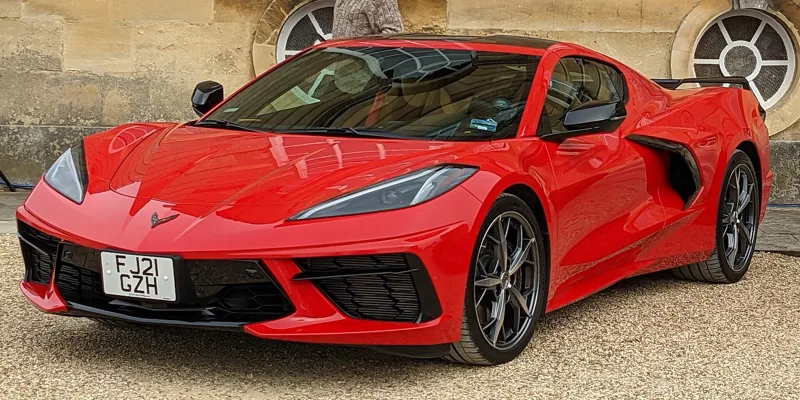
| Corvette Grand Sport | 1963 Corvette Grand Sport | Coupe and roadster; built under licence from General Motors |
| S-1 (former) | Modern take on the Lotus Super 7 | 56 built; production ended March 2004 |
The Cobra: MKIII and MKII
The MKIII copies the third-generation 427 Cobra and is offered in semi-competition and street roadster forms, and it is one of the few Cobra replicas built under licence from Carroll Shelby. The customer receives a rolling chassis with suspension, rear differential, wiring and instruments; it needs an engine with accessories, a transmission, a driveshaft and assorted hoses and fixings. Most use Ford 351 Windsor engines, though 289/302 blocks are possible, along with big block engines from the FE or 385 families. Unlike some rivals, the MKIII uses 100% new parts rather than decades-old rebuilt ones. Late-2007 and later cars have Wilwood disc brakes and a Dana rear end.
The newer MKII Slab Side and FIA copy the 289 street cars of the 1960s racing era, built on a Tojeiro-styled round tube chassis with an authentic transverse leaf spring suspension.
The Daytona Coupe, GT40 and Grand Sport
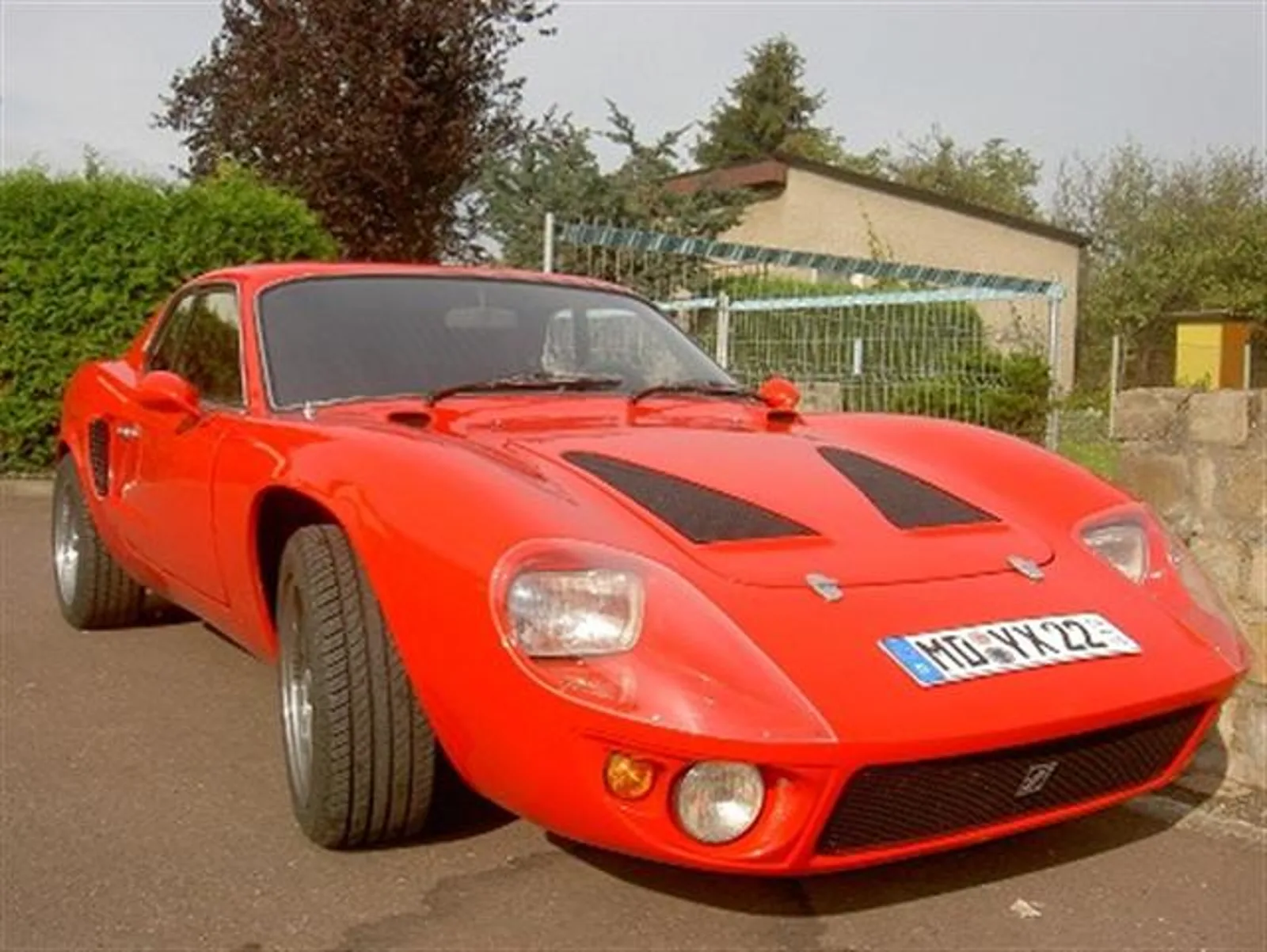
The Shelby Daytona Coupe, or CSX9000 series, began as the SPF Brock Coupe, a continuation of the car that won the 1965 FIA GT World Championship, designed by Peter Brock. It ran from 2003 to 2009, and each car and owner is recorded in the Shelby registry. The Superformance GT40 copies the Ford GT40 MkII A, the model that took the first three places at Le Mans in 1966. It is described as the only replica with an exact monocoque copy of the original chassis, and more than 90% of its parts are interchangeable with the original, enough that it is under evaluation for historic racing eligibility. Differences include hidden air conditioning, modern brakes and left-hand drive, with a right-hand-drive version without air conditioning sold as the GT40/R. Safir Spares LLC licenses the series, and MkI and FIA versions are listed as upcoming.
Superformance teamed up with the Duntov Motor Company of Farmers Branch, Texas, in January 2009 to continue the street version of the 1963 Corvette Grand Sport, with Duntov producing the racing version. General Motors licenses it, and new moulds were made to reproduce the body shape faithfully. An earlier model, the S-1 roadster, was a modern Lotus Super 7 made roomy enough for a 6 ft 4 in, 250 lb American; 56 were produced before production ended in March 2004. Since the start of 2014 Superformance has also been the official Caterham distributor in the United States, shipping part-built Sevens, the 160, 280, 360, 480 and 620R, to be finished by customers.
Kit car registration: what the law asks
A common worry is that a car assembled at home cannot meet the roadworthiness tests required in most countries. The rules differ by place.
- Germany: a kit car capable of more than 6 km/h without a general operating licence (ABE) or EC type permission must be inspected by a recognised expert.
- United Kingdom: the Individual Vehicle Approval test (IVA) applies. It replaced the Single Vehicle Approval (SVA) introduced in 1998, which many predicted would end the kit car trade but in practice made the market stronger. UK rules also let a maker produce up to 200 vehicles a year without full mass-market testing. The DVLA oversees kit cars, and every one gets a Vehicle Identity Check to decide its registration: a new current-year mark, an age-related one, or a Q plate.
- United States: SEMA has worked state by state to create legal ways of registering and inspecting kit cars and specialty vehicles.
- Sweden: kit cars are technically not allowed, but one built mostly from components the builder sourced can be registered as amateur built. A crash test law in 1970 ended a boom based on the Beetle, and by the time amateur building became legal again in 1982 no Swedish kit makers were left. The builders' association SFRO inspects twice, at the rolling chassis stage and when finished, and the power-to-weight cap is 15 kW (20.4 PS) per 100 kg, raised from 10 kW (13.6 PS) before 2003.
Kit car makers around the world
New Zealand built a whole industry on fibreglass from the early 1950s. Weltex Plastics of Christchurch imported a Microplas Mistral mould in 1956, and later firms included Heron Cars, which began making kits in 1980, and Almac, Cheetah, Chevron and Saker in the 1980s. Classic Car Developments of Invercargill, formed in 1992, builds replicas to order, mostly Jaguar C-Types and Ford GT40s. By 2009 it had made 22, all but two exported; its GT40 took 14 months to develop around a steel monocoque folded from 20 gauge sheet. The Auckland Cobra, with a Ford 302 V8, had produced 49 kits or turnkey cars by 2012.
Not every maker lasted. Cheetah, whose kit echoed the shape of the Jaguar E-Type, closed in 1990 after nine cars, hurt by the 1987 share market collapse, a 1989 change to used-import rules and rumours of costly new regulation. Elsewhere, Slovakia's K1-Attack starts at around $15,000 for a complete kit on a Honda Accord engine, Australia has Bolwell, Elfin and Pellandini, and South Africa's Birkin makes a Lotus Super 7 copy.
What it means if you want one
There are three routes. A kit, from plans to a full parts set, puts the building in your hands, at a typical 100 to 1,500 hours. A replica rolling chassis from a maker such as Superformance leaves you only the engine and transmission, bought and fitted through a dealer. A re-body keeps a factory chassis, which can bring much better safety and reliability. In every case the registration test of the country or state has to be passed, and a replica Seven will not hold its value as a Caterham does.
Where this goes next
Superformance lists further GT40 variants, the MkI and the FIA version, as upcoming. In New Zealand the Cheetah company has been seeking expressions of interest from parties willing to manufacture and market the car again. Kit builders have reported that build times rise as the complexity of kits grows.