A general strike wiped out the 1936 race, Audi took over in 2000, and in 2026 Toyota won as Genesis arrived. Garage 56 has tested the future in between.
The 24 Hours of Le Mans was cancelled in 1936 by a general strike, won by Audi's one-two-three in 2000, and taken in 2026 by the number 7 Toyota. Garage 56, created in 2010, gives concept cars a place in the race to test new technology.
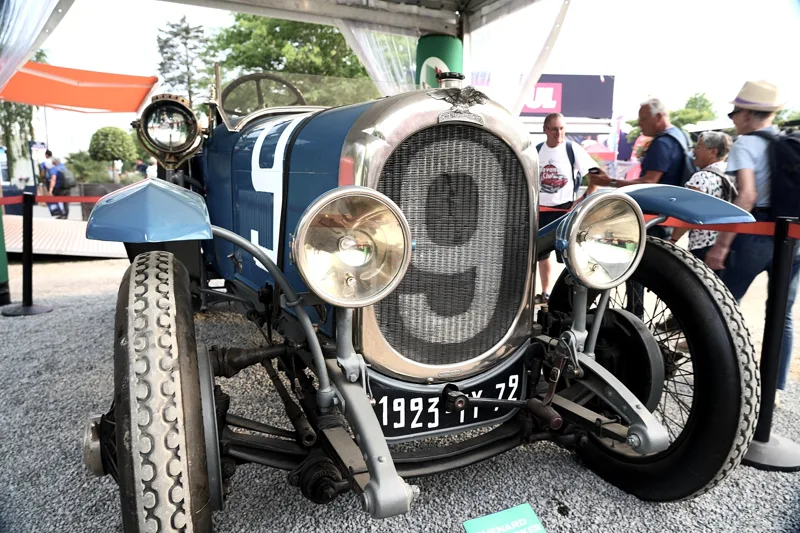
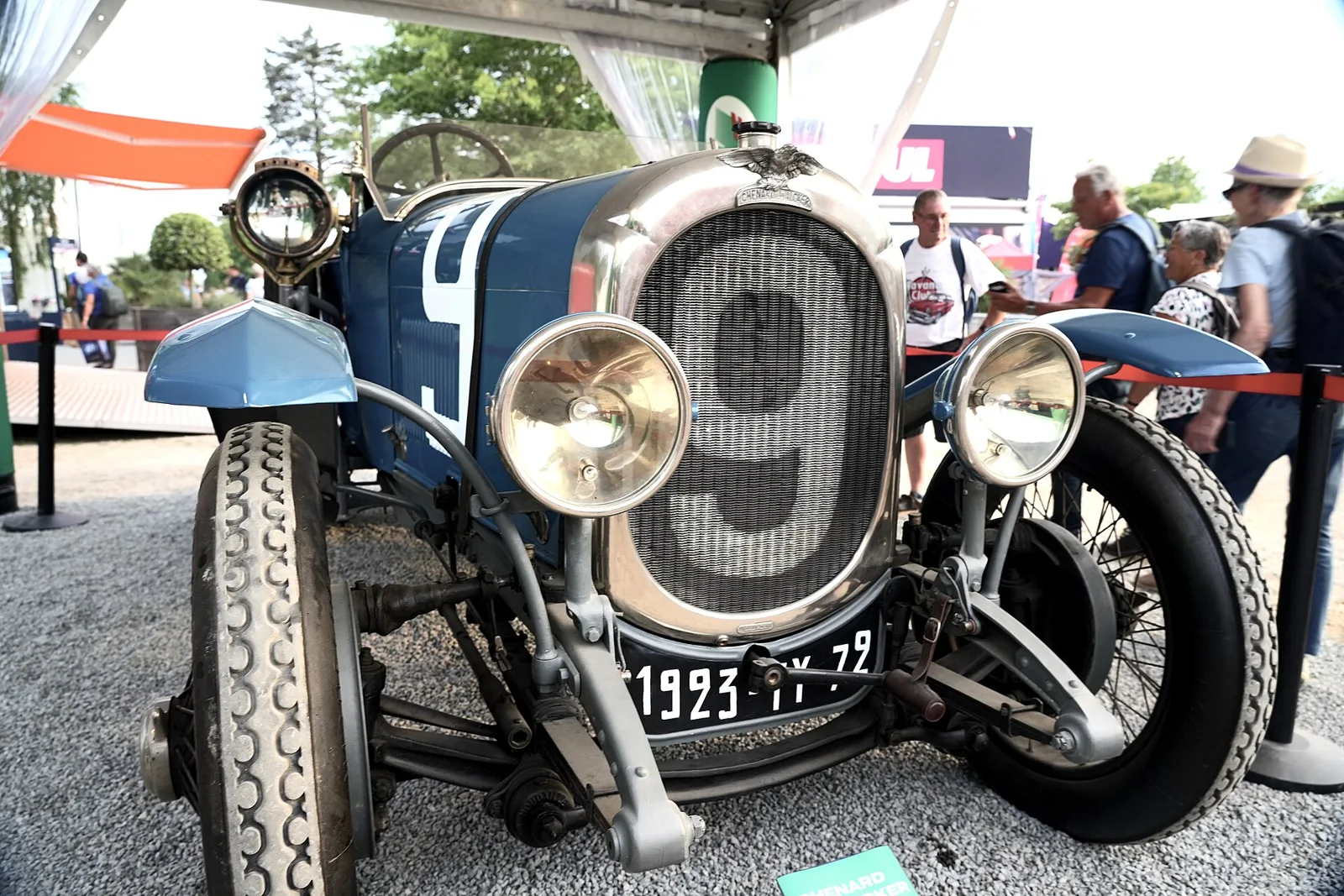
In June 1936, fifty-eight cars had entered the 24 Hours of Le Mans, among them a dozen built to a brand-new French rulebook, and not one of them turned a wheel. A general strike emptied the factories, and by 23 June the race had been cancelled outright. It remains one of the great what-ifs of endurance racing, and it is a good place to start a tour of Le Mans at three moments that could hardly be more different: a race that never happened, the year Audi began to rule, and a 2026 edition that welcomed Genesis and ended a Ferrari streak.
What happened to the 1936 24 Hours of Le Mans?
The 1936 race was planned as the 14th Grand Prix of Endurance, with a start date of 14 June. France was in the middle of a long economic slump and political unrest, and the Popular Front's election victory had been followed by a general strike that was only settled days before scrutineering was due to begin.
Why were French cars suddenly so strong?
The roots lay in grand prix racing. The governing body, the AIACR, had brought in a 750 kg formula in 1934, and Mercedes-Benz and Auto Union, both backed by the German state, now ruled it. Alfa Romeo, Maserati and Bugatti, the old powers, were out-classed. After two fruitless years the Automobile Club de France decided its own grand prix would no longer follow the AIACR formula, which meant giving up a place in the European Championship. The aim, in a period of rising international tension, was to restore French national pride.
The replacement rules asked for open two-seaters that matched the makers' public catalogues. Capacity and weight were unrestricted, supercharging was banned, and at least 20 examples had to have been built, or be under construction, by 1 January 1936. French industry backed the idea strongly. It echoed a British ban on supercharged cars in the 1934 International Tourist Trophy.
The Automobile Club de l'Ouest, which organises Le Mans, scheduled its race a fortnight ahead of the French Grand Prix and agreed that cars built to the French formula could enter. It kept the racing classes from the previous year. Superchargers stayed legal at Le Mans, though the capacity multiplier used to equate them with unblown engines rose from x1.4 to x1.6.
The strongest entry list yet
The result was probably the strongest entry Le Mans had seen. French cars once again had a real chance of outright victory. A dozen came from the new formula, from Delahaye, Delage and Talbot-Lago. Of the 58 cars, 30 were works or works-supported entries from 13 manufacturers. Adler appeared as only the second German maker to enter. Sixteen cars were carried over from the previous year's race for the Coupe Bienniale, and the privateers included Alfa Romeo, Lagonda and Bugatti machinery. The new Bugatti, however, was not ready.
How the strike killed the race
The second mass general strike began on 26 May. More than two million workers, including those in car factories, walked out for better conditions, and the stoppage grew to five million people. There were no major riots, but the effect on motor sport was total. Ettore Bugatti found himself locked out of the Molsheim works he owned, so the new car for the French Grand Prix could not be finished. At the occupied Renault plant, 25,000 strikers were kept cheerful by a Senegalese men's choir.
A settlement came on 7 June, just three days short of the planned start of scrutineering. Fuel was short, and many competitors and spectators faced the prospect of having no transport, accommodation or even food. Nobody was available to prepare the public roads that make up the circuit, or to staff it as officials and marshals. The ACO announced a postponement.
It then asked the AIACR to approve new dates, the following weekend or the first weekend of August. The Royal Automobile Club vetoed both, since it had its own minor international events on those days, and the AIACR sided with the British. With no alternative left, the ACO cancelled the race officially on 23 June. Its general secretary, Georges Durand, feared that friends abroad would read the setback as a sign that things were going badly for France.
The French Grand Prix went ahead five days later under the new formula. The 8-hour race fell to the Bugatti Type 57G of Raymond Sommer and Jean-Pierre Wimille, with four Delahayes next home. Civil war broke out in Spain in mid-July, and motor sport suddenly mattered far less to an anxious Europe. The new French works teams had to wait a year to measure themselves against the proven Alfa Romeo and Lagonda privateers.
The race that never ran in 1936 had 58 entries and 13 manufacturers; a general strike ended it before scrutineering.
The 2000 24 Hours of Le Mans: Audi arrives
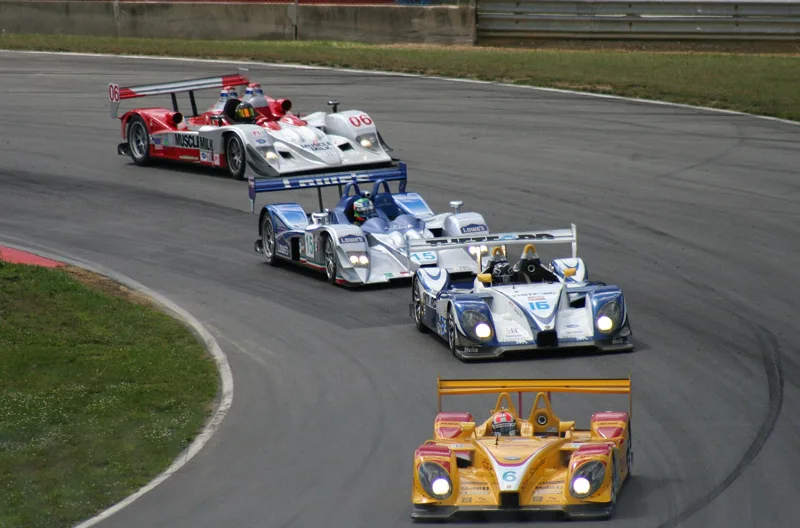
The 68th Grand Prix of Endurance took place on 17 and 18 June 2000, and it came after a mass departure. Once the 1999 race was over, most manufacturers in the top classes went elsewhere. BMW and Toyota moved into Formula One. Mercedes-Benz quit sports cars after the CLR accidents and went back to the DTM, while Nissan left because of financial difficulties.
That left the French privateers Pescarolo, Oreca and DAMS, plus Audi and Panoz from the year before, and a newcomer in Cadillac. About 200,000 people came to watch.
They saw Audi's LMP900 cars finish first, second and third. It was the start of two dynasties, Audi's and that of Tom Kristensen, who drove the winning car. Pole position went to Allan McNish in the number 9 Audi Sport Team Joest at 3:36.124, and McNish also set the fastest lap, 3:37.359.
- Race distance: 5007.99 km
- Winner's average speed: 207.00 km/h
- Fastest speed through the trap: 337 km/h, in an Audi R8
Behind the Audis, the GTS class had its own story. Oreca's Chrysler Viper won it and finished seventh overall after 333 laps, the best result that car ever achieved. It had serious opposition from Corvette Racing's new C5.R, which within two years would beat the Viper's distance record and become the car to beat in the GT classes. One car was disqualified after the flag: the number 83 Dick Barbour Racing entry, for an illegally sized fuel tank found in post-race inspection.
What is Garage 56 at Le Mans?
Garage 56 is a programme that gives concept cars a place on the Le Mans grid so they can test new technology in a real 24-hour race. The cars are classified in the results and run among the competitors, but nobody expects them to be competitive. Their job is to demonstrate experimental features.
The name comes from the 56th and newest garage at the Circuit de la Sarthe when the programme began in 2010. It was intended for teams bringing "a specific and innovative project", and the first entry arrived two years later.
| Year | Entry | Outcome |
|---|---|---|
| 2012 | DeltaWing (All-American Racers, backed by Nissan) | Retired six hours in after hitting an LMP1 car |
| 2013 | GreenGT H2, hydrogen-powered | Declared unfit by the team days before the race |
| 2014 | Nissan ZEOD RC, hybrid electric | Retired after 23 minutes; reached 300 km/h (186.41 mph) |
| 2015 | None | All applications judged unfit by the ACO |
| 2016 | Modified Morgan LMP2, driven by Frederic Sausset | Ran in the race |
| 2017 | Green4U Panoz Racing GT-EV, biomethane | Cancelled after financial problems |
| 2018 and 2019 | None | No application judged mature enough |
| 2020 | SRT41 Oreca 07 LMP2 | Cancelled because of COVID-19 |
| 2021 | SRT41 Oreca 07 LMP2 | Raced, with two paralysed drivers |
| 2022 | None | Slot left empty |
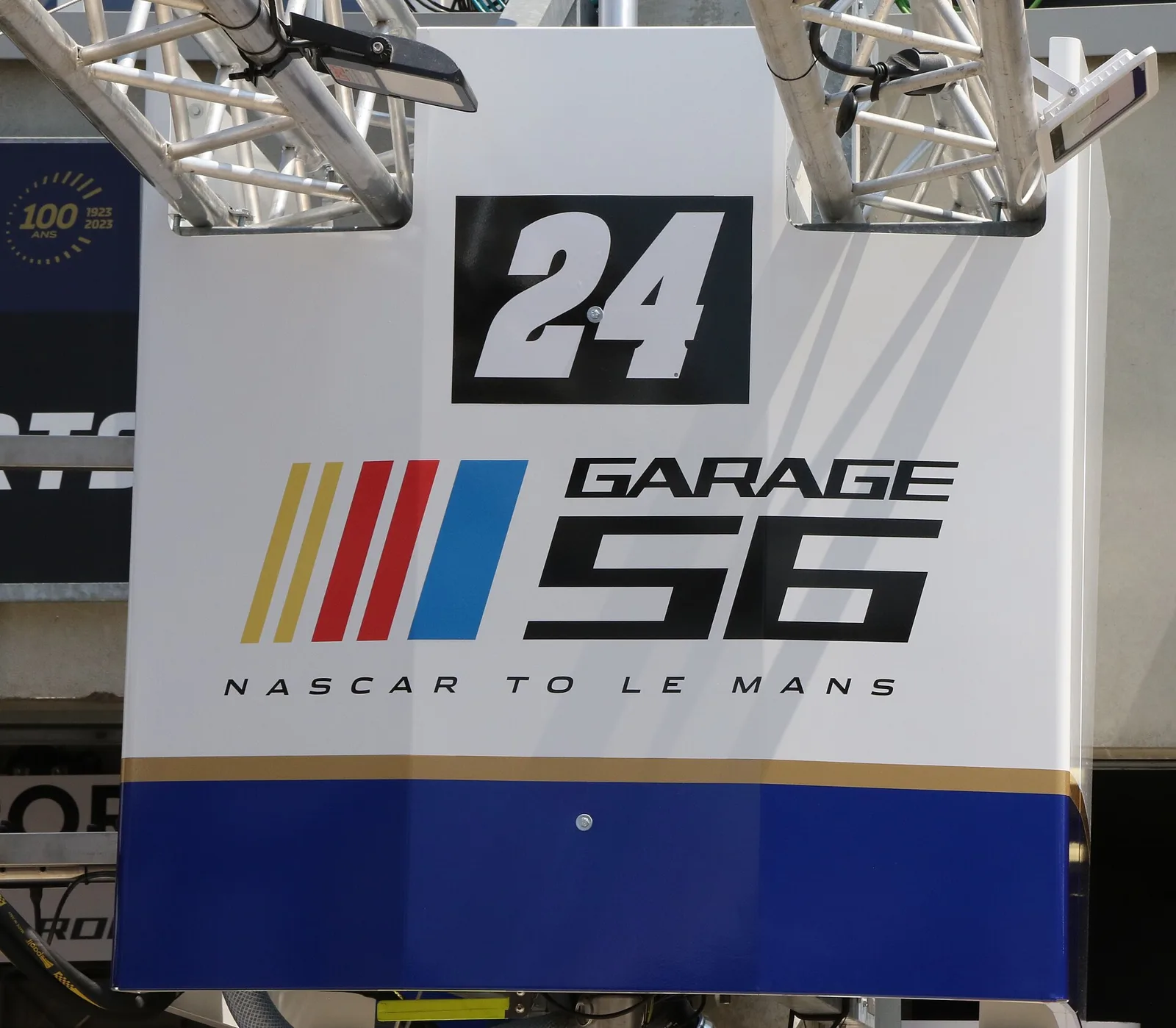
| 2023 | Hendrick Motorsports NASCAR Camaro ZL1 | Ran, marking NASCAR's 75th anniversary |
The first cars through the door
The DeltaWing, an unusual rocket-shaped car, opened the story in 2012. It showed real promise, delivering nearly LMP2-level performance on only 48% of the fuel, but contact with an LMP1 car ended its race six hours in.
The hydrogen-fuelled GreenGT H2 from Switzerland would have been the first car with no internal combustion engine to start at Le Mans, but its team pronounced it unfit to start. It did complete a single demonstration lap in 2016. Nissan's ZEOD RC, a hybrid-electric development of the DeltaWing, lasted only 23 minutes before a gearbox problem stopped it in 2014. Even so, it hit its targets: 300 km/h (186.41 mph) and the first lap of Le Mans ever completed on electric power alone at racing speed.
The gaps, and the human stories
Not every year produced a car. In 2015 every application was deemed unfit. Welter Racing's Green4U Panoz Racing GT-EV, a biomethane prototype with a three-cylinder 1.2-litre engine fed from cryogenic tanks, was cancelled in 2017 for money reasons. Welter kept developing it, hoping for 2018 and 2019, but complex problems with the car ruled out 2018 and the death of Don Panoz suspended the programme in 2019. Perrinn's Project 424, an electric LMP1-based car with an autonomous mode, was also eyed for 2019 and did not happen. The ACO judged none of the applications mature enough, so the garage stood empty in both years.
In 2016 Frederic Sausset, a quadruple amputee, drove a Morgan LMP2 that had been modified for the job. He returned with the SRT41 team and a specially modified Oreca 07 LMP2 for a three-driver line-up of disabled drivers, but the pandemic cancelled the 2020 attempt. The project was delayed a year, and in 2021 Garage 56 came back after a five-year gap. Two of its drivers, both paralysed below the waist, were the first disabled team-mates ever to start the race. The garage was empty again in 2022.
For 2023 the entry was a Hendrick Motorsports Chevrolet Camaro ZL1 stock car from NASCAR's Next Gen Cup Series, modified for the event. Its drivers were Jimmie Johnson, a seven-time Cup champion, Jenson Button, the 2009 Formula One world champion, and Mike Rockenfeller, who won Le Mans overall in 2010. The car was built to celebrate 75 years of NASCAR, in the year the race itself reached its centenary. Chad Knaus, who had been Johnson's crew chief for every one of his titles, managed the project, and the number 24 was a tribute to Jeff Gordon, Hendrick's vice chairman and a former driver.
2026 24 Hours of Le Mans results
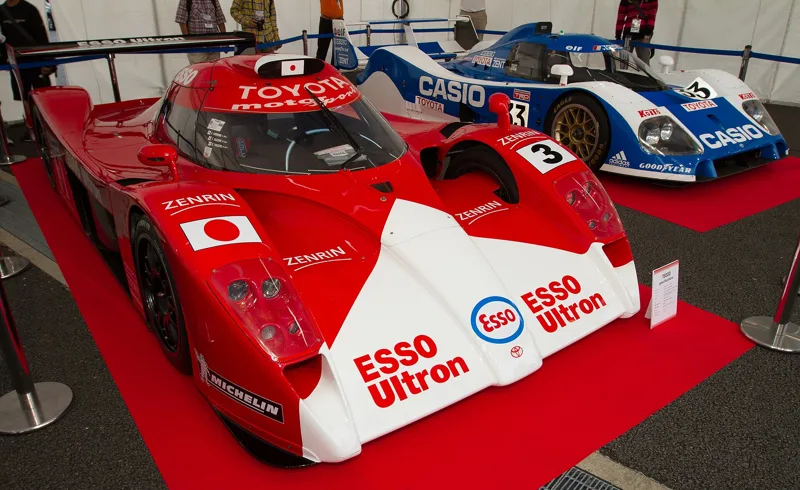
The 94th running was held on 13 and 14 June 2026 at the Circuit de la Sarthe, counting as round three of the 2026 FIA World Endurance Championship. The overall winner was the number 7 Toyota of Mike Conway, Kamui Kobayashi and Nyck de Vries, which ended a three-year streak for Ferrari. Seven cars finished on the lead lap, and the lead moved repeatedly between BMW, Cadillac and Toyota.
The LMP2 class went to the number 43 Oreca 07 of Tom Dillmann, Jakub Smiechowski and Nick Yelloly, part of an Inter Europol one-two and the team's third win in four years. In LMGT3, TF Sport's number 33 Chevrolet Corvette Z06 GT3.R of Nicky Catsburg, Jonny Edgar and Ben Keating won, the tenth class victory for the American brand.
Genesis and the Le Mans 2026 entry list
Two big manufacturer stories framed the year. Porsche withdrew from the WEC Hypercar class, and Genesis Magma Racing, the luxury arm of Hyundai, made its full-season debut. Running two GMR-001 cars at Le Mans, it became the first South Korean team to compete in the race.
The entry list held 62 cars: 18 Hypercar, 19 LMP2 and 25 LMGT3. Besides every full-season WEC entry, automatic invitations went to European Le Mans Series champions, to LMP2 and LMGT3 champions in the Asian Le Mans Series, and to Bronze Cup winners in GT World Challenge Europe, with the second-placed ELMS LMP2 team also invited. IMSA received three places: one Hypercar spot at its own discretion, plus a place apiece tied to the Jim Trueman and Bob Akin awards, which go to the best-placed Bronze-rated drivers in its LMP2 and GT3 classes. Nine reserves waited in case anyone dropped out.
Test day and qualifying
The compulsory test day was on 7 June, with six hours of running split across two sessions. In Hypercar, Tom Gamble set the fastest lap in the number 007 Aston Martin THOR Team Valkyrie, a 3:26.293 that fell narrowly short of the 2025 benchmark. Brendon Hartley's number 8 Toyota and Norman Nato's number 12 Cadillac completed the top three, and all eight manufacturers were separated by 0.915 seconds. The number 15 BMW covered the most distance, 86 laps or 1,171 kilometres (728 mi).
Rookie Jake Hughes lost the car on cold tyres at the Dunlop Curve in the morning and struck Ryo Hirakawa, damaging the number 8 Toyota and the number 25 Algarve Pro Racing car. Job van Uitert led LMP2 in the number 28 IDEC Sport at 3:35.344, and Francesco Castellacci topped LMGT3 with a 3:56.646 in the number 54 Vista AF Corse Ferrari 296 GT3 Evo. Genesis reserve driver Jamie Chadwick was the first woman ever to get behind the wheel of a Hypercar at Le Mans.
In qualifying, Dries Vanthoor took pole in the BMW M Team WRT. The sessions had their share of penalties. The number 38 Cadillac of Team Jota set a 3:22.559 that was later deleted because the car left the working lane in the pit area before it was authorised to do so. The number 29 Forestier Racing by Panis posted the fastest Hyperpole 2 time but dropped a grid place for holding up the number 58 Garage 59 McLaren. In the first session the number 34 Racing Team Turkey by TF Corvette was quickest and then disqualified, after scrutineers found its rear diffuser strake had worn below the permitted height.
How the Hypercar race unfolded
Cyclist Mark Cavendish started the race. By the first corner Cadillac's Will Stevens had passed Kevin Magnussen in the pole-sitting BMW, and on the Mulsanne Straight the other BMW, with Rene Rast aboard, took the lead. Toyota's number 7 used an early undercut, pitting after 29 minutes, and an hour in the sister number 8 car led with the number 7 in fifth.
The fourth hour brought a full-course yellow and the first real dramas. Alessandro Pier Guidi slid the number 51 Ferrari into the number 9 Proton Competition LMP2 at the Forest esses. The Ferrari received a drive-through that dropped it from sixth to tenth. Dries Vanthoor clipped a slower car in the Porsche Curves and picked up a puncture.
A safety car after a crash at the Forest esses shuffled the order as cars dived into the pits. In quick order the lead went to Buemi's Toyota, then Rast's BMW, then Stevens' Cadillac, then the Cadillac of Earl Bamber and finally the Ferrari of Nicklas Nielsen. Moments after the restart the number 50 Ferrari came in with a fire extinguisher fault that took 29 minutes to fix. The number 38 Cadillac, which had led earlier, lost half an hour and seven laps to power steering trouble and then retired after it returned with the same fault.
Cadillac's number 12 held a 47-second lead over the number 8 Toyota by the sixteenth hour, then took a drive-through for speeding in a slow zone, handing the lead to Hartley. The number 8 later needed a brake drum mounting change and fell to fourth. Genesis suffered too. The number 17 broke its right-front suspension on a kerb and retired, and the number 19 needed a power cycle after pulling over. The number 50 Ferrari ended its race with an electrical fault.
With four and a half hours left, Robin Frijns drove through the gravel at pit entry and came out fourth in the number 20 BMW. By the end of the 21st hour, Hartley and Nyck de Vries had passed Norman Nato to give Toyota a one-two. Fresh tyres on the number 7 let it take the lead, 22 seconds clear of the BMW. Just before the final hour the number 009 Aston Martin suffered a rear suspension failure. With 47 minutes remaining, Frijns passed Sebastien Buemi's number 8 Toyota, which was on older tyres, for second.
| Position | Car | Class |
|---|---|---|
| 1st overall | Number 7 Toyota (Conway, Kobayashi, de Vries) | Hypercar |
| 2nd overall | Number 20 BMW (Frijns) | Hypercar |
| 3rd overall | Number 8 Toyota (Buemi) | Hypercar |
| Class win | Number 43 Oreca 07 (Dillmann, Smiechowski, Yelloly) | LMP2 |
| Class win | Number 4 CrowdStrike Racing by APR (Heinrich, Kurtz, Quinn) | LMP2 Pro-Am |
| Class win | Number 33 Chevrolet Corvette Z06 GT3.R (Catsburg, Edgar, Keating) | LMGT3 |
The LMP2 and LMGT3 stories
In LMP2, Esteban Masson was quickest in Hyperpole, but a one-place penalty for Louis Rousset meant the number 28 IDEC Sport led the field away. The number 30 Duqueine took command before the third hour. Julien Andlauer had stretched his advantage to 91 seconds by nightfall, only for the first safety car to wipe it out. In the 21st hour the Duqueine retired with a terminal brake failure, and the number 43 Inter Europol went on to win, followed by the sister number 343 car of Nico Muller and the number 29 Forestier by VPS, which needed a late splash and dash. In the Pro-Am category, the number 4 CrowdStrike Racing by APR won by more than a lap.
In LMGT3, Mattia Drudi started from pole in the number 27 Aston Martin THOR, but by the end of the first hour Jack Hawksworth led in the number 78 Akkodis ASP Lexus.
Genesis in and Porsche out for 2026
Genesis arrived in 2026 for its maiden WEC campaign, with two GMR-001 cars carrying the first South Korean manufacturer entry into the top class. Le Mans was the third round of that season. Porsche, meanwhile, had stepped away from the class.