Two Asian race weekends with long memories: Macau's street circuit that launched Formula One stars, and the Suzuka endurance race that has been shortened, renamed and revived.
The Macau Grand Prix started in 1954 as a street treasure hunt and became a Formula 3 and Formula Regional proving ground for future Formula One drivers. The Suzuka 1000 km, first run in 1966, was paused by the energy crisis, shortened by recession and revived in 2025 as a timed six-hour, 30-minute race.
A race that now sorts out the next generation of Formula One drivers paid its 1980 winner thirty-four dollars, and it started in 1954 as a treasure hunt winding through the streets of Macau. The Macau Grand Prix grew from that game into one of the most closely watched weekends in junior motor racing, while the Suzuka 1000 km, a summer endurance race in Japan first run in 1966, has been halted by an energy crisis, shrunk by recession and an earthquake, rebuilt as a ten-hour event and revived.
How did the Macau Grand Prix begin?
As a game. In 1954 organisers conceived the event as a treasure hunt through the city streets, and soon afterwards someone suggested that the course could stage a race for local motoring enthusiasts. The first Macau Grand Prix ran that year as a sports car event, production cars joined in 1957, and from 1961 the main race ran to open-wheel Formula Libre rules.
For years it stayed an amateur affair. Touring cars replaced the production-car races in 1972, and the motorcycle race, the Macau Motorcycle Grand Prix, was added in 1967. The first fatal tragedy came that same year, when the double champion Dodjie Laurel was killed after losing control and crashing, a death that raised alarm about safety. Teddy Yip then became one of the main forces behind the event in the 1970s and 1980s and, with the parties he hosted at his home, made it a social fixture as well as a race. Money was thin: the 1980 winner, Geoff Lees, received thirty-four dollars and the 1981 winner, Bob Earl, thirty-six.
A race that now sorts out the next generation of Formula One drivers paid its 1980 winner thirty-four dollars, and it started in 1954 as a treasure hunt winding through the streets of Macau.
What is the Guia Circuit like?
Fast, tight and unforgiving. The Guia Circuit strings together fast straights, tight corners and crash barriers, and a Formula 3 car hits 275 km/h (171 mph) as the straight runs out. Street-circuit conditions leave little room for error.
Plenty of present or past Formula One drivers raced there early in their careers, and some took the prestigious prize. Dan Ticktum, Takuma Sato, Ralph Firman, Ralf and Michael Schumacher, David Coulthard and Ayrton Senna are all on the list of winners. On the motorcycle side, the street layout makes the course feel closer to the British open-road races than to a regulation MotoGP circuit.
How did Macau become a stepping stone to Formula One?
Through a Belgian in a French car. In 1966 Mauro Bianchi entered an Alpine A220, with an Alpine Renault engineer, Jean-Paul Castilleux, sent along to help with the technical side. His victory and the exposure it brought drew more professional teams in the following years.
The decisive change came in 1983. Formula Pacific was becoming obsolete, and the organisers first wanted a Formula 2 race, but they were unwilling to carry out big circuit modifications, which would have meant cutting down trees. They chose Formula 3 instead, and the FIA sanctioned the feature race as the F3 World Cup title race. Yokohama Tire was named sole supplier of control tyres at the same time. The event's reputation climbed fast, attracting top young talent from Europe and Japan. The first F3 winner was a young Ayrton Senna.
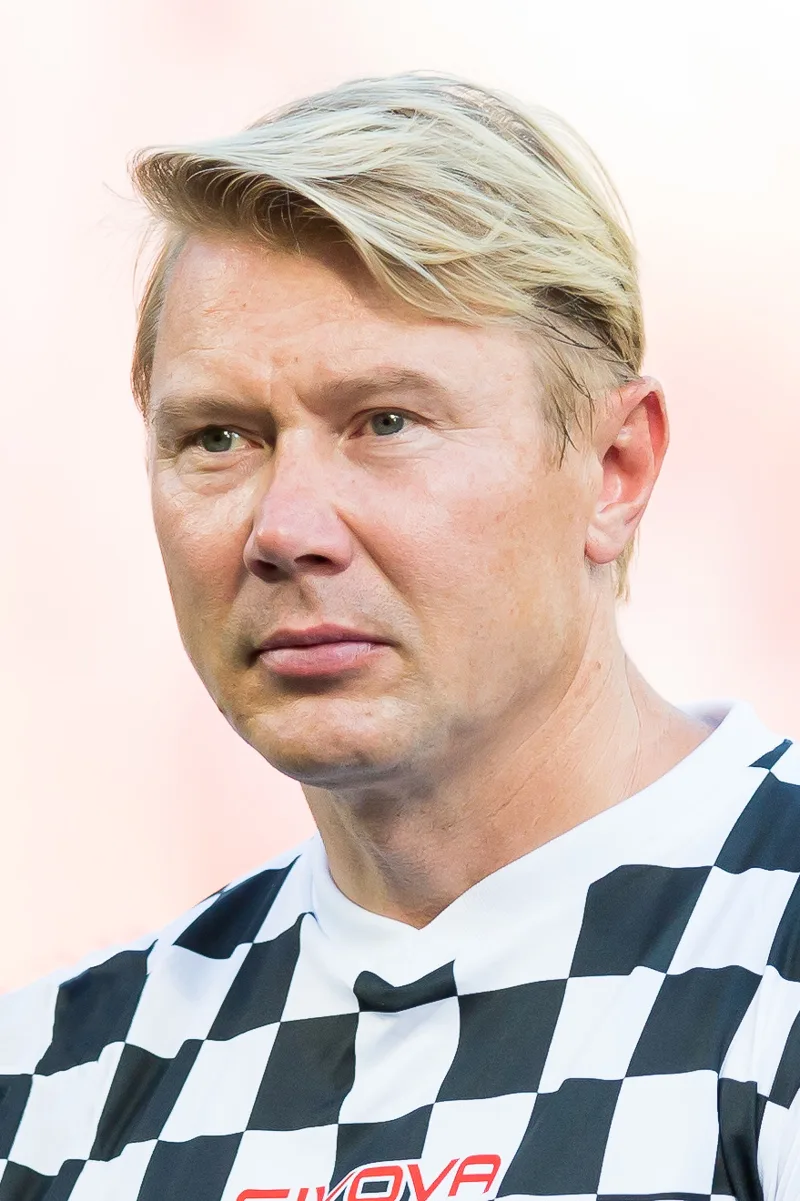
The 1990 race produced one of its best-remembered moments. Michael Schumacher and Mika Hakkinen came to the last lap in first and second, and on the straight beyond the Mandarin Oriental Bend, Hakkinen tried to overtake, ran into Schumacher's rear and spun out. Schumacher kept going with a damaged rear wing and won on aggregate time. Coulthard, Ralf Schumacher and Sato are among the other Formula One drivers who have won it.
Over time the Macau Grand Prix has turned into a springboard towards the FIA Formula 2 Championship and Formula One. Seven drivers from the 2010s fields later won in Formula One: Lando Norris (who lined up in 2017), George Russell (2016), Charles Leclerc (2015), Max Verstappen and Esteban Ocon (2014), Carlos Sainz Jr. (2013) and Valtteri Bottas (2011). The 1995 Macau Grand Prix is nevertheless the latest one won by a driver who later won in Formula One. From 2005 to 2014 the event also carried world championship status, as the season finale of the World Touring Car Championship.
What races make up the Macau weekend?
Usually a Thursday-to-Sunday programme in the second or third week of November. Thursday and Friday are for practice and qualifying, all races take place on Saturday and Sunday, and the heavyweights come last: the Macau Formula 3 Grand Prix, the Guia Race for touring cars and the FIA GT World Cup. The winner of the Formula 3 race is awarded the FIA World Cup.
The motorcycle race is a highlight in its own right, with former or current Superbike World Championship racers and stars of the Isle of Man TT in the field. Winners have included MotoGP champion Kevin Schwantz, Superbike champion Carl Fogarty, Ron Haslam and the Isle of Man names Robert Dunlop, John McGuinness and Michael Rutter. In 2014 the German director Andreas Knuffmann released an award-winning documentary, Macau Gladiators, about the 2013 edition. The 2024 motorcycle race was cancelled after persistent heavy rain from Typhoon Toraji, so qualifying decided the order and Davey Todd was named winner.
The Guia Race for touring cars began in 1972 and was notable then because very few touring car races were run on street circuits. From 2005 to 2014 it formed the last two rounds of the World Touring Car Championship, and in 2015 it switched to TCR specification. The GT category arrived in 2008 as the Macau GT Cup, and the FIA GT World Cup, a GT3 race organised by the Stephane Ratel Organisation and the Automobile General Association Macau-China, was confirmed on 20 March 2015, when the FIA World Motor Sport Council met in Geneva. From 2017 drivers have had to be no older than 59 years 364 days, because bronze-graded drivers are barred. Other races over the years have included a Formula Renault race, a Porsche Carrera Cup Asia race, a scooter race for locals and, occasionally, a celebrity women's race backed by Jackie Chan, run in Mitsubishis. A Lotus Exige single-make race added in 2018 gave way to the Greater Bay Area GT Cup in 2019.
How has the main Macau race changed lately?
It has changed machinery and entry lists with the times. In 2019 the Dallara F3 2019 car arrived, and for the first time every entrant, drawn from the FIA Formula 3 Championship, raced identical cars and engines. From 2020 to 2022 the pandemic closed the door to international drivers, and the title race was folded into China's Formula 4 series, with only local drivers and teams. From 2024 it went back to the Formula Regional format used from 1983 to 2018, open to drivers from Formula Regional series in Europe, North America and Asia, and it is now the FIA Formula Regional World Cup.
When was the Suzuka 1000 km first run?
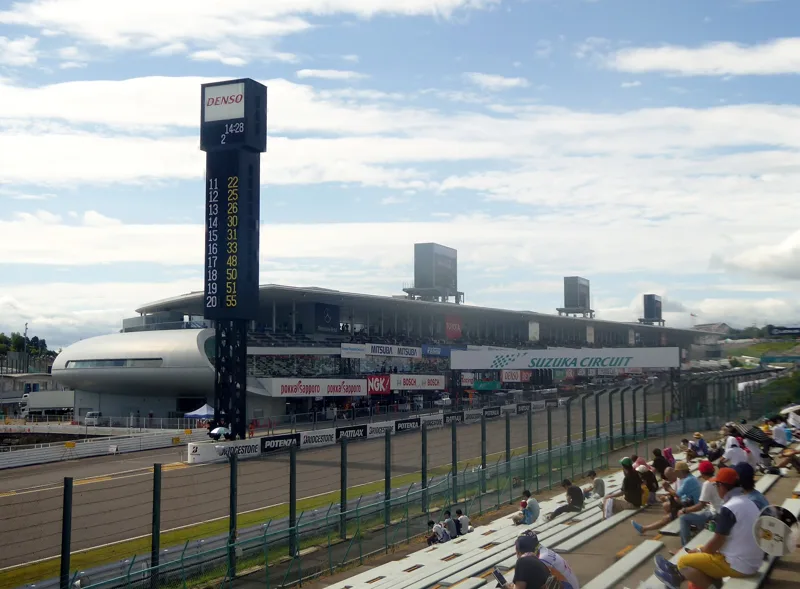
On 26 June 1966, at Suzuka Circuit, in Japan's Mie Prefecture. It was one of three long-distance races held there each year in the 1960s, alongside the Suzuka 500 km and the Suzuka 12 Hours, and the trio formed the short-lived Suzuka Circuit Endurance Series from 1967 to 1970.
The 1970s energy crisis stopped it. There was no race from 1974 until 1979, and when it returned in 1980 it was a non-championship event, held for the first time on the fourth weekend of August. Bad weather pushed the 1989 race back to December, but otherwise it fell on the third or fourth August weekend each year up to 2019. Overseas teams first entered in 1981, the year the event became the International Suzuka 1000 km.
Which championships has the Suzuka endurance race belonged to?
| Period | Status | Detail |
|---|---|---|
| 1980 to 1982 | Non-championship | Revival after the energy-crisis hiatus; foreign teams from 1981 |
| 1983 to 1991 | All Japan Endurance Championship | Renamed the All Japan Sports Prototype Championship in 1987 |
| 1992 | FIA World Sportscar Championship | Series folded after the season, so 1993 was non-championship |
| 1994 to 1998 | BPR Global GT Series, then FIA GT Championship | Pokka became title sponsor |
| 1999 to 2005 | Non-championship | GT500 and GT300 machinery from the Japanese championship, plus Super Taikyu and Clubman entries |
| 2006 to 2017 | Super GT Series | Longest, most prestigious round and the biggest points haul |
| 2018 to 2019 | Intercontinental GT Challenge, as the Suzuka 10 Hours | Replaced the Sepang 12 Hours as the Asian round |
| 2025 onwards | Intercontinental GT Challenge, as the Suzuka 1000 km | Timed six-hour, 30-minute race |
Why was the Suzuka 1000 km shortened?
Economic and natural shocks. The Great Recession in Japan cut the race to 700 km in 2009 and 2010, when it was renamed the Pokka GT Summer Special. The Great Tohoku earthquake and tsunami then reduced it further, to 500 km, in 2011. The original 1,000 km distance and name were restored from 2012.
Before those shocks, the race had risen to the top of its championship. On 12 August 2005 it was announced that it would join the Super GT Series from 2006, and it was the longest and most prestigious round of that series and carried the largest points haul on the calendar.
What was the Suzuka 10 Hours?
A reinvention. On 4 March 2017 the GT Association and the Stephane Ratel Organisation said they would promote a new ten-hour summer race for FIA-GT3 and GT300 sports cars. The forty-sixth Suzuka 1000 km, run that year as part of Super GT, was the last in the original format.
The Suzuka 10 Hours joined the Intercontinental GT Challenge in 2018 and took over the Asian date from the Sepang 12 Hours. A prize purse of 100,000,000 yen, with 30,000,000 yen going to the overall winner, attracted leading international GT3 crews, plus Super GT and Super Taikyu teams. The 2020 edition, due on 23 August, was cancelled during the pandemic, and so was the one planned for 22 August 2021. In 2022 and 2023 the Gulf 12 Hours at Yas Marina Circuit filled the Asian slot.
Who has won at Suzuka?
Kunimitsu Takahashi holds the record with four overall victories. Five drivers have three each: Daisuke Ito, Ryo Michigami, Sebastien Philippe, Juichi Wakisaka and Naoki Nagasaka. Eleven Suzuka winners have also taken the 24 Hours of Le Mans, among them Kazuki Nakajima, Loic Duval, Benoit Treluyer, Andre Lotterer, JJ Lehto, Derek Warwick, Yannick Dalmas, Stanley Dickens, Masanori Sekiya, Vern Schuppan and Henri Pescarolo.
Past winners also include Bob Wollek, who took three Daytona 24 Hours, Alessandro Nannini, victor of the 1989 Japanese Grand Prix, and Mark Webber, the 2015 World Endurance champion and a Formula One race winner. World champions have shown interest too: Jenson Button, the 2009 champion, made his Super GT debut at Suzuka in 2017, and in 2019 the two-time champion Mika Hakkinen drove in the Suzuka 10 Hours.
Among manufacturers, Porsche leads with twelve wins between 1967 and 2026. Honda and Toyota have won eight each, one ahead of Nissan with seven, and Toyota's Lexus brand added five more while racing in Super GT's GT500 class between 2006 and 2017.
Where this goes next
Suzuka's return is the main story. Stephane Ratel told the SRO press conference at Spa-Francorchamps in 2024 that the Suzuka 1000 km would rejoin the Intercontinental GT Challenge in 2025, and the Japan Automobile Federation confirmed 14 September 2025 as the date. The revived race keeps its original title but runs as a timed six-hour, 30-minute event, a format chosen with stint lengths and total drive time in mind and to try to reach the nominal 1,000 km. It also accepts GTA-GT300 entries after an agreement between the two organising bodies in late 2024. From 2027 it will count towards the Super GT GT300 championship, with Super GT teams allowed to use their series' Dunlop tyres against SRO-aligned teams on Pirelli. In Macau, the title race is now run as the FIA Formula Regional World Cup, and the GT Cup and the Guia Race continue as part of the November weekend.