One connector dominates the world's biggest electric car market, another is being built for trucks that draw up to 3.75 megawatts.
The GB/T charging standard is China's national EV plug system, with DC charging rated up to 1200 kW after a 2023 revision. The Megawatt Charging System is a separate connector for trucks and buses, rated at 3.75 megawatts, and both sit beyond Europe's CCS.
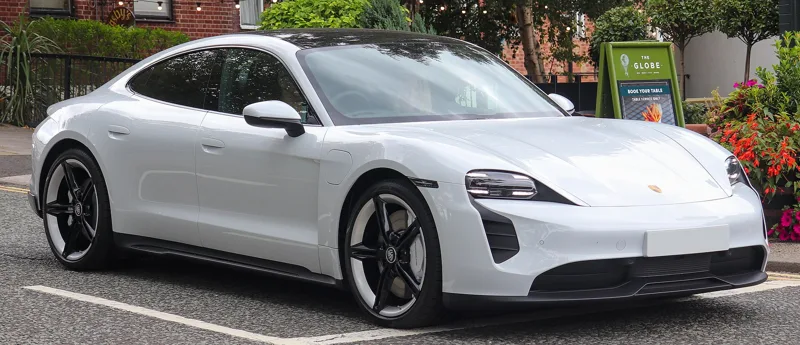
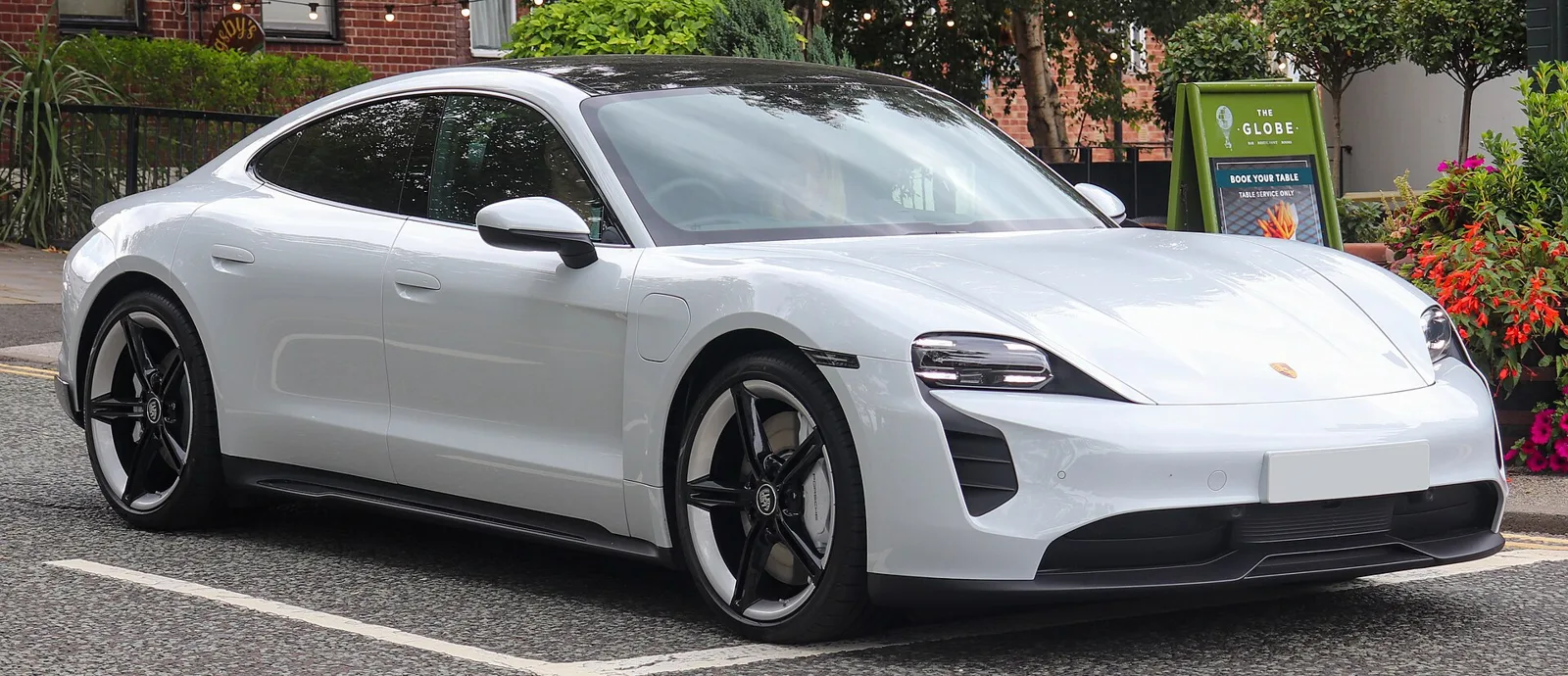
In December 2019, more electric cars with fast-charging ability carried a Chinese socket than any other kind. The GB/T inlet sat on 40% of them, ahead of Tesla's own inlet on 19%, CCS on 17% and CHAdeMO on 15%. That lead came from the sheer size of China's market, and it explains why a standard most Western drivers have never seen belongs in any serious discussion of charging.
GB/T is one corner of the picture. The Megawatt Charging System, or MCS, is another: a connector aimed at trucks and buses, rated for a staggering 3.75 megawatts. Both sit beyond CCS, the combined connector most European and North American cars use, and both are shaped by the same race to move more power through a cable without melting it.
What is the GB/T charging standard?
The name is an abbreviation of "national standard recommended", which tells you its status: the state promotes it as one of China's National Standards. The set is used for AC and DC fast charging in China and Belarus, where plug-in cars go by the local label "new-energy vehicles". The Standardization Administration of China revised the family in 2015, and China's National Automobile Standardization Technical Committee revised it again in 2023.
Think of it as three layers stacked on one another. GB/T 18487 sets out general requirements for conductive charging and matches the IEC 61851 standard. GB/T 20234 covers the physical connectors and interfaces and lines up with IEC 62196 and SAE J1772. GB/T 27930 defines how car and charger exchange messages, and it corresponds to ISO 15118 and SAE J1772. Five of the referenced standards were released together on 28 December 2015; the 2023 update touched two of them to allow more power, including the new GB/T 20234.3-2023 DC charging interface.
In December 2019 a Chinese plug sat on 40 per cent of the world's fast-charge-capable electric cars, ahead of Tesla, CCS and CHAdeMO.
How does GB/T alternating-current charging work?
The AC plug looks familiar to European eyes, and that is deliberate. GB/T 20234.2 uses connectors physically compatible with the European Type 2, but the wiring and signalling differ. Europe's version puts a female connector on the cable and a male pin set on the car. The Chinese arrangement flips it: a male connector on the cable end and a female inlet on the vehicle, while the wall or pillar socket stays female and the plug stays male in both. Control signals also differ, with GB/T using CC/CP (charging confirmation and control pilot) where Europe uses PP/CP (proximity pilot and control pilot).
The plug is a flattened circle with a nominal outer diameter of 51 mm (2.0 in), trimmed to 44 mm (1.7 in) top to bottom. Two modes are defined. Mode 2 supplies 250 V at 10, 16 or 32 A, and mode 3 supplies 440 V at 16, 32 or 63A. As single-phase supplies, they top out at 8 kW and 27.7 kW respectively. The seven-pin interface could carry three-phase power, but current implementations stay with single-phase.
In practice the car, not the cable, often sets the pace. The on-board charger converts incoming AC to DC for the battery, and it is usually rated below 10 kW, so a generous wall supply rarely helps.
How does GB/T DC fast charging work?
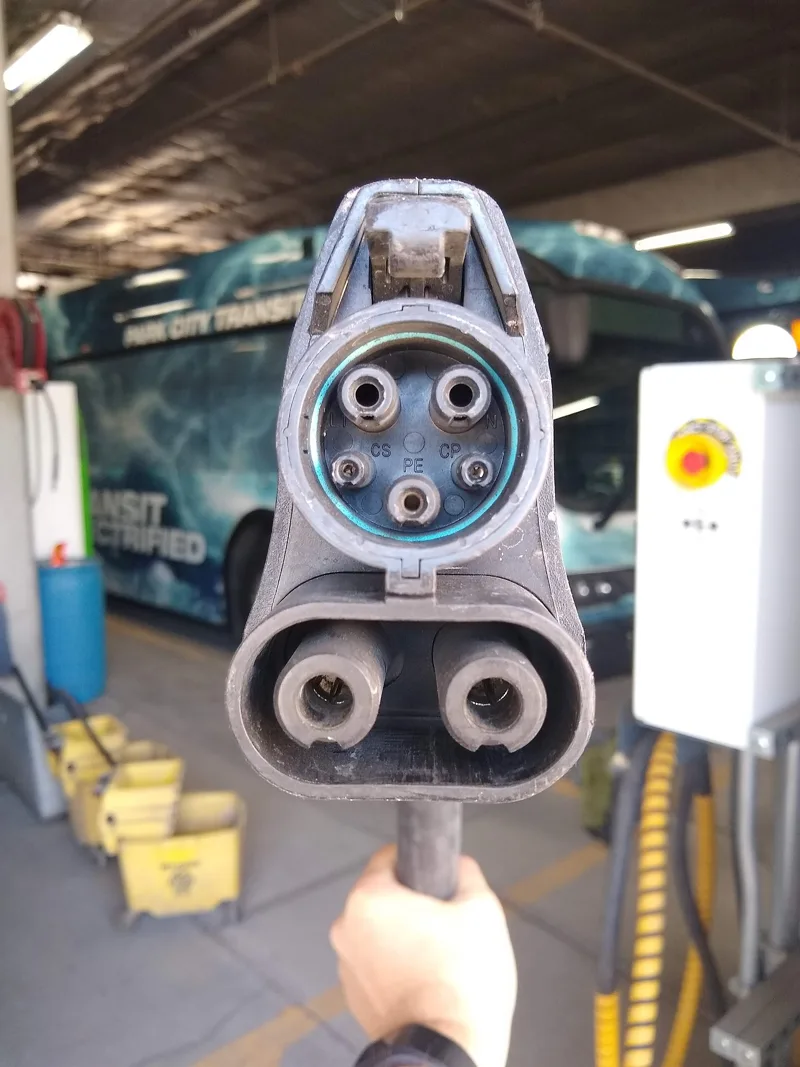
For DC fast charging, GB/T 20234.3 abandons the AC shape for a different and larger connector. It is still a flattened circle, but nominally 65 mm (2.6 in) across and 60.8 mm (2.39 in) top to bottom. Four small pins handle signalling: two for charging confirmation (CC1 and CC2) and two for CAN bus communication (S+ and S-). A further pair, A+ and A-, supply up to 600 W of auxiliary DC power at 30V/20A.
On paper, the ceiling is formidable. The standard allows up to 1200 kW, with voltage not exceeding 1500 V DC and continuous current not exceeding 800 A. On the street, the picture is humbler. Chargers of 50 kW or less are more common, typically keeping the minimum GB/T voltage of 750V with different current ratings, and some use the GB/T plug at a lower voltage such as 500 V.
Why the headline power does not always arrive
A charger's rating is a ceiling, not a promise. If the battery voltage is low, the current needed to reach full rated power can exceed what the charger can deliver. Some cars, even when voltage matches, cannot absorb full power because the heavy current would generate too much heat. And voltage can be a hard stop: a charger limited to the minimum GB/T voltage of 750V cannot charge an 800 V battery at all, unless the car carries its own boost converter to step the voltage up.
How do a GB/T car and charger talk to each other?
Here GB/T parts company with CCS most sharply. CCS carries its messages over the power cable using power line communication, a design inherited from the European Type 2 and North American SAE J1772 AC standards. GB/T uses a separate pair of wires and the CAN bus, and GB/T 27930-2015 is largely based on the SAE J1939 network protocol. Digital messages run under the CAN 2.0B protocol at 250 kbit/sec.
The exchange resembles two strangers agreeing terms before a deal. First the S+ and S- communication contacts connect, then the A+ and A- auxiliary power contacts. The charger sends a handshake to the car's battery monitoring system, and once the battery system answers, the charger tests the insulation and reports that it is safe. Next comes negotiation: the battery system states what it wants, and the charger replies with the most it can give. The battery system then checks whether the car meets the conditions for charging and announces it is ready; the charger runs its own check and does the same.
Charging proper begins with the battery system sending its current state, and the charger adjusting its output in a continuous feedback loop. That loop runs until either side sends a stop message.
Why China developed ChaoJi
Hardware that looks good on paper can disappoint on the road. Soon after the GB/T 20234.3-2015 standard appeared, real-world use showed that the locking system did not work as well as intended and the connector was too easily damaged. Revisions were planned, but a sturdier connector looked necessary.
The answer was ChaoJi, developed in 2020 by the China Electricity Council together with CHAdeMO. It is rated at a maximum of 900 kW, with 600 A at 1500 V. The idea is that ChaoJi could replace both GB/T DC and CHAdeMO, with adapters providing backward compatibility for GB/T DC, CHAdeMO and CCS. The 2023 GB/T revision then raised the standard's own ceiling to 1200 kW.
Charging standards by market share and power
| Standard | Share of fast-charge EVs sold, Dec 2019 | Headline rating |
|---|---|---|
| GB/T 20234.3 (DC) | 40% | Up to 1200 kW, 1500 V, 800 A |
| Tesla proprietary inlet | 19% | Tesla's own design |
| CCS (Combo1 and Combo2) | 17% | Version 1.0 standardised up to 200 kW |
| CHAdeMO | 15% | First specification 125 A at up to 500 V |
| ChaoJi | Introduced 2020 | 900 kW, 600 A, 1500 V |
| Megawatt Charging System | Trucks and buses | 3.75 MW, 3,000 A at 1,250 V |
What is the Megawatt Charging System and why do trucks need it?
A car battery can be topped up in a coffee stop; a heavy truck battery cannot. The Megawatt Charging System is a connector under development for large battery electric vehicles, rated for a maximum of 3.75 megawatts, which means 3,000 amps at 1,250 volts DC. CharIN, the organisation that developed CCS, is advancing it, hoping it becomes a worldwide standard for large and medium commercial vehicles.
The target is Class 6, 7 and 8 commercial vehicles, with large trucks and buses first in line. CharIN also sees potential in aviation, such as e-VTOL aircraft and electric planes, and in marine work for tugs, e-ferries and river cargo vessels.
How the megawatt connector took shape
CharIN formed a task force in March 2018 to define a new high-power standard for commercial vehicles. It used the name HPCCV until late 2019. A meeting in September 2018 built consensus, and CharIN's board approved a set of requirements in November that year. Five companies submitted designs: Tesla, Electrify America, ABB, paXos and Staubli. The task force chose a plug and socket design in May 2019, and CharIN leadership endorsed it that September.
Version 1.0 had a triangular shape with round power pins, but it was not finger-proof, meaning someone could touch the pins by accident. In September 2020 the US National Renewable Energy Laboratory hosted a test of seven vehicle inlets and eleven connectors from seven manufacturers, with six more taking part virtually. Fit, ergonomics and thermal performance were all judged. At the full 3000 A, both inlet and connector were cooled. With only the connector cooled, current was limited to 1000 A, and with no cooling it fell to 350 A, a neat demonstration of how heat governs everything here.
Versions 2.0 to 2.4 tried "hairpin" shaped contacts, then versions 3.0 to 3.2 returned to the triangle with larger pins and longer protective sheaths to keep fingers away. Prototype connectors were tested at up to 3.75 megawatts in August 2021, and version 3.2 was adopted in December 2021.
What the connector must do
The requirements read like a checklist for a rugged, safe, future-proof plug. It must be a single conductive plug, with a maximum of 1250 V DC and 3000 A and a connector limit of 1500 V DC. It must be touch safe to UL2251, carry an on-handle software-interpreted override switch, and be capable of being automated. Cyber-security and bidirectional V2X charging based on ISO 15118-20 are part of the brief. On road vehicles the inlet goes on the left side, at hip height, between the front and rear axles, and a CCS or ChaoJi inlet may sit alongside for AC charging.
Communication uses automotive single-pair Ethernet, 10BASE-T1S, as its physical layer, with ISO 15118-20 as the application protocol. That choice opens the door to vehicle-to-grid charging and to Plug and Charge, an automated method of authentication and billing.
How fast charging networks reached 350 kW
To see why MCS exists, it helps to see how the car networks grew. Home charging points are typically limited to 7 to 16 A at 220-240 volts, or 1.5 kW to 3.8 kW. Early public charging was modest: the Park and Charge pilot in Switzerland dated to 1992, using three-phase 32 A outlets at 400 volts for microcars.
Japan supplied the next step. A pilot project began in 2006, the TEPCO plug appeared with the Mitsubishi i-MiEV in 2009, and the CHAdeMO consortium formed in March 2010. Its first specification reached 125 A at up to 500 V, and the 50 kW stations became the basis for the term fast charging. When the Nissan Leaf arrived in 2010 with a range of up to 160 km (100 miles), a stop at a 50 kW charger took a maximum of 30 minutes to reach 80%. The West Coast Electric Highway, with fast chargers every 25 to 50 miles, was completed in 2013.
Tesla changed the format from single stations to parks of six to ten, starting in 2012 with 90 kW, then 120 kW in 2013 and later 145 kW. As batteries grew, with the Model S rising from 70 kWh in 2012 to 100 kWh in 2016, charging power had to follow.
The next jump came with liquid-cooled cables. ABB's first chargers in October 2017 met the requirement with 375 A, which gave 150 kW on the 400 V cars of the day, and that output became the basis for the term high-power charging, or HPC. Cooling later improved to regularly allow 500 A. Tesla's V3 Superchargers, using liquid-cooled cables by 2019, allowed up to 250 kW with a short-term 625 A. Ionity was founded in October 2017 to build a network of 400 stations of up to 350 kW, about 120 km apart, by the end of 2020, and its first station opened in April 2018.
Where charging networks are being built
By 2020, half of Germany's fast-charging locations had HPC stations. In October 2022, the BDEW reported full motorway coverage with HPC chargers on a 50 km grid, with the 25 km grid almost complete. Germany's Deutschlandnetz funding included up to 2 billion euro for 10,000 HPC ports, and most of that was awarded in 2022, and a further 6 billion euro was added for the period to 2030.
The European Union's AFIR rules, in force from 13 April 2024, set a 60 km grid along the TEN-T core network, with at least one HPC charger by 2025 and a charging park with HPC chargers by 2030. The Netherlands had 5201 fast chargers by April 2023, and France 2030 includes a goal of 50,000 fast chargers. In the United States, a 2022 programme committed 7.5 billion dollars toward 500,000 charging points by 2030, with 5 billion going to highway fast chargers under NEVI. China's 2015-2020 five-year plan aimed for 800,000 charging points, and a 2021 evaluation counted 470,000 fast chargers among 1.1 million public chargers, counting anything above 22 kW as fast.
What this means for someone buying or driving a car
For anyone driving in China or Belarus, GB/T is the plug the standard covers, and its own rules decide what works. A charger on the 750V minimum cannot feed an 800 V battery unless the car has a boost converter, and a fast charger's rating tells you little until the car's own limits are known. At home, the on-board charger, usually under 10 kW, caps AC speeds whatever the supply offers. And the ChaoJi and 2023 changes show a connector family that is still evolving, with adapters bridging the generations.
Where this goes next
MCS is moving from prototype to paperwork. SAE J3271 was published in March 2025, and IEC 63379 version 1.0 followed in February 2026. The remaining parts, including the low-level communication of IEC 61851-23, are expected to be resolved by the end of 2026, along with further amendments to ISO 15118-10 and ISO 15118-20.
Trials show the hardware working. In March 2024 an MAN eTruck charged at 1000 A and 700 kW at an ABB station, and in April a Mercedes-Benz eActross 600 charged at 1250 A and 1000 kW. Two eActross were delivered to Contargo, which announced its own truck charging network at company sites. Shell opened a public truck charger with both CCS and MCS in Amsterdam in June 2024, while Milence opened its first Antwerp-Bruges park without an MCS plug. E.On and MAN plan public chargers at MAN service centres, 125 of 170 locations in Germany, beginning with 400 kW CCS and converting to MCS later.
Plans are broader still. A Swedish project, E-Charge, was to run three truck stations from the first quarter of 2024 with Scania and Volvo trucks and ABB chargers. Germany's HoLa project planned four stations along the A2 from Berlin to Duisburg, with an upgrade to 1 megawatt using MCS in fall 2023. In May 2026 Germany's transport ministry announced a 1.16 billion dollar programme for electric truck charging, including support for MCS. Tesla said at ACT Expo 2025 that it plans a public 46-station Megacharger network using MCS for the Tesla Semi, and ABB said it would deliver 1200 kW stations in 2025.