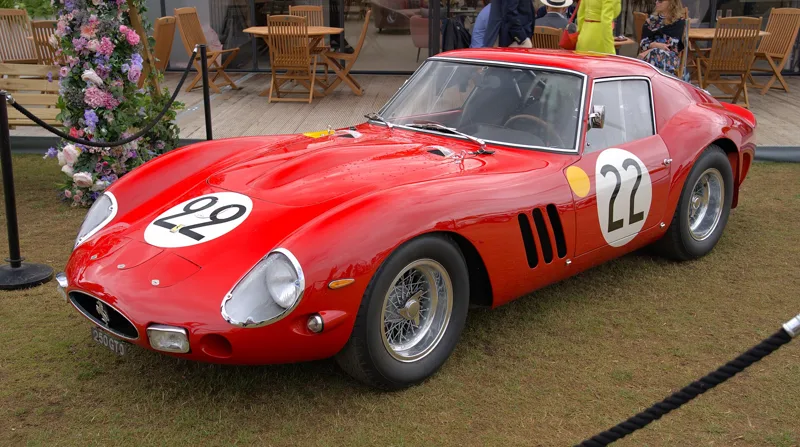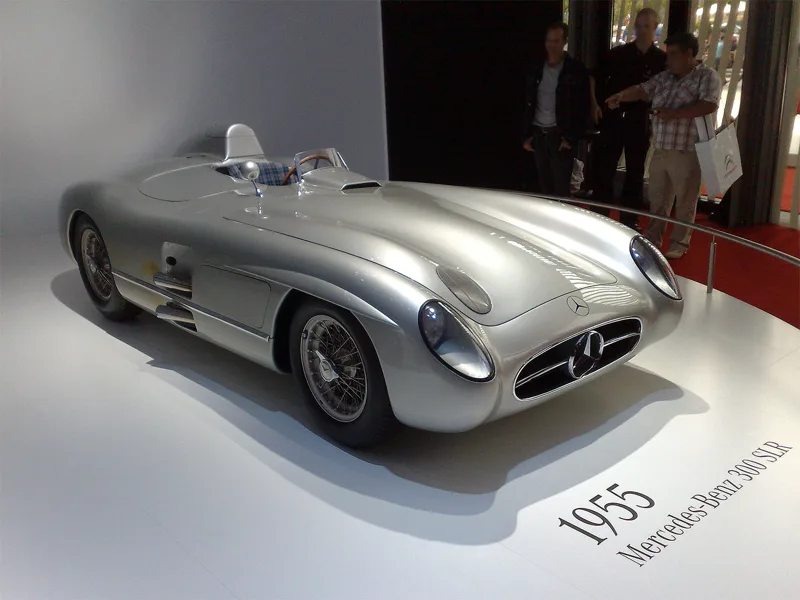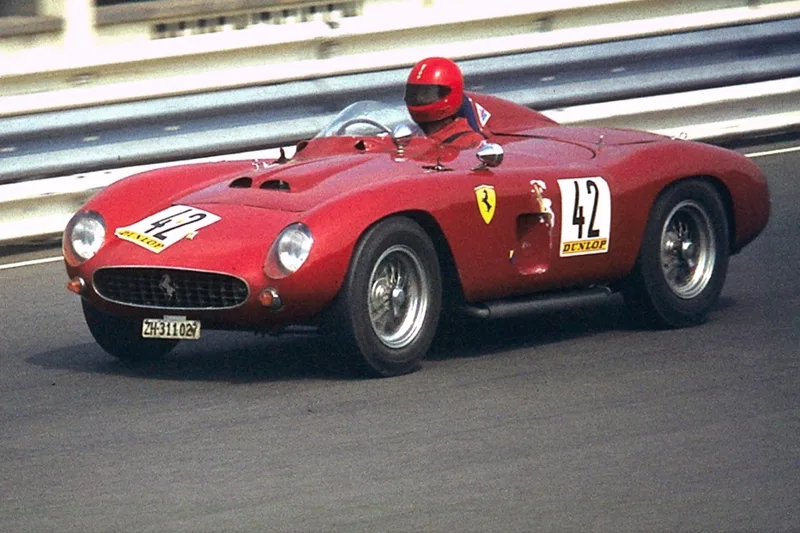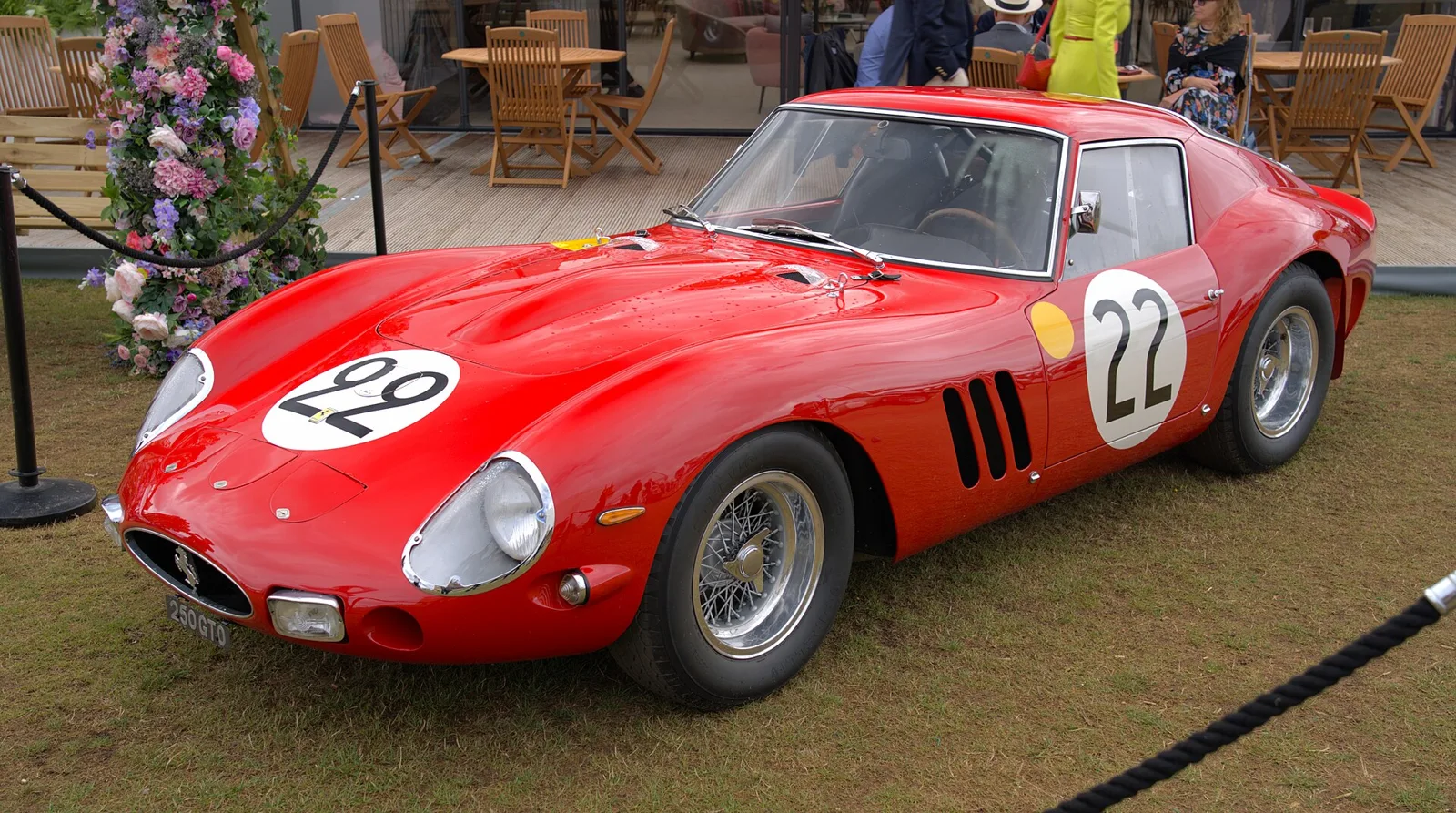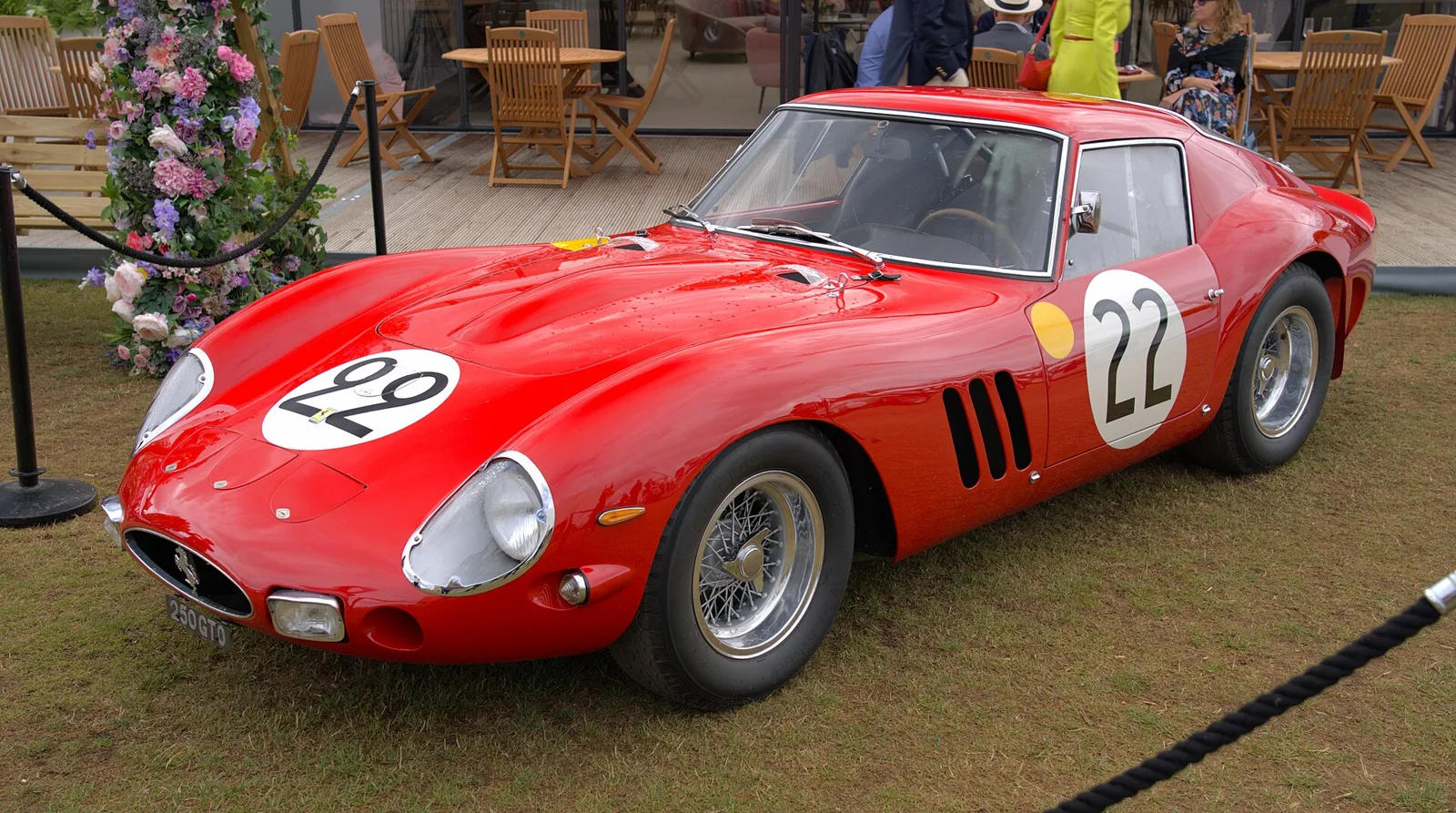
A 1955 Mercedes 300 SLR Uhlenhaut Coupe fetched 135 million euros, and a Ferrari 250 GTO sits behind it, because rarity and racing history decide the price.
A 1955 Mercedes-Benz 300 SLR Uhlenhaut Coupe holds the auction record at 135 million euros, sold in 2022. Ferraris such as the 250 GTO rank close behind, because production numbers, racing wins, originality and provenance combine to set the price.
On 5 May 2022, a racing coupe that its own maker had owned since it was built changed hands at the Mercedes-Benz Museum for 135 million euros. RM Sotheby's handled the sale of the 1955 Mercedes-Benz 300 SLR Uhlenhaut Coupe to a buyer who has not been named, and the price, equal to 114 million pounds or US$142 million, remains the highest ever paid for any car at auction.
What is the most expensive car ever sold at auction?
The most expensive car sold in a public auction through traditional bidding is the 1955 Mercedes-Benz 300 SLR Uhlenhaut Coupe, which made 135 million euros in 2022. The list of auction records only includes cars that went for at least $4 million through ordinary bidding, with the buyer's premium counted in, and excludes private deals, unsold cars and cars that failed to reach their reserve.
The sale funded something specific, because the money went to set up the Mercedes-Benz Fund. The museum kept the other of the two Uhlenhaut Coupes it owned, so one is preserved in the collection while its only sibling now sits with the private buyer.
The price eclipsed the previous record, which had been set by a Ferrari 250 GTO.
A car with the mix of rarity, race wins and provenance can be worth more than almost anything else on four wheels.
What is the Mercedes-Benz 300 SLR Uhlenhaut Coupe?
It is a road-legal version of a racing car. The 300 SLR was a two-seat sports racer built for the 1955 World Sportscar Championship. Its name stands for Sport, Leicht, Rennen, meaning sport, light, racing, and it was developed from the Mercedes W196 Formula One car, with the engine enlarged to 3.0 litres.
Nine chassis were built, seven as roadsters and two as closed coupes with gull-wing doors. When Mercedes-Benz cancelled its racing programme, the company's design chief, Rudolf Uhlenhaut, took one of the leftover cars as his personal transport. Capable of nearly 290 km/h (180 mph), it was by a wide margin the quickest road car then available. One often-told story has Uhlenhaut driving from Munich to Stuttgart, 220 km, in a little over an hour, a trip that now takes two and a half hours.
Light, low and very fast
The engineering explains the speed. A brazed steel-tube spaceframe carried bodywork made from Elektron, a magnesium alloy with a relative density of 1.8, against 7.8 for iron. The car weighed 901 kg (1,986 lb) as a roadster and 1,117 kg (2,463 lb) as a coupe. Think of it as a bicycle frame that has been built around a very large engine: strong where it counts and almost nothing elsewhere.
That engine was a straight-eight displacing 2,982 cc and producing 310 PS (228 kW) at 7400 rpm. The engine was tilted 53 degrees to the right, which lowered the bonnet line and helped the airflow, and it used direct fuel injection from Bosch.
Why was the 300 SLR racing record so strong?
Because for a single season the car was close to unbeatable. In the 1955 Mille Miglia, Stirling Moss and navigator Denis Jenkinson won in a 300 SLR, setting an event record with a 157.650 km/h (97.96 mph) average across 1,600 km (990 mi). Jenkinson read previously prepared notes to Moss, a method comparable to the pace notes used in modern rallying.
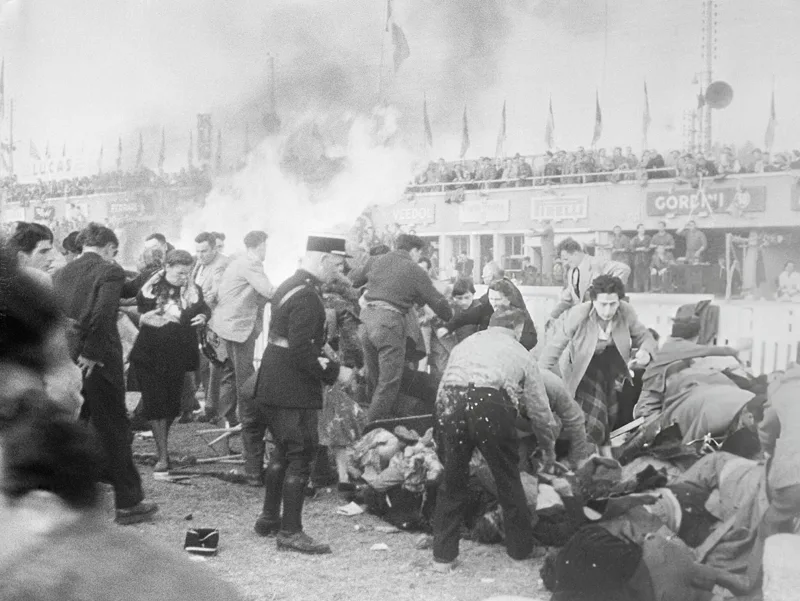
The season also contained tragedy. At the 1955 24 Hours of Le Mans, Pierre Levegh's Mercedes collided with an Austin-Healey and flew into the spectator area. Levegh and eighty-three spectators were killed, and the event remains the deadliest accident in motorsport history. The leading Mercedes cars were withdrawn during the night. The company went on to take a 1-2-3 finish in the Tourist Trophy at Dundrod, then a 1-2-4 in the Targa Florio, which secured the championship by two points over Ferrari. In total, the 300 SLR won five of the six races it entered.
As planned, Mercedes closed its racing department when 1955 ended, having shown it could take titles in both of the World Championship categories, and the company kept out of major racing for three decades after that. Moss later called the 300 SLR the greatest sports racing car ever built.
Why does the Ferrari 250 GTO command so much?
Scarcity, pedigree and fame, in that order. Ferrari built the 250 GTO from 1962 to 1964 to compete in the FIA's Group 3 Grand Touring category. The rules called for 100 cars within 12 months, but Ferrari persuaded the rule makers to count the earlier 250 GT SWB towards the total, and only 36 GTOs were made: 33 with the 1962-63 body and three with the 1964 body. Three further 330 GTO specials push the number to 39 in some counts.
It was never a cheap car, even when new. In the United States the 250 GTO cost $18,000, and buyers had to be approved personally by Enzo Ferrari and his North American dealer, Luigi Chinetti.
What the GTO was like
The mechanics were conservative on purpose, using parts proven in earlier competition cars. A 3.0-litre Colombo V12 of 2,953 cc made about 300 PS at 7500 rpm through six Weber carburettors and a new five-speed gearbox. What was new was the shape. Giotto Bizzarrini concentrated on aerodynamics, backed by wind tunnel tests at Pisa University, and the resulting aluminium body, built by Scaglietti, had a long low nose and small air intakes. The interior was spartan. There was no speedometer, no carpet and no headliner.
On the track it delivered at once. Phil Hill and Olivier Gendebien finished second overall in the car's debut at the 1962 12 Hours of Sebring. In 1962, 1963 and 1964 the GTO carried Ferrari to the over-2000cc class title in the FIA's GT Manufacturers championship, and GTOs also took the Tour de France Automobile in 1963 and 1964. In 2004 Sports Car International went as far as nominating it the best sports car ever.
What happened to the price of a Ferrari 250 GTO?
| Year | Event | Price |
|---|---|---|
| 1989 | Private sale of 250 GTO chassis 3909GT to Takeo Kato | $13,837,500 |
| 1994 | Resold to the Surrey dealer Talacrest after the Japanese bubble burst | $2.7m |
| After 1994 | Sold to David Morrison | Estimated $3.5 million |
| 2001 | Private sale to John Mozart, in exchange for a Ferrari 250 TR | Estimated $7,000,000 |
That single car's history explains the market in miniature. During the Japanese asset price bubble of the late 1980s the yen strengthened from about 300 to the US dollar in 1985 to about 150 in 1989, and wealthy Japanese buyers found classic cars effectively half as expensive in yen terms. When the bubble burst, the value of the same GTO fell by a large margin.
Booms, busts and the long climb
The collector market took shape in the 1970s. Used Ferraris were shipped across the Atlantic to America's Italian exotic car dealers, and those dealers would buy whatever they could get. In the 1973 oil crisis, exotic car prices dropped sharply, and a Lamborghini Miura could be had for $15,000. A 1960 Ferrari 250 GT SWB California Spider was advertised in Road & Track in June 1964 at US$10,500, then in Hemmings Motor News in April 1976 at US$16,750. In 2009 it sold for $4,950,000.
The 1980s were a boom, with investors packing auctions and prices racing upwards. Cars went into storage in the hope of profit, and the prices pushed enthusiasts out while the cars simply moved from one investor to the next with little gain. Car Magazine said in November 1997 that the Ferrari F40 had sparked the speculation craze. The 1990s then brought a bust, and most owners lost considerable portions of the value of their investments.
Since that recession the most desirable cars have gained at least 200 per cent in value, a change put down to investors who now research a car thoroughly before buying, in contrast to the impulsive purchases that destabilised the market in the 1980s. Dietrich Hatlapa of the HAGI Index reports that vintage cars rose by an average of 21 per cent in value from 2005 to 2010.
What makes one old car worth tens of millions?
A set of factors stack on top of one another. Low production and rarity limit supply, while desirability raises demand. Good design helps, and so does nostalgia: buyers at the peak of their earning power, with seven figures to spend, tend to pick the cars they grew up wanting. Sports cars and roadsters are worth more than comparable saloons.
Condition and paperwork are vital. Many of these cars have already had restoration costing hundreds of thousands, or millions, of dollars, so documentation of that work matters. Originality counts as well: a car with the mechanical components it left the factory with is preferred, and while an original body keeps value better than a replacement, collectors regard the chassis as the more important part. A manual gearbox is more desirable than an automatic. Winning a prestigious show, such as the Pebble Beach Concours d'Elegance, adds value.
Race history and eligibility
Racing history makes a major difference, especially a victory in a prestige event such as Le Mans, the Formula One title or the Indianapolis 500. A Ferrari 330 TRI/LM Spider, the 1962 Le Mans winner, sold for $9.25 million in 2007. Eligibility for historic events matters because collectors often buy vintage racers to compete in them. Rules based on Historic Technical Passports and FIA Heritage Certificates require cars to keep period-correct mechanical systems, so originality is a practical necessity as well as a point of pride.
Famous owners, good and bad
Fame transfers to the metal. When Elton John auctioned his collection in 2001, most of it sold at twice the estimate. In 2008 the broadcaster Chris Evans ended a 21-year-old record by bidding successfully on a Ferrari 250 GT SWB California Spider that James Coburn had once owned. In August 2011 a Scuderia Ferrari factory 250 Testa Rossa set a new record, surpassing one set two years earlier by a customer car of the same model.
Scandal works in reverse. A Rolls-Royce Corniche owned by the broadcaster Jimmy Savile is speculated by the motor trade to be worthless in light of the abuse scandal that followed his death. The white 1993 Ford Bronco from the O. J. Simpson chase, on the other hand, sold for $75,000 in 2004, nearly twice its original value.
Provenance can also be wrong. A Mercedes-Benz 770 F-Cabriolet sold in 1973 for a then-record US$153,000, supposedly as Adolf Hitler's parade limousine; a week afterwards it was revealed to have belonged to Finland's President Carl Gustaf Mannerheim. The car went on to beat its own record some months later anyway.
What does this mean for someone buying or watching the market?
Auction results are not the whole story. Sales held around the Monterey events each mid-August tend to be expected to set records, since collectors and investors gather there. But in general auctions are unlikely to produce statistically significant price increases over private sales of the same model in equivalent condition, so a result is a data point, not a verdict.
There is a risk side too. One of the biggest dangers for collectors is immediate devaluation after an accident. The most expensive crash on record was caused by the American businessman Christopher Cox, who wrecked the front end of his Ferrari 250 GTO, a car valued at approximately $30 million before the incident.