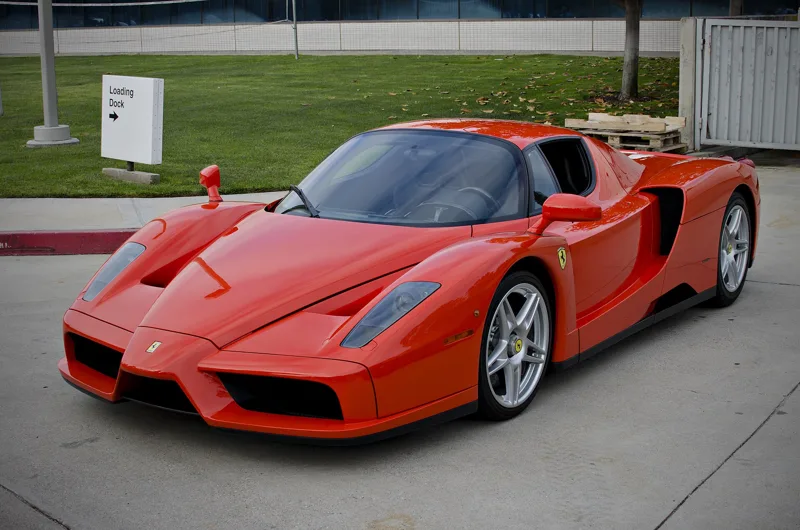
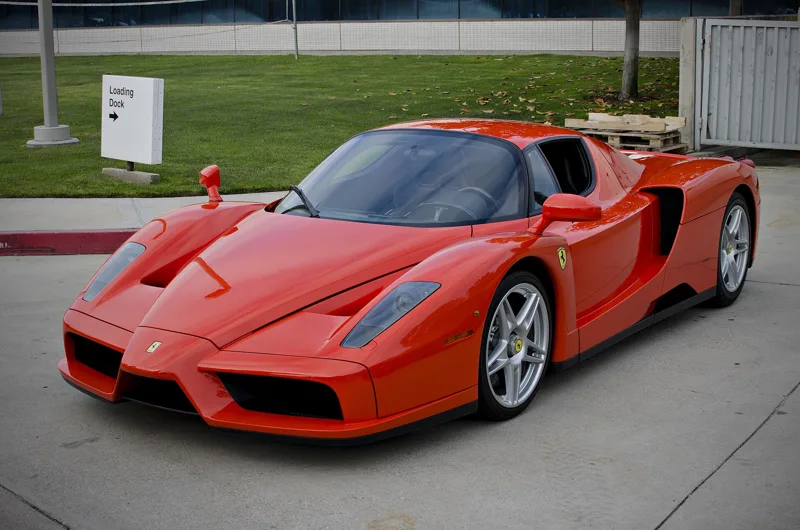
Built to meet Group 3 homologation rules in 1962, the 250 GTO grew into one of the most expensive cars ever sold.
The Ferrari 250 GTO was a V12 front-engined grand tourer that Ferrari produced from 1962 to 1964 for homologation in FIA Group 3 racing. Only 36 were built, and the model later became one of the most expensive cars ever sold at auction and privately.
The Ferrari 250 GTO was a front-engined V12 grand tourer built by Ferrari between 1962 and 1964. It was made to meet the rules for Group 3 Grand Touring Car racing, and it went on to become one of the most valuable cars ever sold.
Why was the 250 GTO built?
Group 3 Grand Touring Car rules required at least 100 cars to be built within 12 months. Ferrari had already homologated the 250 GT SWB in June 1960, and the GTO was designed to carry that approval forward into a faster car.
The letters stand for Gran Turismo Omologato, which translates as grand touring approved. Ferrari persuaded the rule makers to count the earlier 250 GT SWB cars, so the GTO run ended at 36 cars.
A front-engined V12 built to satisfy a homologation rule, which became the most valued model in the Ferrari catalogue.
Who designed the 250 GTO?
Giotto Bizzarrini led development as chief engineer, and he is usually credited as the designer. He and most other Ferrari engineers were dismissed in 1962 after a dispute with Enzo Ferrari, so Mauro Forghieri took over further work with Scaglietti on the body.
The design was a collaborative effort, and no single person can take the credit for it. Each stage of development passed through several hands.
What were the GTO's rivals in Group 3?
Group 3 GT racing was the arena for this car, and its main opponents were the Shelby Cobra, the Jaguar E-Type and the Aston Martin DP214. Bizzarrini focused his design effort on aerodynamics, aiming to improve top speed and stability against those cars.
Bizzarrini's wind tunnel and track work was therefore central to the car's competitiveness, not an afterthought added once the mechanicals were settled.
What engine and chassis did the GTO use?
The engine was the Tipo 168/62 Comp. V12 of 2,953 cc, a race-proven unit used in the 250 Testa Rossa that won Le Mans. The chassis was based on the 250 GT SWB, with minor changes to reduce weight and stiffen the frame.
The frame was welded by hand from oval tubing. Front suspension used A-arms, the rear used a live axle located by Watt's linkage, and the wheels were Borrani wires fitted to disc brakes.
Power was rated around 300 PS, which is 296 bhp or 221 kW, reached at 7500 rpm. Torque reached 294 Nm (217 lbf ft) at 5500 rpm.
A dry sump, six Weber 38DCN carburettors and an all-alloy block made the engine a racing unit. The five-speed gearbox had Porsche-type synchromesh.
How was the body shaped?
The body was shaped in wind tunnel tests at Pisa University, followed by road and track testing of several prototypes. The result was an all-aluminium body with a long, low nose and distinctive intakes, a feature that set it apart from earlier Ferrari GT cars.
A rear spoiler was added after early testing, and a belly pan covered the underside. The fuel tank cover formed a further spoiler under the car.
Scaglietti built most of the bodies, with the exception of early prototypes made by Ferrari or Pininfarina. Cars came in many colours, and the most famous was the bright red Rosso Cina.
What was the cockpit like?
The cabin was spare. It had no speedometer, cloth seats and no carpet or headliner, with ventilation from exterior air inlets. Its racing purpose showed in every detail, with no attempt at luxury. Drivers had little to distract them from the road or the track.
The exposed metal gate for the shift pattern became a Ferrari tradition that lasted in production models until steering column paddle shifters replaced it.
How did the prototypes come about?
Two 250 GTO prototypes were produced in 1961 from existing chassis, converted for the job. The GTO was heavily derived from the 250 GT SWB, so that route was the quickest. The first, 2643GT, was built to competition specification, with a reinforced chassis and a competition gearbox.
That prototype ran at the 1961 24 hours of Le Mans, where it reached 8th overall before retiring at 4:45 am. High-speed instability showed up during the race, and the car returned to the factory for more testing.
It was entered at Daytona in 1962 in the Continental 3 hours and finished fourth overall before passing to private owners.
At Monza in September 1961, Stirling Moss ran the second prototype, and it was quicker around the circuit than a 250 GT SWB. Its body was rough and hastily finished.
Ferrari's team nicknamed the second prototype Il Mostro, the Monster, and the press called it The Anteater.
How did the homologation work?
Under FIA rules of 1962, Group 3 homologation needed at least one hundred examples. Ferrari built only 36 GTOs, but the car was covered by the homologation papers for the earlier 250 GT Berlinetta SWB. Ferrari obtained repeated extensions to those papers, which let the team add changes to the engine, transmission and suspension.
The myth that Enzo Ferrari moved the same cars around for inspectors is just that, because the earlier homologation papers were extended several times between 1961 and 1964.
Ferrari also benefited from the bodywork rules, since more than 100 bodies of the earlier SWB type had been built. That allowed a new body style to be designed without breaking the rules.
How did the GTO race at the start?
The racing debut came at the 1962 12 Hours of Sebring, where Phil Hill and Olivier Gendebien finished second overall. Ferrari then took the over-2000cc class of the FIA GT Manufacturers championship in 1962, 1963 and 1964, with the GTO raced in each year.
250 GTOs also won the Tour de France Automobile in 1963 and 1964. Private teams and Scuderia Ferrari both entered the car, so the GTO appeared in many different hands and liveries.
Rivals included the Jaguar E-type, the AC Cobra and the Aston Martin DB4 GT Zagato. Many GTOs were raced by independent teams and private drivers, so GTO drivers often raced against each other.
The 250 GTO was among the final front-engined machines still competitive at sports car racing's top tier.
What was the GTO '64?
The GTO '64, or Series II, was redesigned by Mauro Forghieri and Mike Parkes in 1964 to keep the car competitive for one more year. Three new cars were built to that specification, and four earlier cars were retrofitted by the factory.
The new bodywork borrowed aerodynamic ideas from the 250 LM, which gave the two cars a visual similarity even though the GTO kept its front-engined layout.
Engine, gearbox and suspension changes were made too, but the overall performance gain was slight. The GTO '64 still won races, including an overall victory at Daytona in 1964.
How many were built?
Ferrari built 36 GTOs in total, made up of 33 Series I cars with 1962 to 1963 bodywork and three Series II cars with 1964 bodywork. Some tallies reach 39 when the three 330 GTO specials are counted. That count is the figure most often quoted when people discuss the car.
The 330 LMB pairs a 4.0-litre 330 motor with a modified 250 GT Lusso chassis, and it was a related model rather than a GTO itself.
Which variants were built?
Three 330 GTO specials used the 250 GTO chassis and body with 400 Superamerica 4.0-litre engines, and they are sometimes counted in the total. Four 330 LMB cars were built in 1963, and three 275 GTB/C Speciales followed in 1964 and 1965.
The 330 GTOs were distinguished by a larger bonnet bulge and were used briefly for racing and testing before being sold to private customers.
The Breadvan was a one-off built by Bizzarrini for Scuderia Serenissima after he left Ferrari. It was designed to beat the new 250 GTO, and it carried many of the concepts Bizzarrini had tried out first on the GTO.
How did the GTO rank among sports cars?
On its 1960s list, Sports Car International ranked the 250 GTO eighth, and in 2004 it named the car the top sports car of all time. Motor Trend Classic ranked it first among the Greatest Ferraris of All Time. Those rankings came decades after the car was built, which shows how its standing grew.
Rankings like these reflect a car whose racing record and design have stayed at the centre of collector interest. The GTO's reputation rests on that combination of track results and visual drama. Those positions are a useful reminder that the car's influence reaches well beyond its production run of 36.
What did the 250 GTO sell for?
The car sold for $18,000 in the United States at launch, and Enzo Ferrari personally vetted each buyer, working alongside his North American dealer, Luigi Chinetti. Sales today have repeatedly set price records, and the model is among the most desired collector cars.
In the late 1960s and early 1970s, a GTO was often a used race car worth four-figure sums. Restored Duesenberg Model Js sold for about $50,000 around 1970, which shows how far the market moved.
Values climbed through the decades that followed, and the car became the most valuable Ferrari model.
The market fell back, bottoming at $2,700,000 in September 1994, before a later low of $2,500,000 in May 1996. Prices recovered later and kept climbing. Collectors now judge the GTO by its rarity, its racing pedigree and its shape, and each of those qualities supports the price.
In June 2018, a 1963 250 GTO (chassis 4153GT) sold privately for $70 million, the highest price yet for a Ferrari. RM Sotheby's sold 3413GT at Monterey for $48,405,000 on 25 August 2018, a new auction record. The previous record was held by 3851GT, sold at Bonhams Quail Lodge in 2014.
Scarcity and high prices led to replicas built on more common Ferrari chassis. Misrepresented copies offered at full market value have also been reported.
How did the GTO fade from racing?
The GTO gradually became obsolete after the 1964 season. Scuderia Ferrari withdrew it from racing by 1965, and the factory's exit left independent teams and private owners to run it in endurance events, rallies and hillclimbs. By the mid-1960s, newer machinery had overtaken it in most classes.
Before the collector market and vintage racing revived interest, some surviving cars were used in regional races and others were simply road cars.
What are the Ferrari 250 GTO specifications?
The table lists the core figures for the 250 GTO, including the engine, output, gearbox, production totals and price when new. Where a figure applies to the 330 GTO specials or the Series II cars, the table says so, so the figures stay separate.
| Item | Detail |
|---|---|
| Built | 1962 to 1964 |
| Engine | Tipo 168/62 Comp. V12, 2,953 cc, dry sump |
| Output | About 300 PS (296 bhp; 221 kW) at 7500 rpm |
| Torque | 294 Nm (217 lbf ft) at 5500 rpm |
| Gearbox | 5-speed with Porsche-type synchromesh |
| Production | 36 cars, or 39 with the 330 GTOs |
| Price new | $18,000 in the United States |
| Record sale | $48,405,000 at auction, 25 August 2018 |