A 1913 partnership, the David Brown DB era, Ford and Mercedes links, the 2018 stock market listing and a Formula One team that wears the name.
Aston Martin, founded in 1913 by Lionel Martin and Robert Bamford, is a British maker of grand tourers and sports cars. Under David Brown the DB series made its name, and the company is now listed on the London Stock Exchange with a Formula One team and lifestyle ventures.
Few British carmakers carry as much heritage as this grand tourer specialist. Founded in 1913, it grew into a listed company that still makes its cars in Warwickshire, and its DB cars turned it into a British cultural icon. The brand has also survived several financial crises, and it now sponsors a Formula One team that carries its name.
Who founded Aston Martin?
Lionel Martin and Robert Bamford set up the business in 1913. They had teamed up the year before to sell Singer cars, and they also serviced other makes from their premises. Martin raced specials at Aston Hill, and the pair decided to build vehicles of their own.
The first car to carry the name combined a Coventry-Simplex four-cylinder engine with the chassis of a 1908 Isotta Fraschini. Work on the first production cars could not begin in 1915, because the First World War pulled both founders into military service.
Seven bankruptcies, one James Bond car and a listed company that still builds grand tourers in Warwickshire.
How did the interwar cars take shape?
After the war the company found new premises and new backers. Louis Zborowski provided funding in the early 1920s, and the firm's cars went on to set records at Brooklands. Its works cars had 16-valve twin-cam engines and were built for racing and record breaking.
The original business collapsed in 1924, and the next owners took over the following year. Bill Renwick and Augustus Bertelli brought in fresh capital, and their own patented engine design became the basis for a new start that produced the car known as Buzzbox.
Who designed the cars of the interwar years?
Augustus Bertelli acted as technical director and designer for nearly every new Aston Martin from 1926 to 1937. His cars included the T-type, the International, the Le Mans and the Ulster, most of them open two-seat sports models bodied by his brother Enrico.
Bertelli also drove his own machines, and the LM team cars won respect in national and international events, Le Mans included. Financial trouble returned in 1932, when Lance Prideaux Brune kept the company alive for a year before handing it on.
How did David Brown shape the DB series?
In 1947 the gear and machine tool maker David Brown, based in Huddersfield, acquired the Aston Martin business and placed it inside its Tractor Group. Brown also took on Lagonda, and the two marques began sharing workshops at Newport Pagnell.
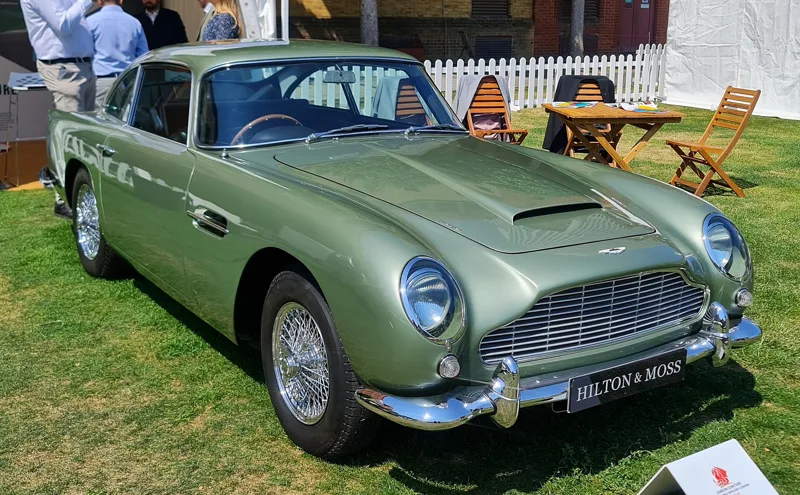
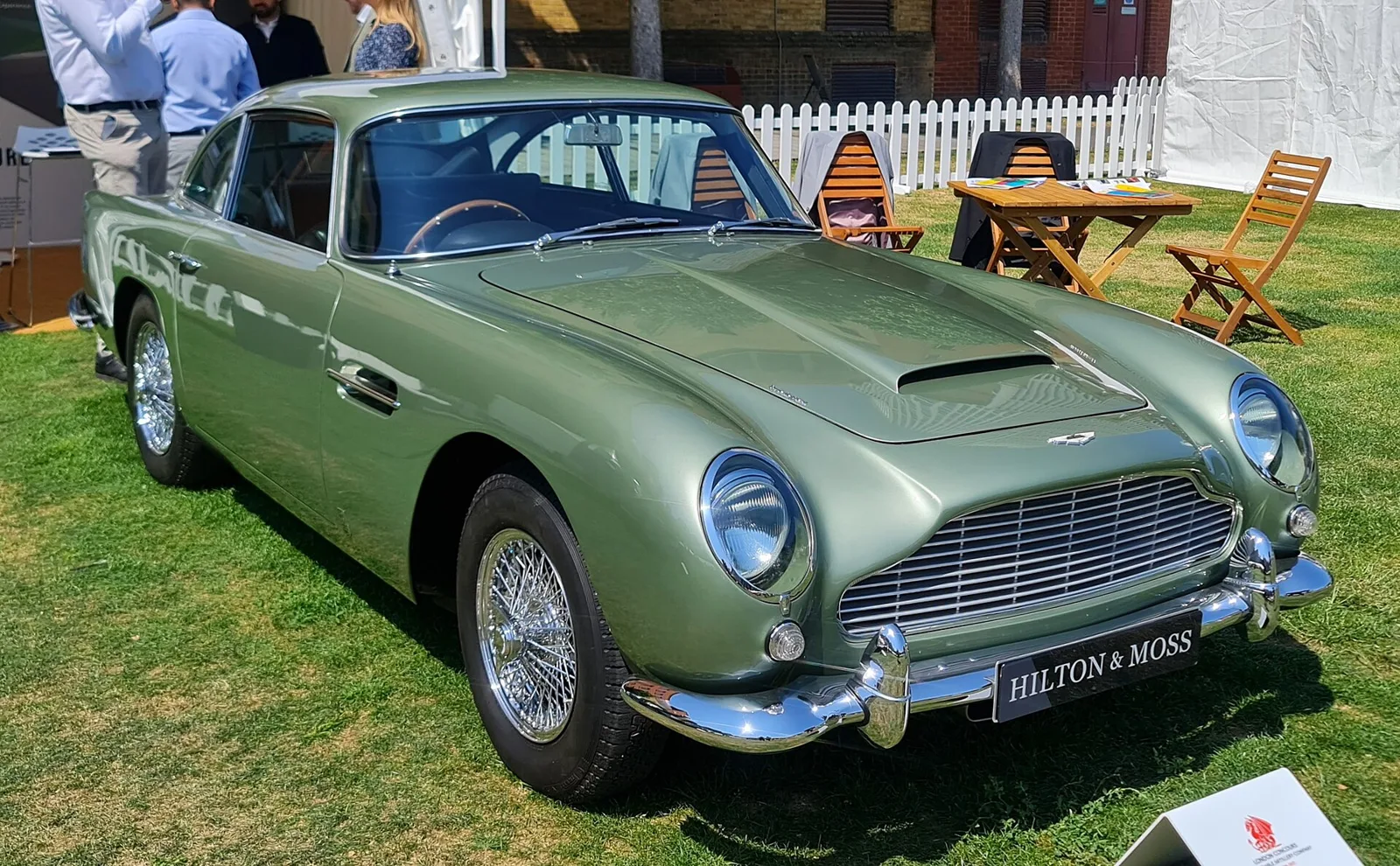
The DB range came next. The DB2 was revealed as a Le Mans prototype, the DB4 arrived in 1958 with Italian styling, and the DB5 followed in 1963. A DB5 later became the car of choice for a famous secret agent in the 1964 film Goldfinger.
The DB6 and the DBS followed in the later 1960s. Tadek Marek designed the six-cylinder engines that powered these cars between 1954 and 1965, and his work underpinned much of the range's character.
What became of the Lagonda name?
The Lagonda name was revived in 2008, when the company announced that a new concept car would be shown in 2009. The revival tied the marque back to the Newport Pagnell heritage that David Brown had shared with Lagonda in the years after 1947.
How close did Aston Martin come to ruin?
The company has survived seven bankruptcies, which is an unusual record for a car maker. Its troubles often came when development costs for new engines and models rose at the same time as sales fell. Each crisis came from a different mix of costs and falling demand.
In 2008 the firm planned to reduce staff numbers from 1,850 to 1,250 because of the economic recession. That reduction reflected how sharply demand had dropped in the years before the downturn.
Did Aston Martin ever build cars outside Britain?
Yes. In 2008 the company agreed to outsource more than 2,000 cars a year to Magna Steyr, keeping design and engineering at Gaydon. The arrangement let the company add production capacity while its design work stayed in one place, which was a deliberate choice.
Gaydon remained the focal point of the business.
What changed under Ford's ownership?
Ford took a controlling interest in 1987 and had full control by 1993. It placed the company inside its Premier Automotive Group and put money into new manufacturing, aiming to raise output. Those investments set the stage for the DB7 era.
A new factory at Bloxham opened in 1994 to build the DB7. Output reached a record 700 cars in 1995, the 2,000th DB7 rolled out in 1998 and the 6,000th in 2002, a total that surpassed every earlier DB model combined.
How did the Gaydon plant change production?
The Gaydon plant opened in 2003 as the first purpose-built factory in the company's history. It covers a 55-acre (22 ha) site and includes a production building of 35,000 m2 (380,000 sq ft), alongside a front building of 8,000 m2 (86,000 sq ft) and offices.
Engines came from a separate facility, the Aston Martin Engine Plant, which the company set up in Cologne in October 2004. That plant could build as many as 5,000 engines annually, with each unit assembled by a single trained technician.
How did the 2007 sale to a private consortium work?
A consortium led by David Richards, the chairman of Prodrive, bought Aston Martin for 475 million pounds in 2007. The group also included the US banker John Sinders and two Kuwaiti investment companies. The purchase was a turning point for the brand's ownership.
Ford kept a stake in the company after the sale. Production of the classic cars had already moved away from Newport Pagnell, which built nearly 13,000 cars from 1955 onwards, and it returned there in 2017.
What did the Mercedes and Stroll links bring?
In 2013 the company agreed to take Mercedes-AMG engines for its next generation of cars, and Mercedes-AMG also supplied electrical systems. Mercedes was due to lift its holding in steps from 5 to 20 per cent. The partnership was intended to support a new generation of models.
Lawrence Stroll's consortium paid 182 million pounds in 2020 for a 16.7 per cent stake, and a rights issue added more capital. Stroll became chairman, marking a new period of ownership.
When did Aston Martin join the stock market?
Aston Martin Lagonda Global Holdings plc began trading in London on 3 October 2018. The float came after a turnaround that produced a pre-tax profit of 87 million pounds for the year. The listing was the start of a new phase of public scrutiny.
A listing gave the company access to new capital after many years of losses. Later shareholders included the Saudi Public Investment Fund and the Chinese automaker Geely, each taking a significant stake in the business.
How did sales decline and then recover?
Sales were 7,300 cars in 2007, but they fell to 4,200 in 2013 and 3,500 in 2014. The 2014 pre-tax loss of 72 million pounds showed how deeply the drop had cut into the company's finances. Recovery took several years of cost control and new models.
The company returned to profit in 2017 after selling more than 5,000 cars. Its pre-tax profit of 87 million pounds marked a sharp reversal from the year before, when the company had made a loss.
Which models shaped the modern range?
The V8 Vantage appeared in 1977 and the Volante convertible in 1978. William Towns styled the one-off Bulldog in 1980, and he also shaped the futuristic Lagonda saloon, which was based on the V8. The early V8 cars laid the groundwork for later models.
The V12 Vanquish replaced the Virage as the flagship in 2001, and the DB9 coupe took over from the DB7 in 2003. The DBX became the company's first SUV, built at a plant in St Athan, Wales.
How has Aston Martin performed at auction?
In August 2017 a 1956 DBR1/1 sold at Sotheby's Pebble Beach sale for US$22,550,000, the highest price ever paid for a British car at auction. The car had earlier been raced by Carroll Shelby and Stirling Moss. Its sale set a benchmark for British cars at auction.
A 1963 DP215 later changed hands at US$21,455,000 in August 2018. Results like these show how strongly collectors value the company's early racing and grand touring cars.
How has the brand grown beyond cars?
The name now appears on boats, submarines, aircraft and property. In May 2018 the company launched a submersible called Project Neptune with a submarine builder, while a luxury tower in Miami carried the brand into residential property. Licensing deals stretch the name well beyond the showroom.
The Aston Martin Residences tower in Miami rises to 66 storeys and opened in 2024. Its residents buy into the brand as much as the building. It shows how the name has become a lifestyle brand as well as a carmaker.
How did Aston Martin's racing roots develop?
The company entered Formula One as a constructor in 1959 and 1960, but those years produced no championship points. Its early attempt was short-lived. The team that later became Aston Martin was renamed for the 2021 season, and its AMR21 car was unveiled in March 2021.
Aston Martin Racing was set up in 2005 for the DBR9 programme, and the company announced in October 2023 that it would compete in the WEC and IMSA series in 2025. A Tickford-engined Nimrod Group C car also finished seventh at Le Mans in 1982.
Aston Martin models and milestones at a glance
The table below lists the main figures for the models and milestones covered in this article. Each row names one item, so the values should not be read as applying to every model in the range.
| Item | Detail |
|---|---|
| Founded | 1913 by Lionel Martin and Robert Bamford |
| DB5 | 1963, featured in the 1964 film Goldfinger |
| Record production year | 700 cars in 1995 |
| Gaydon site | 55 acres (22 ha) |
| Cologne engine plant | Up to 5,000 engines annually |
| 2007 consortium purchase | 475 million pounds |
| Stock market listing | 3 October 2018 |
| Stroll consortium stake | 16.7 per cent for 182 million pounds |
| Record auction | US$22,550,000 for a 1956 DBR1/1 |
| Miami tower | 66 storeys, opened in 2024 |
Frequently asked questions
Why is Aston Martin linked to James Bond?
The DB5 appeared in the 1964 film Goldfinger, and the car became one of the most recognisable products of the brand. The link has been reinforced by later Bond films and by licensed Bond-themed products.
Did Aston Martin ever race in Formula One before 2021?
Yes, Aston Martin entered Formula One in 1959 and 1960, but those seasons produced no points. The 2021 team was a separate entry based on Racing Point.
When did the company last change its chief executive?
Adrian Hallmark took over from Amedeo Felisa as chief executive, starting on 1 October 2024. The company has had several chief executives in recent decades, reflecting its shifting fortunes.
Where is the company headquartered?
Sports cars and grand tourers come from Gaydon in Warwickshire, England, while the DBX SUV is built at a factory in St Athan, Wales.