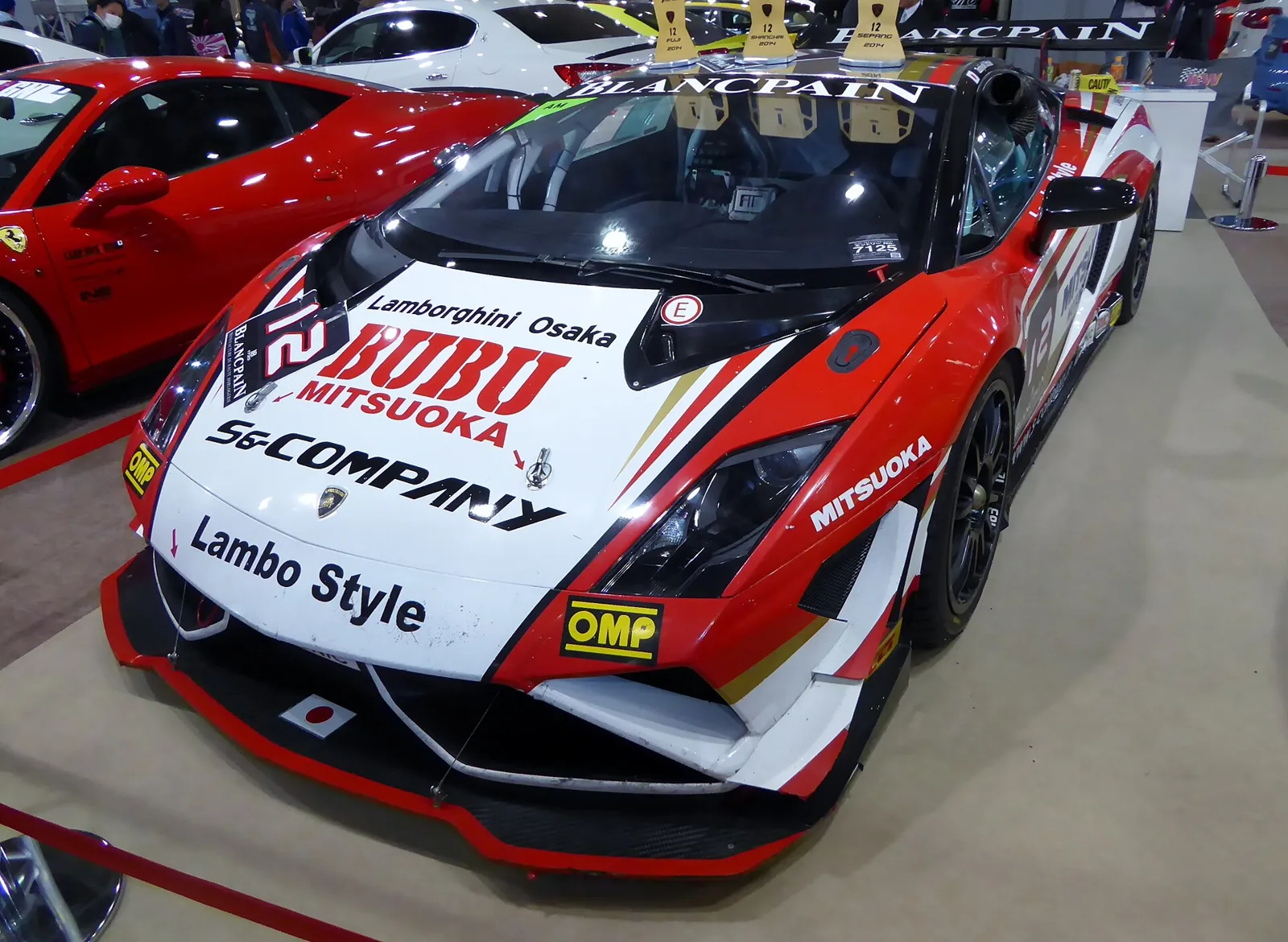
Same car, same tyres, no excuses: how three car makers built their own championships, from the Porsche Supercup to a Lamborghini world final.
The Porsche Carrera Cup is a ladder of one-make championships led by the Supercup, Lamborghini Super Trofeo is a three-continent series with a World Final, and the Audi R8 LMS Cup was an Asian series started in 2012. Each uses identical race cars built by the manufacturer.
Between 1997 and 2000, the Dutchman Patrick Huisman won the Porsche Supercup four years in a row, in a championship where every car was built by the same factory. That is the point of a one-make series. Remove the argument about which car is quickest, and what remains is driver, team and strategy. Porsche, Lamborghini and Audi each built one, and they went about it in strikingly different ways: Porsche with a sprawling ladder of championships, Lamborghini with a three-continent series that ends in a world final, and Audi with an Asian championship based on a GT3 car.
What is the Porsche Carrera Cup?
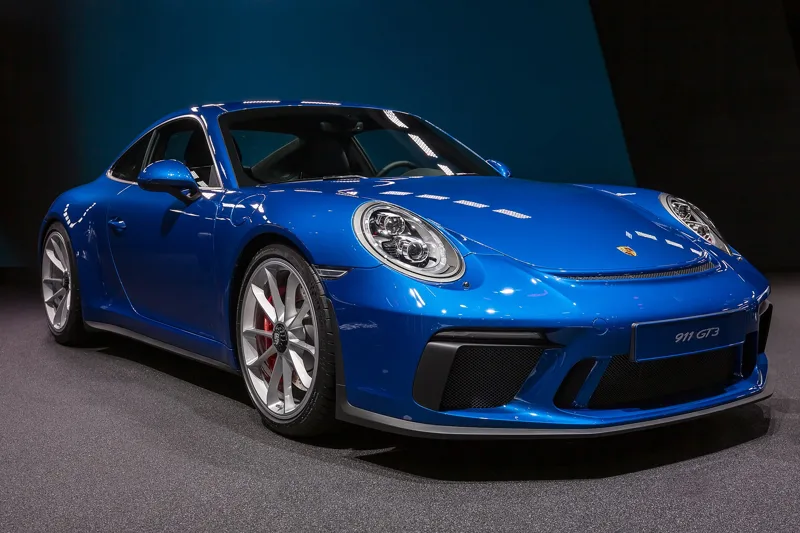
The Porsche Carrera Cup, sometimes shortened to PCC, is a family of one-make championships run by Porsche. The cars were first the 911 Carrera Cup and later the 911 GT3 Cup. Porsche builds them specifically for the job, yet they stay visually and mechanically close to the road-registrable 911 of the same generation.
There are three distinct tiers of racing, and the structure matters because it explains how a driver rises from regional club level to a stage alongside Formula 1.
Tier one: the Porsche Supercup
At the top sits the Porsche Supercup, established in 1993 and regarded as the most prestigious one-make series for GT cars. It runs as part of the support programme for the FIA Formula 1 World Championship, at most or all of the Grands Prix in Europe and occasionally those in Asia and North America.
Tier two: the national Carrera Cups
Beneath it come the national Carrera Cups. Germany, France, Italy, Japan, Australia and the United Kingdom each stage their own. Alongside them, International Carrera Cups pool entries from several countries, one across eastern Asia and another covering Denmark, Finland, Norway and Sweden.
The oldest, and the one that started it all, is the Porsche Carrera Cup Germany. It began in 1986 with the Porsche 964 Cup car and has long been counted among the best-known Pro-Am GT championships in the world. A good number of future World Endurance Champions and Le Mans winners came through it. Today it is the main feeder for the Supercup, and many teams contest both. France followed a year later in 1987.
Then came a rush. In the early 2000s Great Britain, Australia, Asia and Scandinavia all started within a four-year spell, with Italy joining in 2007.
Tier three: GT3 Cup Challenge, Trophy and Sprint Challenge
The bottom rung goes by the name Porsche GT3 Cup Challenge or Porsche GT3 Cup Trophy, and in some markets it has recently become the Porsche Sprint Challenge. It is a patchwork. In Europe there are smaller series, including one based in Switzerland, a Benelux series across Belgium, the Netherlands and Luxembourg, and a Central European series. The Gulf States have a Middle East series of their own. Larger championships exist in the Americas, namely the United States, Brazil and Argentina, and New Zealand has one too. In some Carrera Cup countries a Challenge series acts as the second tier.
Some of these use older Carrera Cup cars from earlier 911 generations. New Zealand and Australia, for example, run second-hand cars from Carrera Cup Australia. The biggest of them, notably the United States and Brazil, work as Carrera Cups in all but name, and GT3 Cup Trophies are, in effect, second-tier GT3 Cup Challenges. Superseded Carrera Cup and GT3 Cup cars have found a second life in domestic GT racing, which is where many of them now compete, on five continents.
The Porsche championships by region
- International: the Porsche Supercup, the Porsche Carrera World Cup and the International Race of Champions USA
- Carrera Cups: Asia, Australia, Benelux, Brasil, France, Germany, Great Britain, Italy, Japan, Scandinavia, North America and the Middle East
- Sprint Challenge: twenty series from Argentina and Australia to Thailand and USA West, taking in Benelux, Central Europe, China, Iberica, Indonesia, Japan and Switzerland
- Endurance: trophies and challenges in Benelux, Brasil, Germany, the Nurburgring, New Zealand and North America
Who has won the most Carrera Cup titles?
Huisman holds the title of most successful Carrera Cup racer, thanks to those four consecutive Supercups. The German Rene Rast won three Supercups, from 2010 to 2012, and two German Carrera Cups, in 2008 and 2012. In France, Dominique Dupuy won the national Carrera Cup five times between 1992 and 1999, while Christophe Bouchut took it four times in between, so the two dominated the series for a decade. Craig Baird, a New Zealander, took five Australian Carrera Cup titles between 2006 and 2013.
The format has spread far beyond Porsche's flagship. The company has used one-make racing for its entry-level models of the day as well, the 924, 944, 968 and Boxster, and rival manufacturers copied it. Ferrari Challenge, Lamborghini Super Trofeo, Trofeo Maserati, the Audi R8 LMS Cup, Lotus Cup and MGF Trophy are all part of the same lineage, as are many series built around the Mazda MX-5.
A one-make series removes the argument about which car is quickest and leaves driver, team and strategy.
What is the Lamborghini Super Trofeo?
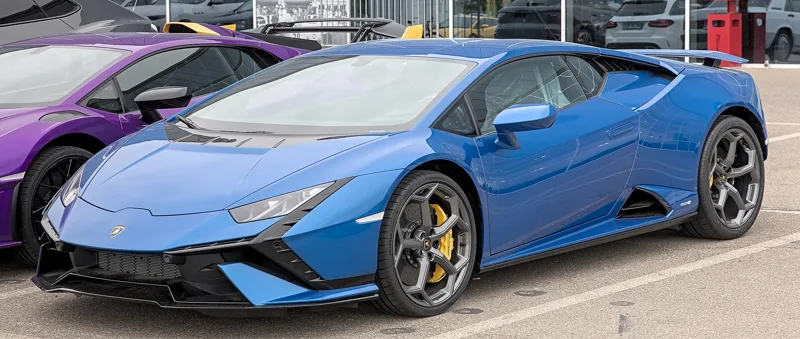
Lamborghini Squadra Corse, the company's motorsport arm, organises the Super Trofeo as an international one-make championship. Only Huracan Super Trofeo Evo cars take part, and they race in three continental series covering Europe, Asia and North America.
Europe is the oldest, dating from 2009. Asia followed in 2012, and North America and the World Final both arrived in 2013. A Middle East series ran from 2017 to 2019.
How the Super Trofeo season works
All three share a format: six double-header race weekends, with each race lasting 50 minutes, held on some of the most prestigious circuits in the world. A World Final then decides the Lamborghini world champions.
The cars are identical Huracan Super Trofeo EVO2 machines, based on the Lamborghini Huracan, which replaced the Gallardo-based version. Within the same race, drivers are grouped into four classes. Pro sits at the top, followed by Pro-Am and Am, and the LB Cup is the fourth.
| Lamborghini Super Trofeo championship | Years |
|---|---|
| Europe | From 2009 |
| Asia | From 2012 |
| North America | From 2013 |
| World Final | From 2013 |
| Middle East | 2017 to 2019 |
What was the Audi R8 LMS Cup?
Audi ran the R8 LMS Cup as a one-make sports car series based in Asia. Its cars were derived from the Audi R8 LMS, the company's GT3 racer, so competitors drove machines closely related to those used in customer racing elsewhere.
The series started in 2012 and travelled around Asia, with Audi as constructor and Michelin as tyre supplier until the end of 2016. That year it welcomed the new Audi R8 LMS, and Phoenix Racing and KCMG joined Absolute Racing as service teams. Pirelli became the official tyre partner in 2017. In 2018 the Audi R8 LMS GT4 was added alongside the GT3-based cars.
- 2012 to 2015: Audi R8 LMS and R8 LMS Ultra
- 2016 to 2018: Audi R8 LMS
- 2018 and 2019: Audi R8 LMS GT4
- 2019: Audi R8 LMS Evo
Porsche Carrera Cup, Lamborghini Super Trofeo and Audi R8 LMS Cup compared
| Porsche Carrera Cup | Lamborghini Super Trofeo | Audi R8 LMS Cup | |
|---|---|---|---|
| Organiser | Porsche | Lamborghini Squadra Corse | Audi |
| Car | 911 Carrera Cup, then 911 GT3 Cup | Huracan Super Trofeo EVO2 | Audi R8 LMS (GT3-based), later R8 LMS GT4 |
| Structure | Three tiers, from the Supercup to regional challenges | Three continental series plus a World Final | One series across Asia |
| Started | 1986 (Germany); Supercup 1993 | 2009 (Europe) | 2012 |
What separates the three series
Porsche built a ladder. A driver can start in a regional Sprint Challenge, move up to a national Carrera Cup and then to the Supercup, with the same basic car concept throughout. Lamborghini concentrated on a single car, run to one calendar format everywhere and capped with a World Final. Audi's R8 LMS Cup stayed on one continent and changed its car as Audi's own GT3 models changed, with an R8 LMS Evo in 2019 and a GT4 version in the line-up from 2018.
Lamborghini's Temerario car from 2027
For Lamborghini, the next change is a new car. From the 2027 season, drivers will compete in identical Lamborghini Temerario Super Trofeo cars, which effectively replace the Huracan.