A SEAT special edition, a Cisitalia leftover, Abarth's orphaned racing department and a Cadillac trim level: how four performance names relate to the companies behind them.
Cupra, Abarth, Osella and Cadillac V-Series are performance names tied to larger car makers. Cupra comes from SEAT and Volkswagen, Abarth is owned by Stellantis after decades with Fiat, V-Series is Cadillac's performance line from General Motors, and Osella is a racing builder that grew out of Abarth's competition department.
A badge that began as a special edition of the SEAT Ibiza in 1996 may now outlast the marque that created it. Reports in September 2026 said Volkswagen was weighing the end of the SEAT marque by 2029, which would leave Cupra as SEAT S.A.'s main commercial brand. The company said no final decision had been taken.
Cupra is one of four performance names tied to a bigger car maker. Abarth began as a tuning and racing firm, passed to Fiat and now belongs to Stellantis. Cadillac's V-Series is a trim level that grew into a sub-brand. Osella is what became of Abarth's racing department when Fiat did not want it. Each has a different relationship with its parent, and the badge means something different on each car.
What is Cupra, and how did a trim badge become a brand?
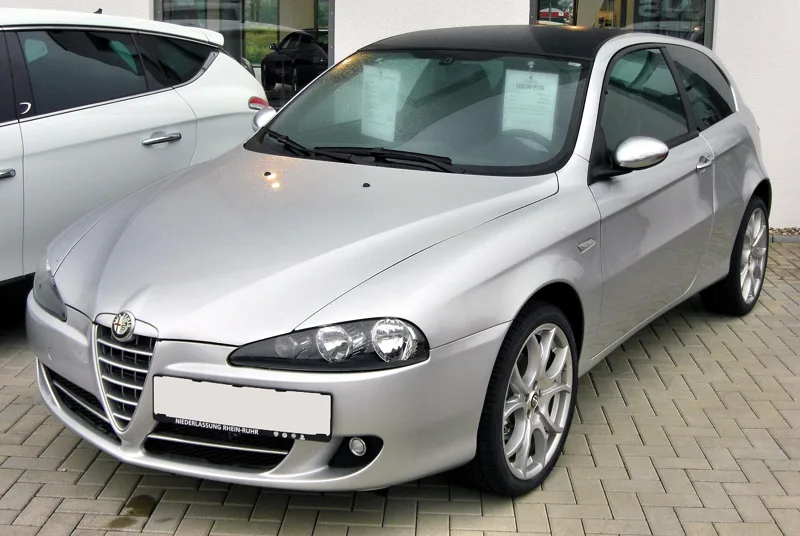
Cupra is a car brand owned by SEAT, part of Volkswagen Group, and headquartered in Martorell near Barcelona. The name is short for Cup Racing and first appeared in 1996 on a SEAT Ibiza special edition. It served as a performance sub-brand of SEAT until January 2018, when it became a standalone brand.
That first car, the Ibiza GTI 2.0 16V Cupra Sport, was a road-legal version of the Ibiza kit car used in competition, built to celebrate SEAT's win in the 1996 FIA 2-Litre World Rally Cup. An Ibiza Cupra 1.8 20V followed in 1999 and the more powerful Cupra R in 2000. The Leon then became the core: the Leon Cupra 4 was the first all-wheel-drive Cupra and remains the only six-cylinder one, and every later Leon generation has carried a Cupra-badged hot hatch.
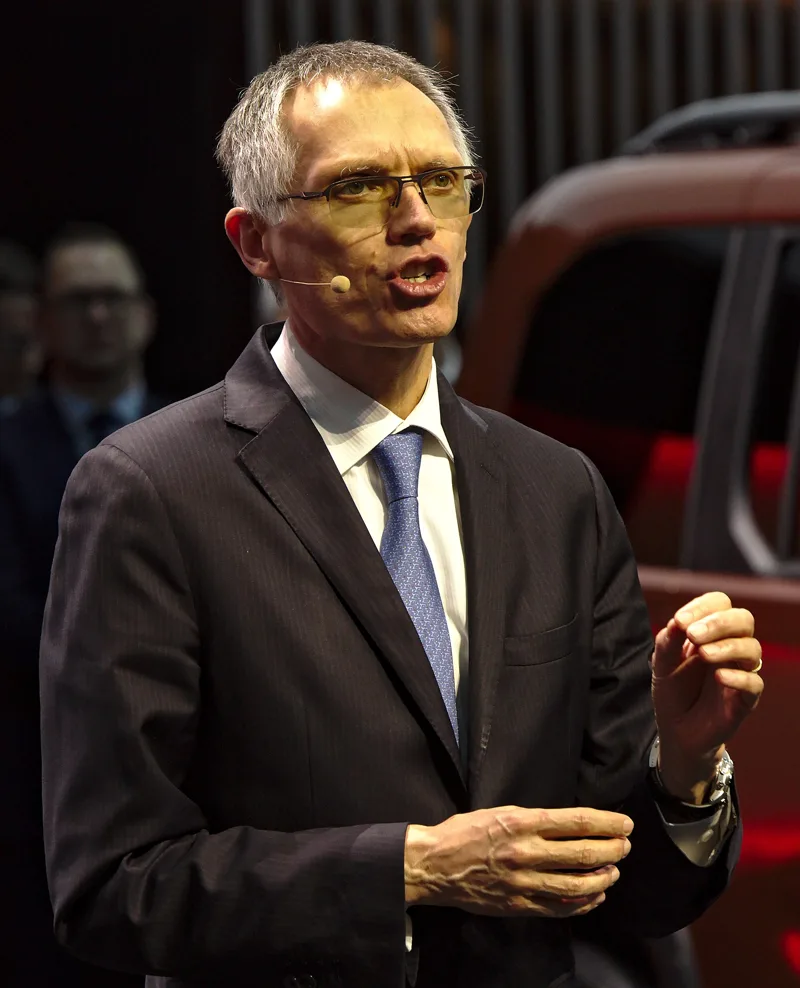
By 2017 the case for independence was building. SEAT's chief executive Luca de Meo hinted at it, and on 31 January 2018 SEAT confirmed it. A launch event on 22 February showed prototypes such as the Cupra Ateca. Wayne Griffiths, the head of sales and marketing, planned to double Cupra sales in four to five years, and the cars were to be sold in some European SEAT dealerships with floor space of their own. The logo, two intersecting triangles, came from Alejandro Mesonero-Romanos, who describes the shape as dynamic, with a stable base and a clear direction.
The Ateca arrived in October 2018 and stayed in production until 2026. The Leon followed in February 2020. The Formentor, previewed as a concept in 2019, was the first Cupra not shared with a SEAT, and its introduction is dated to both March and September 2020. Electric cars came next. The Born, introduced in February 2021, began as the SEAT el-Born concept and stays closely related to the Volkswagen ID.3. The Tavascan, launched in April 2023 after a 2019 concept, is the first Cupra built outside Europe, assembled in China by Volkswagen Anhui. The name has even gone to sea: a yacht, the D28 Formentor, was produced with De Antonio Yachts in July 2021, its design said to be inspired by the Formentor VZ5.
Osella is what became of Abarth's racing department when Fiat did not want it.
What is Abarth, and how did a scorpion badge end up on Fiats?
Abarth builds racing and road cars and acts as a performance division. The Italo-Austrian Carlo Abarth founded it in 1949, and today Abarth & C. S.p.A. belongs to Stellantis, via an Italian subsidiary. Its badge is a shield bearing a stylised scorpion, chosen because Carlo's star sign was Scorpio.
The business grew from the wreckage of another. Carlo Abarth had been sporting director of the Cisitalia racing team from 1947. After Cisitalia folded and its founder Piero Dusio left for Argentina, Abarth took over the assets with money from Armando Scagliarini, and on 31 March 1949 he founded Abarth & C. in Bologna. The inheritance was five 204 sports cars, two of them complete Spiders, a D46 single-seater and a heap of spares. The cars were renamed Abarth Cisitalia 204A at once. Tazio Nuvolari drove one in his final race, taking a class win at the Palermo-Monte Pellegrino hillclimb on 10 April 1950.
Racing did not pay the bills alone. Performance parts did, such as inlet manifolds and silencers for Fiat, Lancia, Cisitalia and Simca. An Abarth exhaust for the Lambretta D and LD models helped Lambretta hold several 125 cc land speed records in the 1950s, and original examples are now collectors' items.
The Fiat link deepened in 1952 with the Abarth 1500 Biposto, built on Fiat mechanicals. A deal in 1957 paid Abarth direct fees for successful finishes, so its cars were entered in every conceivable class around the world, mostly from 850 to 2000 cc, with the Porsche 904 and Ferrari Dino as rivals higher up. The incentive could become a game. Johann Abt was promised a free factory car if he won every race he entered; he won 29 of 30 and finished second in the other, and later founded Abt Sportsline.
How did Abarth go from independent tuner to Fiat's badge and back?
Carlo Abarth sold the company to Fiat on 31 July 1971, and the deal became public on 15 October. Abarth became Fiat's racing department, then ceased to exist as a company on 1 October 1981. The name lived on as a badge on road cars until 1 February 2007, when Abarth & C. S.p.A. was re-established as an independent unit controlled by Fiat Group.
Under Fiat, the engine designer Aurelio Lampredi ran the department that prepared the 124 Abarth Rally and the 131 Abarth. In December 1977 Fiat merged the Abarth and Lancia Squadra Corse operations into a single body, EASA, with Cesare Fiorio as director, working from Abarth's Turin offices. That combined team produced the Lancia Beta Montecarlo Turbo, which took the 1980 makes world title and the 1981 world endurance title for makes, and the Lancia Rally 037, which won the 1983 World Manufacturers' Championship.
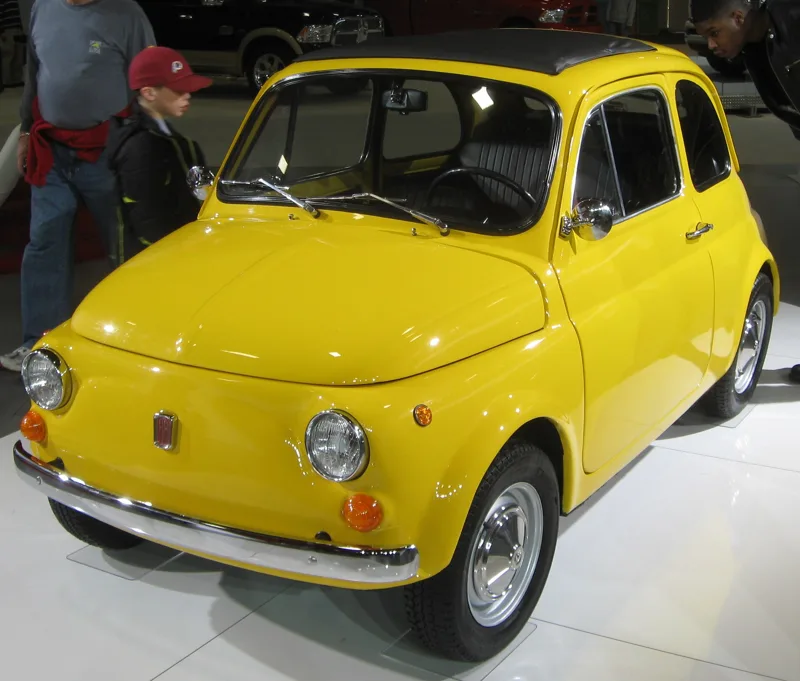
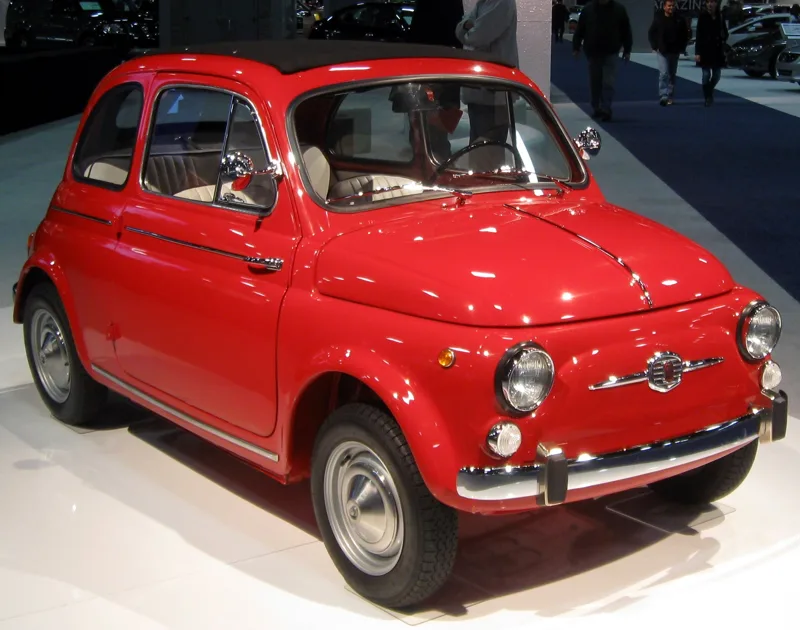
On the road, the badge travelled further than the company. The Autobianchi A112 Abarth was a lightweight, inexpensive boy racer with 58 hp, soon joined by a 70 hp version, and ran its own trophy from 1977 to 1984. In the 1980s the name marked models such as the Ritmo Abarth 125/130 TC, and in the 2000s Fiat used it as a trim level, as on the Stilo. Several Fiats wore the badge without being built by Abarth, among them the Bravo GT, the Punto HGT and the Cinquecento Sporting. Others were sold as "by Abarth" or "Powered by Abarth".
The 2007 relaunch brought the Grande Punto and Grande Punto S2000, and a base in Officine 83, at the former Mirafiori engineering works. Olivier Francois has been chief executive since 2011. Its cars since 2007 include the 500, 595 and 695, the 124 Spider, the Pulse, the Fastback and the 600e. In 2017 the name even reached two wheels, on the limited-edition XSR900 Abarth, a cafe racer based on Yamaha's 847 cc inline-triple. In rallying, Abarth was FIA R-GT Cup runner-up in 2017 and champion in 2018, 2019 and 2020.
What is Osella, and what is its link to Abarth?
Osella builds racing cars in Italy and used to run a Formula One team. The former rally driver Enzo Osella founded it at Volpiano in 1965. It began by racing Abarth sports cars, and when Fiat bought Abarth and had no interest in its racing operation, Osella took that over. It entered 132 Grands Prix between 1980 and 1990.
The BMW-powered FA2 took Osella into the European Formula Two Championship in 1975, but money problems forced a withdrawal before the end of 1976. The team came back in 1979 with Eddie Cheever, who won three races and finished fourth overall. Sponsorship from the tobacco company Ente Tabacchi Italiani and its MS brand paid for the step up to Formula One.
The first Formula One car, the FA1, was drawn by Giorgio Stirano around a Ford Cosworth DFV and wore a black and white paint scheme with big Denim lettering. It was unreliable and aerodynamically inefficient, and many of its parts were made in-house, a policy that kept costs down but often produced poorly designed components. Cheever qualified regularly in 1980 yet finished only one race. Jean-Pierre Jarier scored the team's first points with fourth at Imola in 1982, in a race where only 14 cars started. Riccardo Paletti died in a crash at the start of that year's Canadian Grand Prix.
From 1983 to 1988 the team ran Alfa Romeo engines, naturally aspirated at first and then the turbocharged 890T, which blew up so often that its output was cut back to non-turbo levels. For 1988 the engine was rebadged the Osella V8, after Fiat, Alfa's parent company, tired of the negative publicity. A Cosworth DFR arrived in 1989, and Nicola Larini was running third in Canada when water got into the electrics. In 1990 Gabriele Rumi of Fondmetal bought into the team, and at the end of the year he took it over and renamed it Fondmetal, ending Osella's Formula One story with five championship points.
Sports cars carried the name on. In 1995 Pasquale Irlando won all nine rounds of the European Hillclimb Championship in an Osella PA20, then took the title in 1997, 1998 and 1999. The factory moved to Atella in southern Italy in the 1990s and back near Turin, to Verolengo, in 2001. At the end of 2022 Osella Motorsports merged with Osella Engineering under Enzo Osella and Giuseppe Angiulli. The result, now called Osella corse, builds cars such as the PA21 JrB, which can take motorcycle engines from 1000 to 1600 cc.
What does the V mean on a Cadillac?
The V-Series is Cadillac's range of high-performance models, tuned by General Motors Performance. It was introduced in 2003 to help revive the brand, take on its high-performance rivals and attract younger buyers. Bob Lutz of General Motors said in 2018 that research led to the letter V, which could credibly stand for velocity or visceral.
Lutz said Cadillac wanted to keep away from M, A, G, R and S, and felt V was a unique and elegant letter. It has also been noted that the V recalls the V-shaped element in an older Cadillac logo.
The first V was the 2004 CTS-V, which took the LS V8 from the C5 Corvette Z06 and a six-speed Tremec manual gearbox. A V8 needed its own engine cradle, because the standard CTS carried a V6, and the car also gained bigger anti-roll bars and dampers and much stiffer springs. The XLR-V followed in 2005 with a supercharged 4.4-litre Northstar V8 rated at 330 kW (443 hp), with 561 N m (414 lb ft) of torque. Its supercharger and four intercoolers, which cool the compressed air before it reaches the engine, were built into the intake manifold. The base price of $98,000 had reached $101,300 by 2008. The STS-V arrived in 2006 with 26 more horsepower and 25 more lb ft.
The 2009 CTS-V is the one people remember. Its supercharged 6.2-litre LSA V8, derived from the Corvette ZR1's LS9, made 415 kW (556 hp) and sent 747 N m (551 lb ft) to the rear wheels. That year it lapped the Nurburgring Nordschleife in 7:59.32, the quickest recorded lap by a production sedan on factory tyres, until a Porsche Panamera Turbo recorded 7:56 in July. Asked about a wagon, Lutz said enough demand would justify one, and GM showed the CTS-V wagon in New York on 29 March 2010. The coupe debuted in Detroit that year.
The third generation took the numbers to 480 kW (640 hp) and a peak of 850 N m (630 lb ft), drawn from a supercharged 6.2-litre LT4 V8, 10 hp short of the Corvette Z06 it came from. At 1,880 kg (4,145 lb) it reached 97 km/h (60 mph) in 3.6 seconds and 320 km/h (200 mph), which earned the nickname the four-door Corvette. The ATS-V brought the first V6 in the family, a twin-turbo LF4 with 346 kW (464 hp). Beneath the full V sat the Vsport: the XTS got a 3.6-litre turbo with 310 kW (410 hp), the CTS a 420 hp version, priced about $20k below the CTS-V. The trim ended with the CTS and XTS in 2019 and 2020.
The fourth generation reshuffled the ladder. V became an entry-level performance variant, in effect a mid-level trim across Cadillac's range with smaller engines in place of V8s, while a new top rung, V Blackwing, took over from the old V models; the CT5-V Blackwing replaces the CTS-V. The CT6-V launched the hand-built 4.2-litre Blackwing twin-turbo V8 with 410 kW (550 hp); its torque was 870 N m (640 lb ft), and it was the first V with all-wheel drive. The CT5-V uses a 3.0-litre twin-turbo V6 with 360 hp and a V-Mode button that stores the driver's chosen settings for engine sound, steering, suspension, powertrain and brake response. The CT4-V has a 2.7-litre turbo four with 242 kW (325 hp). At the top, the CT5-V Blackwing has a hand-built 6.2-litre supercharged pushrod V8 of 668 hp, made at the Performance Build Center at the Corvette plant in Bowling Green, and the CT4-V Blackwing a 472 hp twin-turbo 3.6-litre V6.
Cadillac races under the same letter. The first, the CTS-V.R, was a joint venture between GM Performance and Pratt and Miller, the team behind the Le Mans-winning Corvette C5.R programme. It debuted in the 2011 Pirelli World Challenge, the ATS-V.R followed in 2015 and the DPi-V.R arrived in 2017 for the IMSA SportsCar Championship. The latest is the V-Series.R sports prototype.
Four performance names side by side
| Name | Parent | Where it started | What it is now | Racing link |
|---|---|---|---|---|
| Cupra | SEAT, part of Volkswagen Group | 1996 Ibiza special edition; standalone from January 2018 | Brand with its own models, including the electric Born and Tavascan | Cupra Racing; E-TCR and E-Racer |
| Abarth | Stellantis, through an Italian subsidiary | 1949, Bologna | Independent unit of the Fiat group since 2007; 500, 595, 695 and 600e | FIA R-GT Cup champion 2018 to 2020 |
| Osella | Independent; grew out of Abarth's racing department | 1965, Volpiano | Osella corse, building hillclimb and track cars | 132 Grands Prix, 1980 to 1990 |
| Cadillac V-Series | General Motors, tuned by GM Performance | 2003; first model the 2004 CTS-V | Mid-level V trim and top-level V Blackwing | CTS-V.R to V-Series.R |
What do these four brands show about performance sub-brands?
Each has a different link to its parent. Cupra is owned by SEAT and has outgrown its origins. Abarth moved from independent firm to Fiat department to badge and back to a unit of its own. V-Series is a ladder of trims inside Cadillac. Osella exists because Fiat did not want Abarth's racing arm.
For a buyer, the badge needs careful reading. An Abarth badge can mean a car built by Abarth & C. S.p.A., or a Fiat that merely carries the name or a tuning package. A Cadillac V has been a mid-range step since the fourth generation, with Blackwing as the flagship, whereas earlier V models were the top of the range. A Cupra is a distinct brand today, though its first models are based on SEAT cars and sold through SEAT dealers.
Cupra's US plans and the SEAT question
Cupra announced in March 2024 that it intends to enter the American market by the end of the decade, with a new electric Formentor and a larger electric model, not yet named, built in Mexico. The September 2026 reports about SEAT describe a plan that would leave SEAT S.A. and the Martorell factory open, handing SEAT's products, dealerships and production to Cupra. Nothing has been decided, according to SEAT S.A.