A 19.99 km road to 4,302 m, a lawsuit that paved it, and a record that fell from 8:13.878 to 7:57.148 once the dirt was gone.
The Pikes Peak International Hill Climb, or Race to the Clouds, is an annual Colorado hillclimb of 19.99 km to a finish at 4,302 m. Sebastien Loeb set 8:13.878 in 2013, and Romain Dumas drove the electric Volkswagen I.D. R to 7:57.148 in 2018, the first run under eight minutes.
In 2018 an electric Volkswagen climbed Pikes Peak in 7:57.148, an average of 150.9 km/h, and beat the existing overall record by more than 15 seconds. Seven years earlier, roughly a quarter of the same road had still been dirt. The story of the Race to the Clouds is the story of what happens when you take the gravel away.
How does the Pikes Peak hill climb work?
It is a timed climb. It is a climb to the summit of Pikes Peak in Colorado, held every year and nicknamed the Race to the Clouds. The track measures 19.99 km (12.42 mi) and has over 156 turns, with a start at mile 7 on Pikes Peak Highway and a finish at 4,302 m (14,115 ft). That adds up to a rise of 1,440 m (4,720 ft), on grades that average 7.2%.
The race has been held since 1916, is self-sanctioned, and takes in a wide variety of vehicle classes. The organisation behind it operates under the name Pikes Peak Auto Hill Climb Educational Museum, and its stated purpose is to demonstrate advances in the practical use of motor sports technology.
Spencer Penrose, who widened a narrow carriage road into the Pikes Peak Highway, promoted the first climb. Rea Lentz took the first Penrose Trophy in 1916 with a time of 20:55.60, and Otto Loesche collected the last one in 1924. Glen Schultz and Louis Unser then shared a rivalry that produced 12 wins between them, and a stock car class joined the programme in 1929.
After the Second World War Louis Unser won three more times between 1946 and 1970, in tight contests with Al Rogers, while the event counted towards the AAA and USAC IndyCar championships. The Sports Car Club of America sponsored it from 1953 and brought a rush of sports cars. The course record fell every year from 1953 to 1962, the longest such run in the event's history, and most of those records belonged to Louis's nephew Bobby Unser. In 1971 Ak Miller won in a 1970 Ford Mustang. It was the first overall win for a stock car and the first by a non-gasoline vehicle, because the Mustang ran on propane.
Pave the road, the doubters said, and the race would die; instead the record fell by more than a minute.
Why does gravel matter on Pikes Peak?
Because until 2011 the road was part gravel and part pavement, and the surface set the pace. Everything changed with paving. Paving started in 2002, when Colorado Springs lost a lawsuit brought by the Sierra Club. The club argued that decades of dumped gravel, about 1.5 million tons of it, had eroded streams, reservoirs, vegetation and wetlands downstream.
The authority paved about 10% of the route each year. The 2011 race was the last with dirt sections, which still made up about a quarter of the course. As the surface improved, the course record dropped. Nobuhiro Tajima of Japan won six times in Suzuki cars from 2006 to 2011, took two course records, and set the first sub-10-minute time in 2011.
Some feared the end of the event. Hill climb champion Rod Millen warned that paving would kill the race. The opposite happened: by December 2011, over 170 entrants had registered for the 2012 race, compared with 46 a year earlier. The 90th running, in 2012, was the first on all asphalt and brought a bigger entry and the longest race day yet. The overall record fell repeatedly during the event, finally to Rhys Millen, son of Rod, in the Time Attack division.
The speed gain was visible in odd moments too. Mike Ryan's big rig spun at a hairpin in the section known as the Ws and hit the guard rail; he managed a three-point turn, carried on, and still broke his old record by five seconds. On two wheels, the late Carlin Dunne became the first motorcycle rider below 10 minutes in 2012, in a 9:52.819 run on a Ducati, just 1.5 seconds off the overall record of the year before.
How did Europeans change the Race to the Clouds?
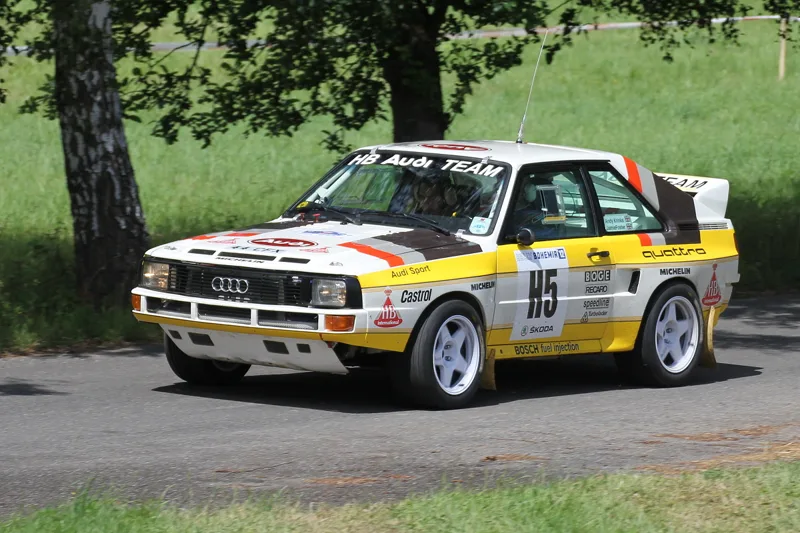
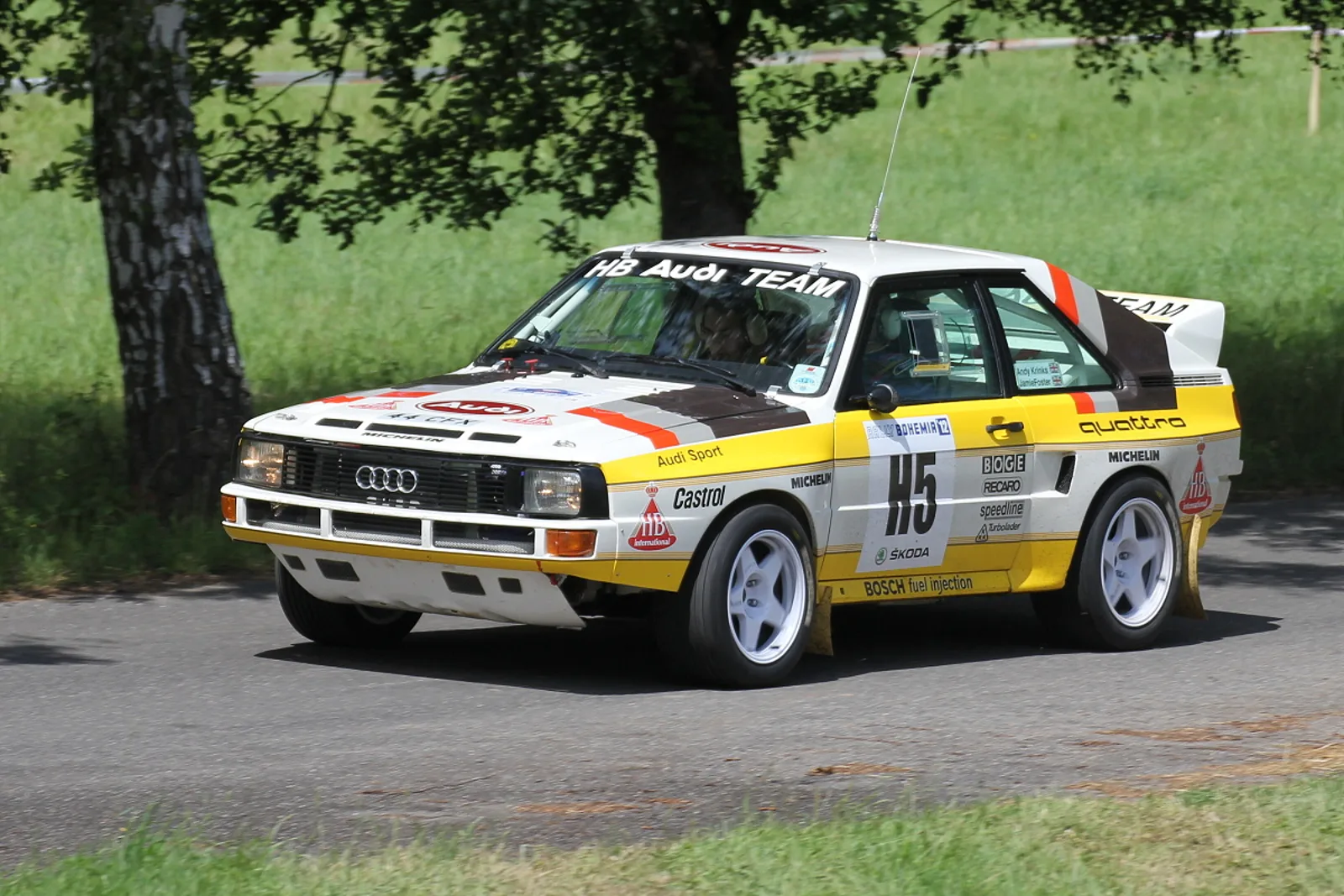
They arrived in 1984, when Martin Schanche, a Norwegian rallycross racer in a four-wheel-drive Ford Escort Mk3, and the French rally driver Michele Mouton, in an Audi Sport quattro, took part and began a new era for European teams in what was then an almost unknown American hillclimb. Schanche failed to set a record because of a flat tyre. Mouton won the Open Rally category alongside Fabrizia Pons, her co-driver in the World Rally Championship, but not the event outright.
She did win overall in 1985, with a course record of 11:25.39. In 1987 Walter Rohrl won in the Pikes Peak version of the Audi Sport quattro S1, with a time of 10:47,85 in the Open Rally category. The next year Finnish former world rally champion Ari Vatanen drove a turbocharged Peugeot 405 Turbo 16 up in a record 10 minutes and 47 seconds, a run captured in an award-winning 1989 short film by Jean-Louis Mourey called Climb Dance.
| Year | Driver and car | Time |
|---|---|---|
| 1916 | Rea Lentz (first Penrose Trophy) | 20:55.60 |
| 1985 | Michele Mouton, Audi Sport quattro | 11:25.39 |
| 1987 | Walter Rohrl, Audi Sport quattro S1 Pikes Peak | 10:47,85 |
| 1988 | Ari Vatanen, Peugeot 405 Turbo 16 | 10:47 |
| 2013 | Sebastien Loeb, Peugeot 208 T16 Pikes Peak | 8:13.878 |
| 2018 | Romain Dumas, Volkswagen I.D. R | 7:57.148 |
What did Sebastien Loeb do at Pikes Peak?
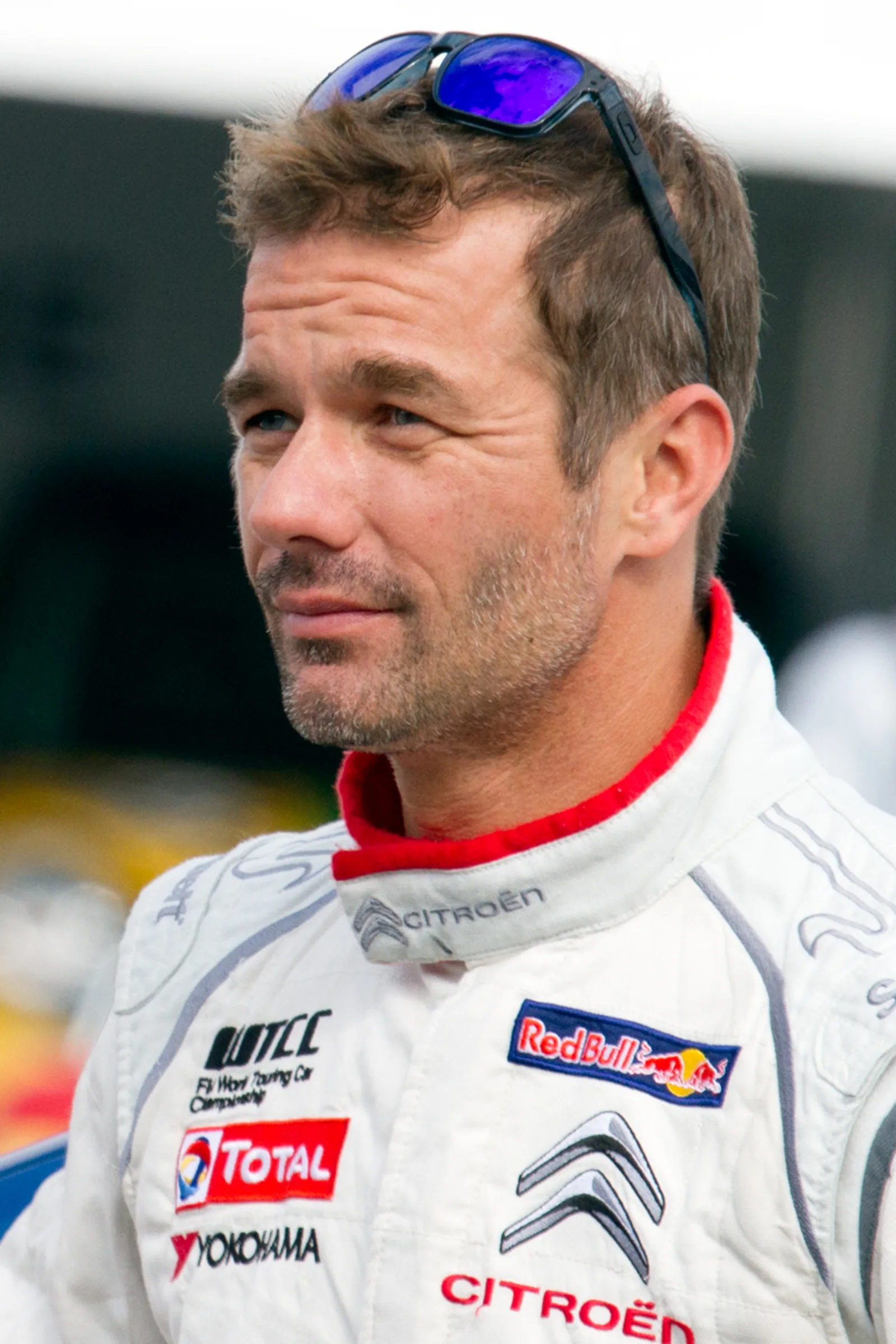
He took the record apart. Loeb, born on 26 February 1974, is a French rally, racing and rallycross driver who won a record nine World Rally Championship titles in a row, a total since matched by Sebastien Ogier in 2025. He began as a gymnast, switched to rallying in 1995, won the Junior World Rally Championship in 2001 and joined Citroen for 2002.
His first drivers' title came in 2004, when he won six events and finished 36 points clear of Petter Solberg. He had a reputation as a tarmac expert, which is why a fully paved Pikes Peak suited him so well. He retired from full-time WRC competition after 2012.
A year later he went up Pikes Peak in the Peugeot 208 T16 Pikes Peak and finished in 8:13.878, shattering the nine-minute barrier. Rhys Millen was second in 9:02.192, which beat his own record by over 44 seconds, with Jean-Philippe Dayrault third in 9:42.740 and Paul Dallenbach fourth in 9:46.001. Four drivers had bettered the record set only a year earlier, and Loeb's time stood until 2018.
How did electric cars reach the top of Pikes Peak?
Gradually, over decades. Electric entries date back to the early 1980s and have come and gone since. Joe Ball drove a Sears Electric Car to the summit in 1981 in 32:07.410, and in 1994 Katy Endicott took a Honda up in 15:44.710. In 2013 Tajima broke the 10-minute barrier for electric cars with 9:46.530 in his E-RUNNER Pikes Peak Special.
By the middle of the decade electric entries were competing for outright results. The 2014 winner was a gasoline car, but electric cars took second, third and fourth. In 2015 electric cars finished first (Rhys Millen) and second (Tajima), though Millen said he lost power to his rear motor pack before the halfway point and had expected to be 30 seconds faster. In 2016 gasoline won again, with electric cars second, third and fifth. Millen's Drive eO PP100 had set an electric record of 8:57.118 that year.
How did the Volkswagen ID.R break the Pikes Peak record?
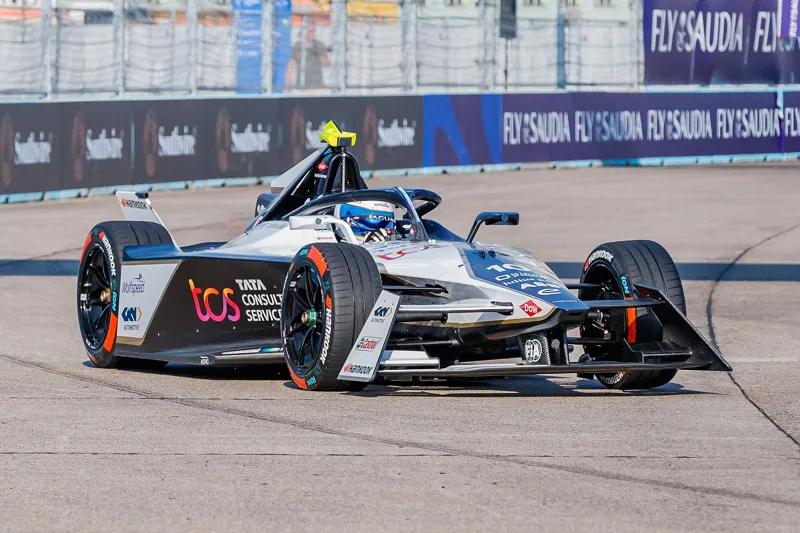
It did so on its competition debut, on 24 June 2018. Volkswagen, which had withdrawn from major motorsport after the emissions scandal of 2015, built the I.D. R as its first electric racing car. Romain Dumas drove, and the team's declared target was to beat the electric record of 8:57.118.
He did far more than that. His 7:57.148 was the first run under eight minutes and the first overall record by an electric car, beating Loeb's mark by over 15 seconds. The average speed was 150.9 km/h (93.8 mph), and the car reached 218 km/h (135 mph) through the speed trap.
The car has two electric motors, one at each axle, that together deliver 507 kW (689 PS; 680 hp), with torque of 649 N m (479 lb ft). It weighs under 1,100 kg (2,500 lb), does 0 to 97 km/h (60 mph) in 2.25 seconds, and carries a single 45 kWh battery. The French sports prototype and hillclimb specialist Norma co-developed the chassis.
Volkswagen kept the car busy. On 3 June 2019 it used 24.7 kWh to set an electric lap record at the Nurburgring of 6:05.336, cornering at up to 3.49 g, with a top speed of 273 km/h (170 mph). It also set the Goodwood Festival of Speed hillclimb record at 39.90 and a 7:38.585 benchmark on the 10,906 m Shan Big Gate Road on Tianmen Mountain, both driven by Dumas. In 2018 the Dewar Trophy went to Integral Powertrain, which supplied the motors.
Which divisions run at Pikes Peak?
There are currently six: Unlimited, Time Attack 1, the Porsche Pikes Peak Trophy by Yokohama, Open Wheel, Pikes Peak Open and the Exhibition Class. Heavy trucks have run alongside open-wheelers, sports cars and rally cars over the years.
- Unlimited accepts any vehicle that passes safety inspection. It holds the most exotic machines, many built just for the race, and has the best chance of the overall record.
- Time Attack 1 is for road-derived cars with either two- or four-wheel drive, closed cockpit only.
- Porsche Pikes Peak Trophy started in 2018 as the first one-make Porsche category, for the Cayman GT4 Clubsport.
- Open Wheel covers single-seaters from Indy-style sprinters to dune buggies and has been in every race since 1916.
- Pikes Peak Open is for production-based vehicles with unlimited modifications.
- Exhibition Class is for machines that do not fit the rules; entries can still attempt the overall record.
What happened to motorcycle racing at Pikes Peak?
It ended in 2019. Motorcycles have raced since 1916, when Floyd Clymer won, though they competed only in some years until a new timing system in 1990 allowed riders to start in waves of five. Earlier mass starts left riders memorising the first few corners until the dust cleared. Motorcycle racing was called off in 1976 and 1982 after accidents, and in 1982 William Gross Jr was killed.
On 30 June 2019 four-time winner Carlin Dunne died in a crash on a prototype Ducati Streetfighter V4, within a quarter of a mile of the line. The organisation postponed all motorcycle racing, reviewed the decision after the 2021 event, and then discontinued motorcycle competition altogether. The fastest motorcycle time remains Rennie Scaysbrook's 9:44.963 on an Aprilia Tuono V4, set in 2019.
Where does the Pikes Peak hill climb go from here?
The Unlimited division is where the overall record is chased, and the road is now asphalt from start to finish. Volkswagen confirmed in February 2020 that a second version of the car, the I.D. R Evo, would be built to continue record attempts, though the company has since said it would abandon motorsport for its flagship brand while continuing to support its premium brands.