Four lightweight machines that put lap times ahead of comfort, with the figures, the records and the problems that followed.
The Radical SR3, Ultima GTR, Caparo T1 and KTM X-Bow are lightweight cars built around lap times rather than comfort, yet registerable or street legal in road versions. They use spaceframes or carbon monocoques, and the figures range from the SR3's 225 hp to the Ultima GTR720's 720 bhp.
An Ultima GTR720 can go from a standstill to 161 km/h (100 mph) and back to a standstill in 9.4 seconds, a figure that Ultima had independently verified for a production car on road tyres and a road exhaust. Stopping from 161 km/h took just 3.6 seconds of that. The car was a British kit car, and it belongs to a small family of machines that treat the road as a place to travel between circuits.
The Radical SR3, Ultima GTR, Caparo T1 and KTM X-Bow come from four makers in three countries, and each trades comfort for lap time. They differ sharply from an ordinary sports car in weight, structure and purpose, and they differ from one another in how much of a road car they ever intended to be.
Road-legal track cars compared
| Car | Engine | Power | Acceleration | Structure | Headline figure |
|---|---|---|---|---|---|
| Radical SR3 | RPE four-cylinder | 225 hp (168 kW) at the wheels | 0-97 km/h in 3.1 s | Carbon-steel spaceframe | Over 1,000 built |
| Ultima GTR720 | Chevrolet V8 | 720 bhp (730 PS; 537 kW) | 0-97 km/h in 2.6 s | Tubular steel space frame | 0-161-0 km/h in 9.4 s |
| Caparo T1 | Menard 3.5-litre V8 | 575 hp (429 kW; 583 PS) | 0-100 km/h under 2.5 s (estimate) | Carbon fibre and aluminium monocoque | Dry weight 470 kg |
| KTM X-Bow | Audi 2.0-litre turbo four | 237 hp (177 kW; 240 PS) | 0-100 km/h in 3.9 s | Carbon fibre monocoque | Top speed 217 km/h |
These cars trade comfort for lap time.
Radical SR3 and the Radical range
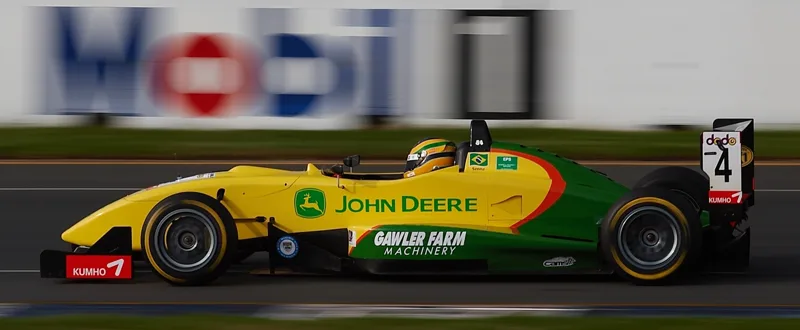
Radical Motorsport was founded in January 1997 by Mick Hyde and Phil Abbott, a pair of enthusiast drivers and engineers, to build open-cockpit sportscars that could be put on the road and then run on a circuit as they came. The first car, built by Abbott in 1996, was the 1100 Clubsport, with a Kawasaki motorcycle engine in a small open chassis, intended for the 750 Motor Club's Sports 2000 category. By 1999 enough had been built to launch a one-make series with the backing of the BRSCC, and the same year came the Prosport, with engines up to 1500 cc, slick tyres of Formula 3 size and an adjustable rear wing.
The SR3 arrived in 2001 and became the company's most popular car, with over 1,000 built. Its Suzuki-based engine was tuned by Powertec, now RPE, in 1300 cc and 1500 cc forms, and early cars offered up to 260 hp (190 kW) from the larger one. An enclosed gear drive replaced the traditional motorcycle chain. The later SR3 uses a hand-built RPE racing four-cylinder producing 225 hp at the wheels, in a carbon-steel spaceframe with polyester bodywork, and covers 0 to 97 km/h (60 mph) in 3.1 seconds on the way to 237 km/h (147 mph).
The other Radicals
The SR1 is the entry point, priced at 44,500 pounds plus VAT, with a 182 hp engine, 0 to 60 mph in 3.5 seconds and up to 2.3 g of lateral acceleration. It has its own SR1 Cup, a club series for novices that includes driver training. The SR4 was meant to be a smaller sibling to the SR3 but sold extremely poorly. The SR8 took the SR3 further with a 2700 cc RPE V8 of 430 hp, and the SR8LM with 2800 cc made 455 hp (339 kW). In August 2009 Michael Vergers drove an SR8LM round the Nurburgring Nordschleife in 6 minutes 48 seconds, a lap record for a road-legal production car that stood until a Porsche 911 GT2 of the 991 generation took it in September 2017 with 6:47.25. A student team from Imperial College London converted one SR8 to electric power for a drive along the whole Pan-American Highway in May 2010.
The SR10 uses a Ford 2.3-litre EcoBoost four with 425 hp (317 kW) and 515 Nm, good for 0 to 60 mph in 2.4 seconds and 290 km/h (180 mph). The RXC is the only closed-top Radical, a mid-range step between SR3 and SR8 that is street legal in most countries. Its 3.7-litre Ford V6 makes 380 hp (283 kW), and at top speed it generates 900 kg of downforce, equal to its kerb weight. The RXC Turbo 500 raises output to 530 hp (395 kW). Production began in late 2013 at 111,689 pounds. The open RXC Spyder started with a 440 hp RPE V8 and a seven-speed sequential gearbox with paddle shifters, and was later updated to a twin-turbo EcoBoost V6 with 654 hp (488 kW).
Racing: one-make series and Le Mans
Radical supports 14 official race series around the world. In Britain the Radical Challenge runs seven rounds with two qualifying sessions of 15 minutes, two sprint races of 20 minutes each and a 40-minute endurance race, and teams get one set of tyres per weekend to keep costs down. Australia's national series, the Radical Cup Australia, formed in 2022 by merging two earlier ones, and the Gulf Radical Cup has run since 2006, attracting drivers from more than 20 countries.
The SR9, a full LMP2 prototype, was Radical's biggest leap into international racing. Rollcentre Racing ran the first chassis, and the car finished a distant 20th in the 24 Hours of Le Mans, proving its reliability only months after being completed. In 2013 Radical also entered British Formula Ford with James Abbott as driver.
Ultima GTR: the kit-car speed record holder
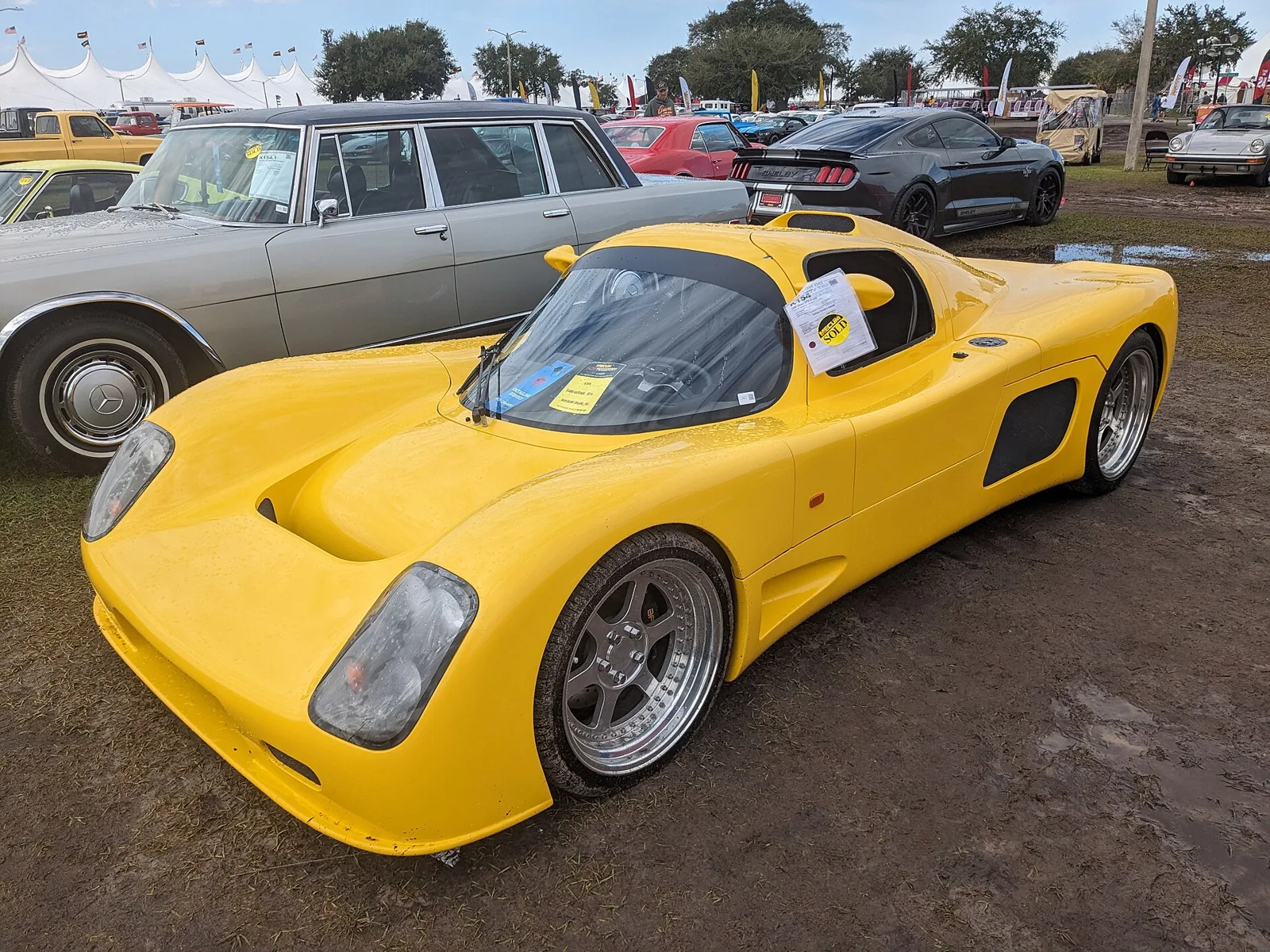
The Ultima GTR was made by Ultima Sports of Hinckley, Leicestershire, and was available as a kit or a factory-built turnkey car until early 2015, when it gave way to the Ultima Evolution. The layout is mid-engined and rear-wheel drive, with a tubular steel space frame and glass-fibre bodywork; a convertible called the Can-Am was also built. Kit builders could fit various engines, but the factory standard was an American Speed Chevrolet small-block V8 with a Porsche or Getrag transaxle, and every turnkey car had it.
Ultima built its marketing around records. The GTR640 had 640 bhp, and the GTR720 produced 720 bhp at 6700 rpm and 855 Nm at 4400 rpm. On road tyres and with a road exhaust, the GTR720 set these independently verified production-car marks:
- 0 to 97 km/h (60 mph) in 2.6 seconds, and 0 to 161 km/h (100 mph) in 5.3 seconds
- 48 to 113 km/h (30 to 70 mph) in 1.8 seconds
- 161 km/h to a standstill in 3.6 seconds, and 0-161-0 km/h in 9.4 seconds
- 1.176g of lateral grip on a skidpad, in a circle 60 m (200 ft) across
- The quarter mile in 9.9 seconds at 230 km/h (143 mph)
At 980 kg (2,161 lb) kerb weight, the GTR720 delivers 745 bhp per tonne, ahead of the Bugatti Veyron, the Enzo Ferrari, the Ascari A10 and the Koenigsegg CCX and CCGT, though behind the Koenigsegg CCXR and the Caparo T1. The chassis is rated for up to 1,000 bhp, and some customers fitted engines of that size or more. In 2007 a GTR720 went round the Top Gear track in 1 minute 12.8 seconds, and in October 2009 Ultima set 1 minute 9.9 seconds, in a configuration not suitable for public roads. A Romanian workshop, Black Falcon Cars, built a turbocharged GTR-based car in 2011 called the SBC-TT1750 with 1,716 bhp (1,280 kW) and made it fully road legal.
Caparo T1: the Formula One-inspired road car
The Caparo T1 was a British two-seater from Caparo Vehicle Technologies, set up by Ben Scott-Geddes (design), Graham Halstead (engineering) and Sean Butcher (marketing and finance), with engineers who had worked on the McLaren F1. It was meant to be a comparatively affordable racing car with road approval, scheduled for production in mid-2007 at 235,000 pounds with about 25 cars a year. Prince Albert II of Monaco, with Murray Walker, unveiled an orange prototype at the Top Marques show on 20 April 2006.
The numbers are extreme. The T1 weighs 470 kg dry. A carbon-fibre body with adjustable front and rear wings and a ground-effect diffuser produces 875 kg of downforce at 240 km/h (149 mph). The chassis pairs a monocoque of carbon fibre and aluminium honeycomb with a tubular rear space frame, and the brakes are 355 mm discs. The engine is a 3,496 cc naturally aspirated Menard V8 weighing 116 kg, producing 575 hp at 10,500 rpm and 420 Nm at 9,000 rpm, which gives 1,223 hp per tonne. A six-speed Hewland sequential gearbox shifts up in 60 milliseconds and down in 30. Estimated figures are 330 km/h (205 mph), 0 to 100 km/h in under 2.5 seconds, and up to 3 g in both cornering and braking.
The road car part proved harder. Jason Plato was injured in October 2007 when a prototype caught fire at around 250 km/h (160 mph) during filming for Fifth Gear at Bruntingthorpe; presenter Vicki Butler-Henderson suggested a faulty oil-sealing component, which Caparo said it had rectified. During testing for Top Gear, a floor panel came loose while Jeremy Clarkson drove, and a fuel-injection problem followed. On 11 November 2007 the T1 recorded 1:10.6 on the programme's Power Board, beating the Koenigsegg CCX's 1:17.6, but Clarkson removed the time because the car could not clear a speed bump. Ben Scott-Geddes said the test car was an engineering vehicle without the adjustable ride height of production cars, which can rise to 90 mm of clearance. Clarkson also found limited downforce at low speed and trouble controlling the car in slow corners and in wet or cold weather.
Caparo planned about 25 cars a year but sold just 15 before it fell into administration in 2015. A few have since surfaced for sale, one in Japan in 2019 and two in the United Kingdom since 2021.
KTM X-Bow: a motorcycle maker's car
KTM, the Austrian motorcycle maker, unveiled the X-Bow (pronounced crossbow) at the Geneva Motor Show in 2008, as the first mass-produced car in its range. It was developed with the design studio KISKA, Audi and Dallara around a carbon-fibre monocoque. The first car used an Audi 2.0-litre turbocharged four with 237 hp (177 kW) and 310 Nm, a six-speed manual or twin-clutch gearbox, and Brembo brakes with 305 mm front discs. It reaches 100 km/h in 3.9 seconds and tops out at 217 km/h (134.9 mph). From the 2011 X-Bow R onward the engine was tuned to 300 hp (224 kW) and 400 Nm. KTM planned 500 cars a year, then raised output to 1,000 and built a new plant near Graz because of demand.
The X-Bow family
The X-Bow GT adds a windscreen and side windows, weighs 847 kg and takes 4.1 seconds for 0 to 60 mph, with 50 L of luggage space. The track-only GTX, released in October 2020 with Reiter Engineering, has a longer wheelbase and a 2.5-litre Audi five-cylinder from the RS3. The street-legal GT-XR is built on the same long chassis with 493 hp (368 kW) and 582 Nm, a seven-speed dual-clutch gearbox and a dry weight of 1,250 kg; it does 0 to 60 mph in 3.4 seconds, reaches 280 km/h (174 mph) and costs 284,900 euros. In the United States the X-Bow Comp R, introduced in 2019, is track-only.
The X-Bow was the car used at the Race of Champions from 2008. In 2009 Marcus Clutton and Phil Keen took the Supersports class of the British GT Championship in one, and Peter Belshaw and Clutton were British GT4 champions in 2011. The factory GT4 was unveiled in 2015 with a wheelbase 17 cm longer, won on its debut at Zandvoort, and carried Brett Sandberg to the 2016 Pirelli World Challenge GTS championship. A GT4 Evo with 375 hp followed in 2019, a GT2 version arrived with the GTX in 2020, and an Evo kit with more power and better aerodynamics came in 2025. Top Gear named the X-Bow Sports Car of the Year in 2008, though in 2012 Clarkson and James May called the engine-start procedure of the GT idiotic.
What it costs to own a track-focused road car
Prices run across a wide range: the SR1 at 44,500 pounds plus VAT, the RXC at 111,689 pounds in 2013, the Caparo T1 at a planned 235,000 pounds and the X-Bow GT-XR at 284,900 euros. Structure and weight explain what that buys. These cars use spaceframes or carbon monocoques, bodywork that is thin or open, and in the Caparo's case an interior lacking amenities and luxuries. Not every version is a road car: the X-Bow GTX and Comp R are track-only.
Where this goes next
Ultima's GTR and Can-Am names were retired in 2015 and replaced by the Ultima Evolution, a complete re-engineering of the package. Radical continues to support its 14 series, and its range of seven models offers the choice of engines on every car. KTM's 2025 Evo kit brought more power and better aerodynamics to the X-Bow. Caparo, by contrast, fell into administration in 2015.