Two Russian circuits and a Soviet-era track near Kyiv, with their events, layouts and what happened to each.
Moscow Raceway opened in 2012 and held DTM and WTCC rounds. Igora Drive, north of Saint Petersburg, was due to take the Russian Grand Prix from 2023 until the contract ended in March 2022. Autodrom Chayka, a 1975 track near Kyiv in Ukraine, has hosted Soviet and Ukrainian championships.
On 26 April 1986, the day of the Chernobyl disaster, a racing circuit near Kyiv was holding a round of the Ukrainian Circuit Racing Championship. The track was Chayka, built in 1975 in the Soviet Union and once known as the best in the country. It has outlasted the Soviet Union, a long decline and, since 2022, war damage. Chayka sits in Ukraine, while Moscow Raceway and Igora Drive are in Russia, but all three are purpose-built circuits.
What are Moscow Raceway, Igora Drive and Autodrom Chayka?
Moscow Raceway and Igora Drive are purpose-built circuits in Russia, one west of Moscow and one north of Saint Petersburg, while Autodrom Chayka is a purpose-built track in Ukraine, near Kyiv. Moscow Raceway opened in 2012, Chayka in the 1970s, and Igora Drive hosts the Russian Circuit Racing Series today.
Moscow Raceway is an FIA-approved venue in the Volokolamsky District of Moscow Oblast, near the villages of Sheludkovo and Fedyukovo, about 97 km (60 mi) west of Moscow. Igora Drive is a 5.183 km (3.221 mi) motorsport complex at the resort of Igora in Novozhilovo, Leningrad Oblast, about 54 km (34 mi) north of Saint Petersburg. Autodrom Chayka, formerly the Chayka Motorsports Complex, stands in the village of Chaiky near the Ukrainian capital.
Chayka was once known as the best track in the USSR.
How was Moscow Raceway planned and built?
In September 2008 it was revealed that work would begin on a Formula One circuit at the village of Fedyukovo. Hans Geist, then managing director of the project, said an FIA inspection could be passed by June 2010, and that the venue would pay its way on DTM or MotoGP alone, with no Formula One. A deal with Bernie Ecclestone was signed in 2008, but the project was dropped from the 2010 calendar in early 2009 and construction stopped. It resumed in June 2010, with the new contractor agreeing to finish the road section of the track by the end of 2011.
The circuit was built by a Russian-German joint venture named Autobahn. The general contractor was Stroytech-5, Siemens was among the sub-contractors and Sergei Krylov worked as an adviser. The whole project cost 4.5 billion roubles by the time it opened on 13 July 2012.
What is Moscow Raceway like to drive?
It was designed to be categorised FIA 1T and FIM A, which would allow competition at any level from national championships to Formula One and MotoGP. The designed length is 4.070 km (2.529 mi) and the width varies from 12 to 21 m (39 to 69 ft). The start and finish line is 15 m (49 ft) wide and stands at an elevation of 22 m (72 ft). The longest straight, at 0.873 km (0.542 mi), was designed to let Formula One cars reach 311 km/h (193 mph).
It is an FIA Grade 1 circuit, which means it meets every requirement to stage a Formula One race, although Russia's world championship Grands Prix were held at the Sochi Autodrom. After inspections on 18 July 2012 the circuit was classified FIM B for motorcycles, a grade below what had been expected.
What racing has Moscow Raceway hosted?
Its opening meeting, on 13 to 15 July 2012, was the fifth round of the World Series by Renault. It was described as the first major international motor-sport event on a race track in Russia, though a round of the FIA European Truck Racing Championship had been held at the Smolenskring in July 2010. The first race was won by the Dutchman Robin Frijns in Formula Renault 3.5. The first Russian winner soon followed: Daniil Kvyat took both races of the Eurocup Formula Renault 2.0 round. Ten Russian drivers took part in the weekend, including the former 3.5 series champion Mikhail Aleshin.
- DTM: 2013 to 2017
- World Touring Car Championship: the FIA WTCC Race of Russia, 2013 to 2016
- Superbike and Supersport World Championships: 2012 to 2013
- Formula Renault 3.5: 2012 to 2014
- Eurocup Formula Renault 2.0: 2012 to 2014
- Formula Masters Russia: 2012 to 2015
- FIA GT1 World Championship and FIA GT3 European Championship: 2012
- FIA Formula 3 European Championship: 2014
- Blancpain GT Series: 2015
Today it hosts domestic and endurance racing: the Russian Circuit Racing Series, SMP F4 Championship, SMP RSKG Endurance and the Russian Endurance Challenge, in May, June, August and October. During the World Superbike weekend on 21 July 2013, the Italian rider Andrea Antonelli died after a collision with Lorenzo Zanetti on the back straight in the World Supersport race. The rest of the weekend's programme was cancelled in torrential rain.
What is Igora Drive?
Igora Drive is a motorsport complex with ten professional tracks for oval racing, drifting, rallycross, motocross and karting, as well as a centre for emergency management. The largest grandstand on the main circuit holds five thousand people, and the whole site has capacity for fifty thousand.
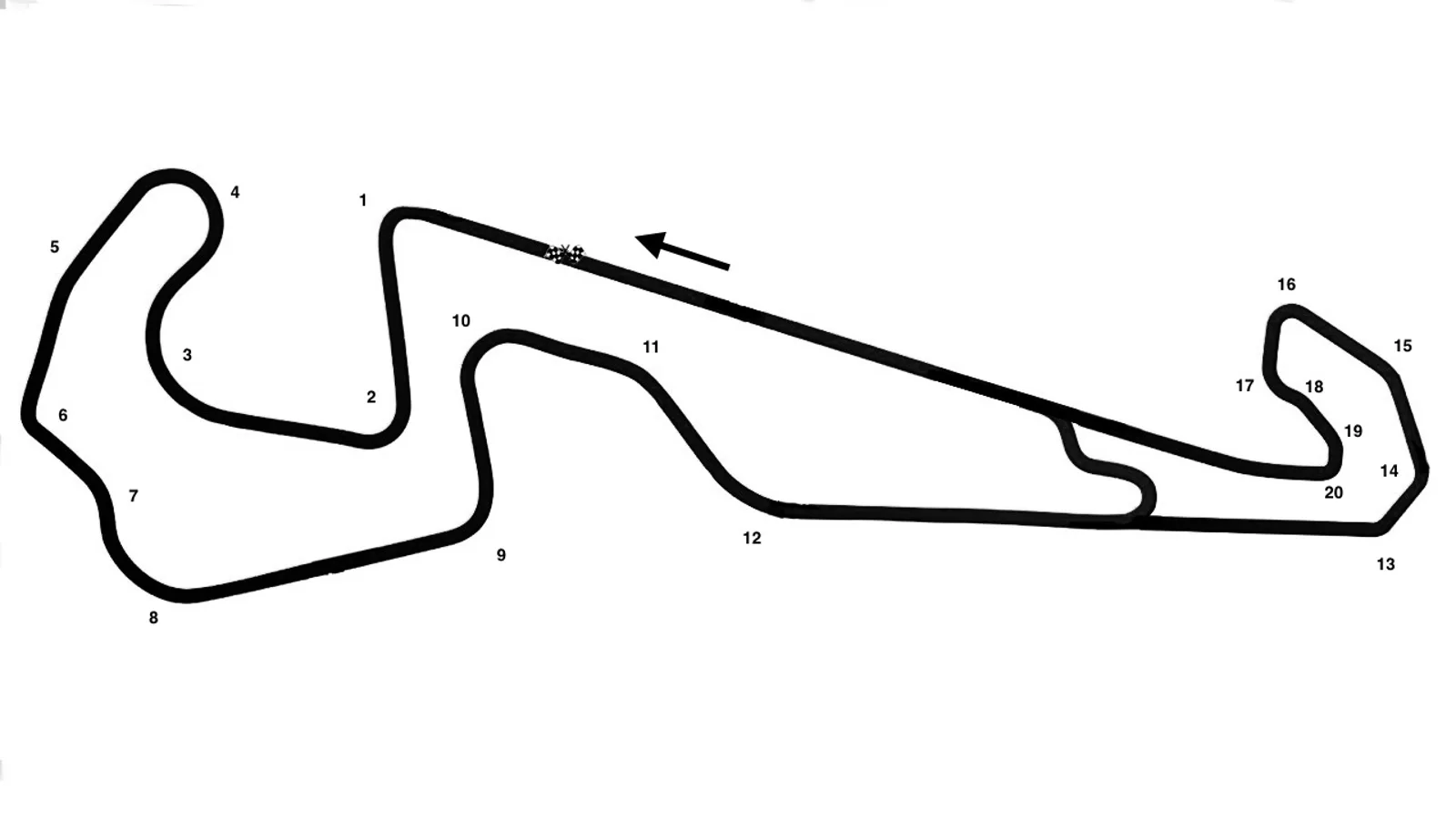
The main circuit was 4.086 km (2.539 mi) long and 12 to 15 m (39 to 49 ft) wide. In 2022 its length went up to 5.183 km (3.221 mi), by featuring 20.5 m (67 ft) of elevation change instead of 17 m (56 ft). For Formula One the plan called for 20 turns instead of 15, with both straights lengthened and a significant uphill section.
Why did Igora Drive lose the Russian Grand Prix?
On 26 June 2021 a contract was announced to move the Russian Grand Prix from the Sochi Autodrom to Igora from 2023 onwards. After Russia's invasion of Ukraine in 2022, the contract was terminated on 3 March and all future races were cancelled.
Other series came and went before that. In 2019 the complex signed a three-year agreement with the DTM, with an option for two more years. The first race was due on 29 to 31 May 2020, with the W Series in support, but both events were cancelled because of the COVID-19 pandemic in Russia. An agreement to host the FIA World Rallycross Championship's World RX of Russia in 2020 was later dropped from the calendar over contractual issues. In July 2020 it held round two of that year's Russian Circuit Racing Series. Its calendar lists the Russian Endurance Challenge in July, and an August programme shared with the domestic circuit series, the SMP F4 category and SMP RSKG Endurance.
What is Autodrom Chayka?
Autodrom Chayka is a motorsport racetrack in Ukraine, in the village of Chaiky near Kyiv. It was built in 1975, when the country was part of the Soviet Union. Since the Federation Automobile de l'Ukraine was founded in 1993 it has hosted regional series, among them the Ukrainian Touring Championship and Superbike.ua.
Chayka became popular and was known as the best track in the USSR because of the very fast sectors near the finish line and corners 2 to 4, called the ears. It was also difficult and dangerous, with no runoffs, very close barriers and poor asphalt. A shorter layout that cut out the ears was used only for testing.
How was Chayka built in the Soviet era?
The society DOSAAF, which cooperated with the army, aviation and navy, began developing the circuit in the late 1960s. It also built an airfield alongside with the same name. The project was finished in 1971 and construction started in 1973.
Touring car races on 27 June 1975 made up the first national motorsport championship in Ukraine. Before the year was out, the USSR Circuit Racing Championship, formula racing included, had come to the circuit. The first Kyiv Ring race came in 1976, and the circuit hosted the championships of Russia and Belarus. In 1977 it held its first international series, the Cup of Peace and Friendship, which became the traditional season opener, and became the last stage of the Rally Russian Winter. A motorcycle speedway and a karting circuit were added in 1982 and 1983, and the first international karting race took place in 1984.
Decline followed an accident. During the Formula Easter race on 7 June 1983 the Estonian driver Toomas Napa collided with a lapped car driven by the Pole Christian Grochowski, who died the same day. Chayka was excluded from the Socialist Countries Cup, and a Soviet championship round that season was cancelled. A second death followed in 1984: Sergey Ledovskoy fractured a leg when it slipped off the pedal while he was testing a new Estonia-20, and he did not receive medical help in time.
Races became rare and crowds small. Attempts to fix the surface made matters worse, until the track consisted of three different types of asphalt. A 1989 plan to invite an Austrian company to rebuild the complex fell victim to finances. The last race of the USSR Circuit Racing Championship took place on 18 August 1991, by which time Ukrainian drivers were using the blue-and-yellow national colours that had once been banned.
How did Chayka change after independence?
After the Soviet collapse the DOSAAF property, including Chayka's airfield and track, passed to the Defense Assistance Society of Ukraine, and for lack of funds some equipment was sold to private owners. The Federation Automobile de l'Ukraine, founded in 1993, took over the Ukrainian Circuit Racing Championship. For a long time Chayka was its only venue, but from 1995 the federation added street circuits. In 1995 and 1996 the track was the closing stage of Rally Kyiv.
Money from events still could not pay for new road surfaces, and the track fell behind FIA safety standards. The federation reclassified it as a street circuit to ease requirements while it looked for a replacement. In 1996 the new Kyiv City Automobile and Motorcycle Club, set up by the racer Serhiy Malyk, tried a race at the cloverleaf interchange in the Osokorky district, but drivers disliked the repetitive layout. The state of Chayka forced it out of the domestic calendar in 1998. The championship returned to Kyiv in 2001 on a temporary circuit around the Olimpiyskyi stadium, and when that land was sold in 2003, Malyk and Leonid Protasov, the USSR and Ukrainian champion who had become Chayka's director, agreed to rebuild the track.
The circuit was shortened to the ears section, and the rest was kept as a stage for the Chayka mini rally. The short ring opened on 8 July 2005, and the Soviet term motorsport complex gave way to the European word autodrome. That year Chayka hosted the finale of Ukraine's first drag racing championship, and the old pit straight has been used as a drag strip since. Drift events began in 2007 after the Ukrainian Drift Federation was formed.
A new pit lane was paved in 2009, and boxes and bleachers were built in 2012. In 2014 most of the barriers were removed to make room for runoff after the football player Andriy Husin died in a crash on a motorcycle track day. The race control building was rebuilt in 2016, with a place for podium celebrations, and the karting circuit was renamed Chayka Karting. In 2018 the Chayka Driving School rebuilt the old speedway track for drift teaching and competitions. On 22 August 2021 the NADU Racing Games brought an air show, a drift show and Ukraine's first rallycross competition.
What has happened to Chayka since 2022?
The village of Chaiky was attacked on 3 March 2022. The speedway stadium and the karting pit building were severely damaged, and so were warehouses around the track. In 2023 the Ministry of Youth and Sports allowed national championships to resume, and superbike racing and karting were the first events back at Chayka. In 2024 the first automobile circuit racing training since the start of the war took place there, though it nearly had to be cancelled after the tarmac was damaged in a recent mass attack.
On 19 July 2025 the Riders team racer Artem Taranenko was killed in a crash during training for a superbike race, and the second and third rounds of the championship were cancelled. On 1 August 2025 a repaved part of the final corner opened as the Chayka Drift Spot. The festival included a concert, a Stance Meet, a motorcycle show, drift taxi rides and a round of the OpenDrift.ua competition.
How do the three circuits compare?
| Circuit | Country | Key date | Length | Known for |
|---|---|---|---|---|
| Moscow Raceway | Russia | 13 July 2012, opened | 4.070 km (2.529 mi) designed | FIA Grade 1 status; DTM 2013 to 2017; WTCC Race of Russia |
| Igora Drive | Russia | 26 June 2021, Grand Prix contract announced | 5.183 km (3.221 mi) since 2022 | Planned Russian Grand Prix venue, later cancelled |
| Autodrom Chayka | Ukraine | 27 June 1975, first races | Short ring opened 8 July 2005 | The ears sector; Soviet and Ukrainian championships |
What is each circuit used for now?
For Igora, the Formula One plan ended with the contract's termination on 3 March 2022, and its programme now centres on domestic series and endurance racing. Moscow Raceway runs domestic racing and endurance events through the season. Chayka reopened its championships in 2023 and opened its drift spot in August 2025.
How do the three circuits differ in origin?
Each circuit shows a different route to a purpose-built track. Moscow Raceway was designed from scratch to meet international grades and then hosted a decade of European championships. Igora Drive grew from a resort complex with ten tracks into the planned home of a Grand Prix. Chayka was a Soviet-era circuit that became a mixed venue for racing, drifting, drag racing and karting. Chayka lies in Ukraine, not Russia.