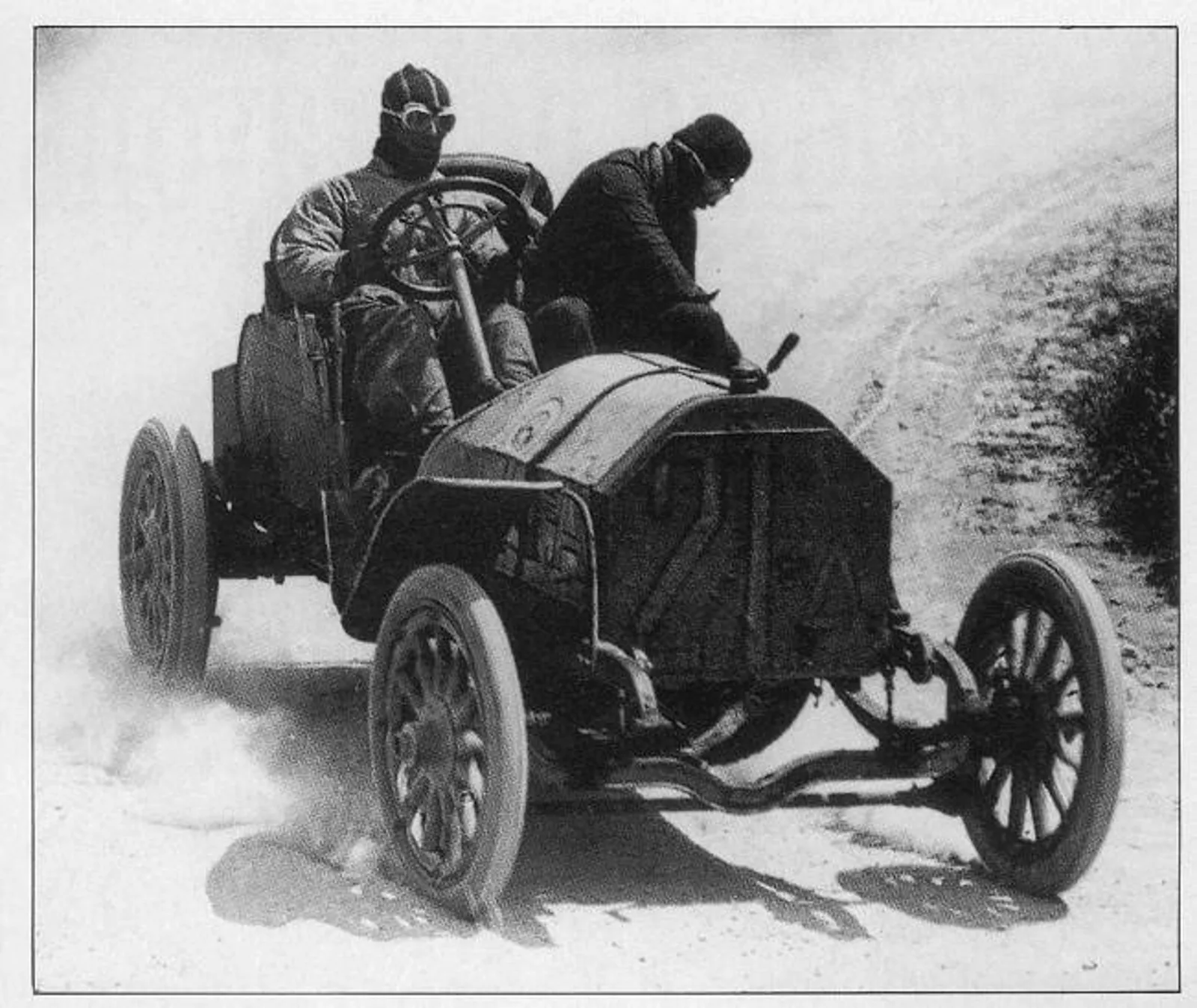
Founded in 1906 and run through Sicilian villages until 1977, the Targa Florio threw hundreds of corners at every lap and rewarded light, nimble cars.
The Targa Florio was a public-road endurance race in the mountains of Sicily, founded in 1906 by Vincenzo Florio and held until 1977. Porsche won it often with light, nimble cars suited to its hundreds of corners, including the 908/03 in 1970. It survives today as a rally.
A single lap of the Targa Florio could throw as many as 900 corners at a driver. The Nurburgring Nordschleife, longest of the purpose-built circuits, has about 180. That one fact explains why the Sicilian race, founded in 1906, was unlike anything else on the sportscar calendar, and why Porsche, building ever lighter cars, learned to beat the specialists.
What was the Targa Florio?
It was an endurance race on public roads through the Sicilian mountains, not far from Palermo, and it ranked as the oldest event in sports car racing. Founded in 1906, it was part of the World Sportscar Championship from 1955 to 1973. The first races covered a whole tour of the island, but in the final decades the track shrank to the 72 km (45 mi) Circuito Piccolo delle Madonie, which was run over 11 laps.
After 1973 it carried on as a national event for sports cars and was dropped in 1977 over safety worries. Today it survives as the Targa Florio Rally, a round of the Italian Rally Championship.
Learning a Targa Florio course took at least 60 laps, and every one of them was driven in public traffic.
Who was Vincenzo Florio?
Vincenzo Florio Jr was an Italian entrepreneur, born in Palermo on 18 March 1883, heir to one of the wealthiest families in late nineteenth-century Italy. He died on 6 January 1959. Not inclined to business, he loved travel and luxury boats, and he was a committed automobile enthusiast.
He had already helped found a racing tradition in Brescia, where he finished third in the 1904 event and then funded the 1905 race, which became the Coppa Florio. He put up 50,000 lire and a cup for the winner. In 1906 he created the Targa after discussions involving Henri Desgrange and James Gordon Bennett Jr. He drew the name from a race he had won in 1903, named after Count Rignano.
Florio treated the event as a showpiece. Medals were commissioned from artists including Alexandre Charpentier and Leonardo Bistolfi, and a magazine, Rapiditas, set out to celebrate the car and the character of modern life with graphic and photographic reproductions. In 1913 he founded the Automobile Club of Sicily and stayed president for a long time.
How did the early Targa Florio races work?
They were brutal. The first race covered three laps of a 148 km (92 mi) circuit, 444 km in all, over roads that wound through about 2,000 corners a lap and about 1,100 m of elevation change, in conditions where the climate could swing sharply. Alessandro Cagno won in nine hours at an average of about 50 km/h.
By 1919 the course had been shortened to 108 km (67 mi), and the Targa was one of the most important races in Europe. Neither Le Mans nor the Mille Miglia existed, and Grand Prix races were still isolated events rather than a series. Mercedes wins in the 1920s made a strong impression in Germany, especially Christian Werner's victory in 1924, the first by a non-Italian since 1920. In 1927 Eliska Junkova became the first woman to compete in the race.
Why did the Targa Florio decline in the 1930s?
Because the calendar moved on and Florio lost his grip on the event. In 1931 landslides destroyed roads and bridges on the Medio course, forcing a one-off return to the Grande circuit. In 1932 the Piccolo course was used for the first time, thanks to a new road between Caltavuturo and Collesano built on the orders of Benito Mussolini at Florio's request. Tazio Nuvolari won what has been described as the last classic Targa organised by Florio.
By 1933 Florio, then 50, had been ousted by politics and club members, and entries fell. Single-seat Grand Prix cars now had their own European Championship, Le Mans defined sportscar endurance racing, and even inside Italy the Mille Miglia and the Tripoli Grand Prix carried more weight. In 1935 the Automobile Club of Sicily tried to remove Florio's name and call it the Targa Primavera Siciliana; the attempt failed. That year's race, won by an Alfa Romeo P3, was the last real Targa in the mountains before the war.
In 1936 the club could not manage a proper event. On 20 December a few amateurs in small touring cars did two laps of the Piccolo course so that a 1936 Targa could go into the record books. From 1937 to 1940 a circuit race for voiturettes was held in Palermo's Favorita Park, dominated by the Maserati 6CM, and in 1941 the pits were dismantled.
How was the Targa Florio revived after the war?
By young enthusiasts, in stages. In 1948 Antonio Pucci and Raimondo Lanza di Trabia revived it as a single lap of the island, won by Clemente Biondetti in a Ferrari 166 S after 12 hours. The 1949 race, held in March in rain, started at night and lasted over 13 hours. Permission for a mountain race was still refused in 1950, so it was another island lap.
The Piccolo course returned in 1951 and the race shrank to a little over seven hours, with Franco Cortese winning in a Frazer Nash. Lancia won the next three years, and the distance was set at 8 laps for 576 km. Meanwhile the long coastal tour continued as a separate event, the Giro di Sicilia, from 1951 to 1958.
How did the Targa Florio join the World Sportscar Championship?
It took the place of another cancelled race. The Carrera Panamericana disappeared after 1954, and its place in mid-October on the 1955 World Sportscar Championship schedule went to the Targa. Championship rules asked for 1000 km or more, which would have meant 14 laps, but a compromise of 13 laps for 936 km was agreed.
The race gave Daimler-Benz a late chance to beat Ferrari, Jaguar and Maserati to the title. The Mercedes-Benz 300 SLR needed a 1-2 finish to stop rivals scoring second-place points. The cars of Stirling Moss and Peter Collins, and of Juan Manuel Fangio and Karl Kling, took over nine hours, finishing just minutes in front of the leading Ferrari, and sealed the championship.
In 1956 the Targa stayed out of the championship because Florio wanted 10 laps and the CSI officials wanted 8. International entries came anyway, and that non-championship race brought the first of many wins for Porsche. The 1957 Mille Miglia killed 12 people, and the Italian government responded by ending that race and prohibiting racing on all public roads in Italy, which caught the Targa too. It was cancelled, with only a regularity contest held in November. In 1958 the Targa became a championship round again, replacing the Mille Miglia as Italy's round in May, and held that status until 1973.
Why was the Targa Florio so hard to drive?
Because no one could learn it quickly. Every variant had between 18 and 23 corners per mile. The Piccolo circuit had about 800 to 900 corners per lap, the Medio about 1,300 to 1,400 and the original Grande about 2,000. Most purpose-built circuits have 12 to 18.
| Course | Length | Years used | Corners per lap |
|---|---|---|---|
| Grande | 148 km (92 mi) | 1906 to 1911 and 1931 | About 2,000 |
| Island tour | 975 km (606 mi), later 1,080 km (670 mi) | 1912 to 1914, then 1948 to 1950 | - |
| Medio | 108 km (67 mi) | 1919 to 1930 | About 1,300 to 1,400 |
| Piccolo | 72 km (45 mi) | 1932 to 1936 and 1951 to 1977 | About 800 to 900 |
A driver needed at least 60 laps to learn a Targa course, and the learning happened in public traffic. One lap of even the Piccolo course could take more than an hour in a road car. Practice was held in the week before the race, often with licence plates fitted to the racing cars.
The course started at Cerda and ran counter-clockwise, dropping from over 600 m at Caltavuturo and Collesano to sea level, then along the Buonfornello straight beside the coast, a straight longer than the Mulsanne at Le Mans. The longest variant climbed to 1,100 m at Geraci Siculo.
Starting a full grid was impossible on roads this tight, so cars left one at a time, 15 seconds apart, against the clock. A car that caught another was simply already ahead on the classification. Lap speeds never rose above 128 km/h (80 mph), compared with 240 km/h or more at Le Mans and 176 km/h at the Nurburgring.
Helmut Marko lapped in 1972, in an Alfa Romeo 33TT3, in 33 minutes 41 seconds, an average of 128.253 km/h, after he made up two minutes on Arturo Merzario's Ferrari 312PB. Leo Kinnunen's 1970 lap in a Porsche 908/3 took 33 minutes 36 seconds at 128.571 km/h. On the older courses, Achille Varzi set the Grande record in a Bugatti Type 51 in 1931, 2 hours 3 minutes 54.8 seconds at 70.7 km/h, and the Medio record in an Alfa Romeo P2 in 1930, 1 hour 21 minutes 21.6 seconds at 79.642 km/h.
The demands went beyond navigation. Finishing took a reliable car, because the slow, twisty route punished gearboxes, brakes and suspension. Some non-Italian entrants skipped it altogether. Mercedes and Porsche arrived weeks in advance, and Porsche's factory drivers even studied films of the circuit in the offseason.
Why did Porsche win the Targa Florio so often?
Because the race rewarded exactly the kind of car Porsche built. The firm mainly chased class wins in the 2-litre categories and overall wins on twisty tracks such as the Targa and the Nurburgring. Its line of fibreglass-bodied cars, the 904, 906 and 907 and then the 908, were light and nimble, and the course punished heavy power more than it rewarded it.
The 908 arrived in 1968 as a 3-litre flat-eight with air cooling and two valves per cylinder, producing 350 PS (257 kW) at 8,400 rpm and later 370. Its predecessor, the 907, had a 2,200 cc flat-eight with 270 PS (199 kW). The 1968 Targa itself went to a 907, not a 908: Porsche did not enter the new car, and faced five Alfa Romeo Tipo 33/2 cars instead of heavy Fords. Vic Elford saved the win.
In 1969 Porsche lowered the weight of the 908 by 100 kg, removed the roof, and called it the 908/02 spyder. It won at the Targa among several races and helped secure the championship early.
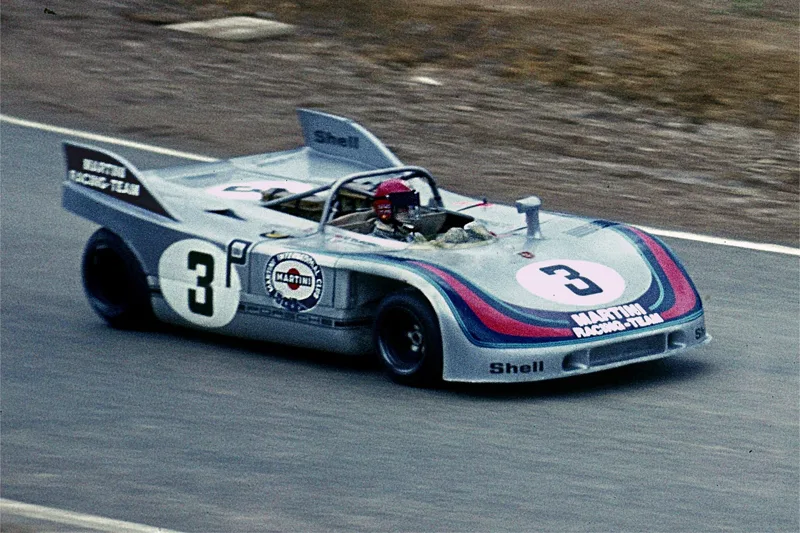
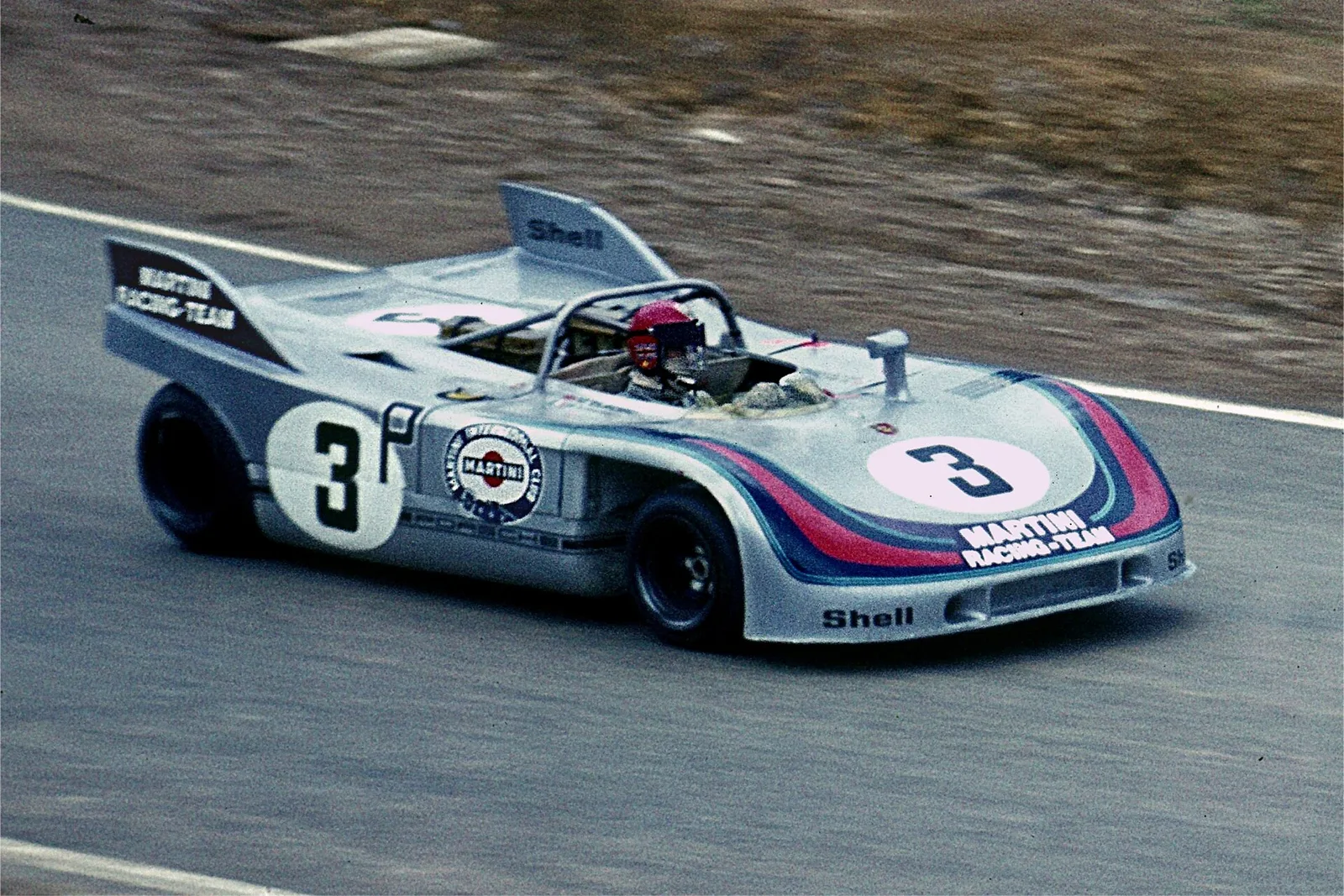
The cleverest step came in 1970. The big 917 was not suited to the Nurburgring or the Targa even as the 917K, so Porsche gave up on a single car for every circuit and produced a dedicated model for each kind of track. The 908/03 was based on the short 909 hillclimb car and weighed only 500 kg (1,100 lb), against about 840 kg (1,850 lb) for the 917K. It was so short that the driver's legs ended up ahead of the front wheels. Typical Targa speeds were about half the 390 km/h that the long-tailed 917 could reach at Le Mans.
Chassis 008 went to the JWA team for the 1970 Targa, painted Gulf blue with number 12, and Jo Siffert and Brian Redman drove it to victory. Other 908/03 cars finished second, fourth and fifth. Four weeks later at the Nurburgring the same chassis, entered by Porsche Salzburg, led a 1-2 finish. Of the four Targa and Nurburgring races across 1970 and 1971, that single chassis won three.
The fourth was the 1971 Targa. With five wins already in the bag for the 917K that season, Porsche put less effort into the mountain race and brought only three 908/03 cars to Sicily. All three crashed. The two JWA cars were out on the first lap, and Redman was badly injured in a fiery crash. Elford set the fastest lap in the Martini-entered chassis 008 and was classified 39th. Local hero Nino Vaccarella won, leading a 1-2 for Alfa Romeo, and the runner-up car was driven by Gijs van Lennep, who won Le Mans for Porsche four weeks later.
Where does the Targa Florio go from here?
The race continues as a rally, but the roads remain. Most of the roads used by the various circuits can still be driven today, though some are affected by landslides and potholes, and the western part of the road linking Caltavuturo and Collesano was interrupted by landslides in the 2010s. The Buonfornello straight was never upgraded to a motorway, because the Autostrade was built nearby.