From the Tickford Falcon and the FPV GT-F 351 to the racing cars of Adelaide, three specialists shaped Australian speed from 1959 to the present.
Tickford Vehicle Engineering (1991 to 2002) and Ford Performance Vehicles (2002 to 2014) turned the Ford Falcon into factory performance models, from the Falcon GT to the GT-F 351. Elfin Sports Cars, founded in 1959, built Australian racing and sports cars and won 29 championships and major titles.
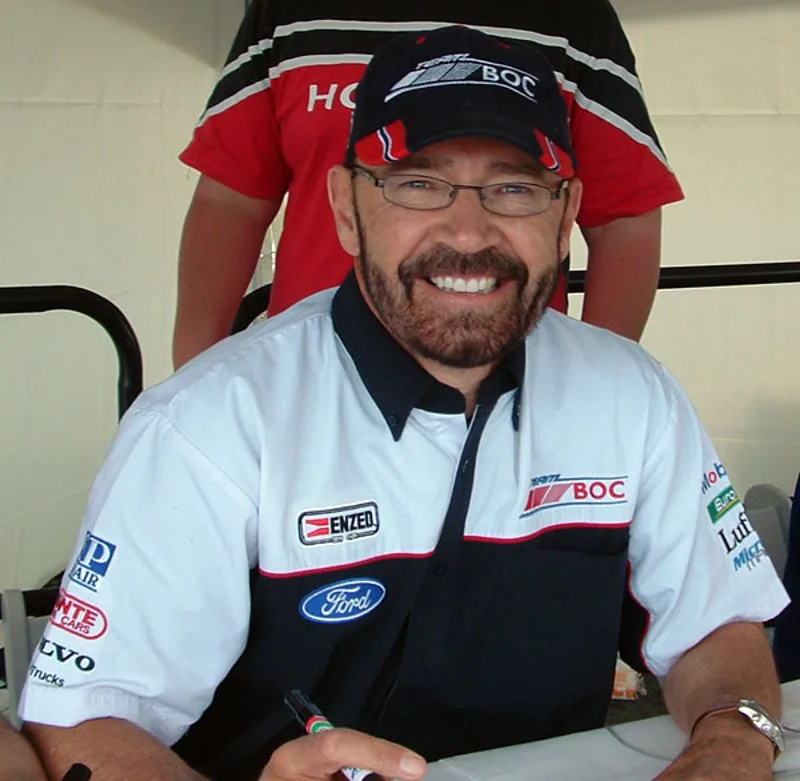
A highway patrol Falcon in New South Wales once carried 600 kW (805 hp) under its bonnet. Dick Johnson tuned the car, one of the last FPV GT-F 351 sedans, to a figure beyond anything in the Australian V8 Supercars, and as of 2015 it was the country's most powerful police vehicle. How an ordinary family sedan became raw material for that, through Tickford, FPV and the racing builders at Elfin, is a story of warranty worries, wind tunnels and one very large V8.
Why did Ford Australia go looking for a tuning partner?
In 1990 Ford Australia began a worldwide hunt for an engineering firm to run a performance arm in the mould of rival Holden Special Vehicles. The gap was obvious. The last factory effort had been a 1982 sports-pack Falcon, and the Falcon Cobra had been gone for 12 years.
Outsiders had filled the hole. AVO, Special Vehicle Operations and Dick Johnson Racing all offered hotter Falcons through the late 1980s and early 1990s. AVO and Johnson both experimented with turbochargers on the Falcon's long-serving 4.0-litre six, and Johnson turned the XE into the Grand Prix Turbo. He had hoped to run something like Peter Brock's Holden Dealer Team, but Ford worried about warranty claims on altered cars, so both firms sold few.
SVO did better. Its EA series SVO became the template for the later XR6, yet Ford still would not stand behind it officially. The answer, in the end, was Tickford, a company best known in Europe for modified Fords.
The F in GT-F 351 stood for final, and 351 was the output in kilowatts.
What did Tickford Vehicle Engineering build for the Falcon?
Tickford Vehicle Engineering began in 1991 as a joint venture with Ford Australia and worked on the company's projects until 2002. It took charge of the Falcon XR range that appeared with the EB series in 1992 and helped bring back the Falcon GT. It also fitted options such as LPG systems and sunroofs.
The XR cars grew in steps. In July 1991 Ford itself had launched the S-XR8, restoring a V8 to the Falcon line for the first time since 1982. When Tickford took over the whole range the following year, the S-XR6 gained a red rocker cover bearing the Tickford wings badge, plus a revised head and cam that took output to 161 kW (216 hp) from 148 kW (198 hp). The S-XR8 kept the standard 5.0-litre Windsor V8.
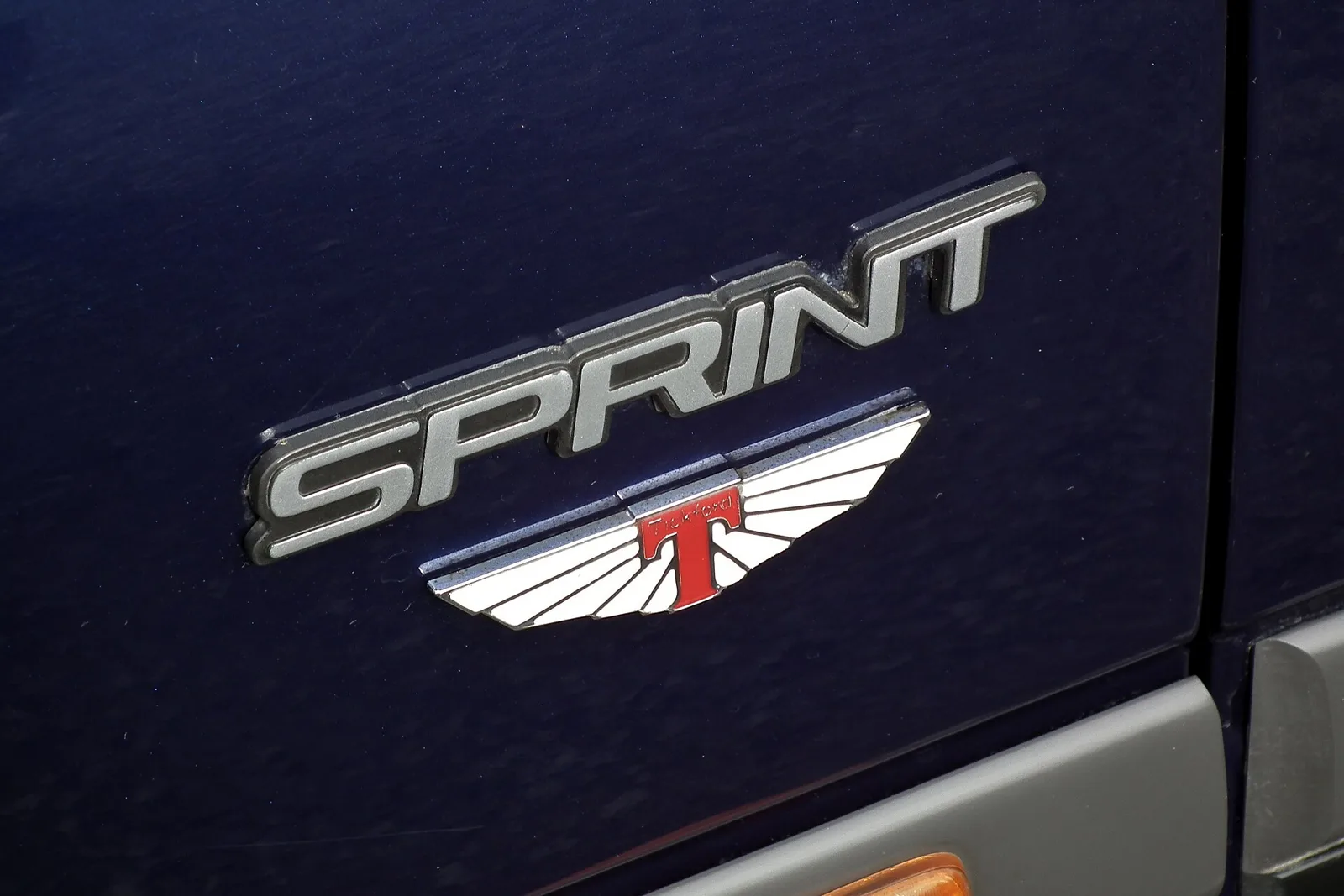
The ED series dropped the S from the name and introduced the four-headlamp face that became the XR's signature, a look inspired by the Escort RS Cosworth sold in Europe. From September 1993 the XR8 Sprint added a 195 kW (261 hp) V8 borrowed from the upgrades of the previous year's GT, together with that car's suspension and brakes. Only a black side strip, small arch mouldings, Sprint badges and a chin spoiler gave it away.
On the EF the XR6 reached 164 kW (220 hp) at 5000 rpm, helped by Tickford alloy heads, a different cam, stiffer valve springs and its own engine programming, with a 2.5-inch exhaust replacing the 2.25-inch standard system. The XR8 rose to 170 kW (228 hp) at 4500 rpm. Late in 1997 the EL's V8 rose again, to 185 kW (248 hp).
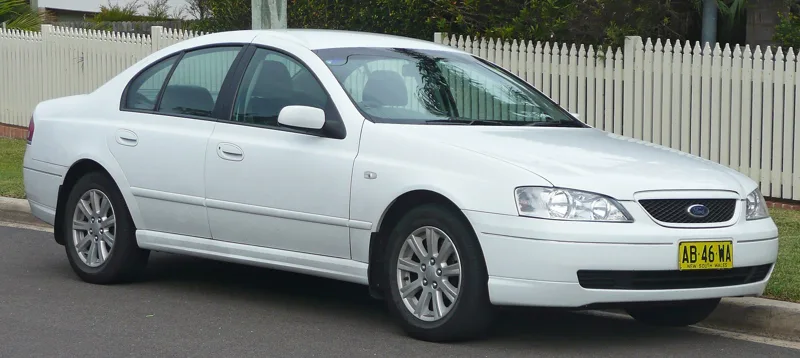
The AU generation split the six into two. The XR6 HP produced 164 kW from the new Intech engine, against 157 kW (211 hp) for the standard unit, thanks to a unique head, reshaped inlet and exhaust ports, an open combustion chamber designed to resist pre-detonation, its own camshaft, higher fuel pressure and recalibrated engine management. It kept a solid rear axle. The XR6 VCT made 172 kW (231 hp), added independent rear suspension and brought variable cam timing, an Australian-production first.
The last flourish came in 2001, when Tickford built 125 XR8 Rebels with a Ford Racing body kit and the 220 kW (300 hp) Synergy 5000 V8 from the T series. Each came with a games console and a racing game signed by Glenn Seton and Steven Richards. The standard AU III XR8 later took the same engine.
How did Ford Tickford Experience take on HSV?
In 1999 Tickford set up Ford Tickford Experience, a three-tier, sedan-only T series built on the new AU Falcon. It was an obvious challenge to Holden Special Vehicles, but the brand said it had no wish to fight a power war. Refinement was meant to be its hallmark.
Managing director David Flint put the philosophy plainly: building a car that merely goes fast is easy, and the harder job is one that handles, performs and drives well. The brand also converted the fourth-generation Mustang Cobra to right-hand drive and promoted the European Cougar.
Also in 1999 Tickford bought Glen Seton Racing and created Ford Tickford Racing, the first team Ford had backed directly for more than 30 years.
How did Tickford bring back the Falcon GT?
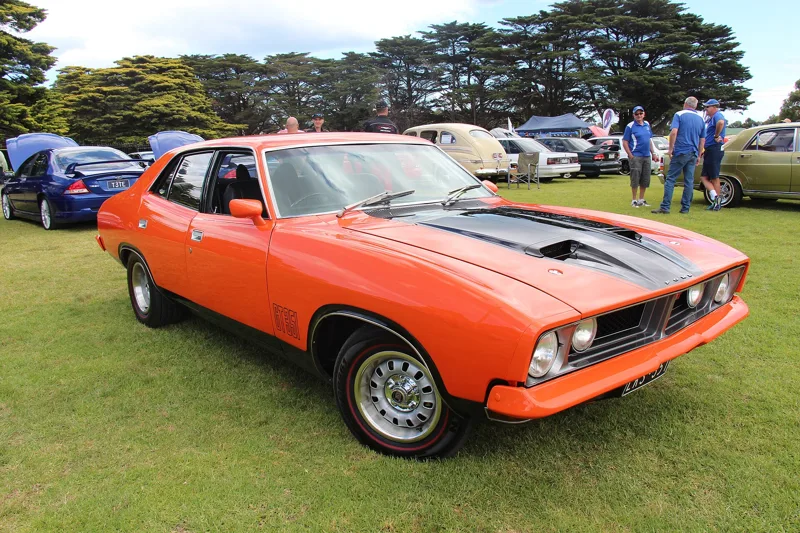
A 1990 concept with a 5.8-litre Windsor V8 (351 cubic inches) never reached production, because fitting the bigger engine meant costly changes to the engine bay. Once the 5.0-litre V8 returned in 1991, Ford revived the GT name, and Tickford built two anniversary models on the luxury Fairmont Ghia rather than the sportier XR, so the result was a true grand tourer with real comfort for the driver, not a stripped hot rod.
The 25th Anniversary arrived in 1992, a month after the S-XR6 and XR8. It marked 25 years since the first GT in 1967 and was the first Falcon to wear the badge since the last GT of 1973. Production totalled 265, with 15 sold in New Zealand. Paul Gibson, who had worked on the Escort RS Cosworth, designed its body kit, which went through wind-tunnel testing in England and looked a little like the Lotus Carlton. Tickford took the Mustang Cobra's 5.0-litre Windsor and adapted it for local conditions, with cam, intake and cylinder head changes, for 200 kW (270 hp). Wheels magazine timed the five-speed manual in November 1992 at 7.57 seconds to 100 km/h, with a top speed of 222 km/h (138 mph).
The 30th Anniversary came in 1997 on the EL series. Of 272 built, 150 were manuals and 122 automatics; 239 went to Australian buyers, no more than four to any dealer. Ford Australia's design chief Steve Park drew it, and his first sketch looked like a Batmobile with a circular stop light on a protruding post before the engineers calmed it down. The vertical-stack grille earned the nickname Darth Vader from the motoring press.
The kit was no mere decoration. It was developed in the Monash University wind tunnel alongside the EL Falcon race car programme, with a rear wing said to cut lift sharply and bonnet vents placed in a low-pressure zone for engine cooling. Under the bonnet, the 5.0-litre V8 was built in Tickford's own workshop with a recalibrated ECU, bigger SVO GT40 heads and 42mm headers, giving 200 kW (268 hp) and 470 Nm (347 lb ft).
What happened when Prodrive bought Tickford?
After Prodrive bought Tickford, Ford Performance Vehicles replaced Ford Tickford Experience with the BA series Falcon in 2002. FPV was based in Melbourne and owned jointly by Prodrive and Ford Australia, and its cars carried the FPV badge until 2014.
It still lent a hand in early work on models such as the BA Falcon XR6 Turbo, and the first parts carried the Tickford badge. The takeover also brought a factory-backed V8 Supercar team, and the race team took the name Ford Performance Racing in 2003.
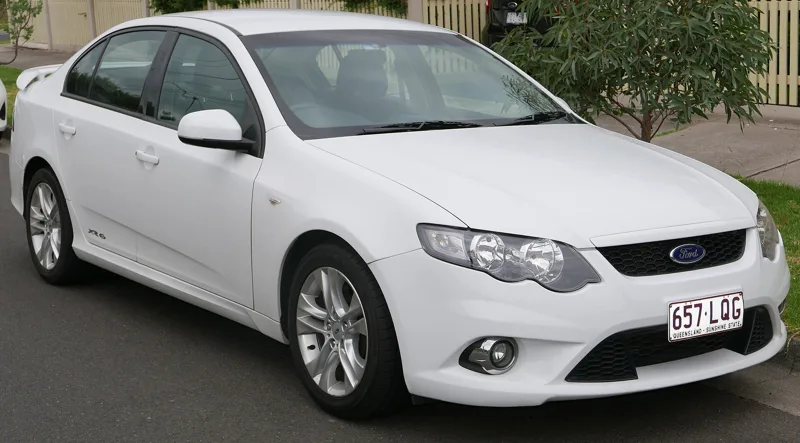
The first range comprised the GT, the GT-P and the Pursuit ute. The GT started at A$59,810, the GT-P at A$69,850, and the Pursuit shared the GT's seats, basic dash and wheels. All wore an FPV body kit with lights from the XR range and a look that echoed the BA Falcon V8 Supercar closely.
What made the FPV GT and FPV Falcon F6 so fast?
Two engines carried the brand. The Boss 290 was a 5.4-litre Modular V8 with four-valve heads from the Mustang Cobra R, making 290 kW (389 hp) at 5,500 rpm and 520 Nm (380 lb ft), and it was named for its output. The Barra 270T was a turbocharged 4.0-litre inline six with 270 kW (362 hp) and 550 Nm (410 lb ft), used in the F6 Typhoon sedan and F6 Tornado ute.
The Boss short blocks were cast iron and came from Windsor, Ontario, with locally sourced intake parts and pistons. The October 2004 BA MkII update brought a six-speed Tremec T56 manual, the Super Pursuit and the F6 pair. The 2005 BF range kept the same engines and added an optional ZF six-speed automatic.
In October 2006 FPV added the Force 6 and Force 8, luxury sedans aimed at the HSV Senator Signature, which dropped the rear wing and the loud colours.
FPV engines at a glance
| Engine | Model and year | Output |
|---|---|---|
| 5.4-litre Boss 290 V8 | BA GT, GT-P and Pursuit, 2002 | 290 kW (389 hp) |
| 4.0-litre turbo Barra six | F6 Typhoon and Tornado, 2004 | 270 kW (362 hp) |
| 4.0-litre turbo Barra six | FG F6, 2008 | 310 kW (416 hp) |
| Boss 290 V8 | FG GT, 2008 | 315 kW (422 hp) |
| Boss 302 V8 | GS, 2009 | 302 kW (405 hp) |
| Supercharged 5.0-litre Miami V8 | GT, October 2010 | 335 kW (449 hp) |
| Supercharged 5.0-litre Miami V8 | GS, October 2010 | 315 kW (422 hp) |
| Retuned supercharged 5.0-litre V8 | GT-F 351, 2014 | 351 kW (471 hp) |
Why did FPV switch to a supercharged V8?
In October 2010 the 5.4-litre V8 gave way to a supercharged 5.0-litre, nicknamed Miami, because of pressure to meet Euro IV emissions rules that the 5.4 could not pass. Output reached 335 kW (449 hp) in the GT and 315 kW (422 hp) in the GS, with a 0-100 km/h time under five seconds and more power and torque than the HSV GTS.
The Territory-based F6X, shown in 2008, was its first non-Falcon model but was gone by 2009. The FG range brought the F6-E and GT-E in place of the Force cars, and the Pursuit was dropped in 2010 before returning as a limited edition in 2012.
A black concept at the 2011 Melbourne motor show promised staggered wheels, but only the wider rear wheels reached production, on the R-spec and GT-F. The track-focused 2012 R-spec, with 335 kW and 570 Nm (420 lb ft), became Australia's fastest accelerating production car.
What was the FPV GT-F 351?
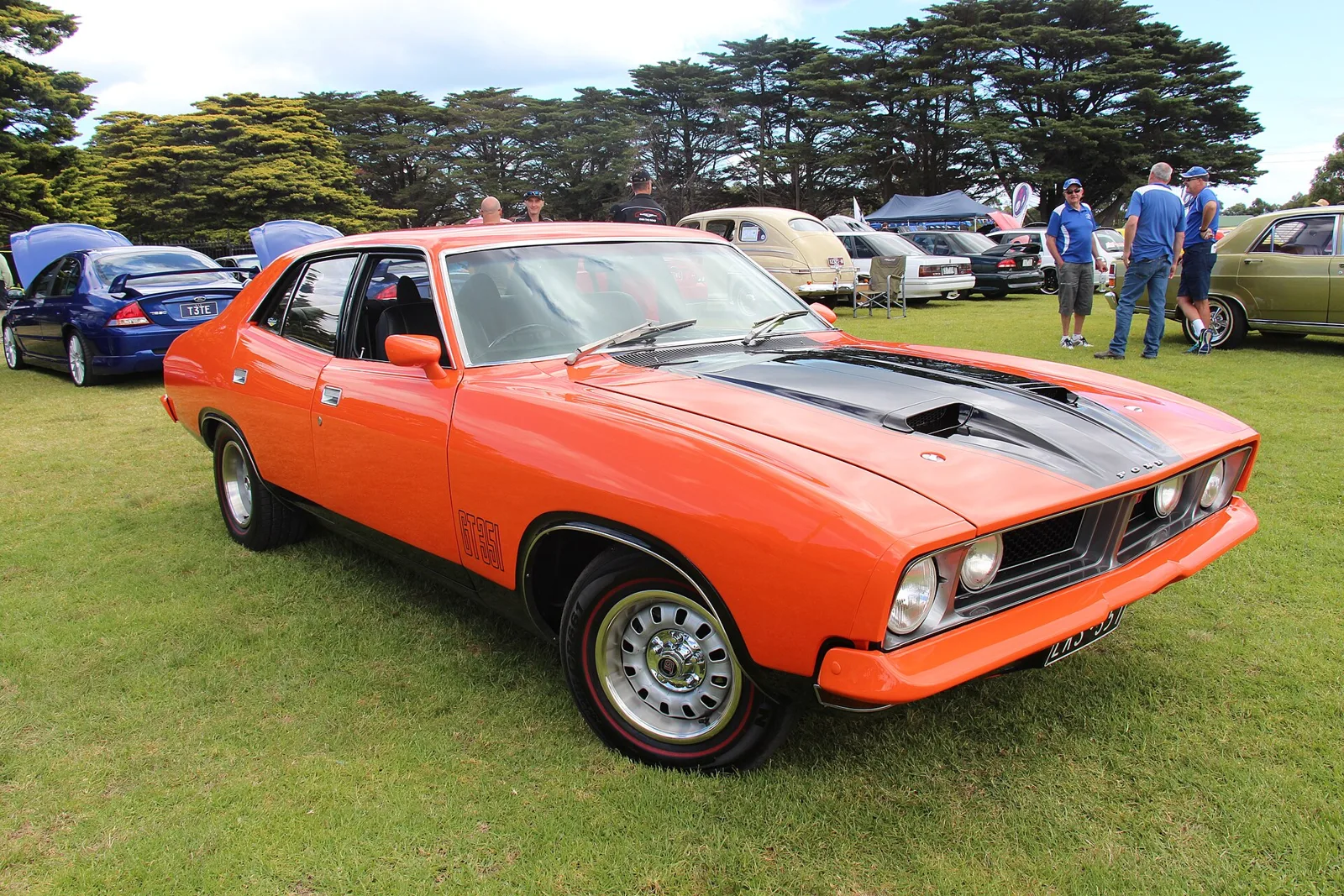
June 2014 brought the GT-F 351, the final Falcon GT sedan and, alongside the Pursuit ute, the last FPV model. The F stood for final, and 351 was both the output in kilowatts and an echo of the 351 cubic inch (5.8 litre) engines in 1970s GT Falcons. Production was 500 for Australia at $77,990, plus 50 for New Zealand.
Its supercharged 5.0-litre V8 produced at least 351 kW (471 hp) at 6,000 rpm and, depending on conditions, more than 400 kW (536 hp) for 15 to 20 seconds through a transient overboost function. Torque stayed at 570 Nm but was spread across a wider rev range. Launch control, six-piston Brembo front brakes and the R-spec suspension and 275/35 R19 rear tyres completed the hardware.
Darker trim, orange accents, a build plate and a certificate marked the cabin, while black mirrors, handles, wheels and a stripe over the roof marked the outside.
FPV put build number 001 and the final Australian car, number 500, up for online auction in aid of the National Breast Cancer Foundation. They sold for $236,100 and $157,600 after 84 and 106 bids. The New South Wales police car was build 88, commissioned as a promotional car yet fully equipped for highway patrol duty.
The end was already scheduled. In August 2012 Ford Australia had announced the purchase of FPV's assets to continue the brand, but in preparation for the closure of local manufacturing it discontinued the FPV range in 2014, after 12 years.
What is Elfin Sports Cars?
Garrie Cooper founded Elfin in South Australia in October 1959 and went on to be a champion driver as well as a designer and builder of racing and sports-racing cars. No Australian sports car maker has been going longer without a break, and few have won more, holding 29 championships and major Grand Prix victories. The first factory stood in Edwardstown, in suburban Adelaide.
Across Cooper's 25 years the company built 248 racing and sports-racing cars across 27 models. He died suddenly on ANZAC Day, 25 April 1982, aged 46, from a burst aorta.
His father, Cliff Cooper, finished the orders on the books, six of the new-generation Formula Vees among them, designed a new Formula Vee called the Crusader and a Formula Brabham car, and then put the business up for sale. In 1983 Don Elliott, Tony Edmondson and John Porter bought it and restored parts and service for existing owners. Murray Richards followed in 1993 and planned a new-generation Clubman, the Type 3. In 1998 Bill Hemming and Nick Kovatch took over and moved the business to Melbourne.
What did Elfin win on the track?
Across the years Elfin drivers took 29 championships and major races. The Australian Sports Car Championship went to Elfin in 1970, 1973, 1974 and 1975, the Australian Drivers' Championship in 1973 and 1975, and the Australian Formula Ford Series in 1970, 1971, 1974 and 1982. The Rothmans International Series followed in 1979.
The race wins stretch well beyond the championships. Elfins took the Australian Tourist Trophy in 1966, 1976 and 1978, the Singapore Grand Prix in 1968, the Malaysian Grand Prix in 1968, 1969 and 1972, the New Zealand Grand Prix in 1973 and 1974, and the Rose City 10000 in 1978.
The driver list is equally broad. James Hunt, the 1976 Formula One world champion, drove Elfins, as did Didier Pironi, Vern Schuppan, Larry Perkins and John Bowe.
Did Elfin ever build road cars?
Elfin built them late in its life. In 2004 it showed the MS8 Streamliner concept in Melbourne as part of a collaboration with GM Holden, and limited production of two versions, the Streamliner and the Clubman, began in March 2006. Tom Walkinshaw bought the firm that December, and later cars went through HSV dealerships.
Both MS8s used the 5.7-litre Gen III V8 supplied to Holden for the VZ Commodore, giving circa 255kW in a small, light car. They were known for spirited handling, and some media thought them disappointing given Elfin's motorsport history. In 2008 came the entry-level T5 Clubman, a turbocharged four-cylinder car using Pontiac-derived engines.
Walkinshaw died in December 2010, ownership stayed with his estate and there has been no production since March 2012.
Where this goes next
Tickford returned in 2016, when the Prodrive Racing Australia division reformed it to offer high-performance upgrades for the imported Ford Mustang, Ranger and Everest. The cause was Ford Australia closing its local factories, which ended the Falcon and the FPV brand. The race team became Tickford Racing in 2017.
Elfin changed hands again in May 2023, when the dealer Young Timers Garage of Keysborough, Victoria, bought it; its principals are Shaun Baker, Steven Baker and Phani Bhogavalli. The new owners say they intend to revive a brand that sat idle for 10 years, and Nick Kovatch remains technical director. The Elfin Heritage Centre in Melbourne, open since 16 August 2007, displays 24 vehicles, including Cooper's first and last race cars and a prototype of the Formula Vee-based road sports car he planned.