A flop on a 1985 Buick, a smartphone revolution and a European safety body that now says many cars lean too hard on the screen.
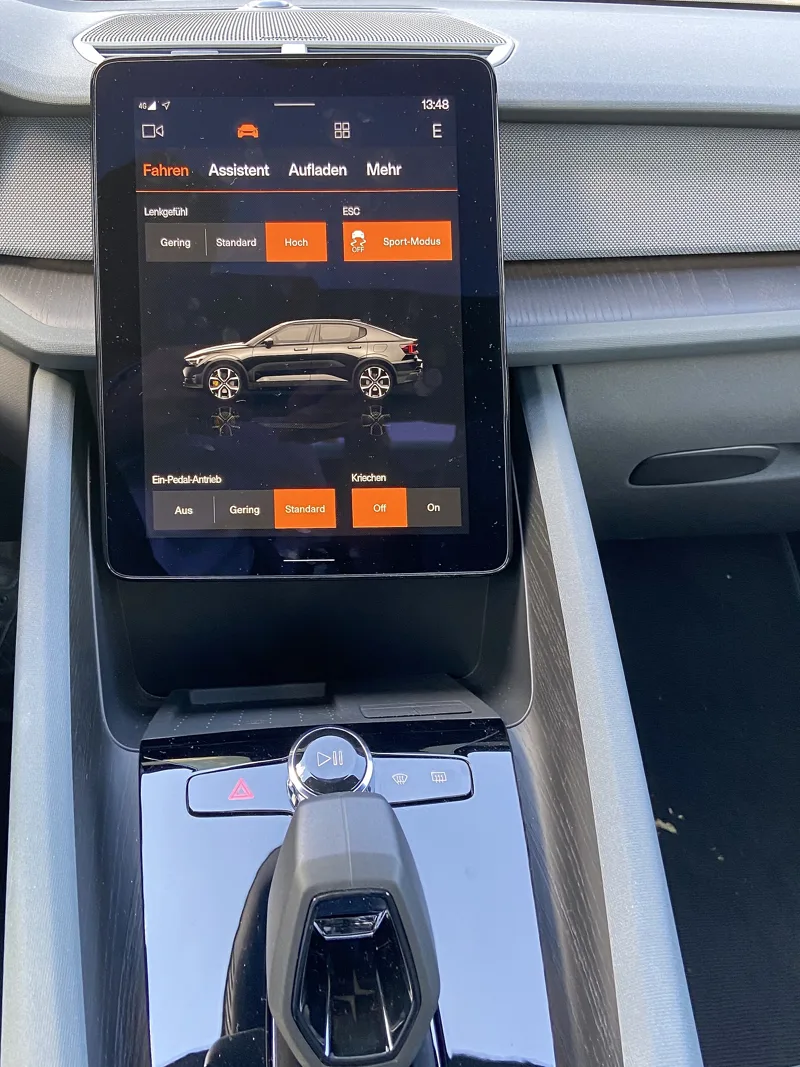
New cars have touch screens because the dashboard head unit now combines navigation, media, phone and vehicle controls in one display, and smartphones taught buyers to expect touch. General Motors tried it in the 1985 Buick Riviera. Euro NCAP states that excessive touchscreen use will be penalised from 2026.
A touchscreen reached the dashboard of the 1985 Buick Riviera, and buyers did not take to it. General Motors' monochrome screen was undone by technical problems and customers who were wary of the technology. Four decades later the charge has changed: Euro NCAP says many cars now make excessive use of touchscreens, and that this will be penalised from 2026.
Why do new cars have touch screens?
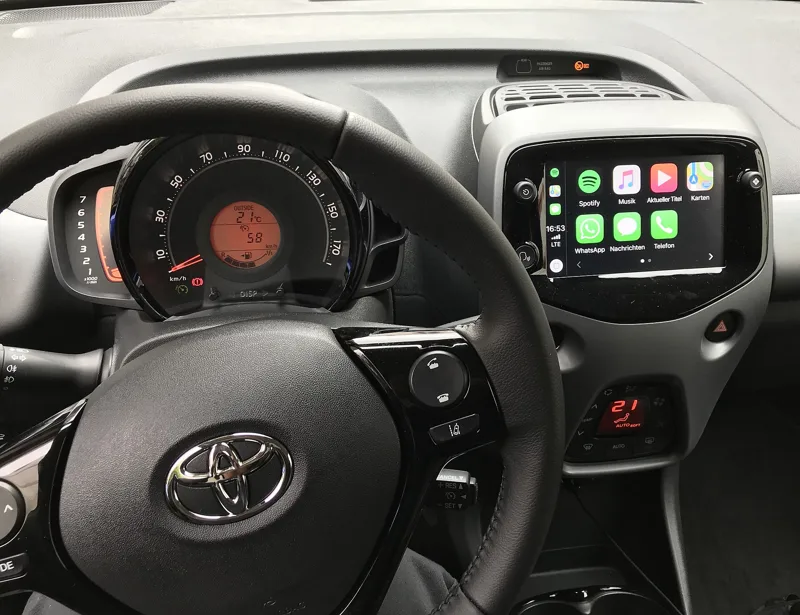
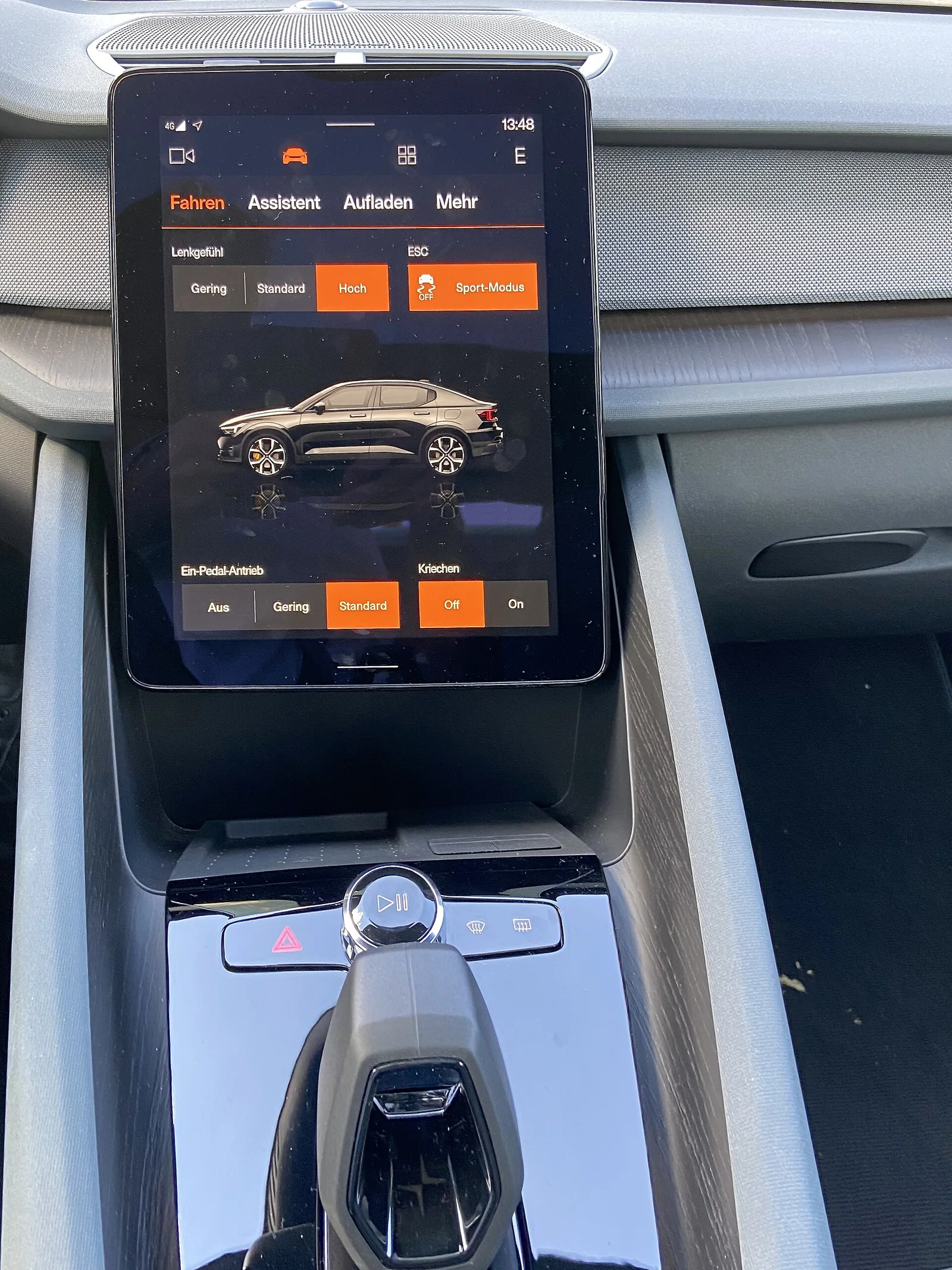
The answer starts with the head unit, the audio and information package sitting prominently in the centre of the dashboard. It is sometimes called the infotainment system, and it provides one hardware interface for screens, buttons and controls across a long list of functions: AM/FM and satellite radio, discs, USB media, GNSS navigation, Bluetooth, Wi-Fi, dashcams and, sometimes, vehicle system status. It can also manage volume, balance, speaker fade, bass and treble.
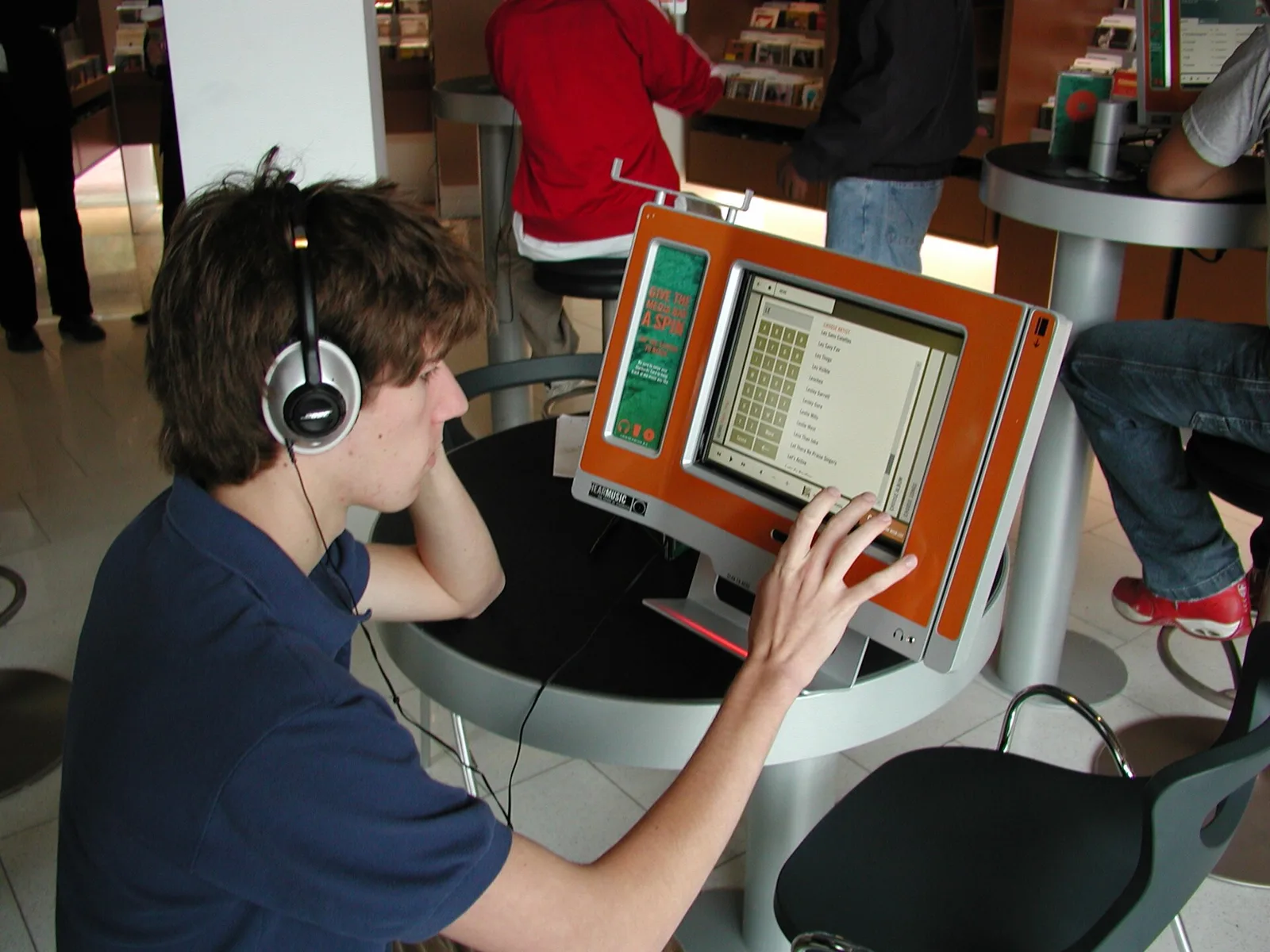
Once a unit has to handle that much, a display is the obvious home for its controls. Dashcams, navigation and DVD players pushed head units towards video screens, and many now add voice control and gesture recognition. Touch suits the same job elsewhere. Touchscreens turn up in kiosks, cash machines and medical equipment because a keyboard and mouse do not give an intuitive, rapid or accurate way of working with what is on the display.
Smartphones sealed the argument. Their popularity drove demand for and acceptance of touchscreens across portable and functional electronics, and display and chip makers began building touch into the basics of their products rather than leaving it to after-market integrators.
The Buick screen failed because the technology was clumsy and drivers were wary; today's screens face a different charge, that cars lean on them too much.
How does a touchscreen sense your finger?
A touchscreen is a display that can detect touch, made of an input device, the touch panel, layered on top of an output device, the visual display, usually an LCD, AMOLED or OLED. Unlike a mouse or touchpad, it lets the user work directly on the content, with tapping, swiping and pinching gestures. Several technologies do the sensing, and each has trade-offs that matter in a vehicle.
Resistive
A resistive panel is built from thin layers, the key two being transparent resistive sheets facing each other across a narrow gap. Pressing with a fingertip or stylus makes them touch at that point, and the panel reads the contact position by acting as paired voltage dividers, one axis after the other. Resistive screens tolerate liquids and contaminants, cost little and work with gloves or any rigid object. The drawbacks are the need to press down, a risk of damage from sharp objects, and poorer contrast because the extra layers add reflections. Most are single-touch.
Surface acoustic wave
This system sends ultrasonic waves across the panel. A touch absorbs part of the wave, and the controller works out the position from the change. Outside elements can damage such panels, and contaminants on the surface interfere with them.
Capacitive
A capacitive panel is built on an insulator, glass for example, with a see-through conductive coating such as indium tin oxide. It is the type behind multi-touch phones: the first mobile phone with a capacitive touchscreen, the LG Prada, arrived in May 2007, a little ahead of the first iPhone.
What went wrong with the Buick touchscreen?
General Motors tasked its Delco Electronics division with swapping a car's secondary functions for a single-colour CRT touchscreen, called the Electronic Control Center. It featured on the 1985 to 1989 Buick Riviera and the 1988 to 1989 Buick Reatta. Its failure was ordinary: technical problems and consumer technophobia made it unpopular.
The 1980s were an experimental decade for touch. The HP-150, one of the earliest commercial touchscreen computers, used an optical infrared screen in 1983. Touch-sensitive control-display units were evaluated for aircraft flight decks to reduce pilot workload, and at Expo 88 in Brisbane, 56 touch information consoles were deployed for visitors. Yet imprecision dogged touchscreens until researchers at the University of Maryland's Human-Computer Interaction Lab introduced the lift-off strategy in 1988. It gave visual feedback as users touched the screen and let them adjust their finger before the action took place on lift-off, which made it possible to select targets as small as a single pixel.
How did touch become good enough?
The route there was long. Eric Johnson of the Royal Radar Establishment in Malvern developed the first finger-driven touchscreen, describing it in 1965 and in more detail in 1967. At CERN, Frank Beck and Bent Stumpe built a transparent touchscreen that went into use in 1973, followed by a mutual capacitance version in 1977. Elographics began work in 1977 on a transparent resistive screen, which was shown at the World's Fair in Knoxville in 1982. The University of Toronto produced the first human-input multi-touch system that same year.
Commercial success came with phones. IBM's Simon in 1993 is widely considered the first touchscreen phone, and in 2004 Apple patented a multi-touch capacitive screen for mobile devices. By 2009, touchscreen phones were gaining popularity quickly, and by the fourth quarter of that year a majority of smartphones shipped globally had touchscreens rather than the old physical keys. In April 2015, the Apple Watch brought force-sensitive displays to consumers, so screens could sense how hard they were being pressed.
What sizes do car touchscreens come in?
Head units follow a standard from the Deutsches Institut fur Normung, ISO 7736, and the dividing line is height. A connector standard, ISO 10487, links either size to the car's electrical system.
| Size | Dimensions | Common in | What it can hold |
|---|---|---|---|
| Single DIN | 180 mm x 50 mm (7.09 in x 1.97 in) | Europe, South America, Australasia | A compact unit, too short for a video display |
| Double DIN | 180 mm x 100 mm (7.09 in x 3.94 in) | Japan, the UK, North America | A video display or touchscreen running manufacturer interfaces, Android Auto, Huawei HiCar or Apple CarPlay |
Aftermarket makers sell units to those sizes, among them Pioneer, Sony, Alpine, Kenwood, Eclipse, JVC and Blaupunkt.
What is Euro NCAP and why does it matter?
The European New Car Assessment Programme is a voluntary safety rating programme based in Leuven, Belgium. It was formed in 1996, published its first results in February 1997, and was started by the Transport Research Laboratory on behalf of Britain's transport department, then backed by several European governments and the European Union. Testing is not mandatory, and models are either chosen independently by Euro NCAP or sponsored by makers.
Its stated philosophy is that legislation sets a minimum compulsory standard, whereas Euro NCAP is concerned with the best possible current practice and keeps raising its assessments to stimulate improvement. Before it existed, the UK demanded just a frontal crash test at 48 km/h (30 mph), and buyers had little information to compare cars. Euro NCAP reports that it has since tested more than 1,800 new cars, issued over 600 ratings and helped to save upwards of 78,000 lives in Europe.
Its results move markets. The Rover 100 received a one-star Adult Occupant Rating in 1997, sold badly and left production shortly after, and BMW reworked the bonnet and headlamp mounting of its 2007 Mini to satisfy the latest pedestrian requirements. For its 20th anniversary in 2017, Euro NCAP pitted a 1997 Rover 100 and a 2017 Honda Jazz against each other in an identical frontal offset test.
Euro NCAP is modelled on the New Car Assessment Program that the US National Highway Traffic Safety Administration introduced in 1979, and similar but not identical schemes run in Australia and New Zealand (ANCAP), Latin America (Latin NCAP), Japan (JNCAP) and China (C-NCAP). A rating is valid for a region, because some cars carry less standard equipment when imported by other countries, and some cars show two ratings, a lower one for standard equipment and a higher one with a safety pack.
How the ratings work
Four percentage scores, for Adult Occupant, Child Occupant, Vulnerable Road Users and Safety Assist, feed an overall star rating that runs from 5 at best to 0 at worst. Safety Assist covers automatic emergency braking, occupant status monitoring, speed assistance and lane support. Euro NCAP Advanced, launched in 2010, rewards new technologies with a proven safety benefit that the star rating does not yet count.
The rules also reach into how features behave. Since 2019 and 2020, NCAP standards require various driver assistance features to be on by default at the start of every journey, with deactivation not possible through a single momentary push of a button. Critics have found fault with how some of these are implemented.
What does a Euro NCAP crash test involve?
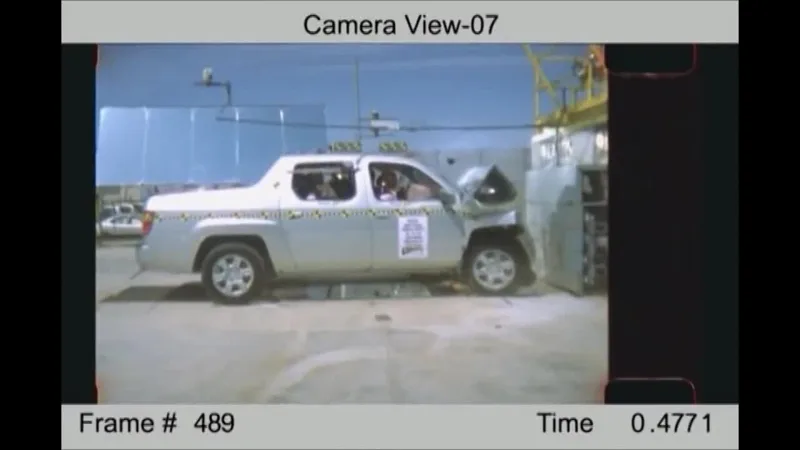
A full assessment can take up to six weeks. In the frontal test, the car is driven at 50 km/h (31 mph) into a moving deformable barrier on a 1,400-kilogram (3,100 lb) trolley that is also travelling at 50 km/h, with a 50% overlap, which stands in for a collision with a mid-size family car. The front seats hold two adult male dummies, with child dummies aged 6 and 10 in the back. A second frontal test drives the car into a rigid wall across its full width at 50 km/h, with a small dummy in the driver's seat and the rear seat, to examine airbags and seat belts.
Side impacts get two tests. A deformable barrier on a trolley hits the stationary car at a right angle at 60 km/h (37 mph), and in the pole test the car is pushed sideways at 32 km/h (20 mph) against a narrow rigid pole, representing a tree or lamppost. A far side test was added in 2020 to address injuries on the side of the car away from the impact. Whiplash is checked by driving the seat forward at 16 and 24 km/h (9.9 and 14.9 mph), and vulnerable road users are covered by head, pelvis and lower leg impacts plus automatic emergency braking tests for pedestrians and cyclists. Even rescue is graded: the ease with which first responders can free an occupant, and how well the eCall emergency system performs after a crash.
What will Euro NCAP do about touchscreens?
The programme's rating history records that, by 2024, excessive reliance on touchscreens was widespread among cars, and that penalties for it begin in 2026. Results are grouped into 13 increasingly demanding classes, and the list continues past 2026 with comparison groups for 2026 to 2028 and 2029 onward.
That puts the dashboard in an odd place. The same industry that moved controls into the head unit, helped by smartphones that trained a generation to swipe, now faces a safety body that has said excess is a problem. The Buick screen failed because the hardware was clumsy and customers distrusted it. The next test is different, because a screen that works well can still count against a car in the ratings if the car leans on it too much.