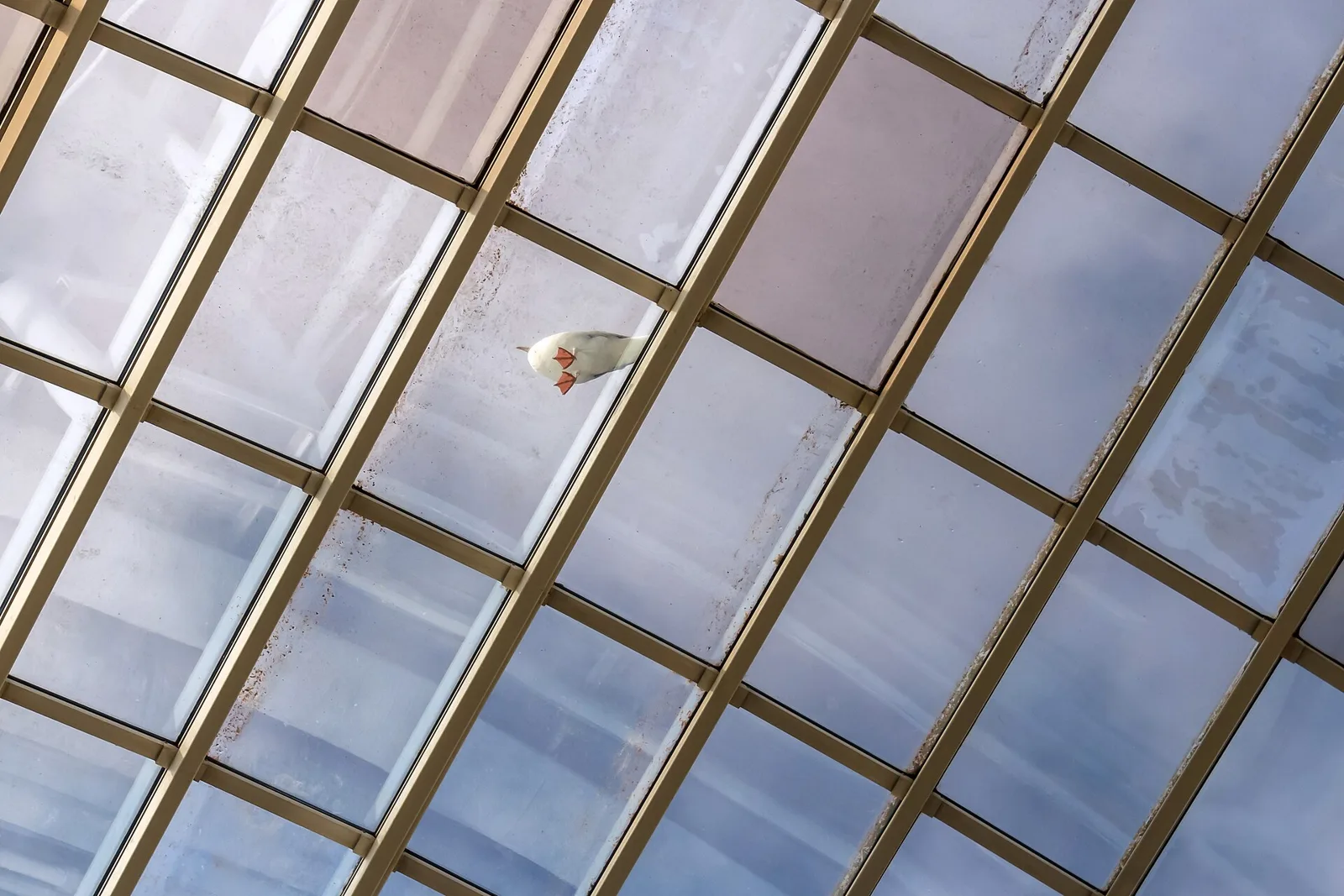
How window film handles heat, glare and privacy, where tint is legal, and how vinyl wraps compare with paint.
Window film is a thin PET laminate that cuts heat, glare and UV on car glass, with ceramic types reducing energy transmission by up to 80 percent; tint darkness is legally limited, for example 35% VLT in New South Wales. A vinyl wrap changes a car's colour without touching its paint and can be removed.
A German taxi law helped turn the vinyl wrap from a billboard trick into a way of changing a car's colour. German taxi companies were required by law to paint their fleets beige, and in 1993 a vinyl maker was asked for a film that could stand in for paint. After three years of taxi service, the vinyl came off and the paint underneath was unscratched.
That small episode contains the whole case for both of the films owners put on their cars. A wrap changes how a car looks without touching its paint. Window film changes what happens at the glass.
Car window tint: what the film does about heat, glare and privacy
Window film, often just called window tint, is a thin laminate fixed to the inside or outside of glass. The same product goes on cars and boats, homes and offices. It is usually made from polyethylene terephthalate (PET), a polyester, which is clear, strong and stable in size, and accepts a range of coatings. Films are sorted by construction, which can be dyed, pigmented, metallized, ceramic or nano, by use, whether automotive, marine or architectural, and by what they do: privacy, solar control, or safety and security. Professional installers do most of the work, though DIY kits are widely sold. The International Window Film Association, founded in 1991, offers information that is not tied to any brand.
The list of jobs is long: cutting heat and glare, insulating, filtering ultraviolet (UV) light, adding safety and security, giving privacy, carrying decoration or branding, resisting graffiti and changing a car's styling. For a car parked in summer, the point is simply to stop it overheating.
Heat rejection is the technical core. These films normally go on the inside of the glass and reduce the infrared, visible and UV radiation coming through. Dyed or metallized versions convert incoming solar radiation into infrared, which is then sent back out through the glass. Ceramic films are non-metallic and carry no dyes that could discolour. Ceramic and metallic films usually cost 50 to 100 percent more than regular film, or even more, but can reduce energy transmission by as much as 80 percent. Spectrally selective films take a different route, blocking particular infrared wavelengths and rejecting heat without dimming natural light.
Basic clear films absorb some UV up to 380 nm, specialist films go to 400 nm, and tinted films are needed to reach 500 nm. Films filter out over 99% of UV at 380 nm, which removes the main cause of fading, though heat, visible light, humidity and chemical vapours also play a part. That is why tinted or metallized films, which reject heat and visible light as well, give the best protection for an interior.
Privacy films reduce what can be seen through the glass. For cars they come in gradients of darkness, and the darker ones are known as limo tint. The wider benefits listed for film in vehicles include protection for rear passengers, cooler conditions for pets, less glare and reflection on LCD screens, fewer thefts because valuables are less visible, and protection for people with photosensitivity or skin conditions such as lupus. Film is also considered more effective and practical than stick-on blinds.
Security film is a heavier product. Made of heavy-gauge plastic, it holds glass together when it breaks, and can protect vehicles. These films are often tinted and can be up to 400 micrometres thick, against under 50 micrometres for ordinary tint. A layer of 100 micrometres or more can stop spall, the dagger-like shards that fly from a struck pane. Switchable films, which change from opaque to clear on a safe voltage under 36V AC, also exist.
Film must suit the glass. The glass type, its thickness and the construction of the window all matter, and the wrong film can crack a pane through thermal stress. Advice on selection is vital, though breakage after the correct film is applied is very unlikely.
A wrap changes how a car looks without touching its paint. Film changes what happens at the glass.
Factory tint is not the same thing
Some cars leave the factory with tinted glass, but it is a different product. Factory tint is not an applied film. The pigment is dyed into the glass during manufacture in an electrical process known as deep dipping. It gives the glass colour without the UV protection or heat rejection that most films add, and its average visible light transmission (VLT) lies between 15 and 26%.
Is window tint legal? The rules by country
Tint reduces visible light transmission, and that creates problems at night and when drivers need to look through other vehicles to spot hazards. Police may also want to see who is inside. So in many places the law limits how dark tint can be.
| Place | What the rules allow |
|---|---|
| New South Wales, Australia | 35% VLT on windows other than the windscreen; a band across the top of the windscreen no deeper than 10% of its depth |
| Canada | Set by province, from 50% VLT in Manitoba to 70% in Quebec and Yukon; most provinces, including Ontario and British Columbia, ban tint on front side windows |
| Hong Kong | Since April 2023, 70% VLT on the front windscreen and front side windows, and up to 44% on the others |
| India | 70% VLT for front and rear windshield, 50% for all other windows |
| Italy | Rear windows and rear windscreen only, with no limit on darkness |
| Belarus | Any tint is illegal, with exceptions for some older factory tint |
| Iran | Legalised in November 2021 by the Court of Iranian Administrative Justice |
The detail inside those headline figures matters. In New South Wales, cars tinted before 1 August 1994 are exempt from the side and rear window rules. Belarus excepts factory tint on vehicles bought before 1 April 2006, along with vehicles used by cash collectors, the KGB and certain officials. In India, the Supreme Court ordered all black films removed on 27 April 2012.
Film sold for safety and security work faces a separate set of tests. American standards such as ANSI Z.97, British standards such as BS 6206 and the European EN12600 classification of glazing resistance to impact apply, and building codes often require a report showing a film has met at least one of them. Solar film is tested less critically, though the standards ASTM E903 and ASTM D1044-93 cover solar and UV transmission and abrasion resistance.
Vinyl wrap vs paint: what a wrap actually is
A vehicle vinyl wrap covers a car's original paint, wholly or partly, with vinyl in another colour or finish, such as gloss, matte, chrome or clear protection. Owners use it for a colour change, for advertising or for a custom livery. Wraps began as advertising, turning vehicles into mobile billboards, and their appeal then was that the sheets can be taken off with relative ease, which cut the cost of changing the advertisement.
The material has a long back story. Early attempts at commercial plastics failed because they were too fragile, until Waldo Semon added additives to PVC in 1926 and made it flexible. In the 1950s Newhouse Automotive Industries of Los Angeles sold aftermarket vinyl treatments, and do-it-yourself partial designs such as plaid or polka dot cost 10 to 20 dollars. Its adverts, which started in 1954, called vinyl the very latest automotive sensation. The first complete bus wrap came in 1991 from Contra Vision in New Zealand for the Pan Pacific Hotel, using clear PET window film with part-printed, part-sprayed graphics so passengers could still see out. Two years later, a digitally printed wrap on a bus promoting Crystal Pepsi is thought to have been the first of its kind.
The key moment for paint substitution was the German taxi job. Taxi companies had to bring a large fleet into line with a legal requirement for beige, and decommissioned taxis had normally been heavily discounted or repainted. Vinyl let them comply while protecting resale value, since it could be removed without damaging the paint below. The vinyl maker documented that after three years of taxi service, removal left the original paint unscratched.
How a vinyl wrap is made and fitted
Wrapping a whole car was hard at first, mainly because the vinyl stuck too early and trapped air bubbles. Companies including Avery Dennison, 3M and Oracal solved it with air channels. Microscopic glass beads in the adhesive stop it gripping until the installer is ready, so the vinyl can be lifted and repositioned repeatedly, until a firm press with a small hard squeegee breaks the beads and fixes it for good. Installers then use heat guns or torches to mould the material over compound curves, recesses and corrugations.
The most common material for colour change work is cast vinyl. It starts as a liquid that is cast into a sheet and passed through ovens, which evaporate the solvents and leave a solid film. Thickness is measured in mils, thousandths of an inch: usually 2 mils (51 micrometres) for printable material and 4 mils (100 micrometres) for solid colour, although cast film is also described as usually 1 to 2 mils thick. Because the film is cast in a relaxed state, it follows curves, keeps its shape and can be relaxed back with heat after modest stretching. It is also less prone to shrinkage than calendered film, which is made by extruding a molten mixture of powdered PVC, liquid softener and colouring through a series of rollers that press it thinner and wider. Cast films are considered the industry premium and suit complex surfaces such as vehicles.
There are three main types of wrap. Cut graphics are individual logos or contact details. Half wraps cover half the vehicle including the back doors, with a larger design. Full wraps cover the whole car and can carry any design.
By 2017 colour change wraps had grown into metallic, chrome and colour-shifting finishes, and into films matched to a manufacturer's paint code or to Pantone colours. Most are applied to the exterior. Door jambs and other hidden parts can be wrapped too, but they add cost. Paint protection films work differently: clear versions let the original paint show through, and colour-matched ones replicate the factory colour.
Wraps can reach the glass as well. Decals can cover side and rear windows, usually perforated so passengers can look out, but the front windows the driver uses are left clear for safety. See-through graphics date from the 1980s, with the first dominant patent held by the British company Contra Vision.
Does a car wrap damage the paint, and what does the law say?
The documented case is the taxi trial: three years of service, then removal with no damage to the paint. Cast film is the type valued for keeping its colour well.
A colour change may need declaring. Because many owners use wraps to reach colours that paint cannot offer, the insurer and the registration authority may need to be told. In the UK that means the DVLA, and in the US the motor vehicles department of each state.
Wrapped advertising has also run into local rules. A number of municipalities have introduced strict laws against mobile advertisements, partly because wrap adverts circulate through high-density areas. New York City bans any motorised advertisement, California has strict rules, and mobile billboards have been identified as a contributor to the city's congestion.
What this means for an owner
For tint, start with the visible light transmission figure that applies where you drive, since limits differ even between the provinces of a single country. Ceramic and metallic films cost more but cut energy transmission by as much as 80 percent, and choosing the right film for the glass matters for thermal reasons. For a wrap, the benefits are a colour that paint may not offer and a result that can be removed, while the costs include extras such as door jambs and the possibility of having to tell the insurer and the registration authority.
Where this goes next
Demand for colour-matching vinyl has grown, with wraps now made to match factory paint colours and metallics. Hong Kong adjusted its tint rules in April 2023, Iran legalised tint in November 2021, and switchable films that clear or darken on a small electrical charge also exist.