Waxing, the cold filter plugging point, EN 590 classes from A to F, and the cetane scale that runs from 15 to 100.
Diesel gels because its waxes crystallise below the cloud point and clog filters. Winter diesel counters this with additives or kerosene-type blending, and standards such as EN 590 set regional classes. Cetane number shows ignition speed; Europe requires a minimum of 51.
Some car makers once told diesel drivers to pour up to 20 percent petrol into the tank in cold weather, a trick that was common in Europe where kerosene-based winter fuel was not on sale at the pump. Since the 1990s that advice has been dangerous: modern direct injection diesels cannot tolerate any petrol in the fuel, because their high-pressure pumps depend on diesel itself for lubrication. The story of winter diesel is the story of finding safer ways to keep a fuel liquid when the air turns cold, and of the cetane number that describes how that fuel behaves once it is burning.
Diesel does not freeze like water. It grows wax. Understanding that, and the few ways fuel suppliers and drivers fight it, explains why a litre bought in Norway differs from one bought in Sydney, and what the number on a premium pump actually measures.
Why does diesel gel in cold weather?
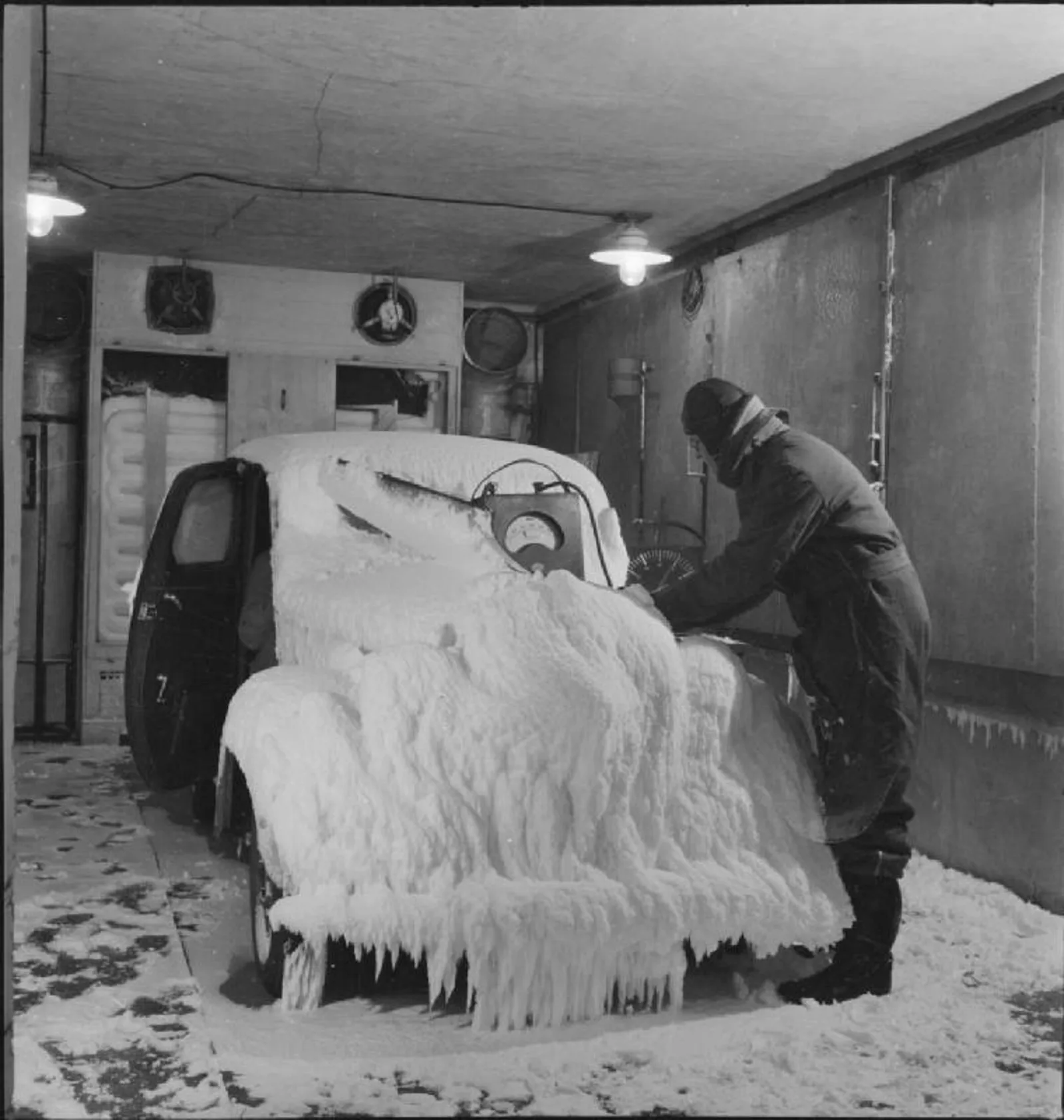
Diesel contains waxes that begin to solidify as temperatures fall. The fuel moves into a partly crystalline state, which is what drivers mean when they say it has waxed or gelled. The first sign is the cloud point. Below it, solid wax particles start to form and the fuel looks cloudy. The wax thickens the oil and clogs filters and injectors, and the crystals gather in the fuel line, above all in the filter, until the engine runs dry and stops.
CFPP, cloud point and pour point
Fuel scientists use more than one temperature. The cold filter plugging point, or CFPP, comes from a standard test of how fast diesel flows through a standard filter in a set time as it cools. The Low Temperature Flow Test, ASTM D4539, does a similar job for fuel with flow improvers. Both readings sit a few degrees above the pour point, the temperature at which the fuel stops behaving like a liquid and pumps would cease working.
An engine already running can carry on below the CFPP. Most have a spill return system that sends surplus fuel from the injection pump and injectors back to the tank, and once the engine warms, the returning warm fuel should keep the tank from gelling. Thanks to better additives, waxing now rarely occurs except in the coldest weather.
Diesel does not freeze; it grows wax, and the fix is in the blend.
How winter diesel is made
Fuel suppliers and drivers have four main tools, and one of them is a cautionary tale.
Additives
Flow-improving additives lower the CFPP. They do not stop wax forming. What they do is stop the particles from joining into larger flakes that would clog the filter. They work only if added above the cloud point, because they must mix well with the fuel, so the ideal moment is at the fuel station while the diesel is still warm from the storage tanks. Additive treatment is cheaper than blending, and stations in cold regions often supply treated diesel at no extra charge. In the United States the treatment ratio is 1 to 40000. If a station already sells winterised diesel, adding more is a mistake: incompatible additives can reverse the CFPP improvement.
Blending with lighter fuel
In North America stations sell two grades under ASTM D975, called No. 1 and No. 2. No. 1 is similar to kerosene, with a natural CFPP of -40 C, but it costs more. Blending in 10 percent of No. 1 pulls the CFPP of No. 2 down by about 5 degrees. That gives American drivers two products: a winter blend, where the station has mixed No. 2 with some No. 1, and winterised diesel, where the supplier has treated No. 2 with additives. Because additives are cheaper, most stations offer winterised diesel in cold weather, and in colder regions many keep No. 1 at the same pump so a driver can choose a blend.
Petrol in the tank
The older shortcut was petrol. Some car makers recommended up to 20 percent in cold weather, at the cost of higher consumption. Direct injection engines changed that. Their pumps run at high pressure and rely on diesel for lubrication, so petrol brings wear and eventual pump failure. Makers of common rail and unit injector engines prohibit diluting diesel with either petrol or kerosene, because it may destroy the injection system.
Heaters
Low-output electric heaters in the tank and around the fuel lines extend the fuel's fluid range and are standard on vehicles used in arctic weather. Because the filter is the first thing to clog, most diesel cars have a filter heater. With one fitted, a summer-grade fuel rated -7 C at the CFPP test can be used safely in -20 C weather, and a winter grade rated -15 C can cope with -24 C. A heater cannot melt wax already sitting in the feed system, so cold starts can still be difficult.
Winter diesel classes and rules around the world
In Europe, winter fuel is governed by EN 590, a standard first written for low-sulphur diesel whose national versions absorbed earlier winter rules. It is statutory in all European Union countries, and also in Iceland, Norway and Switzerland. For temperate zones it defines six classes, lettered A to F. In Central and Western Europe winter diesel must meet Class F from the start of December to the end of February, with a lower class required in the transitional months, mostly October and April. Tests in the Alps found that pump diesel beat the legal minimum by some degrees, with a CFPP of -27 C in every sample.
For arctic zones the standard has five classes from 0 to 4. Scandinavian countries require Class 2. Some refiners sell standard winter diesel and arctic diesel side by side.
| Country | Winter diesel rule |
|---|---|
| Austria | CFPP below -20 C in winter and below -15 C in the transitional period |
| Belgium | At least CFPP -15 C by law |
| France | EN 590 classes B, E and F for summer, winter and winter blizzards |
| Norway | Arctic class 2 in mid-winter, with time frames extended by about 14 days in some regions |
| Switzerland | One year-round diesel that meets winter characteristics |
| Sweden | EN 590 plus national standard SS 155435, introduced 1972 and last updated in 2016 |
| Australia | AS 3570 sets maximum cloud point limits from -3 C to 15 C across 12 climatic regions |
| United States | No fixed dates; ASTM D975 suggests a cloud point no more than 6 C above the 10th percentile minimum temperature |
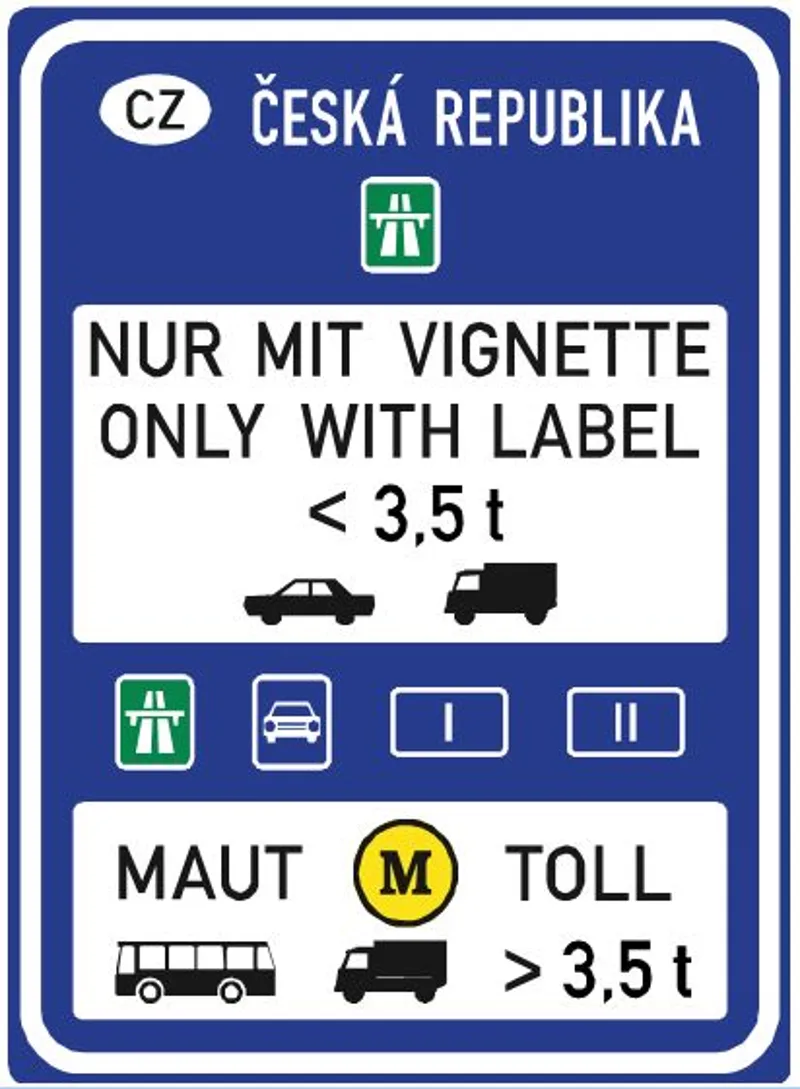
The national picture varies in detail. Belgium's law sets CFPP -15 C, but one fuel group supplies -20 C from 1 November to 28 February and -11 C in October. Poland's stations lengthen the legal period by a few weeks, and when winters turn harsh they move to an arctic grade rated -32 C, or even -40 C in some regions. Switzerland's market offers only one diesel, the "Ganzjahresdiesel", which meets the winter specification all year. In Sweden one provider sells winter diesel with a CFPP of -32 C the whole year. The Czech Republic requires classes B, D and F through the year, and also sells a class 2 diesel for skiing regions.
Canada, with an overall arctic climate, publishes maps of common low temperatures so oil companies can adapt the fuel, which they do about ten times a year. The United Kingdom splits diesel into summer and winter fuel under BS EN 590, with winter biodiesel distribution running from November to March.
Australia and the United States
Australia's AS 3570 sets maximum cloud point limits for each of the 12 calendar months across 12 climatic regions, ranging from -3 C to 15 C. In Australia the CFPP of diesel typically falls about 2 C under the cloud point.
The American approach has no fixed legal time frame. ASTM D975 does not set cold-flow requirements. Its advice is that the cloud point should stay within 6 C of the 10th percentile minimum ambient temperature for the month of use, the low that is hit on no more than 3 days in 30. The standard includes maps for every state and month.
What is a cetane number?
The cetane number (CN) shows how quickly diesel fuel ignites and how much compression it needs to do so. It plays the part for diesel that octane rating plays for petrol, though one of several quality measures, alongside energy content, density, lubricity, cold-flow behaviour and sulphur content.
The scale is built from two reference hydrocarbons. Cetane is defined as 100. Isocetane has a measured value of 15, and replaced an older reference fuel, alpha-methylnaphthalene, which had been assigned 0. A fuel's number is found by blending the two until the mixture ignites with the same delay, then taking a volume-weighted average: CN = % n-cetane + 0.15(% isocetane). Cetane number moves inversely with ignition delay, the interval from the start of ignition to the first measurable pressure rise, so higher-cetane fuels light up sooner than lower-cetane ones. The scale applies only to light distillates; heavy fuel oil uses CCAI and CII.
Typical values
Diesel engines generally run well on CN 48 to 50. Lower numbers mean longer ignition delays, and faster engines work better on higher ones. In Europe the minimum cetane number was set at 38 in 1994 and 40 in 2000. Since 1 January 2001, EN 590 has required a cetane index of at least 46 and a cetane number of at least 51, and premium diesel can reach 60.
Finnish premium diesels have a minimum of 60 with a typical value of 63, and a renewable diesel sold there is rated at 70 or more. Across North America most states follow ASTM D975, which sets a floor of 40, with typical fuels at 42 to 45. Premium diesel may or may not have a higher figure, depending on the supplier. California requires at least 53. Under the TxLED programme, diesel in 110 Texas counties must reach a cetane number of 48 or higher, or follow an approved alternative formulation.
What raises cetane
Cetane can be raised with additives, chiefly alkyl nitrates such as 2-ethylhexyl nitrate, and with di-tert-butyl peroxide. Alternative fuels vary: biodiesel from vegetable oils has been recorded at 46 to 52, animal-fat biodiesel at 56 to 60, and dimethyl ether, a potential diesel substitute, at 55 to 60.
How cetane is measured
Accurate measurement is hard. It needs a special Cooperative Fuel Research (CFR) engine, whose operator raises the compression ratio by hand until the gap between injection and ignition is 2.407 ms, then finds the cetane and isocetane mix with the same delay. The Ignition Quality Tester injects fuel into a constant-volume chamber at about 575 C and 310 psi (21 bar) and times the pressure recovery, and has been the reference method for derived cetane number since the late 2000s. A Fuel Ignition Tester works on a similar principle.
The cetane index is a separate figure, calculated from density and distillation range. The usual 4-point method, ASTM D4737, uses density and the 10, 50 and 90 percent recovery temperatures. The 2-point method, ASTM D976, tends to overestimate and is not recommended. Because an index cannot capture cetane improvers, it estimates only the base number of an unadditised fuel. Each method has its own standard: ASTM D613 (ISO 5165) covers the CFR engine, D6890 the IQT and D7170 the FIT.
What it means for a driver
Seen from the pump, winter diesel means three things. First, the CFPP is the number that matters in the cold, and a filter heater lets the engine tolerate weather colder than that number. Second, if the station sells winterised diesel, do not top it up with an additive. Third, a higher cetane number does not guarantee better fuel on its own, because lubricity, energy content and other qualities also count, and a premium label may or may not carry a higher cetane figure.
Where this goes next
The next change at the pump is set by the calendar. In Central and Western Europe, Class F winter diesel is due by the beginning of December and runs to the end of February. Belgium's winter specification runs 1 November to 28 February, and Sweden's national standard was last updated in 2016. In the United Kingdom winter biodiesel distribution starts in November and ends in March. In the United States, where cold-weather fuel is not tied to fixed dates, it follows the monthly temperature maps.