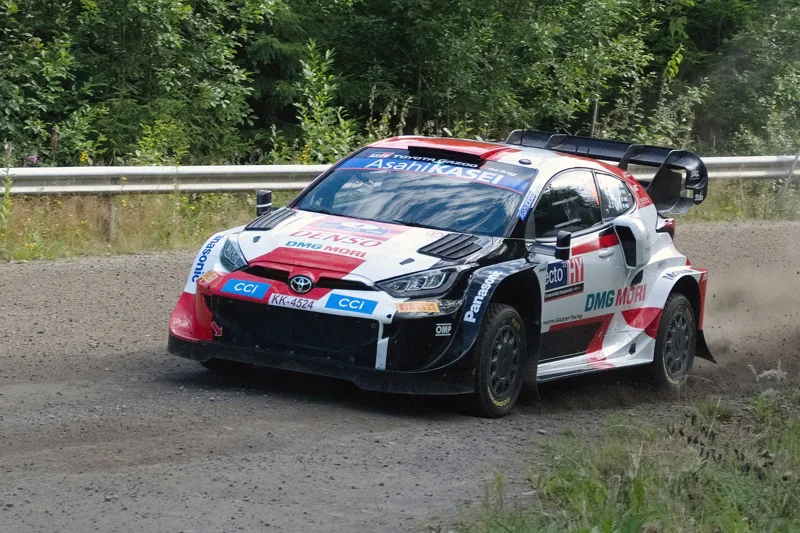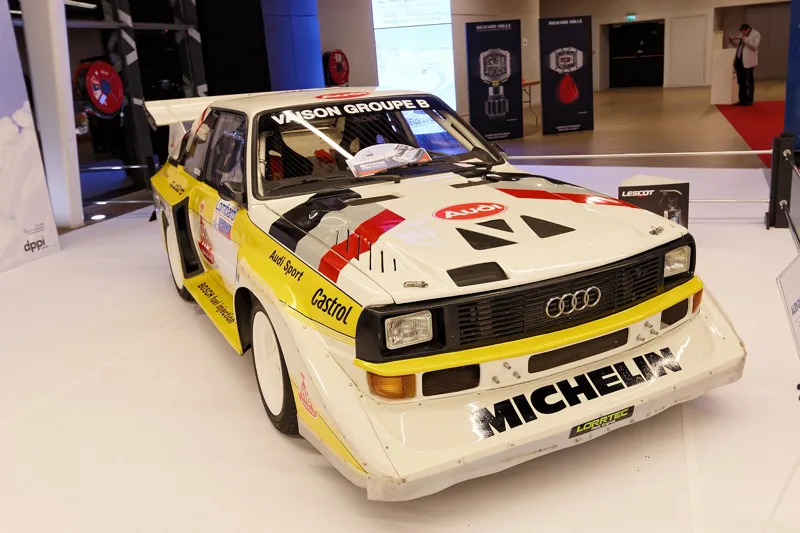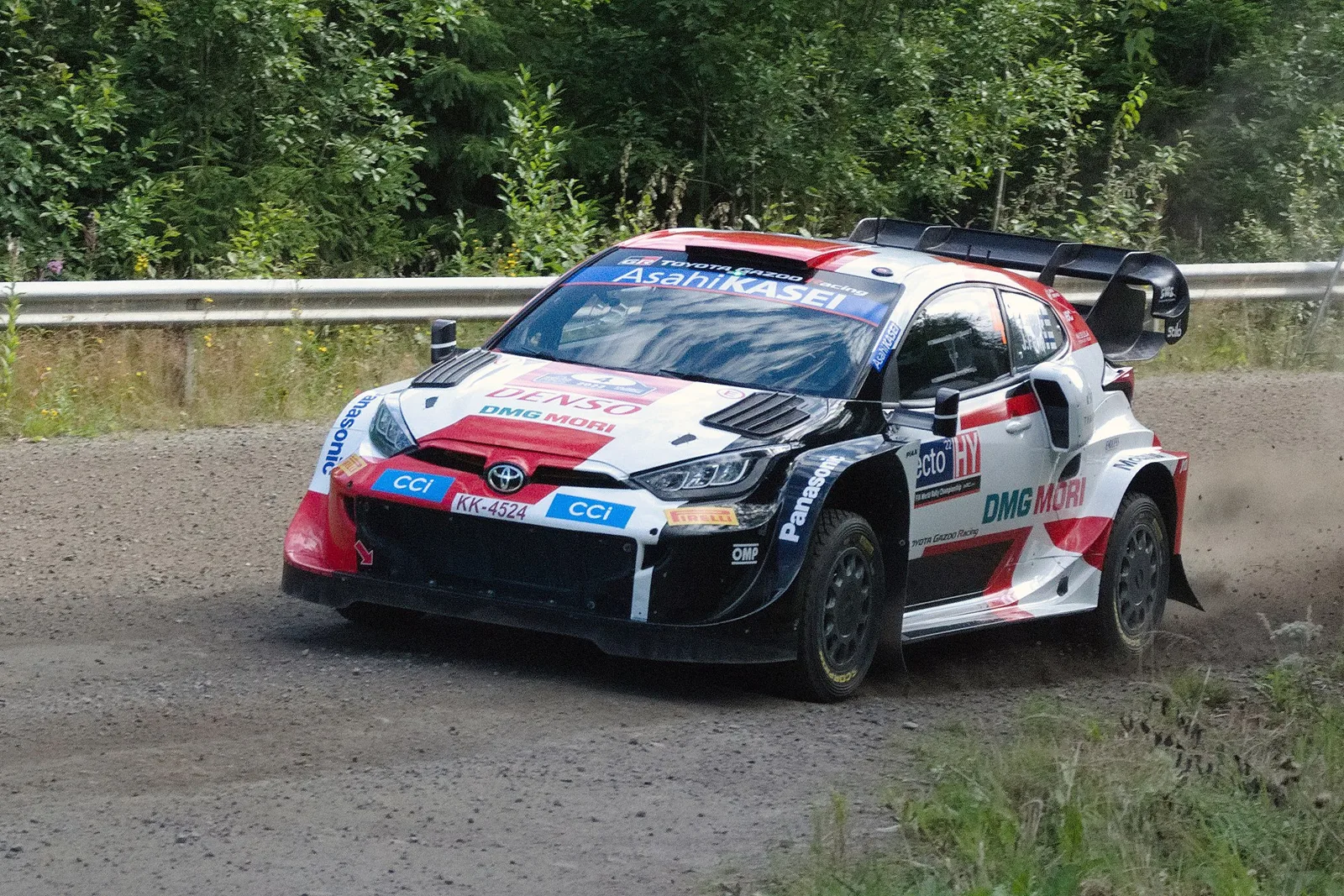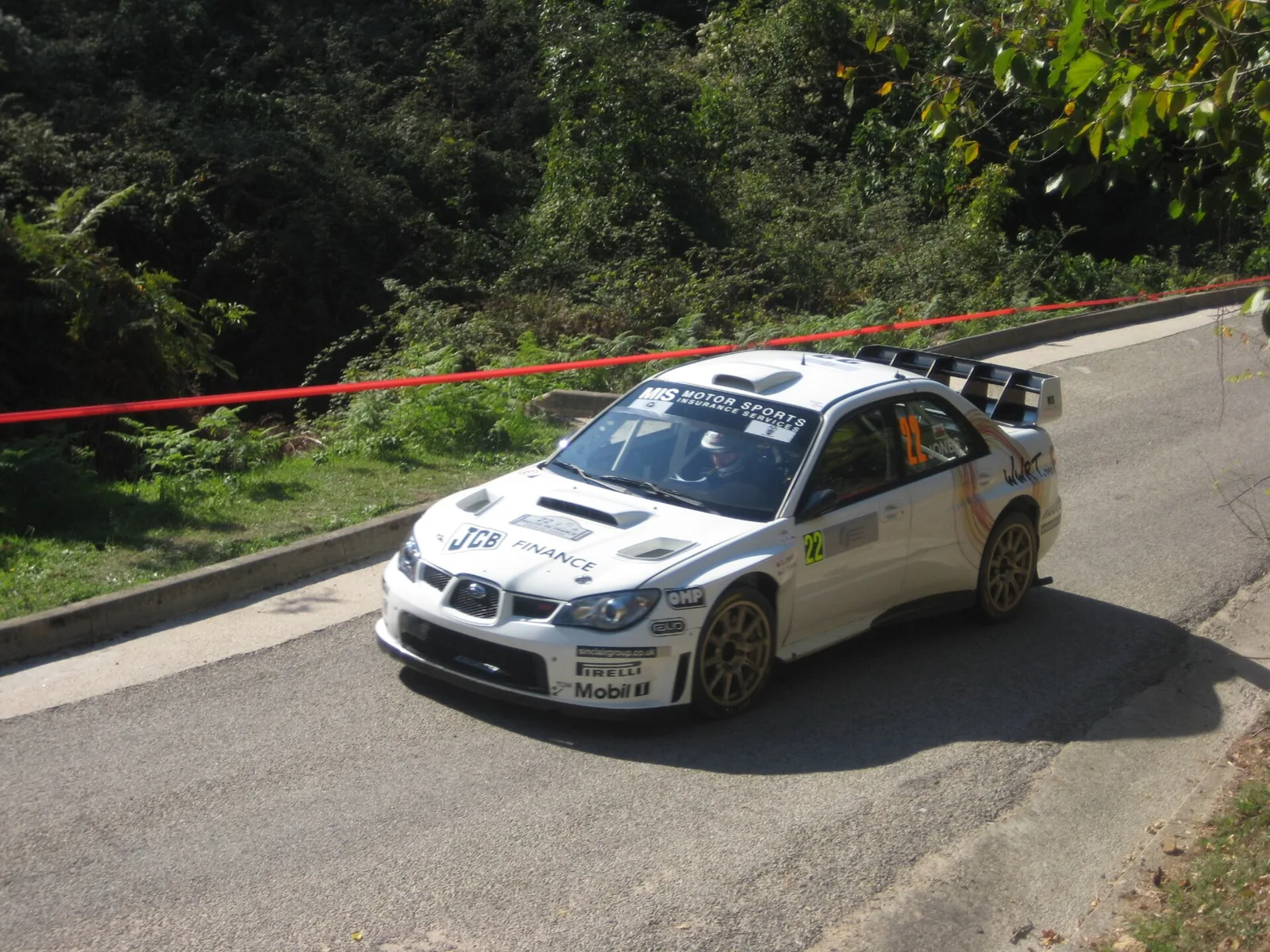
Thin air that costs engines a fifth of their power, ten thousand turns around Ajaccio and a stage surface like ball bearings: what set each of these World Rally Championship rounds apart.
Rally Mexico is a gravel WRC round in Guanajuato with stages as high as 2700 metres. The Tour de Corse is a twisty asphalt rally around Ajaccio on Corsica, and Rally Australia was a WRC round in Perth and later in New South Wales, most recently in 2018.
At Rally Mexico the air thins so much that a WRC car's engine can give away up to 20% of its output. The event's stages climb as high as 2700 metres, the highest of any round in the World Rally Championship. Two other World Championship rounds took very different routes: a Corsican asphalt rally nicknamed for its turns, and an Australian rally that lost its home in a funding row.
What makes Rally Mexico different?
Rally Mexico, formerly known as Rally America, joined the World Rally Championship schedule in the 2004 season. The rally is based in Guanajuato state, with stages around the cities of Leon, Silao and Guanajuato and headquarters in Leon. The stages are the highest in the championship, as high as 2700 metres, and the lower air pressure takes up to a fifth of an engine's power.
The reason is simple. A petrol engine is an air pump: it burns fuel only in proportion to the oxygen it can swallow. High on a mountain each gulp of air carries less oxygen, much as a runner finds on a hill climb, so a car that feels strong near sea level can feel flat at altitude.
Its organisers have collected praise. The organisers picked up the Inmarsat Star of the Rally award in 2004 after running their first WRC event, and the Abu Dhabi Spirit of the Rally award in 2008.
At Rally Mexico, WRC engines lose up to 20% of their power in the highest stages.
How did Rally Mexico reach the World Championship?
The rally began in 1979 as Rally America, born from cooperation between Mexico's two largest clubs, the Club Automovilistico Frances de Mexico and the Rally Automovil Club. Its first venue was the State of Mexico, where it ran without a break until 1985. After six years away it came back in 1991, following the route of El Paso de Cortes between two of the country's biggest volcanoes.
The 1992 edition was cancelled, and the French club chose a new approach, a compact rally packed with special stages. The 1993 edition in Valle de Bravo, run under Gilles Spitalier, was very successful and was named Rally of the Year by the Mexican National Rally Commission. After that the organisers took charge of the Rally de las 24 Horas, the club's flagship event, so Rally America did not run again until 1996, when work on taking it international began.
With a new promoting partner, Rallymex, formed of the Suberville brothers and Spitalier, the event moved to Ensenada in Baja California, on the US border, for two years, and began to attract foreign entries. In 1998 the organisers renamed it and moved it to Leon in Guanajuato, with a long-term business plan aimed at a World Championship place. It ran in 1999 and 2000, and from 2001 to 2003 was observed by the FIA and passed each test.
The 2003 Corona Rally Mexico, the 17th running, was the turning point. Fresh facilities at the Poliforum Expo Center broke new ground, the route was among the most compact ever, and 45 crews from 11 countries crossed the start ramp in Guanajuato at one of the most spectacular opening ceremonies in the sport. In 2004 it made its debut in the expanded 16-round championship as the third round, applying a raft of rule changes brought in by the FIA that season.
What did Rally Mexico look like once it was a WRC round?
In 2005 it was again the third round and the year's first rally run wholly on gravel, drawing 44 crews from 17 nations. The FIA Junior World Rally Championship contenders left Europe for the first time in their series, with Mexico as the second event in an eight-round calendar. For the 21st Corona Rally Mexico in 2007 the route was redesigned to be even more compact, at a total of 850 kilometres, an all-time record for the championship.
When the NACAM Rally Championship, a regional series, was created in 2008, the rally became its centrepiece finale, though after that first year NACAM relocated its Mexican leg to Rally Sierra del Tigre. In 2009 the event ran as the International Rally of Nations. A year later, amid celebrations marking a century since the Mexican Revolution and two centuries since independence, the WRC returned to Leon. In 2017 the rally was part of the NACAM championship once more and included an 80 km stage, the longest in the modern WRC era.
Why is the Tour de Corse called the Ten Thousand Turns Rally?
The Tour de Corse, first held in 1956 on the French island of Corsica, runs on asphalt roads, and its nickname comes from the twisty mountain roads. The name once described a route right around the island. Today the rally uses roads around Ajaccio instead.
France's WRC round from the first season in 1973 until 2008, it took part in the Intercontinental Rally Challenge in 2011 and 2012, and returned to the WRC in 2015.
Who won the first Tour de Corse?
Gilberte Thirion, a Belgian driver, won the first running in a Renault Dauphine. Heavy snow and dangerous conditions troubled the heavier cars, and she made use of the lighter Dauphine's oversteer to take the win. Her quip about the car, calling it fantastic and saying nothing could stop it, least of all its brakes, was a joke that had a very long life.
Two men share the record of six wins: Bernard Darniche, in 1970, 1975, 1977, 1978, 1979 and 1981, and Didier Auriol, in 1988, 1989, 1990, 1992, 1994 and 1995. The only non-French drivers to win more than once are Sandro Munari, Markku Alen, Colin McRae and Thierry Neuville. A classic version, the Tour de Corse Historique, has been held since 2001.
How did the Tour de Corse shape the end of Group B?
The rally is also tied to the most sombre chapter of rally history. Fatal accidents occurred in three consecutive years. Attilio Bettega died in a Lancia 037 Rally during the fourth special stage in 1985, at Zerubia-Santa Giulia. A year later to the day, on 2 May 1986, Henri Toivonen and Sergio Cresto, his co-driver, were killed in a Lancia Delta S4 on the 18th stage, Corte-Taverna. In 1987 co-driver Jean-Michel Argenti and driver Jean Marchini died in a similar crash.
It is widely believed that the deaths of Toivonen and Cresto sealed the fate of Group B rallying. The cars were seen to have too much pure power and too little containment, which made them dangerous and potentially fatal to spectators.
Why was Rally Australia so highly rated?
Rally Australia is an event that ran as a WRC round, most recently in 2018, based at Coffs Harbour, where it was the series finale. It first ran in 1988 and was centred on Perth, Western Australia, up to 2006. In 1988 it counted for the Asia-Pacific Rally Championship, and from 1989 to 2006 for the WRC.
The championship first arrived in Perth with a super-special stage at Richmond Raceway near Fremantle, followed by the famous Langley Park stage on the banks of the Swan River. Well-known stages included those in the Bannister Forest, where the Bunnings Jumps drew thousands of fans each year, and in the Muresk, Wellington and Dwellingup areas. The roads had a special surface of tiny, smooth round stones, said to feel like driving on ball bearings. The WRC teams voted it Rally of the Year in 1995, 1999 and 2000.
Why did Rally Australia leave Perth?
The 2006 rally, run from 26 to 29 October, was the last in Western Australia. The Western Australia Tourism Commission, which held the rally contract, cancelled it after the Australian Labor Party, which then sat in Parliament, chose to pull its funding. Many people supported the rally, which was seen as the biggest annual international event held in Perth.
The event missed the 2007 WRC calendar. It was heavily expected to have a new home from 2008 on the Gold Coast in Queensland, but the Queensland government did not give planning approval for the proposed I-METT facility meant to headquarter it, so the rally stayed on hiatus.
Its return was announced for September 2009, based at Kingscliff in northern New South Wales, and alternating with Rally New Zealand for a World Championship place. The state government designated it a major event because of its impact on the regional economy. Rally Australia's directors, local mayors and representatives of the state tourism body Events NSW agreed the location, which was planned to host the rally every second year until roughly 2020.
What was the controversy in northern New South Wales?
To help the event meet FIA standards, the New South Wales Parliament passed the Motor Sports (WRC) Act 2009. Many residents objected to the law and thought the event did not fit the social fabric of the Northern Rivers or its reputation as an ecotourism destination. Significant public protests marked the lead-up to the 2009 event and the event itself. Two stages were abandoned because of protest activity, with rocks allegedly laid on the road before the cars arrived. A stage marshal said protesters threw rocks at rally cars, which prompted worldwide media reports and an outcry against the protesters.
After a single year in Kingscliff the rally moved to Coffs Harbour, a city with decades of rallying history through the Australian Rally Championship and the Southern Cross Rally. In September 2010, with controversy still running in local communities, the Confederation of Australian Motor Sports, which owns Rally Australia, announced the move to Coffs Harbour, where the Coffs Coast Rally was already established. Chairman Alan Evans said it was the first time a WRC leg had been relocated because of residents' concerns.
The 2011 event ran successfully at Coffs Harbour under chairman Ben Rainsford and chief executive Michael Masi. The rally alternated with Rally New Zealand in 2010 and 2012 before becoming an annual fixture from 2013. It has counted towards the Australian Rally Championship too, though not every year, because that series' technical rules clashed with the WRC's in some seasons. The Western Australian Rally Championship was part of the event during its Perth years.
The last time it appeared on the calendar, in 2019, it was cancelled because bushfires were closing in on the rally's base. As of August 2019, Rally Australia had no contract with the WRC for any year beyond 2019.
How do the three rounds compare?
| Rally | Base | Defining feature | WRC years |
|---|---|---|---|
| Rally Mexico | Leon, Guanajuato | Stages as high as 2700 metres; engines lose up to 20% of power | From 2004; the WRC returned to Leon in 2010 |
| Tour de Corse | Ajaccio, Corsica | Twisty mountain asphalt, the Ten Thousand Turns Rally | 1973 to 2008, then from 2015 |
| Rally Australia | Perth, later Coffs Harbour | Round-stone surface like ball bearings; protests in New South Wales | 1989 to 2006, then 2009 on, last held in 2018 |