A new hybrid and electric class, a revised route and a run of serious crashes defined the 44th Dakar Rally in Saudi Arabia.
The 2022 Dakar Rally was a rally raid held in Saudi Arabia from 1 to 14 January 2022, organised by ASO. It had one prologue and 12 stages, covering about 4,000 km (2,500 mi) of special stages, and it was the first round of the new World Rally-Raid Championship.
The 2022 Dakar Rally was the 44th running of the event, staged from 1 to 14 January across Saudi Arabia. It opened the calendar of the new World Rally-Raid Championship, and its course took in canyons, dunes and the Red Sea coast. Penalties and crashes featured as prominently as the stage winners.
Why did the 2022 Dakar Rally matter for cross-country racing?
The event was the first round of the World Rally-Raid Championship, which was created in December 2021 when the FIA and FIM combined their cross-country championships. The FIA had granted cross-country rallying full World Championship status in 2021, so the Dakar opened a new calendar rather than standing alone as a single event.
The organiser, ASO, had signed a five-year deal with Saudi Arabia. The first-year exclusivity clause in that deal had expired, so other countries could in principle have been added to the route. COVID-19 travel restrictions led the organisers to keep the whole event inside the kingdom. It was the third time Saudi Arabia hosted the race, backed by the Saudi Automobile and Motorcycle Federation.
Sand, navigation and a new hybrid class turned the first week of the 2022 Dakar into a true test of endurance.
What route did competitors face in 2022?
The route combined a prologue with 12 regular stages, about 4,000 km (2,500 mi) of timed special stages and between 2,500 km (1,600 mi) and 3,000 km (1,900 mi) of liaisons. It ran through canyons and cliffs in the Neom region, along the Red Sea coastline and over dunes around Riyadh before finishing in Jeddah.
The organisers unveiled the new course on 11 May 2021, and it pushed deep into the sandy Empty Quarter. The change answered complaints from competitors, who said the earlier routes had too many rocky surfaces. Those surfaces had caused excessive tyre wear and punctures, so a sandier course was the obvious remedy. The exact route followed in late November 2021.
The design included two loop stages and one marathon stage. The rest day fell in Riyadh on 8 January, giving crews a pause in the middle of the rally.
What rule changes shaped the 2022 event?
The 2022 rules pushed towards low-carbon vehicles, created a T1-E class for electric and alternative-fuel prototypes and added a T1+ class for larger off-road cars. Electronic roadbooks became standard for cars, SSVs and trucks, while the Dakar Classic began judging navigation alone on part of its route.
The organisers set an aim of 100% low-carbon vehicles in the car, SSV and truck categories by 2030. For this edition, a T1-E category was introduced, with rules drawn up in collaboration with the FIA for prototypes that relied on electric motors or other technology cutting carbon emissions. Audi Sport entered three Audi RS Q e-tron cars in that class, driven by Carlos Sainz, Stephane Peterhansel and Mattias Ekstrom.
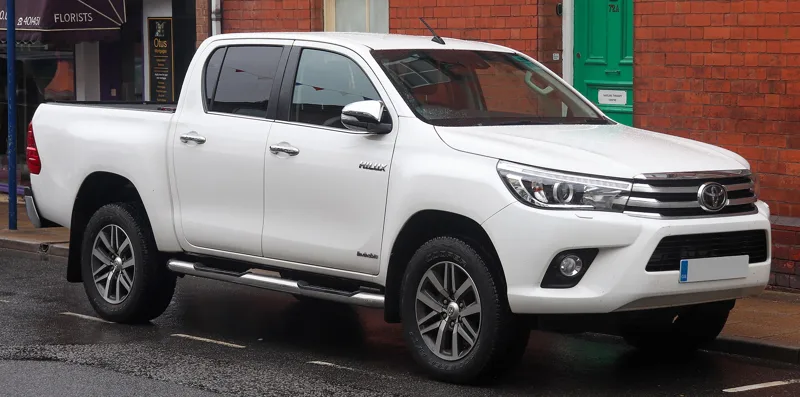
The T1+ class arrived after objections. Audi wanted features for its T1-E cars that the off-road rules did not allow, including a larger chassis, buggy-sized wheels and more suspension travel. Prodrive and Toyota Gazoo Racing objected, and the organisers responded by opening a T1+ class for off-road cars with a 2.3 m (7 ft 7 in) wide chassis and 350 mm (14 in) of suspension travel. The maximum weight rose to 1,950 kg (4,300 lb).
Power was kept in check by air restrictors. Toyota's twin-turbo petrol engine ran a 37 mm (1.5 in) restrictor, while the turbo-diesel engine in the X-Raid Mini buggy had a 39 mm (1.5 in) restrictor. Prodrive's twin-turbo petrol engine was electronically limited to a power curve equal to Toyota's, so both teams were held to the same output.
Who entered the 2022 Dakar Rally?
A total of 750 riders, drivers and co-drivers entered the 2022 event, including 209 rookies, 130 legends who had competed for at least a decade, and 60 women. A further 315 drivers and co-drivers entered the Dakar Classic for classic cars and trucks. Another 34 riders entered as original by Motul, without a team.
Not every entry reached the start. The Belarusian team MAZ-SPORTauto had three T5 trucks entered, but the organisers complied with EU sanctions imposed in 2021. The organisers said MAZ is a factory team on the sanctions list, so no funds could reach it. The vehicles, en route to a European port, were turned back in Poland.
Dakar legend Erik van Loon tested positive for COVID-19 before leaving for Saudi Arabia and could not compete. His place in the Toyota Hilux Overdrive went to Bernhard ten Brinke, who stepped in at short notice.
How did the first week of racing unfold?
The first week produced an early stage winner, a pair of penalties and a long list of riders who lost time on navigation. Stage 1A, a 19 km prologue from Jeddah, opened the event, and heavy rain later forced the marathon elements of stages 2 and 3 to be dropped in favour of regular stages.
The prologue began on 1 January at Jeddah. Bike times on stage 1A were multiplied by five, and Daniel Sanders won for Gas Gas. Skyler Howes and Jose Ignacio Cornejo lost over 8 minutes to the leader.
Guerlain Chicherit ran a bio-ethanol buggy that suffered instrument problems, and he stopped on the track. Navigation caused more trouble on stage 1B. Riders including Ricky Brabec, Luciano and Kevin Benavides, Andrew Short, Juan Barreda, Toby Price and Maciej Giemza each lost between 30 and 50 minutes at a single waypoint.
The Audi team had a difficult day. Stephane Peterhansel crashed and lost more than 7 hours, while Mattias Ekstrom lost more than 1.5 hours. Carlos Sainz lost more than 2 hours finding a waypoint late in the stage, and he publicly criticised the organisation afterwards.
Giniel de Villiers was the first driver to attract a penalty. He collided with motorcyclist Cesar Zumaran and did not stop to help, which breached the regulations, and the organisers gave him a penalty of 5 minutes. The next day he ran over a rider's bike while climbing a dune and again did not stop, and this second penalty was a much heavier 5 hours. The FIA later reversed that penalty after his team presented evidence about the in-car warning system.
Stages 2 and 3 changed shape when heavy rain flooded the marathon bivouac at Al Artawiyah. It was moved to Qaisumah, the marathon element was cancelled and competitors ran with normal team support. Sebastien Loeb won the car stage on stage 2, while Seth Quintero, who had been leading the T3 class, had mechanical trouble and was taken out of the fight.
What were the stage highlights?
| Stage | Category | Winner | Detail |
|---|---|---|---|
| 1A, prologue, 19 km | Bikes | Daniel Sanders | Gas Gas; bike times multiplied by five |
| 2 | Cars | Sebastien Loeb | Marathon element cancelled after heavy rain |
| 3 | Bikes | Joaquim Rodrigues | Hero's maiden stage victory |
| 3 | Cars | Carlos Sainz | Audi RS Q e-tron; first Dakar win for a hybrid |
| 4 | Cars | Nasser Al-Attiyah | Benediktas Vanagas rolled a Hilux T1+ and retired |
Stage 3 was the most significant day of the opening week. Joaquim Rodrigues gave Hero its maiden stage victory on bikes, and Carlos Sainz won in the Audi RS Q e-tron. On the same stage, the WRC driver Andreas Mikkelsen had to retire after a crash.
How did stages 5 and 6 change the race?
Stages 5 and 6 used separate routes for bikes and cars, with the 421 km and 345 km options assigned to different categories. Neutralisation affected the bikes and quads on both days, and Danilo Petrucci became the first MotoGP rider to win a Dakar stage.
On stage 5 the bikes and quads were partially neutralised, because the high number of competitors needing assistance meant no rescue helicopters were available in the final sector. Riders who did not finish the stage were given a standard time. In the quads, only one driver reached the end before the neutralisation was called.
Petrucci's stage win was a historic moment for the event. Skyler Howes finished stage 5 with head, ankle and shoulder injuries, and after medical inspection he was not allowed to continue.
Stage 6 followed a similar pattern. The bikes and quads route was neutralised after the first waypoint at km 101, because rough track caused by heavy rain and the earlier passage of cars and trucks had made the course dangerous. The quad rider Manuel Andujar crashed heavily in the truck ruts and wrecked his machine, but he was shaken rather than seriously hurt.
Which crashes and injuries marked the rally?
The rally was marked by serious crashes, from Walter Roelants's back injuries on stage 4 to the death of a chief mechanic in a liaison accident. A support vehicle exploded in Jeddah before the start, injuring one competitor, and riders were hurt throughout the middle stages.
On 30 December a support vehicle exploded outside a hotel in Jeddah. Philippe Boutron suffered leg injuries and needed an operation, while the others were unharmed. Saudi police ruled out criminal activity, but the FIA and ASO said malice could not be ruled out at that stage, and French prosecutors opened an investigation on 4 January.
Earlier, Alexander Pesci's Rebellion DXX buggy had burned out during the shakedown after an electrical fault. Pesci took over the Rebellion DXX of his teammate Romain Dumas, and Dumas was offered a Toyota Hilux instead.
Several other riders and crew were hurt on later stages. Toni Vingut suffered two cracked ribs and a fibula fracture on stage 2. Walter Roelants suffered serious back injuries on stage 4, Jean-Pascal Besson broke a collarbone on stage 5, and Skyler Howes sustained head, ankle and shoulder injuries. Daniel Sanders broke a hand in a high-speed fall on the way to the stage 7 start, and Isaac Feliu suffered head and chest trauma on stage 9.
The most tragic incident came during a liaison ahead of stage 12. An assistance car from the PH-Sport team collided with a truck driven by a local resident, and the team's chief mechanic, Quentin Lavallee, was killed. Passenger Maxime Frere was injured but stayed conscious and was taken to hospital.
What was the significance of the 2022 Dakar?
The 2022 Dakar Rally was the first event in the new World Rally-Raid calendar, and it showed that a hybrid could win a stage. It also exposed the risks of rough stages, navigation errors and transport accidents. The organisers restated their goal of 100% low-carbon vehicles by 2030.
Carlos Sainz's stage 3 victory in an Audi hybrid was the clearest early sign of that direction, and it gave the T1-E class a visible result in the opening week.
Security also rose after the Jeddah explosion. Competitors were told to stay highly alert, and the organisers raised security in the bivouacs, in hotels and along the route.