A seven-litre aluminium big-block machine from Bruce McLaren's team, the successors that followed it and the Porsche turbo that ended the run.
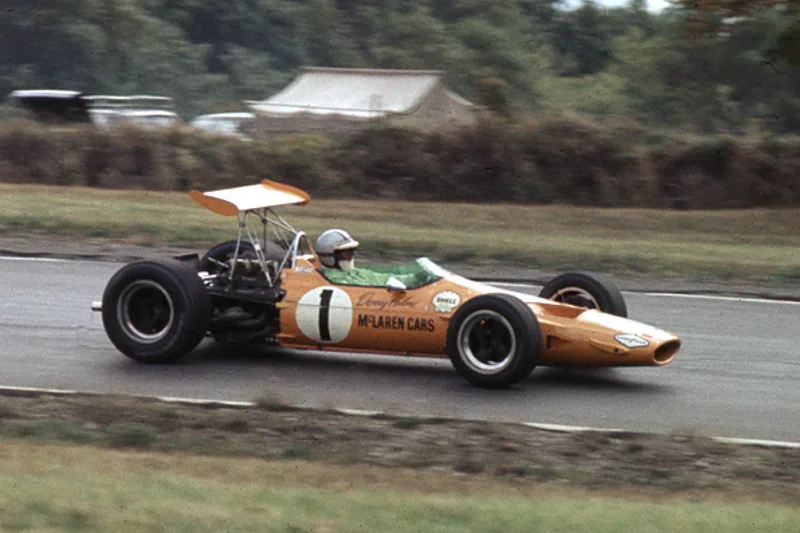
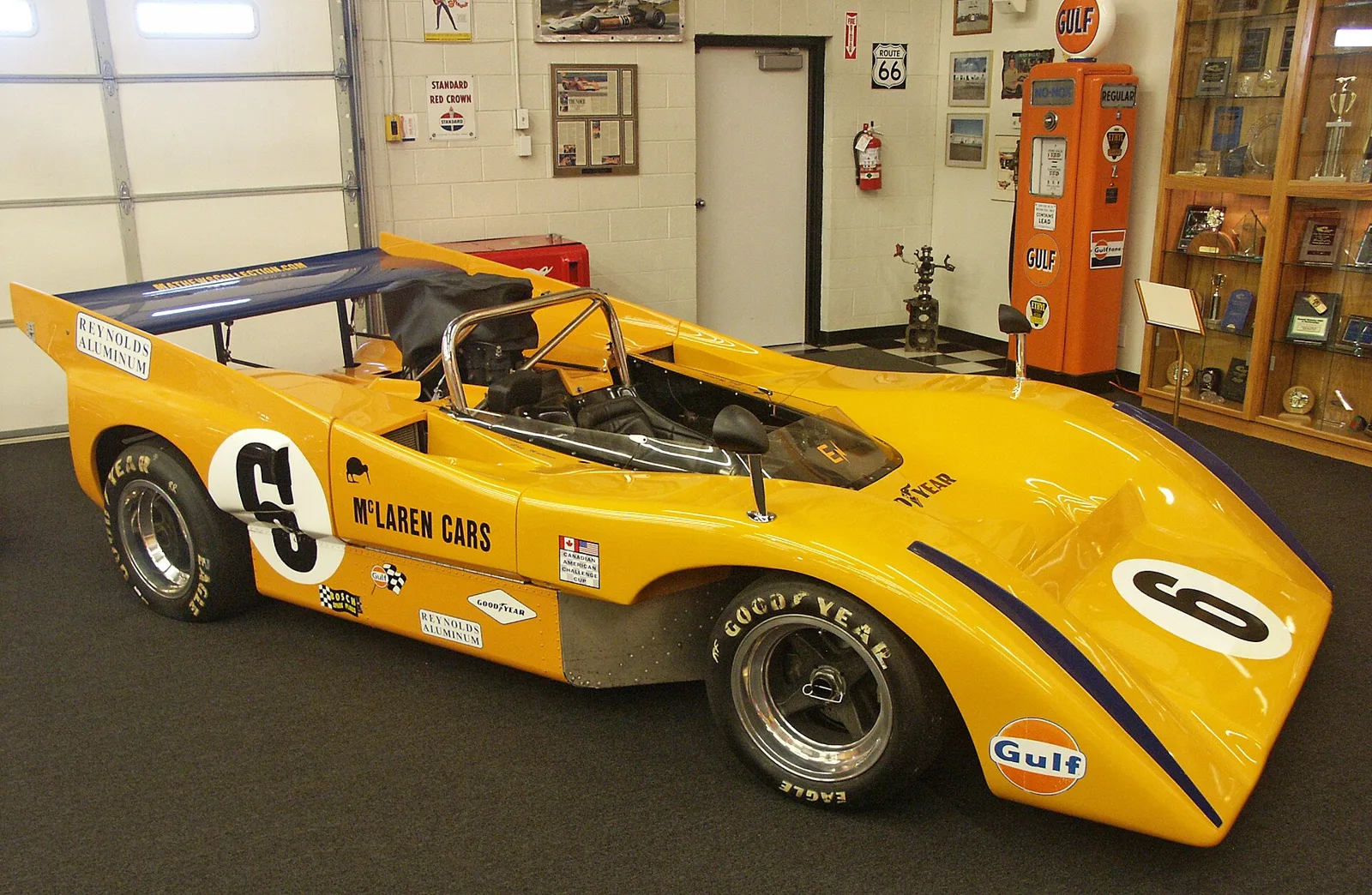
The McLaren M8A was a Can-Am sports racer built for the 1968 season by Bruce McLaren's team. It used a seven-litre all-aluminium Chevrolet big-block V8 as a stressed chassis member, and the M8A and its successors dominated Can-Am for four consecutive seasons until Porsche's 917/10 turbo arrived.
Bruce McLaren's team built the M8A for the 1968 Can-Am season as an evolution of the earlier M6A. Its big-block Chevrolet V8 acted as a semi-stressed chassis member. The M8A and its successors took four consecutive championships until the Porsche 917/10 turbo arrived and changed the balance of the series.
Where did the M8A come from?
The M8A came from a team that had already dominated the early Can-Am seasons. Bruce McLaren and Denny Hulme won five of the six Can-Am races in 1967, which earned them the nickname The Bruce and Denny Show. The M8A was the next step in that line, a car that carried the same team's ambitions into 1968.
Its successor was therefore a step forward from a known design rather than a fresh start. The team did not need to rebuild its approach from scratch, and it could concentrate on making the existing layout faster and more durable.
A chassis that used its own big-block engine as structure, then gave way to a turbocharged rival in 1972.
What was the M8A?
The M8A was an evolution of the M6A with an all-aluminium seven-litre Chevrolet big-block V8 used as a semi-stressed chassis member. Gary Knutson produced the engines, which started at 590 bhp. Only two complete M8A race cars and one spare tub were built.
Because the engine formed part of the structure, the chassis and the engine mountings were designed together.
The 1968 season opened with an immediate result. Denny Hulme won the Road America race in the new car, with Bruce McLaren second.
How did the M8A family develop?
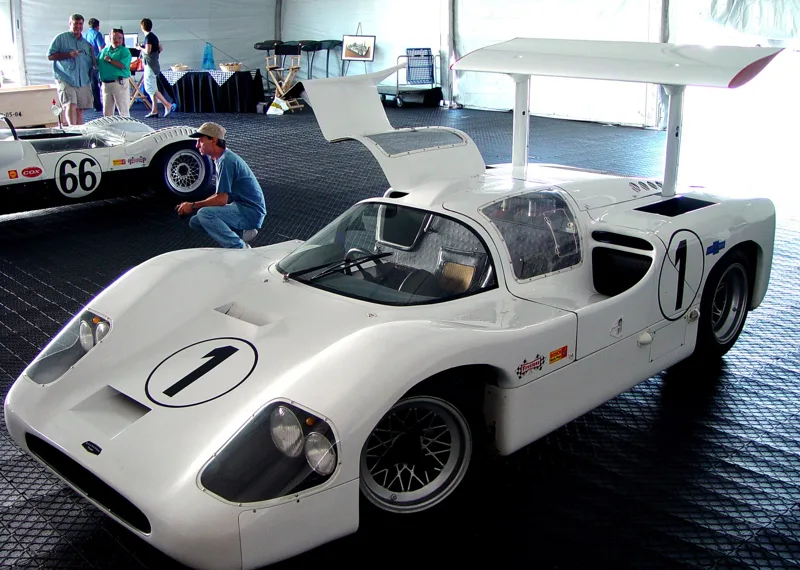
The M8B followed for the 1969 season. Its most visible change was a rear wing mounted high on pylons, like the Chaparral 2E. The pylons passed through the bodywork and attached directly to the suspension uprights, which allowed softer springs than a wing bolted to the body would have needed.
The body was widened to take wheels an inch wider, 15 x 11 at the front and 15 x 16 at the rear. The 1969 engine had a shorter stroke and a larger bore, and it was built by George Bolthoff. It produced 630 bhp from 7,046 cc (430.0 cu in). Two finished M8B race cars came out of the parts of three M8As.
Trojan built the M8E for customers, using the M8B as its basis. Its high pylon-mounted wing gave way to a lower fixed design, since high-mounted wings had been outlawed.
The M8D arrived for 1970. As in FIA racing in 1969, Can-Am had banned high-mounted rear wings, so the M8B wing was replaced by a lower one on fins. The car earned the nickname Batmobile for that shape. Bolthoff enlarged the Chevrolet V8 to 7,620 cc (465 cu in), and it produced 670 bhp at 6800 rpm with 600 lb-ft (810 N-m) of torque.
What happened to Bruce McLaren in 1970?
Bruce McLaren died on 2 June 1970 while testing the M8D at Goodwood. Twelve days before the Can-Am season opened, the rear bodywork came adrift at speed on the Lavant Straight. The loss of downforce destabilised the car, which spun and struck a bunker used as a flag station.
Denny Hulme had already suffered a serious crash at Indianapolis in May, so the team faced a difficult few weeks. Despite the loss, the car type, driven by Dan Gurney, went on to win the opening round.
The M8D went on to dominate the 1970 series. The season opened on 14 June at Mosport, and the car won nine of the ten races. Peter Gethin replaced Gurney at the fourth race and won at Road America, while Hulme took six wins and the championship.
How did the M8 series race from 1968 to 1971?
The M8 series won four consecutive Can-Am titles. Denny Hulme won the 1968 and 1970 championships, Bruce McLaren took the 1969 title as driver and team owner, and Peter Revson won in 1971. In 1968 Hulme scored 35 points to McLaren's 24.
The 1968 season began with a dominant performance. Hulme won at Road America with McLaren second, and the team took a one-two finish at Edmonton. The M8B then retired at Bridgehampton with engine failure, so the team cut its compression ratio from 13:1 to 12:1, trading horsepower for reliability.
The tide turned late in 1968. McLaren won at Riverside in searing heat, and Hulme won in Las Vegas to finish the year as champion. The team had used its mechanics to extract more power from the engine in those last two races.
In 1971 Peter Revson won the championship in a Team McLaren M8F, taking five races. Denny Hulme won three races in the same car, and Jackie Stewart won two in a factory Lola Can-Am car.
The 1969 title was won in the M8B, the car with the pylon-mounted wing and wider body described above. McLaren's success that year came as both driver and team owner, which gave the team a direct link between the car on the grid and the people who had designed it.
Porsche factory driver Jo Siffert campaigned a single 917 Spyder in the second half of the 1971 season, backed by Porsche Audi USA dealers. He took fourth in the series despite being killed in Formula One before the final Can-Am round.
How did the M8F and its big-block engine change?
The M8F, developed for the 1971 season, used an 8.1-litre (488 CID) big-block Chevrolet V8, later upscaled to 8.3-litre (509 CID). Its output was over 700 hp. The Trojan-built M8FP was the customer version of the same car. Each step in the line had grown the engine, and the M8F was the largest of them.
The bigger engine was the last step in the M8 line's evolution. The M8F's big-block made over 700 hp, above the 590 bhp of the early M8A. Each generation had added displacement, and by 1971 the engine had grown far beyond the 7-litre unit of the original M8A.
What happened to the M8 after 1972?
After 1972 the works McLaren team left Can-Am to concentrate on Formula One, and Porsche's turbocharged 917/10 dominated the series. The M8 continued in private hands, and Francois Cevert won the sixth race at Donnybrooke in an M8F, the last Can-Am win for the McLaren M8.
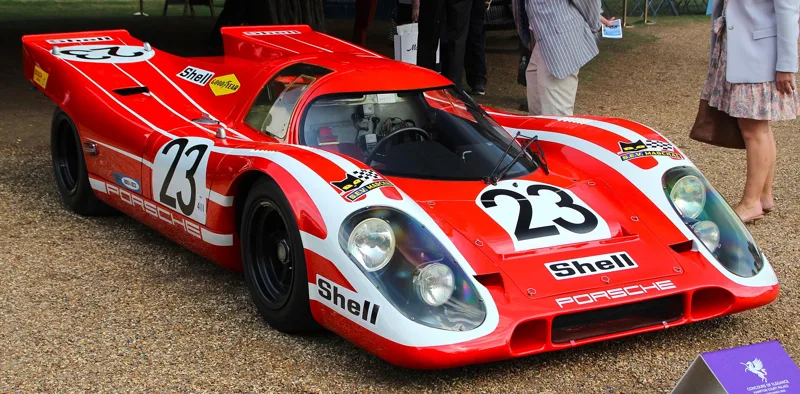
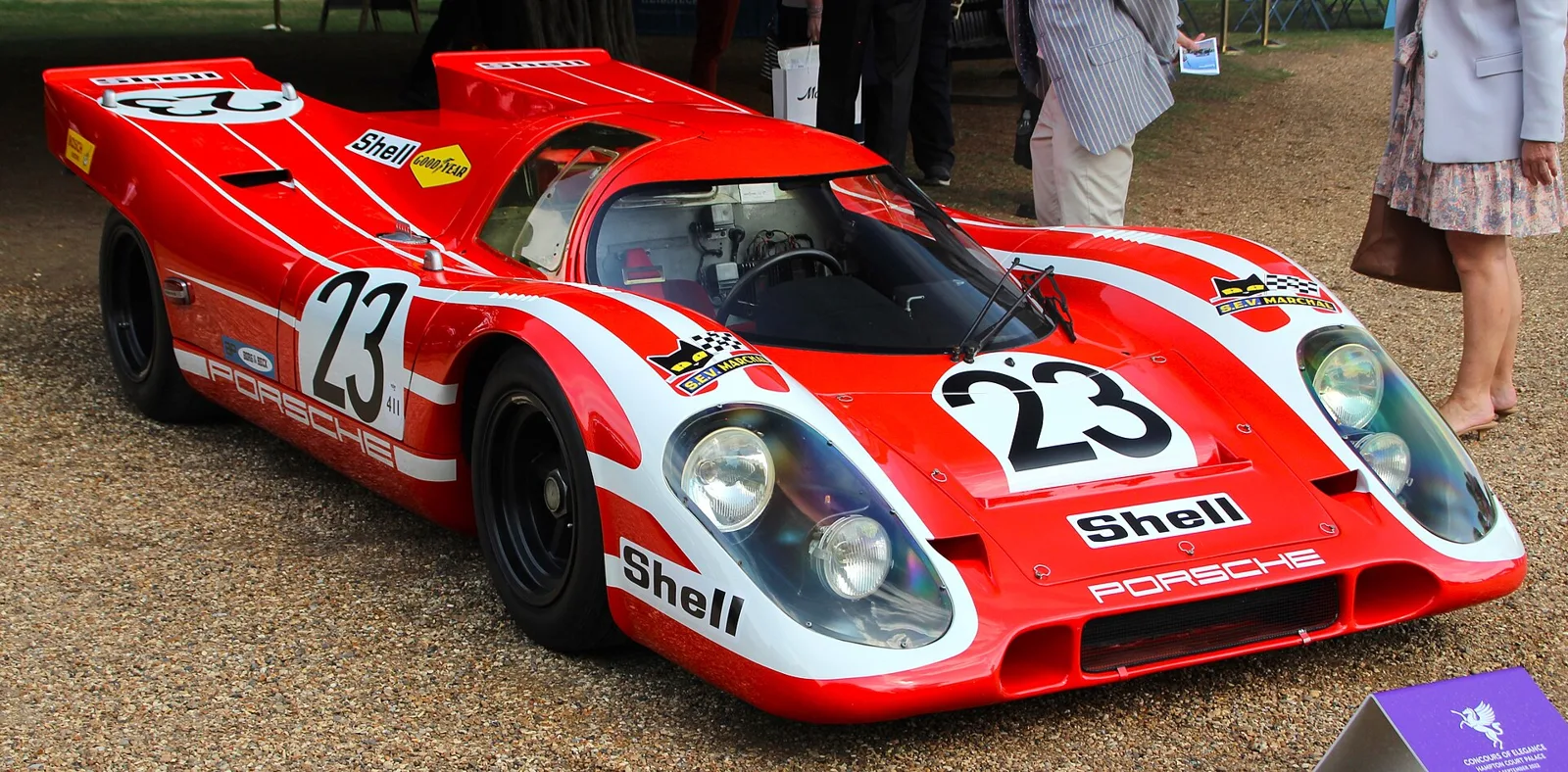
Porsche had left the World Sportscar Championship in the summer of 1971 and spent nearly a year testing at its Weissach track, working with Team Penske. It returned to Can-Am in 1972 with two turbocharged 917/10s. Mark Donohue took pole for the first race and finished second, and George Follmer won the second race.
McLaren moved to the M20 for 1972, and Hulme won the first and third races in it. Despite two more wins for McLaren later in the season, Porsche's power and reliability took the championship, and Hulme finished second in the standings.
Team McLaren left Can-Am after 1972 to focus on Formula One, where it won the 1974 title and again in 1976. In 1973 Porsche won every race, and privateer M8s ran at the back of the field.
In Europe the M8 versions raced in the Interserie, which started in 1970 and was dominated by domestic Porsche 917s for several years. AMG bought one M8 chassis and ran it at Imola in 1972 with a turbocharged Mercedes-Benz M100 engine. The McLaren and Lola Can-Am cars remained popular in classic events for decades.
What was the C8?
The McLaren C8, sometimes called the Chevrolet McLaren C, was a Group C racer built on an M8F Trojan chassis. It used an 8,128 cc (496 cu in) Chevrolet V8, and Peter Hoffmann owned the sole example and kept it until 1999.
In qualifying trim the car produced 825 PS (607 kW; 814 bhp) with 1,100 N-m (811 lb-ft) of torque, while race trim gave 710 PS (522 kW; 700 bhp) and 935 N-m (690 lb-ft). With a weight of 1,200 lb (544 kg), the car was fast but fragile, and it often retired from races. The body came from Lotec.
Peter Hoffmann built the car in 1982 to meet the new Group C regulations of that year, and it carried the 496 cu in Chevrolet V8 throughout its racing career.
Hoffmann first ran the car in 1982 at the eighth DRM round at Hockenheimring and retired. He then switched to the Interserie and took second at Siegerlandring, 39.1 seconds behind Volkert Merl's Porsche 908/3 Turbo. After that he went back to the DRM for the tenth round at the Nurburgring, and retired there as well. In 1983 he took eighth at Zolder, and in 1986 he was the last finisher, eleventh, in the ADAC Sport Auto Supercup at the Nurburgring.
The C8 returned to the International Supersports Cup in 1992 and finished second at the Nurburgring. In 1996 Hoffmann took the car's first ever victory at the first Nurburgring round. In 1997 four races ended without a start, before a second place at Brno.
Hoffmann tried to enter three races in 1998 and one in 1999, but none of those attempts reached the start. The McLaren C8 never competed in a race again after that.
Which McLaren M8 models carried which engines?
| Model | Season | Engine | Output |
|---|---|---|---|
| M8A | 1968 | 7-litre all-aluminium Chevrolet big-block V8 | 590 bhp initially |
| M8B | 1969 | 7,046 cc (430.0 cu in) Chevrolet V8, built by George Bolthoff | 630 bhp |
| M8D | 1970 | 7,620 cc (465 cu in) Chevrolet V8 | 670 bhp at 6800 rpm |
| M8F | 1971 | 8.1-litre (488 CID), later 8.3-litre (509 CID) | Over 700 hp |
| C8 | 1982 | 8,128 cc (496 cu in) Chevrolet V8 | 710 PS (522 kW; 700 bhp) in race trim |