A sports car series with no engine limit, orange McLarens that won for years, a snowmobile engine that sucked a car to the road and a Porsche that made over 1,000 horsepower.
Can-Am was a North American sports car series from 1966 to 1974 run under FIA Group 7 rules with unlimited engine size. McLaren dominated until 1971, Porsche's turbocharged 917s won in 1972 and 1973, and rising costs and the oil crisis ended it.
Porsche claimed 1,500 horsepower for its Can-Am car in qualifying trim, and in a series with almost no rulebook even that was not the strangest machine on the grid. The Canadian-American Challenge Cup ran between 1966 and 1974, McLaren won it so often, Chaparral and Porsche pushed the limits, and rising costs finally brought it down.
What were the Can-Am rules?
Can-Am ran under the FIA's Group 7 category, which set no limit on engine size and very few limits on anything else. A car needed two seats, wheels covered by bodywork and basic safety equipment. Turbochargers and superchargers were legal, and aerodynamics were close to free. Few major series have ever come nearer to a policy of anything goes.
Think of a cooking contest whose only requirements are that the dish fits on a plate and the kitchen stays upright. Group 7 was that contest for racing cars. It had begun in Europe as a home for non-homologated sports car specials, was popular in Britain through the 1960s and doubled as a hillclimb class. Its cars were built for short sprints rather than endurance races. Nissan and Toyota built their own in Japan, though those never raced abroad, and a few Can-Am regulars crossed over to try them at home.
Few major series have ever come nearer to a policy of anything goes.
How did Can-Am begin?
The series was run by the SCCA and the CASC, with Johnson Wax as its first sponsor. The opening season in 1966 was short: two races in Canada and four in the United States. It grew out of the United States Road Racing Championship for big-engined sports racers, and European constructors and drivers were arriving in North America in growing numbers.
The money was real. There was prize money, appearance money and plenty of backing from the trade, and the series paid its way for the people who entered. That drew in nearly every top name of the era, among them Mario Andretti, Dan Gurney, Phil Hill, Jacky Ickx, John Surtees and Peter Revson. Lola was the first force. John Surtees won the inaugural championship in 1966 in a Lola T70, and Lola kept trying new designs while a rival team refined one idea year after year.
Why did McLaren dominate Can-Am?
McLaren's Can-Am run lasted from 1967 to 1971 by one count, with the Bruce McLaren and Denny Hulme pairing so dominant that the series was nicknamed the "Bruce and Denny show". In 1967 the two men won five of the six races. The recipe was reliable engines, tidy engineering and an unusually careful team.
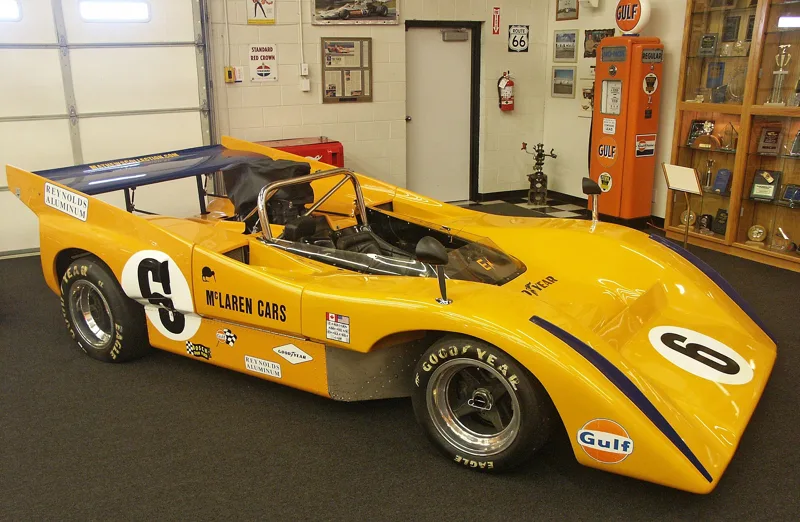
The 1967 car was the M6A, built specially for Can-Am, and it introduced the orange colour that became the team's signature. It used a full aluminium monocoque and a small-block Chevrolet V8 prepared by Al Bartz Engines in Van Nuys, California, an engine the team treated as a byword for reliability. The crew was international for its day. Bruce McLaren and Chris Amon were New Zealanders, Denny Hulme was a third, and he arrived as the 1967 Formula One world champion. Teddy Mayer managed, and the mechanics came from the United States, Britain, Australia and New Zealand.
For 1968 came the M8A. Its seven-litre aluminium big-block Chevrolet V8 sat in the car as a semi-stressed member, meaning the engine helped hold the chassis together instead of just hanging in it. That saves weight, because the engine does a structural job that extra tubing or panels would otherwise do. Gary Knutson built the engines, and they started with 590 bhp. Only two complete cars and one spare tub were made.
The year was not a procession. Both works cars retired with engine failure at Bridgehampton, and the team responded by lowering the compression ratio from 13:1 to 12:1, giving up a little power for survival. Wet weather at Laguna Seca produced a second and a fifth, and it began to look as though rivals had caught up. Then the mechanics found more power, Bruce McLaren won at Riverside and Hulme at Las Vegas. Hulme took the title with 35 points, and McLaren was second on 24.
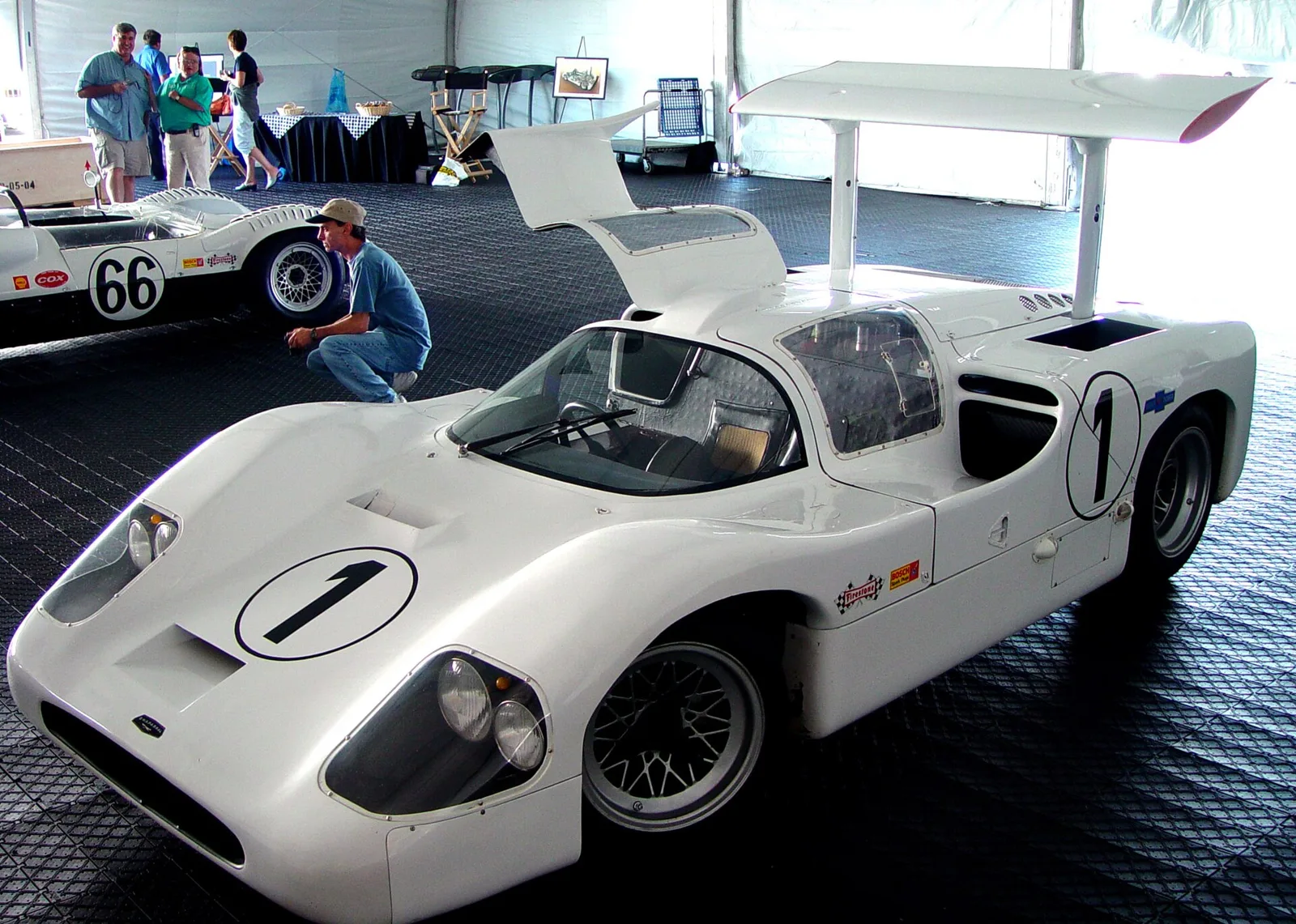
The M8B arrived in 1969 with its rear wing lifted high on pylons that passed through the bodywork and fixed to the suspension uprights. Mounting the wing there let the team run softer springs than a body-mounted wing would have allowed. George Bolthoff built the 7,046 cc engine, rated at 630 bhp. McLaren won the season, and at Michigan International Speedway on 28 September the team took a one-two-three, with McLaren ahead of Hulme and Gurney.
How did Bruce McLaren's death change the team?
Bruce McLaren died on 2 June 1970 while testing the new M8D at Goodwood. Part of the rear bodywork came adrift on the Lavant Straight, just before Woodcote corner. The car lost downforce, became uncontrollable, spun, left the track and hit a bunker used as a flag station. The Can-Am season opened twelve days later.
The team had already endured a hard few weeks, with Denny Hulme badly hurt in a crash at Indianapolis in May. Even so, the M8D was the strongest car in the field. High wings had been banned in 1969 in FIA racing and Can-Am followed, so the M8D carried a low wing on fins, which earned it the nickname "Batmobile". Its Chevrolet V8 grew to 7,620 cc and produced 670 bhp at 6800 rpm, with 600 lb ft (810 N m) of torque.
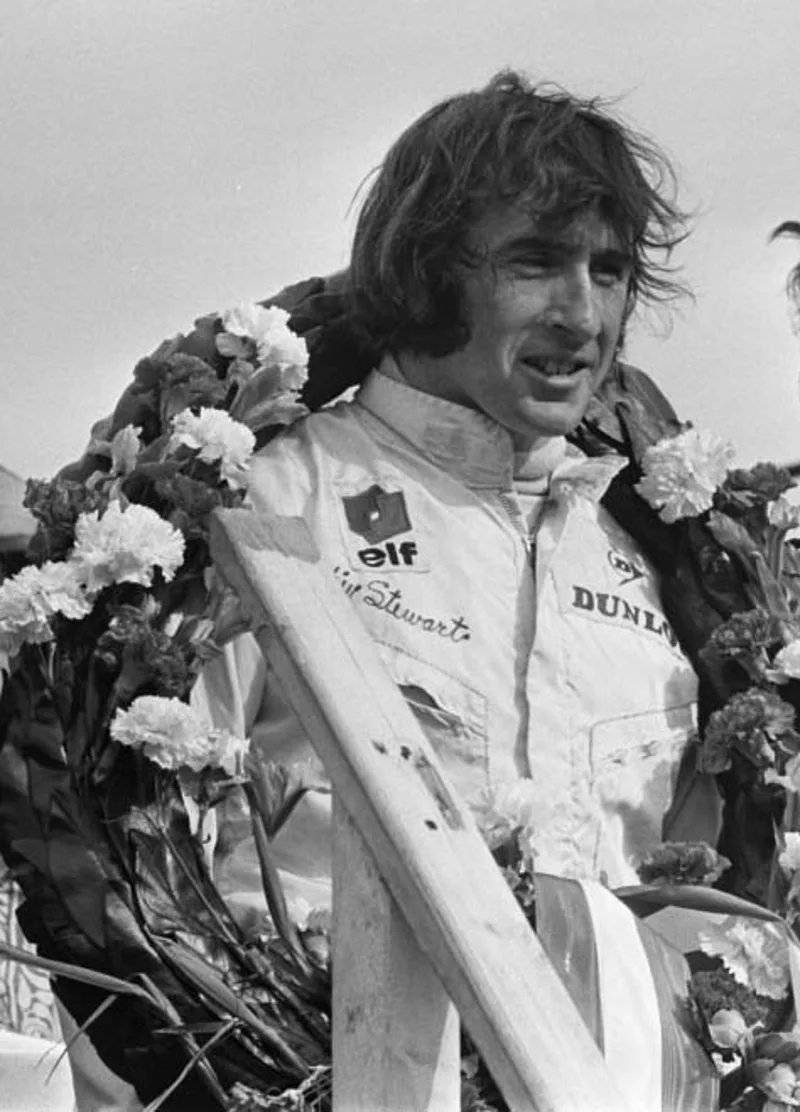
Dan Gurney won the first two races at the wheel, and Peter Gethin later won at Road America. Hulme took six victories and the championship, and the M8D won nine of the ten races. In 1971 the M8F carried an 8.1-litre engine, later enlarged to 8.3 litres, with more than 700 hp. Peter Revson won the title with five victories, Hulme won three, and Jackie Stewart took two in the factory Lola T260.
Private customers could buy their own. Trojan built fifteen of the M8C customer cars, which used a more conventional chassis so owners could pick their own engine, including Chevrolet and Ford V8s and even a Ford-Cosworth DFV from Formula One. The M8E and M8FP followed the same customer idea.
What was the Chaparral 2J?
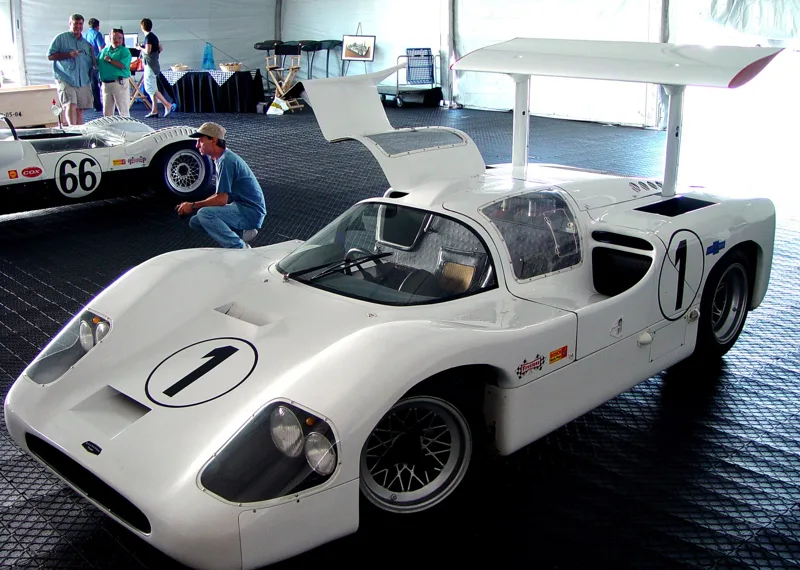
The Chaparral 2J was a twin-engined sports car built by Jim Hall. A big-block Chevrolet drove the wheels, while a tiny snowmobile engine at the back turned two fans. Those fans, together with movable Lexan skirts around the underside, pulled a vacuum beneath the car. It gave downforce on a par with huge wings, but without the drag that wings bring.
Hall's cars had been trendsetters from the start. His earlier 2 series were built with covert help from the research and development division at Chevrolet, and the 2E of 1966 was the first of the high-wing racers. The FIA then banned movable aerodynamic devices, and Chaparral answered with the 2H in 1969, which sought lower drag but achieved little success on track.
The 2J was the ultimate expression of what Group 7 allowed. It proved too complicated mechanically to last in racing conditions, yet the principle was sound. The same idea turned up in Formula One in 1978 on the BT46B, the car known as the Fan Car.
Why was the Porsche 917/30 so feared?
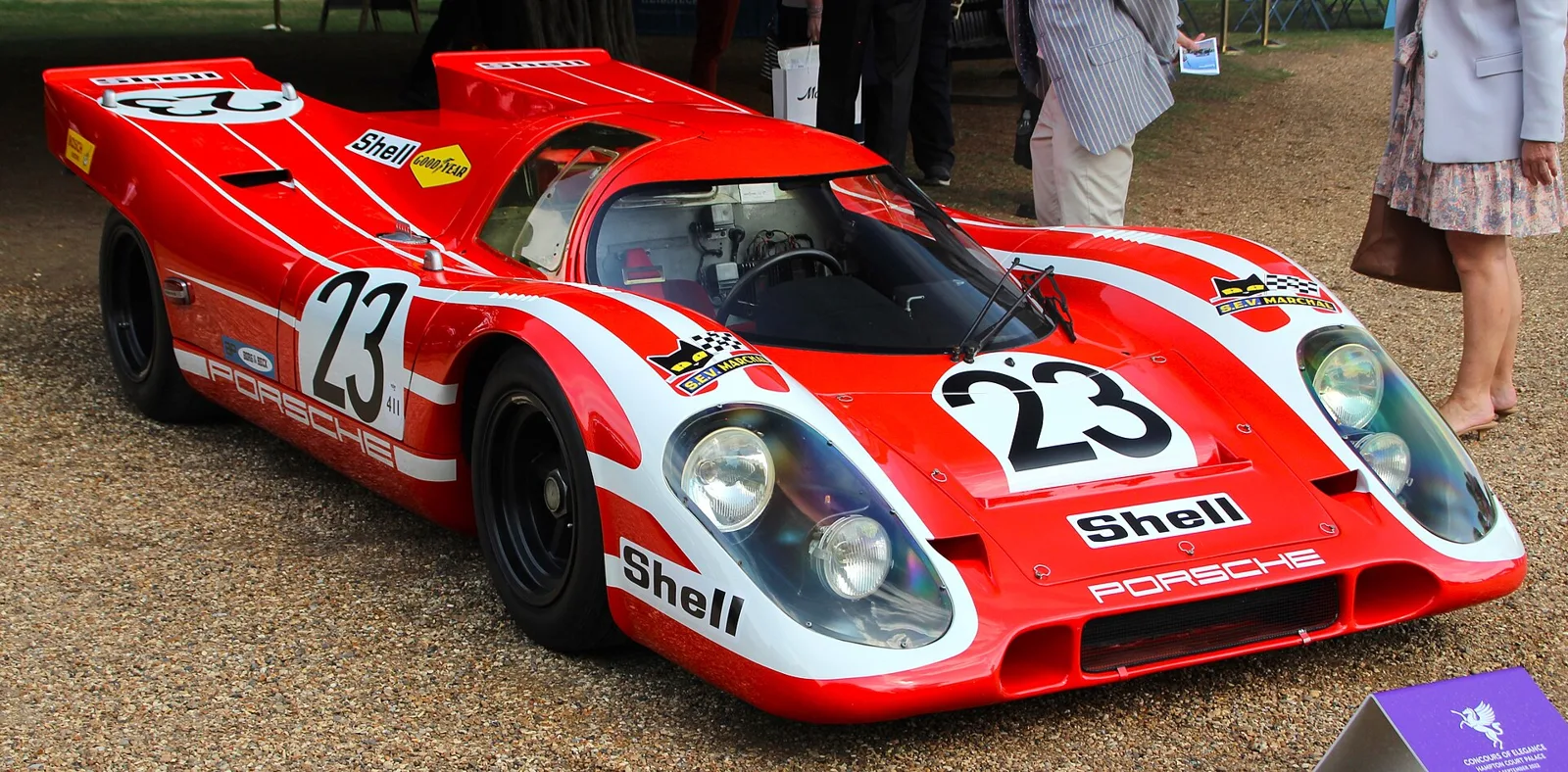
The 917/30KL, nicknamed "Turbopanzer", combined a 5.4-litre turbocharged flat-12 with a weight of 1,800 lb (816 kg) and strong downforce. Accounts of its output differ: 1,100 hp in race trim and 1,580 hp (1161 kW) for qualifying according to one, and a figure of 1,500 hp claimed by the Porsche team in qualifying trim according to another.
Porsche arrived at the party slowly. The 917 was introduced in 1969 to exploit the 5-litre sports car rules, with a Type 912 flat-12 enlarged from 4.5 to 5.0 litres, and it gave Porsche its first overall victories at Le Mans in 1970 and 1971. The first Can-Am version was the open 917PA of 1969. Only two were built. One never raced and ended up as a test mule for an experimental flat-16 engine. The other, entered by Porsche Audi, was underpowered at 530 hp and overweight against the McLarens, though Jo Siffert still finished fourth in the championship, with a best result of third at Bridgehampton.
Porsche's 908 spyder, with 350 hp, was the car of underfunded teams, yet it took a win at Road Atlanta in 1970 when more powerful machines dropped out. The normally aspirated 917/10 of 1971 was lighter and cleaner but still short on power. Siffert again finished fourth, even though he was killed in Formula One before the final round.
Then Porsche left the World Sportscar Championship in the summer of 1971 and spent nearly a year testing at Weissach with Team Penske. The turbocharged 917/10 TC of 1972, a 900 hp five-litre flat-12 prepared by Roger Penske, was driven by Mark Donohue and George Follmer, and they won six of the nine races. Donohue took pole position at the first race and finished second. Follmer won the second. Another account puts the car's output at well over 800 hp, soon exceeding 1,000.
The 917/30KL took the process further. One account says it won six of the eight races in 1973, while another says Porsche won every race, with nearly all of them showing three Porsches in the top four and David Hobbs in a McLaren M20 or Lola the best of the rest. Either way the effect was the same. Porsche's dominance was so complete that the rules were changed to bring in a fuel-consumption limit for 1974, and the category the car was built for was discontinued. In 1975 Donohue drove a 917/30 to a closed-course record of 221 mph (356 km/h) at Talladega, and the car could reach 240 mph (386 km/h) on the straights.
Behind the headline power sat unusual engineering. The 917 frame was a very light spaceframe weighing 42 kg (93 lb), pressurised with gas so any crack in a weld would show up as a pressure loss. Fibreglass bodywork saved weight at a cost to safety, which led James May to call the 917 "the world's fastest canoe". Drivers of 917s also won the European Interserie every year from 1969 to 1975.
Was Can-Am one of the fastest racing series ever?
By the early 1970s its cars were making well over 1,000 horsepower, with wings, active downforce generation, very low weight and speeds that astonished people at the time. They were frequently as fast as, or faster than, the contemporary Formula One cars around certain circuits.
That speed came from technology tried out in public. Titanium, effective turbocharging, ground-effect aerodynamics and sport wings all showed up on Can-Am cars before they spread elsewhere in racing. Constructors included McLaren, Chaparral, Lola, BRM, Shadow and Porsche, and others tried their luck. Peter Bryant's Ti22 used titanium throughout its chassis and suspension, and he experimented with carbon fibre early on. Funding trouble stopped it, and Bryant moved to the UOP-sponsored Shadow team. Shadow's own first car had tiny wheels and radiators perched on the rear wing, and it failed, but Bryant's more conventional designs replaced it.
Others were stranger still. The Macs-It special had four engines. Ford showed up with unsuccessful cars derived from the GT40, Lotus, Ferrari and BRM appeared with limited success, and March tried for a share of the market in 1970 and 1971 without establishing itself. Lola's T310 of 1972 was the longest and widest car of its era, delivered late and plagued by handling problems all year, with a best finish of fourth at Watkins Glen.
How did the leading Can-Am cars compare?
| Car | Year | Engine | Quoted power |
|---|---|---|---|
| McLaren M8A | 1968 | Seven-litre Chevrolet V8 | 590 bhp at first |
| McLaren M8B | 1969 | 7,046 cc Chevrolet V8 | 630 bhp |
| Porsche 917PA | 1969 | Normally aspirated flat-12 | 530 hp |
| McLaren M8D | 1970 | 7,620 cc Chevrolet V8 | 670 bhp at 6800 rpm |
| McLaren M8F | 1971 | 8.1-litre Chevrolet V8 | Over 700 hp |
| Porsche 917/10 TC | 1972 | Turbocharged five-litre flat-12 | 900 hp |
| Porsche 917/30KL | 1973 | Turbocharged 5.4-litre flat-12 | 1,100 hp race, 1,580 hp qualifying |
What ended the original Can-Am?
Costs, mostly. The 1973 oil crisis hit just as the price of competing climbed, a recession followed in North America, and support and interest dwindled. After a lacklustre 1974 season the series was cancelled, and the last scheduled race that year was never run.
Racing had rarely been close, since one maker usually dominated, and the same technology that made the cars thrilling also made them ruinously expensive. McLaren had already stepped away after 1972 to concentrate on Formula One, and after Porsche's withdrawal Shadow won the final season with turbocharged cars. The single-seater Formula 5000 championship then became the leading road-racing series in North America, and many Can-Am drivers and teams moved across to it.
Where this goes next
Formula 5000 led for only two years. The SCCA brought Can-Am back in 1977, based first on converted Formula 5000 cars fitted with closed wheel bodies, and it included a two-litre class built around Formula Two chassis. That second Can-Am was a very different series. It faded as IMSA and CART racing grew more popular in the early 1980s, though it stayed active until 1987.
The revival still gave careers a start, among them those of Al Holbert, Alan Jones and Al Unser Jr. Can-Am itself is remembered because of its popularity in the 1960s and early 1970s, its short rulebook that allowed fast and inventive cars, and the quality of its drivers. The cars remain popular in historic racing today.