Two generations of large Citroen family cars, the Hydractive suspension that set them apart, and the 2022 crossover that carried the name forward.
The Citroen C5 was a large family car built in two generations, mainly in France from 2000 to 2018 and in China from 2008 to 2022. It replaced the Xantia and used Hydractive suspension, which adjusted ride height automatically. A crossover called the C5 X arrived in 2022.
Citroen's C5 spanned two generations of large family cars, first as a liftback and estate and later as a conventional three-box saloon. Its defining feature was Hydractive suspension, which kept the body level and could lower the car at speed. A crossover carrying the same name followed in 2022, and it was a very different machine.
Where did the Citroen C5 come from?
The C5 replaced the Xantia in the large family car class. It was the first modern Citroen to use the Cx naming that earlier cars such as the C4 and C6 from 1930 had carried. Production began at the end of 2000, and British sales started in April 2001.
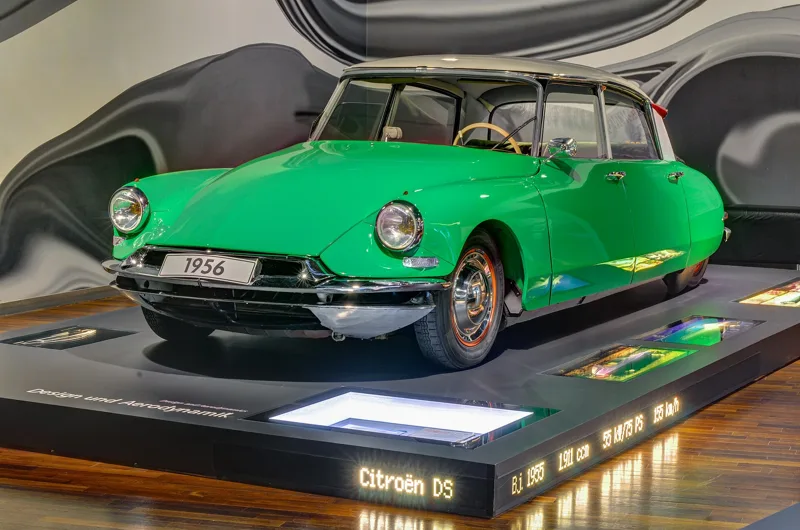
The first-generation car was the last Citroen developed under chairman Jacques Calvet, who led the company from 1982 to 1999. Its engineers worked within a hydropneumatic tradition that stretched back to the 1950s DS, and they added new electronics to keep that tradition current.
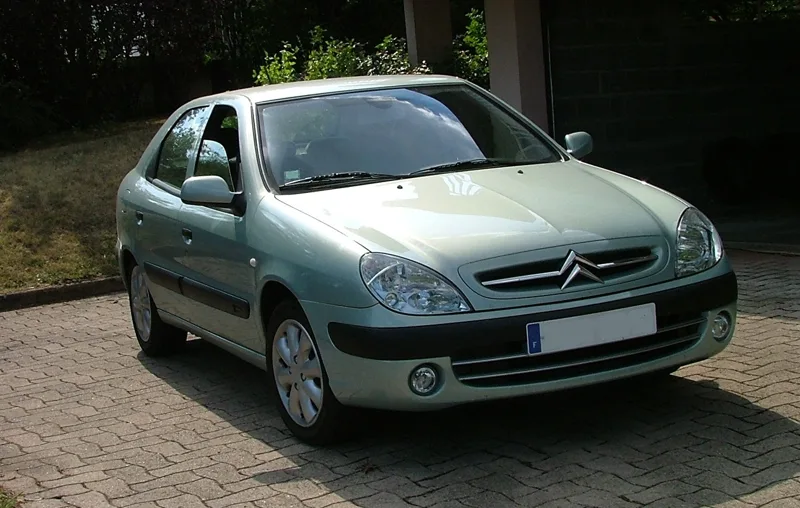
The first generation came only as a five-door liftback or a five-door estate. Production ran in France from 2000 until 2018, while manufacture in China ran separately from 2008 until 2022, so the model's later years were shaped by two very different markets.
Hydractive was the C5's signature, and it was dropped from the China-market car in 2017.
How did Hydractive suspension work?
Hydractive 3 replaced the mechanical height correctors of earlier hydropneumatic Citroens with electronic sensors. A suspension computer then set ride height automatically, lowering the car at high speed to cut drag and raising it on bumpy roads at low speed. Drivers could still choose a height manually, within limits set by the computer.
The system kept the car level and stable across changing loads. At the front the height could change by up to 15 mm (0.6 in), and at the rear by up to 11 mm (0.4 in). The same hydraulics let the car run on three wheels after a flat tyre, which made a single puncture far less of a problem.
Hydractive 3+ added computer-controlled ride stiffness on certain models, giving drivers a choice between softer and firmer settings. Manual control of ride height was kept, though the computer overrode it when the car was driven too fast for the height chosen.
Why did the C5 separate its brakes and steering from the suspension?
The first-generation car broke with Citroen tradition by running its brakes and steering off separate hydraulics rather than the suspension circuit. Steering assistance used LDS fluid as well, but through a pump of its own. One theory held that cost drove the decision, because electronic brake force distribution was expensive to develop on the hydropneumatic system.
Another explanation pointed to the nature of traditional Citroen brakes. They were highly responsive, and some drivers found them awkward when moving between hydropneumatic models, although others regarded that responsiveness as a strength.
What changed in the 2004 facelift?
The September 2004 facelift was a major one. It gave the car new front and rear ends, bringing it into line with the new Citroen C4, while the centre section stayed the same. Both bodies grew longer, and the headlights became swivelling directional units.
The liftback grew in length from 4,618 mm (181.8 in) up to 4,745 mm (186.8 in). The estate went from 4,755 mm (187.2 in) up to 4,840 mm (190.6 in), so both body styles gained a little extra room behind the front seats.
What engines did the first generation use?
Petrol buyers could pick 1.8 and 2.0 litre straight-fours or a 3.0 litre V6. Diesel buyers could choose from 1.6, 2.0 and 2.2 litres with direct injection, which gave them a choice between smaller and larger engines. Petrol and diesel options together covered a broad range of sizes and running costs.
Between them, the petrol and diesel options gave the range breadth in the large family car class. Engine choice stayed a central part of the offer through the 2008 generation change, and the line-up was later cut sharply, as the sections on the second generation explain.
Was the second-generation C5 a success?
The second generation arrived in February 2008 as a regular three-box saloon with an aerodynamic shape, and the estate, called the Tourer, followed in May 2008. The saloon won the 2009 Semperit Irish Car of the Year title and the 2008-09 Japan's Import Car of the Year award. Sales proved harder to sustain in some markets, notably the UK.
Enthusiasts often call this generation the X7 because it shares underpinnings with the C6. Its hydropneumatic system and double wishbone layout worked together, an unusual pairing that showed how far Citroen was prepared to go to keep its signature ride.
Engines changed in stages. The Ford-built V6 from the C6 came first, and in 2009 an updated 3.0 litre unit replaced it with better economy. In 2010 the 2.0 HDi 160 replaced two earlier diesels to meet Euro 5 rules, and a 1.6 THP 155 from the DS3 took over from the older petrol unit, mated to a six-speed manual.
Mild facelifts followed in 2011 and July 2012. The 2011 update brought LED lights and three new engines, while the 2012 changes softened the chevron badging and the grille. Exclusive models also received the eMyWay unit, which offered full Bluetooth connectivity and an iPod and USB interface.
Citroen eTouch bundled assistance services into the car. Emergency and assistance calls were supported by a GPS module and SIM, and no call plan was required. The SOS button summoned emergency help, and an impact could trigger the same call automatically, while a separate double chevron button handled non-emergency assistance.
How did the saloon end in Europe?
In Europe the saloon stopped being freely available to order in March 2017, while the Tourer and the CrossTourer remained configurable. The petrol range had already gone in July 2015, and Italy had withdrawn its petrol engines as early as February 2013.
The surviving European line-up was cut to two 2.0 BlueHDi diesels, one with 150 PS (110 kW) and a manual gearbox, the other with 180 PS (132 kW) and an automatic. That reduction was a response to market pressure, because sales of petrol versions had been shrinking for years in the segment.
Why did the C5 leave the UK?
The C5 was officially withdrawn from the UK in May 2016, after 17,105 sales since 2008. Only 237 cars were sold in 2015, the lowest figure since launch, and the withdrawal also ended right-hand drive production of the model. For a car of this size, those figures were a clear warning.
Timing mattered. The second generation arrived just as the 2008 financial crisis began, and buyers were turning towards crossovers in growing numbers. France recorded 6,549 sales over the same time span, which suggests the decline was not uniform across Europe.
How did the China-market C5 change in 2017?
In 2017 the China-market C5 received a redesigned front end, with new headlights, grilles and bumper. Its rear was revised slightly, with new tail lamps. The engine line-up was a 1.6-litre turbo petrol producing 167 PS (123 kW), alongside a 1.8-litre turbo with 204 PS (150 kW) and 207 lb-ft (280 Nm) of torque.
Both engines drove the front wheels through a six-speed automatic. Citroen dropped Hydractive from the facelifted car, citing high production costs and low customer demand. That decision ended the hydropneumatic system on the C5 after almost two decades of use across the model's two generations.
What is the Citroen C5 X?
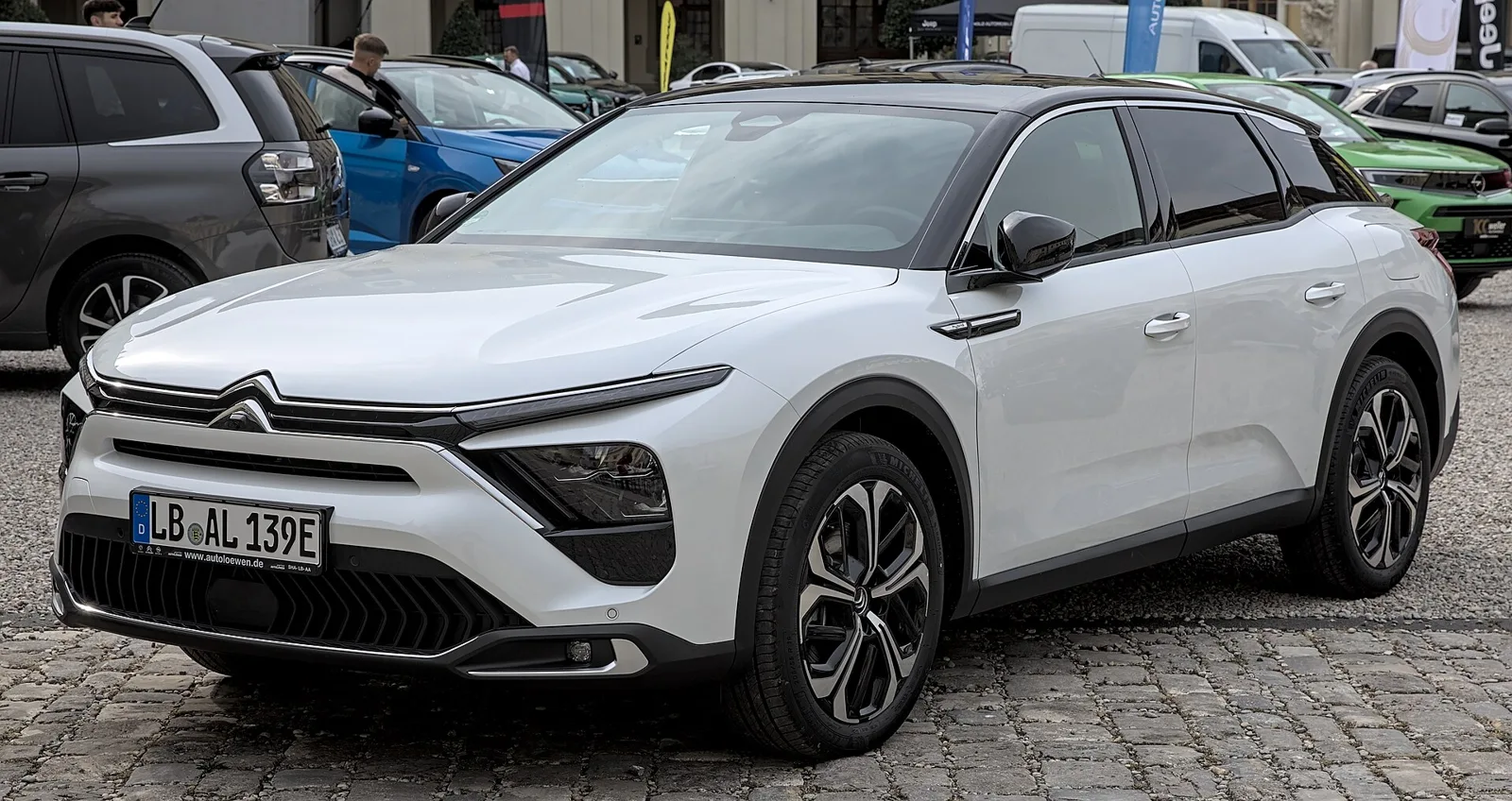
The C5 X is a crossover that keeps the C5 nameplate but has no link to the earlier generations. Citroen revealed it in the United Kingdom in July 2022 as a larger mid-size crossover SUV, and it was planned for sale in markets including Australia and Europe.
Where the earlier cars were defined by hydropneumatic suspension and conventional body shapes, the C5 X follows the crossover trend that had already changed the family car market. That places it in the sales territory the earlier model struggled to hold in the UK.
What are the Citroen C5 specifications?
The core figures are a 4,618 mm to 4,840 mm body length range across the first generation's liftback and estate, Hydractive heights of up to 15 mm at the front, and 720,000 cars built. Figures are quoted metric first with imperial in brackets.
| Specification | Detail |
|---|---|
| Body styles (first generation) | Five-door liftback or estate |
| Liftback length before 2004 | 4,618 mm (181.8 in) |
| Liftback length after 2004 | 4,745 mm (186.8 in) |
| Estate length before 2004 | 4,755 mm (187.2 in) |
| Estate length after 2004 | 4,840 mm (190.6 in) |
| Hydractive height variation | Up to 15 mm (0.6 in) front, 11 mm (0.4 in) rear |
| First-generation production | 720,000 cars, ended December 2007 |
| UK sales 2001 to 2004 | 45,502 first-generation cars |
| Second-generation launch | February 2008 |
| China 2017 1.8 turbo | 204 PS (150 kW); 207 lb-ft (280 Nm) |
How did the C5 fit into Citroen's hydropneumatic history?
The C5 carried forward the hydropneumatic approach that Citroen had used since the DS of the 1950s. Hydractive 3 was an evolution rather than a clean break, because the fluid-based suspension stayed in place while electronics took over height control.
The brakes and steering decision showed where the company drew the line. Keeping the suspension hydraulics for ride and levelling, while moving the brakes onto a separate system, meant the engineers could lean on a conventional braking arrangement that the PSA Group already had in use.
For owners, the practical benefit was in day-to-day ride. Levelling under changing loads and the ability to keep the car stable over uneven roads were the features most closely associated with the car's name.
What did the Exclusive trim add?
From the 2012 facelift, Exclusive models were distinguished by special badges on the flanks ahead of the front doors. They also received the eMyWay unit in place of the earlier onboard GPS and radio head, which was a visible upgrade inside the car.
The eMyWay unit offered full Bluetooth connectivity along with iPod and USB interfaces. For a large family car of its generation, that combination was a clear convenience advantage, although the rest of the interior was broadly unchanged.
Frequently asked questions
How many first-generation C5s were built?
Production ran from the end of 2000 until December 2007, and the total came to 720,000 cars. In the UK alone, 45,502 first-generation models were sold between 2001 and 2004.
What is Hydractive 3+?
Hydractive 3+ was a version of the system that added computer-controlled ride stiffness on top of the automatic height control.
Did the C5 keep its hydropneumatic suspension in China?
No. Citroen removed Hydractive from the China facelift in 2017 because it was costly to build and had little buyer demand.
Is the C5 X related to the earlier C5?
Not in engineering terms. The C5 X shares only the nameplate and is a larger mid-size crossover SUV.
When did the second generation go on sale?
The second generation launched in February 2008, following a premiere at the Brussels show on 15 January 2008.