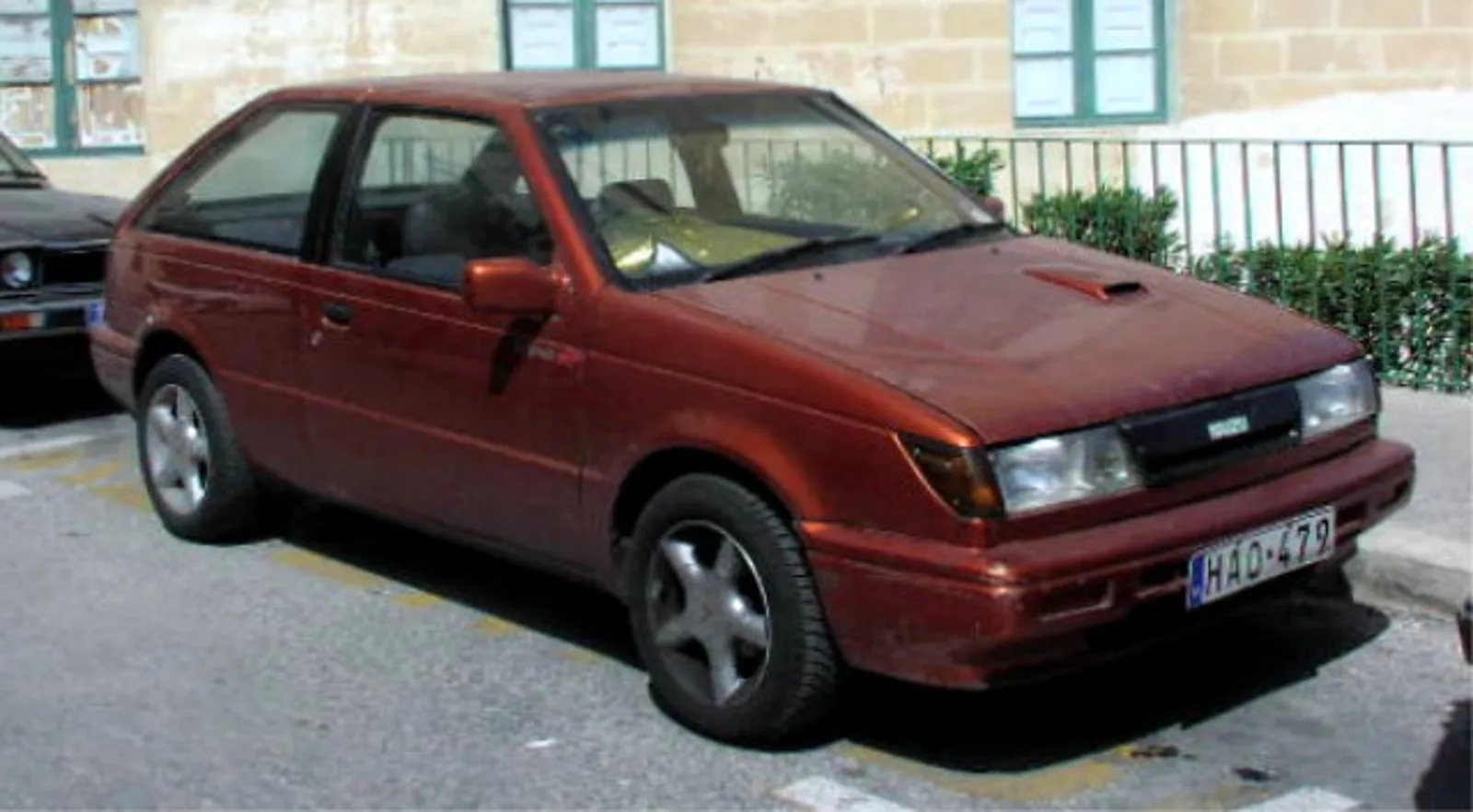
A subcompact that began as a rear-drive Opel relative in 1974, turned front-wheel drive in 1985 and ended its life as a rebadged Honda Domani.
The Isuzu Gemini was a subcompact built from 1974 to 2000. It started as an Opel Kadett-based rear-drive car, turned front-wheel drive in 1985, and its last two generations were rebadged Honda Domani sedans. The name was also sold under Holden, Opel, Chevrolet and Buick badges.
The Isuzu Gemini was a subcompact built by Isuzu from 1974 to 2000. The same basic product was sold under many other names, some of them General Motors brands, and its last two generations were little more than badge-engineered Honda Domani models.
Where did the Gemini come from?
The first Gemini appeared in November 1974 as the Bellett Gemini, a name that linked it to the Bellett it succeeded. The car was derived from Opel's Kadett C, the third generation, which rode on General Motors' T-car platform, and the Bellett word vanished from the name in April 1975.
The car came as a four-door sedan and a two-door coupe. Its chassis code was PF50, the later 1.8-litre cars were PF60, and the diesels were PFD60.
A car that began as a rear-drive Opel relative and ended with a Honda badge.
How did the first generation develop?
The June 1977 facelift brought a simplified honeycomb grille and rectangular headlights, along with the 1817 cc G180 engine borrowed from the Florian and the 117 Coupe. That unit produced 110 PS (81 kW), dropping to 105 PS (77 kW) with an automatic gearbox.
Two 1800 trims existed, the LT and LS, while the LS/G coupe received a five-speed manual and high-pressure headlight washers, which was a first for a Japanese home-market car. In November 1977 the 1600 gained square headlights and the I-CAS oxidation catalyst, giving 100 PS (74 kW), or 94 PS (69 kW) with an automatic.
The Gemini Black and the 1800 Minx were added in 1978. In June 1979 the nose was reshaped into a slant with rectangular lamps, and the tail was redesigned, along with a lengthened engine compartment and a broader radiator opening that suited the twin-cam G180W and a new 4FB1 diesel that arrived that November.
What were the sporting Geminis?
In Japan the sporting models used the ZZ name. ZZ/L arrived in 1980, followed by ZZ/R in 1981, then ZZ/T and ZZ/E. They used the G180W, an eight-valve DOHC 1.8-litre rated at 130 PS (96 kW) at 6400 rpm, most often with fuel injection.
The ZZ models had a shortened remote-throw manual shifter and an optional factory limited-slip differential. A milder sporting model, the LS/G, kept the OHC 1800 engine but added a little more character to the trim.
In October 1982 a diesel with Bosch VE electronic injection arrived, offering 66 PS against 61 PS for the regular unit. A turbo diesel with 73 PS (54 kW) followed a month later, and neither of the stronger diesels was ever offered as a coupe.
How did the first generation sell in North America?
The first Gemini reached North America in late 1975 as the Opel by Isuzu, later the Buick Opel, for the 1976 model year. It took over from the German-built Kadett, which had grown too costly after the dollar slid and German costs climbed. Buick-badged cars sold 18,801 units in 1978 and 17,564 in 1979.
Road and Track disliked the switch, saying the Isuzu felt built down to a price and was one of its least favourite cars. A Sports Coupe with a spoiler and sporty mirrors arrived in 1978, and the 1979 car received ribbed velour trim, new paint options and rectangular headlights.
The model was dropped in the middle of 1979, but 950 more cars were sold during 1980 from remaining stock. For 1981 the Buick Opel became the Isuzu I-Mark. It was offered as a sedan or two-door coupe, with a standard 78 hp (58 kW) 1.8-litre G180Z petrol engine and a 51 hp (38 kW) diesel that peaked at an unusually high 5,000 rpm.
The rear-wheel-drive I-Mark ended in 1985, when only the Deluxe sedan with the petrol engine remained. Output had stayed level at 78 hp (58 kW), peaking at 4,800 rpm.
How did the Gemini sell in Australia and New Zealand?
From the 1975 launch, Australian examples carried Holden-Isuzu badges, and Holden also built the Gemini as a three-door station wagon and a three-door panel van. The Holden Gemini was named Wheels Car of the Year for 1975. New Zealand also received local assembly from 1977 through 1984, and early cars there wore Isuzu badges.
Down Under the base petrol unit was the G161Z, while cars from 1979 onward could take a 1.8-litre 8-valve SOHC diesel, the 4FB1. The usual G161Z was a 1.6-litre 8-valve SOHC unit fed by a Nikki carburettor.
Elsewhere the Gemini was sold in only a few European markets, where it used a 1.6-litre engine rated at 68 PS DIN (50 kW). In South Korea it was the Saehan Gemini, whose maker became Daewoo Motors in 1982, and the car continued as the Maepsy. The Maepsy Sigma taxi remained in production until 1989.
Who designed the second generation?
The second generation was styled by Giorgetto Giugiaro, who had already designed the 117 Coupe and the Piazza. This time the target was a front-wheel-drive economy car on the new R-body platform, which had MacPherson strut front suspension and a beam axle at the rear.
GM ordered detail changes after Isuzu had presented the designs, and it made them without consulting Giugiaro. He took the changes as an insult, which ended a long working relationship, and he did not claim the styling as his own for a decade after production ended.
What changed with the front-wheel-drive Gemini?
The R-body reached showrooms in May 1985 under the Gemini FF name, having already been sold in the United States as a Chevrolet. In Japan it started with a carburetted 1.5-litre SOHC engine, and a 1.5-litre diesel was added in November 1985.
A 120 PS (88 kW) turbocharged 1.5-litre, the Irmscher, joined in May 1986, and the NAVi5 automated manual gearbox arrived the same year. The February 1987 facelift brought a more aggressive front with wraparound headlights, and the FF name was dropped as the rear-drive car finished its run.
The car premiered at the Geneva Motor Show in March 1987, but European sales disappointed, and the company quickly quit selling passenger cars in Europe. A 1.6-litre DOHC engine with 135 PS (99 kW) followed in February 1988.
Export versions had smaller engines to suit tax systems based on displacement. These included a 1.3-litre with 72 PS (53 kW), a 1.5 with 76 PS (56 kW) and a naturally aspirated diesel with 52 PS (38 kW). Trim levels ranged from basic C/C, LT and S cars to Irmscher, ZZ and Lotus Tuned versions.
In total 748,216 second-generation Geminis were built under all nameplates. Of those, 150,873 carried the I-Mark badge in the United States, while 363,171 wore Chevrolet and Geo badges.
How did the Spectrum and I-Mark sell in North America?
In the United States the car appeared as the Chevrolet Spectrum, which Geo sold from mid-1988, or as the Isuzu I-Mark. Pontiac sold the I-Mark as the Sunburst in Canada from 1985 to 1988. Import quotas limited sales to coastal markets at first, and only 29,500 cars were available in the first model year.
The Spectrum Turbo, with 105 hp (78 kW), arrived for 1987 in sedan form only, whereas the I-Mark RS turbo came as a hatchback. The 1.6-litre DOHC engine appeared in the I-Mark RS in 1989 with 125 hp (93 kW), and Lotus Tuned Suspension was fitted to the LS and RS models in 1988 and 1989.
US sales of the I-Mark fell by half in the second half of 1989 during a long changeover to the new models. Isuzu was contractually bound to supply Geo Spectrums, which left few I-Marks for its own dealers.
What was the third-generation Gemini?
For 1990 the Gemini was redone, and its coupe version became the Gemini Coupe. The sedan appeared in March 1990, the liftback coupe in September 1990 and the three-door hatchback in March 1991. The body was wider than before, and the last Isuzu-developed cars were sold as the Impulse, Piazza, Stylus, Geo Storm and Asuna Sunfire until June 1993.
Isuzu's finances forced a delay, and strong early sales in Japan slumped as the post-bubble recession took hold. The company then left the car business to focus on trucks and SUVs, where the Trooper and Rodeo sold well overseas.
In North America the sedan went on sale in December 1990 as the Isuzu Stylus. The base S used a 95 hp (71 kW) 1.6-litre SOHC engine, while the XS had a 125 hp (93 kW) DOHC unit and Lotus-tuned suspension. The 1992 XS moved to a 1.8-litre with 140 hp (104 kW). The third generation totalled 406,625 units, with 17,754 sold in the United States.
Why did the Gemini become a Honda?
In 1993 Isuzu halted production of its own Gemini and replaced it with a rebadged Honda Domani. The car was announced at the end of August and went on sale in early September, but Isuzu did little to advertise it, as it was aimed mainly at existing customers of its commercial vehicles.
The fourth generation came only as a four-door sedan with a limited set of engines. The 1600 C/C and C/C 4WD models and the slightly stronger G/G were all rated 120 PS (88 kW). In May 1995 an E-VTEC 1500 C/C joined the range with 94 PS (69 kW), aimed at buyers who had once chosen diesel Geminis. Production ended in January 1997.
The fifth generation, from 1997, was a rebadged second-generation Domani sedan, which was sold as a Civic in Europe. It was offered in one body style, offered with 1.5 or 1.6-litre petrol power, and production ceased in 2000.
What were the Gemini generations?
The table summarises the five generations. The front-wheel-drive cars took over from the rear-wheel-drive design in 1985, and the last two were Honda-based cars sold under the Gemini name.
| Generation | Years | Layout | Engines |
|---|---|---|---|
| First | 1974 to 1987 | Rear-wheel drive | 1.6 and 1.8-litre petrol, 1.8-litre diesel |
| Second | 1985 to 1990 | Front-wheel drive | 1.3 to 1.6-litre petrol, diesel |
| Third | 1990 to 1993 | Front-wheel drive | 1.5 to 1.8-litre petrol |
| Fourth | 1993 to 1997 | Front-wheel drive, Honda Domani | 1.5 and 1.6-litre petrol |
| Fifth | 1997 to 2000 | Front-wheel drive, Honda Domani | 1.5 or 1.6-litre petrol |
How safe was the Gemini?
A 2006 Used Car Safety Ratings review judged the 1982 to 1984 Holden Gemini in Australia to offer significantly worse than average crash protection for its occupants. The RB generation fared a little better, rated worse than average.
Where did the Gemini work as a taxi and police car?
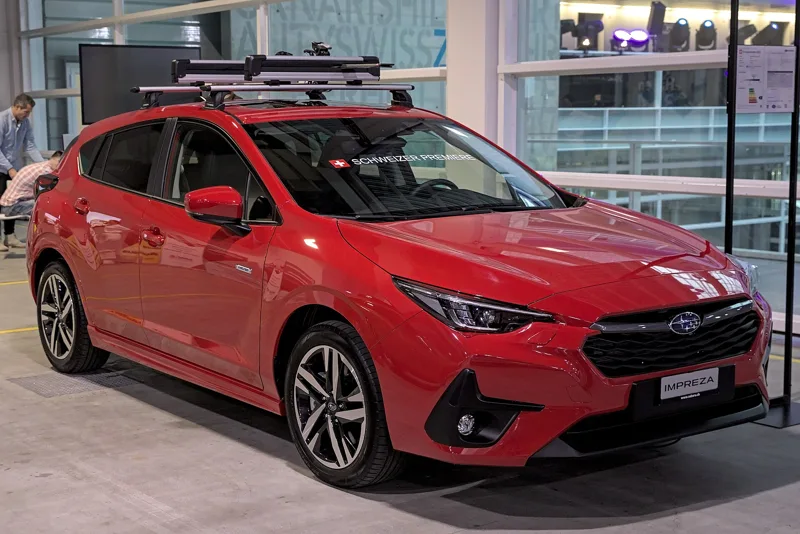
The first and second generation diesel Geminis were among the most popular taxi models in the Philippines during the 1980s and early 1990s. Singapore police ran Fast Response Cars based on the Gemini from 1991 to 1995, before Subaru Impreza cars took over the role.
In Japan the front-wheel-drive Geminis carried the catchphrase Shortstop of the streets. Japanese commercials used stunt work through Parisian streets, with Remy Julienne coordinating most of the stunts, and the cars became very popular.
Frequently asked questions
When did the Gemini end?
The Gemini name ended in 2000, with the fifth generation, a rebadged second-generation Honda Domani sedan.
How many rear-wheel-drive Geminis were built?
The rear-wheel-drive Gemini ended in February 1987 after 768,537 had been built.
Was the Gemini sold in North America?
Yes. From 1976 it wore Buick Opel badges in North America, later becoming the I-Mark, and the second generation was sold as the Chevrolet Spectrum.
What engines did the first-generation diesels use?
The first-generation diesels used the 4FB1 engine, and the 1982 Bosch VE injected version had 8% more power than the standard diesel.
Who styled the second-generation Gemini?
Giorgetto Giugiaro styled it, although GM changed the design without consulting him, and he denied authorship for a decade afterwards.