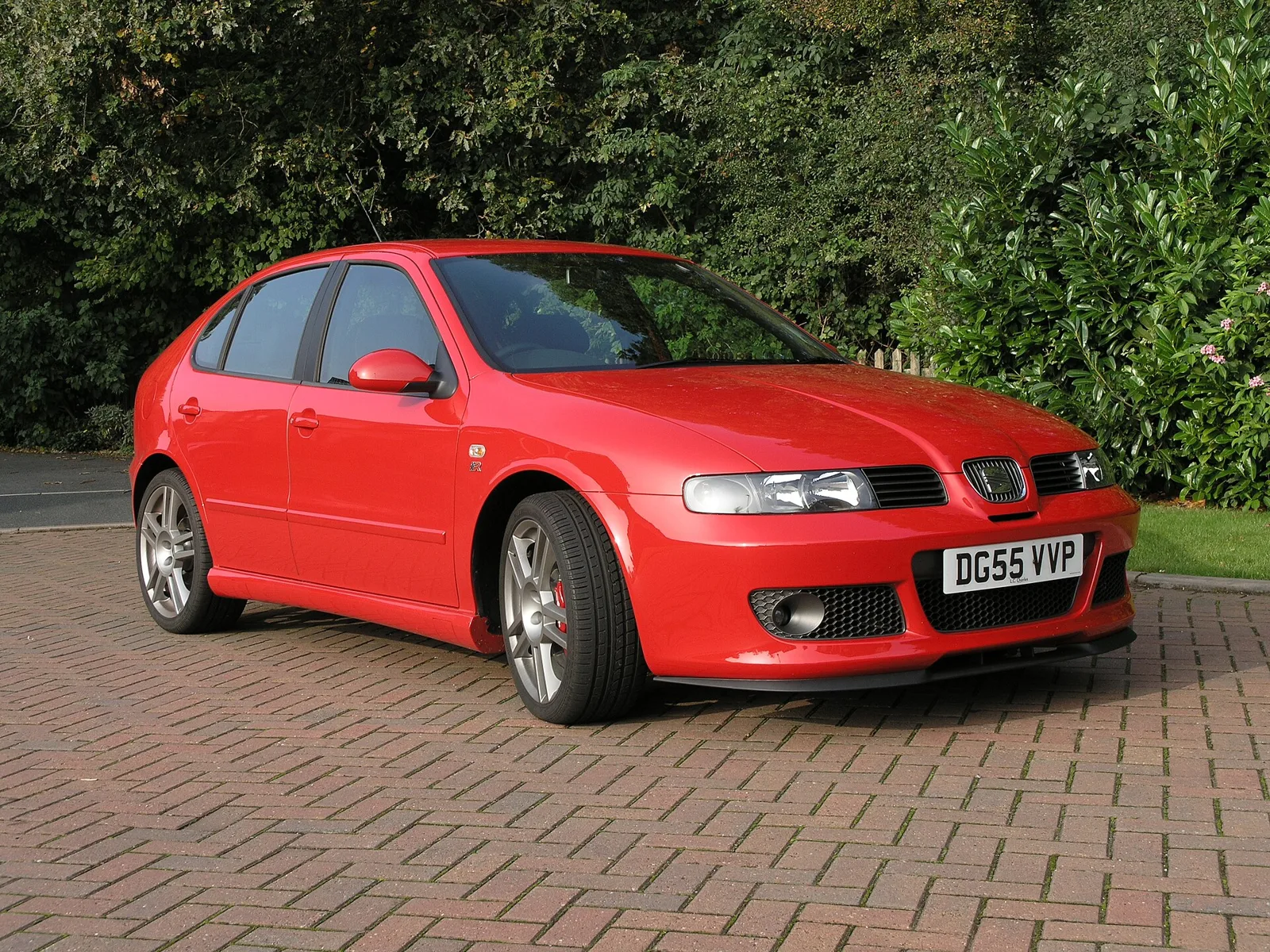
From the 1999 Typ 1M hatchback to the 2020 fourth generation, with Cupra performance, plug-in hybrids and a long WTCC and TCR racing record.
SEAT has built the Leon since October 1999, and it is now in its fourth generation, with more than 2 million sold. Its Cupra versions and TCR racing cars are the best known parts of the range, and the model has also been a long-running entrant in touring car racing.
The SEAT Leon is a small family car that the Spanish maker has built since October 1999. It has passed through four generations, moving from a Volkswagen Group A platform to the MQB architecture, and it has produced more than 2 million cars. Its Cupra models and its racing record are the parts of the story most people remember.
What was the first Leon like?
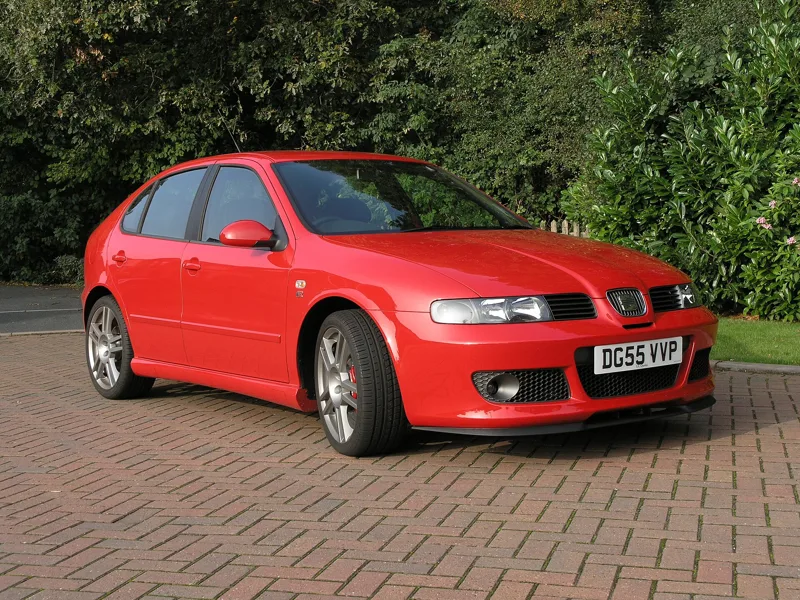
The Mk1 hatchback, codenamed Typ 1M, launched in 1999 and was built at Martorell. A small number, 13,401 cars, were assembled in Belgium as well. Its underpinnings came from the Volkswagen Group A4 (PQ34) platform, which it shared with components of the Volkswagen Golf Mk4.
SEAT positioned the Leon as a sportier and cheaper alternative to the Golf. Its fastback body drew inspiration from the Alfa Romeo Alfasud, and firmer suspension with wider tyres was meant to sharpen the handling. The dashboard borrowed its layout from the first Audi A3 generation.
The saloon version of the same car was sold as the SEAT Toledo. Typ 1M output stopped in May 2006, but the model left a lasting reputation among enthusiasts.
Four generations, more than 2 million cars, and a racing record built on the Typ 1M and the TDI.
Which engines did the Mk1 Leon offer?
The non-turbo petrol line-up began with a 1.4-litre 16 valve engine producing 55 kW (75 PS; 74 bhp), alongside a 1.6-litre 8 valve unit with 74 kW (101 PS; 99 bhp). The facelift swapped the 8 valve for a 16 valve engine rated at 77 kW (105 PS; 103 bhp).
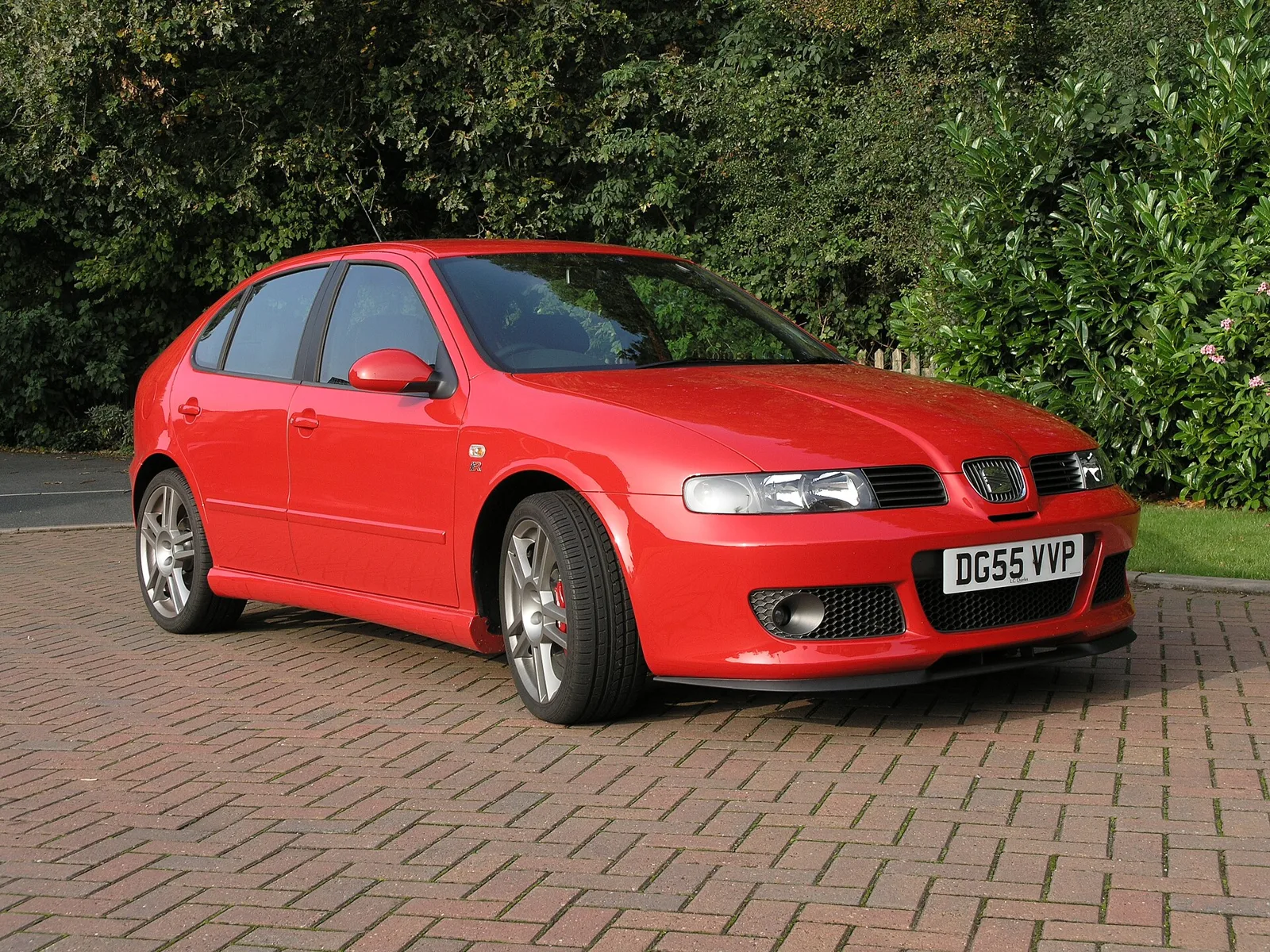
The sportier Leon 20VT, which was badged Cupra and then FR in the UK, used a 1.8-litre turbo with 132 kW (179 PS; 177 bhp). The fastest version, the Cupra R, produced 154 kW (209 PS; 207 bhp) at first and later 165 kW (224 PS; 221 bhp).
A 2.8-litre VR6 with four-wheel drive was offered in some countries as the Cupra 4. It produced 150 kW (204 PS; 201 bhp) and used the Haldex Traction system also found in the Volkswagen Golf 4motion.
Turbocharged direct injection diesels were available as well. The strongest diesel was rated at 110 kW (150 PS; 148 bhp), and the lesser units ran from 90 PS (66 kW) upwards.
Every engine above 96 kW (131 PS; 129 bhp) came with a six-speed manual gearbox. Rear suspension was a semi-independent torsion beam, except on the 4WD models, which had multi-link independent rear suspension, and every version had four-wheel disc brakes.
What made the original Cupra special?
The original Cupra came only in red, yellow and black, the colours of the Spanish and German flags. That livery was a deliberate homage to the two countries that worked together on the project.
In Switzerland, Abt Sportsline offered a tuned Cupra 4 Kompressor. A supercharger was added to the 2.8-litre VR6, which made 206 kW (280 PS; 276 bhp) and 323 N-m of torque, or 238 lbf-ft.
The Mk1 Cupra R continued to attract praise long after production ended. In a 2010 hot hatch poll run by Autocar, readers placed it seventh among the best hot hatchbacks of all time.
The model also collected honours on the way. It won the Carro do Ano award in Portugal in 2001, and in Poland the Auto Swiat magazine named it the Most Satisfactory Car of the Year for 2007.
How did the second generation change?
Production of the second generation, internally called Typ 1P, began in May 2005. It looked similar to the SEAT Altea, which had launched a year earlier, and it adopted design cues with a more modern, Alfa Romeo style face and vertically parked wipers.
The Mk2 offered a 16 valve 1.2-litre TSI petrol rated at 105 PS (77 kW). In some markets, including Greece, Romania and Italy, the base car ran a 1.4-litre MPI with 63 kW (85 PS; 84 bhp), while the sportier FR models began with a 110 kW (150 PS; 148 bhp) 2.0 FSI.
A 2.0 TDI producing 103 kW (140 PS; 138 bhp) was a popular diesel choice. A 136 kW (185 PS; 182 bhp) 2.0 TFSI was dropped because it sold poorly and the FR models took its place.
In June 2006 the Leon gained the 2.0 TFSI from the Golf Mk5 GTI, rated at 200 PS (147 kW), with twin chrome exhausts, sport seats and FR badging. A 125 kW (170 PS; 168 bhp) 2.0 TDI also joined the range.
The Cupra version of the second generation used a 2.0 TFSI with 177 kW (240 PS; 237 bhp), and it reached 100 km/h in 6.4 seconds. Its unique parts included 18-inch alloy wheels, red brake calipers and heavily bolstered sports seats.
The fastest Mk2 was the Cupra R, which used a 195 kW (265 PS; 261 bhp) 2.0 TFSI found in the Audi S3 and the Golf R. It reached 100 km/h in 6.2 seconds and was limited to a 250 km/h (155 mph) ceiling.
A UK-only K1 Leon Cupra, inspired by the BTCC race car, was made for a single year from 2008. A facelift for the range followed in 2009.
Which limited editions were built?
SEAT Deutschland announced 55 units of the Copa Edition in 2008. It used a 2.0 TFSI producing 210 kW (285 PS; 281 bhp) and 360 N-m, and it could reach 254 km/h (158 mph) with 100 km/h arriving in 5.9 seconds.
The Copa Edition had Eibach suspension and improved brakes, with xenon headlights, 18-inch wheels and a spoiler whose air intakes were larger. It was offered only in white with black stripes, although SEAT Mexico later built 100 units in orange with black stripes and a sunroof.
The Streetcopa was a Swiss-market edition shown at the 2008 Geneva Auto Show, limited to 200 units. After SEAT won the World Touring Car Championship, a facelifted version called the Leon World Champion Edition was limited to 200 units as well.
SEAT Nederland announced the Cupra 310 Limited Edition, with a 2.0 TFSI lifted to 228 kW (310 PS; 306 bhp) and 425 N-m. Only 100 were built, in Candy white or Infiri black, and the top speed rose to 259 km/h (160.9 mph).
The 310 car had engine remapping by Abt Sportsline, black alloy wheels, an alarm system, Bluetooth and 310 Limited Edition badges. Full factory warranty was kept despite the power increase.
In 2007 SEAT prepared a single car customised by Shakira. It was auctioned for the benefit of the Pies Descalzos Foundation, and mechanically it matched the standard Cupra.
What changed with the third generation?
The third generation, codenamed 5F, arrived in 2012 on the MQB platform that the seventh generation Volkswagen Golf also used. It was 5 cm (2 in) shorter and up to 90 kg (198 lb) lighter than the car it replaced, but its wheelbase grew by 5.8 cm (2.3 in).
That longer wheelbase gave the cabin more shoulder room and more rear legroom, and the boot offered 380 litres (13 cu ft). The first official pictures were released on 16 July 2012, and the car made its public debut at the Paris Motor Show that September.
Safety equipment came with a driver knee airbag and a multi-collision braking system, which applies the brakes after an impact to help prevent a follow-on crash. Lane keeping help and driver fatigue detection were also offered, and the braking system included a hill-start assistant.
The interior had a driver-focused centre console with a 5.8-inch touchscreen. Full-LED headlamps with a full beam assistant were offered for the first time in the class, and the SEAT Drive Profile system allowed eco, normal, sport and individual settings.
SEAT announced in early 2012 that the range would include three-door and estate versions as well as the five-door. The estate, the Leon ST, was unveiled at the Frankfurt Motor Show in September 2013 with a maximum load capacity of 1470 litres. An off-road X-PERIENCE version followed on 23 June 2014.
The three-door Leon SC was discontinued in August 2018 because demand for three-door hatchbacks had fallen.
How powerful were the Cupra models of the third generation?
The Cupra 265, built from 2014 to 2016, used a turbocharged 2-litre 16-valve inline four with 265 PS (195 kW). It reached 0-62 mph in 6.2 seconds and topped out at 250 km/h (155 mph).
The Cupra 280 of 2014 and 2015 used a 280 PS (206 kW) version of the same engine and accelerated to 62 mph in 5.8 seconds. The Sub8 Performance pack, launched in August 2014, added side skirts, lightweight 19-inch wheels and 30 mm larger ventilated brake discs.
The Ultimate Sub8 pack followed in February 2015. It removed the centre armrest, reduced the speakers from eight to four and replaced the standard climate control with a smaller heater, all to save weight.
The Cupra 290 replaced the 280 in 2015 and 2016 with 10 bhp more, and it came as the SC three-door, the hatchback and the ST estate. The Cupra 300 followed in 2017 and 2018 with 296 bhp, and it reached 62 mph in 5.8 seconds.
When new WLTP testing arrived, the 300 was replaced in 2018 by a 290 that added a gasoline particulate filter. The ST estate kept the 300 PS output and received the same filter.
The Leon Cupra R was limited to 799 units, based on the Cupra 300 with a 310 PS (228 kW) engine. Only 24 right-hand drive examples were built for the UK, and the car had exclusive 19-inch wheels and a carbon fibre front splitter.
What is the fourth generation like?
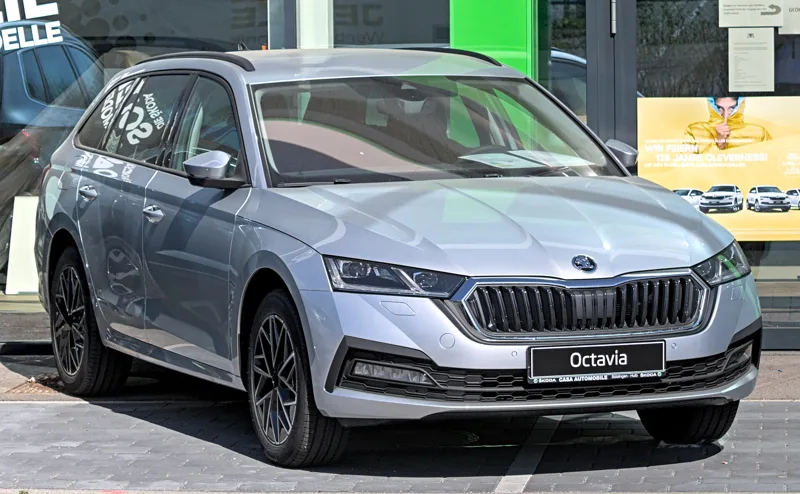
The fourth generation was unveiled on 28 January 2020. Its MQB platform is shared with the Volkswagen Golf Mk8, Skoda Octavia Mk4 and Audi A3 Mk4, and it has an all-digital cluster with full LED lighting. Buyers can pick petrol, diesel, mild hybrid or plug-in hybrid power.
The fourth-generation car is 16mm narrower and 90mm longer than its predecessor. The five-door boot still holds 380 litres, and the estate gained 30 litres to reach 617 litres.
Petrol engines include a 1-litre three-cylinder with 108 bhp and a 1.5-litre four-cylinder that comes in 128 bhp or 148 bhp tune. The TDI diesel is a 2-litre offered with 113 bhp or 148 bhp.
A 1.5-litre TGI natural gas engine produces 96 kW (130 PS) and reaches 440 km (273 miles) on gas. When the gas runs out, the engine switches to petrol automatically until the next refuelling.
The eTSI mild hybrid pairs the engine with a 48V electric motor, and braking energy goes into a lithium-ion battery of the same voltage. It can coast with the engine switched off in some situations.
The eHybrid plug-in uses a 1.4-litre TSI with a 13 kWh lithium-ion battery to produce 150 kW (204 PS). It offers an electric-only range of 60 km (38 miles), and charging takes 3.5 hours from a 3.6 kW AC socket. It is the only Leon with rear multi-link suspension.
Standard equipment includes the Kessy automatic locking and starting system, an electronic parking brake, an eight-inch infotainment system and LED headlights with automatic high beam. The car is offered in seven trim levels, from SE through FR and FR Sport to XCELLENCE Lux.
How did the Leon race?
The first-generation Cupra R formed the basis of the one-make SEAT Leon Supercopa, which ran in Spain, the UK, Germany and Turkey from 2003. Power was raised to 184 kW (250 PS; 247 bhp), and an International Masters final was added in October 2005.
From 2005 SEAT used a second-generation car in the World Touring Car Championship. Its racing engine made over 191 kW (260 PS; 256 bhp), and the car weighed at least 1,140 kg (2,513.3 lb) with its driver. SEAT Sport ran six cars in the WTCC with Oreca.
A TDI version came in mid-2007 and helped SEAT win the manufacturers title in 2008. Yvan Muller won the 2008 drivers title in a Leon TDI, and Gabriele Tarquini took the 2009 title in the same car. SEAT also won the manufacturers championship again in 2009.
The Leon TDI also raced in the British Touring Car Championship in 2008, where Jason Plato finished second in the drivers' standings. The Eurocup for the Leon started in 2008 and supported the WTCC programme.
The Leon Cup Racer became the base for the TCR International Series. Later the 2020 Leon Competicion TCR debuted at Mugello in TCR Italy, and Mikel Azcona became European TCR Champion for a second time with the car.
In 2024 and 2025 the Leon VZ TCR won the TCR Europe title. The car was also named the 2025 TCR Car of the Year. In another series, the Cupra e-Racer won the e-TCR manufacturers championship in 2021 and 2022.
How many Leon cars have been sold?
More than 2 million Leon cars have been produced and sold across the three generations since 1999. Most were built at SEAT's Martorell plant, along with other Volkswagen Group factories.
In 2011 retail sales reached 77,075 vehicles, while annual production came to 80,736 units.
What are the SEAT Leon specifications?
The table lists the core facts about the Leon across its four generations, with engine and performance figures taken from the versions named in each row. Values for the Cupra models are kept separate from the standard cars.
| Specification | Detail |
|---|---|
| Launch | October 1999, Typ 1M, built at Martorell |
| Second generation | Typ 1P, from May 2005 |
| Third generation | 5F, MQB platform, debut at Paris in September 2012 |
| Fourth generation | Presented 28 January 2020, MQB platform |
| Mk1 Cupra R | 154 kW (209 PS; 207 bhp), later 165 kW (224 PS; 221 bhp) |
| Mk2 Cupra R | 195 kW (265 PS; 261 bhp), 0-100 km/h in 6.2 seconds |
| Cupra 265 | 265 PS (195 kW), 0-62 mph in 6.2 seconds |
| Cupra 280 | 280 PS (206 kW), 0-62 mph in 5.8 seconds |
| Cupra 300 | 296 bhp, 0-62 mph in 5.8 seconds |
| Mk3 boot | 380 litres (13 cu ft) |
| ST estate load | 1470 litres |
| Fourth generation eHybrid | 150 kW (204 PS), 60 km (38 miles) electric range |
| Retail sales, 2011 | 77,075 vehicles |
Frequently asked questions
When did the SEAT Leon first go on sale?
The Leon was launched in October 1999 as the Typ 1M hatchback, built at Martorell.
How many Leon cars have been made?
The total passes 2 million, counted across the three generations built so far.
Which Cupra was the most powerful Mk3?
The Cupra R limited to 799 units used a 310 PS (228 kW) engine, the highest output in the third generation.
When was the fourth generation presented?
Presentation took place on 28 January 2020.