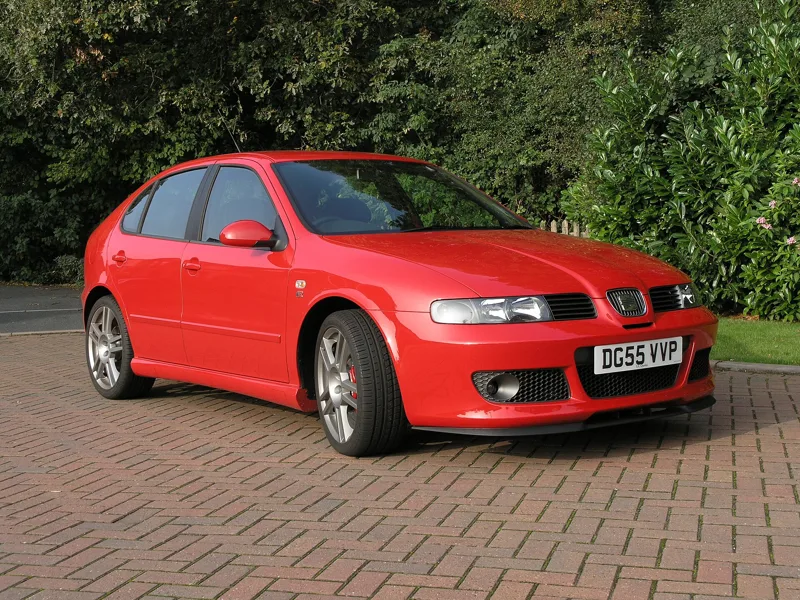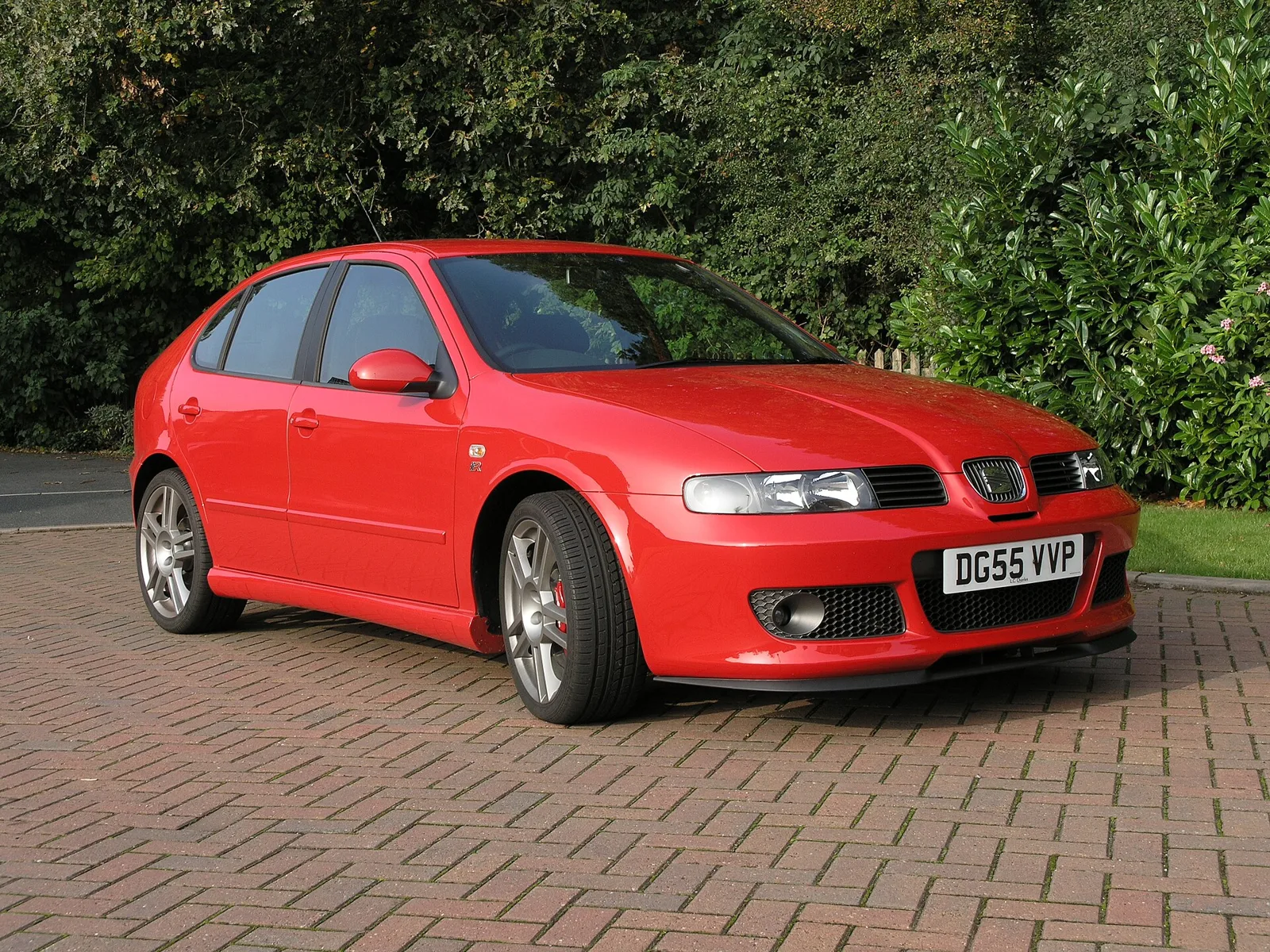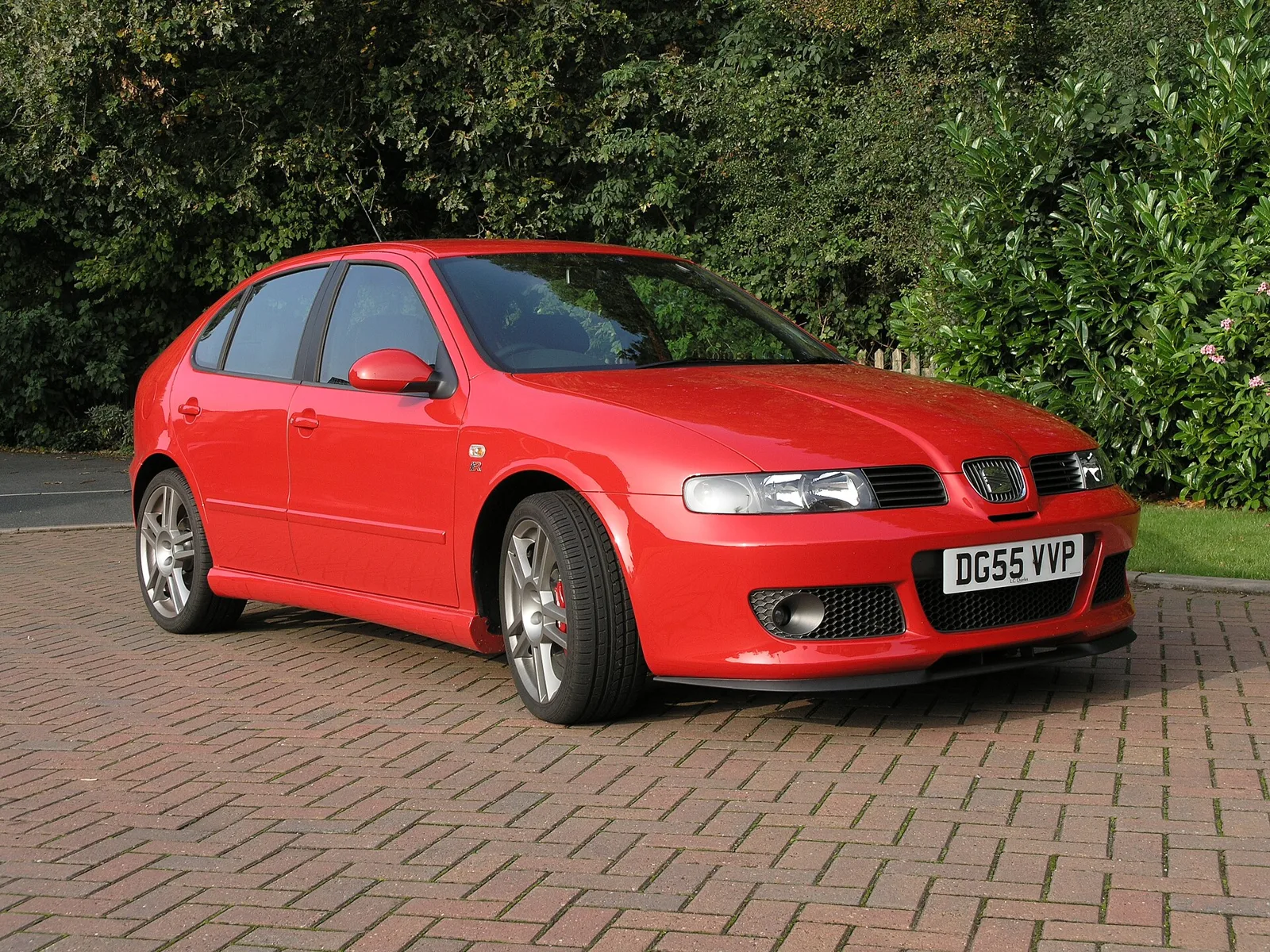
A Barcelona-built marque born from a state venture with Fiat, a 1953 first car, a 600 that motorised Spain and a long Volkswagen era.
SEAT is a Spanish car maker founded on 9 May 1950 as a joint venture with the state holding company and Fiat. Volkswagen took control in 1986 and now owns the brand outright. Its Martorell plant, opened in 1993, built the Ibiza that became the brand's best seller.
SEAT is a Spanish car manufacturer founded on 9 May 1950 as a joint venture between the state holding company Instituto Nacional de Industria, Spanish banks and Fiat. Volkswagen took control in 1986 and the brand is now a fully owned subsidiary of the group. Its headquarters are in Martorell, near Barcelona, where the Ibiza has been built since 1993.
When and why was SEAT founded?
The origins of the brand go back to 22 June 1940, when Banco Urquijo backed the Sociedad Iberica de Automoviles de Turismo, known as S.I.A.T., to give Spain a homegrown mass-market carmaker. The project was delayed by the war, but it was never abandoned because of its strategic importance.
The current company was set up on 9 May 1950 as the Sociedad Espanola de Automoviles de Turismo. The Instituto Nacional de Industria held the majority stake, with a starting capital of 600 million pesetas divided into 600,000 shares of 1000 pesetas each.
The state's involvement came by way of a Franco government decision dated 3 January 1942. Its aim was not to become another licensee assembling foreign designs, but to develop the whole manufacturing process from design to assembly inside Spain.
A Barcelona marque born from a 1950 state venture with Fiat, now a Volkswagen performance brand with a 1953 first car.
Why did SEAT choose Fiat as its partner?
Six Spanish banks signed an alliance contract with Fiat on 26 October 1948, bringing a foreign partner to the project. The favoured bidders had been Volkswagen and Fiat, and Fiat's bid won for several reasons, including its prominence in Spain and its earlier plant in Guadalajara.
Fiat received a 7% stake in return for technical help. The partnership gave the new company access to proven models and engineering, which Spain lacked after the civil war had removed much of its automotive expertise.
The plant was placed in the duty-free zone of the Port of Barcelona, which offered sea and road links to the rest of Europe. The company's first president was Jose Ortiz-Echague, who had come from the Spanish aircraft maker Construcciones Aeronauticas.
What was the first SEAT car?
The Zona Franca plant opened on 5 June 1953, and the first car to come off its line was the SEAT 1400 on 13 November 1953. The factory's production grew quickly, and by 1954 Spanish-made parts reached 93% of the total content.
The factory's official opening took place on 5 May 1955. The early SEAT 1400 was a luxury car and was too expensive for most Spanish buyers, which meant the company needed a second, more affordable model to reach ordinary families.
How did the SEAT 600 change Spain?
The SEAT 600 launched in 1957 and became the first car for many Spanish families. It was a licensed version of the Fiat 600, and it helped to motorise the country during a period of rapid economic change.
By 1967 SEAT was Spain's largest automaker by sales, and it produced 282,698 cars in 1971, more than 58% of the Spanish total. That scale showed how far the brand had moved from its early struggles to a dominant domestic position.
How did Fiat's stake in SEAT change?
In 1967 an agreement between Fiat and the Spanish Ministry of Industry ended the restrictions on exporting SEAT cars. Fiat raised its holding in the company from 7% to 36%, while the government's controlling stake fell from 51% to 32%.
Fiat's growing influence reflected the terms of the original licence, which had covered technical help and a route to exports. The deal also brought undertakings by Fiat to help SEAT grow, including work on a new model that became the basis for later cars.
What led to the dispute with Fiat?
The SEAT Ronda launched in 1982, styled by Rayton Fissore with the Martorell technical centre. Fiat sued SEAT, claiming the car was too similar to its Ritmo, and the case went to the Arbitration Chamber of Paris.
In 1983 the Paris body declared that the differences between the two cars were important enough that the Ronda could not be treated as a rebadged Ritmo. SEAT's president, Juan Miguel Antonanzas, had shown the press a Ronda with every part that differed from the Ritmo painted bright yellow.
How did Volkswagen take control of SEAT?
Volkswagen agreed a licence and a partnership with SEAT in 1983, and it bought a 51% majority stake on 17 June 1986. Its share increased to 75% on 23 December 1986, and on 18 December 1990 it bought the remaining 25%.
The Volkswagen period turned SEAT into a low-cost production base for the group's wider range. SEAT contributed up to 15.2% of the Volkswagen group's total output in 1989, and it opened the Spanish market to the SEAT, VW and Audi names.
Which SEAT models came out of the 1980s?
SEAT launched its new Ibiza in 1984, a Giugiaro-styled hatchback that used System Porsche engines and underpinnings from the Fiat Ritmo and Strada. The Ibiza also formed the basis of the Malaga, a four-door family saloon.
The Ronda, the Ibiza and the Malaga showed that the brand could compete on design and price. These cars were the foundation for a new generation of SEAT models built after the Volkswagen takeover.
How did the Martorell plant change SEAT?
King Juan Carlos inaugurated the Martorell plant on 22 February 1993. The site lies about 30 km northwest of Barcelona and has an annual production capacity of around 500,000 units, and it became the main plant of the company.
The first cars to roll out of Martorell were the Ibiza Mk2 and its saloon version, the Cordoba Mk1. The Zona Franca factory kept a supporting role, with about 80% of the parts for the MQB A0 platform made there, and the Technical Centre in Martorell covers 200,000 m2.
Gearbox production also grew, with the Gearbox del Prat plant set up in 1979. SEAT Componentes can now make up to 3,500 gearboxes a day in El Prat de Llobregat, which shows the depth of the company's manufacturing base.
When did SEAT start building cars outside Spain?
The first SEAT model built outside Spain was the Alhambra Mk1, produced in 1996 at the Palmela plant in Portugal. That step marked a change in the way the company organised its production across Europe.
The Arosa, a three-door city hatchback, launched in 1997 and replaced the Marbella. Production of the Marbella ended on 7 April 1998, which closed the chapter of the original Zona Franca line for vehicles.
Outside Europe, Mexico has become the brand's most successful market, with a dealer presence in 27 states. SEAT also sold cars in Russia from 2007 to 2015, a market that showed the company's wider export reach.
How did the SEAT brand evolve in the 1990s and 2000s?
In March 1999 SEAT presented a more rounded logo in silver on a red background, replacing the earlier blue. The change came shortly after the launch of the second-generation Toledo, and it signalled the brand's shift towards a more emotional identity.
The auto emocion slogan was presented in September 2000, and it reflected a youthful and sporty corporate identity. SEAT Sport, the motorsport division, took responsibility for developing the high-performance models in the range.
How did SEAT perform in rallying?
SEAT's first serious World Rally Championship attempt came in 1977, when it finished third and fourth at the Montecarlo Rally. The company later won 11 rally titles between 1979 and 1983, which built a strong base for its later programmes.
The SEAT Ibiza Kit-Car won the 2-Litre World Rally Cup in 1996, 1997 and 1998. The move to the top category came with the Cordoba WRC, which debuted at the 1998 Rally of Finland, but the company pulled out of international rallying at the end of 2000.
Did SEAT win touring car championships?
SEAT became the first manufacturer to win a WTCC round in a diesel car in 2007. The Leon then won the World Touring Car Championship in 2008 and 2009, and Yvan Muller won the 2008 drivers' title for the brand.
The success was a high point for the brand's motorsport work, although SEAT UK withdrew from all British motor sport at the end of the 2008 season. The team's diesel approach had made it a leader in touring car racing during those years.
What grand tourer and single-seater projects did SEAT run?
The Cupra GT race car was launched by the SEAT Sport division at the 2003 Barcelona Motor Show, and it was produced in limited series for racing teams. It made its debut in 2004 in the Spanish GT Championship.
In 1970 SEAT set up the Formula Nacional series in Spain, which became known as Formula 1430. The single-seater cars were driven by young Spanish drivers and used 1430 engines and 6700 gearboxes supplied by the company.
What is the Cupra brand?
In 2018 the former top Cupra trim level became a separate marque beside SEAT. At the same time SEAT Sport became Cupra Racing, which made the performance side of the business a separate identity.
Cupra describes itself as a challenger brand, based in Barcelona and focused on contemporary performance. The split gave SEAT a clearer structure, with the mainstream range in one identity and the sporting models in another.
How big has SEAT grown?
Over 16 million SEAT cars have left the line since 1953, and the Ibiza is the most successful model, with over 4 million units sold in four generations. The brand reached 336,683 retail sales in 2009, while its production that year came to 307,502 units.
The scale of those figures explains why SEAT is seen as a core part of the Volkswagen Group. The Martorell plant, with its capacity of around 500,000 units, supports much of the group's Spanish output.
Which SEAT models did Volkswagen rebadge?
The Arosa was rebadged as the VW Lupo and the Inca as the VW Caddy. In the other direction, the SEAT Exeo was based on the Audi A4 B7, the SEAT Mii was based on the VW Up, and the SEAT Toledo Mk4 was based on the Skoda Rapid.
These rebadges show how the group shares platforms across its brands. SEAT's own cars also travelled into other markets under different names, which helped spread the design work across more customers.
What environmental and transport projects has SEAT run?
SEAT's Ecomotive range uses lighter parts, low-resistance tyres and new aerodynamics. The Ibiza Ecomotive 1.4 TDI emits 98 g/km of CO2, and the Ibiza Ecomotive was honoured by the Verkehrs-Club Deutschland in 2008.
In 2009 an Ibiza Ecomotive set a world fuel-saving record of 2.34 L/100 km over 1,910 km on a single tank. The Autometro rail link, which opened on 18 January 2008 between Martorell and the Port of Barcelona, moved vehicles away from the roads with a 6.8 million euro budget.
What are the key SEAT models and figures?
The table lists selected SEAT models with the year, a defining figure and the role each car played in the brand's history. Where a model had several versions, the figure shown is the one that best describes it.
| Model | Year | Defining figure | Role |
|---|---|---|---|
| SEAT 1400 | 1953 | First car built at Zona Franca | First SEAT car |
| SEAT 600 | 1957 | Licensed version of the Fiat 600 | First car for many Spanish families |
| SEAT 800 | 1963 | First SEAT-exclusive derivative | Four-door stretched 600 |
| Ronda | 1982 | Styled by Rayton Fissore | First SEAT without Fiat involvement |
| Ibiza | 1984 | Giugiaro-styled hatchback | Best-selling model, over 4 million units |
| Ibiza Mk2 | 1993 | First car built at Martorell | Export success |
| Ibiza Kit-Car | 1996 to 1998 | 2-Litre World Rally Cup wins | Rally competitor |
| Cordoba WRC | 1998 | Debut at the Rally of Finland | Top-category rally car |
| Leon WTCC | 2008 and 2009 | World Touring Car Championship titles | Diesel touring car |
Frequently asked questions
How many SEAT cars have been built?
The company has built well over 16 million cars since it began production in 1953. The brand has launched its models in more than 70 countries.
Which SEAT model sold the most?
The Ibiza is the best seller, with over 4 million units sold across four generations. It was first built at Martorell in 1993 as the Mk2.
When did SEAT leave rallying?
The company quit international rallying in late 2000 after its Cordoba WRC programme struggled.
Where is SEAT headquartered?
The headquarters are in Martorell, near Barcelona, at the company's industrial complex. The site also houses the main manufacturing facilities.