Bicycles in 1896, a state-owned works under communism, and a Volkswagen takeover that rebuilt the brand's image in Western Europe.
Skoda is a Czech carmaker that traces its origins to Laurin & Klement in 1896 and has been owned by Volkswagen since 2000. The brand reported 1.25 million global sales in 2018 and ranked as Europe's third best-selling brand in 2025.
Skoda is a Czech car manufacturer headquartered in Mlada Boleslav, and its story begins with a bicycle business founded in 1896. It matters because the brand survived decades of state ownership, joined the Volkswagen Group, and now sells cars in over 100 countries, with a motor sport record that began in 1901.
How did Skoda begin as a bicycle business?
The company that became Skoda started as Laurin & Klement, a velocipede manufacturer founded in 1896 in Mlada Boleslav. Vaclav Klement, a 26-year-old bookseller, had no technical experience when he opened a repair shop with Vaclav Laurin, an established bicycle maker from Turnov.
The partnership soon outgrew repairs. The founders began making their own machines, and the bicycle workshop became a manufacturing business that would later move into powered vehicles. That shift is the thread connecting the early shop to the modern brand.
The step into powered vehicles came quickly. In 1899 the Slavia motorcycle made its debut, marking the start of Central Europe's first motorcycle factory. Exports began in 1900, when the workforce stood at 32 and 150 machines were shipped to London.
A Czech badge that began with bicycle repairs in 1896 and now sells cars in over 100 countries.
When did Skoda start building cars?
Laurin & Klement began making automobiles in 1905, which made it the second-oldest car maker in the Czech lands after Tatra. Before that, the firm had built bicycles and motorcycles, so the car programme grew out of the same workshop rather than arriving as a new venture.
The Voiturette A, the first car model, was a success. It gave the company an early footing in car making, and the models that followed built on that start.
How did Skoda Works take control of the company?
Problems and a fire on the company's premises in 1924 led Laurin & Klement to look for a new partner. In 1925 Skoda Works, the Plzen-based arms manufacturer founded in 1859, acquired the business, and most later production carried the Skoda name.
Emil von Skoda founded the works, and it began as an arms manufacturer. Car making gave the works a way to widen a base that had been built on weapons, and the car business later became a separate concern in its own right.
How did the new chassis change the range?
In 1933 Skoda held a 14% market share and ranked third behind Praga and Tatra. The new line that followed rested on a chassis with a backbone tube and all-round independent suspension, first used on the 420 Standard, and it made the brand market leader by 1936.
The chassis design was modelled on the Tatra design of Hans Ledwinka, which gave the range a structure that differed sharply from the company's earlier products. The brand's share had reached 39% by 1938, a clear sign of how far it had climbed in a few years.
What did the Second World War do to the works?
During the war Skoda Works' vehicle output fell from 7,052 in 1939 to 683 in 1944. UK and US air forces bombed the works repeatedly between 1940 and 1945, and the final raid, on 25 April 1945, caused about 1,000 dead or wounded.
Those years marked a low point for the works. The car business had to be rebuilt from that position once peace returned, and the rebuilding took place under very different political conditions.
How did Skoda change under state ownership?
In 1948 Skoda Works became state owned, and the car business was separated from it. The change came only a few years after the war ended, and it placed the car company on a new footing for the decades that followed.
Privatisation did not begin until 1991, after the Velvet Revolution set the process in motion, and that opened the way to a new partner.
How did Volkswagen become the owner?
The Velvet Revolution led to privatisation starting in 1991, and the 1990 tender drew 24 registered companies, of which eight showed serious interest. Volkswagen was chosen on 9 December 1990, and it bought the remaining 30% on 30 May 2000.
The stake was built up in steps. Volkswagen took a 30% share from 16 April 1991, raised its holding to 70% on 11 December 1995, and its ownership became complete on 30 May 2000. Each stage gave the Volkswagen Group more control over the Czech company.
Did the brand's image improve after the takeover?
Yes. The Felicia of 1994 was effectively a reskin of the Favorit, yet its quality and equipment were improved, and the car ranked among the highest in UK customer satisfaction surveys. Buyers in the Czech Republic regarded it as good value for money.
The turning point in Britain came in 2000, when the 'It is a Skoda, honest' campaign began with the launch of the Fabia. By 2005 the UK share was over 1%, and for the first time the company had a waiting list for deliveries.
How did the Octavia and Fabia change the range?
The Octavia (1996) and the Fabia (1999) were built on Volkswagen Group floorpans. The Octavia shared its floorpan with the VW Golf Mk4, while the Fabia floorpan became the basis for the VW Polo and SEAT Ibiza. That shared structure shows how closely the Czech engineering work was tied to the wider group.
Which models make up the current range?
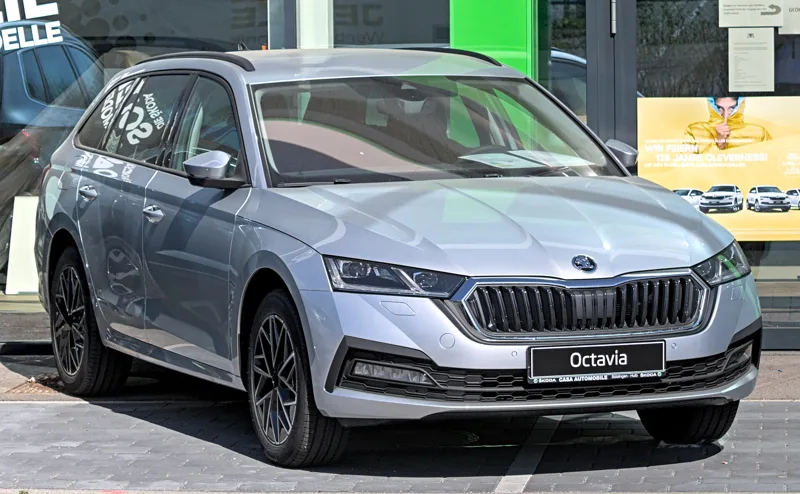
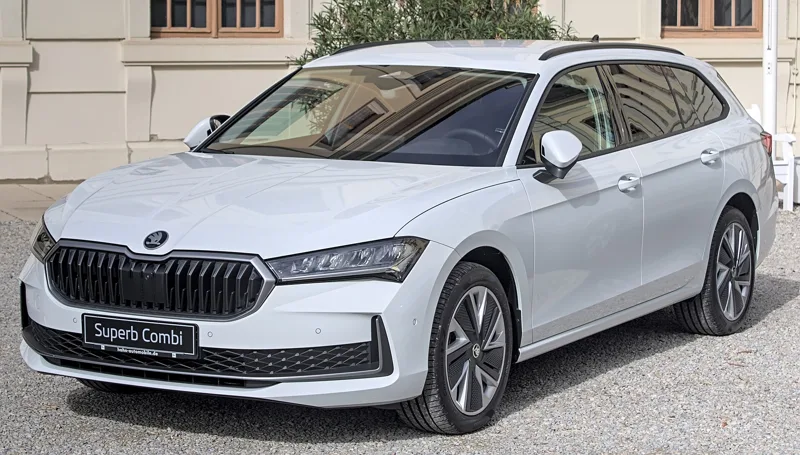
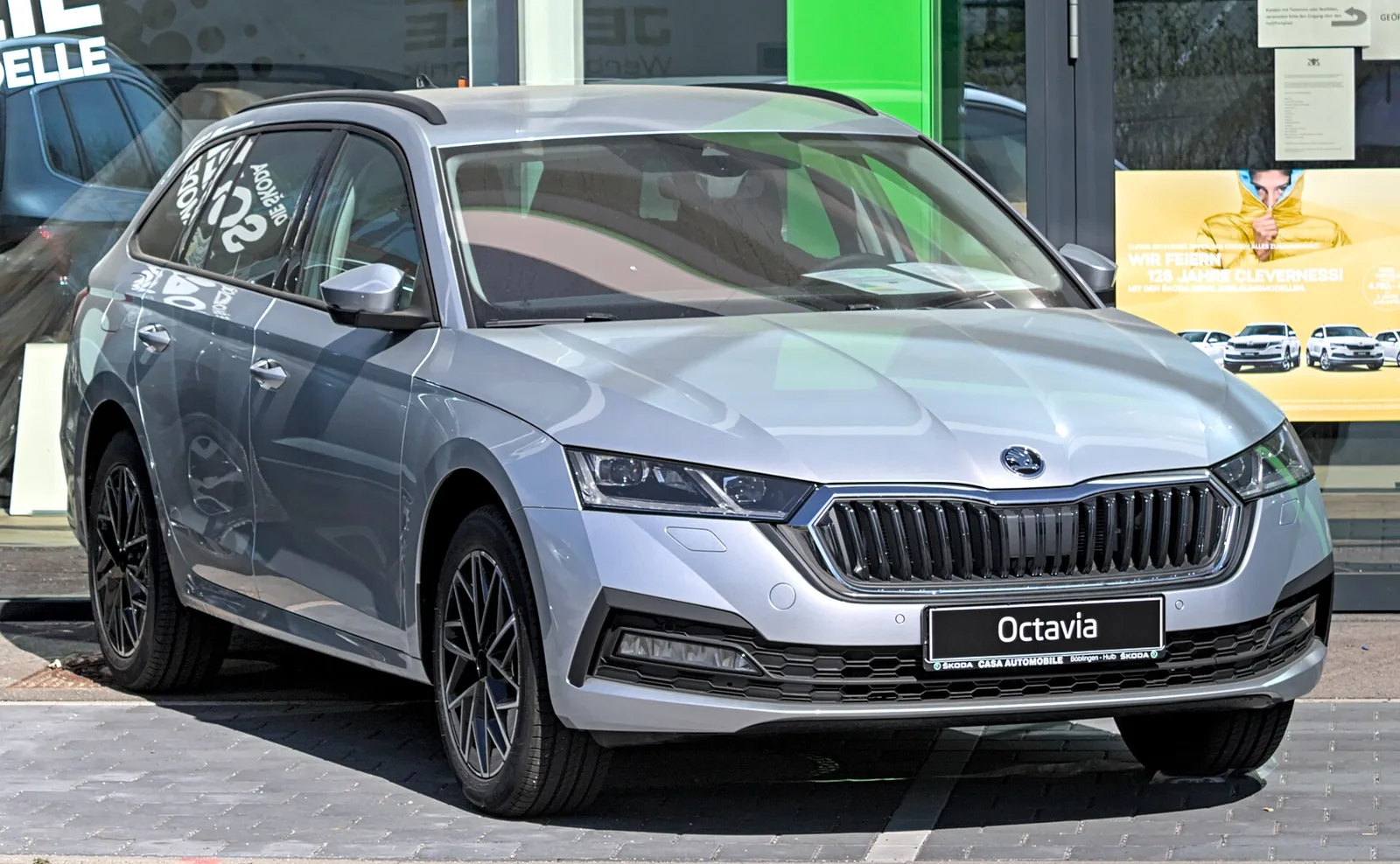
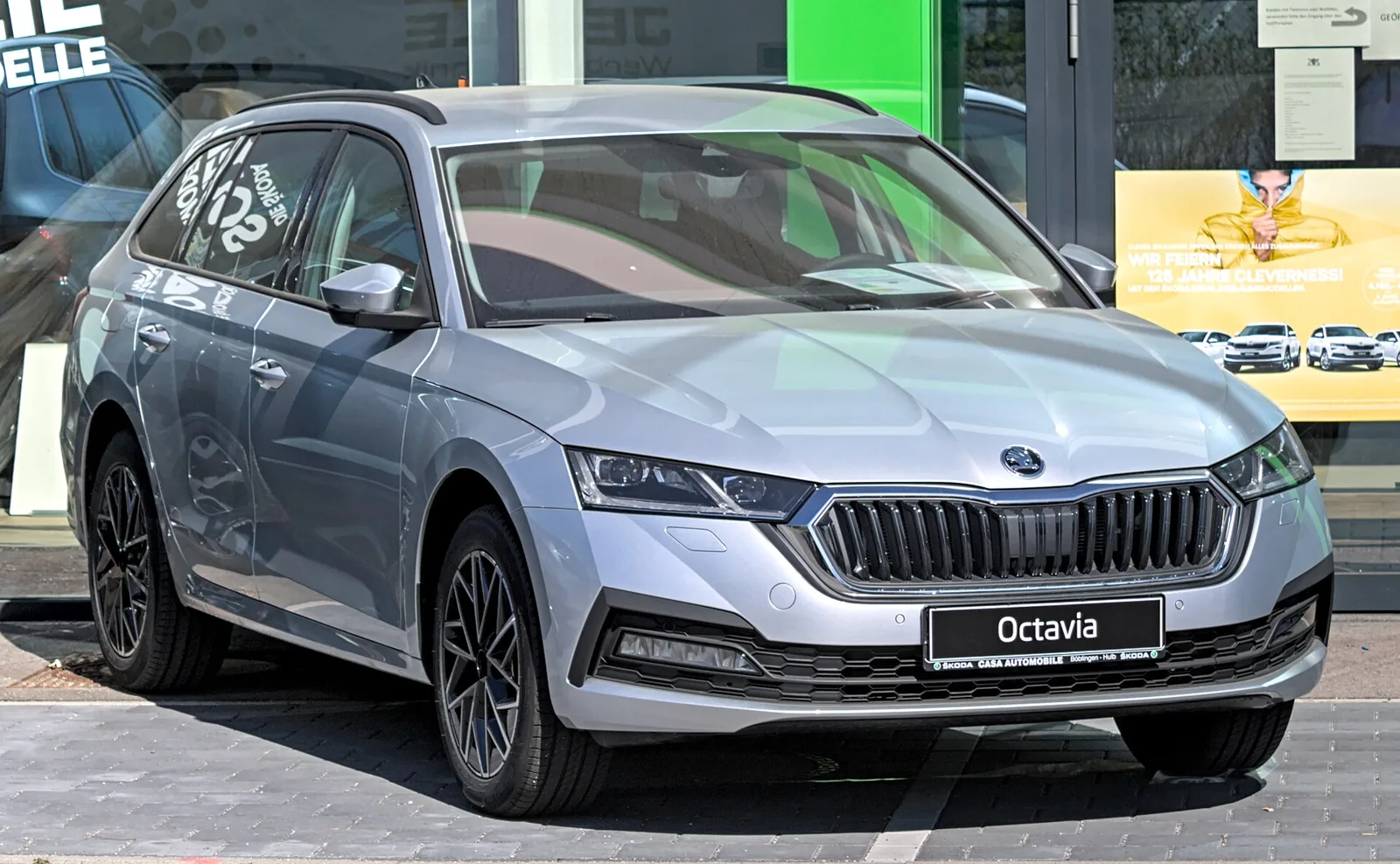
The current line-up runs from electric crossovers to family cars. The Enyaq and Elroq are all-electric crossover SUVs, the Karoq and Kamiq sit in the compact SUV and crossover segments, and the Superb IV and Octavia IV cover executive and small family duties.
- Enyaq: all-electric crossover SUV, since 2020
- Elroq: all-electric crossover SUV, since 2025
- Karoq: compact SUV, since 2017, replaced the Yeti
- Kamiq: crossover SUV, since 2019
- Kodiaq II: SUV, since 2023
- Superb IV: compact executive car, since 2023
- Octavia IV: small family car, since 2019
- Slavia: subcompact car, since 2022
- Fabia IV: supermini, since 2021
The Karoq arrived in 2017 and took over from the Yeti, while the Slavia and Fabia IV fill the smaller end of the line.
How many cars does Skoda sell each year?
Global sales reached 1.25 million units in 2018, an increase of 4.4% on the previous year, and the brand sold cars in over 100 countries. Operating profit was EUR 1.6 billion in 2017, up 34.6%, which kept the company's finances on a firm footing.
Volumes have moved in large steps. In 1991 the company built 172,000 units and exported 26% of them to 30 countries. By 2000 output had reached 435,000 units, and 82% of those cars were exported to 72 countries.
Revenue in 2013 reached EUR 10.3 billion, slightly below the EUR 10.4 billion of 2012. In the first quarter of 2014 the brand recorded 247,200 deliveries, up 12.1%, and in 2025 it ranked third among the best-selling brands in Europe.
Which countries buy the most Skoda cars?
Germany and the Czech Republic were the largest markets in 2022, with 134,260 and 71,152 sales respectively. Those figures describe a single year, so they show a snapshot rather than a trend. Looking further back, China overtook Germany as the largest single market in 2010, which shows how quickly the picture can change.
The United States was an early but short-lived market. The Octavia was imported from 1957, but US sales peaked in 1959 and fell sharply after 1960. Sales in Canada ran from 1984 to 1990.
What growth targets did the company set in 2010?
In 2010 the company set a growth strategy aimed at 1.5 million annual sales by 2018. The plan was ambitious for a brand of its size, and it set the company a clear numerical target. Winfried Vahland became chief executive on 1 September 2010, and he took charge of the company's management at the same time.
What was the 2015 emissions scandal?
In 2015 Volkswagen admitted installing pollution-cheating software in many cars, and about 1.2 million Skoda cars worldwide were affected by the same device. The issue was not confined to any single country, because the affected cars were spread across the world, and it placed the brand's reputation under pressure at a difficult moment.
In Britain the brand ranked first for reliability in 2015, a welcome counterpoint to the emissions story.
When did Skoda begin selling electric cars?
The first fully electric Skoda was the Citigo-e iV, which was sold from 2019 to 2020. The brand committed EUR 2 billion over five years to electrification in 2018, and the Vision E concept was built on the Volkswagen MEB platform, which gave the electrification effort a shared technical base.
The Vision E concept was a 300-bhp coupe-SUV with a 500 kilometres (310 mi) range. The Enyaq has been on sale since 2020 as the brand's all-electric crossover SUV.
What has Skoda achieved in motor sport?
Skoda has competed in motor sport since 1901. It competed as a manufacturer in the World Rally Championship from 1999 to 2005, and it went on to win WRC-2 titles with the Fabia R5 in 2015, 2016, 2017 and 2018.
The World Rally Championship programme began with the Octavia WRC. Armin Schwarz finished third at the 2001 Safari Rally, and at Rally Australia the 1995 champion Colin McRae was running second before he retired.
The brand also won in the Intercontinental Rally Challenge. In 2009 its debut season produced three wins and second place in both championships. In 2010 the brand took seven IRC wins and the manufacturers' and Juho Hanninen's drivers' titles, and in 2013 the IRC merged into the European Rally Championship, where Jan Kopecky won the drivers' title.
What does the Skoda logo show?
The logo is a winged arrow with three feathers, and that design was registered in 1923. The SKODA text was added in 1936, completing the badge's familiar form. The arrow stands for speed, and the wings represent progress and freedom.
The story goes that a relief of a feathered headdress inspired the design. The logo and corporate identity were redesigned and shown at the 2011 Geneva Motor Show, the same show where the VisionD concept previewed the third-generation Octavia.
What are the key Skoda figures?
The table below gathers the figures most often needed for a quick overview of the brand, from its founding dates and ownership to its sales, profit and motor sport record. Each row is taken from the detail given earlier in this article.
| Measure | Figure |
|---|---|
| Laurin & Klement founded | 1896 as a velocipede manufacturer |
| Skoda Works founded | 1859 by Emil von Skoda in Plzen |
| Headquarters | Mlada Boleslav, Czech Republic |
| Volkswagen ownership | Remaining 30% bought on 30 May 2000 |
| 2018 global sales | 1.25 million units, up 4.4% |
| 2017 operating profit | EUR 1.6 billion, up 34.6% |
| Markets | Sold in over 100 countries |
| Fastest production car, engine up to 2 litres | 227 mph (365 km/h) at Bonneville, August 2011 |
| Superb III top speed | 250 km/h (160 mph) |
| Motor sport | Since 1901 |
Frequently asked questions
When was Skoda founded?
Laurin & Klement got its start in 1896 as a maker of velocipedes, and the company that became Skoda Auto grew out of that bicycle business. The older Skoda Works traces back to 1859, when Emil von Skoda founded it in Plzen as an arms manufacturer.
Who owns Skoda?
Volkswagen has owned the company in full since 30 May 2000, when it bought the remaining 30%. Before that, the stake had been built up in steps from 1991. Volkswagen first took a 30% share on 16 April 1991, then 70% on 11 December 1995, before completing its ownership in 2000.
How fast is the Superb III?
The Superb III tops out at 250 km/h (160 mph) and needs 5.8 seconds to reach 100 km/h (62 mph). For comparison, the Octavia vRS set a Bonneville record of 227 mph (365 km/h) in August 2011 in the class for engines up to 2 litres.
Which Skoda was the first fully electric model?
The Citigo-e iV was the first fully electric Skoda, and it was sold from 2019 to 2020. Its arrival marked the start of the brand's electric line-up. The Enyaq followed as an all-electric crossover SUV on sale since 2020, and the Elroq joined the range as an all-electric crossover SUV from 2025.