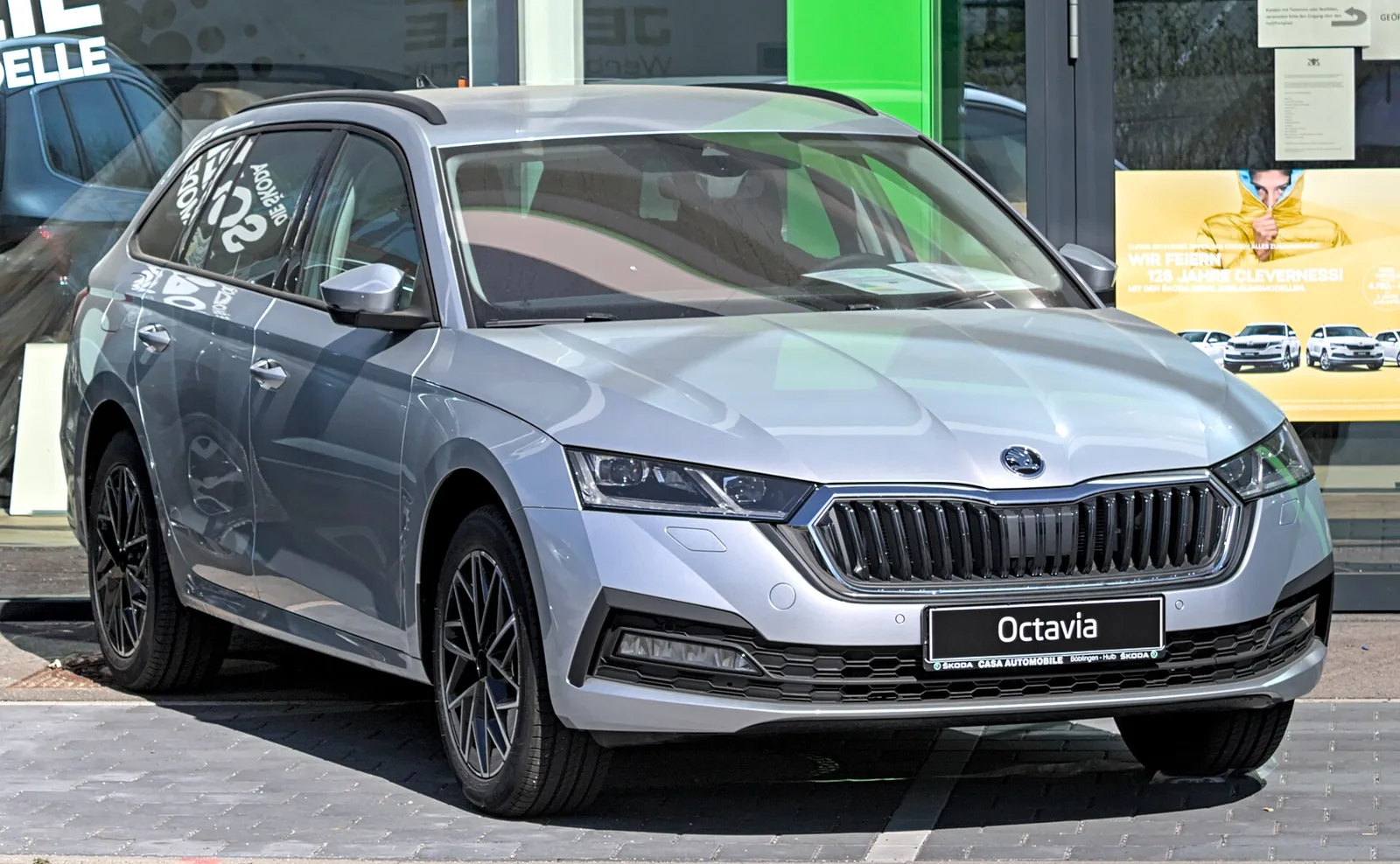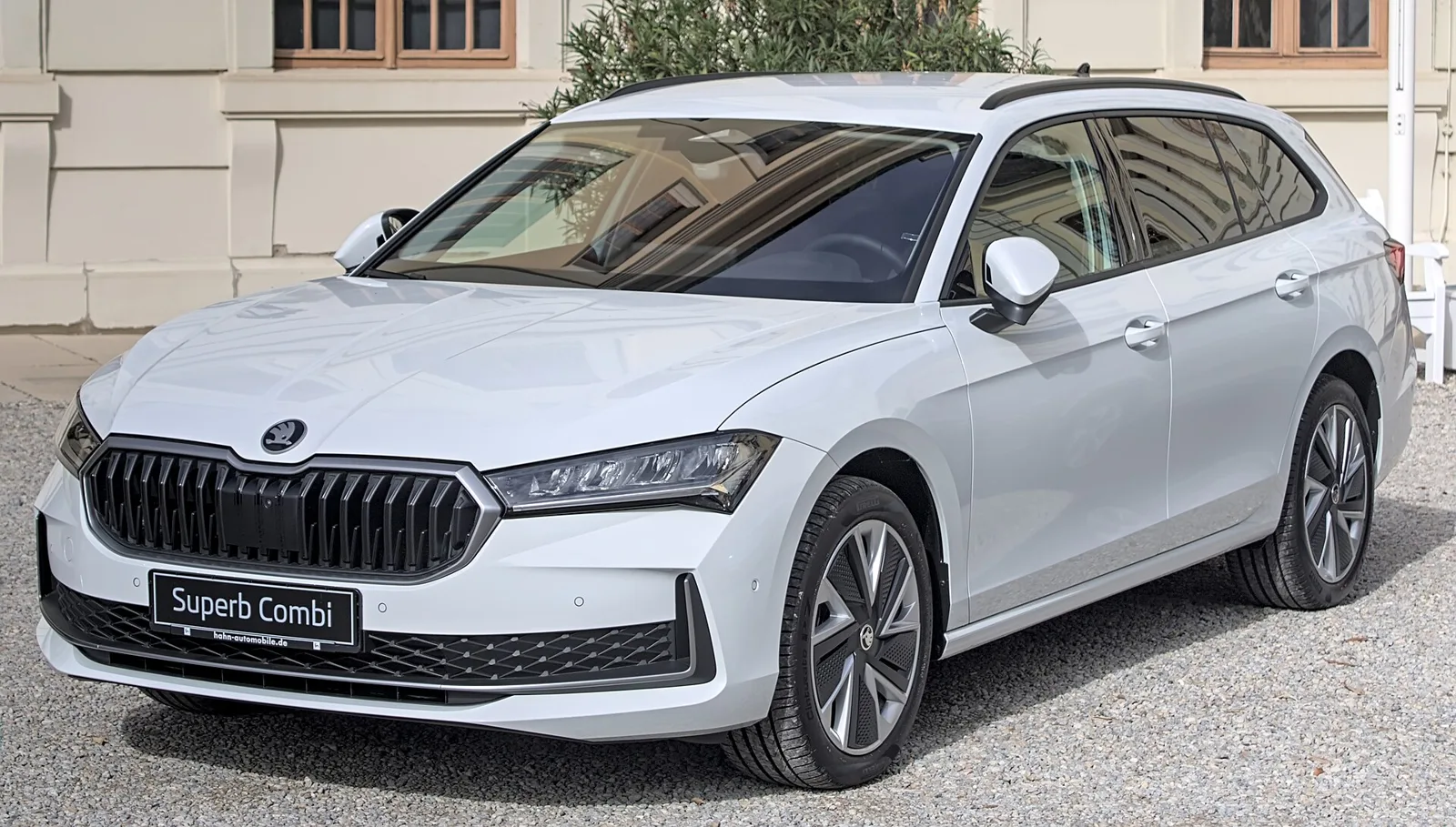
Four generations since 2001, a Volkswagen Group platform story, a TwinDoor tailgate and a fourth-generation car that dropped the manual.
Built since 2001 by Skoda Auto, the Superb has reached a fourth generation. Early versions were tied to Volkswagen Group platforms, while the 2023 model comes as a liftback and an estate without a manual option, and its engines range from diesel to plug-in hybrid.
The Skoda Superb is a large family car that Skoda Auto has built since 2001, when it reached the market as the first modern Superb. Its four generations have shared platforms with Volkswagen Group cars, and the fourth generation arrived in 2023 as a liftback and estate with no manual option.
Where did the Superb come from?
Skoda previewed the Montreux concept at the 2001 Geneva show, and the production car followed in the same year. The first Superb was built on the Shanghai-Volkswagen Passat B5 long-wheelbase car, which was itself a version of the Passat B5 with a wheelbase 10 cm longer.
The car used the Volkswagen Group B5 PL45+ platform. In 2005 Shanghai-Volkswagen rebadged the Superb as the Passat Lingyu for China, and that model was facelifted in 2009 before being replaced in 2011 by the Passat NMS.
A Passat-derived family car that grew into a plug-in hybrid liftback and estate with its own design language.
Why was there no estate at launch?
Skoda considered a station wagon but never put it into production. Volkswagen worried that such a car would take too much share from its own Passat Variant and from Audi's A4 Avant, so the first Superb stayed a saloon.
When the Superb reached the UK in May 2002, its most expensive version cost only 1,000 pounds more than the cheapest Jaguar X-Type, which underlined how aggressively it was priced against larger rivals.
What engines did the first generation use?
The base Classic used a 1.9-litre turbocharged direct-injection diesel producing 74 kW (101 PS; 99 bhp), or a 2.0-litre petrol with 85 kW (116 PS; 114 bhp). The Comfort and Elegance models offered a 1.8-litre turbo petrol, a 2.8-litre V6 petrol or a 2.5-litre V6 TDI.
Transmissions included five- and six-speed manual gearboxes and a five-speed Tiptronic automatic from ZF. The later 2.0-litre TDI PD (BSS) produced 103 kW (140 PS; 138 bhp) and used a wet particulate filter fed by a fluid tank under the spare wheel.
What changed with the 2006 facelift?
Skoda gave the first Superb a facelift in August 2006 with its new radiator grille, headlights and door-mirror indicators. The interior was redesigned, and a Laurin and Klement model became the top trim, replacing the Elegance.
The facelift also brought real wood trim on some versions and an umbrella stowed in the rear door panels. The Superb became the first Skoda offered with the DX CD navigation system, which came with a stronger sound system of eight speakers and a six-CD changer.
How did the second generation change the car?
Skoda unveiled the second Superb at the Geneva Motor Show in early March 2008. It was based on a stretched version of the Octavia A5's platform, the Volkswagen Group's A6 PQ46, and it adopted a transverse engine layout.
The car's signature was the TwinDoor tailgate, where one button opened just the lid as a conventional boot and the other lifted the whole rear glass in hatchback style. A Combi estate with 633 litres of boot space was shown to the press in June 2009 and debuted at Frankfurt that September.
Which engines did the second generation offer?
Petrol engines at launch were a 1.4-litre TFSI with 92 kW (125 PS; 123 hp), a 1.8-litre TFSI with 118 kW (160 PS; 158 hp) and a 3.6-litre VR6 with 191 kW (260 PS; 256 hp) and four-wheel drive. The VR6 reached 100 km/h in 6.5 seconds and topped out at 250 km/h.
Diesels included a 2.0-litre PD TDI at 103 kW (140 PS; 138 hp), a common-rail 2.0 TDI at 125 kW (170 PS; 168 hp) and a 1.9-litre TDI at 77 kW (105 PS; 103 hp) for the Greenline. A 2010 update added a 147 kW (200 PS; 197 hp) 2.0 TFSI and swapped the PD unit for common rail.
What trims and special versions were offered?
The Comfort, Ambition, Elegance, Greenline, Exclusive and Laurin and Klement trims covered most of Europe, while the UK offered S, SE, Elegance, Laurin and Klement and Greenline. Sweden received an off-road AllDrive estate in June 2012, with 20 mm (0.79 in) more ground clearance and a front skid plate.
The same car reached the rest of Europe as the Superb Outdoor, which added front-wheel-drive versions and most of the engine range. It arrived in the UK in October 2012.
What did the third generation bring?
The third-generation Superb moved to the Volkswagen Group MQB platform, which the Passat B8, Arteon, Tiguan Mk2 and Kodiaq also used. It was unveiled at the 2015 Geneva Motor Show, with a concept called the Vision C previewing it the year before.
The new car was larger than its predecessor. Dealer deliveries of the sedan began in June 2015, with the estate following in September, and the Superb appeared in the Tour de France as a referee car.
How quick was the third-generation Superb?
The 2.0 TSI 4x4 produced 200 kW (268 hp), making it Skoda's fastest production car at the time, with a top speed of 249 km/h (155 mph) and 0-100 km/h in 5.5 seconds. Its petrol engines ran from 1.4 to 2.0 litres, and its diesels were 1.6 and 2.0 litres.
In 2016 the 1.4 TSI and 1.6 TDI were dropped, leaving 110 kW as the weakest engines. From model year 2017 the 2.0-litre cars with 150 hp used the DQ381 dual-clutch gearbox, and a 2021 update gave the 4x4 petrol the EA888 Evo4 engine which lifted output back to earlier levels.
What awards did the Superb win?
Top Gear named the Superb its Luxury Car of the Year in 2009, and the UK Caravan Club named it Towcar of the Year. The third generation was named Car of the Year in the Czech Republic and in Macedonia, and it became a 2016 World Car of the Year finalist.
The third generation picked up strong reviews abroad. The Telegraph gave it 9/10, Autocar 4/5, Top Gear 8/10 and Auto Express 5/5, and Auto Bild awarded 588 points. What Car? also picked it as the best compact executive and estate car in 2016.
What did the 2019 facelift add?
Skoda unveiled the facelifted Superb in Bratislava in May 2019, with matrix full-LED headlights, Predictive Cruise Control and Emergency Assist. The range also gained the first plug-in hybrid, the Superb iV, which pairs a turbocharged 1.4-litre petrol engine with an electric motor.
The iV offers up to 55 km (34 mi) of electric range, and the Superb Scout added taller suspension and underbody protection for light off-road use. The facelifted car reached showrooms in early 2020.
What is the fourth-generation Superb like?
Skoda officially unveiled the fourth-generation Superb on 2 November 2023. It is offered as a liftback and an estate, and it shares its body panels and greenhouse with the Volkswagen Passat B9. Both cars are offered with petrol, diesel and plug-in hybrid engines, and the manual option has been dropped.
The design follows Skoda's Modern Solid language, with an octagonal grille, second-generation LED Matrix headlights and Crystalline LED taillights. The liftback reduces drag by 10 percent and the Combi by 15 percent, compared with its predecessor.
How big is the fourth-generation interior?
The liftback offers 645 litres of boot space and the Combi 690 litres, which grows to 1,920 litres in the Combi with the rear seats folded. A Jumbo Box with 5.5 litres of storage sits beneath the armrest.
The cabin has a 10.25-inch Virtual Cockpit digital driver display, a 10-inch touchscreen that can be upgraded to 13 inches, and Smart Dials for drive modes, climate and volume. The car also introduced a heads-up display to the Superb range, and a 14-speaker Canton sound system and 10-point massage seats are available.
How did the fourth generation do in crash tests?
The fourth-generation Superb achieved a five-star Euro NCAP rating, with results applied from the Volkswagen Passat B9 because the two cars share a similar body structure. The same body carries the results across both models.
How did the third generation change in size?
The third generation was bigger than the car it replaced and rode on a platform shared with several Volkswagen Group models. Its arrival in 2015 came in the same year as the Passat B8, which made the two cars close relatives in showrooms.
How did the Superb's driver aids develop?
Early Superbs offered front and rear proximity sensors, an automatic park assist system and a tyre pressure monitoring system. The second generation also had a rain sensor and a navigation system with a large 6.5-inch colour touchscreen and a 30 GB hard drive.
The 2019 facelift then brought more advanced assistance, with new headlight technology and a cruise control system able to anticipate slowdowns ahead.
How did the trim names change across the generations?
The Superb's trim names moved from the early Classic, Comfort and Elegance to the later S, SE and SportLine, with Laurin and Klement staying at the top throughout.
Greenline versions held a separate place in the range as the economy-focused option, and the AllDrive estate added off-road looks for buyers in Sweden.
How did the Superb's boot size change?
The second-generation Combi offered 633 litres of boot space, while the fourth-generation liftback offers 645 litres and the Combi 690 litres. With the rear seats folded, the fourth-generation Combi reaches 1,920 litres.
Boot space is one of the few figures that appears consistently across the Superb's four generations, and it helps explain the model's family appeal.
What were the Superb's Simply Clever features?
The fourth generation carried twenty-eight Simply Clever features, including an umbrella stored in the driver's door and a Phone Box with wireless charging and a cooling function.
The Jumbo Box holds 5.5 litres under the armrest, and Ergo seats with a 10-point massage function add to the cabin's comfort features.
How did the 2010 update change the diesel range?
The 2010 update replaced the 2.0-litre PD diesel with a common-rail engine, and the 1.9-litre PD unit gave way to a 1.6-litre common-rail engine of the same 77 kW output.
The Greenline version kept its lower-consumption role with the 1.6-litre engine.
Across four generations the Superb has remained a large family car, and its platform changes track the Volkswagen Group's own development cycles. The table that follows lists the generation codes and launch years in one place. Its codes, Typ numbers and platform names all trace back to the same Volkswagen Group family.
The fourth generation's arrival also marked the first time the Superb was offered without a manual option, which set it apart from every earlier car.
How did the Superb's generations compare?
The table lists the four generations with their codes, platforms and launch points, so the progression from the 2001 Passat-based car to the 2023 liftback is easy to follow.
| Generation | Code | Platform | Launch |
|---|---|---|---|
| First | B5, Typ 3U | VW Group B5 PL45+ | 2001 |
| Second | B6, Typ 3T | VW Group A6 PQ46 | 2008 |
| Third | B8, Typ 3V | VW Group MQB | 2015 |
| Fourth | B9, Typ 3Y | Stretched MQB Evo | 2023 |