Fiat's first rear-engined car, the Multipla that doubled as an early minivan, and the licensed versions that carried the design across Spain, Yugoslavia and South America.
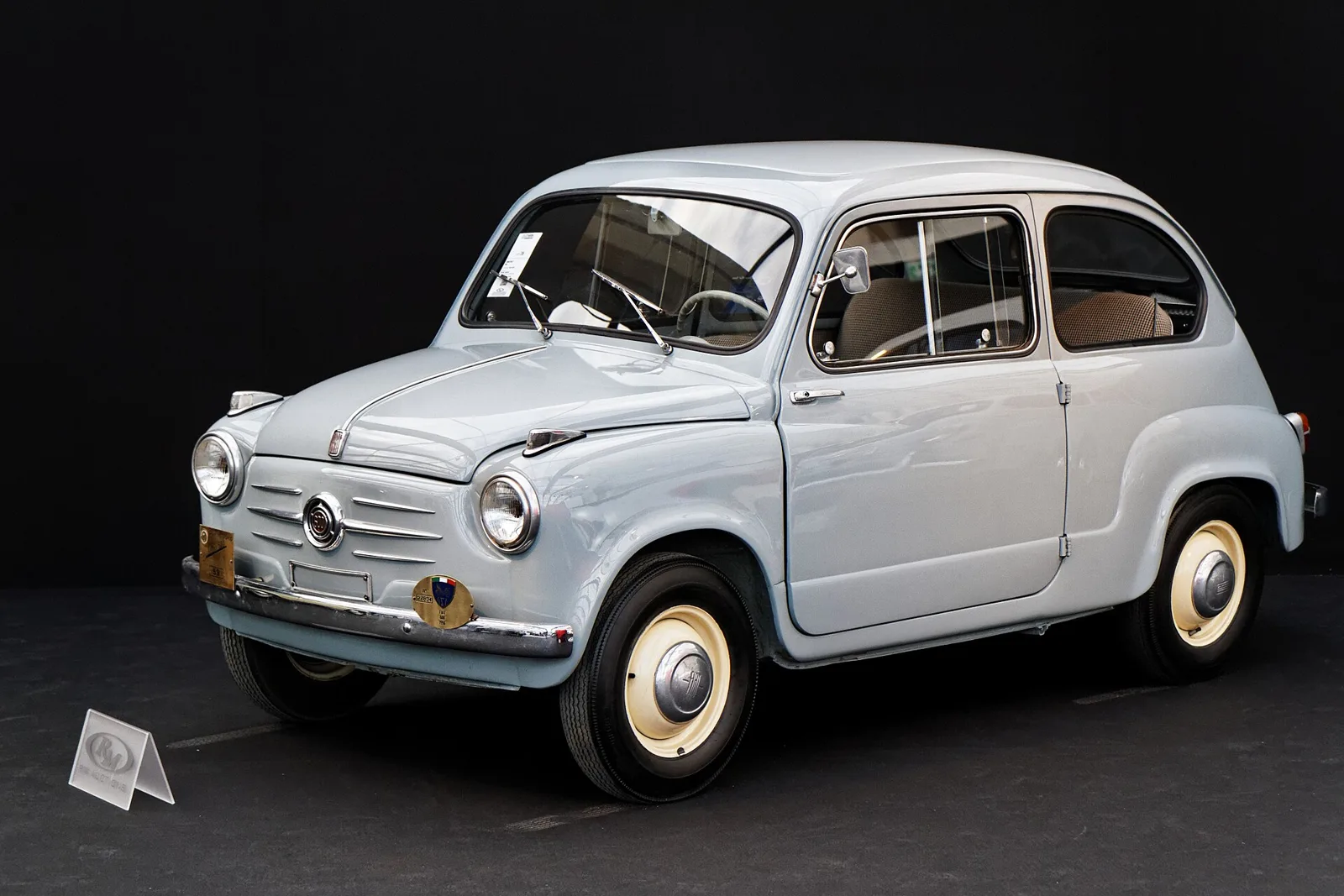
The Fiat 600 was a small rear-engined city car and economy family car built by Fiat from 1955 to 1969. It came as a two-door saloon and a six-seat Multipla, and 2,695,197 were built in Italy alone, with many more made under licence overseas.
Fiat's 600 was the company's first rear-engined car, launched in 1955 as a cheap and capable small car. Its layout and styling became a template for later small Fiats, and the Multipla turned it into one of the first mass-produced minivans. Today the car is remembered as a symbol of Italy's postwar recovery.
Why did Fiat build a rear-engined car?
Codenamed Progetto 100, the 600 was designed as an economical car able to carry four people. Its layout mirrored the Volkswagen Beetle and the Renault 4CV of the same era, and it was Fiat's first rear-engined car. The later Nuova Fiat 500 borrowed much of its layout and design from it.
The brief called for a weight of around 450 kg, room for four people and luggage, and a cruising speed of 85 km/h or more. Five prototypes were built between 1952 and 1954, and each one differed from the others. The surviving example, chassis 000001, had a single-cam V2 engine and no clutch pedal, but it did not become the production design.
Dante Giacosa presented the car at its official launch in 1955. He described the aim as something new, pursued for the sake of progress and simplification.
A rear-engined city car that became the first car for families from Spain to Argentina.
What was under the skin of the Fiat 600?
The 600 used a water-cooled inline-four mounted at the rear, hydraulic drum brakes on all four wheels and a double-mounted leaf spring at the front. It had a four-speed transaxle with synchromesh on the upper three gears, and the engine itself was the tipo 100 unit, which enjoyed a production career of 45 years.
Early engines were 633 cc units giving a top speed of 95 km/h (59 mph), while the 767 cc version reached 110 km/h (68 mph). Unlike the Beetle or the Fiat 500, the 600 was water-cooled, which provided a proper cabin heater. High-power modified cars often needed an extra radiator or oil cooler to keep up.
Generators used mechanical external regulators, a detail that reflected how simple the electrical side of the car was. The rest of the package followed the same logic, with components chosen for cost and ease of repair rather than for prestige.
What was the Multipla?
The Multipla was a four-door MPV built on the 600's drivetrain. It could seat six people, and its footprint came in at 50 cm (19.7 in) more than the Mini Cooper's. The Brussels show in January 1956 saw its debut, and production ended in spring 1967.
The driver's seat sat forward, over the front axle, which removed the boot but created a one-box shape with a flat front. It came in 4/5-seater, 6-seater and taxi versions, with original Italian prices of 730,000, 743,000 and 835,000 lire. Taxi use kept the Multipla on Italian streets well into the 1970s.
Its 663 cc overhead valve engine was rated 21.5 DIN PS (15.8 kW; 21.2 hp), and the maker quoted 90 km/h (56 mph) as its top speed. A September 1960 upgrade gave the 600 D Multipla a larger 767 cc engine rated 25 DIN PS (18.4 kW; 24.7 hp).
How many Fiat 600s were built?
Italian production reached 2,695,197 cars at the Mirafiori plant in Turin. Output ran from 1955 to 1969, the full life of the model. The millionth car came off the line in February 1961, under six years after launch, when output had reached around 1,000 cars a day.
Licensed builders multiplied the total. SEAT built the 600 in Spain from 1957 to 1973, with 797,319 made, and Fiat Neckar produced more than 172,000 in Germany before 1967. Zastava in Yugoslavia built the 750 and 850 from 1955 to 1985, and Sevel built the 600 R in Argentina from 1960 to 1982.
Across all markets, total world production exceeded 4,921,626 cars. That figure combines the Italian plant with the Spanish, German, Yugoslav and South American lines, which together made the 600 a global car rather than a purely Italian one.
Why is the Fiat 600 considered an icon?
It is widely regarded as a pop symbol of Italy's rebuilding years. In Spain the SEAT 600 became the first car many families could afford, and in former Yugoslavia it was nicknamed the Fica. Its place in popular memory rests on that role as a family's first car.
Across the twentieth century, the SEAT 600 outsold every other car in Spain, helping motorise a country moving from farming to industry. Ghia's Jolly, a beach car built on the 600 chassis in 1958, took the idea to wealthy yachtsmen and film stars.
Were there sporting versions of the 600?
Yes. Abarth produced many tuned 600 variants between 1956 and 1970, under names such as the 750 and 850, and some wore aluminium bodywork by Zagato. Abarth's rival Giannini also tuned the car, most famously in its 750 TV form.
Coachbuilders worked on the design too. Coriasco turned the Multipla into a compact panel van, while Fissore produced the Marinella beach car from 1956 with a wicker rear bench.
How economical was the Fiat 600 to run?
Fuel economy for the 633 cc engine was around 5.7 L/100 km (50 mpg-imp; 41 mpg-US). The 1959 model's tank held about 26 litres (7 US gal), and its small engine and modest weight kept running costs low for a family car.
Simplicity was part of the appeal. The engine was designed to simplify maintenance, and even the earliest prototype had no clutch pedal, a reminder of how far the team wanted to strip the car back.
What were the Multipla's seating layouts?
The Multipla came in three layouts. The 4/5-seater had a fixed front bench and a rear bench seating two or three passengers that could fold away, while the six-seater added four single rear seats that could each be folded individually to the floor.
The taxi version was built around a separate driver seat and a passenger seat that folded down into a luggage shelf. Two foldaway jump seats sat in the middle, with a bench at the rear against the firewall, which let the car carry a full load of passengers.
What was the Ghia Jolly?
Ghia converted a number of 600s into the Jolly beach car in 1958. Its wicker seats and optional fringed top were designed for yachts and sunny terraces, and the car cost nearly twice as much as a standard 600. Its handmade character set it apart from the standard car.
Only a small number were made. Fewer than 100 are believed to exist today, each one unique, and 32 were used as taxis on Catalina island from 1958 to 1962. Famous owners reportedly included Aristotle Onassis, Yul Brynner and Grace Kelly.
Collectors pay heavily for genuine examples. A 1960 Jolly sold for $170,500 at a Scottsdale auction in January 2015, although replicas are sometimes passed off as authentic.
How did the Argentine 600 change?
Sevel built the 600 in Argentina from 1960 to 1982, and the car changed steadily through that period. The 600D arrived in 1962 with a 767 cc engine, and the rear-hinged doors ended with the 600E of April 1965. Each facelift kept the basic layout while refreshing trim and engines.
The 600R of November 1970 had 36 hp SAE and new interior trim. The 600S of July 1977 moved to an 843 cc engine rated 32 hp DIN, with a top speed of up to 120 km/h (75 mph). The Fiat 147 took over from the 600 in April 1982, following a last facelift in 1981.
What did the Yugoslav and German versions involve?
In former Yugoslavia the car was built by Zastava in Kragujevac as the 750, later the 850, from 1955 to 1985. It was known locally as the Fica or Fico, and it played a major part in motorising the country.
In Germany, Fiat Neckar built the 600 from 1956 to 1967, first as the Jagst 600 and from 1960 as the Jagst 770 with the 600D upgrades. More than 172,000 were made before production ended at the close of 1967.
How much did a Fiat 600 cost?
The 600 launched at 590,000 lire, roughly 8,680 euros or US$9,440 in 2023 money. That price placed the car within reach of a wider market than the Multipla or the Jolly ever targeted. In that sense the car was a deliberate attempt to put Italian families on the road.
Price was only part of the appeal. A simple rear-engined layout, a light body and a modest engine kept the car affordable to run as well as to buy, which mattered to families who had never owned a car before.
What came after the 600?
Fiat's 850 family, made up of a saloon, coupe and spider, arrived from 1964 on the 600's platform. The two cars coexisted for five years before the 600 was cancelled, and the larger 850 took over the family car role within the range.
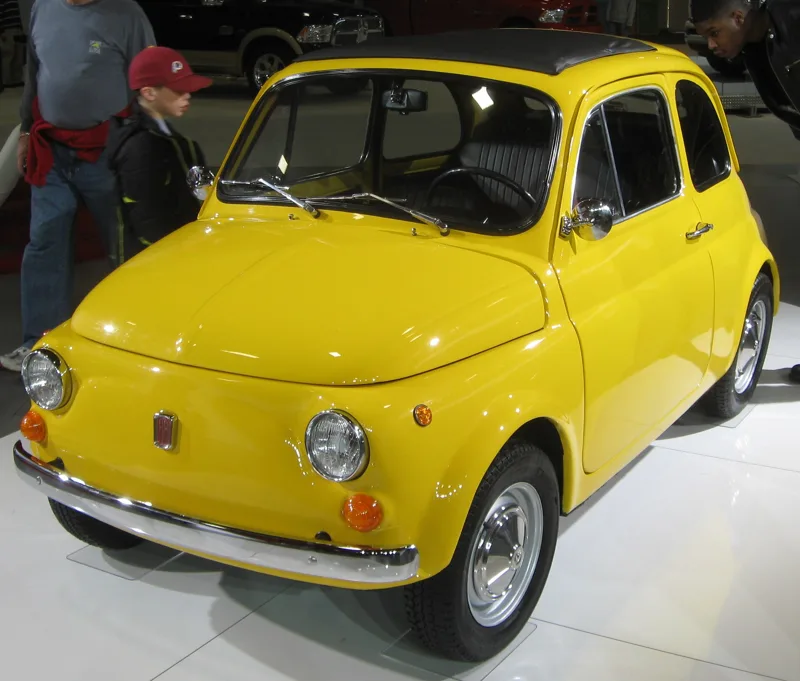
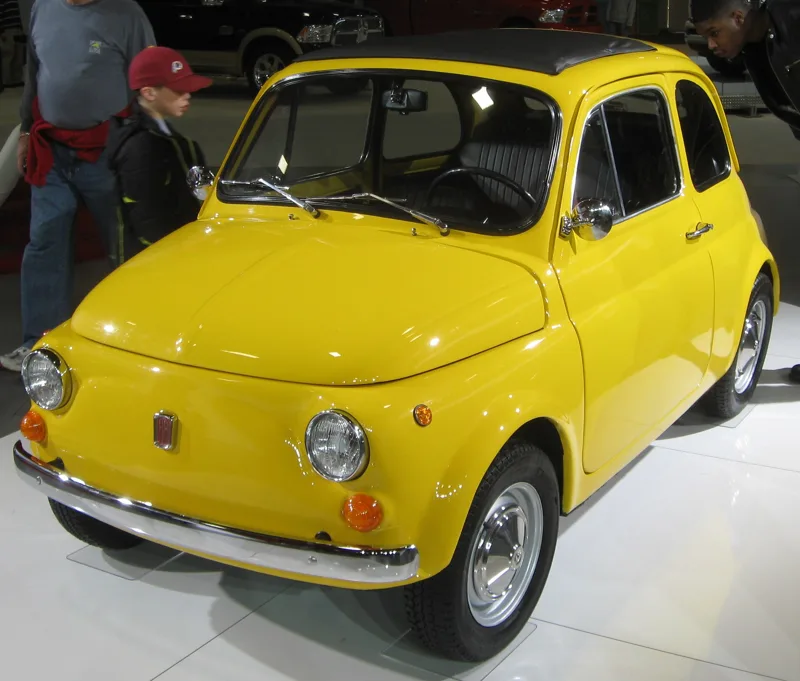
The 600 also gave the 500 its design. The second-generation Nuova Fiat 500, at 2.97 m (9 ft 9 in) long, launched two years after the 600 and was largely copied from its layout and design, although its body was rounder.
How did the SEAT 800 differ?
The SEAT 800 was the only four-door derivative of the 600 built in Spain. It was made from 1964 to 1967 with a longer wheelbase than the standard car, and SEAT developed it in-house with no equivalent in Fiat's own range.
Its existence shows how far the design could be stretched once it was in another manufacturer's hands. The 800 sat outside Fiat's line-up entirely, which made it a distinct vehicle rather than a variant in the usual sense.
What was the legacy of the Fiat 600?
The 600 left a legacy in three areas: the rear-engined small car, the minivan idea in the Multipla, and the licensed model that carried the design into other countries. Each of those strands still shapes how people remember the car today.
Several licensed versions outlived the Italian original. Zastava's version ran until 1985 and the Argentine car until 1982, both longer than Fiat's own production run of 1955 to 1969.
How should the Fiat 600 be remembered?
The 600 is best remembered for simplicity and reach rather than performance. Its two main engines gave top speeds of 95 km/h (59 mph) and 110 km/h (68 mph), which were modest even by the standards of the day. That simplicity explains why so many examples were built and sold.
Its layout gave Fiat a template for later small cars, and its licensed builds gave it a presence on several continents. For many families it was the first car they owned, and that everyday role explains its enduring place in Italian memory.
Frequently asked questions
How fast was the original 600?
Early models ran 95 km/h (59 mph) for the 633 cc car and 110 km/h (68 mph) for the 767 cc version.
Was there a van version of the Multipla?
Yes. The 600T was a van derivative of the Multipla with a rear-mounted 633 cc engine.
What replaced the 600?
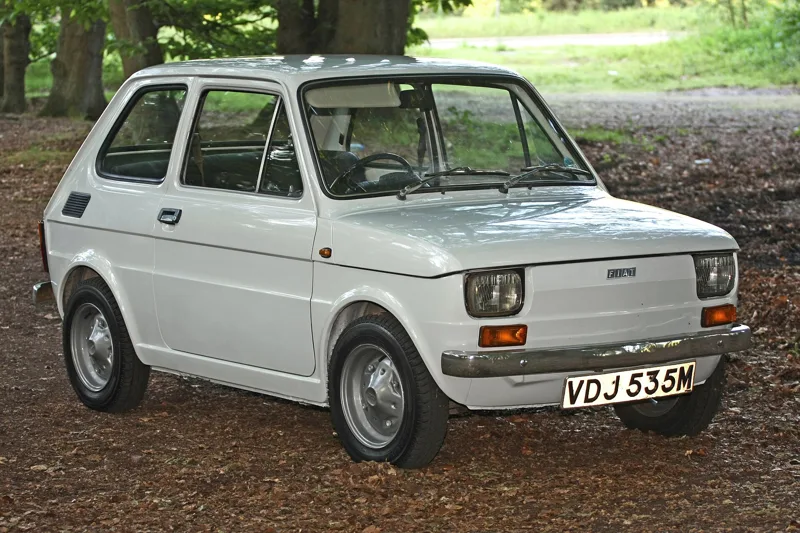
Fiat replaced the 600 with the 126 and 127 models. The 850 range ran alongside the 600 for five years before the older car was cancelled.
Where was the 600 built under licence?
Under licence the 600 was built in Spain, Germany, Yugoslavia, Argentina and Chile.