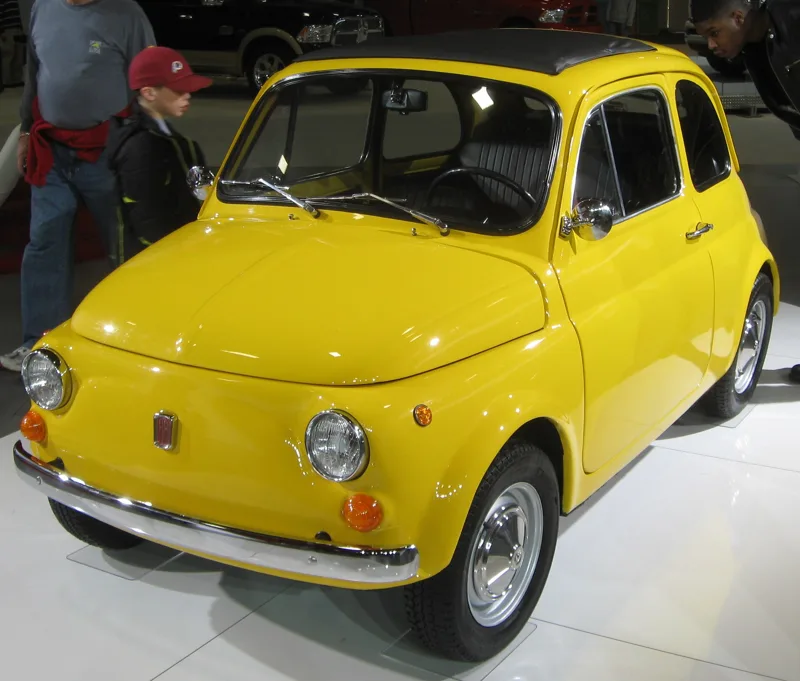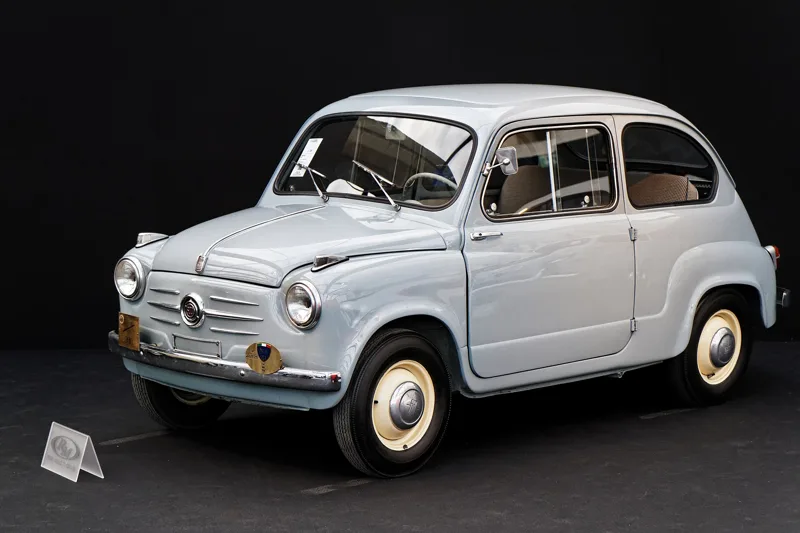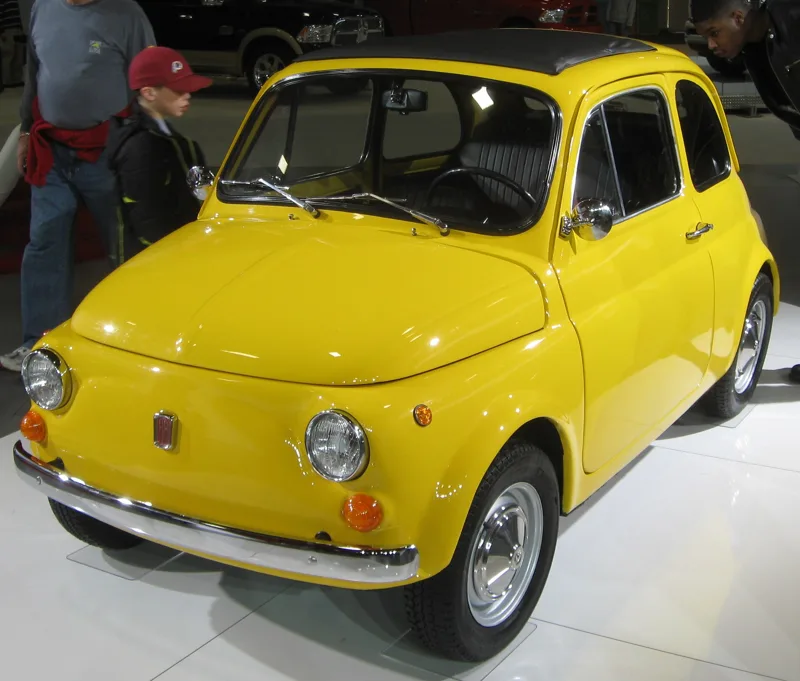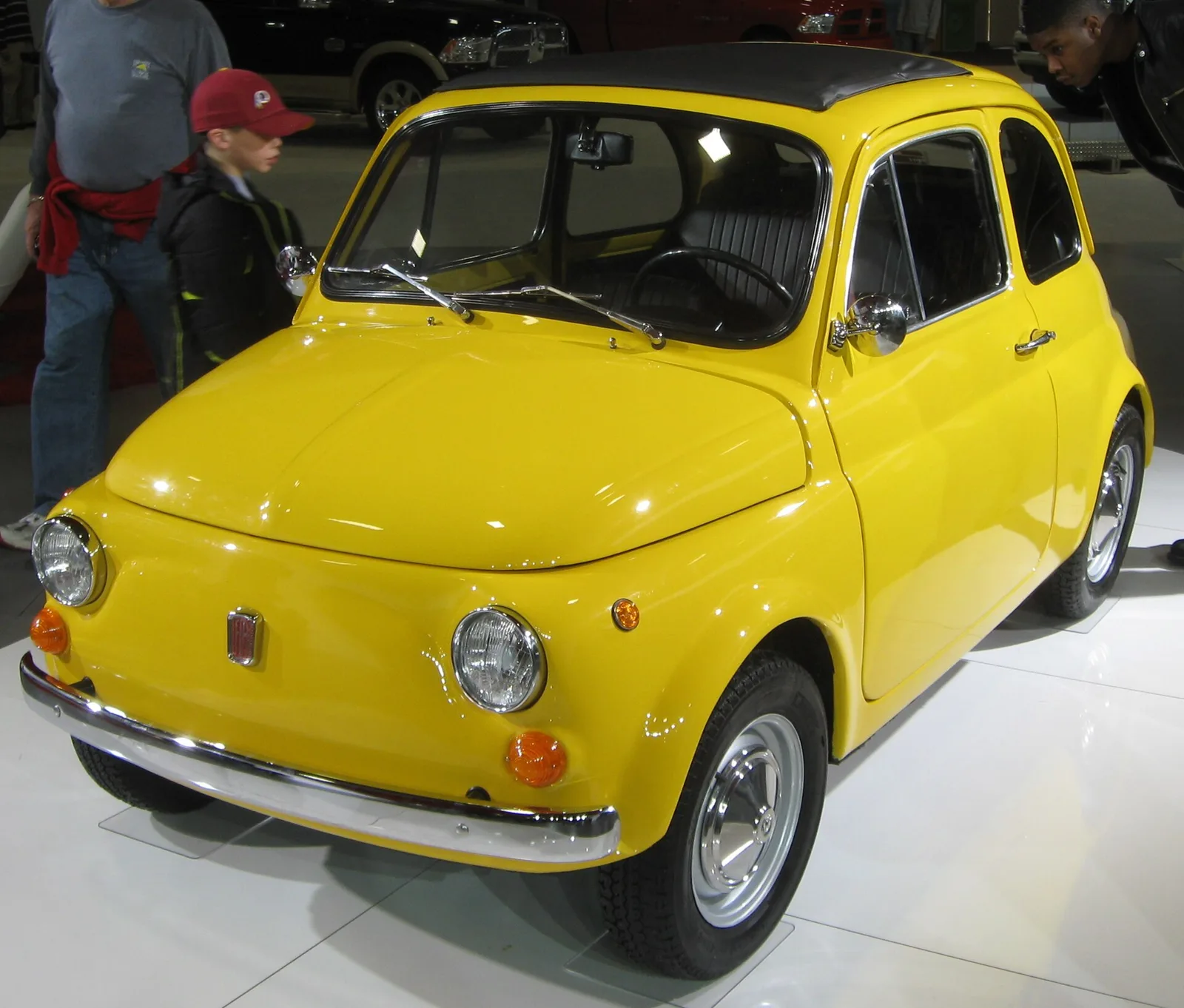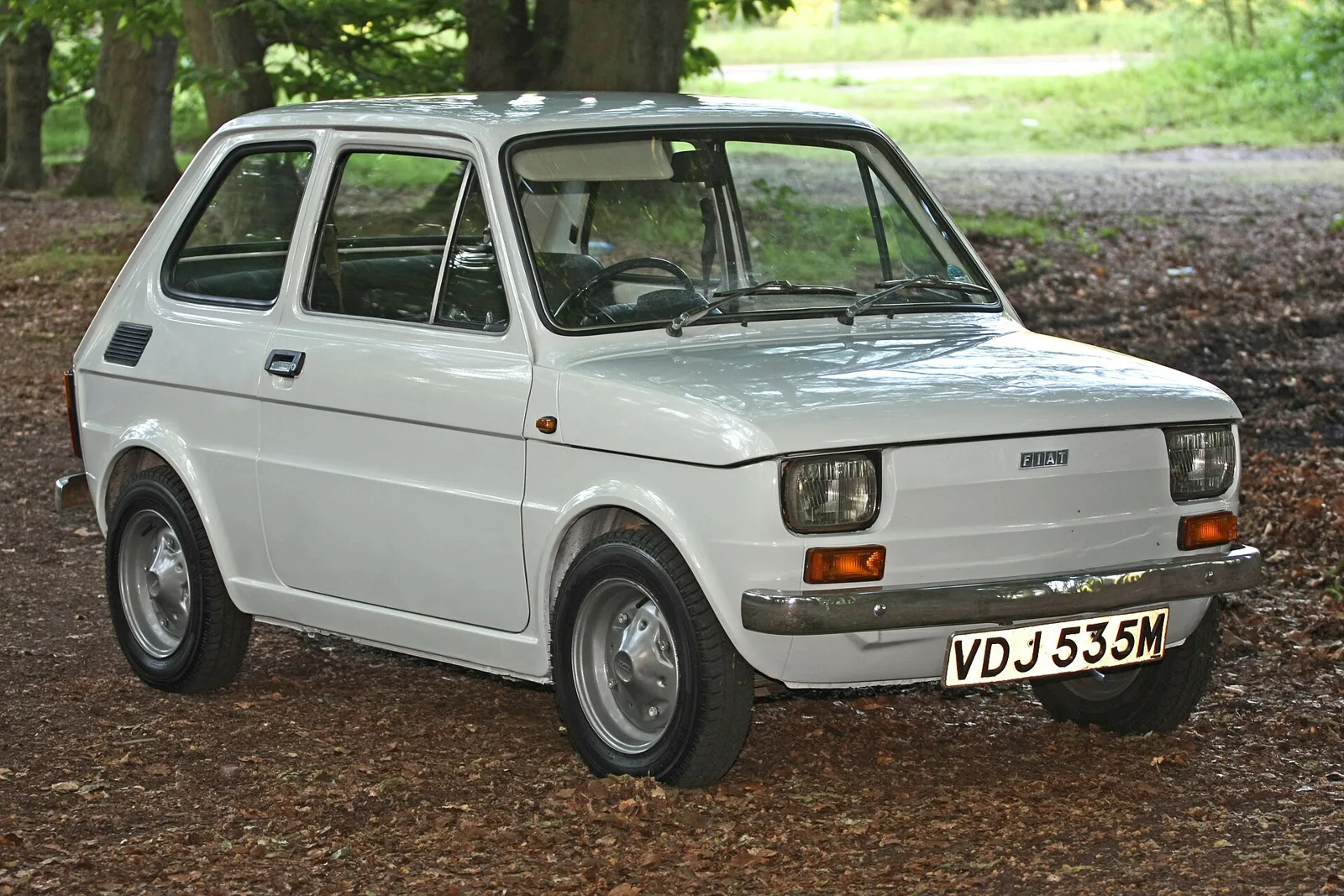
A small rear-engined Fiat that outlived its Italian origins, became a people's car in Poland and stayed in production for 28 years.
The Fiat 126 was a rear-engined city car built from 1972 to 2000, replacing the Fiat 500. Built in Italy and at length in Poland, it became the Polski Fiat 126p and earned the nickname Maluch. Its Polish run produced more than three million cars.
The Fiat 126 is a rear-engined city car that Fiat built from 1972 until 2000 as a single generation. It seated four and replaced the Fiat 500, carrying over many of its elements. The 126 was built in large numbers in Poland, where it became known as the Maluch and turned into a national icon.
Where did the Fiat 126 come from?
The 126 was introduced in October 1972 at the Turin Auto Show. It shared its wheelbase and much of its mechanical layout with the Fiat 500, and it used a slightly larger bodyshell designed by Sergio Sartorelli. The car was a successor to the 500 in Fiat's small-car line, and it kept the rear-engined layout that made the earlier car distinctive.
Fiat built the 126 in both Italy and Poland, and the Polish version became far better known than the original. Production in Italy ran at Cassino and Termini Imerese until 1979, while the Polish factories carried on for almost three decades more.
A small rear-engined Fiat that became a Polish people's car, and a symbol of a generation of family motoring.
What changed from the Fiat 500?
The 126 was not a straight copy. Moving the starter from the top of the engine bellhousing to the side allowed the bulkhead and rear seat to shift about 10 cm rearward, and the roof was lengthened to give rear passengers more headroom. Those changes added genuine space inside a car that was still tiny on the outside.
The engine capacity rose from 594 cc to 652 cc at the end of 1977, when the bore grew from 73.5 mm to 77 mm. Power stayed at 23 hp (17 kW), but torque rose from 39 Nm to 43 Nm, giving the larger unit a little more pulling power in everyday driving.
How did the Polish Fiat 126p come about?
In Poland the car was built under licence by Fabryka Samochodow Malolitrazowych, known as FSM, at Bielsko-Biala and Tychy. The product was sold as the Polski Fiat 126p from 1973 to 2000, and the factory built its first car from Italian parts on 6 June 1973.
The Polish version had a higher chassis, a modified grille at the back and extra changes that set it apart from the Italian original. Its front indicator lenses were clear in Italy but orange in other markets, and the letter p was added to its name to distinguish the Polish car.
The nickname Maluch translates roughly as the little one or toddler. It caught on so quickly that the manufacturer accepted it as the car's official name in 1997, and the word appeared on badges at the rear of the car from that year. Many Poles still use the term affectionately when they talk about the car.
Why was the 126p so important in Poland?
The 126p was the first genuinely popular and affordable car for many Polish families. In 1971 there were only 556,000 passenger cars in Poland, and the planned economy had little room for private motoring. The car opened up mobility for ordinary households, and it filled the role of a family car as well as a city runabout.
The first Polish-built car rolled off the line on 6 June 1973 from Italian parts, and by the end of that year the factory had built over 1,500 cars.
Reaching the one-million mark in 1981 showed how completely the car had taken root among Polish families. Demand outstripped supply for years. Production was not enough to meet the orders, so buyers joined waiting lists that could last several years, and the authorities could sometimes allocate a coupon based on merit or connections.
How did the 126 change through its life?
The Polish car was modified steadily through the 1980s. It received upgraded brakes and new wheels from the Italian Fiat range, and hazard warning lights were added to meet new rules. Electronic ignition arrived in 1985, and an alternator replaced the undersized generator around 1987.
A facelift in 1984 brought plastic bumpers for all versions and a new dashboard, and the FL designation followed. In 1994 the car gained parts from the Fiat Cinquecento and became the 126 EL, and the ELX introduced a catalytic converter. A catalytic converter was introduced in January 1997 as well.
Did the Fiat 126 come as a hatchback?
Yes. The 126 Bis, produced from 1987 until 1991, gained a hatchback that opened onto the cargo space at the rear. It achieved this by replacing the air-cooled engine with a horizontally placed, water-cooled 704 cc flat-twin producing 19 kW (26 hp).
The Bis was built in Poland as well, where it used a 704 cc engine of Polish construction and some parts from the Cinquecento. Production of the original model continued alongside it for the Polish market.
How many Fiat 126s were built?
Global production reached 4,673,655 units. Italy accounted for 1,352,912 cars, Austria for 2,069 cars assembled by Fiat-Steyr through 1975, and Poland for 3,318,674 cars. The Polish total made up most of the entire run.
The millionth Polish 126p was built in 1981, and the three millionth followed in May 1993. Production in Poland ended on 22 September 2000, after a last limited Happy End series of 500 red and 500 yellow cars.
Where else was the 126 sold and loved?
The 126p had a strong export life in Eastern Bloc countries, and it was one of the most popular cars in both Poland and Hungary for several years. It also found a minor market in Australia between 1989 and 1992 as the FSM Niki, when it was the country's cheapest car.
China imported the car early in the 1980s, and it became one of the best-selling models there with around 30,000 units a year. An estimated 10,000 Cuban cars were still registered by 2016, and Cuban owners swapped in Daewoo Tico, Subaru Vivio and Lada 2107 engines.
The car also picked up many nicknames. In Albanian it was called Kikirez, in Serbo-Croatian Peglica, and in Slovene Bolha. German speakers called it the Bambino, the Italian word for child.
Why did production of the 126 end?
Fiat stopped marketing the 126 in 1993 in favour of its new front-engined Cinquecento. The rear-engined layout had been made obsolete by front-wheel drive cars with better packaging and handling, which is why the 126 was one of the last of its kind.
The Polish factory kept building the car until 22 September 2000, which ended a run of 28 years for the design. Autocar later counted its 28-year single-generation run as the 26th most long-lived in history, which reflects how long the basic design survived.
Were there special versions of the 126?
Several experimental and special versions appeared. The Bombel was a cargo prototype designed in 1974 with a fibreglass bubble-shaped cargo area, and an off-road prototype used caterpillar tracks. A front-wheel drive, front-engined prototype with a longer nose and a flat cargo area was also built.
In the early 1990s a German company called POP offered convertible versions of the 126 Bis, including the POP 650 and the more luxurious POP 2000. Zastava built the car under licence in Yugoslavia, and Greece's DIM project built only ten cars based on the 126.
Austrian assembly was brief, with Steyr-Puch building 2,069 cars through 1975 as a successor to the successful Puch 500. The Greek DIM project followed a similar path, using the 126 as a basis, but it was abandoned after only ten cars.
What are the Fiat 126 specifications?
The table below lists the core figures for the Fiat 126 family, covering the launch engine, the later 652 cc unit and the production totals. Figures are shown for each version separately, so the early air-cooled engine does not blur with the later Bis.
| Specification | Detail |
|---|---|
| Production span | 1972 to 2000 |
| Seats | Four |
| Launch engine | 594 cc, air-cooled rear engine |
| Engine from late 1977 | 652 cc, 23 hp (17 kW) |
| 126 Bis engine | 704 cc water-cooled flat-twin, 19 kW (26 hp) |
| Italian production | 1,352,912 |
| Polish production | 3,318,674, 1973 to 2000 |
| Global production | 4,673,655 |
| Final Polish run | Ended 22 September 2000 |
How did the 126's battery and ignition work in practice?
Battery and charging were a practical concern for owners. The factory battery held 35 amp hours, and because the generator was undersized, the battery only reached a full charge when the car was driven for an extended period. Many owners fitted a 45 amp hour battery from the Fiat 125p, which improved cold-start reliability.
Those upgrades were part of a steady programme of improvements across the car's long life, and the later changes are covered in the section on the 1980s.
Why did the rear engine survive for so long?
The 126 kept its rear-mounted air-cooled engine for most of its life, even as front-engined, front-wheel drive cars became the norm across Europe. The layout had its roots in the original 500, which shared the same basic architecture.
Fiat finally moved on when it stopped marketing the 126 in 1993 in favour of the Cinquecento, a new front-engined car. The 126 had become one of the last rear-engined small cars made in Europe, and the Cinquecento marked the end of that tradition in Fiat's line-up.
How did the engine grow and change?
The launch engine was air-cooled and mounted at the rear, and it was small even by the standards of its day.
The facelift years added changes too. The 1984 facelift introduced plastic bumpers, and the 1994 EL update brought Cinquecento parts. The 126 Bis of 1987 to 1991 moved to a water-cooled 704 cc flat-twin, which made the hatchback possible.
How did the 126 live on after production?
The 126p remained a popular project car long after it left the production line. Its simple rear-engined platform became a favourite for electric motor and motorcycle engine swaps, and its compact body made it an easy base for conversions.
Its popularity was not limited to Poland. The 126p was also one of the most popular cars in Hungary, and Cuban enthusiasts were still swapping in other engines decades after launch, which kept the car on the road in unusual forms.
Frequently asked questions
How many seats did the Fiat 126 have?
The Fiat 126 seated four passengers in its rear-engined layout. The 126 Bis kept that capacity while adding a hatchback body.
What was the Maluch?
Maluch is the Polish nickname for the Polski Fiat 126p, and it became the car's official name in 1997.
When did the 126 go out of production?
The Polish factory ended production on 22 September 2000, after building 3,318,674 cars in Poland.
Did the 126 have a hatchback?
Yes. The 126 Bis of 1987 added a hatchback with a horizontal water-cooled 704 cc engine, replacing the original air-cooled unit.
Was the 126 raced?
No factory motorsport programme is recorded for the 126. Its legacy lies in its engineering, its production run and its role on Polish roads.