From the Prius transmission to the first mainstream turbo diesel, four large parts makers show how much of a car comes from names that never appear on the bonnet.
Aisin, Garrett Motion, Mahle and ZF Sachs are large suppliers whose parts sit inside cars from many brands: Aisin makes transmissions and drivetrain parts, Garrett makes turbochargers, Mahle makes pistons and cooling systems, and ZF Sachs makes clutches and shock absorbers.
In 1978 just eight turbocharged car models existed, and Garrett supplied the turbo for seven of them. That is how the big parts makers work: Aisin, Garrett Motion, Mahle and ZF Sachs put their work inside cars wearing other badges, from Toyota and Ford to Audi and Volkswagen.
Which car parts suppliers sit behind so many brands?
Four large names show the range. Aisin, a Japanese member of the Toyota Group, makes engine, drivetrain, body and chassis parts. Garrett Motion specialises in turbochargers. Mahle, from Stuttgart, builds pistons, filters and cooling systems. ZF Sachs supplies clutches, torque converters and shock absorbers.
In 1978 only eight car models were turbocharged, and seven of them used a Garrett turbo.
How do Aisin, Garrett Motion, Mahle and ZF Sachs compare?
| Supplier | Base | Roots | Best-known products | Scale |
|---|---|---|---|---|
| Aisin | Japan | Aisin Seiki formed in 1965; origins in 1943 | Automatic transmissions, drivetrain, body and chassis parts | Ranked 359 on the 2020 Fortune Global 500 |
| Garrett Motion | Rolle, Switzerland | Garrett Corporation of 1936; independent since 2018 | Turbochargers | About $3.6 billion in revenue in 2021 |
| Mahle | Stuttgart, Germany | Founded on 1 December 1920 | Pistons, filters, thermal management, electrics | Over 12.5 billion euros in sales in 2018 |
| ZF Sachs | Schweinfurt, Germany | Founded in 1895 | Clutches, torque converters, dampers | Brand of ZF Friedrichshafen since 2011 |
What is Aisin and what does it make for carmakers?
Aisin engineers and makes automotive components and systems, and sends engine, drivetrain, body, chassis and aftermarket parts to Toyota Motor Corporation and other major manufacturers. It is a member of the Toyota Group and appeared at 359 in the 2020 Fortune Global 500. Away from cars it has sold sewing machines, welfare products and combined heat-and-power equipment, and from 1966 to 2020 it also made mattresses.
The story starts in 1943 with Tokai Aviation Industries, a joint venture of Toyota and Kawasaki Aircraft Industries that made aero engines for the air arm of the Imperial Japanese Army. A clash with an existing company of the same name forced a quick change to Tokai Airplane Industries. After the war it became Aichi Industries and moved into sewing machines and car parts, and in 1965 a merger with the parts maker Shinkawa Kogyo created Aisin Seiki.
In October 2019 Aisin Seiki announced it would merge with its subsidiary Aisin AW. The combined business has been called Aisin Corporation since 1 April 2021.
What is Aisin AW and what did it build?
Aisin AW made automatic transmissions. It began in 1969 as Aisin-Warner, set up with BorgWarner as a partner. BorgWarner cut its stake to 10% in 1981 and sold the rest by 1987, and the firm took the name Aisin AW in 1988. It developed the transmission of the Toyota Prius and the world's first speaking navigation system.
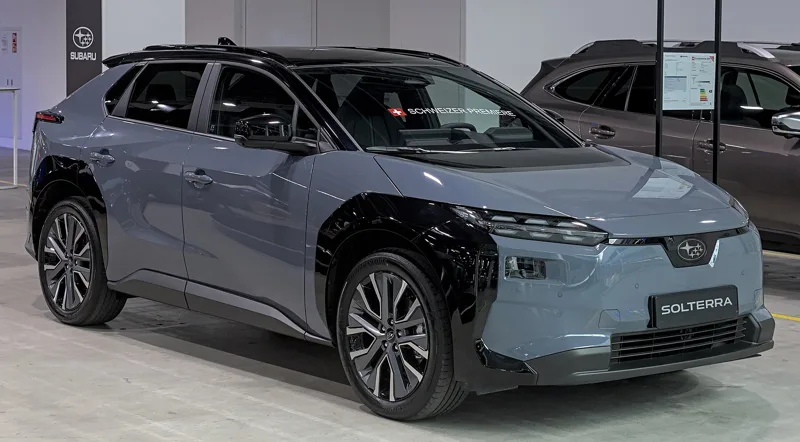
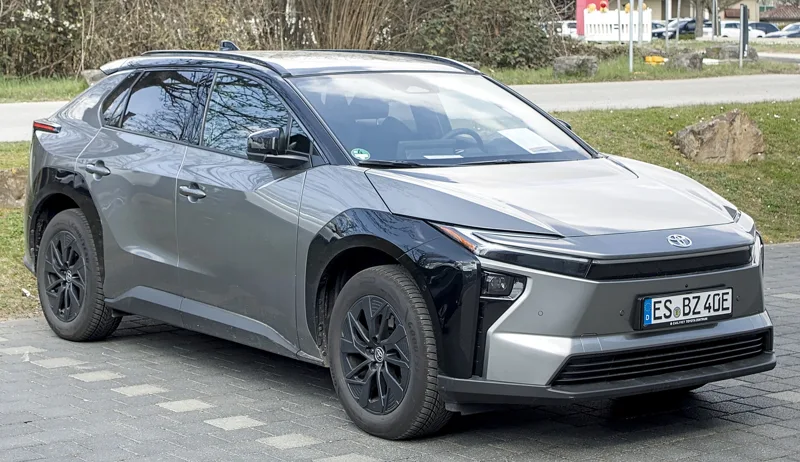
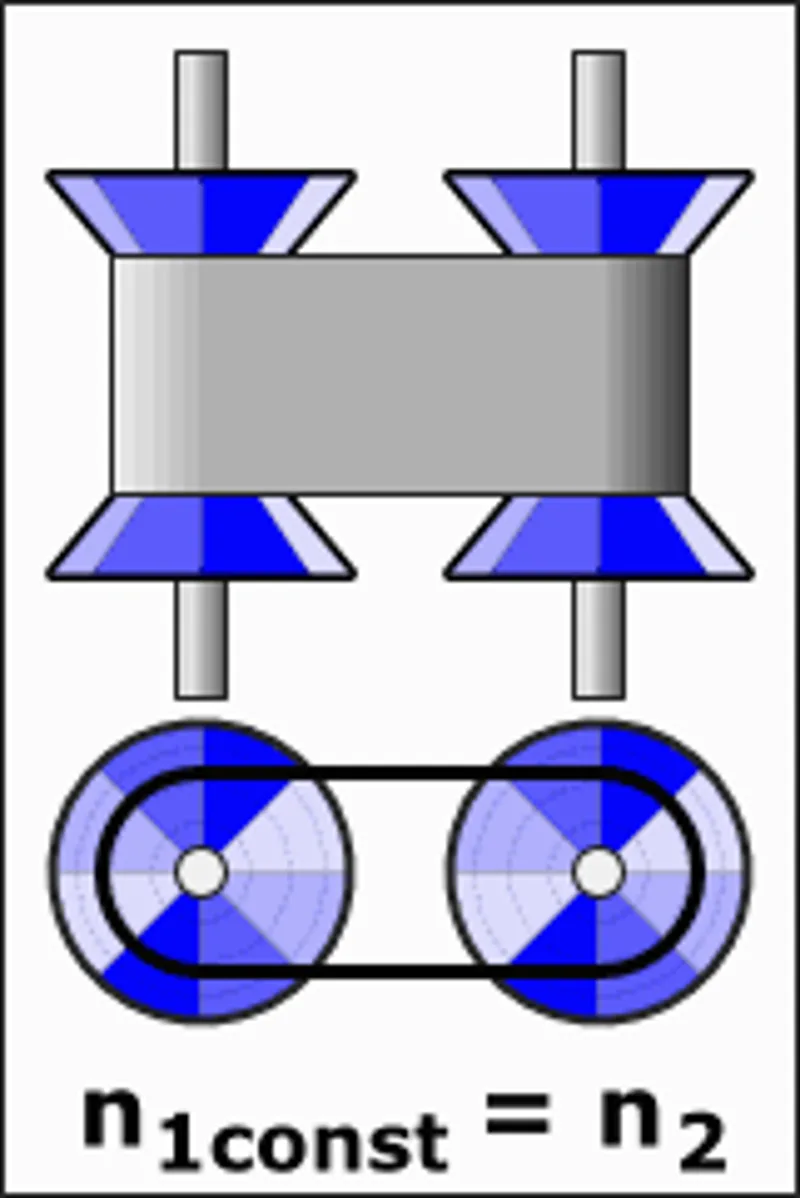
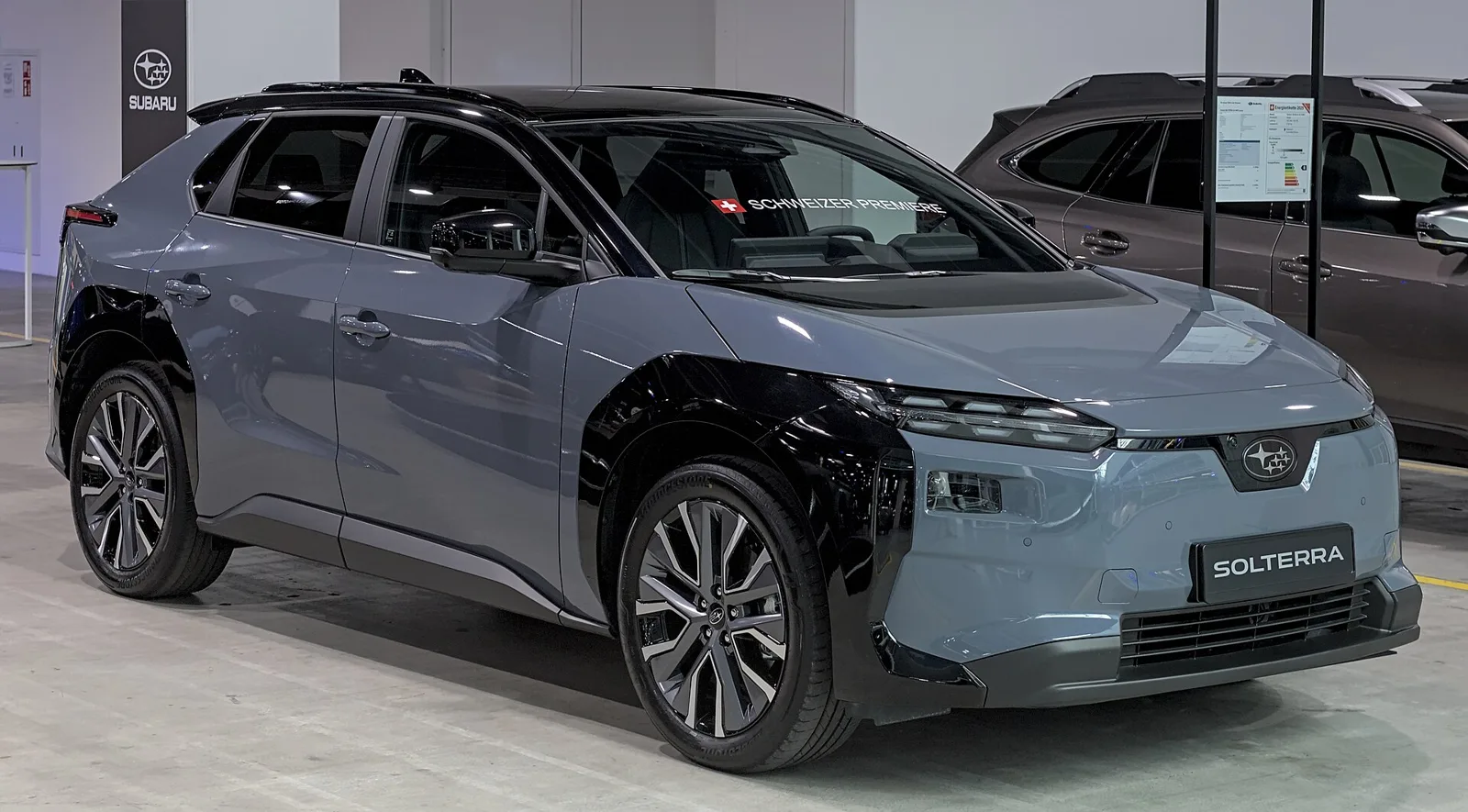
Its two-axis electric continuously variable transmission shows how a supplier's design spreads across brands. It has been used in the Prius range since 2016, apart from the Prius c, in both generations of the Ford Escape Hybrid built between 2005 and 2012, and in the Chrysler Pacifica Hybrid from 2017. The two-axis layout removes a second planetary gearset that the 2010-2015 Prius and Prius c needed. That makes the unit narrower and lighter and improves its efficiency.
Aisin AI, spun off in July 1991, made manual transmissions and transfer cases. Toyota was its only customer until 1996, when DaimlerChrysler and Isuzu began using its products. It was folded into Aisin AW in 2019.
Where does Aisin build parts outside Japan?
Aisin built a factory in the United States in 1986 and began production in 1989 in Seymour, Indiana. It now supplies Honda, General Motors, Mitsubishi, Nissan and Toyota, and has another plant in Marion, Illinois. On 5 October 2005 it opened a test facility covering 3.55 square kilometres (878 acres) near Fowlerville, Michigan, its first in North America and third in the world.
In 2009 the North American businesses came under Aisin World Corporation of America, arranged to give Toyota, Mitsui and Hino's American branch majority ownership. In Europe, Aisin AW ran research and development at Braine-l'Alleud and remanufacturing and electronics at Baudour.
The newest venture is BluE Nexus, set up with Denso in April 2019 to build electric-vehicle powertrains. Toyota Motor Corporation owns 10% of it. The main product is the e-Axle, which packs an electric motor, gears and an inverter into one unit, and BluE Nexus also markets the hybrid drive systems from Aisin AW. Aisin has sponsored Toyota Gazoo Racing Europe since 2012.
What does Garrett Motion make, and why did it matter for the turbo era?
Garrett Motion engineers and manufactures turbochargers and related forced-induction systems for everything from compact passenger cars up to heavy trucks, as well as for industrial equipment and construction machinery. It also supplies racing teams. In 2021 the business generated about $3.6 billion in revenue.
John Clifford "Cliff" Garrett started a firm called Aircraft Tool and Supply in 1936, working from a single room in Los Angeles, and renamed it Garrett Corporation in 1938. During World War II it built aircraft turbochargers. On 27 September 1954 the turbocharger group was separated to form the AiResearch Industrial Division, aimed at diesel applications. A contract for 5,000 turbochargers for the Caterpillar D9 tractor followed the first T-15 delivery in 1955.
The T11 of 1960 took turbos to commercial vehicles, including heavy trucks from Mack, Volvo and Scania. Passenger cars with turbos first appeared in 1962 and 1963, as the Chevrolet Corvair Monza and Oldsmobile Jetfire. Racing and sports cars soon gave turbos their performance image.
How did turbochargers become common?
The 1970s oil crisis was the push. Federal regulators leaned on carmakers to cut exhaust emissions, and by 1977 turbocharged cars were on sale in the United States and Europe, among them the second-generation Buick Regal and cars from Volvo, Saab, Peugeot, Renault and Mercedes. Garrett formed its automotive group in 1980. The count passed 100 turbocharged models by the mid-1980s, and turbos were commonplace in the 1990s.
In the 2000s Garrett turbos went into the Chevrolet Sonic and Mercedes S 350 as well as the Volkswagen Polo and Golf, and into the BMW X6 ActiveHybrid, Ford F-350 and Jaguar XF. A 2010 programme produced 15 new technologies aimed at 100 new engines, among them a world first: ball bearings in the turbo of a mainstream light-vehicle diesel. It has also built the smallest turbo for the Tata Nano and one for the 100-litre engine of a Caterpillar mining truck.
What do wastegate, VNT and dual-stage turbochargers do?
A turbocharger forces more air into an engine than it would draw in by itself. A wastegate turbo, the type Garrett offers for petrol engines, is smaller than older designs, with better fuel efficiency and more torque while meeting emissions rules.
The variable-geometry type, called VNT, relies on nine movable vanes, steered by an electrohydraulic actuator with a proportional solenoid. Think of the nozzle on a garden hose: the air passage widens and narrows to suit what the engine needs at different revs. Forty million VNT units have been sold since the 1990s. A heavier version, VNT DutyDrive, uses 12 to 19 vanes on twin axles for trucks and buses.
Dual-stage systems use two smaller turbochargers, side by side or one after the other. The first handles low speeds, and a valve opens the second as revs rise. The Audi A6 and A7 three-litre V6 variant runs both at a lower pressure, and some set-ups pair one large turbo with a smaller one. The Dualboost has two compressors to mimic a twin-turbo. Garrett also holds a patent on a single-cartridge, dual ball-bearing design that rolls rather than slides, intended to cut the pressure needed to move air.
How did Garrett Motion become independent?
Founder Cliff Garrett died in 1963, and to avoid a hostile takeover threat from Curtiss-Wright the company merged with Signal Oil and Gas in 1964. Over the decades it became part of Allied-Signal and then, in 1999, Honeywell. The turbo business sat inside Honeywell as its Transportation Systems division from 2004.
On 1 October 2018 it was spun off as Garrett Motion, with headquarters in Rolle, Switzerland. Honeywell shareholders got one Garrett share for every 10 Honeywell shares held, about 74 million shares in all. In September 2020 Garrett said it intended to enter Chapter 11 and to be bought by KPS Capital Partners, and it emerged in April 2021 after a restructuring plan confirmed on 23 April and 1.3 billion raised in equity.
What is Mahle and how did it begin?
Mahle is a German parts maker based in Stuttgart and one of the largest automotive suppliers in the world. The company counts itself among the three biggest systems suppliers worldwide in thermal management, mechatronics, electrics, filtration and engine systems.
The engineer and pilot Hellmuth Hirth set up a small workshop in Bad Cannstatt in 1920 to build a two-stroke engine. Hermann Mahle, aged 26, joined on 1 December 1920 as the seventh employee, and that date is regarded as the group's birthday. Testing engines alone could not pay the bills, so the workshop turned to pistons. Most car pistons then were cast iron, but Hirth's team experimented with light alloy.
His brother Ernst arrived as head of engineering in November 1922. A 1924 merger with Chemische Fabrik Griesheim-Elektron, inventors of the magnesium alloy Elektron, produced Elektronmetall GmbH. A controlled-expansion piston, the first in Germany, came in 1927, and the first aluminium ring-carrier piston for diesels in 1931. It became Mahle KG in 1938.
What has Mahle invented since the war?
During the war the Bad Cannstatt factory made alloy pistons for everything from small cars to submarine engines, including pistons with a 40 cm (15.7 in) bore. The Fellbach plant turned out 70% of Germany's pressure die castings in magnesium, aluminium and zinc alloys. Afterwards came aluminium cylinders with Cromal coatings in 1951.
In 1964 Hermann and Ernst Mahle gave up private ownership and moved the shares to the Mahle Foundation, a body for public benefit. Milestones since then include Europe's first series aluminium engine blocks, cast by low-pressure die casting, in 1976, a composite camshaft in 1988, a piston cooling system for diesels in 2001 and the world's first all-plastic oil filter in 2003. That same year it built its first complete engine, used in Formula Student.
Sales grew from over 5.2 billion euros in 2010 to over 12.8 billion in 2017.
How big is Mahle today?
As of 2022 Mahle had about 72,000 employees, 152 production plants and 12 major research centres. At the end of 2025 the workforce numbered 64,242, working across 28 countries at 127 production locations, supported by 11 technology centres. By region the locations break down as Europe and Africa 51, North America 21, China 19, the rest of East Asia 17, India 11 and South America eight.
It has five business units: Engine Systems and Components, Filtration and Engine Peripherals, Thermal Management (including cooling for electric-car batteries), Electronics and Mechatronics, and Aftermarket. Recent investment has gone into Ramos Arizpe in Mexico, the Changshu complex in China for electric-vehicle technologies, and electric compressors at Coimbatore in India, where production began in 2026. At Jundiai in Brazil the Global Biomobility Center works on engines that run on biofuels.
What is ZF Sachs?
ZF Sachs, long known as Fichtel & Sachs, was founded in Schweinfurt in 1895 and is now a brand of ZF Friedrichshafen, producing powertrain and suspension components. On 1 August 1895 Ernst Sachs, as technical director, and Karl Fichtel, in commercial management, started a precision ball-bearing factory with capital of 15,000 Deutsche marks. A year later it had 70 workers making 50 to 70 hubs a day.
The breakthrough was the torpedo freewheel hub of 1903, a bicycle component with an integrated freewheel and coaster brake. Sachs patented a single component worldwide rather than the whole product, and copies soon appeared in China. By 1905 the firm employed 1,800 people and built 382,000 torpedo hubs.
Ernst Sachs sold SKF the rolling-bearing division in 1929, its 3000 co-workers included, and put the money into clutches, small engines and shock absorbers. In 1944 over 7,000 people worked for the company, many of them forced labourers, and almost every German tank had Sachs clutches. Come 1945, 67% of the production facilities lay in ruins.
What did Fichtel and Sachs make after the war?
In 1956 the company presented the Saxomat semi-automatic transmission. Single-cylinder two-stroke petrol engines of 50 to 400 cc followed, and in 1960 came a world first, an air-cooled Wankel engine meant for stationary work. At Schweinfurt alone it employed more than 10,000 people. Through the 1980s it kept a leading, at times dominant, place on the world market with four main lines: bicycle hubs, clutches, shock absorbers and small engines.
Ownership then changed repeatedly. In 1987 Gunter Sachs and his nieces sold up to Mannesmann, and the name became Mannesmann Sachs in 1997, the year engine building was dropped or sold and bicycle hub gears went to SRAM. In 2000 it passed to a consortium around Bosch and Siemens, and in 2001 ZF Friedrichshafen bought it and renamed it ZF Sachs. On 1 August 2011 it merged into ZF Friedrichshafen. By 2017 the Schweinfurt site had 9,500 employees and was ZF's largest location.
Drive components from Schweinfurt today include clutches, torque converters and dual-mass flywheels, plus electric drives and whole hybrid modules; on the suspension side there are dampers for cars, trucks, motorcycles and trains. One example is Nivomat, which replaces the usual springs, struts and dampers at each wheel with a single unit that provides damping, ride control and self-levelling. A built-in pump driven by the movement between axle and chassis does the levelling. Sachs returned as a bicycle brand in 2018 and has become a large bike maker.
How are the big parts suppliers moving towards electric cars?
The stated direction is electric. BluE Nexus markets the e-Axle, Mahle is building thermal management and electric compressors for electric cars, and ZF has a development centre for e-mobility at Schweinfurt.