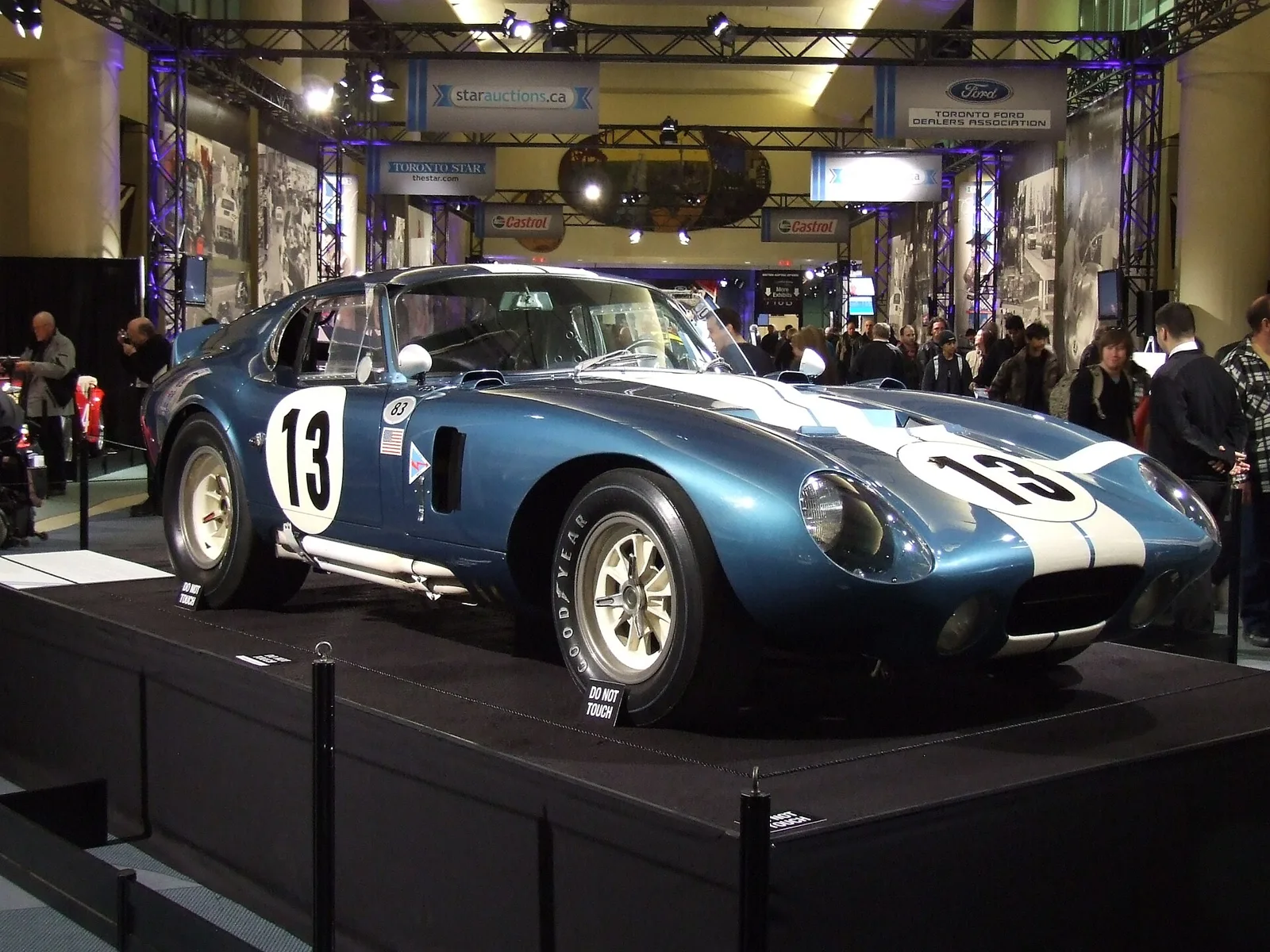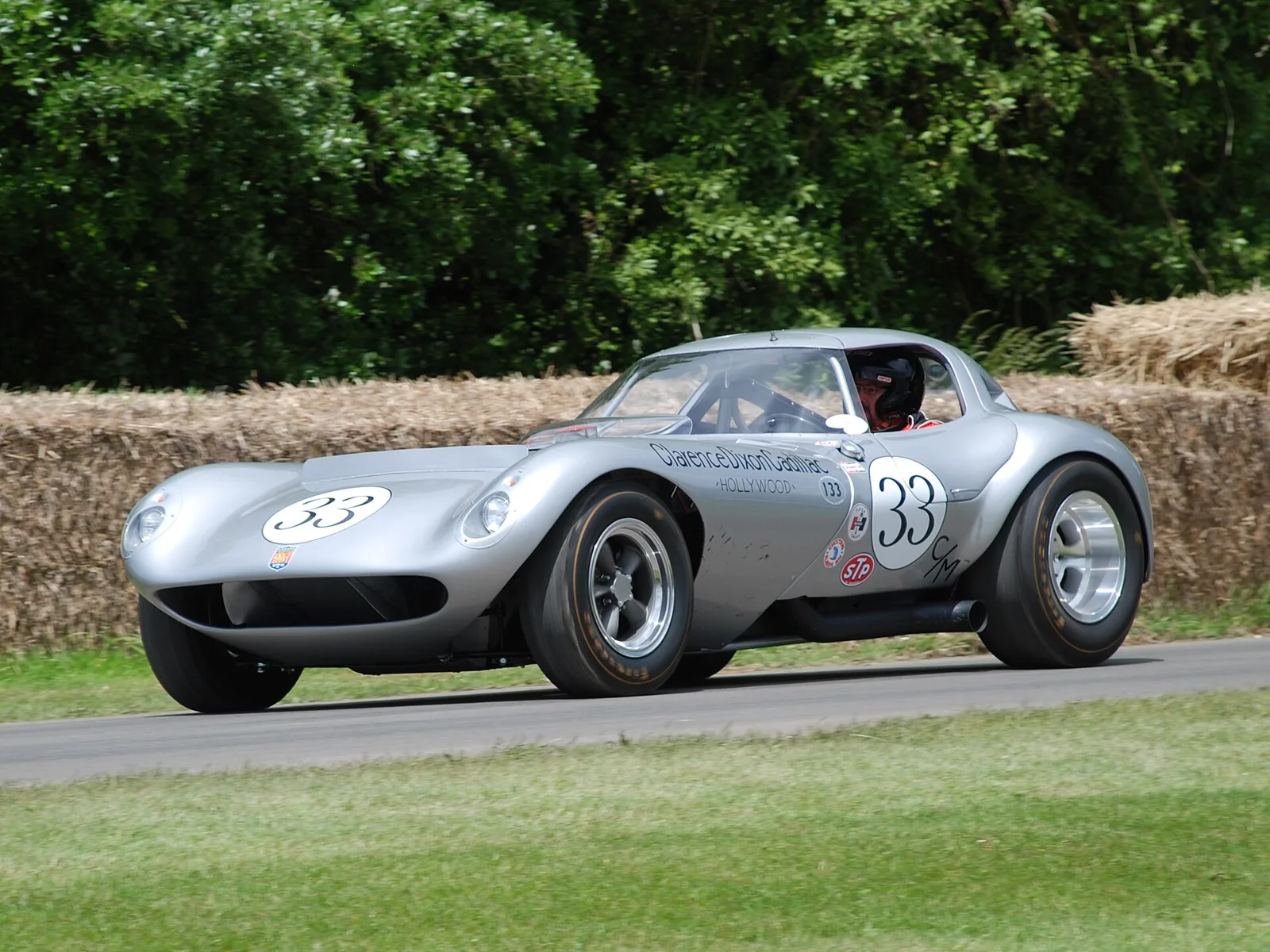
A Woolworth heir's front-engined Chevrolet specials and a Corvette tuner's Cobra rival, from the 1958 lap records to the 1965 factory fire.
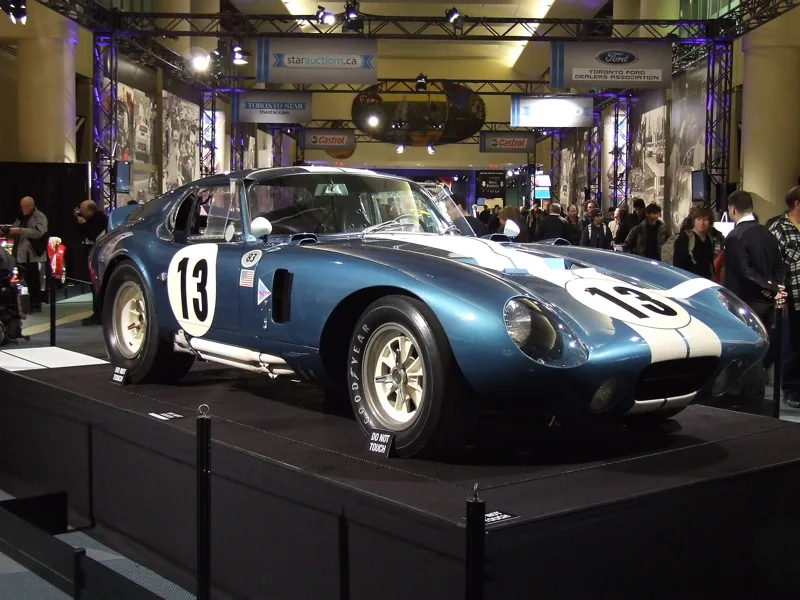
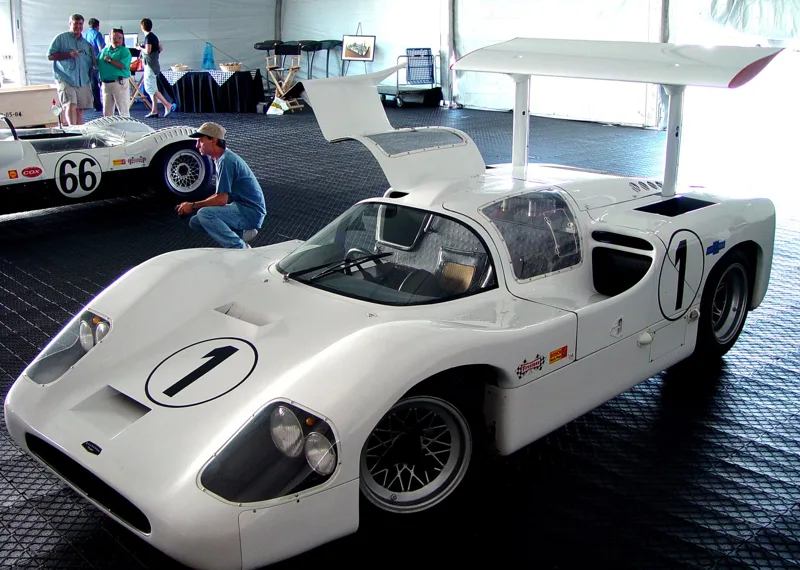
The Bill Thomas Cheetah and the Scarab Mark I and II were American sports racing cars with Chevrolet power. Lance Reventlow's Scarabs ran from 1957 to 1959, while Bill Thomas built Cheetahs from 1963 to 1966 to rival Carroll Shelby's Cobra. Reventlow closed his company in 1962, and a factory fire ended Cheetah production in 1965.
In 1958 two American-built Scarabs won every race they finished and set a lap record at every track they visited. Their owner, Lance Reventlow, heir to the Woolworth fortune, had set out to beat Europe's best sports cars with a Chevrolet-powered machine from Los Angeles. Five years later the Chevrolet tuner Bill Thomas began the Cheetah, a car with a very different mission.
What were the Bill Thomas Cheetah and the Scarab Mark I and Mark II?
The Scarab Mark I and Mark II were sports racing cars built by the American maker Scarab between 1957 and 1959, driven by Carroll Shelby, Chuck Daigh and Bruce Kessler among others. The Bill Thomas Cheetah, a sports car engineered entirely from American parts, was built between 1963 and 1966 by Chevrolet tuner Bill Thomas to take on Shelby's Cobra.
The Scarabs won every race they finished in 1958 and set lap records at every track they raced on.
How do the Scarab Mark I and II compare with the Bill Thomas Cheetah?
| Car | Built | Builder | Engine |
|---|---|---|---|
| Scarab Mark I | 1957 to 1958 | Reventlow Automobiles | Small block Chevrolet V8 from Traco Engineering |
| Scarab Mark II | 1958 to 1959 | Reventlow Automobiles | Small block Chevrolet V8 from Traco Engineering |
| Bill Thomas Cheetah | 1963 to 1966 | Bill Thomas Race Cars | Thomas-built 377 cu in (6.2 L) fuel-injected small block V8 |
Who built the Scarab and why?
Lance Reventlow began racing in 1955, aged 19, in a Mercedes 300SL. In 1957 he went to Europe with a Formula Two Cooper and with Warren Olson, who sold Coopers in Los Angeles. Most of the races he tried to enter turned him down, and at Snetterton he flipped a Maserati 200S and was thrown from the cockpit. By then he had been joined by a school friend, Bruce Kessler, the previous year's 500cc Club of America champion.
Their plan was an American car good enough to beat the Europeans at their own game. They toured Lotus, Cooper and British Racing Motors, and finally the Lister Motor Company in Cambridge, where Brian Lister walked them round the workshop. Kessler was impressed. Reventlow was not, and believed he could do better.
He incorporated Reventlow Automobiles in 1957 and hired Olson to manage the team. Dick Troutman and Tom Barnes helped build the car, Chuck Daigh joined as development engineer, and Jim Travers and Frank Coon of Traco Engineering, then the best-known racing engine firm in the country, supplied the power. Phil Remington, later hired by Carroll Shelby for the Ford GT programme, was on the team, and Leo Goossen and Kenneth Howard devised the blue metallic paint, and Emil Diedt shaped the aluminium bodies over the space-frame chassis.
How did the Scarab Mark I and II perform in 1958?
There was a hitch during construction: European sports car rules changed to cap engines at 3,000 cubic centimetres. The team tried a four-cylinder Meyer-Drake Offenhauser in the third front-engined Scarab to comply, but Daigh found it 100 pounds heavier than the Chevrolet and 100 horsepower down. The Chevrolet went back in.
The first car was immediately fast. Daigh broke the Willow Springs lap record on the car's first test, on 16 January 1958, then bettered it by four seconds a week later. At its official debut, an SCCA regional in Phoenix, Kessler lowered the record by six seconds. Reventlow won at Santa Barbara in May. A second car, the right-hand-drive Mark II, was built for Daigh, and from then on both cars won every race they completed that year.
The big test was the sports car Grand Prix of the United States, last of four rounds in the USAC road racing season. Two Mark IIs and a Mark I were entered. Daigh qualified second in a Mark II in 2 minutes 4.8 seconds and Reventlow third in the other with 2 minutes 8.14 seconds.
In the race, Reventlow was hit by Phil Hill's Ferrari 412 S, damaging the rear of his car and puncturing the fuel tank. He carried on to third by lap seven, but was black-flagged so the tank could be repaired. When Kessler took over after the repair, officials refused to let the car back out, and Reventlow's outburst led to a punch-up and disqualification for him and the car. Meanwhile Daigh and Hill fought for most of the race until the Ferrari suffered fuel vaporisation in 100 degrees F (38 degrees C) heat. Daigh's own car had a damaged differential, overheating brakes and fuel worries, but he won anyway.
Laguna Seca and Nassau Speed Week followed, with wins at both. At Nassau, Reventlow took the Governor's Cup and then shared the Nassau Trophy with Daigh.
What happened to the Scarabs after Reventlow quit?
The Mark IIs were sold but kept winning, in the hands of Nickey Nouse and Meister Brauser. Augie Pabst drove one in the 1960 Pacific Grand Prix, and Shelby drove another in the 1960 USAC series, where on 26 June he lowered the lap record twice on his way to winning.
Reventlow closed the company in 1962 but kept the original left-hand-drive Mark I prototype, chassis 001, which his friend Raoul Balcaen turned into a street-legal car. Pabst still owned the Mark II he drove for Meister Brauser, chassis 002, as of 2008.
A replica of chassis 002 was built in 1983 for the car's 25th anniversary by Richard Reventlow, working from Troutman and Barnes's original plans. A collector funded it, and Pabst allowed his car to be photographed and documented, a process that took over three years. Former Scarab people called it exact, and the Meister Brauser team signed a certificate of authenticity. It later gained an FIA Historical Technical Passport, valid until 2027. In 2017 the FIA certified a set of 20 Mark II replicas.
In July 2008, several Scarabs came out for the Kohler International Challenge at Road America, marking 50 years since the first Scarab race, with members of the original team there. Kessler said nobody had expected the cars to be racing half a century later.
Who was Bill Thomas and how was the Cheetah built?
William P. Thomas, who was born on 28 May 1921 and lived in Anaheim, California, began tuning Corvettes for racing in 1956 and by 1960 had his own company, Bill Thomas Race Cars. General Motors hired him for performance work on the new Corvair, and he also prepared 1962 Chevrolet 409s for drag racing and worked on the Chevy II.
In 1963 he gained covert support from Vince Piggins, head of General Motors' Performance Product Group, to build the Cheetah as a concept. His lead fabricator Don Edmunds did most of the construction. John Grow, a Chevrolet dealer in Rialto, owned the prototype and helped pay, along with private investors. Chevrolet helped with a Corvette 327 engine, a Muncie transmission and independent rear-end assemblies, and the rest came from the wider GM parts bin, including Chevrolet spindles and NASCAR-spec drum brakes.
The design process was refreshingly rough. Edmunds laid the drivetrain on the shop floor and sketched the chassis outline in chalk. The original blueprints were a few simple drawings with the main parts in block form. A plywood buck guided the body, which California Metal Shaping made in aluminium, and Aircraft Windshield Co supplied the glass. A second aluminium car followed in December 1963, built for evaluation at the Chevrolet Engineering Center, and the rest were fibreglass, with bodies from Contemporary Fiberglass after problems with Fiberglass Trends' moulds. Fiberglass Trends then made its own version, the GTR, for drag racing.
Why was the Cheetah's layout so unusual?
The Cheetah was front-engined, but with the engine pushed so far back that the transmission output yoke joined directly to the input yoke of the rear differential. The driveshaft was effectively just a universal joint. The driver's legs sat beside the engine, and the exhaust headers passed over them.
The benefit was weight distribution close to that of a mid-engined car, without the cost of an expensive transaxle. The price was a hot cockpit, which would affect results on the track. The chassis itself was drawn-over-mandrel cro-moly tubing, welded by the heliarc process.
What went wrong with the Cheetah?
The Cheetah began as a cruising machine or styling exercise, built to show General Motors what Thomas's company could do and win more contract work. Only after construction began did Thomas decide it would race to promote the concept. The chassis was never designed for that and was not rigid enough.
The weaknesses showed quickly. Hot air had nowhere to leave the engine bay, so the engine overheated as well as the driver. The cure was a larger Pontiac NASCAR radiator, holes cut in the hood and belly pan, and spoilers to pull hot air out; the first hood spoiler was a rope across the hood.
The chassis had little triangulation, so suspension geometry kept changing under load and the car was hard to handle even for an experienced driver like Jerry Titus. Hard acceleration could make the trailing arms bow outwards and let the rear wheels toe in. Owners improved matters with gussets, extra triangulation, reworked trailing arms and disc brakes. In a straight line, few cars could catch it, thanks to the Thomas-built 377 cu in (6.2 L) dual air-meter, fuel-injected small block V8.
What was the Super Cheetah?
Former employees believe the aluminium car numbered 001, sold to Chevrolet for evaluation and bought back by Thomas, became the base for the Super Cheetah, intended as an improved 1965 street car and rumoured to be a Le Mans runner. Work began in early 1964. It had a 4130 chrome moly steel space frame, a wider interior, rack-and-pinion steering moved behind the front spindles, 7 degrees of built-in caster, diagonal tubing on the shock towers, ball joints on the arms and a bigger rear for more fuel. Thomas never finished it, because Chevrolet withdrew its support.
How did the Cheetah fare in racing?
Thomas had designed the car with Dave MacDonald in mind as driver, but Carroll Shelby offered MacDonald a drive in the Cobra instead, and MacDonald died on 30 May 1964 at Indianapolis. Its planned debut at the 1963 Los Angeles Times Grand Prix never happened: Don Horvath crashed it in practice two days earlier, and the aluminium body was replaced by fibreglass. Its first event, the Cal-Club race at Riverside on 1 February 1964, ended on the first lap when Jerry Titus slid off after a water hose sprayed the rear wheels.
Titus raced it all season and promoted it in Sports Car Graphic magazine. In 1965 Jerry Entin took over as owner, and that car appeared in the Elvis Presley film Spinout.
The most successful Cheetah was the third car, the first with a fibreglass body, sold to Ralph Salyer in 1964. It was converted to a roadster, which helped keep Salyer from suffering heat exhaustion, and raced as the Cro-Sal Cheetah, named after Salyer and his mechanic Gene Crowe. It won 11 minor events in 1964 and 1965.
The sixth car, ordered by the Burien/Seattle dealership Alan Green Chevrolet, took part in 10 FIA events in 1964 and 1965. In 2009 it received an FIA Historic Technical Passport, which makes it eligible for FIA-sanctioned vintage events worldwide and the only Bill Thomas Cheetah to hold one. It arrived in red and was repainted "Alan Green green" around June 1964. Other cars went to club racers, a drag racer and a road driver, and the ninth, the Dixon Cadillac, took the 1968 A/SR title in the SCCA's Southern Pacific Region.
Why did Cheetah production end?
In 1964, the number of cars needed for race homologation rose from 100 to 1000, and Chevrolet told Thomas it would no longer support the Cheetah. Race car design was also moving fast, and true mid-engined layouts were the future: the Ford GT40 made Shelby's Daytona coupes obsolete.
Then a fire destroyed Thomas's factory on 9 September 1965. He chose to end production and move on, including custom Camaros with Nickey Chevrolet. The last documented Thomas-built Cheetah was ordered in the autumn of 1965 and delivered in April 1966.
How many Cheetahs were built, and who still makes them?
No official records survive. Best estimates put production at up to 23 cars in various states of completion, while Bob Auxier of BTM Race Cars counts 19 chassis and 33 bodies. The surviving originals are largely collector items, and a gathering of Cheetahs at Road America in 2014 marked the 50th anniversary, with members of Thomas's family present.
Copies continued. Fiberglass Trends sold its GTR, aimed at drag racers, from 1965 until at least 1989. Auxier built his first Cheetah in 1996, and with Thomas's agreement BTM Race Cars produced about 46 continuation cars from 2001 to at least 2013.