A plywood chassis weighing 187 lb, a Mini-engined mid-engine coupe, a Le Mans entrant and a Wexford sports car sold as a kit, all built by small teams.
The Unipower GT, Costin Amigo, Deep Sanderson and TMC Costin were lightweight British and Irish specials built between 1960 and 1987 in tiny numbers. Each borrowed mechanicals, from BMC Mini engines to Vauxhall and Ford parts, and the Amigo used a plywood chassis.
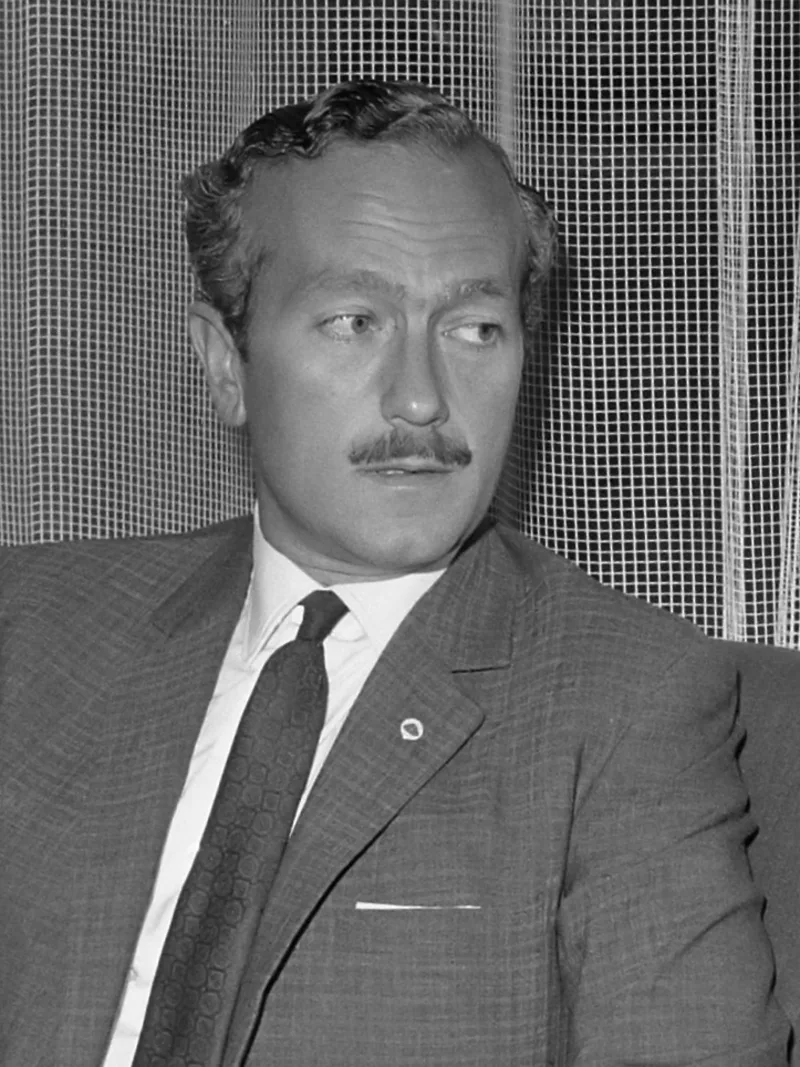
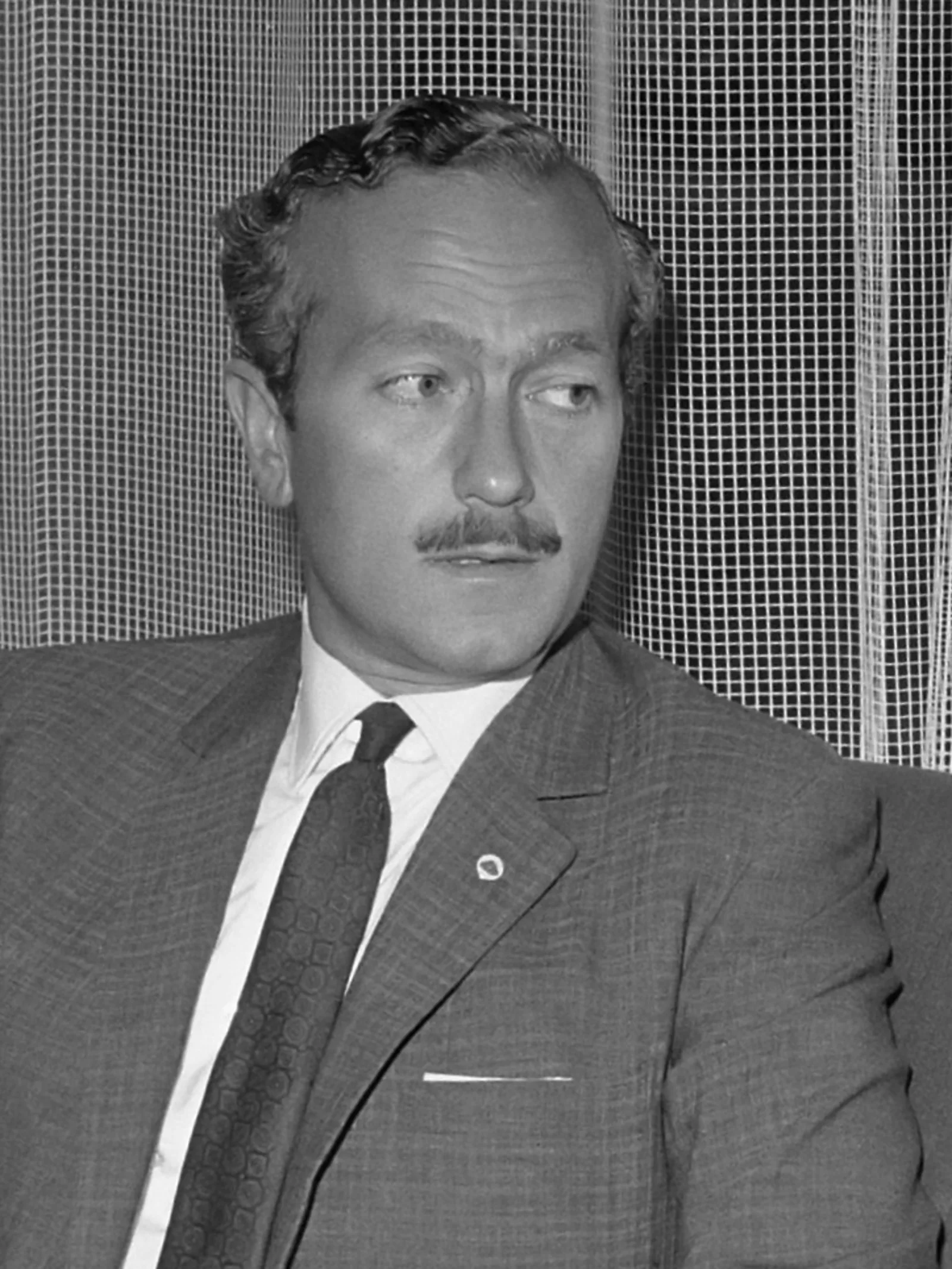
Frank Costin built a road car around a plywood chassis. The finished structure of the Costin Amigo weighed 187 lb (84.8 kg) and resisted twisting with 3,500 foot-pounds (4,750 newton-metres) per degree, and the car on top of it was reported to reach 204 to 220 km/h (127 to 137 mph). Beside it stand three other small-run British and Irish specials of 1960 to 1987.
The others came from very different corners of the trade: a racing driver who tuned engines, an engineer who had worked on the Hillman Imp and the Ford Cortina, and a farming family in County Wexford who built their first car in a barn.
What were the Deep Sandersons?
Chris Lawrence designed every Deep Sanderson and often drove them himself. Before the first, he had made a name tuning the engine used in the Triumph TR cars and in his own Morgan race car. Lawrence and his staff built some at Westerham Motors and later LawrenceTune Engines, and others were contracted out. The name blends his father's favourite jazz standard, "Deep Henderson", with his mother's maiden name. The cars were mainly single-seaters and small sports coupes from the early 1960s, though the badge turned up on other projects, and the last Deep Sanderson was built in 1986.
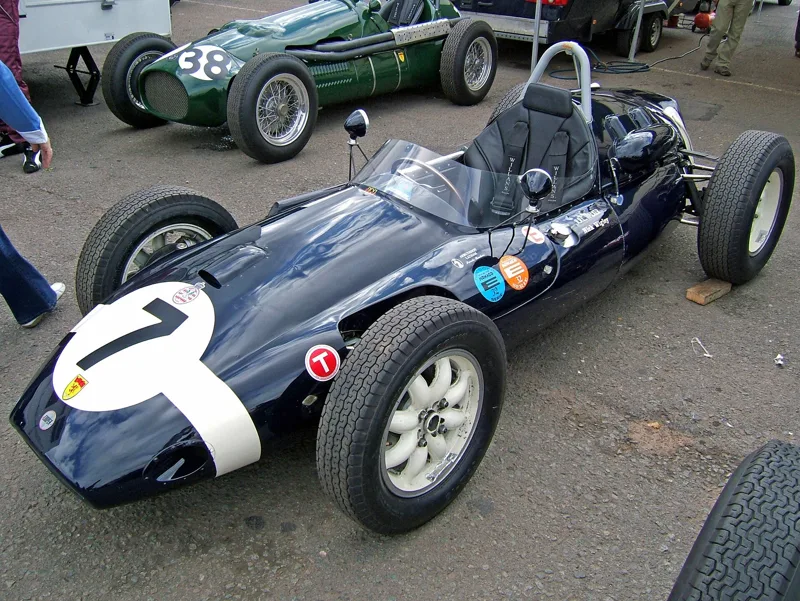
Formula Junior and the Lawrence Link
The first, the DS101 of 1960, was a Formula Junior car, a class created to keep racing cheap by demanding that the suspension, engine, gearbox and final drive come from a volume-production car. Lawrence drew a tubular steel chassis on a tetrahedron layout and used a Volkswagen Beetle's front suspension and transaxle with a 1000 cc Ford Kent engine. Both cars retired from the first race at Goodwood, which Lawrence put down to sump bungs touching the ground on left-hand bends and unscrewing themselves.
The DS104 followed, built on ideas he picked up from Keith Duckworth. Lawrence drilled a new intake port down into the cylinder head, fed it through second-hand 45DC3 carburettors, and fitted the Volkswagen transaxle upside down to lower the crankshaft. At its first Silverstone test the crown wheel turned out to be on the wrong side of the pinion, leaving one forward gear and four in reverse. Once the crown wheel was moved, the car won first time out at Oulton Park.
The DS104 also introduced the Lawrence Link, a trailing-arm suspension whose links converge towards the car's centre-line. Lawrence patented it, then sold the patent to Rover in 1963 when LawrenceTune hit financial trouble.
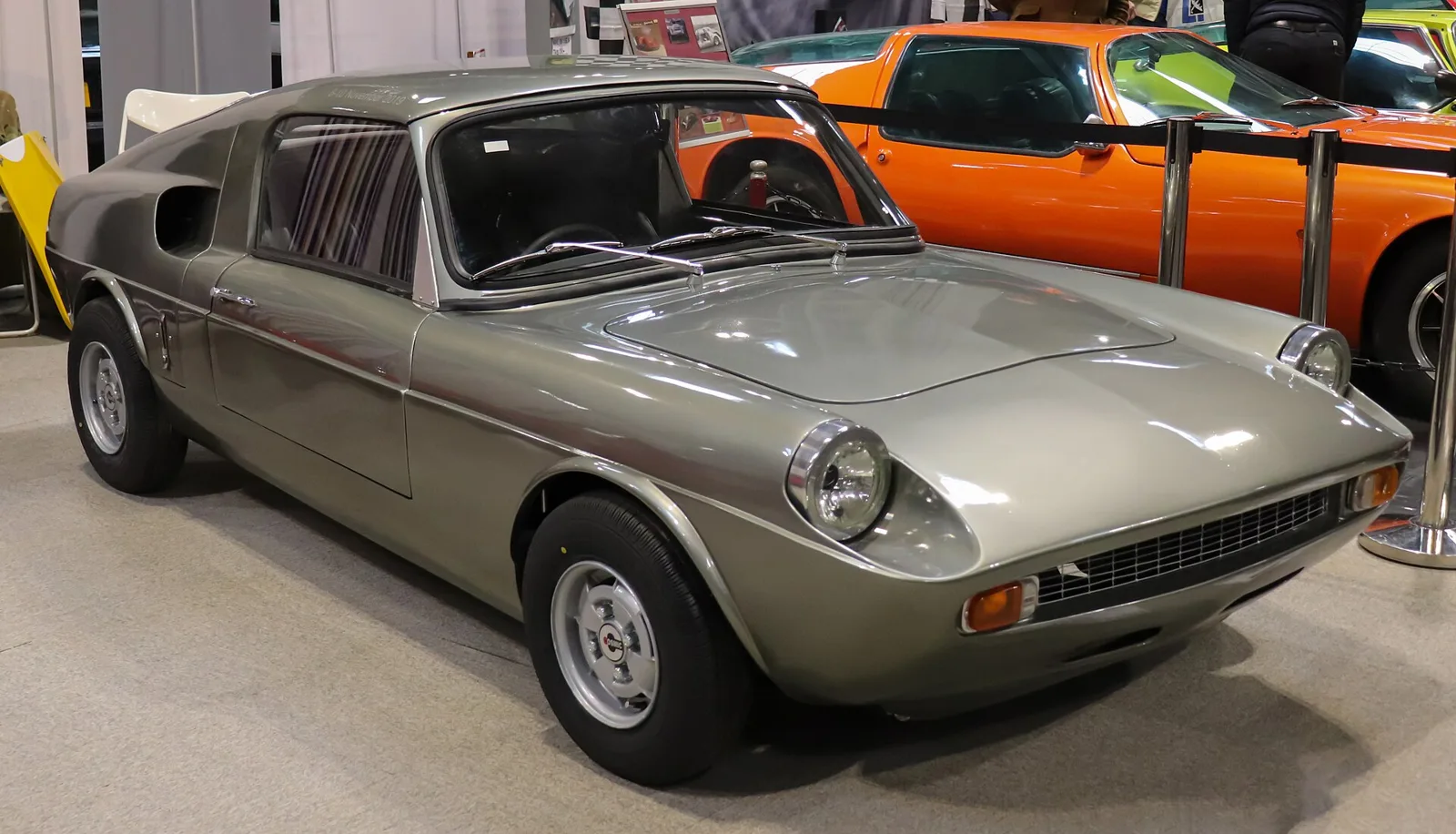
The mid-engined Mini-powered DS301
In autumn 1960 Len Bridge urged Lawrence to build a road-going sports car, since that market was far bigger than racing, and to use the Mini drivetrain. Andrew Wallace drew a chassis with a thick circular backbone, sheet-metal box sections at each end and an aluminium floor, with Lawrence Link suspension at both ends and the Mini engine and transaxle amidships. The prototype used an 850 cc engine and aluminium bodywork by Williams and Pritchard. The tall rear cover and concave tail earned it the nickname "the perfume delivery wagon", and Lawrence called it ugly but functional.
It crashed into a tree at the Nurburgring in 1961 and was scrapped. The replacement was a compact fastback with a drag coefficient of 0.29 and a frontal area of 1.0 square metres (11 sq ft), and the whole body behind the driver tilted back to reveal the engine. At the 1962 Racing Car Show, Lawrence returned unexpectedly to find Colin Chapman and Mike Costin inspecting it from the inside. Microplas then took a mould so later bodies could be made in fibreglass.
Le Mans publicity brought orders for the standard 850 cc DS301, and John Pearce, who joined LawrenceTune in 1962, offered to build them as a subcontractor. After a serious road accident in France left Lawrence with a business reduced to himself, Pearce kept building and paid him royalties on 23 cars by January 1965. That year Pearce bought a commercial garage and knocked down the old building where the cars were made, which ended production.
Le Mans and the other Deep Sandersons
Lawrence had won the 2-litre class at Le Mans in 1962 in his Morgan and wanted to go back in a car of his own. In 1963 he entered an aluminium DS301 in the 1000 cc class with a 997 cc Downton-tuned engine and a 45 mm Weber carburettor. It topped 241.4 km/h (150 mph) on the Mulsanne straight. After a trip through a sand trap, its single-circuit brakes lost all their fluid, which Lawrence blamed on overheated seals, and he nursed the car round by coasting, sliding and using the clutch, climbing back to the same lap as the leading Alpine Renault. It was then black-flagged for dropping below the minimum average speed at midnight.
A two-car team in 1964 lost one car in practice, and the other retired in the third hour with a blown head gasket. In 1968 he was back with the DS302, which began as a DS301 stretched to take a 1600 cc Ford Kent engine with fuel injection, driven through a Hewland FT200 five-speed transaxle. Rover would not allow the Lawrence Link, so the car got front A-arms and a de Dion rear. It was disqualified when a driver strayed more than 100 metres from it, searching for the injection pump belt. Chris Martin restored the DS302 for Le Mans in 2004, and Lawrence built a DS301 from an unused shell for the Le Mans Classic that year.
At its first Silverstone test the DS104 had one forward gear and four in reverse.
What was the Unipower GT?
The Unipower GT debuted at the Racing Car Show in January 1966 and used a BMC Mini powertrain behind the seats. Ernie Unger, who had worked at Lotus as a mechanic and then developed the Hillman Imp and Ford Cortina, sketched a car combining Italian Abarth engineering with British handling. He teamed up with Valerian Dare-Bryan, a freelance designer who had worked with Colin Chapman and Frank Costin. Ron Bradshaw, a Ford stylist then working on the GT40, drew the shape in his spare time.
A prototype chassis built at Roy Pierpoint's shop went to Robert Peel and Company, which fabricated an aluminium body. Mini designer Alec Issigonis liked the result so much that he arranged for BMC parts at far below retail, helping keep the price down.
From UPD to UWF
Tim Powell, who owned Universal Power Drives (UPD), a maker of multi-axle trucks sold as Unipower, bought the project and gave it money and production space. Specialised Mouldings made the fibreglass bodies and Arch Motors the chassis. UPD planned the name "Hustler GT", but that name was already used for another UPD product, so Racing Car Show organiser Ian Smith suggested Unipower GT. Driver and journalist Jose Rosinski dubbed it the "Mini Miura".
The 998 cc Mini Cooper version cost 950 pounds and the 1275 cc Cooper S 1150 pounds. Early bodies had a drag coefficient of 0.37, but lift problems led to MIRA wind tunnel tests and a front spoiler, cutting the figure to 0.32.
By 1968 UPD had lost interest. Unger joined Piers Weld-Forester to form U.W.F. Automative Engineering, which bought the car and assembly line and restarted production in Park Royal, West London, with softer springs, new alloy wheels, a revised dashboard and new tail lamps. UWF stopped building in late 1969 and the last car was delivered in early 1970.
How it was built and how many
The engine was the cast-iron BMC A-Series, mounted across the car with the gearbox in the sump, sharing the engine's oil, behind the driver and just ahead of the rear axle. Buyers chose the 998 cc Cooper or the 1,275 cc Cooper S, both with twin SU carburettors. The spaceframe was square and rectangular steel tube with built-in roll-over protection, and the fibreglass body was bonded to it for extra stiffness. Suspension was independent all round.
The rest came from other parts bins: Austin 1100 indicators, a Triumph Spitfire windscreen, Ford Cortina door hinges, Jensen C-V8 headlamps and Vauxhall Viva tail lamps.
Production was at most 75 cars. A narrower count gives 73, with 42 from UPD and 31 from UWF, and around 30 percent had left-hand drive. Seven were built for competition, with Cooper S discs all round, anti-roll bars and magnesium Minilite wheels. A lightweight car, UWF1007, went to Le Mans in 1969, where French onlookers called it "La puce jaune", the yellow flea. It was timed at 225 km/h (140 mph) on the Mulsanne Straight, but its co-driver failed to qualify.
Italian tuner Gianfranco Padoan restyled one after it failed Italian headlamp rules and tried to put it into production as the ESAP Minimach GT, but UPD sued and the project foundered. Owners gathered at Beaulieu in late 2016 for the car's 50th anniversary.
What was the Costin Amigo?
Costin considered the Amigo, built from 1970 to 1972 by Costin Automotive Racing Products Ltd, his Auto Project XVIII, and chose the name to suggest a car that was friendly to drive. His goals were to cruise at 161 km/h (100 mph) below 5000 rpm, cover 400 km (250 mi) with luggage aboard, without tiring the driver or stopping for fuel, and return 9.4 L/100 km (30 mpg imperial).
The project began in 1968 while Costin was in North Wales, then moved to Bedfordshire and finally to near Luton, close to Vauxhall's big factory. Television executive Jack Wiggins paid for the prototype, with extra backing from Paul Pycroft de Ferranti. The car was announced in December 1970 at a price of 3,326 pounds. Eight or nine were made, and one count says two of them were left unfinished when production ended, one of those being completed in 1979.
Timber chassis were nothing new for Costin, who had founded Marcos Engineering with Jem Marsh in 1959 to make the wooden Xylon. The Amigo chassis used six torsion boxes, three lengthwise forming the centre tunnel and two sills and three crosswise for the engine bay, cockpit and boot, made of gaboon plywood with Parana pine strips and Ciba Aerolite glue. A steel tube behind the seats gave roll-over protection. The non-structural fibreglass body, bonded on with Araldite, had a reverse camber line like the one Costin used on the Lotus Elite. It helped stability at speed but hurt it in traffic. Even the mirrors were scrutinised, and the drag coefficient was 0.29.
Running gear came largely from Vauxhall, notably the VX 4/90, with a Victor crossmember, a live rear axle and front disc brakes. Dampers were self-levelling Koni units otherwise sold only to Ferrari. Power was a 2.0-litre Vauxhall Slant-4 with a four-speed gearbox and Laycock overdrive plus a limited-slip differential. Quoted figures are 204 to 220 km/h (127 to 137 mph) and 0-97 km/h (0-60 mph) in 7.1 to 7.5 seconds.
Chassis 060 ran in the 1971 Le Mans 3 Hours with a Brian Hart-tuned Lotus-Ford Twin Cam. Hart drove it alone, since partner Paul Pycroft de Ferranti never took the wheel, and it did not finish. With that engine it could top 237 km/h (147 mph). Gerry Marshall won at Thruxton in it that year with a Bill Blydenstein 2.3-litre Vauxhall engine, and Blydenstein later rebuilt it with a dry-sump engine, ZF five-speed gearbox and dual-circuit brakes.
What was the TMC Costin?
The TMC Costin was a Clubman-style sports car built from 1983 to 1987 at Castlebridge, County Wexford, in fewer than forty examples. It looked cobbled together, with a Lotus Seven front and a slab-sided rear, yet every choice served low drag, high-speed stability, light weight and strength.
It began with the Thompsons, a farming family with six sons. Peter worked in engineering at the Timoney Research Centre at Navan on armoured personnel carrier design, where brothers Val and Sean also joined. In March 1983 Peter, Val, Sean and Anthony founded a company, usually called the Thompson Manufacturing Company, with funds from the Industrial Development Authority.
Peter asked Frank Costin to design the first car and develop its tooling in exchange for a 10 percent royalty on each sale. Called Auto Project XXIV, it was meant to improve on the Lotus Seven and has been described as the first road racing car built in Ireland. During development it was the Rushabout, with a 1,256 cc Vauxhall Chevette engine. The brothers hand-built the first car in the family barn.
The TMC Costin launched at Mondello Park in late 1983 and sold from 1984, in three states of tune called GTA, GTB and GTC, as a kit or finished car. The kit started at 2000 pounds and rose to 6000, while built cars went from 6500 pounds to 13,000 including VAT and duty. By late 1985, Automotive News reported, TMC had exported five cars to Canada at 20,000 Canadian dollars each and planned to reach fifty a year.
TMC claimed close to one hundred cars, but fewer than forty are thought to have been built.
Engines were Ford-based: a 1,599 cc Crossflow as standard, the CVH, or Cosworth BDA or BDR units, giving 84, 110 or 130 hp (63, 82 or 97 kW). The 1984 Costin 1600 RSR took a tuned CVH with twin Weber carburettors and the Sierra's five-speed gearbox, while the cheaper 1600 RS had a Crossflow, four-speed gearbox and fabric doors.
Costin's space frame is built from three modules: a front frame carrying the engine and suspension, a triangular centre section for the occupants, and a rear section for the suspension and roll bar. It was designed for about 300 hp (224 kW) and, with a 100 percent safety margin, could theoretically cope with 600 hp (447.4 kW). The doors hinge at the A pillars and swing up and forward, the roof is a Targa with a removable centre panel, and the luggage area behind the seats holds 467 litres (16.5 cu ft). Panels are GRP, aluminium and Kevlar. Brakes are Girling discs in front and drums at the rear.
On its debut at Mondello Park in 1983, driven by John Keaney, the car took pole and won. Peter Thompson reportedly asked what pole was. Val Thompson has since raced a TMC Costin in vintage events.
How do the four cars compare?
| Car | Built | Engine | Numbers |
|---|---|---|---|
| Deep Sanderson DS301 | Early 1960s, Britain | BMC A-Series, 850 cc in standard form | Royalties paid on 23 cars by January 1965 |
| Unipower GT | 1966 to 1969, Britain | BMC A-Series, 998 cc or 1,275 cc | At most 75 |
| Costin Amigo | 1970 to 1972, Britain | 2.0-litre Vauxhall Slant-4 | Eight or nine |
| TMC Costin | 1983 to 1987, Ireland | Ford Crossflow, 1,599 cc | Fewer than forty |
What became of the Unipower successor and the TMC chassis?
In 1988 TMC sold the chassis rights to Dan Panoz, son of an American businessman who owned a pharmaceutical firm in Ireland. With his father's money he bought the plans, jigs and parts for two cars, shipped them to the United States, hired TMC engineers Sean Thompson and Mick Murphy, and used the TMC Costin chassis as the basis of the Panoz Roadster. He had applied for a job at TMC.
The Unipower's planned successor, with the engine still in the middle but larger, stalled. Designer Peter Bohanna, with Robin Stables, went on to build the Diablo prototype shown in 1972, which developed into the AC 3000ME. A later Dare-Bryan design with a Toyota powertrain never came to fruition.