Four car factories that employed thousands, the very different reasons each one shut, and what stands on the sites now.
Longbridge, Buick City, Janesville and North Tarrytown were large car plants that closed for different reasons: MG Rover's 2005 collapse, falling sedan sales in 1999, fuel prices and slow SUV demand in 2008-09, and the age of a 1900 site in 1996.
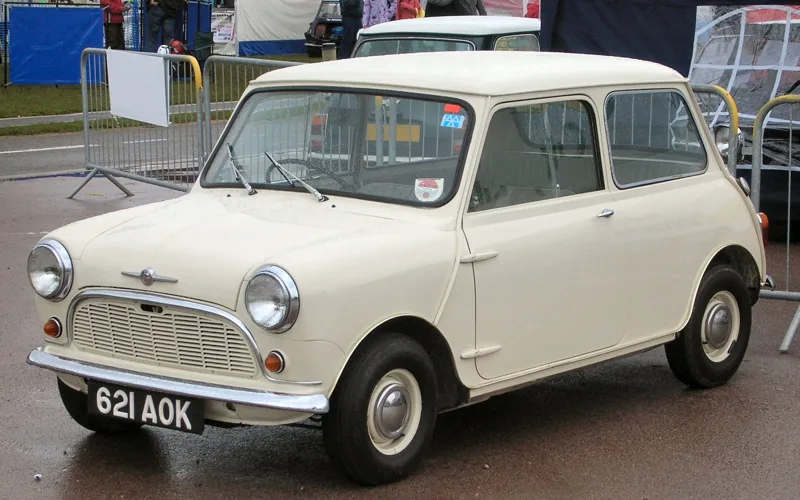
In the late 1960s, about 25,000 people worked at Longbridge, the Birmingham plant that built the original Mini. By April 2025 the figure was 46.
Longbridge is one of four large car plants that ended, each for a different reason. Buick City in Flint, Michigan, closed because sedan sales were falling. The Janesville assembly plant in Wisconsin closed when fuel prices turned buyers away from large SUVs. North Tarrytown in New York was shut because it was old and could not be modernised. Longbridge itself went into administration when its owner ran out of money.
Longbridge plant: from print works to MG Rover
The site began in 1895 as a factory for copper-plate printers White and Pike, built at a cost of 105,000 pounds in fields south of Birmingham. The venture failed, and a bank repossessed it in 1901.
Herbert Austin spotted the derelict buildings on 4 November 1905 after falling out with the Vickers brothers, his partners at Wolseley. With financial help from friends and from two businessmen, Frank Kayser and William Harvey du Cros, he bought the site and 8 more acres for 7,500 pounds on 22 January 1906. The first Austin, a 25-30 hp touring car with a four-speed gearbox and chain drive, appeared at the end of March 1906 at 650 pounds. About 50 hands built roughly a dozen cars in the first year.
Growth was fast. By 1908 there were 1,000 workers, and by 1912 the plant was turning out 1,000 cars a year with 1,800 employees. In February 1914 the company was floated and issued 250,000 pounds of preference shares, and the money paid for new workshops and a switch from belts and shafts to electric drive.
Two world wars
The First World War remade the place. Over the four years the output included more than 8,000,000 shells, 650 guns, 2,000 aeroplanes and 2,500 aero engines, plus 2,000 trucks. The site trebled in size by 1917, gained its own railway station and a flying ground at Cofton Hackett, and employed over 22,000 people, many of them women. When the Armistice came, contracts were cancelled at very short notice, and the works had grown to more than 10 times its prewar size. In the Second World War it turned to armour-piercing ammunition, jerrycans, mines, depth charges and helmets, while the East Works built Short Stirling and Hawker Hurricane aircraft.
BMC, British Leyland and the Metro
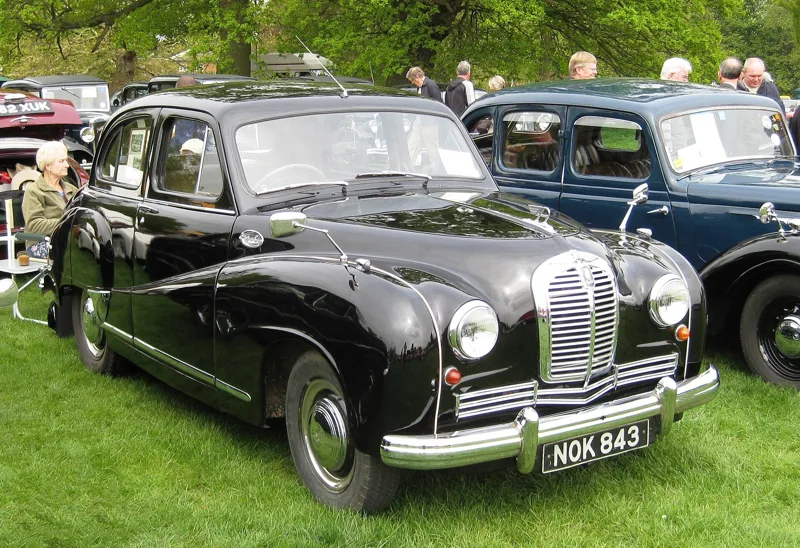
After the war Leonard Lord became chairman. The millionth Austin was built in June 1946. Longbridge built the Austin A40 Sports with Jensen, which made the bodies elsewhere, and the Healey 100 with the Donald Healey Motor Company. In 1952 Austin merged with Morris Motors to form BMC, and in 1968 the government of Harold Wilson arranged for BMC to join British Leyland. The government refinanced the group in 1975.
Strikes marked the 1970s. Derek Robinson, known as "Red Robbo", became the face of the disputes, and British Leyland attributed 523 of them to him in 1978 and 1979, although his responsibility has since been called overstated and most were brief stoppages led by shop stewards.
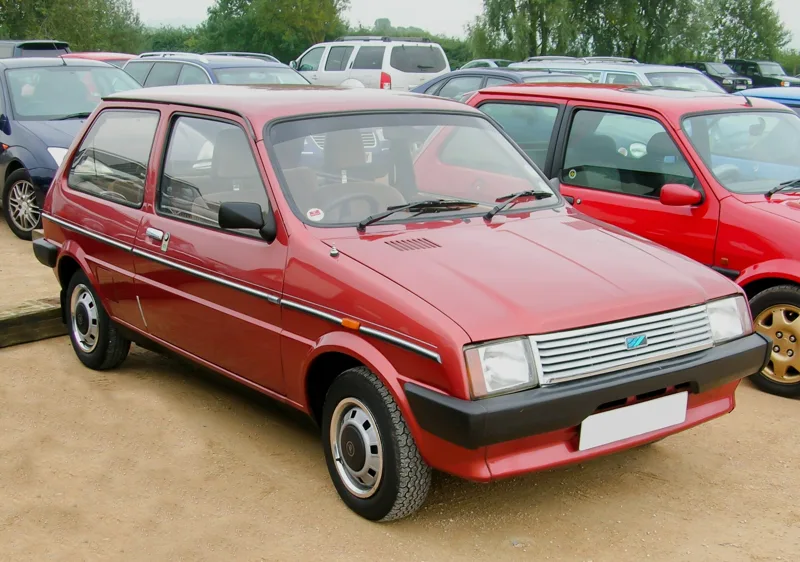
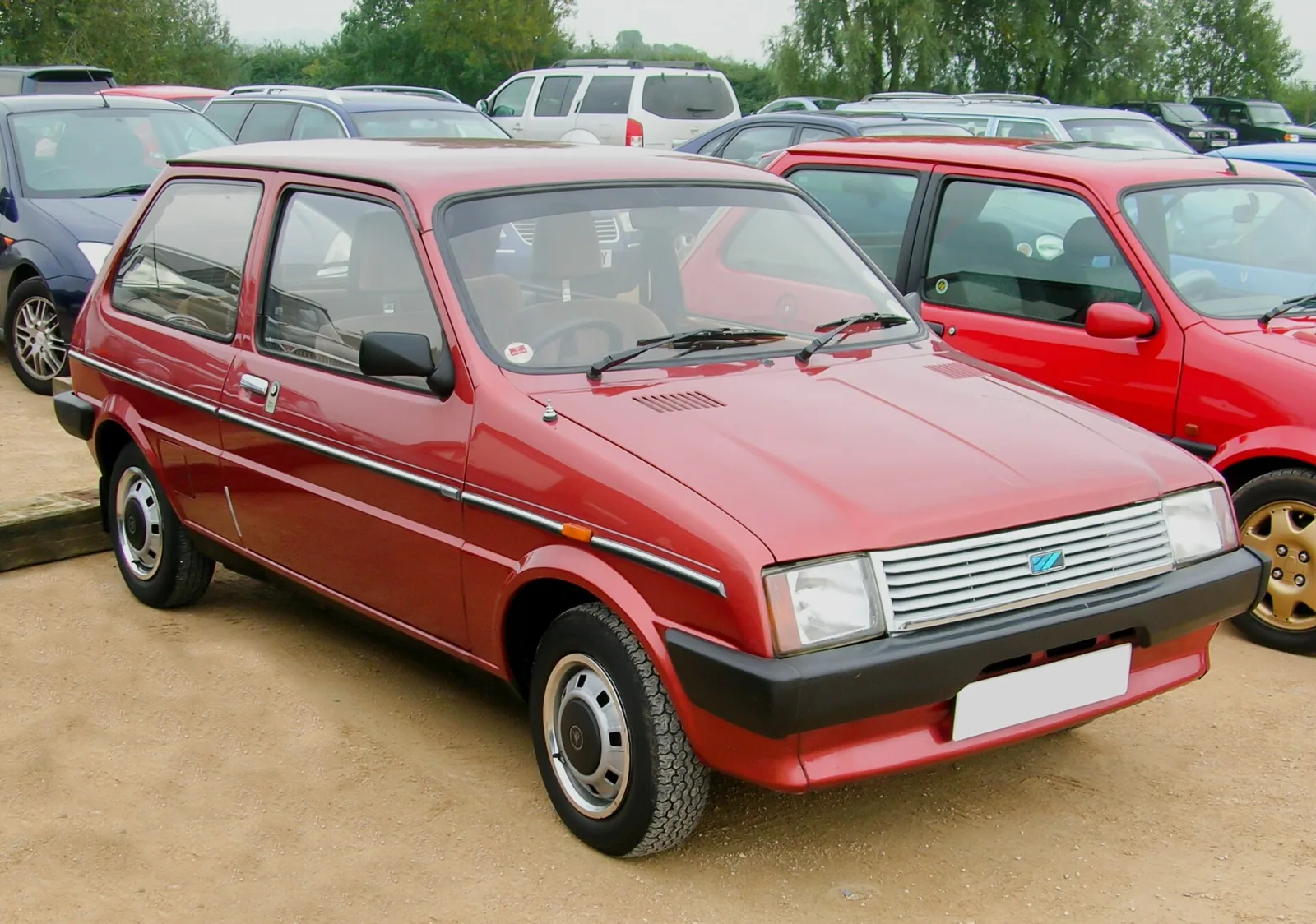
The 1979 expansion made room for the Austin Metro, launched in 1980. A new West Works used extensive robotics, a first for British Leyland, and the body shells crossed the Bristol Road to final assembly on an enclosed conveyor. The Metro stayed in production virtually unchanged for 10 years, and a deal with Honda gave the group a new lease of life. Longbridge was sold with Austin Rover to British Aerospace in 1988 and renamed Rover Group in 1989, the year the second-generation Rover 200 arrived.
The 2005 collapse
BMW bought Rover Group in 1994, but heavy losses alarmed its shareholders, and in 2000 the plant was sold to the Phoenix Consortium for the token sum of 10 pounds, becoming MG Rover Group. Commentators said at the time that the plant was not modern enough. In April 2005 the Phoenix Consortium put the company into administration, putting more than 6,000 people out of work. One factor was age: MG Rover's newest all-new model, the Rover 75, was more than six years old, while rivals such as Ford and Vauxhall had replaced most of their ranges since the late 1990s.
MG under SAIC
Nanjing acquired the remaining assets, including the Longbridge lease, three months after the company went into receivership. MG TF production restarted in August 2008 in part of the old South Works, and ended around April 2011 with only 906 built. Nanjing was bought by SAIC, and MG Motors began building the MG 6 at Longbridge in April 2011 from semi-knocked-down kits from SAIC's Lingang plant in China. The cars arrive almost complete, needing only the engine, front suspension, nose trim and wheels, because Longbridge no longer has working body-welding or paint shops. The MG 3 followed in 2012, and about 400 people worked there by 2014.
Vehicle assembly ended in 2016. Today Longbridge is the MG Motor Technical Centre, which checks each MG that is assembled in China before it is sold in Europe. More than half the factory site has been sold and cleared for homes and businesses, with a target of 10,000 jobs and 1,450 homes.
Four plants, four endings: an administration, a sedan slump, an SUV collapse and a building too old to modernise.
Buick City, Flint: General Motors' answer to Toyota City
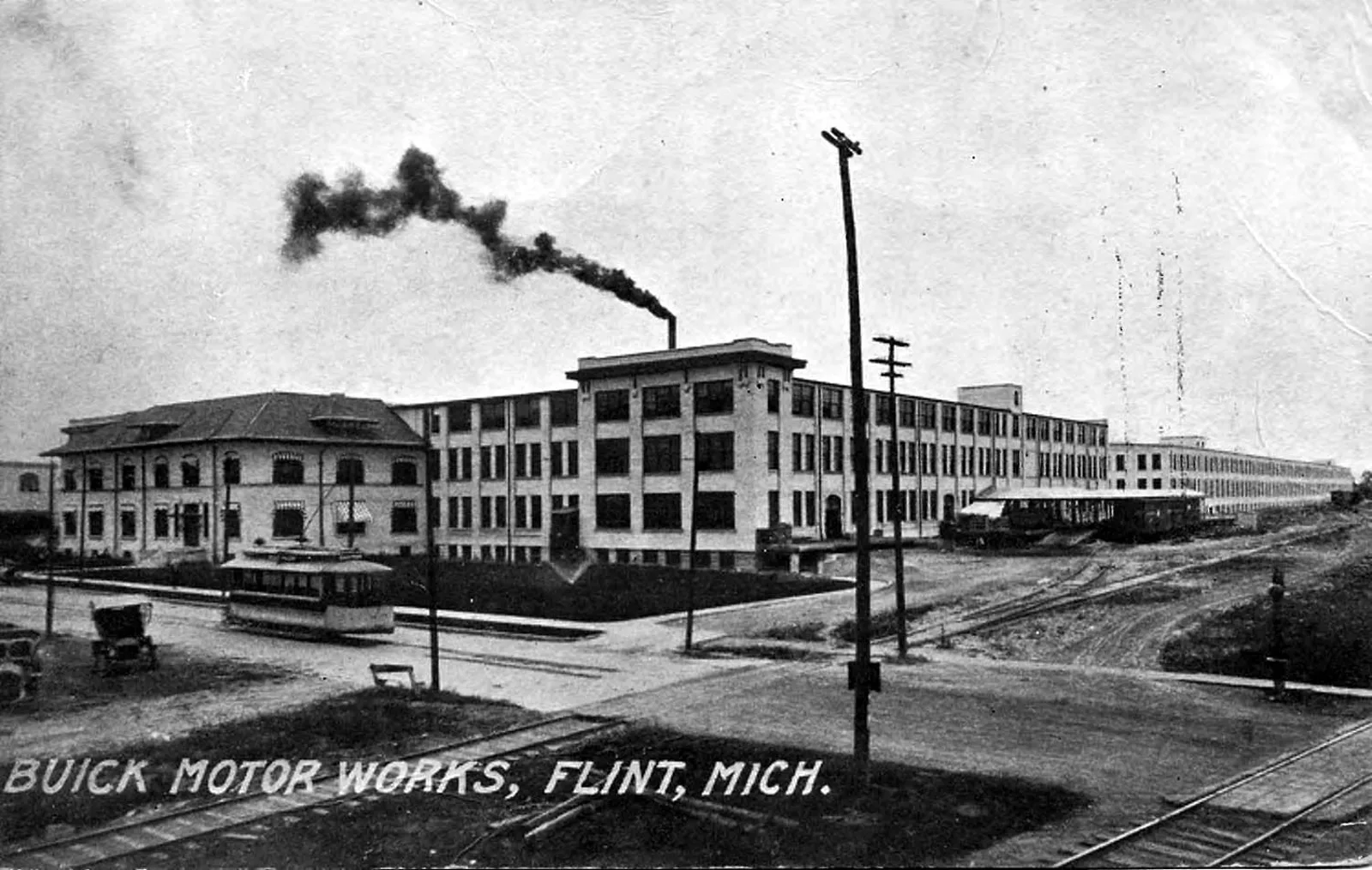
Buick City in northeast Flint served as the Buick home plant from 1904 until 1999. The oldest parts of its 235-acre complex date from before 1904, when the Imperial Wheel Company was moved there in 1898 by Billy Durant and Josiah Dallas Dort. Flint Wagon Works bought Buick Motor Company in September 1903, and the plant built 16 cars in 1903 and 37 in 1904. Under General Motors, founded in 1908, it made 30,000 cars for 1910 and passed one million by 1923.
The original factory was once the largest in the world, with 24 separate buildings, until the Ford River Rouge Complex opened in 1928. Everything from wheel bearings and nuts to transmissions was made on the one site. In 1918 it switched to the Liberty L-12 aircraft engine, and from 1942 to 1946 it built trucks, tanks and aircraft, including the M18 Hellcat, a tank destroyer that was the quickest of the whole war.
The Buick City plan
By the early 1980s General Motors was weighing a move of Buick production to a newer plant due to open in 1985. A senior administrator wrote a business plan for Flint, adopted in 1982. After a $350 million investment, the plant was christened Buick City in September 1985 as GM's answer to Toyota City, borrowing its high technology, just-in-time manufacturing, labour-management cooperation and inventory control. The Buick City 1989 LeSabre topped the J.D. Power customer satisfaction survey, It was the first American-built car to make the list.
Why Buick City closed
At the end of 1986 GM announced 11 plant closures by 1989, which put 35,000 of Flint's 150,000 residents out of work and was chronicled in Michael Moore's 1989 documentary Roger & Me. Buick City itself lasted another decade. In 1997, citing declining sedan sales, GM announced it would close, and the last day of vehicle assembly was 29 June 1999.
In 1999 it also took J.D. Power's Platinum Award for assembly quality, the only GM plant to have won it as of 2016. The last cars were the Pontiac Bonneville and the Buick LeSabre, and full-size sedan production moved to Orion Assembly. Engines and components carried on in the north of the site, renamed GM Powertrain Flint North, for roughly another decade. The site then passed to the Motors Liquidation Company on 6 December 2010.
The EPA treated the land as a cleanup site, and in August 2018 Lear Corporation opened a 156,000-square-foot seat factory on 33 acres of it. The Southend of the 412.947-acre site was demolished by 2002, and most of the Northend by 2012.
Janesville assembly plant: tractors to SUVs
The Janesville plant in Wisconsin opened in 1919 as a tractor factory after General Motors merged two firms to create its Samson Tractor division. The first tractor was built on 1 May 1919. A farm depression from 1920 forced layoffs of more than 1,000 workers, and Samson went bankrupt, but the plant manager, Joseph A. Craig, persuaded GM to keep Janesville, and in 1920 truck production moved there from Flint.
Chevrolet began making cars there in 1923, with a Fisher Body plant alongside. A sit-down strike at the plant in 1937 led quickly to a national contract, and during the Second World War it made artillery. The 100 millionth GM vehicle came off its line in April 1967. Peak production came in 1977, when 7,100 employees built 274,286 cars and 114,681 trucks.
In the 1980s large cars left and the plant took on small J-cars, among them the Chevrolet Cavalier. Pickups left for Fort Wayne in 1987, but medium-duty trucks and full-size SUVs came in, and by 1992 it was the only GM plant making large SUVs. It built Chevrolet Suburban and Tahoe models, was one of three plants on the GMT900 trucks from 2006, and produced more than 500,000 E85-capable full-size SUVs by that year.
The end at Janesville
In 2008 high fuel prices, slow SUV sales and a weak economy cut the plant to a single shift, and about 750 jobs went in July. At GM's annual shareholder meeting on 3 June 2008, chief executive Rick Wagoner said Janesville would close by 2010, one of four factories, with cutbacks expected to save $1 billion a year.
SUV production ended on 23 December 2008, and workers gathered under a banner marking the last vehicle off the line. That vehicle, a black 2009 Chevrolet Tahoe, went to the United Way of North Rock County, which raffled it. Another 57 production employees finished work for a light truck partnership with Isuzu until 23 April 2009.
The plant sat on standby through GM's bankruptcy, one of three with Orion and Spring Hill, and was the only one still on standby in 2014. A new contract with the United Auto Workers in January 2016 cleared the way to sell it, though contamination on the north and south sides delayed that. Demolition began in 2018 and was largely done by early 2019.
North Tarrytown assembly: from steam carriages to minivans
The North Tarrytown plant stood on the Hudson River in what is now Sleepy Hollow, New York, and ran with short interruptions from 1900 to 1996. John Brisben Walker bought part of the Kingsland estate in 1899 and hired McKim, Mead & White to design the factory. The Mobile Company of America built its first steam carriage there on 7 March 1900, but fewer than 600 were made before it stopped in early 1903 because the industry was moving to the petrol engine.
Maxwell-Briscoe leased and then bought the plant. By 1913, as the Maxwell Automobile Company, it had reached a peak of 28 models across seven brands, but overextended itself and went bankrupt that year. Chevrolet, then independent, bought parts of the complex in 1914 and 1915, and joined General Motors in May 1918. Fisher Body began making bodies on the site in 1924.
Workers and wartime
At its peak the plant employed about 5,000 people on three shifts, around half of them African American. In January 1969, 1,600 workers took a day off to honour Martin Luther King on what would have been his 40th birthday. When they were disciplined, they protested at the gate and management shut down both production lines. The workforce also joined the 67-day 1970 GM strike, and the better labour-management cooperation that followed lifted productivity in the late 1970s to 60 cars an hour.
During the Second World War the plant became part of GM's Eastern Aircraft Division, building wings, engine cowls, canopies and fuselage sections for the Grumman Avenger torpedo bomber. Eastern Aircraft built over 7,500 Avengers, about 77 per cent of the total, and the payroll reached about 10,000, with 2,900 women among them.
Why North Tarrytown closed
The plant's cars included the Chevrolet Series 490 and, in 1963, the gold-coloured Impala SS with a 409 V8 that was the 50 millionth Chevrolet. Its final output was a trio of GM minivans: the Oldsmobile Silhouette, Pontiac Trans Sport and Chevrolet Lumina APV. Sluggish sales were part of the story, but the trade paper Automotive News gave the main reason as old age: an old-fashioned multistory building that could not be expanded or modernised efficiently. With 2,100 employees left, the plant closed in 1996 and minivan production moved to Doraville, Georgia. It had made an estimated 12 million cars and trucks since 1918 and was the longest continuously operating plant in GM's family.
After the plant
The plant had a heavy environmental cost. Expansions in the 1920s rerouted the lower Pocantico River and completed the filling of Pocantico Bay. It used about 1 million gallons of water a day, which returned to the Hudson as waste, along with lead chromate and chemicals from painting and cleaning. GM decontaminated the site under New York's Brownfield Cleanup Program. In the 2020s the west parcel became a largely residential development by Toll Brothers called Edge-on-Hudson, and the east parcel was kept by the village of Sleepy Hollow for a public works garage and other facilities.
Four closed plants compared
| Plant | Opened | Production ended | Why |
|---|---|---|---|
| Longbridge, Birmingham | 1905 (Austin) | Car production 2005; assembly ended 2016 | MG Rover entered administration in April 2005 |
| Buick City, Flint | 1904 (Buick home plant) | 29 June 1999 | Declining sedan sales |
| Janesville, Wisconsin | 1919 | 23 April 2009 | Fuel prices, slow SUV sales and the economy |
| North Tarrytown, New York | 1900 | 1996 | Age of the plant and sluggish minivan sales |
Where the sites stand today
Each site has changed. Longbridge hosts the MG Motor Technical Centre and part of it is being redeveloped for homes and businesses. Buick City has a seat plant and an environmental cleanup. Janesville was demolished by 2019, and the west parcel at North Tarrytown became housing. In 2013 the American Cast Iron Pipe Company announced plans for a 200,000-square-foot plant on the former Buick City complex.