The carbon fibre chassis, the paddle-shift gearbox and the Ferrari and Mercedes title cars: four F1 designers and the teams they moved between.
These four engineers designed F1 cars for several teams. Barnard introduced the carbon fibre chassis and the paddle-shift gearbox, Gascoyne ran technical departments at Jordan and Toyota, Costa worked at Minardi, Ferrari and Mercedes, and Tombazis at Benetton and Ferrari.
At the 1981 Italian Grand Prix, John Watson's McLaren left the track coming out of the second Lesmo corner in a massive crash. He climbed out unhurt, to the surprise of many, not least Watson himself and the man who had drawn the car, John Barnard. The chassis was made of carbon fibre, which many in Formula One had doubted, and within months rival teams were copying it. That single idea belongs to one of four designers who shaped modern F1 cars across several teams: Barnard, Mike Gascoyne, Aldo Costa and Nikolas Tombazis.
Who are John Barnard, Mike Gascoyne, Aldo Costa and Nikolas Tombazis?
They are engineers rather than drivers, and none worked for only one team. Barnard, the oldest, took a diploma at Watford College of Technology and joined General Electric before motor racing, and he spent decades moving between teams on his own terms. Gascoyne and Tombazis both started in aerodynamics. Costa came from structures and suspension.
| Designer | Born | Best-known cars | Standout claim |
|---|---|---|---|
| John Barnard | 4 May 1946 | McLaren MP4/1 and MP4/2; Ferrari 640; Benetton B190 to B192 | First carbon fibre chassis in F1 (1981); semi-automatic paddle gearbox (1989) |
| Mike Gascoyne | 2 April 1963 | Jordan 1999 car; Tyrrell and Sauber designs; Benetton and Renault cars | Third in the 1999 constructors' championship with two wins for Jordan |
| Aldo Costa | 5 June 1961 | Ferrari F2002 and F2004; Mercedes W05 to W09 Hybrid cars | Chief designer or engineering director on Ferrari and Mercedes title-winning cars |
| Nikolas Tombazis | 22 April 1968 | Benetton B194 and B195; Ferrari F2007 and F2008 | Helped teams win seven Drivers' and eight Constructors' championships |
John Watson walked away from a massive crash in 1981, and carbon fibre changed Formula One.
What did John Barnard change in Formula One design?
Barnard joined Lola in 1968 as a junior designer, where he met Patrick Head, later a co-founder of Williams; Head was best man at his wedding. After three years at McLaren working alongside Gordon Coppuck on the championship-winning M23, he moved to Parnelli Jones, and then built IndyCars. In 1980 his Chaparral 2K chassis carried Johnny Rutherford to victory in the Indianapolis 500 and to the CART drivers' title.
That success in the United States brought him to McLaren's new boss Ron Dennis, and in 1980 Barnard started work on the McLaren MP4, or MP4/1. It was the first carbon fibre composite chassis in F1. The team sponsor Hercules Aerospace built it in the US, after Dennis and Barnard had failed to find an English firm that would take it on. Steve Nichols, a McLaren engineer and former Hercules apprentice, suggested the American firm.
Carbon fibre brought new levels of rigidity and driver protection, and Watson's Monza crash became a very public proof. In 1983 Barnard also pioneered the coke-bottle shape of sidepods still visible today. McLaren then dominated the sport: drivers' titles went to Niki Lauda in 1984 and Alain Prost in 1985 and 1986. In 1984, Lauda and Prost took 12 of 16 races in the TAG-Porsche powered MP4/2, with Lauda champion by half a point. When Barnard left at the end of 1986, his cars had won 31 Grands Prix for the team.
The engine was part of the story. Mansour Ojjeh of Techniques d'Avant Garde paid for the 80-degree V6, and Porsche built it to Barnard's specification. It first raced at the 1983 Dutch Grand Prix with approximately 700 bhp (522 kW; 710 PS), and output climbed to around 950 bhp (708 kW; 963 PS) before it was retired in 1987.
How did the paddle-shift gearbox reach Ferrari?
By 1986 Barnard's working relationship with Dennis had deteriorated, and before the German Grand Prix it was announced that he would join Ferrari for 1987. Ferrari had gone without a win since Michele Alboreto's at the 1985 German Grand Prix, so Barnard could name his terms. The team handed him a large sum to open a design office in Guildford, which became the Ferrari Guildford Technical Office in early 1988. By his own account, the name was a pun on the GTO road car.
Staying in England ruffled feathers. Barnard worked away from Maranello, even though that had been the tradition for non-Italians such as chief engineer Harvey Postlethwaite, reasoning that it would spare him the distractions of the factory and of an Italian press that was scathing about Ferrari failures. He also banned the team's tradition of wine at the mechanics' table during testing, which went down badly.
For 1989 he introduced electronic gear shifting, operated by two paddles on the steering wheel, which became the semi-automatic gearbox. The system had been fragile in testing since early 1988 and many expected it to fail. Instead, Nigel Mansell won first time out in the V12-powered Ferrari 640 at the Brazilian Grand Prix. It was the only finish for either Mansell or Gerhard Berger until round 7, when Mansell was second in France; the gearbox caused many retirements until the cause, too little battery power, was fixed. After that results climbed, with Mansell winning in Hungary and Berger in Portugal. Ferrari took third in the constructors' championship, behind McLaren and Williams.
The gearbox also helped Berger. After a fiery crash at Tamburello at the San Marino Grand Prix, at close to 290 km/h (180 mph), he suffered burns to his hands. Because he could change gears without taking his hands off the steering wheel, he was back racing in Mexico, just two races later. Berger and team boss Cesare Fiorio told reporters his injuries would have kept him out longer without it. By 1995 every team was running a copy.
Where else did Barnard work?
For 1990 Alain Prost arrived at Ferrari in an effective swap for Berger, and Barnard chose to leave for Benetton, wanting a new challenge and a team based in England. As Technical Director he assisted chief designer Rory Byrne with the Ford V8-powered B190, which took two wins in the last two races of 1990 with Nelson Piquet. The B191 followed, and carried Piquet to his 23rd and last Grand Prix win in Canada. It was the first Benetton with the raised front profile pioneered by Tyrrell in 1990, a layout now found on nearly all open-wheel racers. With the B192, Michael Schumacher took his first Grand Prix win, in Belgium. Barnard left after a dispute over money with team boss Flavio Briatore.
He returned to Ferrari in mid-1993, when the team had not won since 1990, again on his own terms, with a new office in Surrey called Ferrari Design and Development. From there came the 412T1B, which put Ferrari back on the top step with Berger, and the 412T2, which gave Jean Alesi his only race win. Then Jean Todt began building a design office in Maranello. Barnard was unwilling to relocate, and the F310B of 1997 was his last Ferrari design; Todt appointed Rory Byrne as Chief Designer and Ross Brawn as Technical Director. The F310B took Schumacher close to the title, and his Japanese Grand Prix win was the last for a Barnard car.
FDD was sold that summer and became B3 Technologies. It worked for Arrows in 1998, a deal that fell into dispute when Prost also hired it. The last points for a car wholly of Barnard's design came from the Arrows A19, when Pedro Diniz took fifth in a rain-soaked Belgian Grand Prix. Barnard advised Prost until the team folded in 2001, then moved to motorcycle racing. In 2008 he sold B3 Technologies and turned to furniture design; the company went into administration late that year.
Who is Mike Gascoyne, and which cars did he design?
Gascoyne was born in Norfolk in 1963 and studied at Cambridge. His first F1 job, in 1989, was as a wind tunnel aerodynamicist at McLaren, for a single year. Tyrrell came next, where he worked for Postlethwaite. When Postlethwaite left in 1991 to design Sauber's first F1 car, he took the 28-year-old Gascoyne to Switzerland. The Sauber C13 chassis he worked on scored 12 points in 1993. Back at Tyrrell as deputy technical director, he designed the 1994 car and stayed four years, though lack of money limited what he could do.
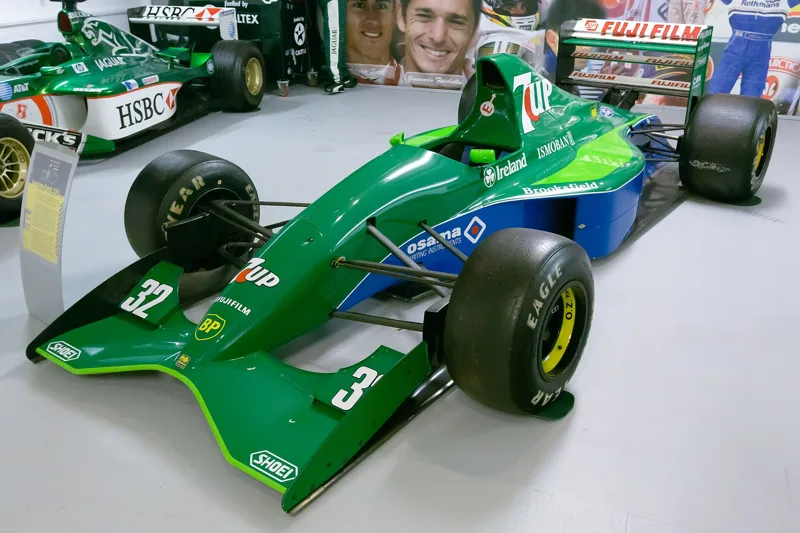
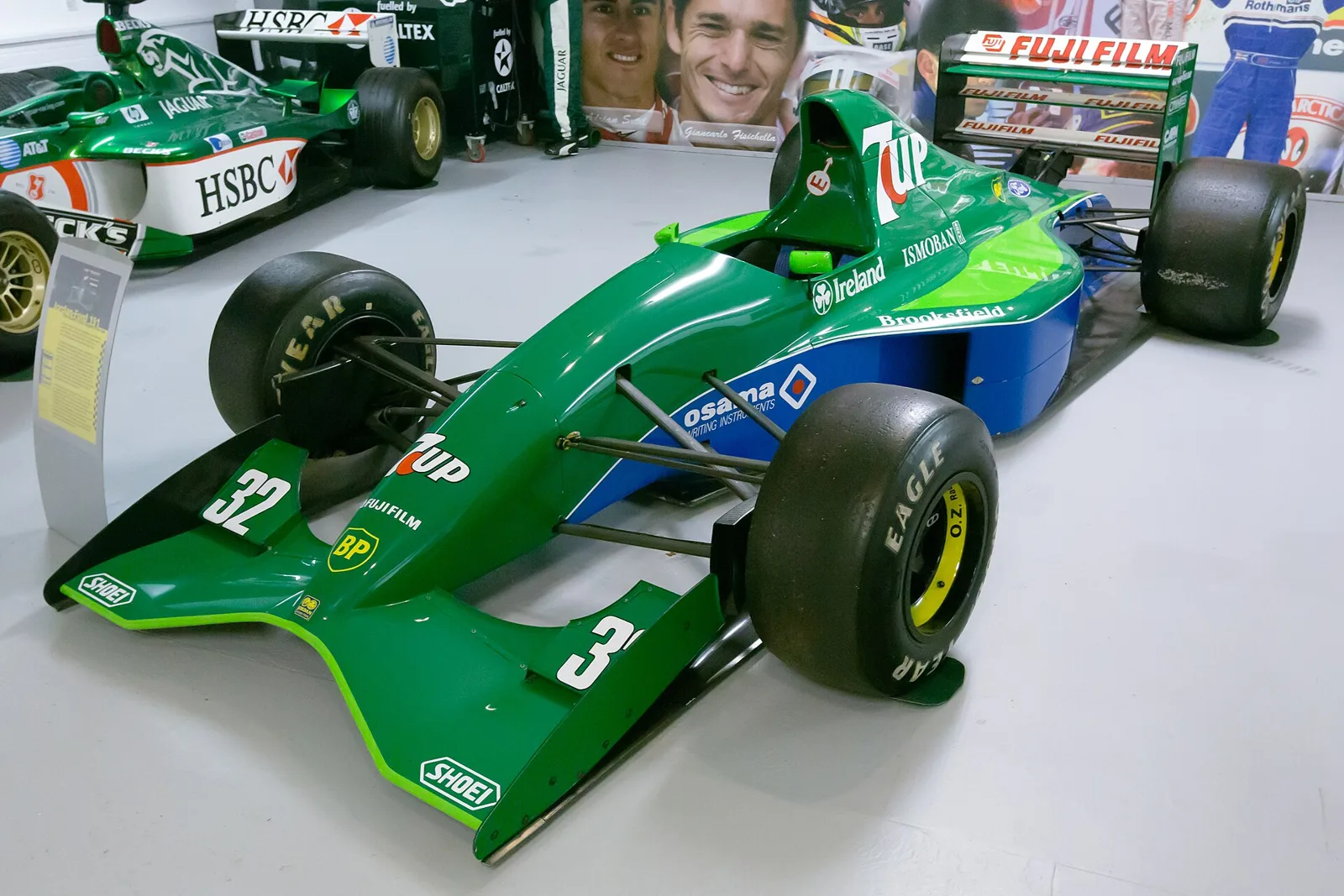
In June 1998 he became technical director at Jordan, replacing Gary Anderson, and designed the 1999 car. That season was the team's most successful ever: third in the constructors' championship, with two race victories. A move to Benetton before the 2001 season followed, and the next two and a half seasons, under the Benetton and then Renault names, brought a marked improvement, ending with victory at the 2003 Hungarian Grand Prix. By then he had been placed on gardening leave pending a move to Toyota.
At Toyota from December 2003, he could not influence the early decisions on the 2004 car, which disappointed. 2005 was Toyota's most successful season by far, with points in every race except the opener and the controversial United States Grand Prix. But the TF106 struggled in the first races of 2006, particularly in Bahrain, and Toyota dropped him in April. Toyota cited a fundamental difference of opinion over technical operations, and the parties parted ways amicably on 6 April.
Gascoyne then moved to Spyker F1 as chief technology officer, signed in September 2006. His first Spyker car, an updated F8-VII introduced in 2007, was, he said, up to three-quarters of a second a lap faster than the original. He stayed on when Spyker became Force India, until Vijay Mallya took full responsibility for running the team in November 2008. In 2009 he helped form Lotus Racing, which gained a 2010 entry and became Caterham F1; he signed an extension to 2015. In February 2012 he stepped back to become chief technical officer of the Caterham Group, and CEO of Caterham Technology and Caterham Composites.
That role took him to Le Mans, with an LMP2 entry in 2013 in collaboration with Greaves Motorsport, and to a 50/50 joint venture with the French manufacturer Alpine to develop a road-going sports car due in 2016. Outside F1 he founded MGI Engineering in 2003, a firm that develops lightweight composite solutions and now works on electric vehicles and eVtol aircraft.
Who is Aldo Costa?
Costa was born in Parma in 1961 and studied mechanical engineering at the University of Bologna. His thesis was about F1 suspension systems. He started at Abarth in Turin, calculating loads for rally cars such as the Lancia Delta Integrale, and at 27 his work caught the eye of Giancarlo Minardi, who hired him in 1988 as chief designer. By 1989 he was technical director, and he stayed in charge of technical matters until 1995.
Minardi achieved a front row at the 1990 United States Grand Prix, with Pierluigi Martini, and a best race result of fourth, repeated between 1991 and 1993. Those results helped win a partnership with Ferrari, which delivered engines to Minardi from 1991.
Costa joined Ferrari in 1995, first on the F50 GT, then in the chassis design office. From 1998 he assisted chief designer Byrne, working closely with Brawn. Ferrari's dominance from 1999 to 2008 owed much to cars such as the F2002 and F2004. When Byrne announced his retirement in 2004, Costa succeeded him as chief designer. The F2005 brought a disappointing season with a single win, in large part because the FIA, aiming to end Ferrari's dominance, changed the rules so that tyres had to last a full race. Before 2006, Costa moved up to head of design and development, with Tombazis installed as chief designer. He later served as technical director, and helped design the F2007 and F2008, the last Ferrari cars to win a championship. In May 2011, after a poor start to the season, Ferrari announced he had given up the role. Costa called his dismissal inelegant.
He joined Mercedes as engineering director in 2011. He led the design of the 2013 W04, and from 2014 to 2018 was engineering director for the championship-winning W05 to W09 cars, serving as technical consultant in 2019. Of Italian engineers, he alone has worked with both Schumacher and Lewis Hamilton. He was interim technical director from January to March 2017, until James Allison replaced him, and he stepped down from engineering director at the end of 2018, citing family reasons. In September 2019 it was announced that he would join Dallara as chief technical officer, succeeding its founder Giampaolo Dallara by 2020. In February 2024 he said Dallara worked on 17 automotive projects, from IndyCar to Formula E, and collaborated with Ferrari on its Le Mans Hypercar project.
Who is Nikolas Tombazis?
Tombazis was born in Athens in 1968, the son of the architect Alexandros Tombazis, and was expected to follow him into architecture. By the age of 10 he was hooked on Formula One in the era of the ground-effect Lotus 78 and Lotus 79, and wrote a five-page school essay on Colin Chapman. He graduated in engineering from Trinity College, Cambridge in 1989, with a specialisation in aerodynamics, then took a PhD in aeronautical engineering at Imperial College London in 1992. At Cambridge he met James Allison, later his fellow aerodynamicist at Ferrari.
After talks with McLaren failed, he answered an Autosport advertisement and joined Benetton in November 1992 as an aerodynamicist. He was head of aerodynamics by 1994. The B194 he helped to design won the drivers' title with Schumacher, in a season overshadowed by the deaths of Roland Ratzenberger and Ayrton Senna. The B195 won both titles in 1995. When Schumacher, Brawn and Byrne left for Ferrari, Brawn lured Tombazis to follow in 1997, and he went on to run aerodynamics and computational fluid dynamics.
Schumacher broke his right leg at the 1999 British Grand Prix and Ferrari lost the drivers' title, but it won the constructors' title, its first since 1983. In 2000 it won both, the first drivers' title since 1979, a moment Tombazis called really special. He left for McLaren in 2004, where he contributed to the MP4-19B, which brought Kimi Raikkonen a win at the Belgian Grand Prix. The MP4-20 of 2005 won 10 of 19 races but proved fragile, finishing 9 points behind Renault.
He returned to Ferrari in March 2006 as chief designer. His first design, the F2007, led Raikkonen to the drivers' title, with the F2008 winning the constructors' title. The 2010 to 2013 years were harder, with Fernando Alonso taking inferior machinery to the final round in 2010 and 2012 and losing both times. Tombazis later explained that the problem lay in the diffuser. He left Ferrari on 16 December 2014, argued in an August 2015 interview that he was a scapegoat, and became chief aerodynamicist of Manor in 2016. After Manor closed in March 2017, he joined the FIA in 2018, and he has been its single seater director since 2023, overseeing the 2022 and 2026 regulations. Overall he helped teams win seven Drivers' and eight Constructors' championships.
How did their careers cross?
Through Ferrari above all. Barnard worked there twice, and Costa and Tombazis worked side by side, Costa as head of design and development and Tombazis as chief designer. Costa said in a 2014 interview that he had been told he was stifling Tombazis's creativity, and asked what the results had shown since; Tombazis said in 2015 that he felt like a scapegoat. Postlethwaite connects Barnard, who worked alongside him at Ferrari, to Gascoyne, whom he took to Sauber.
Where the four designers work now
Tombazis is overseeing the 2022 and 2026 regulations for the FIA. Costa runs the technical side at Dallara, which builds cars for several single-seater series. Gascoyne's MGI Engineering is increasingly focused on electric vehicles and eVtol aircraft. Barnard, who sold his company in 2008, has moved on to furniture design.