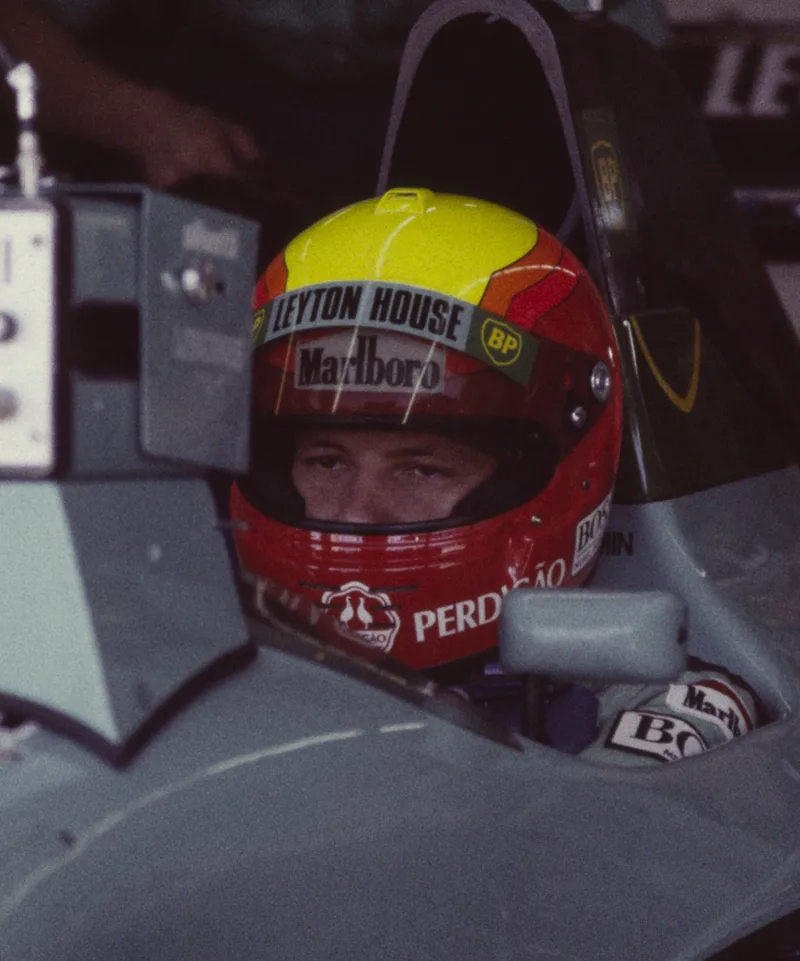
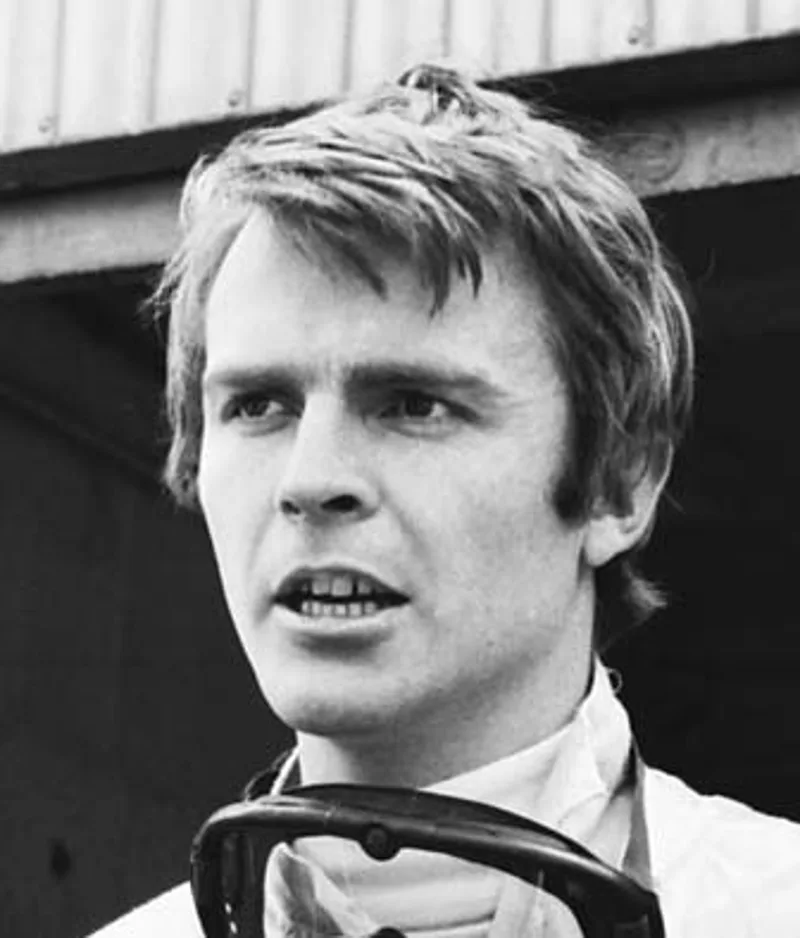
Two cars running first and second in France, a podium that lost its points, Simtek's best result of ninth, and 33 Pacific starts without a point.
Larrousse lasted from 1987 to 1994 and took one podium. Leyton House raced in 1990 and 1991 and was second in France. Simtek and Pacific both ran in 1994 and 1995, with ninth and eighth their best finishes. Each team folded or withdrew when sponsorship ran out.
For the first six races of 1990 the Leyton House team could barely get its cars onto the grid. Both drivers missed the cut in Brazil and in Mexico, and Mauricio Gugelmin was also left out at Monaco and in Canada. Then came France, where Ivan Capelli and Gugelmin lined up seventh and tenth and held the first two places for much of the afternoon. That swing from nothing to nearly everything is a fair picture of small Formula One teams: always close to failure, and now and then at the front.
Four of them share this story. Leyton House raced under that name in 1990 and 1991. Larrousse competed from 1987 to 1994, while Simtek and Pacific each entered 1994 and 1995.
Leyton House: from sponsor to team
Leyton House Racing was the March team under a new name. March had come back to Formula One in 1987 with backing from Leyton House, a brand of the Japanese property firm Marusho Kosan, which bought the team outright in 1989. Capelli and Gugelmin, who had joined March in 1987 and 1988, stayed in the cars.
The arrangement began with a death. In 1986 the driver Akira Hagiwara, who raced for Akira Akagi, died in a Mercedes 190E testing crash at Sportsland Sugo. Akagi met Capelli's manager, Cesare Gariboldi, at Imola and borrowed Capelli for Japanese Formula Two, then watched him win the 1986 International Formula 3000 title in Leyton House colours. Akagi offered US$200,000 for a full season in Japan, but Capelli and Gariboldi wanted Formula One and asked for US$4 million. Akagi agreed. Gariboldi took the idea to Robin Herd at March, and Ian Phillips became team manager.
A team that missed the grid in Brazil and Mexico was leading in France a few races later.
The March years and Adrian Newey
The first car, the March 87P, was a reworked Formula 3000 chassis powered by Ford's Cosworth DFZ. At the opening round in Brazil the team numbered 17 people, including Akagi's girlfriend, his translator and Capelli's father. Only a sports car engine was ready, and the turbocharged opposition was at least 60 mph faster on the straights, so Capelli never started. A proper car, the March 871, appeared at San Marino, and Capelli's first point came at Monaco, leaving him 19th overall.
Adrian Newey arrived in August 1987 and drew the March-Judd 881. It scored 22 points in 1988 and took second at the Portuguese Grand Prix. No other normally aspirated car led a race that year, and none had done so since 1983. Capelli got ahead of Alain Prost's McLaren-Honda on lap 16 in Japan after Prost missed a gear, though the team later learned Capelli had caught the engine's off-switch with his glove. Most of the field imitated the 881's slim monocoque and aerodynamics in 1989, and Newey became a star.
In May 1989 Akagi bought the team and the right to build F3000 cars from the publicly owned March company, so it became a manufacturer, growing from 19 staff to 120. The chassis took a CG prefix for Gariboldi, who had died that January. Despite gearbox casing problems, the team finished 12th in the Constructors' Championship with four points, all from Gugelmin's third place in an 881 at the opening race.
Leyton House at its peak in 1990
For 1990 the CG901, another Newey design, took a Judd V8. A fault in the Southampton wind tunnel hurt the car, and Newey was fired, though not before he made changes that transformed it in time for France. Helped by a decision not to stop for tyres, Capelli and Gugelmin ran one-two. Gugelmin's engine failed. Capelli led Alain Prost's Ferrari until a misfire let the Frenchman by with three laps remaining. Second was still a hugely popular finish.
Britain saw Capelli third before a fuel pipe broke, Germany a seventh place, Hungary an eighth for Gugelmin and Belgium a point for him in sixth. Then the season faded. Capelli's six points left him equal tenth in the standings and the team seventh in the Constructors' Championship, later promoted to sixth when Larrousse was disqualified.
Meanwhile Ian Phillips caught meningitis in Brazil, Akagi cut the budget and brought in an accountant, Simon Keeble, who took charge and fell out with Newey. Newey, who had an offer from Williams, took it. Phillips left for the new Jordan team, team manager Harry Mandel resigned, and Gustav Brunner became technical director.
The end of Leyton House
For 1991 Brunner and Chris Murphy drew the CG911 and the team swapped the Judd for an Ilmor V10. Capelli retired from the first nine races, even though he had run in the top six at San Marino and in Canada, and took a single point, for sixth in Hungary. The team ended 12th. In September Akagi was arrested over a financial scandal involving Marusho Kosan and the Fuji Bank, and his associate Ken Marrable took over with money short. With two races left, Karl Wendlinger took Capelli's seat; the Ilmor V10 would later power Sauber's Formula One debut, with Wendlinger one of the drivers.
Capelli went to Ferrari and Gugelmin to Jordan for 1992. A consortium that included Marrable, Brunner, the lawyer John Byfield and the Dutch businessman Henny Vollenberg bought the team, which returned to the March name, perhaps to put distance between itself and Akagi. Wendlinger was fourth in Canada. Paul Belmondo gave way to Emanuele Naspetti, and Jan Lammers came back after ten years away. Attempts to sell the team failed, and it folded in early 1993. Akagi died on 8 August 2018.
Larrousse: a French team on borrowed chassis
Larrousse Formula One began in 1987 as Larrousse and Calmels, founded by Didier Calmels and the former racer Gerard Larrousse and based at Antony, south of Paris. Calmels went to prison for murdering his wife, and the team became simply Larrousse. It raced until 1994 and its best finish was third, at the 1990 Japanese Grand Prix.
The first car, the LC87, was commissioned from Lola and used a Cosworth DFZ V8. It started with one car for Philippe Alliot, and Yannick Dalmas joined late in the year. Lamborghini V12 engines arrived in 1989, and Gerard Ducarouge had been hired as designer in September 1988. Dalmas, who had Legionnaires' disease, lost his seat after Canada that year, with Eric Bernard and then Michele Alboreto filling in. Larrousse then sold half of his shares to Japan's Espo Corporation, which paid for Aguri Suzuki. The team moved to Signes, near the Paul Ricard circuit.
The 1990 podium that left no points
Larrousse's best year, 1990, began with a forced pre-qualifying session each weekend until mid-season. Suzuki took the team's first and only podium, at Suzuka in front of his home fans, and the team was sixth in the Constructors' Championship. Then Lamborghini said it was moving to Ligier, and the FIA looked at an alleged false declaration. The team had listed itself as the car's maker when Lola had designed and built it. The honest error cost Larrousse its 1990 points, but it kept the prize money and travel benefits and was spared pre-qualifying.
Espo pulled out early in 1991, leaving the team short of cash even though the car, with Brian Hart engines, was usually quick enough for the middle of the field. Suzuki was sixth in the opening race at Phoenix and never saw the chequered flag again. Bernard picked up a point in Mexico and badly broke a leg in qualifying at Suzuka. Gachot returned for the Australian finale after being released from jail. In July the team went to a French court for protection from creditors.
In 1992 Robin Herd built a chassis and the Venturi car company took 65% of the team. With Lamborghini engines, Gachot and Ukyo Katayama, the only point was Gachot's, at Monaco. Venturi sold its shares in September to a group headed by Rainer Walldorf, whose real name was Klaus Walz and who was wanted by police in several European countries.
Collapse in 1995
The first season on its own chassis, 1993, brought just two finishes in the points. For 1994 Lamborghini left and a Peugeot deal failed, so the team used customer Ford HB engines, well behind the works Benetton's Ford. The Swiss Fast Group, run by the Ferrari dealer Michel Golay and former racer Patrick Tambay, became a partner, and the Alken-Maes brewery sponsored cars painted mainly in the colours of alcohol-free beer. Comas and Olivier Beretta drove. Reliability was poor, though Comas took two sixth places and Beretta a seventh at the German Grand Prix, where only eight cars finished after a huge start-line accident. As money ran short, pay drivers replaced them.
The team also played a part in the Benetton cheating allegations. A refuelling rig maker asked it in May to take a fuel filter off its device, and it told the FIA the night before a September meeting about Jos Verstappen's refuelling fire in Germany.
For 1995 Herd designed a car that was never built for lack of funds. A merger with the French F3000 team DAMS failed, so Larrousse ordered an upgrade of the old chassis while hoping the French government would offset the Evin law's ban on tobacco and alcohol sponsorship. A majority stake went to Laurent Barlesi and Jean Messaoudi. No government money came. The team skipped the first two long-haul races, Ford refused to supply engines without payment, Tambay and Golay went to court and a Petronas deal depended on racing. Before the San Marino Grand Prix Larrousse announced the team's withdrawal. French motorsport had already lost AGS in 1991 and seen Ligier taken over by Flavio Briatore and Tom Walkinshaw in 1994.
Simtek: an engineering firm turns racer
Nick Wirth, Max Mosley and Donald Hughes set up Simtek Research in August 1989 as an affordable design service. It started in Wirth's home with a single engineer, then moved into a Banbury site with a wind tunnel. Clients included the FIA, Ligier and Formula 3000 and Indycar teams. In 1990 it drew a Formula One car for BMW, which dropped the project; the design was later sold to Andrea Moda. After Mosley became FIA president in 1992 he sold his share to Wirth.
Wirth decided in August 1993 to enter his own team. Jack Brabham, a three-time world champion, took a shareholding and his son David signed as driver, with the 33-year-old rookie Roland Ratzenberger in the other car. The team bought Ford HB V8s from Cosworth, and MTV Europe became title sponsor.
Simtek in 1994
Active suspension was banned before the season, so the S941 was a conservative, heavy design with a manual gearbox at first and a weaker engine than the leaders. The team employed 35 people, the fewest in Formula One and a tenth of Ferrari's total. In the first race Brabham qualified last, in 26th, and finished 12th, while Ratzenberger failed to qualify. He was 11th at the second.
At San Marino, Ratzenberger lost his front wing during Saturday qualifying and went out again on a flying lap. At the Villeneuve curva, at 190 mph (310 km/h), the wing failed and he hit a concrete wall. He suffered a basal skull fracture and died instantly. No one had died at a race weekend for 12 years. Brabham chose to race on, and the next day Ayrton Senna was killed in the race.
"For Roland" was painted on the airbox. At Monaco the team had one chassis and the second grid slot was painted with the Austrian flag. Andrea Montermini crashed in Spain and broke a toe. Jean-Marc Gounon was ninth at the French Grand Prix, the team's best, helped by high attrition. Domenico Schiattarella then took the seat, and Taki Inoue crashed into the pit wall in Japan after three laps. There were no points, but Wirth carried on.
Simtek in 1995
MTV paid in airtime that Simtek resold to other sponsors. The Ford ED engine and former Benetton gearboxes went into Wirth's new S951, and Jos Verstappen replaced Brabham, who had a British Touring Car offer. In Argentina Verstappen qualified 14th and ran sixth until a slow stop and a gearbox failure, and Schiattarella was ninth. Debts had reached six million pounds in 18 months. Neither car finished a lap at Monaco. Wirth wrote that a major backer had pulled out, and Bernie Ecclestone let the team skip Canada because it had entered for 16 races and the calendar had grown to 17. Backers of Hideki Noda were hit by the Kobe earthquake, and before the next race Simtek went into voluntary liquidation. Simtek Research followed, 48 jobs were lost and the assets were auctioned.
Pacific: junior success, Formula One struggle
Keith Wiggins, a former mechanic, founded Pacific Racing in 1984 for European Formula Ford, where Harald Huysman won the European and Benelux titles. Bertrand Gachot took the 1986 Formula Ford 2000 crown and JJ Lehto the British one in 1987. Pacific then won the 1988 British F3 title at the first attempt and, in Formula 3000, Christian Fittipaldi's 1991 championship.
Wiggins asked Reynard to build a Formula One car, the PR01, for 1993. Reynard's best designers had gone to Benetton and the paper drawings were sold to Ligier, so the team started again. The Benetton B193, Ligier JS37 and PR01 shared a slab-sided, raised-nose shape. A recession and unpaid investor money forced Pacific to postpone in January 1993.
The 1994 season, delayed a year, was a disaster. Paul Belmondo and Gachot, a shareholder, drove a PR01 that had done no wind tunnel work and covered a few dozen miles of testing, with an underpowered Ilmor V10. The cars scored nothing, never finished a race and from the French Grand Prix neither qualified. In 1995 the team took the name Pacific Team Lotus, though no staff, equipment or technology came with it. Ford ED engines arrived, and the PR02 had a guaranteed place on every grid after Larrousse and Lotus left the entry lists. Montermini replaced Belmondo, and Wiggins took 25 minutes to open a champagne bottle at the car's reveal.
Results did not follow. Gachot left in mid-season, pay drivers Giovanni Lavaggi and Jean-Denis Deletraz took the seat, and Gachot came back when their money dried up. Pacific's best finishes were eighth in Germany and Australia, each as the last car, many laps down. After 33 Grands Prix the team withdrew. Wiggins returned to Formula 3000, tried Le Mans with a modified BRM chassis and closed the team in 1998. He then joined Lola and bought Bettenhausen Motorsports in 2000, renaming it HVM Racing, which left the sport after 2012.
The four teams compared
| Team | Formula One years | Best result | How it ended |
|---|---|---|---|
| Larrousse | 1987 to 1994, with an entry for 1995 | Third, 1990 Japanese Grand Prix | Withdrew before the 1995 San Marino Grand Prix |
| Leyton House | 1990 and 1991 (March from 1987) | Second, 1990 French Grand Prix | Sold, raced as March in 1992, folded in early 1993 |
| Simtek | 1994 and 1995 | Ninth, 1994 French Grand Prix | Voluntary liquidation, June 1995 |
| Pacific | 1994 and 1995 | Eighth, 1995 German and Australian Grands Prix | Withdrew after 33 starts |
Did any of the four teams return to Formula One?
None of the four exists as a Formula One entry today. Gerard Larrousse said he intended to return in 1996, but the lawsuits that followed the team's collapse made that impossible.