A Honda-backed Japanese outfit, a Jordan rebrand, a one-year Dutch team and a Malaysian project that crowdfunded its final race.
Super Aguri, Midland, Spyker and Caterham all entered Formula One between 2006 and 2010. Super Aguri withdrew in 2008 over money, Midland was sold and became Spyker and then Force India, and Caterham entered administration in 2014 after crowdfunding its final race.
In November 2014 a Formula One team asked the public to pay for its next race. Caterham, in administration and with its management gone, turned to crowdfunding, the first F1 team ever to do so, and according to media reports the sponsor on its car was a small pub in West Sussex. The money got it to the last race of the season, in Abu Dhabi, and it was gone within months. Caterham was the last of four teams, with Super Aguri, Midland and Spyker, that came into F1 between 2006 and 2010 and ended up sold on, renamed or wound up.
Which F1 newcomers of 2006 to 2010 were sold on or folded?
Super Aguri, Midland, Spyker and Caterham all arrived as newcomers, and each found a different way out. Midland and Spyker were one team under two owners, passed along inside a single year; Super Aguri was a Japanese project run from an English factory; Caterham was a Malaysian one that lasted for several seasons.
| Team | Raced | Origin | Ending |
|---|---|---|---|
| Super Aguri | 2006 to 2008 | Founded by former driver Aguri Suzuki, Honda engines, Tokyo base, English factory | Withdrew after four races of 2008 over money; administration on 7 May 2008 |
| Midland | 2006 | Jordan Grand Prix bought by Alex Shnaider of the Midland Group | Sold to Spyker Cars in September 2006 |
| Spyker | 2007 | Bought from Midland by Dutch maker Spyker Cars | Sold to a consortium led by Vijay Mallya; renamed Force India for 2008 |
| Caterham | 2012 to 2014 | Began as Lotus Racing in 2010 under Tony Fernandes | Administration in October 2014; assets auctioned from March 2015 |
Midland and Spyker were one team under two owners, passed along in a single year.
How did Super Aguri get onto the grid?
Super Aguri exists because of one driver's popularity in Japan. Honda finished buying British American Racing as 2005 ended, and chose Rubens Barrichello over Sato, who had scored only a single point that year. Public pressure in Japan, plus Sato's lasting popularity, moved Honda to help him carry on, and that fed into the creation of a team under former F1 driver Aguri Suzuki. It was based in Tokyo, but ran from the old Arrows factory at the Leafield Technical Centre in Oxfordshire, and it acted to some degree as an unofficial Honda B-team.
The path to the grid was bumpy. Talks began in February 2005, and the team registered its intention to enter on 1 November, ahead of the FIA deadline of 15 November. The FIA's entry list for 2006 did not include it, reportedly because the $48 million entry bond had not been produced on time. After re-applying, it needed the agreement of all ten existing teams. Midland appeared to be blocking, on the grounds of reduced television revenue, but the necessary unanimity came and the FIA confirmed the entry on 26 January 2006.
The car was an updated 2002 Arrows A23, called the SA05, bought from the former Minardi principal Paul Stoddart, who had acquired the cars when Arrows went into receivership. Power came from customer Honda V8 engines, on Bridgestone tyres. Sato and Yuji Ide started the 2006 season. Ide, at 31 the oldest rookie in F1, had little European racing experience and spoke no English; he retired from the Bahrain opener with a mechanical failure after nearly running over his pit crew, collided with Midland's Christijan Albers at the San Marino Grand Prix, and was reprimanded. On 10 May 2006 the FIA revoked his Super Licence.
What did Super Aguri achieve before it ran out of money?
Its best days came in 2007, with Sato and Anthony Davidson driving. The new SA07 failed its crash test at first, and was unveiled less than 48 hours before first practice in Australia, yet both cars qualified 10th and 11th, far better than the team's previous best of 17th. At the Spanish Grand Prix Sato took the team's first point in 8th place, helped by cars from Ferrari, BMW Sauber, Toyota and Williams dropping out. In Canada he finished 6th, collecting 3 points and passing the defending world champion Fernando Alonso on track. Davidson, in the points hunt there until he hit a gopher on the circuit, did not score. Those were the team's four points, all by Sato, all in 2007.
Money was the problem. Title sponsor SS United Group Oil and Gas defaulted on payments, and the team had to let go as many as 30 staff. In 2008 a takeover by the Magma Group collapsed; the cause was reportedly Honda Racing CEO Nick Fry refusing a three-year debt payment plan and wanting the whole sum at once. The team made it to the Spanish Grand Prix, allegedly with help from Bernie Ecclestone, but at the Turkish Grand Prix its trucks and motorhomes were turned away at the gate after Fry reportedly told organisers that it would not be racing. On 6 May 2008, after four races, Suzuki announced the withdrawal. Administration was confirmed the next day. German businessman Franz Hilmer later bought the assets and applied unsuccessfully to enter 2010 under the Brabham name.
What was Midland F1, and why did it last one season?
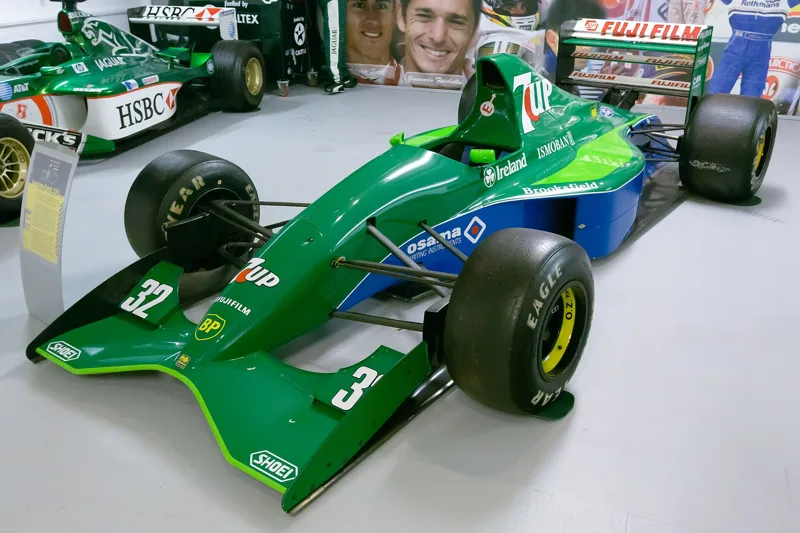
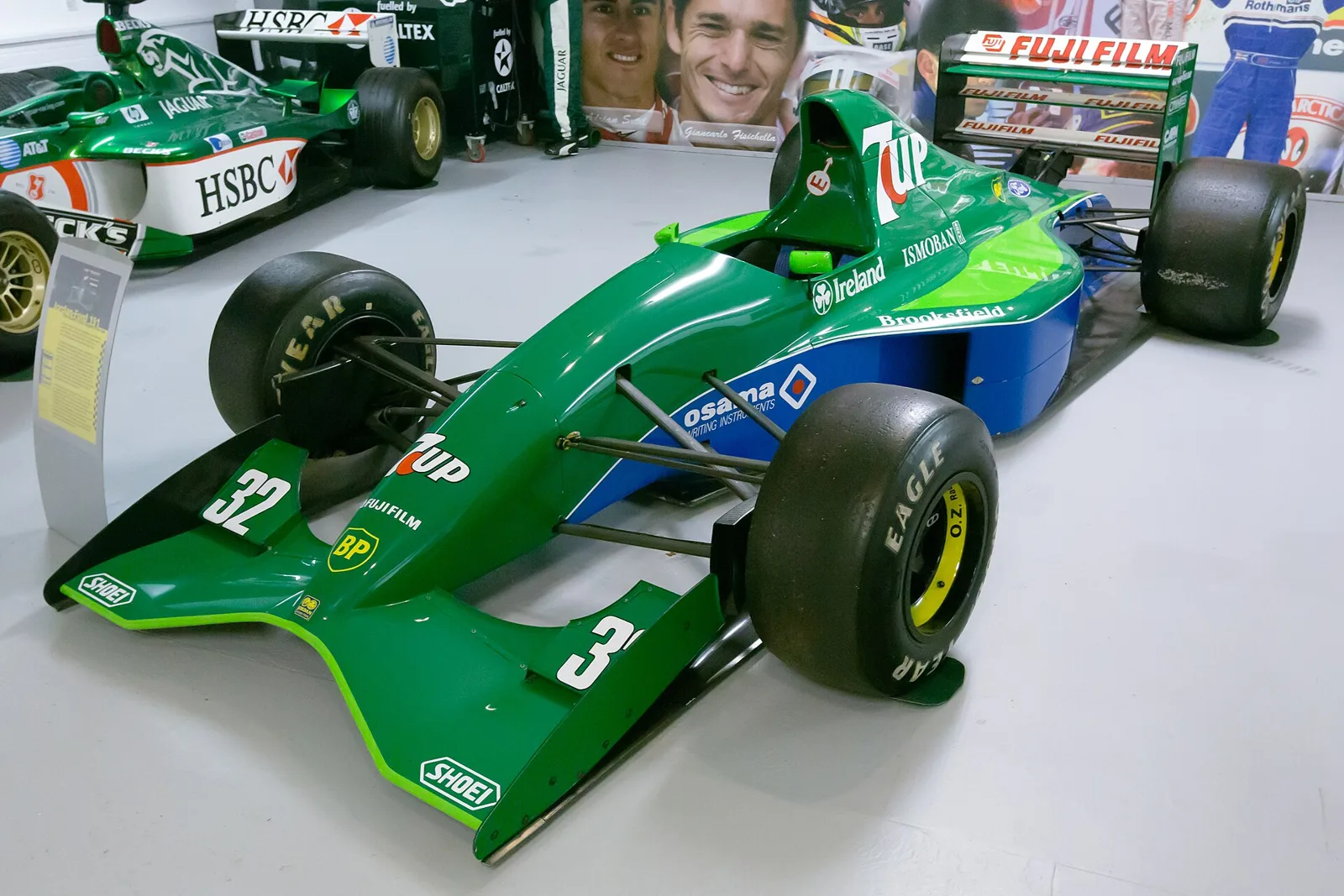
Midland's route in was a purchase. The Midland Group, owned by the Canadian businessman Alex Shnaider, bought the Jordan team before the 2005 season for $60 million. Buying Jordan made the team a legal continuation rather than a new entity, which meant avoiding the $48 million entry bond, and allowed Midland to claim the television revenue from Jordan's ninth place in the constructors' championship. It was licensed as the first Russian F1 team, though it stayed at Jordan's Silverstone factory.
The 2005 Jordan, still carrying that name, ran at the back with rookies Narain Karthikeyan and Tiago Monteiro. The high point was Monteiro's third place at the United States Grand Prix, in which only six cars started because of problems with Michelin tyres. At Spa he added an eighth place in wet conditions, the last point the Jordan name scored.
For 2006 the team became MF1 Racing, a short form that prompted a joke in the UK about a budget furniture maker. Cars were painted in the Midland Group's red, white and black, with leased Toyota customer engines. The Italian firm Dallara had been contracted to develop the M16, but the deal was discontinued after a disappointing contribution, and James Key was promoted to technical director. Shnaider had wanted F1's first Russian race driver; instead the team signed the Dutchman Albers from Minardi and kept Monteiro.
Progress came through the year. Bridgestone tyre development, plus aerodynamics and handling gains, lifted the car from running ahead of only Super Aguri to sparring with Red Bull and Toro Rosso. The team reached the second qualifying session eight times out of a possible 36, with a best of 14th, and cut its deficit from around four seconds a lap in 2005 to around 2 seconds by the time of its sale. First-lap accidents at Monaco, Indianapolis and Montreal spoiled results, and the German Grand Prix ended in disqualification, for a flexible wing that broke the technical rules.
Why was Midland sold to Spyker?
There was talk in the paddock from mid-season, less than two years after Shnaider bought the team from Eddie Jordan. Reports suggested a price of $128 million. Grid places had turned into assets: no new team could enter after 2008, and all 12 places were taken. On 9 September 2006 the news came that Spyker Cars, a Dutch maker of hand-built cars, had bought the team for $106.6 million.
The new owners could not rename the team mid-season, as FIA regulations preclude it, but they could add a sponsor name, so for the last three races it was Spyker MF1 Racing, in a revised livery. Colin Kolles stayed as team principal. Michiel Mol became Director of F1 Racing, and Mike Gascoyne joined at the end of the season in a senior technical role.
What happened to Spyker F1 in 2007?
The Spyker F1 Team raced under a Dutch licence, only the second Dutch constructor after Boro Racing in 1976 and 1977. Livery switched to orange and silver, orange being the national colour and racing colour of the Netherlands. It stayed based in the UK. Customer 2006-spec Ferrari engines replaced the Toyota units, which went to Williams. In March two Abu Dhabi companies, Etihad Airways and Aldar Properties, signed on as sponsors, so the entry became the Etihad Aldar Spyker F1 Team.
Adrian Sutil, one of the 2006 third drivers, joined Albers. The pair swapped numbers 20 and 21 inside the team because Albers wanted an odd one. Albers was released on 10 July for lack of sponsorship money that would have funded development. Mol called the decision one of the toughest of his career. His replacement for the European Grand Prix, Markus Winkelhock, led the race, the only Spyker driver to do so, because of the team's tyre choice, but the seat then went to Sakon Yamamoto. A B-Spec car failed the rear crash test in August and then passed it in time for the Italian Grand Prix.
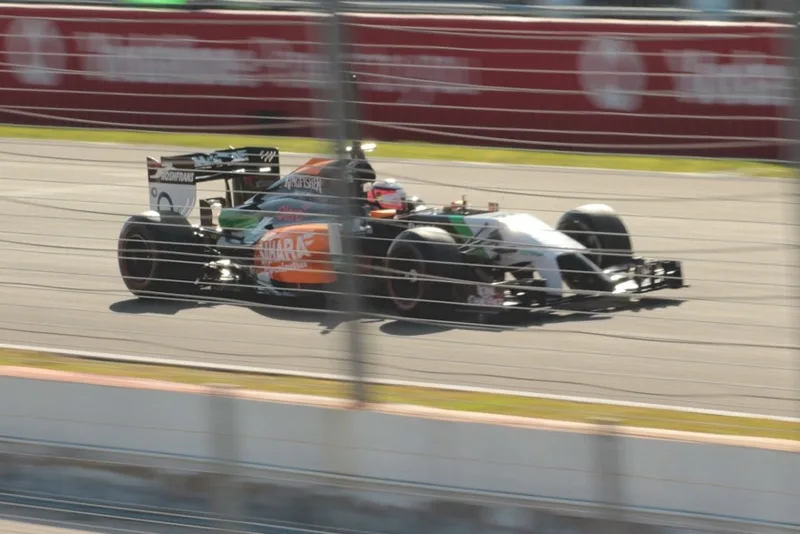
The team's only championship point arrived at the 2007 Japanese Grand Prix on 30 September. Sutil crossed the line 9th, and stewards later ruled that Toro Rosso's Vitantonio Liuzzi had passed him under a yellow flag on lap 55. A 25-second penalty moved Sutil up to 8th. Spyker Cars warned in August that all or part of the team might have to go, since it could split from its parent company, and a consortium called Orange India took it over, led by the Indian businessman Vijay Mallya together with Mol, a Dutch entrepreneur already on the board. For 2008 the team was renamed Force India.
How did Caterham reach Formula One?
The Caterham story is the longest of the four. Tony Fernandes' team entered F1 in 2010 as Lotus Racing, borrowing the Lotus name from Group Lotus and running as 1Malaysia F1, a project tied to the national 1Malaysia initiative of the then Prime Minister, Najib Razak. Proton, which owned Group Lotus, ended that licence, so for 2011 Fernandes took over the separate, privately owned Team Lotus name. Proton began legal proceedings, and Fernandes bought the British sportscar maker Caterham Cars. It ended 2011 tenth in the constructors' standings, and in November 2011 applied to change its constructor name to Caterham for 2012, while Renault became Lotus.
For 2012 it moved to Leafield, previously home to Arrows and Super Aguri. The Caterham CT01 was the team's first car built to run KERS. Vitaly Petrov replaced Jarno Trulli, who was unhappy with the lack of development, alongside Heikki Kovalainen. Kovalainen reached the second part of qualifying in Bahrain, eliminating Michael Schumacher, finished 13th at Monaco ahead of Jenson Button, and took 14th in Valencia. The team beat Marussia to 10th in the constructors' championship in the final race, when Petrov scored a team-record 11th place.
Why did Caterham fall away?
In 2013 the drivers were Charles Pic and rookie Giedo van der Garde, who took the team's best-ever qualifying position, 14th, at the Belgian Grand Prix. Despite a faster car than Marussia's, Caterham finished behind them in 11th. In 2014 Marcus Ericsson and Kamui Kobayashi joined, and Fernandes told staff he would walk away if results stayed flat. After Monaco, Caterham held the record for race starts without a single point, because Marussia's Jules Bianchi had just finished 9th and scored for his team.
In July 2014 Swiss and Middle Eastern investors bought the team, with Colin Kolles advising them. Christijan Albers took over day-to-day running. Kobayashi missed the Belgian Grand Prix, where Andre Lotterer, a three-time Le Mans winner, made his F1 debut and retired with mechanical problems. More than forty former employees began legal action for unfair dismissal after cost cuts by the new owners.
On 21 October 2014 Caterham entered administration, with Smith and Williamson in control. Ecclestone let the team skip the United States and Brazilian Grands Prix, though missing a race broke the rules; at the first of those, the FIA stewards chose not to impose any penalties, given the team's finances. A crowdfunding campaign raised the money to compete in Abu Dhabi, and on 14 November it was reported to have succeeded, to the dismay of some F1 figures including Ecclestone. Kobayashi drove, with Will Stevens, aged 23, in the second car. The team also took part in the post-season test.
A December 2014 dispensation to use 2014 cars in 2015 did not save it. On 27 February 2015 the FIA issued a new entry list that put Manor Marussia back in and left Caterham out. In March the assets went to auction and the team officially folded. In November 2014, 230 staff not directly involved in Grand Prix preparation were made redundant, and they received redundancy payments in January 2019, more than four years after the bankruptcy.
What links the four teams?
Place and people. Leafield, the Oxfordshire base, was home to Arrows, then Super Aguri, then Caterham. The Silverstone factory that once built Jordans carried on through Midland and Spyker. Colin Kolles and Mike Gascoyne appear in more than one story, Albers drove for Midland, Spyker and later ran Caterham, and Giedo van der Garde was named a Super Aguri third driver, left for Spyker's reserve list and later raced for Caterham. Sakon Yamamoto moved from Super Aguri to Spyker.
What did it mean for the car brands behind the teams?
Two of the four were tied to road-car makers. Fernandes acquired the British sportscar manufacturer Caterham Cars and formed the Caterham Group, and after the Caterham Group separation the Caterham name was used under licence. The Dutch firm Spyker Cars bought Midland and carried the orange and silver already seen on its Spyker Spyder GT2-R into F1.
What survives of the four teams?
The Midland and Spyker line carried on as Force India from 2008. Intellectual property from Super Aguri is still owned by Formtech Composites, at the Leafield factory, after Franz Hilmer's unsuccessful bid to enter 2010 under the Brabham name.