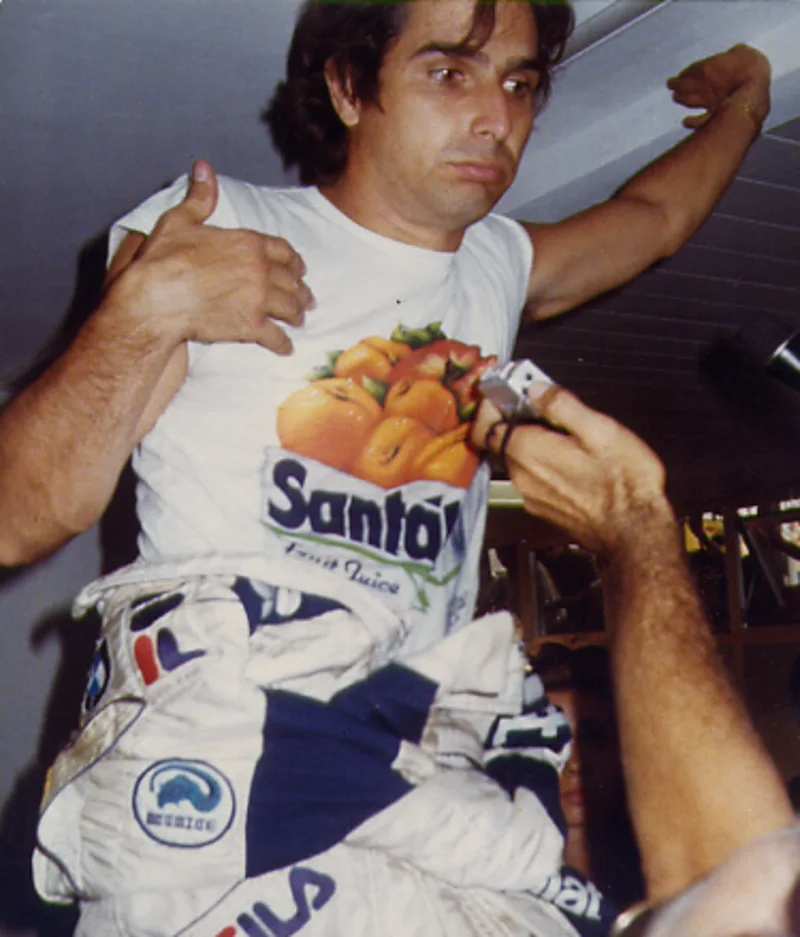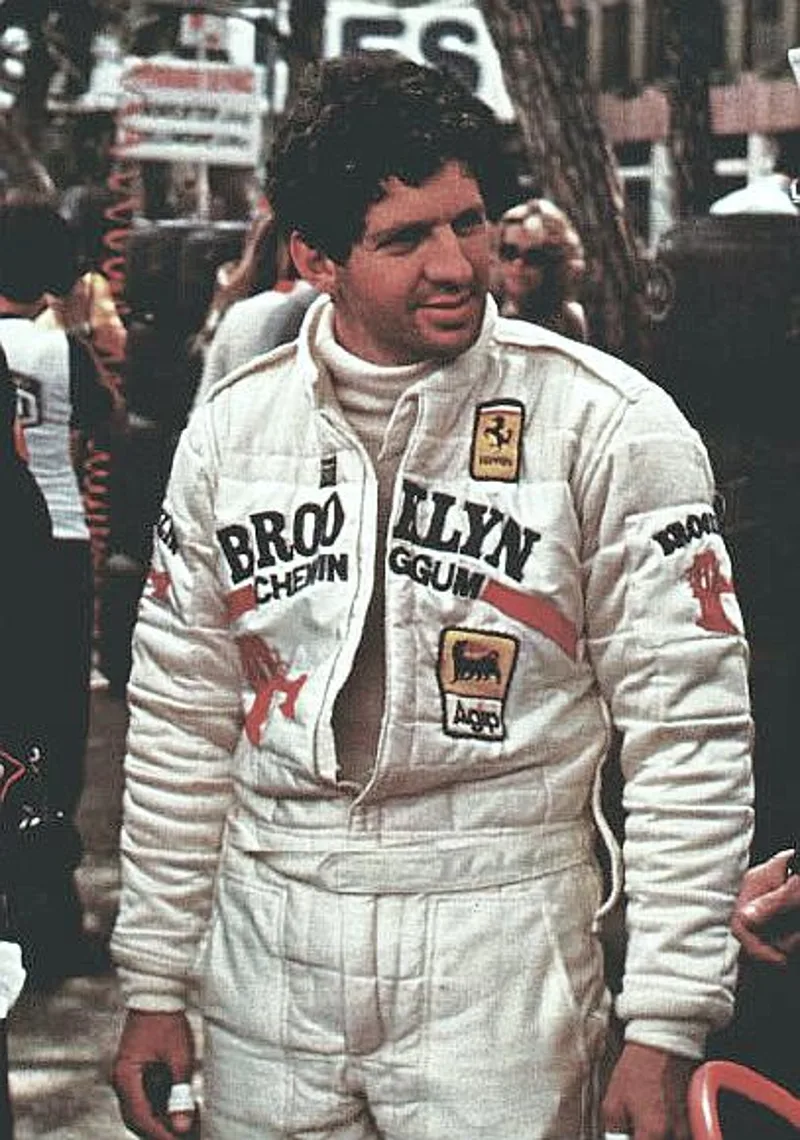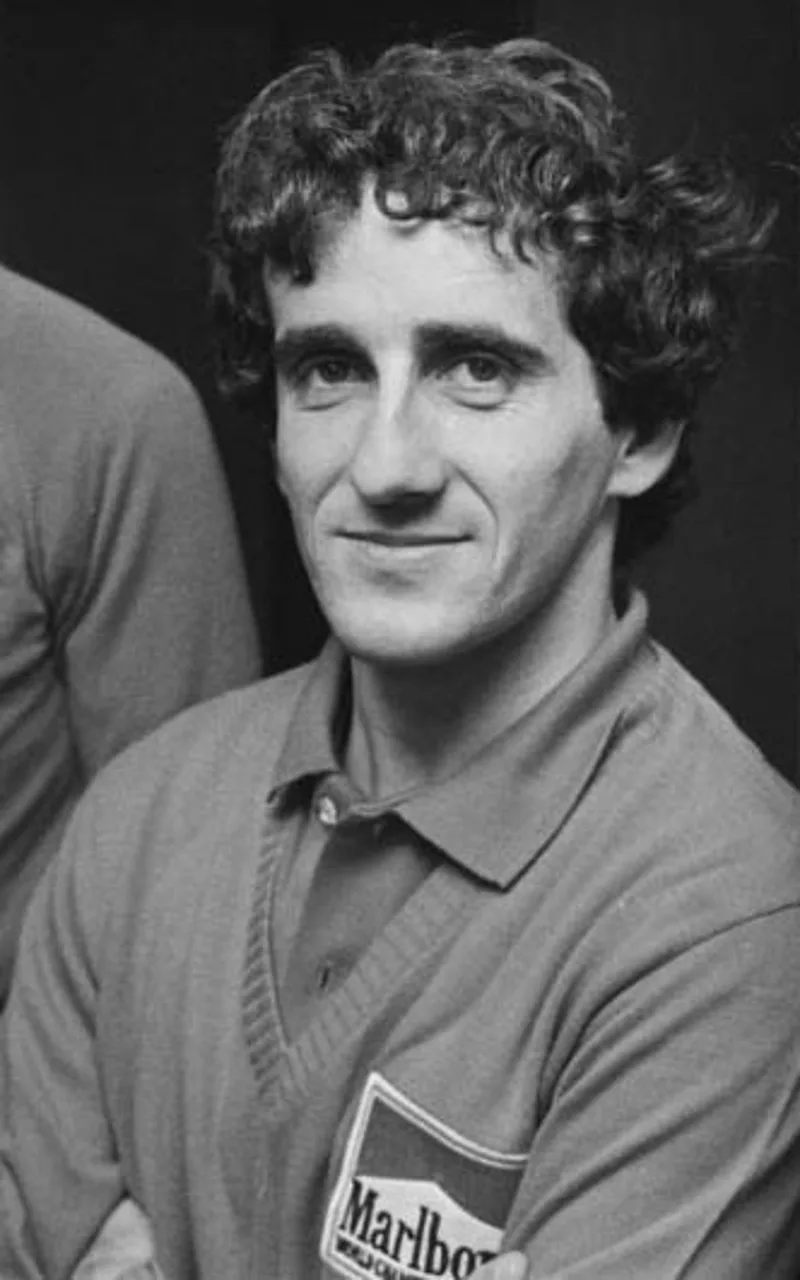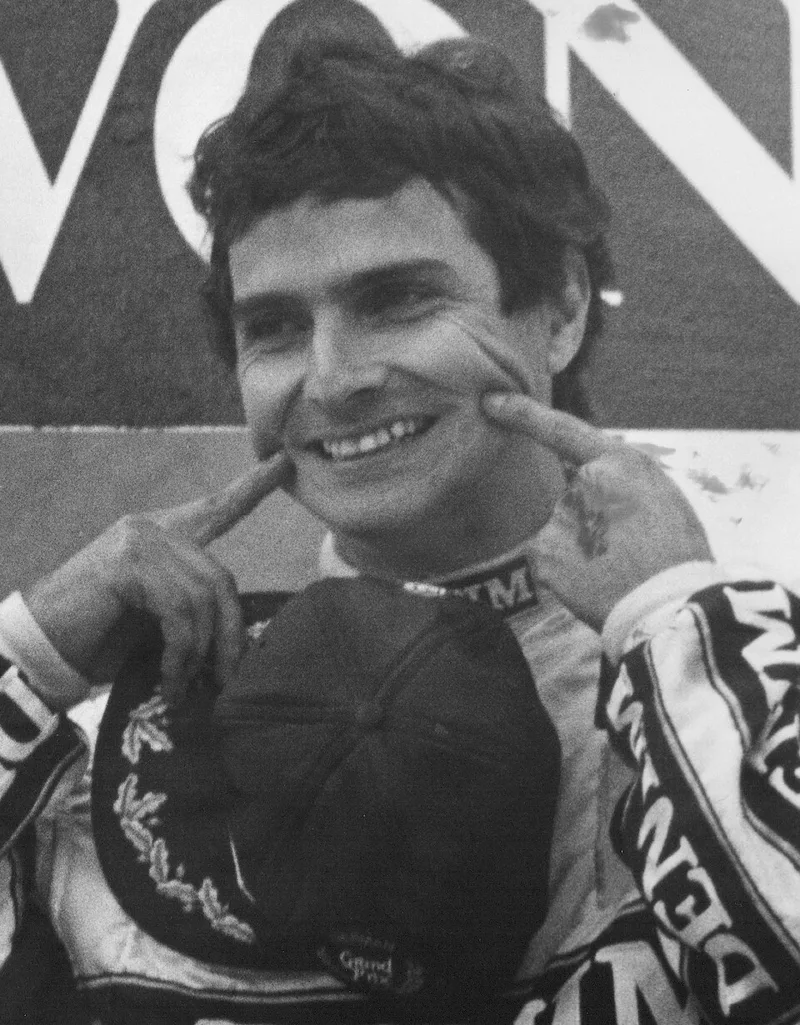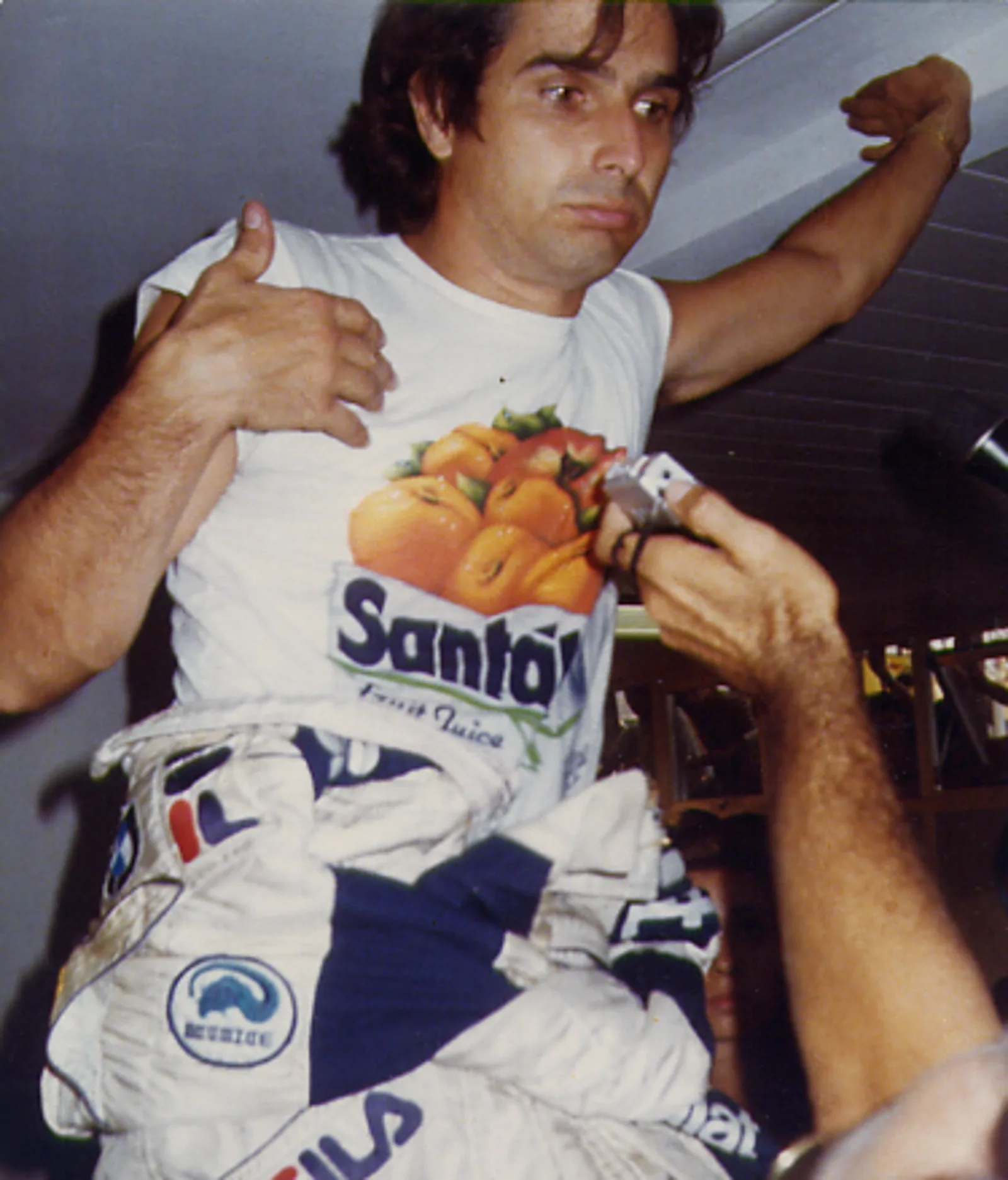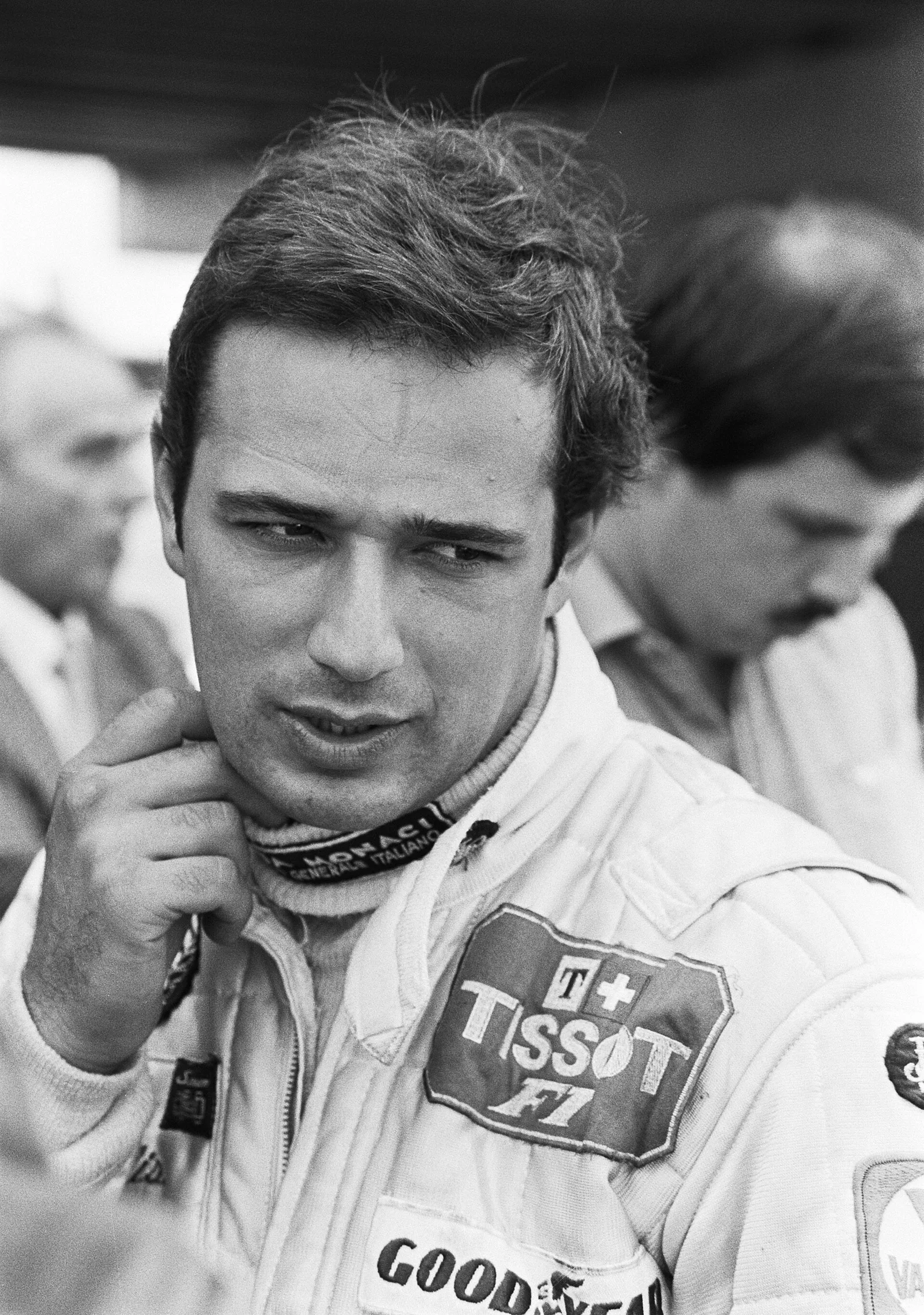
Fifteen podiums before a first win, six victories and a title chase, a pianist who won by 0.05 seconds, and a Belgian who held off Senna in Hungary.
Depailler, Laffite, de Angelis and Boutsen won thirteen Grands Prix between them and never took the world title. Laffite won six, Boutsen three, and Depailler and de Angelis two each. Their careers also led to safety changes at Hockenheim and Paul Ricard.
Patrick Depailler stood on the Formula One podium 15 times before he won a Grand Prix, and nobody has ever done it more often before a first victory. That record, which he still shares, says a lot about the four drivers in this story. Depailler, Jacques Laffite, Elio de Angelis and Thierry Boutsen won between them 13 Grands Prix and were never champion.
None of them lacked speed. Laffite took six wins and chased the 1979 title to the final races, de Angelis finished third in the 1984 championship, and Boutsen was the best non-turbo driver of 1988. What they shared was the wrong car at the wrong moment, and for three of them an accident that changed circuits or cars.
Patrick Depailler, the man who kept finishing second
Patrick Andre Eugene Joseph Depailler was born in Clermont-Ferrand on 9 August 1944 and was inspired as a child by Jean Behra. He drove in Formula One from 1972 to 1980 and won two Grands Prix across eight seasons, along with one pole, four fastest laps and 19 podiums.
From Formula Two to Tyrrell
He first stood out in 1972 at the Formula Two Pau Grand Prix, where he finished 0.9 seconds behind Peter Gethin after a 70-lap fight in a March 722. Tyrrell gave him drives in France and at Watkins Glen that year, and he finished seventh at the American race in an older car. In December 1973 the team picked him and Jody Scheckter to replace the late Francois Cevert and the retired Jackie Stewart.
He took pole for the 1974 Swedish Grand Prix in only his ninth race, on the 4.01 km (2.49 mile) Anderstorp circuit, and finished second behind Scheckter. In January 1975 he was given 25-1 odds of winning the championship, and that year he took fifth in Argentina and third in South Africa.
In 1976 the Renault sports car team suspended him for three races after he crashed on the second turn of a 180-mile (290 km) race at the Nurburgring and Jean-Pierre Jabouille crashed trying to avoid him; the pair had been told not to fight each other for the lead. In Formula One he was a regular front-runner in the six-wheeled Tyrrell, second to James Hunt in France and again in Canada, where he inhaled fumes over the last third of the race and lost consciousness after pulling off. He took second in Japan on a drying track despite tyre problems, ahead of Hunt, who finished third and won the world title.
The Monaco win
Depailler skidded off at Interlagos in the 1977 Brazilian Grand Prix and went to hospital with a leg injury. In December of that year he was promoted to number one at Tyrrell as Ronnie Peterson left for Lotus. Tyrrell also dropped its six-wheeler. In 1978 he was third in Argentina and lost the South African Grand Prix on the last turn of the last lap, when his car ran short of fuel and Peterson wiped out a nine-second gap. He climbed from 12th on the grid to third at the United States Grand Prix West, then took his first win at Monaco in the Tyrrell-Ford 008. It was his first victory in 69 championship races, after eight second places.
Ligier, the hang glider and Alfa Romeo
For 1979 he joined Ligier, whose new JS11 swapped the Matra V12 for a lighter Ford Cosworth V8. He led the first ten laps in Argentina before engine trouble and finished fourth. He was second to teammate Laffite in Brazil, more than five seconds back, and then won the Spanish Grand Prix at Jarama from flag to flag. That put him level with Gilles Villeneuve on 20 points at the top of the table.
Then, on 3 June 1979, he broke both legs and critically injured a heel in a hang gliding accident near his hometown. The Ligier team had French government support, which required a French-speaking driver, so the Belgian Jacky Ickx took his seat. In 1980 Depailler joined the newly formed Alfa Romeo team, using special brakes to toughen his leg muscles and still driving in pain. The car was fast, and he qualified third for the United States Grand Prix West, but it was not reliable enough to finish.
Hockenheim and what it changed
On 1 August 1980, ten days before the German Grand Prix, a suspension failure at Hockenheim pitched his Alfa Romeo 179 into the Armco at the fast Ostkurve. It overturned, vaulted the barrier and slid along the top for several hundred feet. He suffered fatal head injuries. A chicane was built into the Ostkurve, first used in the 1982 German Grand Prix. His home town has a radio-controlled car circuit named after him, the Mini Circuit Patrick Depailler, and Xavier Laurent played him in the 2013 film Rush.
Depailler took 15 podiums before his first win, still a shared record.
Jacques Laffite, six wins and a title chase
Jacques Laffite was born in Paris on 21 November 1943 and learned to race at the Winfield Racing School at Magny-Cours in 1968. Frank Williams gave him his Formula One debut in the 1974 German Grand Prix. A year later he was second in the German race at the Nurburgring and took the European Formula Two title for Martini.
He moved to Ligier in 1976, scoring 20 points and a pole position at Monza. His first win came at Anderstorp in the 1977 Swedish Grand Prix. After a winless 1978 the team built the JS11 for the ground effect era, and Laffite won the first two races of 1979, including a grand slam in Brazil. He fought for the title until the last races but finished fourth with 36 points after eight retirements. He was fourth again in 1980 and 1981, adding three more wins between the two seasons.
Williams, Ligier again and the Brands Hatch crash
In 1982 he failed to finish 11 of 15 races and ended 17th with five points. After two winless years at Williams he returned to Ligier in 1985 and took podiums in Britain, Germany and Australia. In 1986 he added two more podiums before the British Grand Prix, where he broke both legs in a crash at the start at Brands Hatch.
He retired from Formula One with six wins, seven poles, seven fastest laps and 32 podiums. His 176 starts tied Graham Hill for the most Grands Prix. He took six of Ligier's nine wins, making him the most successful driver in the team's history. New rules from 1988 required the driver's feet to be behind the front axle line, a direct response to his injuries.
Beyond Formula One
Laffite made three trips to the non-championship Australian Grand Prix, finishing second to Alain Prost in 1982. He also won sports car races in 1975 at Dijon, Monza and the Nurburgring, started the Le Mans 24 Hours nine times and, from 1997 to 2012, worked as a presenter for the French network TF1.
Elio de Angelis, the pianist who won by 0.05 seconds
Elio de Angelis was born in Rome on 26 March 1958. His father, Giulio, was a wealthy property developer who also won world championships in powerboat racing. After a short spell in karts, Elio won the 1977 Italian Formula Three Championship, raced Formula Two in 1978 and won the prestigious Monaco F3 race. At the end of 1977, aged 19, he was on Enzo Ferrari's shortlist to replace Niki Lauda and tested at Fiorano, but Ferrari signed Gilles Villeneuve.
Lotus and a record as the youngest podium finisher
He made his Formula One debut with Shadow in 1979, finishing seventh in Argentina. Lotus boss Colin Chapman hired him to partner Mario Andretti in 1980, and at 21 he became the youngest podium finisher of all time with second place at Interlagos in the Brazilian Grand Prix.
His first victory came in the 1982 Austrian Grand Prix, 0.05 seconds ahead of Keke Rosberg's Williams. It was the last win that Chapman celebrated by throwing his cap in the air; he died that December. In 1983 Lotus changed from the Cosworth DFV it had used since 1967 to Renault turbos, and a season of mechanical failures yielded a best of fifth in Italy.
The 1984 season was far better. De Angelis scored 34 points, took three podiums and finished third in the championship, with second place at Detroit as his best. He was the only driver in the top five that year without a race win, a measure of his consistency. In 1985 Ayrton Senna arrived from Toleman. De Angelis took his second and last win at the San Marino Grand Prix, after Alain Prost's McLaren MP4/2B was found 2 kg underweight and Prost was disqualified. He also claimed his last pole in Canada and finished fifth with 33 points, five behind Senna, then left Lotus, frustrated that the team's efforts centred on the Brazilian.
The BT55 and Paul Ricard
For 1986 he moved to Brabham to replace Nelson Piquet, who had gone to Williams to join Nigel Mansell, a former Lotus teammate of de Angelis. Riccardo Patrese was his teammate. Gordon Murray's BT55 was a low-line car with a reduced frontal area, but its four-cylinder BMW turbo had to be tilted at 72 degrees, which caused severe oil surge and poor throttle response, and it was clear early on that Brabham had fallen behind.
On 14 May 1986, three days after he retired from the Monaco Grand Prix on lap 31 with engine failure, de Angelis was testing at the Paul Ricard circuit in France when the BT55's rear wing detached at high speed. The car lost downforce at the rear, cartwheeled over a barrier and caught fire. The impact itself did not kill him, and his actual injuries were a broken collar bone and light burns, but he could not get out of the car by himself. There were few marshals at the circuit, and a helicopter took 30 minutes to arrive. He died 29 hours later in a Marseille hospital from smoke inhalation.
Formula One stopped using the full 5.812 km (3.612 mile) Paul Ricard layout and moved to the 3.812 km (2.369 mile) Club version, which bypassed the Verriere curves where he crashed and cut the Mistral Straight from 1.8 km to 1 km. The full circuit returned in 2018 with sharper Verriere curves and a chicane that split the straight. Derek Warwick took his place at Brabham. No Formula One driver died in a car again until Roland Ratzenberger at Imola eight years later, and Senna died the day after that.
The gentleman player
De Angelis was a concert-standard pianist. When the Grand Prix Drivers Association went on strike over new Super Licence conditions before the 1982 South African Grand Prix, the drivers locked themselves in a Johannesburg hotel, and he kept them entertained with concertos by Chopin and Mozart. Jean Alesi later wore a helmet matching his design, and in 2017 he was honoured at the Ludovico Scarfiotti Memorial in Rome.
Thierry Boutsen, the Belgian who won in the rain
Thierry Marc Alain Boutsen was born on 13 July 1957. After winning the Volant V at the Andre Pilette Racing School in Zolder in 1977, he won the Belgian Formula Ford 1600 championship in 1978 with 15 victories in 18 races. He moved to Formula 3 in 1979 and was runner-up in the European series in 1980, behind Michele Alboreto. In 1981 he was second again, this time in Formula 2 behind Geoff Lees.
A frightening Le Mans accident
At the 1981 Le Mans 24 Hours his WM P81-Peugeot suffered a suspension failure at around 350 km/h (217 mph) after the Hunaudieres kink and lost its entire rear end against the guard rail. Boutsen was unhurt, but flying debris struck three marshals and a gendarme, and marshal Thierry Mabilat was killed.
In sports cars he took victory in the first ever Group C race, the Monza 1000 km of 1983, in a Porsche 956 with Bob Wollek, and the 1985 Daytona 24 Hours in a Porsche 962 shared with Wollek, A. J. Foyt and Al Unser Sr. In 1986 he won the Group C world title with the Walter Brun team and the Spa 1000 km.
Arrows, Benetton and the first win
Boutsen paid $500,000 for a drive in 1983 and made his debut for Arrows at his home Grand Prix on the shortened 7 km (4.3 mile) Spa circuit. Backing from Barclay kept him at Arrows for three more seasons. In 1985 he finished third at Imola behind Prost and de Angelis; Prost was disqualified for being 2 kg underweight, which promoted Boutsen to second and handed de Angelis the win. He finished 11th overall that year.
He moved to Benetton in 1987 as Teo Fabi's teammate and took third in Adelaide when Senna was disqualified. In 1988, with the Rory Byrne-designed B188 and a naturally aspirated Ford V8, Boutsen scored points in 10 of 16 races, five of them thirds behind the all-conquering McLaren-Hondas, and finished fourth overall as the best non-turbo driver. Frank Williams signed him that summer to replace Mansell.
In 1989 he drove the Renault V10-powered Williams FW12C and took his first win at the Canadian Grand Prix in the wet. He had run last at one point and spun a full 360 degrees without hitting anything, but he caught and passed the struggling Patrese and took the lead three laps from the end when Senna's Honda V10 failed. He was the first new winner in Formula One since Berger in 1986. He added a second win in the rain-soaked Australian Grand Prix, even though he had been one of the drivers protesting about conditions.
The Hungarian win and the drop to Ligier
His third and last win came in Hungary in 1990, from his first pole, leading from start to finish while holding off Alessandro Nannini and Senna. Even so, Williams wanted a star for 1991 with Mansell available, and kept Patrese instead of Boutsen, who had won three races in two years to Patrese's one. Boutsen dropped to Ligier, whose Lamborghini-powered JS35 was uncompetitive, then in 1993 took a Jordan seat that Barclay secured. He was too tall for the car and was outpaced by Rubens Barrichello. He failed to score in ten races, and Jordan made his home Grand Prix a farewell, a send-off that ended with a first-lap retirement.
After Formula One he led Ford's Super Tourenwagen Cup effort in 1994, then drove a Porsche 911 GT1 for Champion Racing in America, taking second in class at the 1997 Daytona 24 Hours and the GT-1 US Championship in 1998. A crash at Le Mans in 1999 in a Toyota GT-One left him severely injured, and he retired. Today he runs Boutsen Aviation in Monaco, which he founded in 1997 with his wife Daniela and which had sold 205 aircraft by May 2011.
Four winners compared
| Driver | Formula One years | Grand Prix wins | Standout figure |
|---|---|---|---|
| Patrick Depailler | 1972 to 1980 | 2 (Monaco 1978, Spain 1979) | 19 podiums; joint record of 15 before his first win |
| Jacques Laffite | 1974 to 1986 | 6 | Fourth in 1979, 1980 and 1981 |
| Elio de Angelis | 1979 to 1986 | 2 (Austria 1982, San Marino 1985) | Third in 1984 |
| Thierry Boutsen | 1983 to 1993 | 3 (Canada 1989, Australia 1989, Hungary 1990) | Fourth in 1988 |
What their careers changed
Three of the four left a mark on the sport's safety. Depailler's death led to the Ostkurve chicane at Hockenheim in 1982. Laffite's broken legs led to the rule that drivers' feet must sit behind the front axle line from 1988. De Angelis's accident ended the full Paul Ricard layout for Formula One until 2018.
Their careers also touched. Depailler finished second behind teammate Laffite in Brazil in 1979. Boutsen and de Angelis shared the Imola podium in 1985, where Prost's disqualification handed de Angelis the win and Boutsen second place. Depailler, Laffite and Boutsen all drove for Ligier at some point.