Stunt jumps that wrecked a car per episode, a pink six-wheeled Rolls-Royce and a talking Trans Am: the engineering behind four screen icons.
KITT was a modified 1982 Pontiac Trans Am, the General Lee an orange 1969 Dodge Charger, FAB 1 a pink six-wheeled Rolls-Royce and the 1966 television Batmobile a customised Lincoln Futura concept car. Stunts, models and replicas shaped how each was built and used on screen.
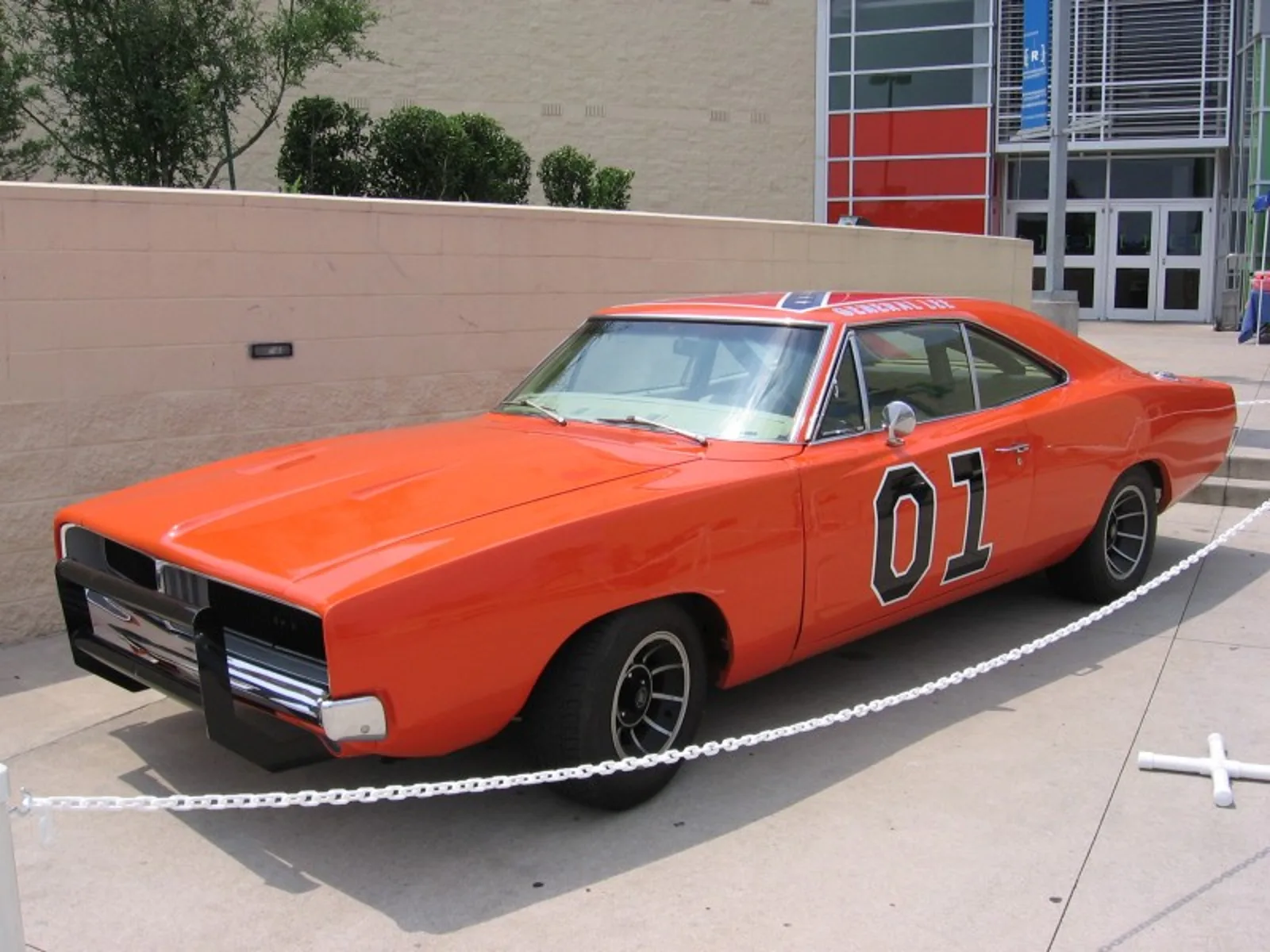
Averaged over the run, The Dukes of Hazzard scrapped more than one General Lee per episode. The orange 1969 Dodge Charger appeared in every episode but one, and its famous jumps wrecked the car, so the production kept finding replacements until the supply of 1968 and 1969 Chargers in Southern California ran thin.
Behind the General Lee sit three other television cars with their own odd engineering stories: KITT from Knight Rider, Lady Penelope's pink FAB 1, and the Batmobile. Each started as a fictional machine and had to be built, or faked, for the cameras.
Television's famous cars side by side
| Car | Real base vehicle | Series | Notable figure |
|---|---|---|---|
| KITT | 1982 Pontiac Firebird Trans Am | Knight Rider | Claimed turbo boost beyond 322 km/h (200 mph) |
| General Lee | 1969 Dodge Charger | The Dukes of Hazzard | Estimated 255 to 325 cars used |
| FAB 1 | Modified Rolls-Royce with six wheels | Thunderbirds, 1965-66 | Puppet-size model cost about 2,500 pounds in 1966 |
| Batmobile | Lincoln Futura concept car | Batman, 1966-1968 | Name coined in February 1941 |
More than one General Lee was discarded per episode.
General Lee Dodge Charger: how the Dukes' car was built
The General Lee has doors welded shut, so the Dukes climb in through the windows, and a horn that plays the first 12 notes of "Dixie". It is named after the Confederate general Robert E. Lee and carries a Confederate battle flag on its roof. The idea grew out of a bootlegger's car: Jerry Rushing's, which took its name from Lee's favourite horse, Traveller. The same name went on the car in Moonrunners, a 1975 film that preceded the series.
Gy Waldron, who created the series, had a Pontiac Firebird in mind for the part. He gave way to the stunt coordinator Al Wyatt Sr, who knew what a 1969 Charger could take because three of them had worked for him on the 1974 film Dirty Mary, Crazy Larry. The jumps, some of them more than 40 feet in the air, demanded heavy modification. Crews loaded 230 to 450 kg (500 to 1,000 pounds) of sandbags or concrete into the trunk to stop the nose dropping, and raised the front end by turning the torsion bars to maximum height so that the lower valance would not scrape the ramp. Stunt drivers enjoyed the flights and hated the landings, which were violent and nose-down, and the unibody usually failed. Every car used in a big jump was retired, and post-production editing hid the damage.
Estimates of the total number of General Lees differ. Cast member Ben Jones and builders have said 325, while others say about 255, and around 17 originals survive. Chargers from 1968 and 1969 were converted, and no 1970 models appeared until the 2005 film. As the car became the star, Warner Bros moved building in-house to keep its look consistent. When Chargers grew hard and expensive to find, the producers reused jump footage and, in the final season, radio-controlled miniatures, much to the annoyance of several cast members.
Georgia cars and the builders
Episodes 1 to 5 were filmed in Covington and Conyers, Georgia, in November and December 1978, using five Chargers. The first three were labelled LEE 1, 2 and 3 for editing. LEE 1, a 383 V8 second-unit car with a roll cage, made the famous jump over a police cruiser. LEE 3, the close-up car shown in the first publicity photos, had a 440 Magnum engine with 375 hp and weighed 1,665 kg. In 2012 LEE 1 was sold at the Barrett-Jackson Scottsdale auction to the golfer Bubba Watson for US$110,000 (US$121,000 with the buyer's premium). He later said he would repaint it and remove the Confederate flag, and confirmed in 2020 that he had.
From the second to the fourth season the cars were built by Andre and Renaud Veluzat, who reportedly charged Warner Bros $250 a week per car plus $2000 to $3000 when one was destroyed; the money helped restore Gene Autry's Melody Ranch. Because their builds were inconsistent, fans sent Warner Bros complaints, and by 1983 production moved fully in-house under strict specifications. Piper Cubs searched for 1968 and 1969 Chargers from the air, jumped cars were repaired where possible rather than scrapped, and a rivalry with Knight Rider pushed the production to attempt ever bigger jumps with models.
The Dukes of Hazzard film used about 24 Chargers from 1968 to 1970. Some stunt cars drove themselves, while engineless ones were fired without drivers from a diesel-powered catapult, a cousin of the launch gear on aircraft carriers. Professional drifter Tanner Foust handled the drifting, and car 020, the only four-speed, is road-worthy and privately owned by Troy Martinson in Minnesota.
KITT from Knight Rider: a supercomputer on wheels
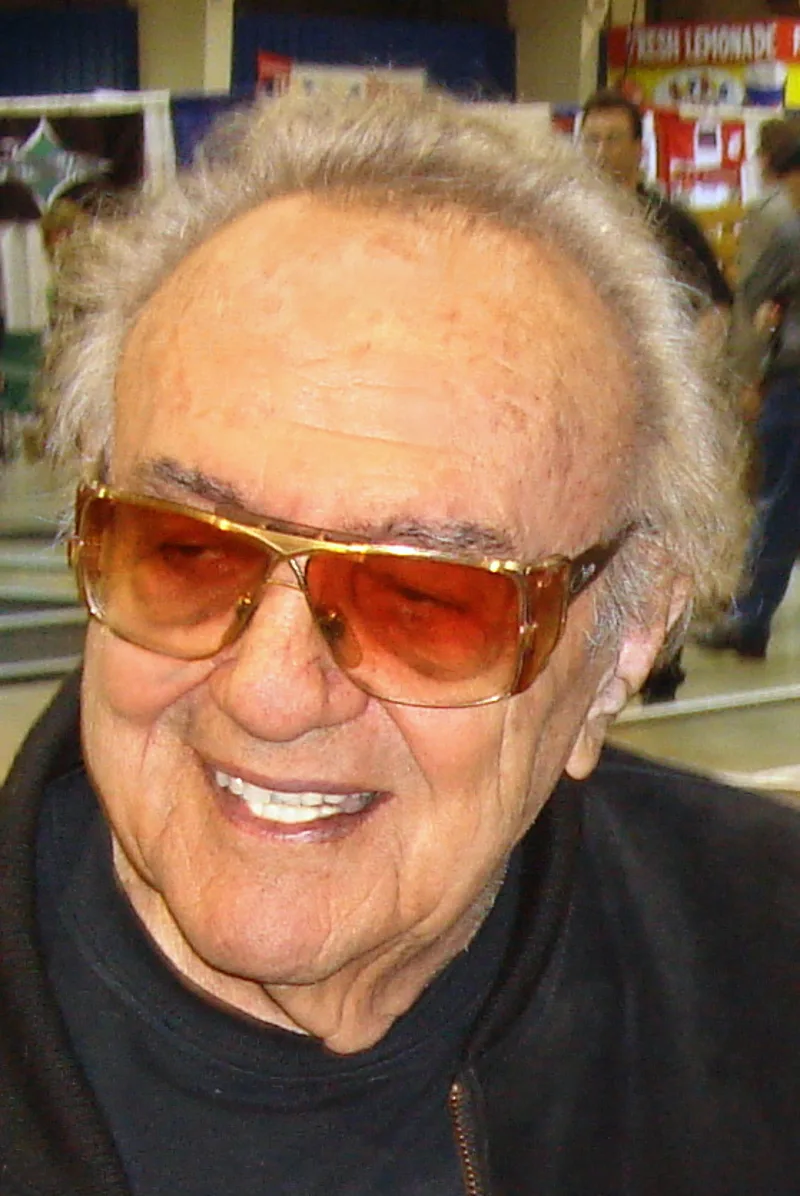
KITT, short for Knight Industries Two Thousand, is an artificially intelligent module inside a highly advanced car. The first KITT was a modified 1982 Pontiac Firebird Trans Am, designed by customizer Michael Scheffe, with convertible and super-pursuit versions built by George Barris, and voiced by William Daniels. A second KITT, the Knight Industries Three Thousand, appeared in the rebooted series and its 2008 pilot as a 2008-2009 Ford Shelby GT500KR. In the 1991 film Knight Rider 2000 the original is destroyed and its microprocessor passes to the Knight 4000, a modified 1991 Dodge Stealth.
Within the story, the car was designed by the billionaire Wilton Knight, who founded FLAG, the Foundation for Law and Government, and its initial production cost was put at $11,400,000. His original processor sat in a government mainframe in Washington, until Knight decided it would be better used in a crime-fighting car. KITT can think, learn and speak, has a bruisable ego, and carries 1,000 megabits of memory with one-nanosecond access.
Gadgets and modes
The front-mounted scanner is the Anamorphic Equalizer, a fibre-optic array that can see in X-ray and infrared; creator Glen A. Larson said it referred to the Cylons of Battlestar Galactica, and the show even reused the Cylon scanner sound. KITT can scan buildings and monitor radio and phone traffic, analyse vital signs with an EKG, sniff for bombs, and use a microwave jammer to break electronic locks, work ATMs or apply a car's brakes by heating its fluid. The body has a shell called Tri-Helical Plasteel 1000 MBS that stops almost all conventional firearms. A coating withstands sustained heat of 426 degrees Celsius (800 degrees Fahrenheit).
On the road, KITT has four modes: normal cruise with the hero Michael in control, auto cruise using collision avoidance, pursuit mode that blends manual and computer control, and a silent mode that muffles the engine. Rocket boosters give a turbo boost that can lift the car over obstacles and push it beyond 322 km/h (200 mph), and the fictional 0 to 60 mph time is 2 seconds. The fiction says it runs mainly on hydrogen but can burn any combustible liquid, with fuel economy of at least 65 mpg. In reality the engine was a 5.0L V8 making 145 hp, and some stunt cars used a turbocharged 3.8L V6. Other equipment includes ejection seats, tyre spikes, a parachute, a winch and grappling hook, flamethrowers under the bumpers and a rotating licence plate, reading KNI 667 when turned.
FAB 1 from Thunderbirds: Lady Penelope's pink Rolls-Royce
FAB 1 is a pink six-wheeled car from the 1960s British series Thunderbirds, its films and its remake. It belongs to Lady Penelope Creighton-Ward, International Rescue's London agent, and her butler Aloysius Parker normally drives. In the original series and the films Thunderbirds Are Go (1966) and Thunderbird 6 (1968) it is a modified Rolls-Royce with a central driving position under a bulletproof bubble canopy. Brains, the inventor of the Thunderbirds machines, added machine guns, a smoke screen, an oil slick dispenser, extendable tyre studs, and hydrofoils and skis for water and snow.
Gerry Anderson said that, given Penelope's personality, it could only be a Rolls-Royce. The company agreed to the use of its brand, because the programme was aimed at children and might give its cars a modern image, on condition that the full name Rolls-Royce always be used on screen. Designer Derek Meddings gave the car six-wheel drive purely for looks, putting two sets of wheels at the front. The shooting models ranged from a miniature 15 cm (six inches) long to a puppet-size version of 1.8 or 2.1 m, built of plywood, aluminium and chrome-plated brass for about 2,500 pounds in 1966, about 44,300 pounds in 2025 money. Rolls-Royce supplied a real radiator grille with a Spirit of Ecstasy for the close-ups. That model, the most expensive prop of the series, is now owned by the filmmaker Peter Jackson.
The 2004 film and later versions
For the 2004 live-action film, Rolls-Royce, and BMW as its owner, wanted no part of a redesign, so the producer Working Title turned to Ford, which based the car on its eleventh-generation Thunderbird. The pink car kept six-wheel drive and gained flight: its boot panels open to reveal a gas turbine, wings extend, and the rear wheels fold up. It was built as a working, road-going car, and James May drove it for Top Gear, noting that its length made small English villages awkward. Ian Adcock of The Daily Telegraph said it understeers like a yacht. Critics were split, with Motor Trend praising it and SFX calling it rather ugly, and Gerry Anderson disliked the design so much that he lost interest in the film. It was displayed at the Heritage Motor Centre in Gaydon.
In the Thunderbirds Are Go remake FAB 1 has a grey-silver bonnet and boot lid, flies and can travel underwater, and its machine guns have been replaced by missiles and torpedoes, though it keeps the smoke screen and oil slick.
Replicas
A 22-foot (6.7 m) replica was built in 1968, on the chassis of a Bedford VAL coach, to carry Gerry and Sylvia Anderson to the London premiere of Thunderbird Six. It cost 10,000 pounds and had a fibreglass body and a Bedford petrol six. It broke down after a few hundred yards on the night, and the Andersons finished by taxi. Rolls-Royce tried several times to buy and destroy it, and local police later asked its museum owner not to drive it on public roads. It is now in a museum in Florida. A second replica, on a Rolls-Royce Silver Spirit, attended Anderson's funeral on 13 January 2013. The registration FAB 1, first issued in July 1946, was bought by Chris Evans in 2012 for 75,000 pounds.
Batmobile history: from a red car to the Futura
The idea of a dedicated car for Batman dates to Detective Comics #27 of May 1939, where he drives an unnamed red car. The name "Batmobile" did not appear until issue #48 in February 1941. Batman #5, from March 1941, introduced a long, streamlined version with a tall scalloped fin and a bat head on the front, which the Joker forced off a cliff three pages later. Since then it has had a bat motif, usually wing-shaped tailfins, and has served for pursuit, carrying prisoners, riot control and forensic work on the move.
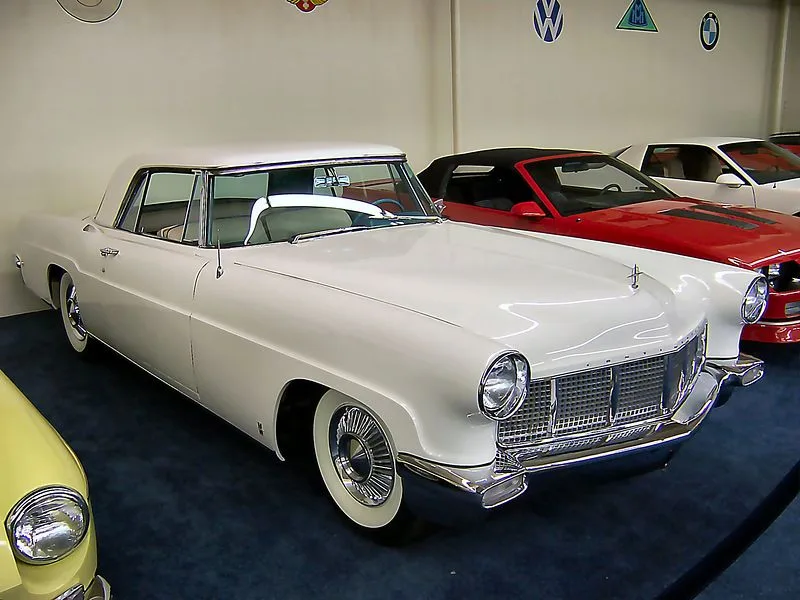
The best-known television Batmobile started as a concept car, the Lincoln Futura, ten years old by then. George Barris owned it, and his shop made the modest changes for the 1966 to 1968 Batman series. The show's popularity brought its campy tone into the comics, and when it was cancelled in 1968 the comics turned darker and dropped that car. Animation followed its own path: Super Friends adapted the Futura with a V-shaped hood and the first yellow bat emblems on the doors, then revamped it in 1978, while Filmation's 1968-69 Batman/Superman Hour gave a long black car with a light-blue underside, jets and inflatable pontoons.
The comics have since run through many designs. In the Bronze Age the stunt driver Jack Edison built the cars. Batman: The Dark Knight Returns turned it into a tank, a 2008 owner's manual gave it a theoretical five-cylinder engine of up to 10,000 hp (7,500 kW), a 2009 version could fly and fire 19 types of projectile, and in 2011 it was redesigned again. The DC Universe version since DC Rebirth is more rectangular and armoured. In the animated series Batwheels, the Batmobile is voiced by Jacob Bertrand.
What the cars tell collectors
Each car has a different afterlife. LEE 1 sold for US$110,000, FAB 1's puppet model belongs to Peter Jackson, car 020 is road-worthy in Minnesota, and about 17 original General Lees remain. The FAB 1 registration sold for 75,000 pounds. George Barris appears twice in these stories, building KITT's convertible and owning the Futura that became the 1966 Batmobile.