A Rimac Nevera needs 1.82 seconds to reach 100 km/h on a good day, and the rules about how that is timed decide who really holds the record.
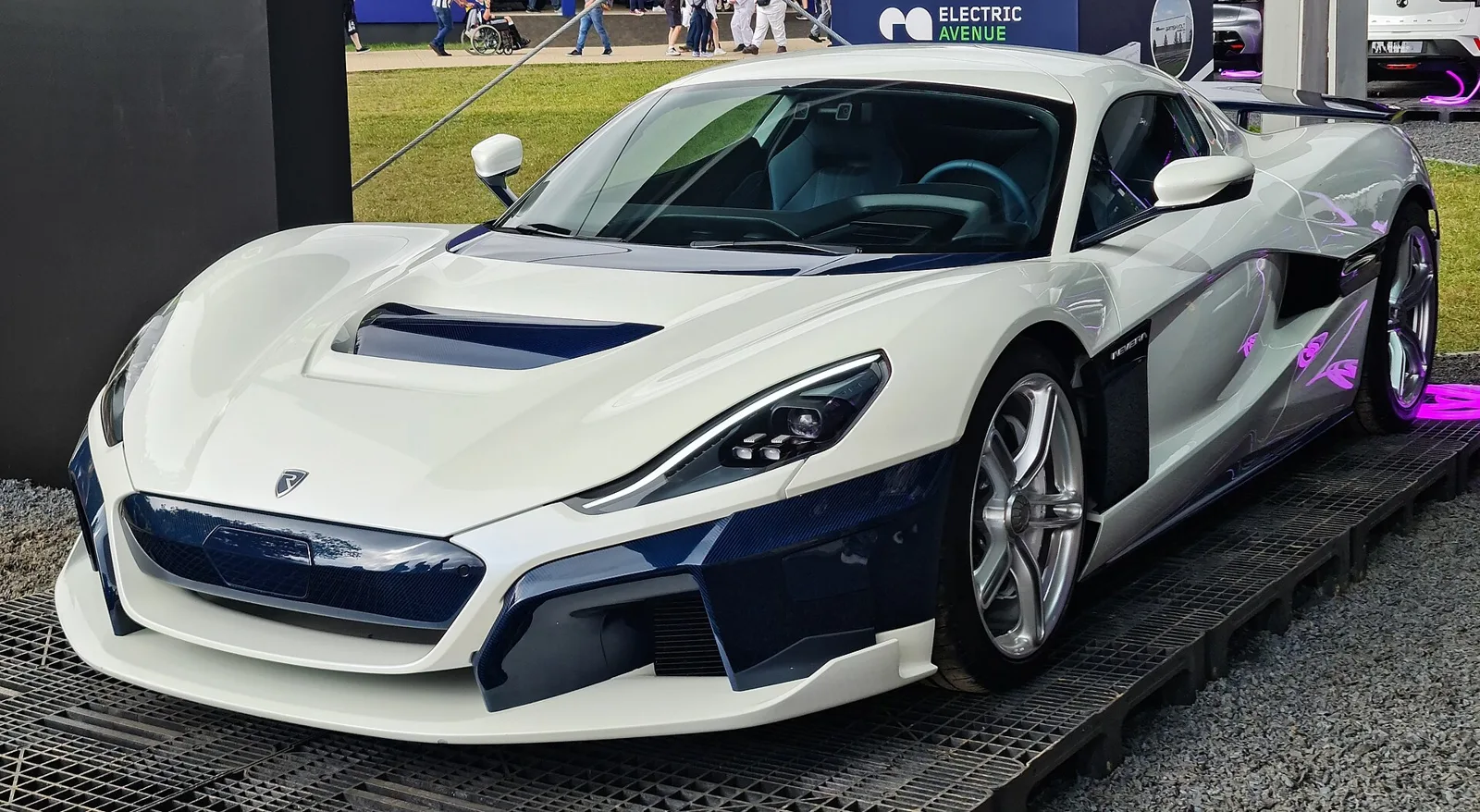
The Rimac Nevera is the quickest accelerating production car, with a record of 1.82 seconds from 0 to 100 km/h in May 2023. Four independent electric motors and torque vectoring explain the pace, but quoted times vary with the test method, tyres, rollout and conditions.
On a single day in May 2023, a Rimac Nevera set 23 performance records, among them 0-100 km/h in 1.82 seconds. A little over a year later, the track-focused Nevera R came with a published 0-100 km/h time of 1.88 seconds, despite making more power. Both figures are on the record, and the gap between them tells you almost everything about how fast cars are timed.
What is the quickest accelerating production car?
The Rimac Nevera is the car to beat. In its May 2023 record day, Rimac announced 0-97 km/h (0-60 mph) in 1.74 seconds and 0-100 km/h (0-62 mph) in 1.82 seconds, plus a quarter mile of 402 m in 8.25 seconds.
| Measure | Rimac Nevera | Rimac Nevera R |
|---|---|---|
| 0-97 km/h (0-60 mph) | 1.74 s | 1.74 s, or 1.66 s in other tests |
| 0-100 km/h (0-62 mph) | 1.82 s | 1.88 s |
| Top speed | 412 km/h (256 mph) in videos released November 2022 | 430 km/h (267 mph) |
| 0-400-0 km/h (0-249-0 mph) | 29.93 s | 25.79 s |
| Power | 1,914 PS (1,408 kW; 1,888 hp) | 2,107 PS (1,550 kW; 2,078 hp) |
Both numbers are honest, and the gap between them tells you how fast cars are timed.
How does the Rimac Nevera accelerate so quickly?
It has four electric motors, one for each wheel, so every corner of the car is pushed independently. Each is a carbon-sleeve permanent-magnet motor linked to the wheel through a single-speed gearbox, and combined they produce 1,914 PS (1,408 kW; 1,888 hp), with 2,360 N-m (1,741 lb-ft) of twisting force.
Picture four strong people each pushing a corner of a heavy sofa, with a coach telling every one of them how hard to shove from moment to moment. That coach is the torque vectoring, and it is why the car can put so much power down without simply spinning its tyres. The Nevera R sharpens the idea. Its motors were improved to produce 2,107 PS (1,550 kW; 2,078 hp) with the same 2,360 N-m, it is lighter at about 2,265 kg (4,993 lb), and it wears Michelin Cup 2 tyres with a more negative camber. Rimac says this combination reduces understeer by 10 per cent and increases lateral grip.
Aerodynamics that matter at 430 km/h
The Nevera R also gains a fixed rear wing, a larger diffuser and a redesigned front bumper, which Rimac says increases downforce by 15 per cent and aerodynamic efficiency by 10 per cent. Its claimed 0-300 km/h time is 7.89 seconds, with a top speed of 430 km/h (267 mph) on the claimed list.
Who builds the Nevera, and how many exist?
Rimac Automobili is a Croatian company, and almost all key components are designed and made at its headquarters near Zagreb. The car made its first appearance at the 2018 Geneva Motor Show, under the name Rimac C_Two, and was renamed for launch. Nevera is a Croatian word for sudden, short storms with lightning that hit the Adriatic coast. Over more than three years Rimac refined the car in an extensive test and development programme.
Production has been limited to 150 cars. The first production-specification car was delivered in August 2022 to Nico Rosberg, the 2016 Formula One World Champion, and US deliveries began in June 2023. Rimac's founder and chief executive, Mate Rimac, said in May 2024 that more than 50 vehicles had reached customers, a sign that the pace was slower than expected. The Nevera is built at the same factory, at roughly one a week, as the Pininfarina Battista, which uses the same platform.
Testing before the records
Before any of those headlines, the car had to be proven. Rimac built four prototypes for different tests during global homologation, and in June 2020 it opened a facility at Veliko Trgovisce to assemble homologation prototypes and customer cars. The plan was to make four vehicles per month at full capacity, together with 13 prototypes for crash testing to destruction and 10 pre-production cars by the end of 2020. European crash testing was finished in 2021 and the US passive safety tests in February 2022, after four years of testing.
One detail shows the company's humour. A fire extinguisher in the back is held by a leather strap embossed with a joke aimed at the Grand Tour presenter Richard Hammond, who survived a fiery Concept One crash during a hill climb with a broken leg.
The rest of the record book
Straight-line speed is not the car's only specialty. On 15 November 2022, Rimac published two videos of the Nevera hitting 412 km/h (256 mph) on the Papenburg test track in Germany. It set the production EV record at the Goodwood Festival of Speed with 49.32 seconds on 17 July 2023 and at the Nurburgring with 7:05.298 minutes on 18 August 2023, driven by Martin Kodric. Rimac advertises a range of 647 km (402 miles) on the NEDC cycle and 490 km (300 miles) on WLTP, and says a fast charger can recharge the battery to 80 per cent in under 30 minutes.
How did electric cars take the 0-100 crown?
Not in one leap. The Tesla Model S, produced from 2012 to 2026, is widely described as having been highly influential among electric cars. Tesla began work around 2007 under the codename WhiteStar, showed a prototype in Hawthorne, California on 26 March 2009 and started series production at Fremont in June 2012. Motor Trend made it Car of the Year in 2013, and by 2015 it outsold every other plug-in electric vehicle in the world.
The recipe was a mostly aluminium body and a battery pack in the floor, which gives a centre of gravity height of 18 inches (460 mm) and a weight distribution of 46 per cent at the front and 54 per cent at the rear. It used a single-speed reduction gear, and a claimed drag coefficient of 0.24, a figure Car and Driver independently verified in 2014.
How the Model S came together
The path was messy. Henrik Fisker was first appointed lead designer, but after a dispute with Elon Musk he was replaced by Franz von Holzhausen, who had designed the production exterior by 2008. In the meantime a small team of engineers bought a Mercedes-Benz CLS, cut out its floor and fitted a modified battery pack from a Tesla Roadster, building a working battery-electric prototype in three months that had 120 miles (190 km) of range. They then repeated the exercise, stretching the wheelbase by four inches (10 cm) to match early Model S specifications.
Weight was the central worry, because the battery pack was so heavy. Musk chose aluminium over steel, arguing that the rest of the car had to be lighter than a comparable petrol car or performance would suffer. Tesla bought the former General Motors and Toyota factory at Fremont in 2010 for $42 million, while Toyota put $50 million into Tesla for a 2.5 per cent stake. The first production Model S was shown to employees, selected customers and the press there on 22 June 2012.
Adding motors, adding speed
The power climbed steadily. The 1,000 Signature cars of 2012 had an 85 kWh battery and an induction motor making 270 kW (362 hp), or 310 kW (416 hp) for the Signature Performance. In 2014 Tesla replaced the P85 with the P85D, adding a front motor so that the car had all-wheel drive and a combined 515 kW (691 hp) and 931 N-m. The P90D that followed in 2015 raised the figure to 568 kW (762 hp) and 967 N-m. The 2021 update introduced the Plaid, which uses three permanent magnet synchronous reluctance motors. Production ended in May 2026.
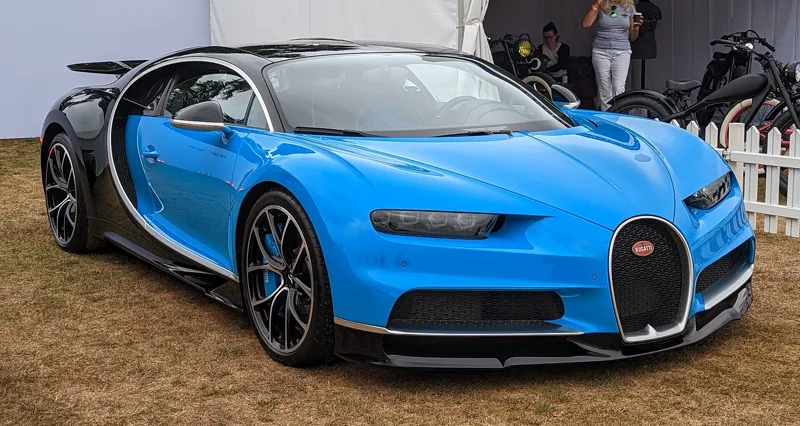
Car and Driver put the Nevera's significance in plain terms in its review: this was the moment a battery-powered car beat the Bugatti Chiron, and it suggested the internal-combustion engine might never catch up. Road & Track called the Nevera's acceleration savage and unrelenting, and Top Gear gave a pre-production car 9 out of 10 in 2021 while noting that the brakes take some getting used to.
Why are quoted 0-100 and 0-60 times so often disputed?
Because a time is only meaningful together with the way it was taken. The list that ranks these cars accepts only unmodified production cars, on their original manufacturer-supplied road tyres, with 25 or more built and sold new to the public. Times must come from reliable sources, and an independent source or at least video footage is needed to confirm the car and tyre condition. Self-published video, such as YouTube drag races, does not count.
The 0-60 mph table has to allow for many variables. Tyres, altitude, driver weight, the timing equipment, the weather and the surface of the track all influence a time. North American publications often take one foot of rollout before starting the timer, and the list includes times that leave out the first foot. The 0-100 km/h table, by contrast, accepts only standing starts with no rollout, which means the two tables cannot be compared exactly. A run that declines by up to one per cent from start to finish still qualifies.
The Nevera R illustrates the problem neatly. Its 0-97 km/h time is 1.74 seconds in one set of figures and 1.66 seconds in other tests, the same car, with different conditions or methods. Its published 0-100 km/h time of 1.88 seconds is slower than the base Nevera's 1.82, even though the R has more power, which is another reminder that each figure belongs to its own run.
What does the 0-400-0 test show?
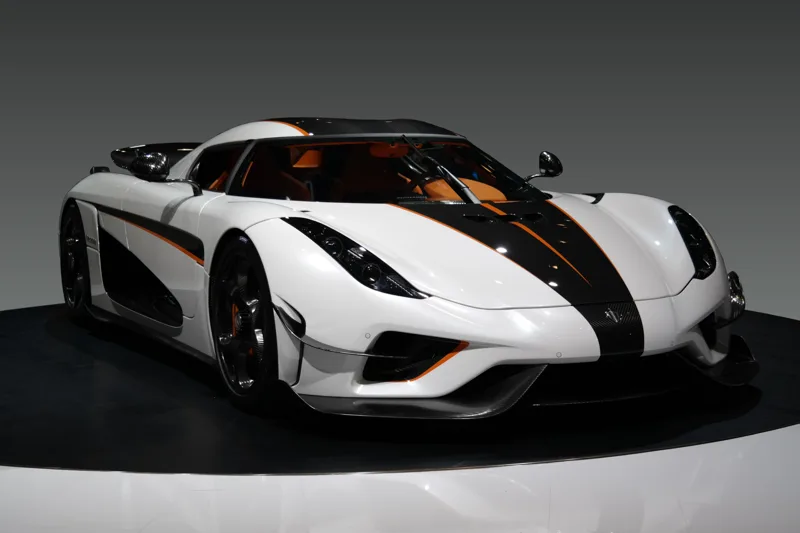
It is the test that turns acceleration into a full performance measure: how long a car needs to reach 400 km/h and stop again. The Nevera managed 29.93 seconds in May 2023. The Koenigsegg Jesko Absolut was then reported to have set 27.93 seconds on 2 July 2024. On 10 July 2025 the Nevera R recorded 25.79 seconds at Papenburg, one of 24 world records Rimac announced that day.
What does it mean for someone who wants one?
Before a time becomes a buying reason, it helps to ask where and how it was set. Robb Report's reviewer noted that the Nevera costs seven figures, and production is limited to 150 cars. The Verge called its looks anonymous and unexciting, but also described the car as more forgiving and accommodating than most hypercars. The car can be recharged to 80 per cent in under 30 minutes, it has butterfly doors, and it carries the sensors for SAE Level 4 autonomous driving once an upgrade has been developed to enable them.
Where does the acceleration race go next?
Rimac unveiled the Nevera R on 17 August 2024.