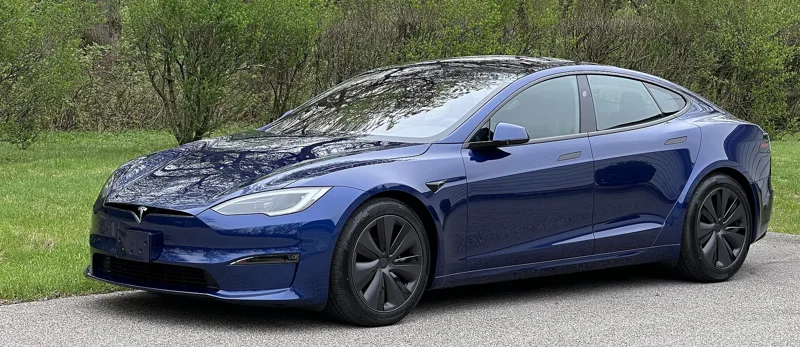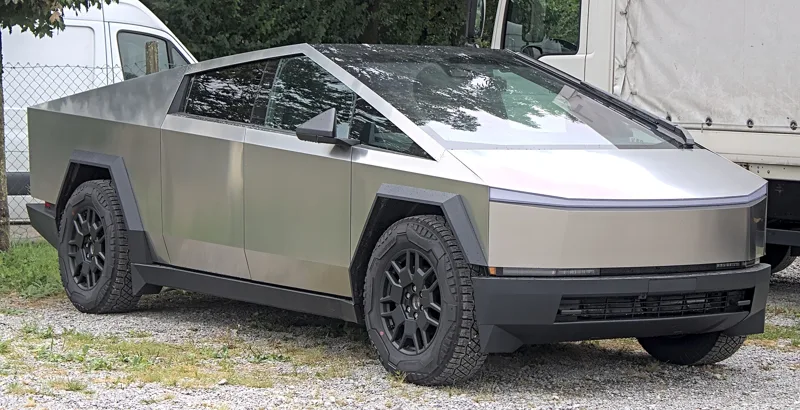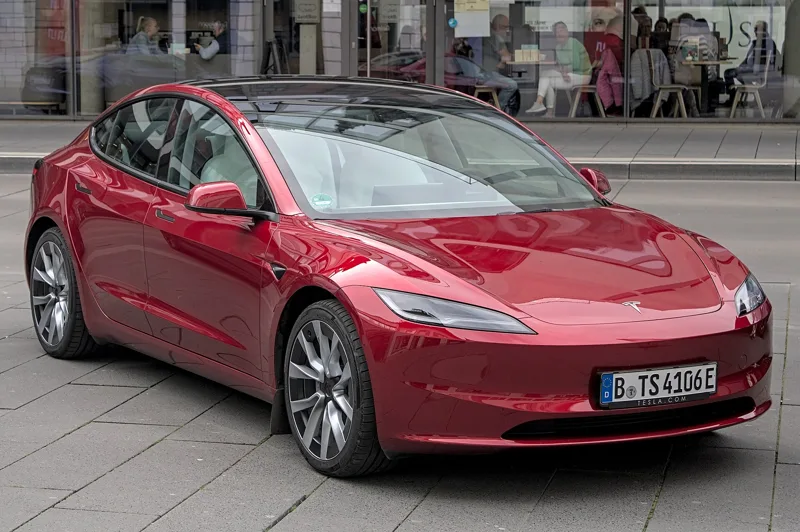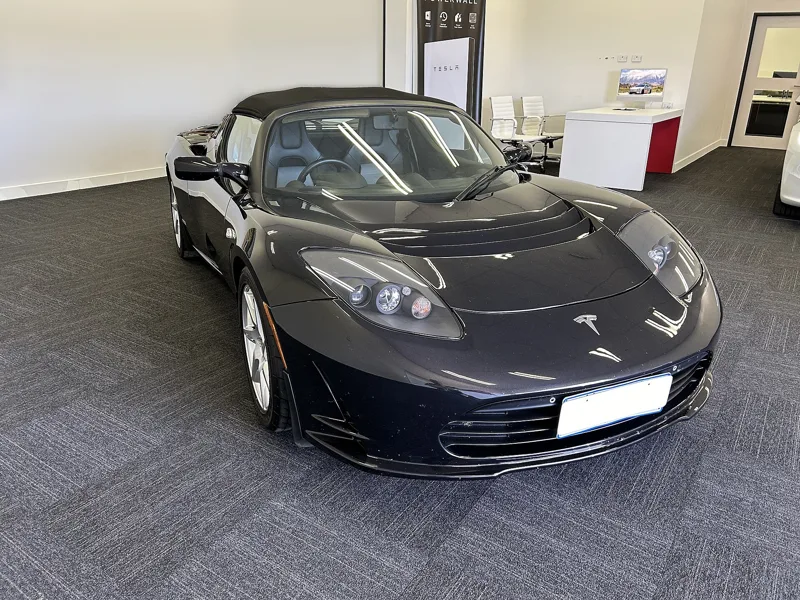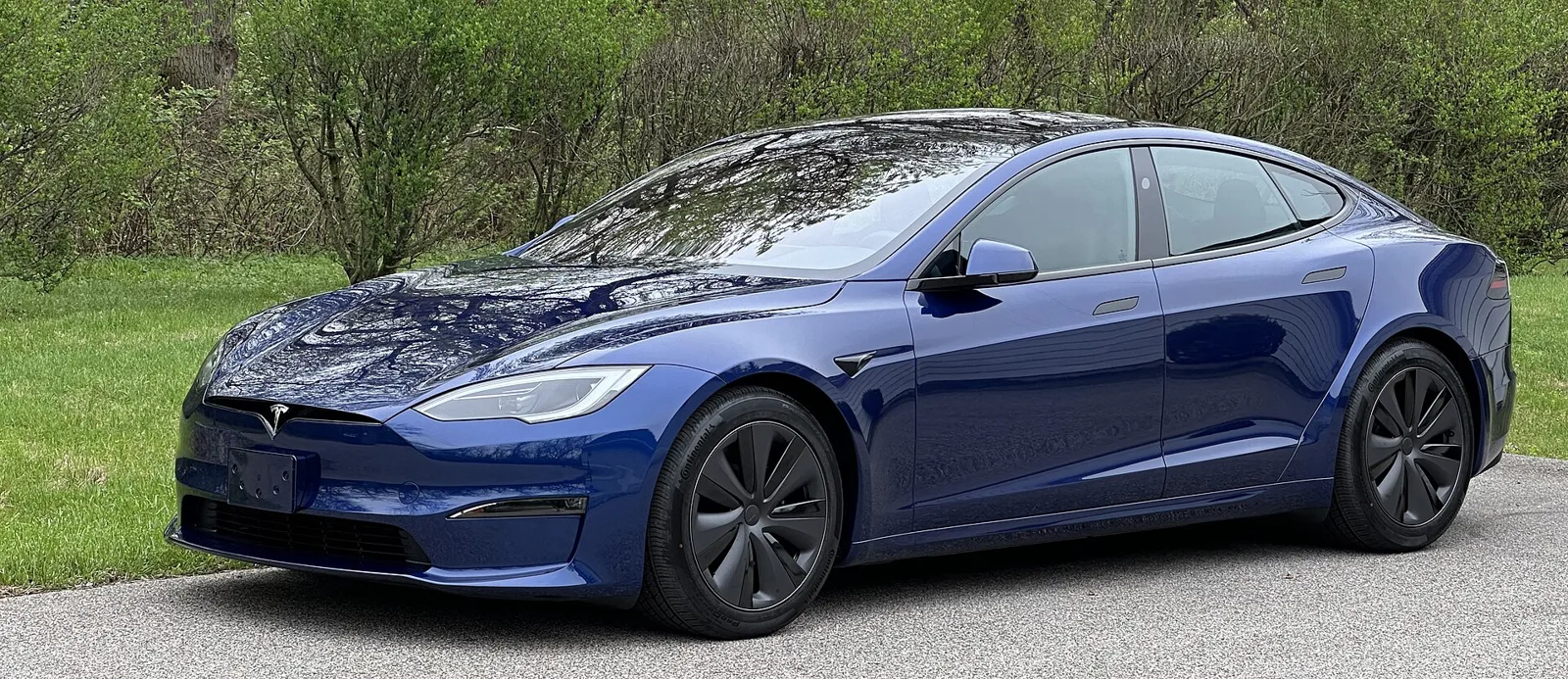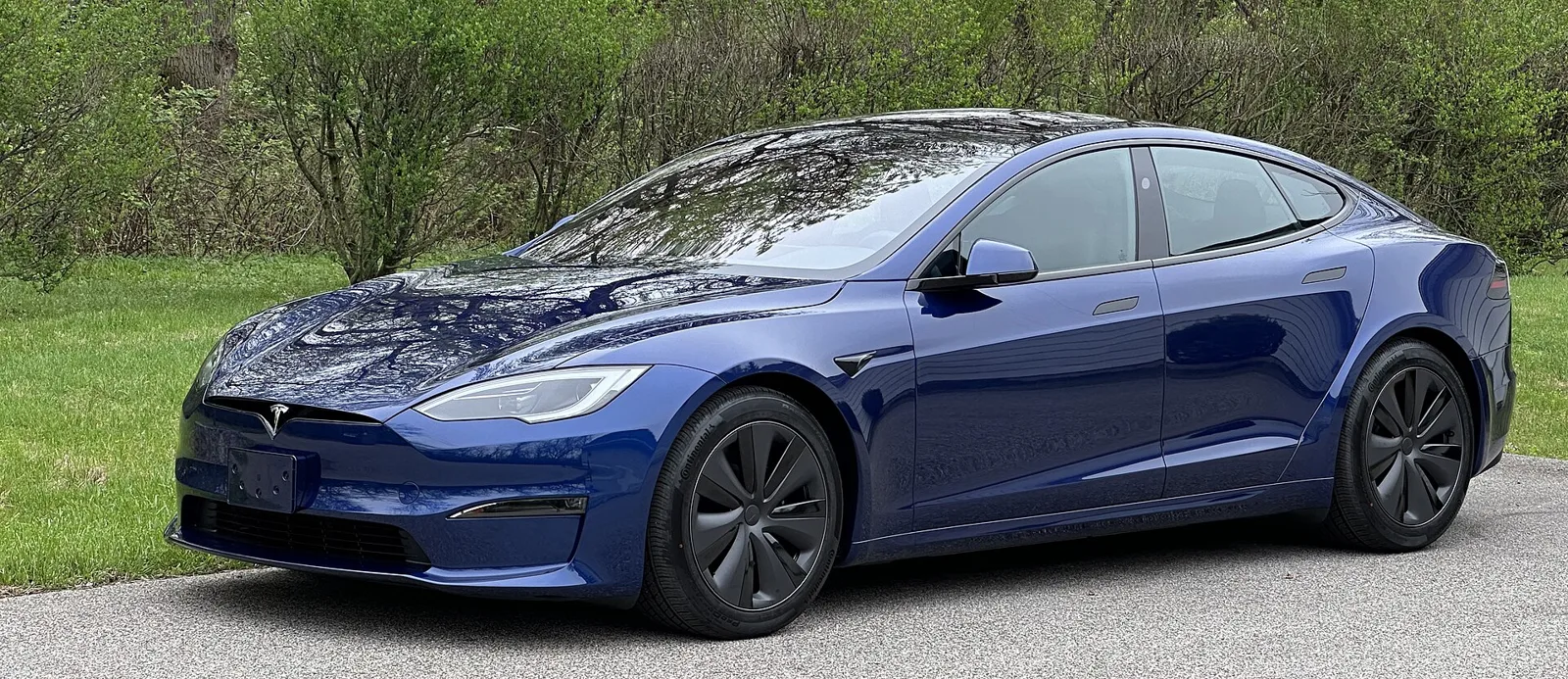
From the WhiteStar prototype to the Plaid, the Model S was Tesla's second car and a yardstick for electric sedans until production ended in 2026.
The Tesla Model S was a battery-electric four-door car that Tesla produced from 2012 to 2026. It was one of the most influential electric cars of its time, and the Plaid version of 2021 pushed its performance to a new level.
The Tesla Model S was Tesla's second vehicle and the first to make a strong case that an electric car could be desirable as well as practical. Its aluminium body, large battery and Plaid performance variant made it a reference point for rivals for more than a decade.
Where did the Model S begin?
Development started around 2007 under the codename WhiteStar, and Henrik Fisker was appointed lead designer that year. The company asked for a sleek four-door sedan priced between US$50,000 and US$70,000, and Fisker signed a contract worth US$875,000 to design it.
Fisker's designs were rejected, and he left to found his own company. Musk filed a lawsuit accusing him of stealing ideas, but Fisker won the case in November 2008 after an arbitrator ruled the claims were without merit.
Franz von Holzhausen, who had formerly designed for Mazda, took over the project in August 2008. Within three months he had produced the exterior that became the production car's shape.
Early engineering work started from a Mercedes-Benz CLS. Tesla's engineers test-drove a CLS and an E-Class before choosing the CLS as their baseline, then built a battery-electric version by fitting a Tesla Roadster battery pack.
A sedan that moved electric cars from the practical to the desirable, then bowed out with a red-and-gold farewell run.
Why did Tesla choose electric only?
Early plans included a hybrid with a range extender, but the idea was dropped when Elon Musk announced at the GoingGreen conference in September 2008 that Tesla would build only battery-electric vehicles. The original battery version was targeted at a range of 200 miles (320 km).
The engineers wanted the non-battery parts to weigh less than equivalent gasoline cars, so Musk chose aluminium over steel for most of the structure. He argued that the primary challenge was keeping the car's performance intact without it.
Development moved at pace. Engineers worked in shifts inside a 3,000 square feet (280 m2) tent at the SpaceX factory, which also housed the design centre that Tesla used to save money.
When did the first cars reach customers?
Tesla debuted a prototype in Hawthorne, California, on 26 March 2009, and series production began at Fremont in June 2012. European deliveries started in August and September 2013, and the first Australian delivery took place in Sydney on 9 December 2014.
Tesla built its 1,000th Model S by 31 October 2012 and handed over 2,650 cars before the year closed. The company had aimed for 5,000 units by the end of 2012, a target it did not reach.
In the first half of 2013, 10,050 units were delivered to customers, a clear sign that demand was building well beyond the early enthusiast market.
The Model S was the first Tesla built at Fremont, and it was followed by the Model X, Model 3 and Model Y. Together the four cars formed the company's so-called S3XY family of vehicles.
How was the body and chassis built?
The body and chassis are made mostly of aluminium, and the car shares its platform and 30 percent of its parts with the Model X crossover. A cast subframe sits on four rubber-isolated mounts to reduce vibration reaching the cabin.
The front suspension uses a double control arm design, while the rear is a multi-link arrangement. Both ends use an air spring for ride comfort, and the steering is an electrically assisted rack-and-pinion system.
Braking hardware came from Brembo. The car has a frunk offering 5.3 cubic feet (150 L) of storage in place of an engine bay, which made good use of the space an engine would otherwise have taken.
The rear trunk offers 26.6 cubic feet (750 L) with the seats upright and 58.1 cubic feet (1,650 L) when they fold down. Seat and wheel materials changed from a mix of leather and synthetic to fully synthetic in 2017.
How aerodynamic is the Model S?
The company claimed a drag coefficient of Cd=0.24 at launch, the lowest of any production car at the time, and Car and Driver confirmed the figure in 2014. The 2021 update reached Cd=0.208, which was the lowest of any current production automobile.
A solid front fascia replaced the grille, the door handles retract and the underbody is flat with no exhaust pipes to disturb the airflow. Each of these choices helped the car slip through the air more cleanly.
The centre of gravity sits 18 inches (460 mm) above the road, which reduces the risk of rollovers. The weight split is 46 percent front and 54 percent rear, which keeps the handling balanced under acceleration.
What powers the Model S?
Rear-wheel-drive models use a single induction motor, while dual-motor cars added a front motor. The Plaid uses three permanent magnet motors, delivering a combined 760 kW (1,020 hp) and 1,050 Nm (770 lb ft) of torque.
The battery pack is built from thousands of 18650 cells, each 18 mm in diameter and 65 mm tall, arranged in the car's floor. The pack is the heaviest component in the car and gives it a low centre of gravity.
The 2019 Long Range had a 100 kWh battery and dual motors generating 350 kW (469 hp) and 730 Nm (540 lb ft), with a range of 375 miles (604 km). Its drivetrain relied on a single-speed reduction gear transmission.
From 2019 the front motor on the Performance and Long Range models was a permanent magnet unit, first used in the Model 3, while the rear motor remained an induction design.
How did the Model S range and charging develop?
Early cars offered an 85 kWh battery with a range of 265 miles (426 km). A 2021 update brought the Long Range to 405 miles (652 km), and the 2025 refresh pushed it to 410 miles (660 km).
A home wall connector added up to 44 miles (71 km) of range per hour, while the mobile connector offered 30 miles (48 km) per hour. Models before 2016 could be fitted with two onboard chargers that provided up to 62 miles (100 km) per hour.
Superchargers began operating in late 2012 on a 480-volt network. Tesla also demonstrated a battery swap taking about ninety seconds in 2013, although the programme was never opened to the public.
Tesla's 2020 plan folded the battery into the body itself, aiming to add strength while lowering weight and cost, a change that reflected later design thinking.
What were the Model S's main trims?
The first Signature editions had 270 kW (362 hp) and 439 Nm (324 lb ft), and the P85D added a front motor for all-wheel drive with 515 kW (691 hp). Later models moved to Standard Range, Long Range and Performance names.
The 2016 Performance car's output was 562 kW (754 hp), with 931 Nm (687 lb ft) of torque, and its 100 kWh battery gave a range of 365 miles (587 km). The Plaid followed in 2021 as the most powerful version of the car.
The Standard Range returned in 2023 with a range of 370 miles (600 km), while the Long Range Plus offered 400 miles (640 km) from 2020.
Musk announced that 2026 would be the final model year, and a run of 250 Signature Editions marked the close of production. Each one was based on the Plaid and finished in a striking red exterior with gold badging.
How did safety and recalls play out?
The Model S earned a five-star rating from Euro NCAP in 2022 and a five-star NHTSA rating in 2015. Tesla claimed the NHTSA result amounted to 5.4 stars, but the regulator said it does not award more than five stars.
Recalls were frequent. In 2015 Tesla checked all 90,000 Model S cars for a possible seat belt defect, and in 2017 a recall for Takata airbags covered every Model S built from 2012.
In March 2018 all 123,000 Model S cars built before April 2016 were recalled for corrosion of power steering bolts, and in December 2021 a further 119,009 cars were recalled over a hood latch risk.
Fires attracted attention too. The first, on 1 October 2013 near Kent, Washington, followed a strike with metal debris, and Tesla said the firewalls between its 16 battery modules limited the damage to a small section of the car.
What did critics make of the Model S?
Critics were divided. The Sunday Times called it the last throw of the electric dice, while Top Gear credited it with almost single-handedly pushing mainstream manufacturers towards electrification. Road and Track argued that the Plaid was among the worst cars in the world.
Time named the Model S one of the best inventions of 2012, and the magazine later ranked it among the top gadgets of the 2010s. Car and Driver also featured it in its annual best-cars roundup for 2015 and 2016.
The Daily Telegraph listed it among cars that changed the world in 2014, and Motor Trend named it its Car of the Year for 2013. Reviews praised the acceleration, but several writers disliked the yoke steering wheel that arrived with the 2021 update.
Some companies have built their own versions. The Model SB shooting brake was a one-off unveiled at the 2019 Geneva Motor Show, while Binz and Coleman Milne produced hearse conversions in 2020 and 2023.
What are the Tesla Model S specifications?
The table gathers core figures for the Model S across its life, with the variant named where a row covers one version. Metric values come first and imperial figures appear in brackets. Each figure is quoted as it was published at the model's launch.
| Specification | Detail |
|---|---|
| Body | Four-door full-size car |
| Early drive | Rear-wheel drive, single induction motor |
| Plaid drive | Three permanent magnet motors, all-wheel drive |
| Early battery | 85 kWh lithium-ion |
| Long Range battery (2019) | 100 kWh, 375 miles (604 km) |
| Plaid output | 760 kW (1,020 hp); 1,050 Nm (770 lb ft) |
| Plaid 0-60 mph | 1.98 seconds |
| Plaid top speed | 200 mph (322 km/h) |
| Long Range, 2021 | 405 miles (652 km) |
| Long Range, 2025 | 410 miles (660 km) |
| Drag coefficient | Cd=0.24 at launch, Cd=0.208 after 2021 |
| Weight split | 46 percent front, 54 percent rear |
| Frunk | 5.3 cubic feet (150 L) |
| Trunk | 26.6 cubic feet (750 L), or 58.1 cubic feet (1,650 L) folded |
| Production | June 2012 to 13 May 2026, Fremont |
Frequently asked questions
How quick was the Model S Plaid?
The Plaid's three motors give a 0 to 60 mph (97 km/h) time of 1.98 seconds and a top speed of 200 mph (322 km/h). Its range was rated at 390 miles (630 km) with the 95 kWh pack.
Did the Model S ever seat children in the back?
Until 2018 buyers could add a folding rear row that faced backwards and seated two children in five-point harnesses.
When did Australian buyers receive the car?
Australian buyers received their first cars from December 2014 onward. Mainland China deliveries had started on 22 April 2014, and Hong Kong followed in July 2014.
How many Model S cars did Tesla sell in 2015?
Tesla sold 50,366 Model S cars in 2015, making it the top-selling plug-in electric vehicle worldwide that year. In the first half of 2016 it trailed only the Nissan Leaf among electric cars in sales.