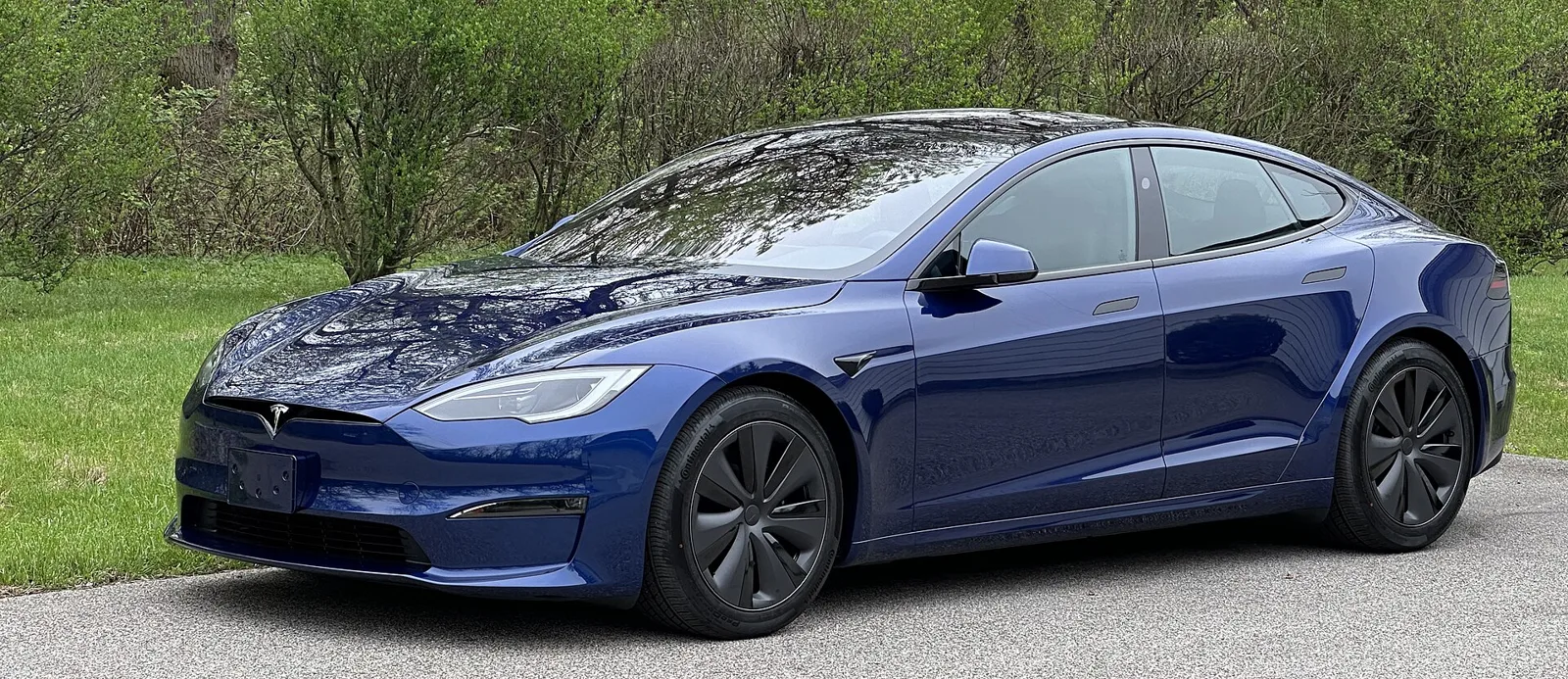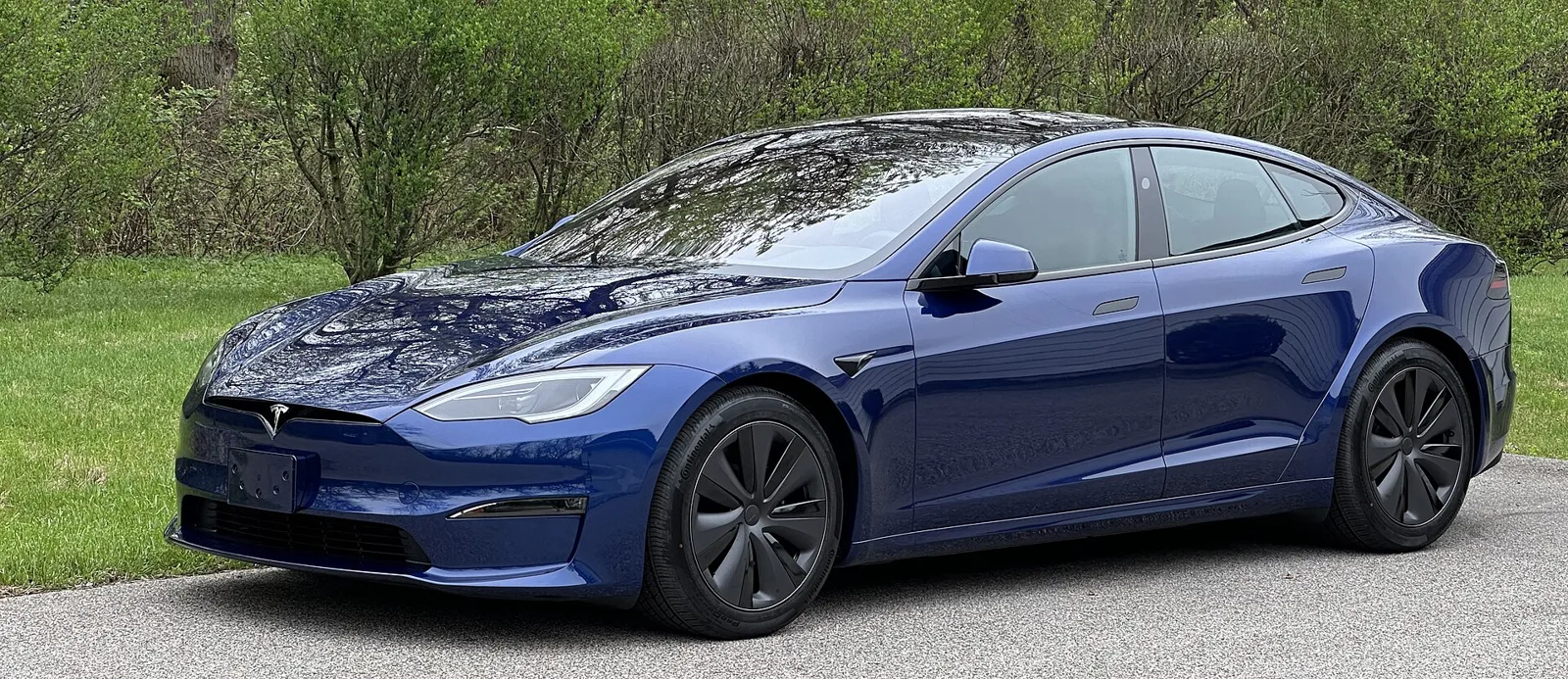
One rewrote the luxury sedan rulebook with software and silence, the other perfected it with aluminium and all-wheel drive. We compare the Tesla Model S and Audi A8 across two decades of engineering ambition.
The Tesla Model S and Audi A8 approach the luxury sedan from opposite directions: Tesla with a battery-electric powertrain, over-the-air updates and minimalist design, Audi with an aluminium space frame, quattro all-wheel drive and decades of refinement. Both are full-size luxury four-doors, yet their engineering philosophies could hardly be more different.
The Tesla Model S and Audi A8 are both full-size luxury sedans, but they represent two entirely different answers to the same question: how should a flagship four-door be built? Tesla launched the Model S in 2012 as a battery-electric disruptor, while Audi has been refining the A8 since 1994 with aluminium construction and quattro all-wheel drive.
Where did the Tesla Model S come from?
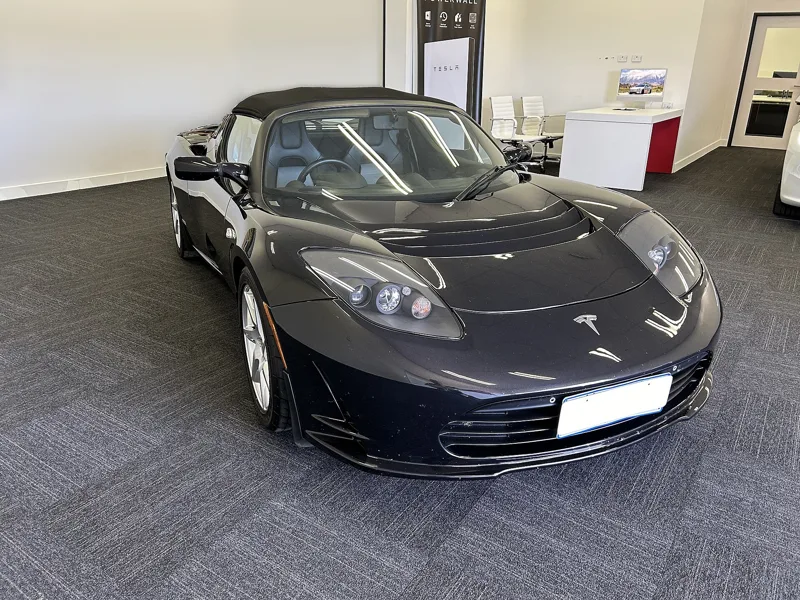
Tesla's second vehicle after the Roadster, the Model S began development in 2007 under the codename WhiteStar. The original brief called for a four-door sedan with two powertrain options: a battery-electric version with a planned 200-mile range and a hybrid with 40 to 50 miles of electric range and 400 miles total. In 2008, Elon Musk announced that Tesla would produce only battery-electric vehicles, killing the hybrid variant before it ever turned a wheel. A prototype was unveiled on 26 March 2009 in Hawthorne, California.
Both are legitimate flagships; they simply speak different languages.
How did the Audi A8 establish its aluminium identity?
The tale of Audi's range-topper begins further back. Introduced in 1988, the Audi V8 (Typ 4C) was the model the A8 replaced. As far back as 1982, Ferdinand Piech put his name to a deal with Alcoa, the aim being to create a car far lighter than rivals in its segment and so cancel out the approximately 100 kg weight disadvantage brought by fitting all-wheel drive as standard. The V8's replacement had been picked as the intended recipient of this work by the late 1980s. Chris Bird and Dirk van Braeckel produced the definitive styling, which was signed off in mid-1991, and September 1993 saw the ASF Concept shown at the Frankfurt Motor Show, its body finished in polished aluminium. Pilot build of the D2 Typ 4D got under way in December 1993, development was wrapped up in early 1994, and the whole programme cost $700 million.
Tesla Model S vs Audi A8: how do the specifications compare?
| Specification | Tesla Model S | Audi A8 |
|---|---|---|
| Production start | 2012 | 1994 |
| Production end | 2026 | D2 ended 2002; later generations continued |
| Body style | Four-door sedan | Sedan (short- and long-wheelbase) |
| Platform | Aluminium-intensive skateboard | Volkswagen Group D platform (D2/D3); MLB later |
| Drag coefficient | Cd=0.24 at launch; Cd=0.208 from 2021 | Not applicable |
| Center of gravity height | 460 mm (18 inches) | Not applicable |
| Weight distribution | 46% front, 54% rear | Not applicable |
| Battery / engine | 18650 cylindrical cells in floor | 2.8 V6 to 6.0 W12 |
| Drive | Rear-wheel drive or all-wheel drive | Front-wheel drive or Torsen quattro |
| Transmission | Single-speed reduction gear | ZF six-speed Tiptronic automatic (D3) |
What makes the Tesla Model S interior and packaging different?
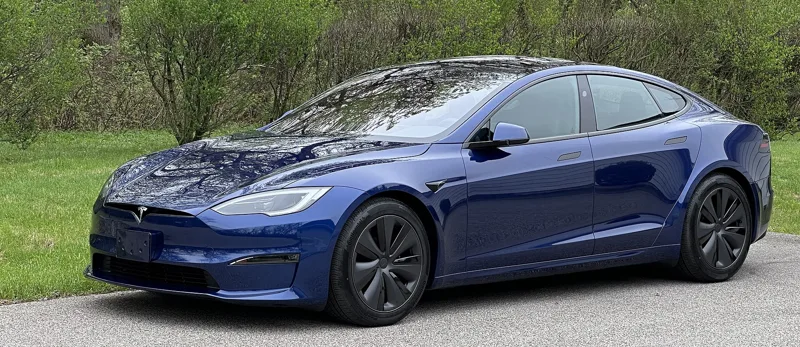
Placing the battery pack within the floor of the Model S gives the car a centre of gravity far lower than usual, measuring only 460 mm (18 inches) above the ground. The front carries 46 percent of the weight, while the rear carries 54 percent. This arrangement additionally creates room for luggage: a front compartment of 150 litres (5.3 cubic feet), known as a frunk, together with a rear trunk offering 750 litres (26.6 cubic feet) when the seats are upright and 1,650 litres (58.1 cubic feet) once they are folded down. Buyers could at first choose between synthetic and non-synthetic leather for the cabin, before synthetic leather became the sole option in 2017.
How does Audi's Space Frame construction work?
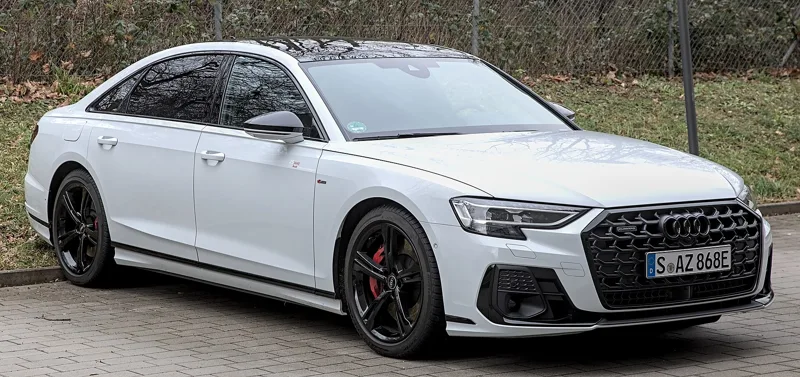
Central to the A8 is the Audi Space Frame, an all-aluminium monocoque that Audi developed together with Alcoa. No volume-produced model had preceded it in adopting an aluminium chassis, and ASF construction has underpinned each generation of the A8 since. The D2 was built on the Volkswagen Group D platform, and buyers could choose either front-wheel drive or Torsen quattro permanent all-wheel drive. Safety and chassis innovations came thick and fast: 1997 brought the debut of ESP on series-production all-wheel-drive cars, plus front and rear side airbags, both industry firsts. Two years later, side curtain airbags joined the specification, as did a solar sunroof offered in the North American warm weather package.
What was the Audi A8 D3's technological leap?
Audi's D3 flagship arrived in late 2002, carrying the marque deeper into the tech vanguard. Among its debuts were the MMI cabin control system, the company's first bi-xenon HID headlights, static AFS cornering lamps, self-levelling air suspension paired with CDC (Skyhook) dampers, DVD-based satellite navigation, a six-speed Tiptronic automatic, and a system that recognises individual drivers. Higher-torque versions used the ZF 6HP26-A61 six-speed automatic, whereas a 6HP19 unit was fitted to six-cylinder cars. Generation IV Quattro employed a Torsen T-1 centre differential splitting torque evenly by default, able to direct as much as 70 percent to a single axle. The body could sit at 120 mm normally, rise to 145 mm, or drop to 95 mm in Autobahn mode, which engaged for 30 seconds once 120 km/h was exceeded.
How did the Model S evolve through its production life?
The Model S evolved continuously over its production life. The initial 1,000 cars were 'Signature' limited editions, fitted with an 85 kWh battery, 270 kW (362 hp), 439 Nm, and 265 miles of range. The Signature Performance variant raised output to 310 kW (416 hp) and torque to 601 Nm, with range unchanged. A 40 kWh entry model that had been planned was scrapped, and a 60 kWh alternative took its place; its output was restricted by software to 40 kWh, giving 225 kW (302 hp), 430 Nm, and 208 miles. In 2014 the P85 was superseded by the P85D, which offered 515 kW (691 hp), 931 Nm, and 275 miles. The 70D, 90D, P90D, P100D, and 100D followed, with each raising both output and range. A 2016 facelift introduced a redesigned front fascia and full-LED adaptive headlights, and an over-the-air update upgraded the battery to 75 kWh, which added 40 miles of range.
What are the defining design stories of each car?
Developing the Model S proved a fraught affair. In 2007 Henrik Fisker won a US$875,000 contract to serve as lead designer, tasked with shaping a 'sleek, four-door sedan' carrying a price of between $50,000 and $70,000. Musk turned the proposals down, calling them 'terrible' and a 'giant egg' in internal remarks. Fisker departed to set up Fisker Automotive, which unveiled the Karma in 2008; Musk then brought a design theft suit, which Fisker prevailed in during November 2008. Franz von Holzhausen joined in August 2008, and by the close of that year the production exterior was finished. To keep costs down, the design centre was first housed within the SpaceX factory. The production car came with a solid front fascia, retractable door handles and a flat underbody, for a claimed drag coefficient of Cd=0.24, which Car and Driver verified in 2014. The 2021 update achieved Cd=0.208, and at its launch no other production car could match that figure.
How do the driving experiences differ?
The Model S relies on a single-speed reduction gearbox, and when drive goes to the rear wheels only, one AC induction motor handles propulsion. Two AC induction motors served all-wheel-drive cars until 2019; after that point the rear retained an induction motor, whereas the front adopted a permanent magnet synchronous reluctance design. Three permanent magnet synchronous reluctance motors appear in the Plaid version. Up front the suspension pairs double control arms with air springs and Brembo disc brakes, while the rear uses a multi-link layout with air springs. A cast aluminium cross-member carries the front suspension, and the rear subframe is attached through four rubber-isolated points. An electrically assisted rack-and-pinion system handles steering. The A8 differs, offering conventional petrol engines that span a 2.8 V6 up to a 6.0-litre W12 in the D2, along with a distinctly separate character derived from its aluminium construction and quattro grip.
What is the legacy of each car?
The Model S earned recognition from several outlets: Motor Trend named it Car of the Year for 2013, Time listed it among the Best Inventions of the Year in 2012, and in 2019 Time included it in its 10 Best Gadgets of the 2010s. In 2015 and 2016, Car and Driver featured it on its best cars list. The Daily Telegraph described it in 2014 as 'the car that changed the world'. Road & Track was less kind about the Plaid and its yoke steering, calling it 'perhaps one of the worst'. The A8's legacy is one of continuous innovation: the first mass-market aluminium chassis, the debut of MMI, and a template for lightweight luxury that rivals eventually followed. It was designed to compete with the Mercedes S-Class and BMW 7 Series, and also took on the Jaguar XJ and Lexus LS.
Which one should you choose?
Which one suits you depends on your priorities. Tesla's Model S delivers immediate pulling power, a centre of gravity that sits low, plenty of room for luggage, and an ownership model defined by software that can be updated while you sleep. Audi's A8 answers with flawless construction, two wheelbase options, quattro four-wheel drive, and a ceremonial feel refined across thirty years. Each is a credible range-topper; they just express themselves differently.