Three began as wartime airfields and one as a colliery railway, yet each ended up with its own length, rhythm and reputation.
Goodwood, Thruxton and Snetterton are former airfields in southern and eastern England, while Knockhill in Fife was cut from colliery railway and service roads. Their lengths run from 2.092 km at Knockhill to 4.778 km on the Snetterton 300, and each hosts a different mix of events.
In 1993 Damon Hill took a Williams Formula One car round Thruxton in 57.6 seconds, an average of 147 mph (237 km/h). It was a demonstration run, so the time sits outside the official books, but it is still the quickest lap anyone has recorded on the Hampshire circuit. Thruxton is one of four British race circuits that look alike on a map and behave quite differently once a car is on them.
Three of these four circuits began as wartime airfields
Goodwood took over the perimeter track of RAF Westhampnett, a relief airfield for RAF Tangmere. Thruxton began in 1942 as RAF Thruxton, which housed both the RAF and the USAAF, with troop transports and gliders flying from it on D-Day operations. Snetterton came from RAF Snetterton Heath, which opened in May 1943, was later home to American airmen and closed in November 1948.
Knockhill is the odd one out. It opened in September 1974 in Fife and was assembled by joining service roads to a disused mineral railway, closed in 1951, that had served Lethans Colliery. That origin shows up in the corners and the elevation, which are nothing like a flat runway loop.
| Circuit | Location | Built on | Longest layout | Racing began |
|---|---|---|---|---|
| Goodwood | Near Chichester, West Sussex | RAF Westhampnett perimeter track | 3.809 km (2.367 mi) | 1948 |
| Thruxton | Hampshire, north of Southampton | RAF Thruxton perimeter road | 3.792 km (2.356 mi) | Circuit established 1968 |
| Snetterton | Norfolk, off the A11 | RAF Snetterton Heath roadways | 4.778 km (2.969 mi) | 1953 opening; first open meeting 1951 |
| Knockhill | Fife, north of Dunfermline | Service roads and a mineral railway | 2.092 km (1.300 mi) | 1974 |
What makes Thruxton special is the pace.
Goodwood circuit: the track that stopped racing for over thirty years
The first meeting at Goodwood was on 18 September 1948, run by the Junior Car Club with the blessing of the Duke of Richmond and Gordon. P. de F. C. Pycroft won the opening race at 66.42 mph (106.89 km/h), driving his own 2,664 cc Pycroft-Jaguar, and Stirling Moss took the 500 cc class in a Cooper. From there the circuit built its name on the Glover Trophy, a non-championship Formula One race, on the Goodwood Nine Hours endurance events of 1952, 1953 and 1955, and on the Tourist Trophy, which visited between 1958 and 1964.
Speed was the circuit's problem from the start. The original layout had a fast left-hand curve on the approach to the start-finish line, and the pits sat on the infield side of where the curve ended. After Giuseppe Farina won the 1951 Goodwood Trophy at more than 95 mph (153 km/h) in an Alfa Romeo 159, the organisers replaced the curve with a chicane in 1952. It began as straw bales and boarding, and brick walls arrived in 1953. That brick chicane lasted until the circuit closed. In the mid-1970s it was finally flattened by a Team Surtees transporter leaving after a test session, and when the circuit came back to life in the late 1990s the chicane was rebuilt in polystyrene blocks.
Closure itself came in 1966. The owners were not willing to add yet more chicanes to rein in modern racing cars, so the last club meeting, organised by the British Automobile Racing Club (BARC) on 2 July 1966, ended an era. The official lap record from that period is 1 minute 20.4 seconds, shared by Jackie Stewart and Jim Clark from the 1965 Glover Trophy, the last Formula One race run on the circuit.
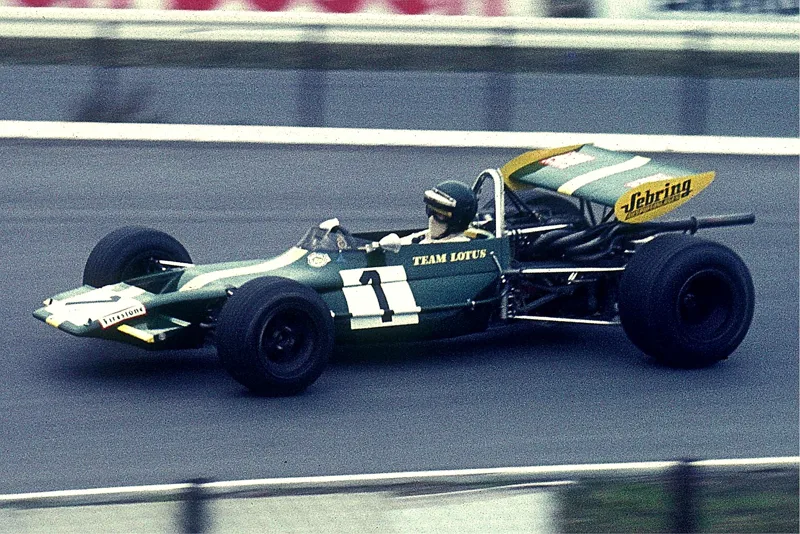
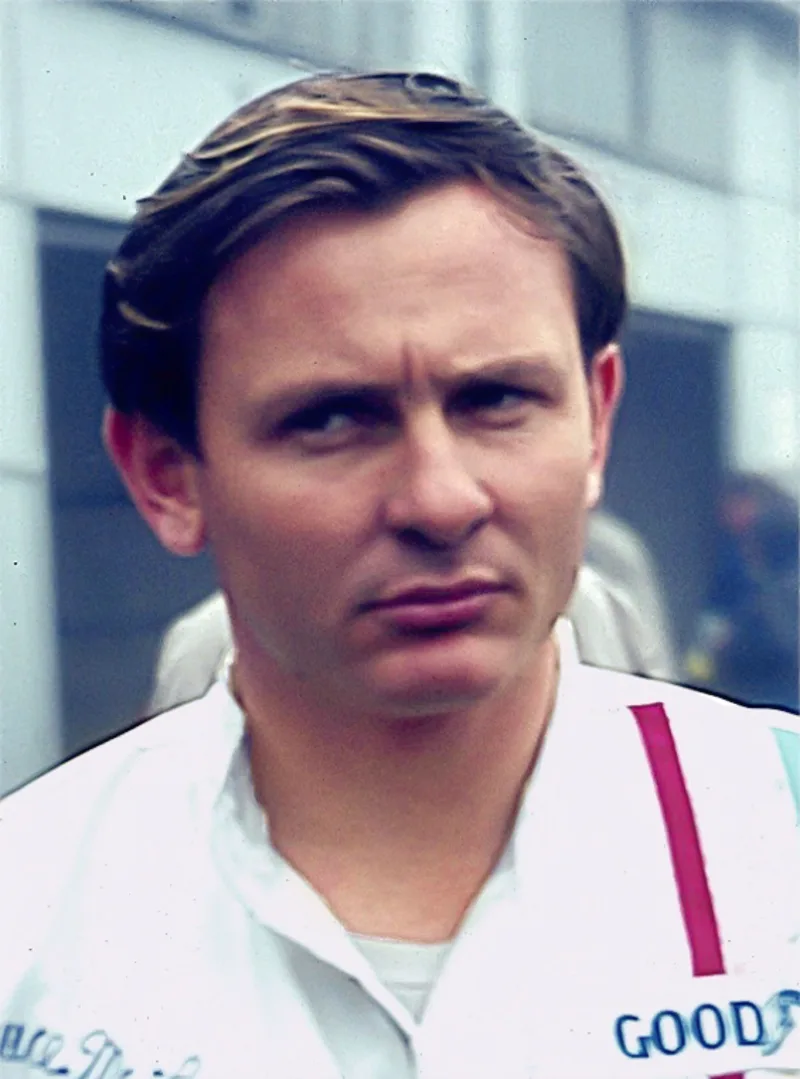
The track kept a second life as a test venue, with a dark chapter of its own. Bruce McLaren, the founder of McLaren, died on Lavant Straight on 2 June 1970 when the rear bodywork failed on the McLaren M8D Can-Am car he was testing; it spun, left the track and struck a bunker. Another milestone was far gentler. Donald Campbell showed his Bluebird CN7 land speed record car there in July 1960 and July 1962. The 30 ft (9.1 m) turbine streamliner, rated at 4,500 hp (3,400 kW), had only four degrees of steering lock, so the laps were taken at close to tick-over speed, with a top of 100 mph (160 km/h) on one straight.
How the Goodwood Revival brought the circuit back
Racing returned in 1998, following the Festival of Speed hill climb's success. The Goodwood Revival runs for three days each September and is reserved for the cars and motorcycles that would have raced in the circuit's original period, 1948 to 1966, and visitors turn up in period clothes to match. In 2008 the main Sunday drew 68,000 people, which was 9,000 more than in 2007.
The track hosts historic races, track days and sessions for trying the circuit, the Mongol Rally moved its start to the paddock in 2009, and the National Finals of the Greenpower schools challenge are held there each year, with children racing 24 volt electric single-seaters they built themselves. A free monthly gathering called the Breakfast Club has run since March 2006. The circuit also staged the 1982 UCI Road World Championships for cycling, appeared in Downton Abbey, and became a free update in Gran Turismo Sport in May 2019. When the pandemic cancelled the Festival of Speed, members' meeting and Revival in 2020, Goodwood replaced them with a combined event called Speedweek, and it was during Speedweek's timed shootout that Nick Padmore set the all-time outright lap record of 1:09.914 in an Arrows A11.
Thruxton circuit: the fastest in the UK, with a planning limit
Thruxton traces the airfield's old perimeter road, which became a circuit in 1968. Before that, from 1950 to 1965, motorbike races had been run on the runways and perimeter road. The airfield had a history of its own: paratroopers who carried out the Bruneval Raid, which seized German radar equipment on the French coast, took off from this site.
What makes Thruxton special is the pace. The 2.356 mi (3.792 km) lap is often called the fastest in the UK, with speeds above 190 mph (300 km/h) possible. The circuit was resurfaced in 2000, and lap times fell considerably against the year before. Safety work at Church, one of the quickest sections, was completed in 2020, and a spectator area has been built around Noble, extending toward the Goodwood corner. In 2025 a further viewing area, the Woodham Hill Bank, opened on the approach to the Club chicane.
Planning restrictions allow only 12 days of motorsport a year. Three go to bikes, namely a British Superbike weekend and a club day, and the remainder are shared between touring cars from the British Touring Car Championship, truck racing, Thruxton Retro and clubs such as the 750 Motor Club and the Classic Sportscar Club. Because meetings are so rare, each one carries weight on the calendar. The site is also home to BARC headquarters. Past visitors have included British Formula 3, which came between 1977 and 2008 and again in 2010 and 2014, the European Formula Two Championship from 1968 to 1984, and a TCR UK round in 2024.
Snetterton circuit: three layouts on one site
Snetterton's racing story begins with a church service. In early 1951 two members of the Aston Martin Owners Club, Oliver Sear and Dudley Coram, asked landowner Fred Riches whether they could use the old airbase roadways. Riches, a local churchwarden, agreed on one condition: no racing from 10:45 am until noon on a Sunday, and everything over before Evensong began. The first open meeting took place on 27 October 1951, a set of one-lap sprints known as speed trials, and Ken Wharton set the fastest time in an ERA at 82.4 mph (132.6 km/h). The circuit counts 1953 as its opening year, when motorcycle racing began there under the Snetterton Combine.
In the 1960s and early 1970s the circuit measured 2.710 mi (4.361 km), with a Norwich Straight that ended in a hairpin. Russell bend, named after Jim Russell, whose racing drivers school ran at the circuit, was added in the 1960s to slow cars approaching the pits, then saw a lot of crashes and was later redesigned.
Ownership changed in 2004, when MotorSport Vision bought Snetterton from Octagon in a package that also covered Brands Hatch, Oulton Park and Cadwell Park. In October 2005 Jonathan Palmer announced a major rebuild, and in September 2010 MSV confirmed that the new work would be ready for the 2011 season. The centrepiece was a fresh mile of infield track beyond Sear Corner, with a hairpin named Montreal because it was modelled on the one at Circuit Gilles Villeneuve. It was renamed Wilson in 2016 in memory of Justin Wilson, the IndyCar driver killed at Pocono in 2015. The last chicane before Senna Straight went too, replaced by a longer Coram curve and a tight left called Murrays.
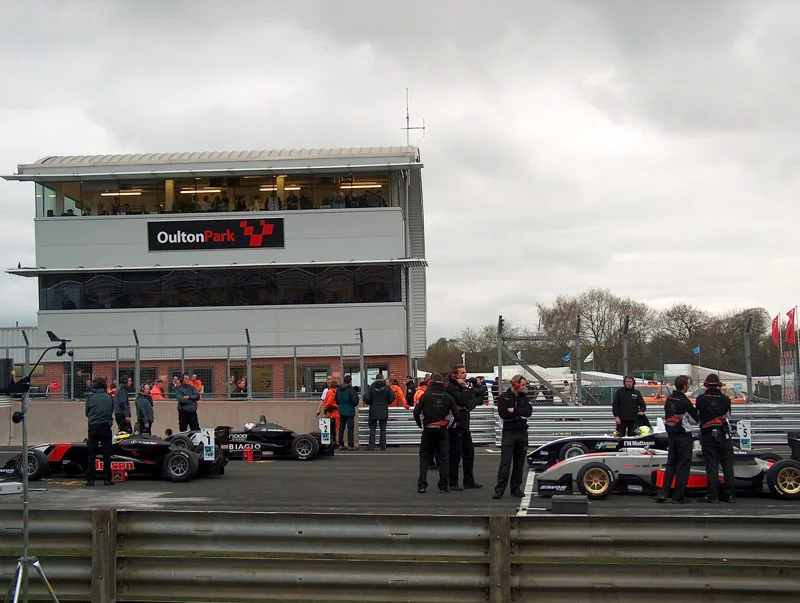
The result is a site that works as three tracks. The 300 Circuit is the longest at 4.778 km (2.969 mi), Britain's second longest racing track, and it was designed to earn an FIA Grade 2 licence. British Formula 3 and British GT raced on it first, on 14 and 15 May 2011. The 200 layout, at 3.219 km (2.000 mi), is closest to the old track and serves club racing, with re-profiled corners meant to help overtaking. The 100 layout, 1.577 km (0.980 mi), is just the new infield, which serves testing and a racing school. The 100 and 200 can run together, as they first did at the BRSCC meeting on 29 and 30 May 2011.
The lap records show how the rebuild changed the circuit. Before 2011 the official record was 0:56.095, set by Klaas Zwart in August 2007. The 300 Circuit record is Felipe Nasr's 1:39.933 in a Carlin Dallara F308 during the 2011 British F3 meeting. Alongside the touring cars and superbikes, the calendar includes the Caterham Grand Prix in August and, in September, a TCR UK round. Snetterton also holds the Citroen 2CV 24 Hour Race, usually around the August bank holiday weekend, and from 1980 to 1994 it hosted the Willhire 24 Hour, the UK's first 24-hour race.
Knockhill racing circuit: a hill, a railway and a start line that is not the finish
Knockhill is the shortest of the four and the one with the most up and down. Its International layout covers 2.092 km (1.300 mi) and has 9 corners, the National layout is 1.609 km (1.000 mi) with 10, and there is a 0.483 km (0.300 mi) tri-oval. On every layout the track is 10 m (33 ft) wide and the elevation change is 37 m (121 ft). Unusually, the start line sits roughly midway down the pit straight while the finish line is slightly west, toward the final corner.
A lap begins over the crest, the highest point, then drops to Duffus Dip, a fast, blind, downhill right-hander regarded by many as among the hardest corners in Britain. Leslie's, a quick left, follows at the bottom, and then comes the braking zone for McIntyre's, a ninety-degree right. The track dips to its lowest point, climbs to the Chicane, where the second part is completely blind and a sausage kerb discourages cutting, so cars often go through on two wheels. Clark's, a blind uphill right, catches out drivers in much the same way, and Hislop's, previously called Railway because it follows the old railway line, is a high-speed left kink. The lap ends with a slipstreaming run down the Railway straight into Taylor's hairpin, one of the tightest in Britain, with an uphill apex and the best overtaking chance on the circuit.
Knockhill's history is largely a story of persistence. Derek Butcher became owner in 1984, and under him the circuit grew to host rounds of most major British car and bike championships. The British Touring Car Championship visited for twelve years until 2002, when the promoters were seeking infrastructure upgrades, and returned in 2004 with ITV showing the event live. British Formula Three and British GT came back in May 2005. In 2008 a corner was named Leslie's Bend after the racing driver David Leslie, who died in a small jet accident at Farnborough. In 2012 racing and track days switched to the anti-clockwise direction, and the circuit became the first in modern UK history licensed for cars and bikes to race both ways. As of 2025 it holds an FIA grade 3 licence, the only one issued in Scotland.
What a visit to each circuit actually gives you
For anyone who wants to drive rather than watch, Knockhill is the most obvious choice. Its experiences use a Ferrari F430, an Aston Martin Vantage, a Legend car, Civic Type Rs and Audi-engined Van Diemen single-seaters, and there is a rally stage with modified Ford Fiestas, a skid pan, a 500-metre kart track and an off-road course with a Jeep Wrangler. The circuit also runs taster days for people with disabilities and a Fiesta experience for those too young to drive on public roads. On-site parking holds 3,000 cars.
Goodwood suits those who want atmosphere and history, and it offers track days and try-out days alongside the Revival. Thruxton rewards the spectator who values rarity: with just 12 days a year, a visit is an occasion. Snetterton, with three layouts that can run in parallel, is the practical choice for club racers and test days. Each venue has also shown up well beyond the track itself. Knockhill appears in Project CARS 2, Colin McRae: Dirt and the TOCA games, in Top Gear and in the Kaiser Chiefs video for Hole in My Soul.
Recent changes at each circuit
Lately the work has been about audiences and safety. Thruxton finished its Church safety changes in 2020 and added Woodham Hill Bank in 2025. Knockhill reprofiled its infield off-road course in 2019 for Rallycross. Snetterton completed its big rebuild in 2011 and renamed its hairpin in 2016. Goodwood swapped its 2020 events for Speedweek, and the outright lap record from that week is the figure on the books today.