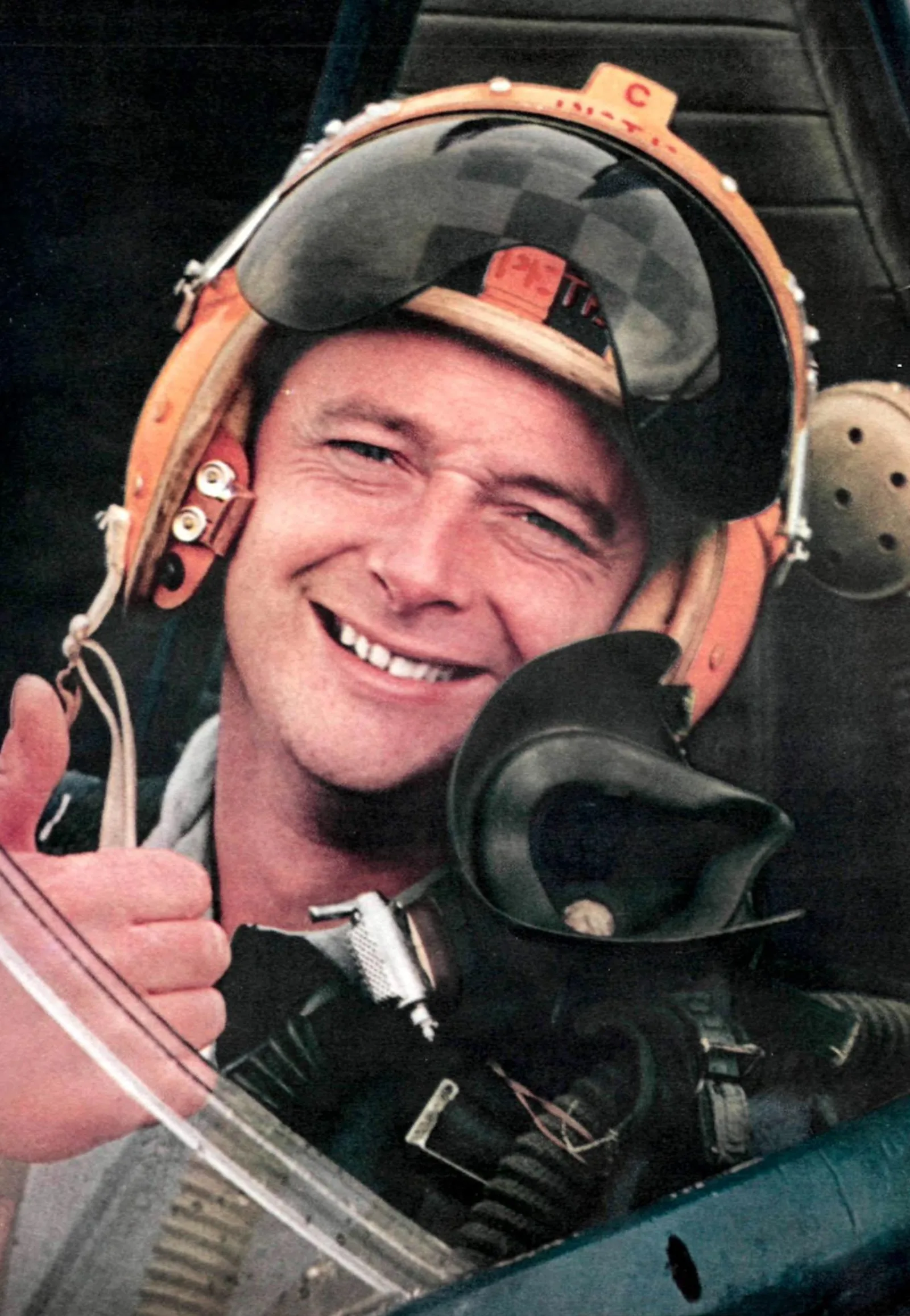
The son of a famous record holder, Campbell took eight absolute world marks on water and land before dying on Coniston Water in 1967.
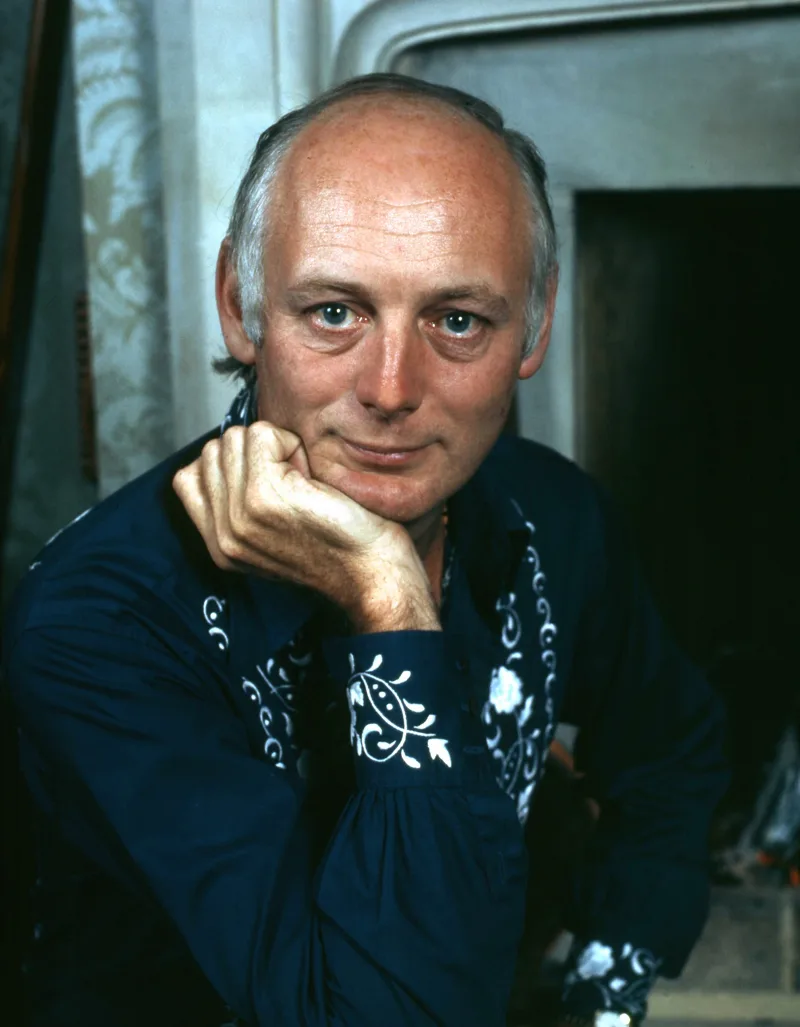
Donald Campbell was a British record breaker who took eight absolute world marks on water and land in the 1950s and 1960s. He held both records in 1964 and died on Coniston Water in 1967 during a water record attempt.
Donald Campbell, a Briton, took eight absolute world speed marks across the 1950s and 1960s, on water and on land. In 1964 he became the only person to hold both the land and water records in one calendar year. He died on 4 January 1967 during a water speed record attempt on Coniston Water in the Lake District.
Who was Donald Campbell?
Donald Malcolm Campbell was born on 23 March 1921 at Canbury House in Kingston upon Thames, Surrey. He was the son of Malcolm Campbell, whose 13 world records in Bluebird cars and boats came in the 1920s and 1930s. His mother was Dorothy Evelyn Whittall, Malcolm's second wife.
Campbell was educated at St Peter's School in Seaford and at Uppingham School in Rutland. At the start of the war he signed up for the RAF, yet childhood rheumatic fever meant he could not serve. He instead worked as a maintenance engineer at Briggs Motor Bodies in West Thurrock and held shares in Kine Engineering, a machine tool company.
His father died on 31 December 1948. Leo Villa, who had been his father's chief engineer, helped him pursue records, first on water and later on land. He married three times, and his daughter Gina was born in 1949.
Campbell set eight world speed records in his life, but his final attempt on Coniston Water is what most people remember.
How did Campbell start breaking water speed records?
In the summer of 1949 Campbell started his water attempts using the old K4 hull his father had owned, renamed Bluebird K4. The first attempts that summer failed, although he came close to his father's existing record. The team went back to Coniston Water in 1950 for more trials.
The American Stanley Sayres then pushed the record from 141 to 160 mph, which was beyond K4 without major changes. In late 1950 and 1951 the team converted K4 into a prop-rider, which cut hydrodynamic drag because one propeller blade stayed clear of the water at speed. The boat gained a second cockpit for Leo Villa.
K4 won the Oltranza Cup in Italy in spring 1951, and it reached 170 mph on a return to Coniston that September. At that speed the boat suffered a structural failure that wrecked it. Sayres later raised the record to 178 mph in Slo-Mo-Shun IV.
Why did John Cobb's death matter to Campbell?
John Cobb was Britain's other water speed contender. He had ordered Crusader, a turbojet hydroplane aiming above 320 km/h (200 mph), and started testing it on Loch Ness in autumn 1952. Cobb died that year when Crusader disintegrated during a record run.
The loss hit Campbell hard, and he resolved to build another Bluebird boat that would return the water record to Britain. Work then began on a jet-powered design, which became Bluebird K7.
What made Bluebird K7 unusual?
K7 was an all-metal jet hydroplane designed by Ken and Lew Norris. It had a steel frame, an aluminium body and three planing points, with two forward sponsons and one at the rear. The boat carried a Metropolitan-Vickers Beryl axial-flow turbojet that produced 16 kN (3,500 pound-force) of thrust.
The boat was designed for 400 km/h (250 mph), and its frame was built to take 25 times gravity, more than contemporary military jets could manage. For years it stood alone as a successful jet boat, a status it kept until the late 1960s. Its name came from its Lloyd's unlimited rating registration, as K7 was the seventh boat registered in that series.
How many water speed records did K7 set?
Between July 1955 and December 1964, K7 carried Campbell to seven world water records. The first came at Ullswater on 23 July 1955, at 325.60 km/h (202.32 mph), though it followed months of testing and a heavy rework of the front sponson mounts.
Later that year he reached 348 km/h (216 mph) on Lake Mead in Nevada. Four further marks followed on Coniston Water, where Campbell and the boat became an annual fixture in the second half of the 1950s, backed first by the Mobil oil company and later by BP. In 1956 the boat reached 225 mph and recorded a peak of 461.53 km/h (286.78 mph) on one run.
Further gains came in each of the following years, with 239 mph in 1957, 248 mph in 1958 and 260 mph in 1959. In January 1957 he was made a CBE, largely for his record at Lake Mead. In November 1964 he also set an Australian water speed record of 348 km/h (216 mph) on Lake Bonney in South Australia.
Did Campbell go after the land speed record?
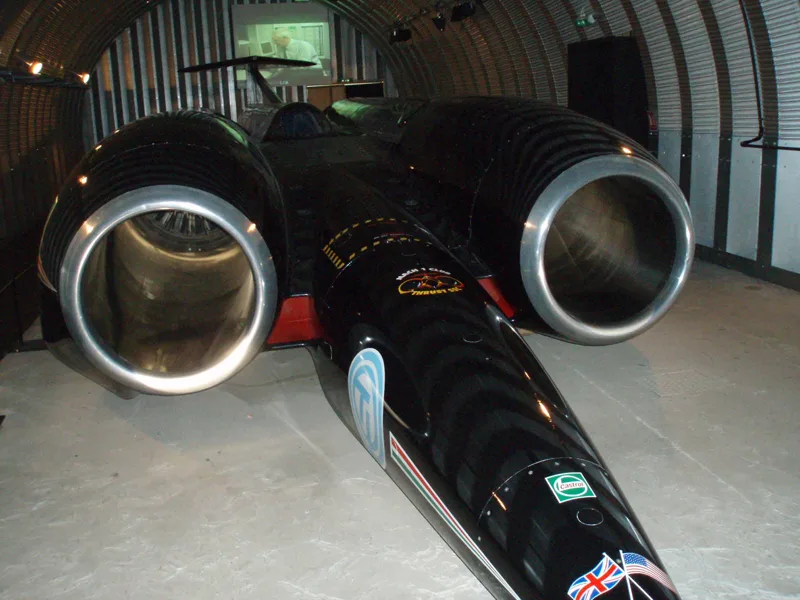
Campbell's interest in the land record grew after his success on Lake Mead in 1955. The land speed record then stood at 634 km/h (394 mph), set by John Cobb in 1947. Ken and Lew Norris designed Bluebird-Proteus CN7 with 800 km/h (500 mph) in mind.
Four driven wheels were fed by a heavily altered Bristol-Siddeley Proteus gas turbine producing 4,450 shp. British firms including Dunlop, BP and Lucas took part in the project. The car was completed by spring 1960, and after low-speed tests at Goodwood it went to the Bonneville Salt Flats in Utah, where his father had set a record in 1935.
On the sixth run at Bonneville, Campbell lost control at over 580 km/h (360 mph) and crashed. The car's structure protected him, but he ended up in hospital with head injuries and a ruptured eardrum, and CN7 was beyond repair. Sir Alfred Owen, whose Rubery Owen group had built the car, offered to rebuild it.
Campbell decided against returning to Bonneville, judging the 18 km (11-mile) course too short and its salt surface in poor condition. BP helped to find another venue, and Lake Eyre in South Australia was chosen. The rebuilt car was ready about nine months later than he had hoped, and it was then shipped to Australia.
Rain disrupted the attempts. By May 1963 Lake Eyre had flooded to a depth of 80 mm (3 in), and the attempt was abandoned. The press criticised Campbell for alleged time wasting, although the weather was beyond his control. In July 1963 the American Craig Breedlove had reached 407.45 mph in his jet car Spirit of America, which was not wheel-driven but was widely treated as the fastest car in the world.
Campbell returned to Australia in March 1964. BP left as his main sponsor after a dispute, and Ampol took over. The track never fully dried, but in July 1964 he made two runs in a break in the weather and set a new land speed record of 648.73 km/h (403.10 mph). On the final third of the measured mile CN7 averaged 690 km/h (429 mph), yet Campbell felt let down, since it had been designed for far higher speeds.
How did Campbell hold both records in 1964?
Campbell went back to K7 for one last water attempt, and on the final day of 1964 he set a seventh water record at Lake Dumbleyung near Perth in Western Australia. The speed was 444.71 km/h (276.33 mph). That gave him both records within one calendar year, a feat no one else had managed.
His land record did not last long. FIA rule changes allowed pure jet cars to set records from October 1964. CN7's 429 mph average on the final Lake Eyre run stayed the highest speed by a wheel-driven car until 2001. Today the car sits in the National Motor Museum at Beaulieu, Hampshire.
What were Campbell's plans for a rocket car?
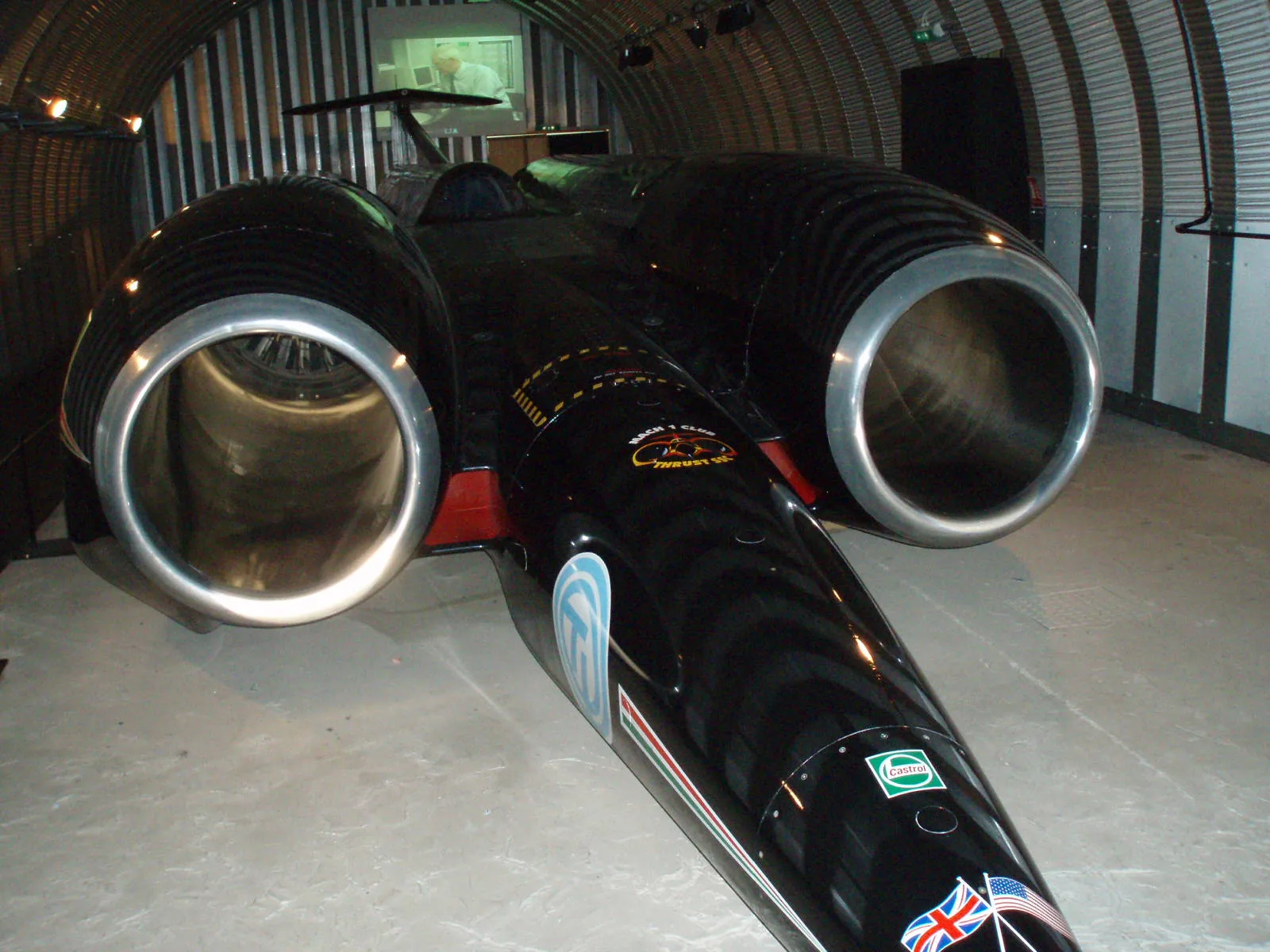
After 1964 Campbell wanted a far bigger jump in speed. He planned a rocket-powered supersonic car called Bluebird Mach 1.1, with a potential top speed of 1,350 km/h (840 mph). Norris Brothers were asked to carry out a design study. On 7 July 1965 he unveiled the plan at the Charing Cross Hotel in London.
The design used two Bristol Siddeley BS.605 rockets, a readily available type originally built as take-off boosters for military aircraft. Each gave 36 kN (8,000 lbf) of thrust, so the pair produced 71 kN (16,000 lbf). Ken Norris had calculated that rockets would give a smaller frontal area and lighter weight than a jet engine.
In spring 1966 Campbell also went back to water, hoping to raise the record to 300 mph to publicise the rocket car. K7 was fitted with a Bristol Orpheus engine taken from a Folland Gnat jet, bought from the Ministry of Defence for 200 pounds. Trials at Coniston began in November 1966 but went badly, with bad weather, engine damage and fuel problems.
What happened on 4 January 1967?
Conditions were finally suitable on 4 January 1967, and the first run began just after 8:45 am. K7 averaged 478.9 km/h (297.6 mph) on that run. Campbell did not wait to refuel or for the spray from the first run to settle, and he turned straight around for a second run.
On the second run K7 reached a peak of 528 km/h (328 mph). A severe bounce caused the boat to slow sharply, the engine flamed out and the boat left the water in a steep nose-up attitude. It somersaulted and came down roughly 230 metres short of the end of the measured kilometre. The hull broke apart, and the main section went under soon after.
Campbell was killed instantly. Mr Whoppit, Campbell's teddy bear mascot, turned up in the wreckage, and his helmet was retrieved. Royal Navy divers found the wreck but abandoned the hunt for his body after a fortnight.
What did the inquest conclude about the crash?
The crash was examined in detail, and several causes were proposed. Campbell did not wait to refuel after his first run, so the boat was lighter and passed through the wash from that run. Inquiry work suggested that the wash itself was not as important as first believed, because the water brake had been used well south of the measured distance.
The boat may have passed the limit of its aerodynamic stability when static, and evidence suggested the dynamic limit was also crossed. The cause of the engine flame-out could not be established with certainty. It may have been fuel starvation, damage to a structural element after the bouncing, or disturbed airflow into the intakes. Film evidence also suggested that no thrust was present as the boat left the water.
The wreck was rediscovered by the underwater surveyor Bill Smith between 1996 and 2001. With the agreement of Campbell's daughter Gina and the wider family, K7 was raised in 2001, and Campbell's body was recovered on 28 May 2001. He was laid to rest in Coniston Cemetery on 12 September 2001.
The inquest was held on 25 October 2002, decades after the crash, at John Ruskin School in Coniston. The coroner Ian Smith heard evidence that a submerged object, fuel starvation, icing, engine mount failure and suicide had all been considered, and he rejected the theories that did not fit the evidence. The verdict recorded that his death was accidental.
What is Campbell's legacy?
Between them, Campbell and his father set 11 water speed records and 10 land speed records. The BBC drama Across the Lake, broadcast in 1988, cast Anthony Hopkins as Campbell. Robert Hardy had earlier played his father in the drama Speed King.
The Queen's Commendation for Brave Conduct was granted posthumously on 28 January 1967 for his determination in pursuing the water record. The Ruskin Museum in Coniston displays his memorabilia, the Bristol Orpheus engine recovered in 2001 and a restored K7. An English Heritage blue plaque marks the father and son at Canbury School in Kingston upon Thames, where they lived.
What were Campbell's main records?
| Date | Vehicle | Record or milestone | Speed |
|---|---|---|---|
| 23 July 1955 | Bluebird K7 | Water speed record at Ullswater | 325.60 km/h (202.32 mph) |
| 1955 | Bluebird K7 | Water speed record at Lake Mead, Nevada | 348 km/h (216 mph) |
| 1956 | Bluebird K7 | Peak speed on one run | 461.53 km/h (286.78 mph) |
| 1959 | Bluebird K7 | Coniston water record | 420 km/h (260 mph) |
| July 1964 | Bluebird CN7 | Land speed record at Lake Eyre | 648.73 km/h (403.10 mph) |
| 31 December 1964 | Bluebird K7 | Water speed record at Lake Dumbleyung | 444.71 km/h (276.33 mph) |
| 4 January 1967 | Bluebird K7 | Fatal attempt at Coniston Water | Peak of 528 km/h (328 mph) |