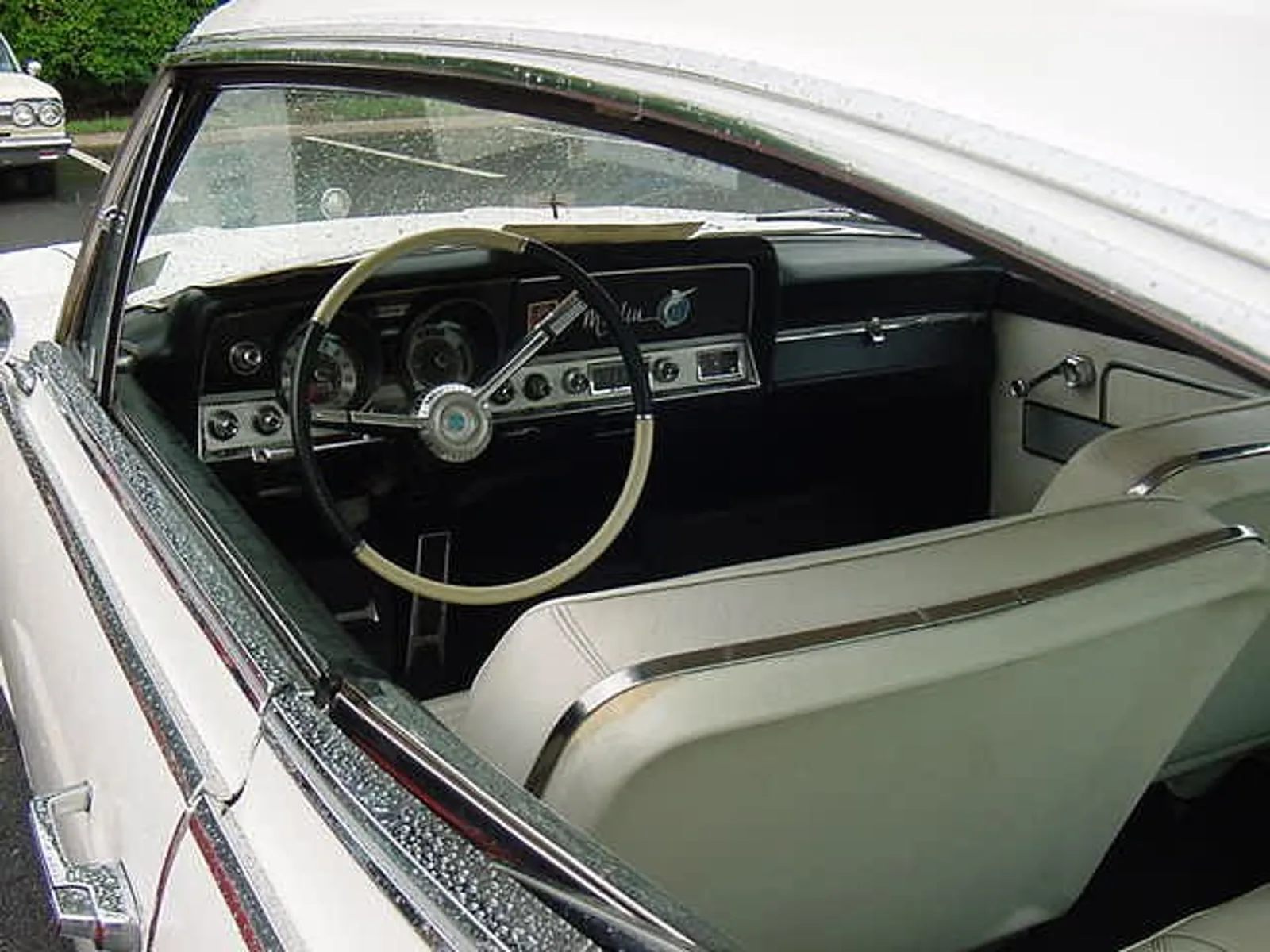
A roof that copied a convertible, a covering that faked a fabric top and a panel that began by uncovering the chauffeur.
A hardtop is a rigid metal car roof, usually pillarless, built to look like a convertible. Vinyl roofs added a fake fabric-top look and peaked in the 1970s. Sunroofs began as sliding panels for chauffeur-driven cars. Pillarless hardtops and vinyl roofs have largely gone, while sunroofs are everywhere.
No American manufacturer has sold a true pillarless hardtop in regular production since the 1978 Chrysler Newport and New Yorker, yet in the 1960s the two-door hardtop routinely outsold four-door sedans, even family cars like the Chevrolet Impala. It was a roof built to look like a convertible's, and it started a run of roofs that imitated, opened or covered what sat above the driver's head.
What is a hardtop?
A hardtop is a rigid car roof, typically metal and part of the vehicle's design, strength and style. The word usually means the pillarless hardtop, a body with no B-pillar. In the 1970s "pillared hardtop" described cars that kept a B-pillar but gave their doors frameless glass, so they looked like the pillarless kind.
A hardtop roof can also come off or fold away. A detachable hardtop is a rigid removable panel, often stored in the boot. A retractable hardtop, also called a coupe convertible or coupe cabriolet, is a convertible that swaps its folding fabric roof for a multi-part rigid one that stows itself automatically.
The hardtop was built to look like a convertible, and the vinyl roof then made the hardtop look more like one still.
Where did the pillarless hardtop come from?
Early automobiles had neither roof nor sides. By 1900 some wore fabric roofs and crude folding tops, yet fully enclosed bodies soon became the norm. The first pillarless hardtops appeared between 1915 and 1918 under the names "convertible cars", "touring sedans" or "Springfields". A Springfield had folding upper door frames and rear glass frames that lifted out and stowed under or behind the seats. Cadillac offered a sedan in the late teens with removable B pillars.
A cheaper cousin, the California top, began in Los Angeles and sold best from 1917 to 1927. Fitted in place of a touring car's folding roof, it closed the sides against the weather and brought the price of a closed car closer to an open one. Many had celluloid windows that rolled up like a blind.
The 1949 breakthrough
Chrysler built seven pillarless Town and Country coupes as concepts in 1946, and Plymouth sold a low-priced hardtop, the Cranbrook Belvedere, from 1951 to 1953. Series production began at General Motors in 1949 with the Buick Roadmaster Riviera, the Oldsmobile 98 Holiday and the Cadillac Coupe de Ville. The story goes that they were inspired by a Buick executive's wife, a convertible driver who never put the top down.
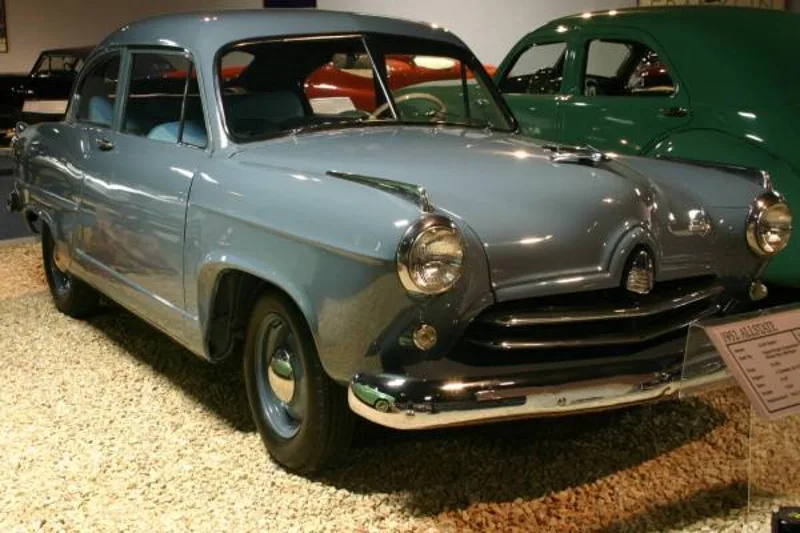
An early four-door hardtop came from Kaiser-Frazer in 1949, the Virginian, although its slim chrome-and-glass B pillar could be unscrewed, with five screws holding it on. Padded nylon or cotton over the roof gave it a soft-top look.
How did hardtops take over America?
Buyers of the 1950s took to two-door hardtops and drifted away from two-door sedans. The first four-door hardtops came from General Motors in 1955, and by 1956 every major American maker had two-door and four-door hardtops somewhere in its range. Each brand gave its pillarless body a name of its own.
| Maker | Name for the pillarless body |
|---|---|
| Cadillac | de Ville |
| Buick | Riviera |
| Oldsmobile | Holiday |
| Pontiac | Catalina |
| Chevrolet | Bel Air |
| Ford | Victoria |
| Chrysler | Newport |
| Imperial | Southampton |
| Packard | Mayfair |
| Hudson | Hollywood |
| Nash | Country Club |
| Studebaker | Starliner |
Ford later reused Studebaker's Starliner name on its Galaxie hardtop. For 1956 General Motors restyled its cars and put four-door hardtops in every division and almost every series bar the cheapest, and Chrysler did the same from Imperial down to Plymouth. The shape then spread to wagons: American Motors built the first four-door hardtop station wagons in 1956 on the Rambler, Mercury's Commuter followed a year later, and Chrysler made them through 1964.
Through the 1960s, the best-selling body in most lines with a pillarless option was the two-door. The 1957 to 1964 Cadillac and the 1965 to 1969 Corvair came only as pillarless bodies. Popular Mechanics even felt obliged to point out that the new 1967 Oldsmobile Delmont range included a "pillar" sedan.
Why did the hardtop disappear?
With no B-pillar, a body is inherently less rigid, so it needs extra strength underneath to stop it shaking. Hardtops often shared the frame of the equivalent convertible, which is reinforced for the same reason. Critics worried that the roof offered poor protection in a rollover. Later research found that serious or fatal injuries were significantly rarer in two-door and four-door hardtops and four-door wagons than in sedans, and a 1980 study saw more roof crush in hardtops without more frequent severe injury.
The style fell away with convertibles in the mid-1970s, partly because makers feared American federal safety rules would be hard for pillarless bodies to meet. Monocoque construction also made the design less practical. Some stylists kept the look without the engineering by tucking a B-pillar behind tinted glass and painting its outer face black. Nearly every hardtop design was gone by the end of the 1990s as structural standards tightened.
New hardtops usually cost more than ordinary sedans, and today collectors prize them over the B-pillar versions of the same model.
Where did the hardtop go outside America?
European makers still build pillarless coupes but rarely call them hardtops. The current Bentley Continental GT, the Renault Avantime and the Rolls-Royce Wraith fit that description, and the 2016 Mercedes E-class coupe, code C238, is a modern pillarless design. The Facel Vega Excellence of 1958 to 1964 is one of the few European four-door hardtops. Ford's Taunus P5 and P7 came in a no-B-pillar hardtop form that felt open-air with every window down. In Britain, unlike in America, the pillarless Sunbeam Rapier and Ford Consul Capri sold in smaller numbers than the saloons with a centre pillar.
Japan's luxury hardtops
Toyota brought out Japan's first two-door hardtop in July 1965, in the third-generation Corona line, and rivals soon sold the shape as a luxury touch. Nissan gave the Cedric and Gloria a genuine pillarless four-door and two-door, treating the latter as a premium personal car. Subaru launched the Leone as a genuine two-door hardtop in 1971. These models cost more and felt grander than the sedans next to them. In the 1980s Toyota added the Carina ED and Corona EXiV as genuine four-door hardtops, and Subaru sold pillared hardtop Legacy and Outback bodies from 1989 until 2009.
What was the vinyl roof for?
A vinyl roof is a vinyl covering on a car's top. It was meant to give fixed-roof models a convertible's appearance, and it became a fashion statement independent of the convertible it imitated. It was most popular in North America, where it counts as a hallmark of 1970s domestic cars, and in the UK and Japan it appeared mostly on the sporting or luxury versions of standard saloons.
The earlier version was a necessity. In the 1920s roof coverings of leather or canvas kept rain off the occupants, and some copied the movable tops of horse carriages, down to the landau bars. A 1928 to 1929 Ford Model A Special Coupe had its whole roof covered in a vinyl-like material. The practice lapsed in the 1930s, when painted steel was judged better and smoother pontoon bodies came in.
Fabric as a styling choice
After the war, the first fabric top used for looks rather than function was on the 1949 Kaiser Virginian, a fixed-roof sedan version of the Manhattan convertible wearing the same nylon. Ford had no hardtop to match General Motors and Chrysler, so for 1950 it offered a vinyl-covered roof on the Crestliner, Mercury Monterey and Lincoln Lido to simulate a convertible. It did not sell, and the vinyl models went the next year when Ford introduced its own pillarless hardtops for 1951.
Kaiser pushed further. For 1951 it listed a padded roof with a lizard-skin pattern called "Dinosaur", and its 1953 Dragon wore a grass-pattern "Bambu" vinyl. The 1956 Cadillac Eldorado Seville carried a standard roof in an early vinyl called "Vicodec", really diamond-point convertible fabric stretched over thin padding with two long seams. Sales were low, yet the car stayed in production until 1960.
The craze began with the 1962 Ford Thunderbird, which offered a vinyl roof and revived landau bars. Some form of vinyl trim stayed on Thunderbird roofs for two decades. General Motors' 1962 full-size coupes, the Dodge Dart and the Mustang joined in, and by mid-decade every automaker would cover a sedan, coupe or wagon in colourful vinyl.
Peak vinyl
By the late 1960s vinyl roofs were routine in most classes of car, with patterns imitating canvas, alligator and snake. Chrysler briefly sold paisley and floral designs as the "Mod Top", the Mercury Cougar flirted with houndstooth, and by 1972 even the Ford Pinto could be had with vinyl.
The opera window arrived at about the same time and matched a vinyl surround so well that the pair came to stand for American design in the 1970s. Overseas, Ford covered European Escort, Cortina, Taunus and Granada models in vinyl until the early 1980s, Volvo made it standard on its top two-door, the 262 C coupe, and Toyota used it on the Corona Mark II, Crown and Century in the mid-1970s.
Six ways to wear it
Designers settled on a handful of layouts in the 1960s and 1970s:
- Full: vinyl across the whole top, C pillars included
- Canopy: vinyl only across the front portion, reaching half or two-thirds of the roof's length
- Halo: like the canopy but stopping short of the glass, leaving a ring of painted metal
- Landau: the near opposite, covering just the back portion, a quarter to a third of the roof
- Landau and canopy: both on one car, as on the 1977-79 Thunderbird, with a metal targa band between them
- Up and over: Chrysler's mid to late 1970s coupes, where the vinyl stopped just behind the opera window and then ran up and over the roof
Is the vinyl roof still around?
Barely, on new cars. The "aero look" that the 1983 Thunderbird brought to the American market clashed with opera windows and vinyl roofs, whose formal style did not suit the sleek profiles designers were chasing. Tops with a canvas look, known as cabriolet roofs and fitted with imitation convertible bows under the fabric, found some favour. All-vinyl styles dwindled through the 1990s, and the 2002 Lincoln Continental was among the last to leave the factory with one.
Hearses and limousines almost always keep them. A vinyl top is the style people expect on those vehicles, and it hides the welded seams left when a standard sedan is stretched. Aftermarket customisers still fit vinyl roofs too, most often to Cadillacs and Lincolns.
What is the difference between a sunroof and a moonroof?
A sunroof is a roof panel that moves aside to expose a window, admitting light and fresh air, and it may work by hand or by motor. The word now covers any movable roof panel. "Moonroof" originally meant fixed glass panes set in the roof above the passengers. By the historical definition a sunroof is opaque, but most factory sliding sunroofs today have a glass panel and are often marketed as moonroofs, a term carmakers popularised.
Marketing blurred the line. A 1962 Volkswagen advertisement promised a sun-roof that turned into a moon-roof after dark, and a 1972 Chevrolet campaign pushed moonroofs on the Chevelle, Monte Carlo and Nova. In 1973 John Atkinson, a Ford marketing manager, took up the word for the Continental Mark IV, and in its first year Ford sent those cars to the American Sunroof Company to be fitted away from the line. Once a car leaves the assembly line, a factory option can no longer be built into the roof, so later fitting means going aftermarket.
Where did the sunroof come from?
Early luxury cars often had a fixed roof over the rear passengers and nothing over the chauffeur, a layout known as Coupe de Ville, Sedanca or Sedanca de Ville. The open cab kept the driver in touch with the surroundings, showed that the owner employed a paid driver and let the driver's livery identify the owner. As speeds rose and cars became everyday transport, drivers needed shelter, and part-time roofs grew from a stretched piece of leather into framed leather or cloth. By the late 1920s a solid metal panel could slide into a slot above the passengers.
Sedan bodies with a one-piece roof and no gap over the driver arrived in the early 1930s. Coachbuilders such as Barker, Gurney Nutting and Park Ward then cut sliding cloth or metal panels into Bentley and Rolls-Royce roofs, giving the sunroof its recognisable modern shape. Owners were increasingly driving themselves, and a few two-seaters even had a sliding panel over the front seats. The panel's purpose had moved from uncovering the chauffeur to letting the owner enjoy a fine day.
The Pytchley roof
The mass market began with the entrepreneur Noel Mobbs, who turned his coachbuilding firm into Pytchley, a maker of sliding roofs. The mechanism was patented and first shown in 1925. By 1929 the panel sat flush with the rest of the roof when shut, and Morris used the technology from 1932 on the Minor, Major and Ten as a "Sliding Head". Wolseley adopted it in 1935 and Austin in 1936. The 1933 Hillman Aero Minx, whose sliding panel carried glass, is counted as the first moonroof. In 1941 Pytchley sued Vauxhall over unpaid royalties. Vauxhall said its panel, which slid under the rear section rather than over it, was different enough to need no licence. Pytchley won.
From targa to panoramic
The 1953 Ford Lincoln X-100 concept brought the Sedanca idea back for an owner-driven car with a retractable transparent targa top, which inspired fixed moonroof panels on 1954 production cars. Triumph's 1961 TR4 had a removable hard top in two sections, and the 1966 Porsche 911 Targa gave the style its trademarked name. Lamborghini showed a roof framed around a transparent panel on a 1969 Espada, which heralded the modern panoramic roof. The 1953 Lincoln XL-500 concept, with its full-length Plexiglas bubble canopy, is also described as the first panoramic roof.
What kinds of sunroof are there?
- Pop-up: a manually tilting panel that vents the cabin or, if taken out, opens it fully; cheap, and fitted to the Porsche 944 and early Mazda RX-7
- Spoiler: tilts to vent and slides above the roof, needing little headroom, as on the Honda CRX and Toyota Celica
- Inbuilt: slides between the metal roof and the headliner at some cost in headroom; the 1960 Ford Thunderbird was among the first
- Folding: a fabric panel that folds back, a European tradition seen on the original VW Beetle and Renault Twingo
- Top-mount: a glass panel gliding on tracks above the roof with no loss of headroom, as on the London Taxi
- Panoramic: a big or multi-panel moonroof over front and rear seats, found from the Lexus ES to the Tesla Model S
- Removable: T-tops with two panels and a centre brace, and targa roofs with one panel and no brace, as on the Corvette and Honda NSX
- Solar: glass with a photovoltaic panel that powers ventilation fans while the car sits in the sun
What is left of these roofs today?
Most moonroofs today are electric, with a pop-up and inbuilt layout or a pop-up and spoiler layout, and large openings are often made by top-slider or spoiler mechanisms. Folding sunroofs have returned after a long absence from European and North American markets, with several new factory-installed options. Solar sunroofs have been offered on the 2010 Prius, recent Audi cars and the Renault Zoe. For fabric and vinyl, hearses, limousines and customisers still use them, while the true pillarless hardtop survives mainly as a coupe shape from European makers.