A school rule about matchboxes, a Mattel founder watching his son, and a surfboard-carrying VW bus now worth tens of thousands: how die-cast cars grew up.
Matchbox began in 1953 with Lesney Products and became the generic name for small toy cars. Mattel launched Hot Wheels in 1968 with low-friction wheels and fantasy hot rods, forcing Matchbox to respond. Mattel bought Matchbox in 1997, and rare early models, such as the Rear-Loader Beach Bomb, now sell for tens of thousands of dollars.
A pink toy bus with surfboards sticking out of its back window once sat alone on a rotating platform in a Los Angeles museum, and market prices for the model have run from $70,000 to $120,000. It failed its first test because it was too narrow to roll on the Hot Wheels track. Behind that one narrow bus lies the Hot Wheels story, the Matchbox rivalry that shaped it, and the growth of die-cast cars from pocket toys into a collecting industry.
How did Matchbox begin?
The Matchbox name dates from 1953 and belonged to Lesney Products, a British die-casting firm whose reputation was built by Jack Odell, Leslie Smith and Rodney Smith. Lesney itself blended the first names of the two Smiths. The company's first major success was a model of the coronation coach of Queen Elizabeth II, which went on to sell over a million.
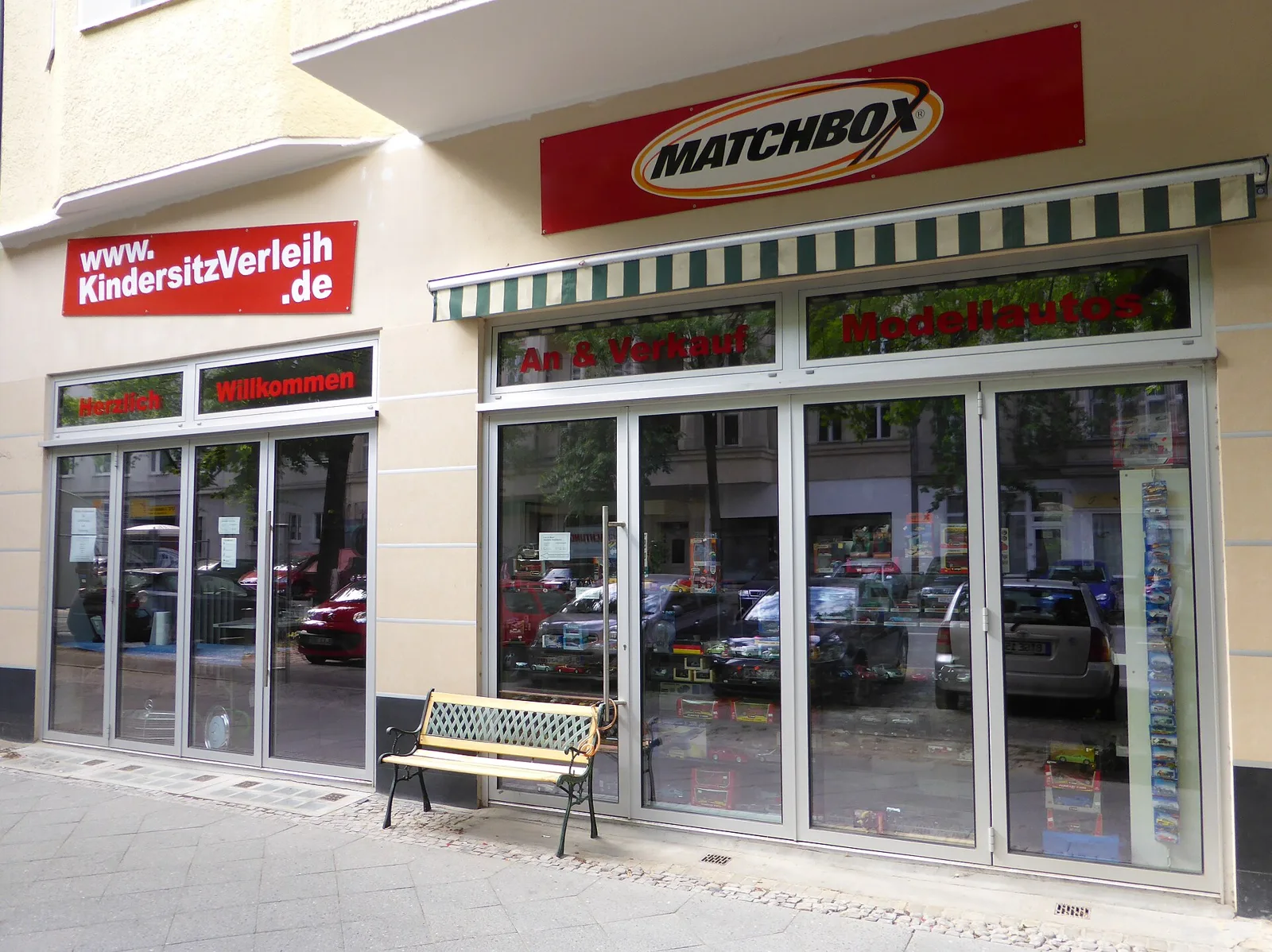
The toy that made the brand came from a family rule. Odell's daughter was only allowed to bring to school toys that would fit inside a matchbox, so he crafted a scaled-down version of Lesney's green and red road roller. It became the first model in the 1-75 range, joined by a dump truck and a cement mixer, and the company sold them in replica matchboxes. The range always held 75 different vehicles. Matchbox became such a common word for a small toy car that it was used for any brand.
The little models filled a gap that competitors barely touched, and their low price helped. Early examples were all metal, with no windows or interiors, and about 2 inches (5 cm) long. By 1968 the typical model had plastic windows, an interior, spring suspension and opening parts, at about 3 inches (7 cm), and some featured steering. Lesney had bought out its distributor Moko in 1959, and in 1968 Matchbox led worldwide sales among small die-cast cars, alongside fellow British makers Dinky and Corgi.
Matchbox gave the world a word for a small toy car; Hot Wheels gave it a reason to want a faster one.
Why did Hot Wheels change the game?
Mattel introduced Hot Wheels on 18 May 1968, and the idea came from co-founder Elliot Handler. He had watched his son Kenneth play with Matchbox cars and wanted a line that would do for boys what Barbie had done for girls. Where Matchbox built scaled-down replicas of real road cars, Handler pictured exaggerated, customised hot rods, with big rear tyres, superchargers, flame paint and outlandish proportions. Engineer Jack Ryan helped him build the cars, and Mattel artist Rick Irons drew the flame logo.
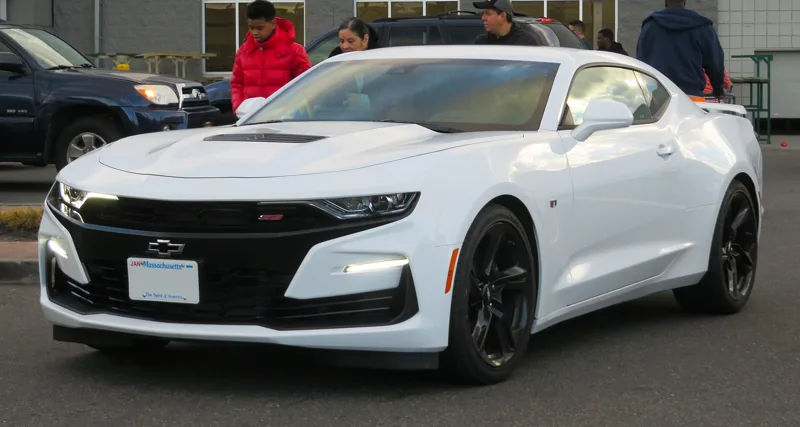
The first cars were known as the Original Sweet 16, made in 1967 and shown at the 1968 New York Toy Fair. They launched the Red Line Series, named for the red pin stripe on the sides of the tyres. Eleven of the sixteen castings came from Harry Bentley Bradley, who had designed the body of the Deora concept car, and the first off the line was a dark blue Custom Camaro.
The wheel that won
The decisive feature was underneath. Hot Wheels ran on wide, hard-plastic tyres that gripped the track with far less drag, and they held a straighter line than the thin metal or plastic wheels fitted to Matchbox cars of the day. They rolled easily and fast, which Mattel's orange track sets and battery-powered Super Chargers showed off. The toys looked fast and were fast, and the brand disrupted the small die-cast market from 1968 onward.
The 1969 line, with Ira Gilford's drawings, among them the Twin Mill and Splittin' Image, cemented the brand's lead in the United States. Larry Wood joined in 1970 and went on designing for more than 40 years before retiring in 2019, and Paul Tam contributed wild ideas such as a twin-engined Volkswagen Beetle called the Evil Weevil and the six-wheeled Open Fire.
How did Matchbox fight back?
Earlier challengers such as Husky, Budgie and Cigar Box had made little impression on Matchbox. Hot Wheels did, even though its cars were less true to scale and often fantasy vehicles, because they came in bright metallic colours with racing-style wheels and a flood of track sets. A second American rival, Johnny Lightning, arrived in 1969, and Lesney's US sales effectively collapsed.
Lesney responded quickly with the Superfast line, which converted the 1969 range to low-friction wheels, narrow at first while the factory retooled for wider tyres. By 1970 and 1971 new models carried wide tyres, and short-lived electric Scorpions went up against the Hot Wheels Sizzlers. Come the middle of the 1970s, Matchbox was a world force once more, adding Streakers to answer the tampo-printing that Hot Wheels had introduced.
The fight ended less happily. Britain's economy in the late 1970s hit all its toy makers, and Lesney went bankrupt in June 1982. Meccano (Dinky), Matchbox and Corgi all failed within a span of three years. Universal Toys and David Yeh bought the Matchbox name and moved most production to Macau, and later to China, where the first batch of Matchbox toys with China cast on the base appeared in 1985. Tyco Toys acquired Matchbox from Universal in 1992, and in 1997 Mattel bought Tyco, making the two old rivals sister brands that still sell under their own names.
How do Hot Wheels and Matchbox compare?
| Matchbox | Hot Wheels | |
|---|---|---|
| Introduced | 1953, by Lesney Products | 18 May 1968, by Mattel |
| Founding idea | A toy small enough to fit a matchbox | A boys' line to match Barbie |
| Typical model | Small-scale replica of a real production vehicle | Exaggerated customised hot rod |
| Wheels at launch | Narrow metal or plastic | Wide, hard-plastic, low friction |
| Packaging origin | Replica matchboxes | Red and yellow blister packs, later blue cards |
| Owner today | Mattel, since 1997 | Mattel |
What happened to Hot Wheels after 1968?
The early years are called the Redline era. In 1970 Mattel adopted the slogan "Go With the Winner" and released 43 new cars. That year also brought the Snake and the Mongoose, a rivalry between two drag racers created for publicity, and the first Silver Series, available only through a mail-in offer.
Sales then dipped. Only seven new models appeared in 1972, and of 24 models in 1973 just three were new. The glossy Spectraflame colours gave way to drab enamel, which is still the norm on mainstream Hot Wheels. The slow years had one lasting result, which is that the 1972 and 1973 models are now known to be very collectible. In 1974, Flying Colors added decals and tampo-printed designs, and the improvement helped revive sales and was copied by competitors. In 1977 the red lines were dropped from the wheels, as buyers drifted from fantasy hot rods to more realistic cars and trucks, in the manner of Matchbox.
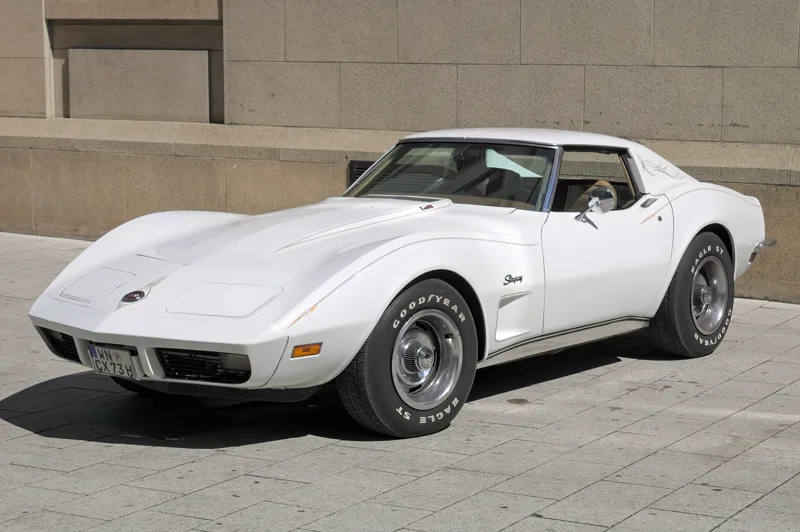
The 1980s brought gadgets: Hot Ones wheels in 1981, rubber-tyred Real Riders in 1983, and Ultra Hot Wheels in 1984. There were also thermal colour-change paint and Crack-Ups, vehicles with a panel that rotated to reveal a dented reverse side. In 1983 Hot Wheels designed a die-cast 1984 Corvette before General Motors had officially unveiled the car, which angered GM and almost cost Mattel its licence.
Collector numbers came in 1989, with cars numbered up to 274 across blue-card packs until 1994. In 1995 the line split into series, including the Model Series, renamed First Editions in 1996, and the Treasure Hunt Series, and a Bonus Car programme caused shortages in stores. The brand marked its 30th anniversary in 1998 with replica cars in special boxes.
Why do some Hot Wheels cars fetch thousands?
The answer is the Beach Bomb. Early prototypes were faithful to the shape of a Volkswagen Type 2 bus, with two surfboards poking out of the back window. Mattel wanted every car to run on every playset, but testing showed this version was too narrow to roll properly on the track or take power from the Super Charger, and too top-heavy for fast corners.
Designers Howard Rees and Larry Wood widened the side fenders, gave the surfboards a new storage place on the side, and cut away the roof for a full-length sunroof to lower the centre of gravity. Collectors call that production version the Side-loader. The original, the Rear-Loader Beach Bomb, is widely seen as the holy grail of a serious collection. Nobody knows how many were built, as test pieces handed to employees. A standard Beach Bomb may be worth up to $600, but Rear-Loader prices have reached the five-figure range of $70,000 to $120,000. The Petersen Automotive Museum displayed a pink one alone on a rotating platform under glass, and the Hot Wheels Collectors Club released an updated Rear Loading Beach Bomb as a limited edition in 2002.
How are die-cast cars made, and how did collecting take off?
Die-casting forces molten lead, zinc alloy or plastic into a mould. Early toys used a lead alloy, but most modern examples use zamak, a zinc alloy with small amounts of aluminium and copper. Impurities such as lead or iron cause zinc pest, in which the casting distorts, cracks or crumbles. That is why prewar die-cast toys rarely survive in good condition.
Early makers were Dowst Brothers (TootsieToys) in the United States, Solido in France and, in Britain, Meccano with its Dinky Toys. Corgi arrived in 1956 and pioneered interiors and windows. Advertising had been part of the business since Meccano used it in 1934, and during the 1960s companies began to commission die-cast vehicles purely as promotional items, reasoning that children influence family purchases and grow into adult customers.
Collecting became an industry in the 1970s. Lesney began to court collectors, attending their meetings, supplying information to their clubs and surveying their interests. One early result was a black Ford Model T in the Models of Yesteryear line, followed by vans printed with period adverts for products such as Lipton's Tea and Coca-Cola. Special editions for single countries, such as Arnott's Biscuits for Australia, proved desirable and profitable, and the company developed premium models no longer aimed at children at all.
Corgi copied the formula with dozens of versions of a Thornycroft van and hundreds of Routemaster buses sold in specific stores. Some collectors dismissed this as "collecting paint", because only the decoration changed, but it saved money on tooling. By the 1980s many die-cast vehicles were being bought by adults as collectibles, and since 2009 the Diecast Hall of Fame has inducted the designers and executives behind the industry.
Which scale do collectors choose?
Model scales matter to buyers. The 1:43 scale is the most popular for model cars worldwide, dating back to the 1930s, and Dinky made it popular because it suited O gauge railways. The 1:18 scale gives large, detailed models usually 7 or 8 inches (18 or 20 cm) long and is aimed mostly at adults. The 1:24 scale became a standard among international makers during the 1980s.